
Reindeer Maze with 41 or 240 Cells
An easy reindeer maze with 41 wide cells for ages 3 to 5 and a hard one with 240 narrow cells for ages 9 to 12, free to print with the answer on page two.
Choose a level
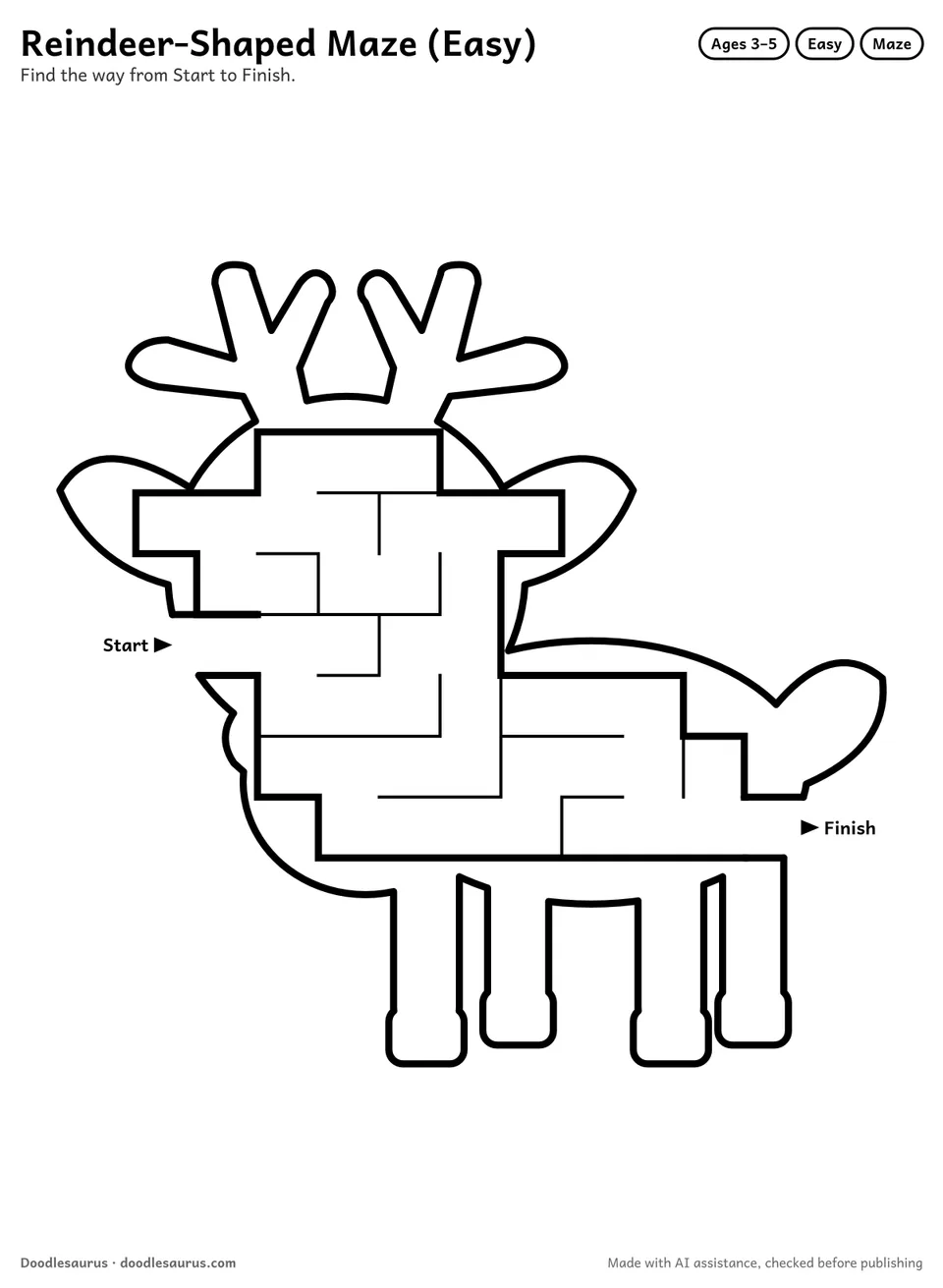
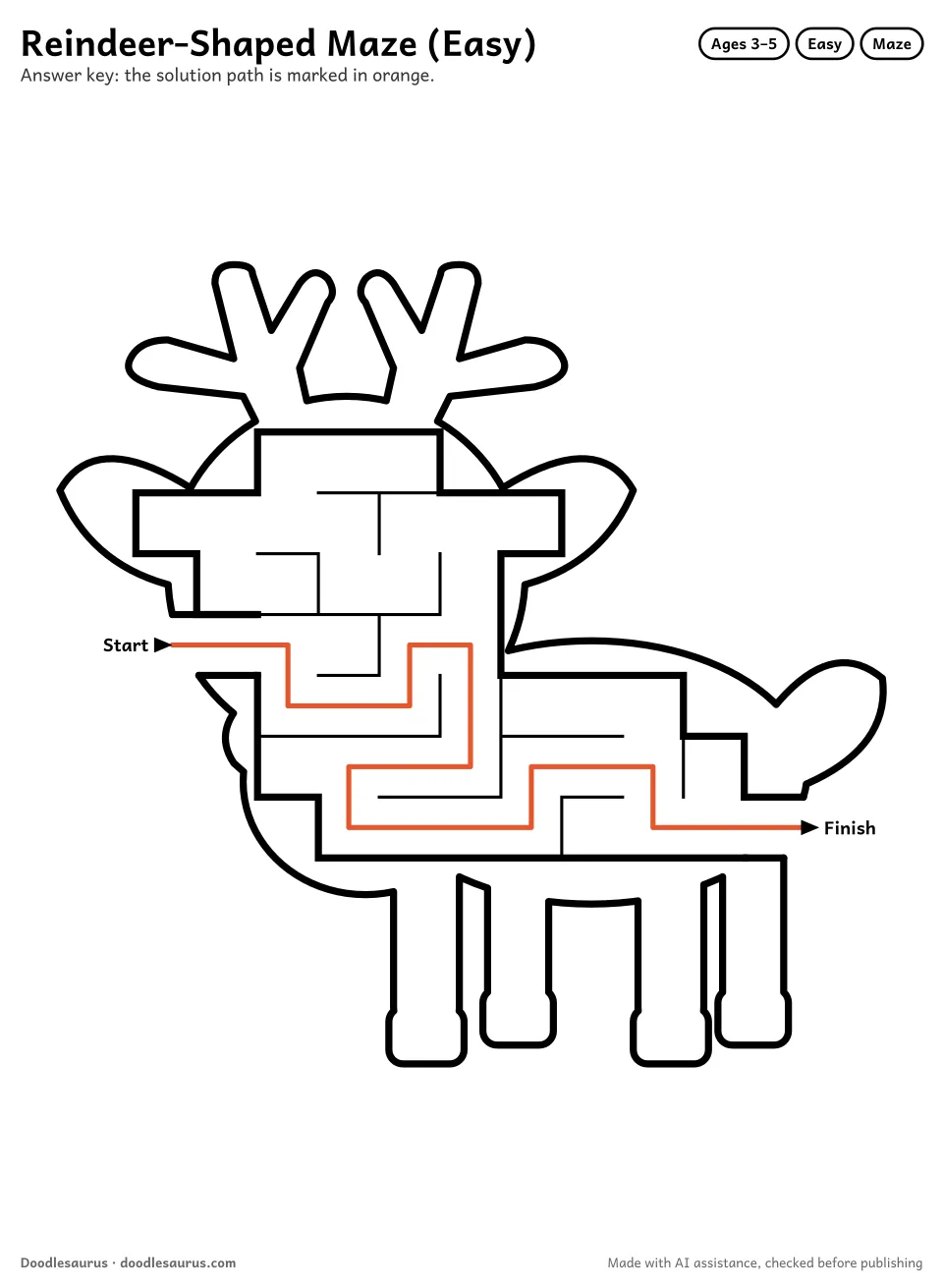
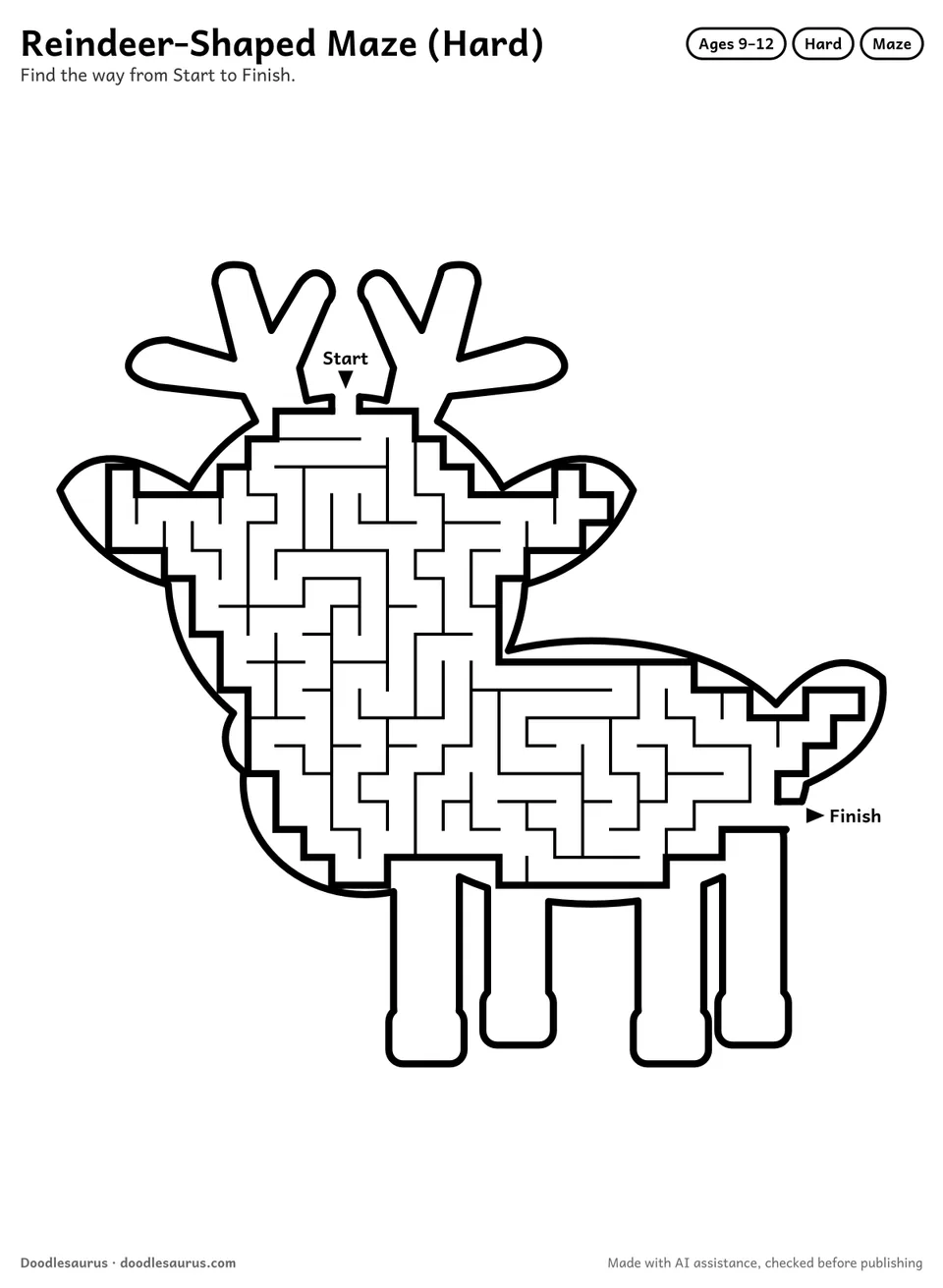
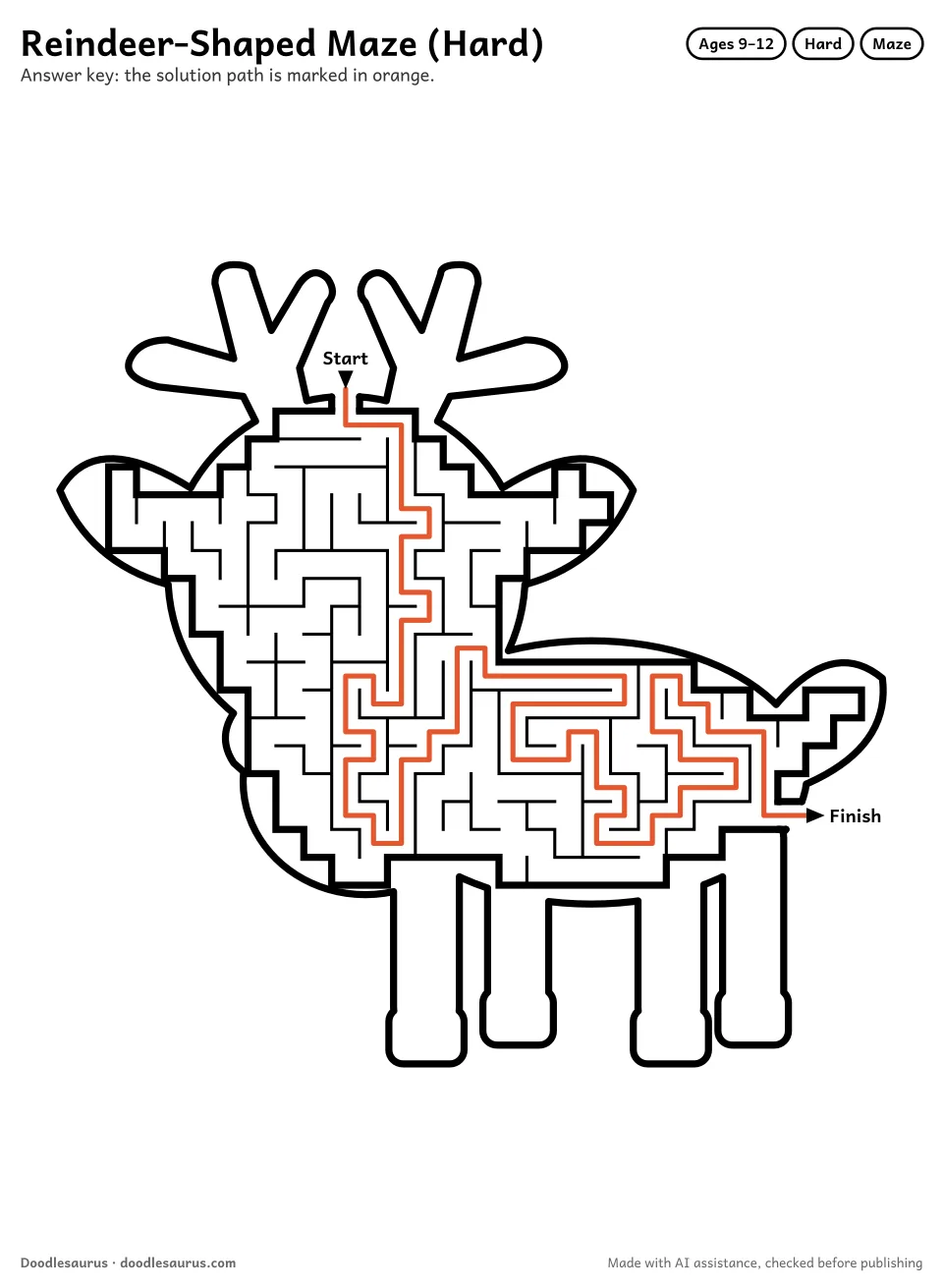
Antlers above, maze below
The branching antlers on this reindeer maze are only an outline on both pages, drawn above the maze rather than inside it. The walls step in small squares just inside the rest of the standing reindeer: two ears that stick out, a round head and a long body with a fluffy tail. Four legs with hooves stay outline only too. Both levels finish in the same spot, outside the back end of the body just below the tail. The solution is on page two of every PDF.
Easy and hard
A route of just 19 cells crosses the easy reindeer, which has 41 cells of 12 mm for ages 3 to 5. It begins outside the left side, just below the left ear, drops into the body, runs along its lower part and comes out below the tail. Its passages reach only into the base of both ears.
There is no medium page. The hard reindeer for ages 9 to 12 is a big step up, with 240 cells of only 5.5 mm and a route of 86 cells. It starts above the head, between the antlers, runs straight down through the head into the body and winds back and forth through the middle of the body before it ends below the tail. Corridors run into both ears and the tail. Fit to page would narrow those passages, so the A4 or US Letter file is meant to print at 100 percent.
Holiday uses
The reindeer maze needs nothing but a pencil. That suits a car trip to see family, a quiet corner at a holiday party or the last week of school.
Skills practiced & tips
- Look for both arrows first; the easy page starts outside the left side, just below the left ear, and the hard page starts above the head, between the antlers.
- Try the route with a finger before using a pencil.
- When the line reaches a wall, back up to the last fork and choose the other way.
- On the hard page, use a sharp pencil for the 5.5 mm passages in the ears and tail.
- After solving, color the reindeer brown and give it a bright collar.
Reindeer fun facts
- Reindeer can see ultraviolet light, which may help them spot lichen and predators against bright snow.
- Lichen, often called reindeer moss, is one of the main winter foods of reindeer.
- A newborn reindeer calf can usually stand and follow its mother within a few hours of birth.
Classroom ideas
- Pre-K (ages 3 to 5): solve the easy reindeer with a finger, then trace the route with a crayon.
- Grade 4: partners solve the hard maze together, taking turns to draw each straight stretch.
- Grades 4 to 6: work out what share of each maze the route covers, such as 19 out of 41 cells on the easy page.
More reindeer activities
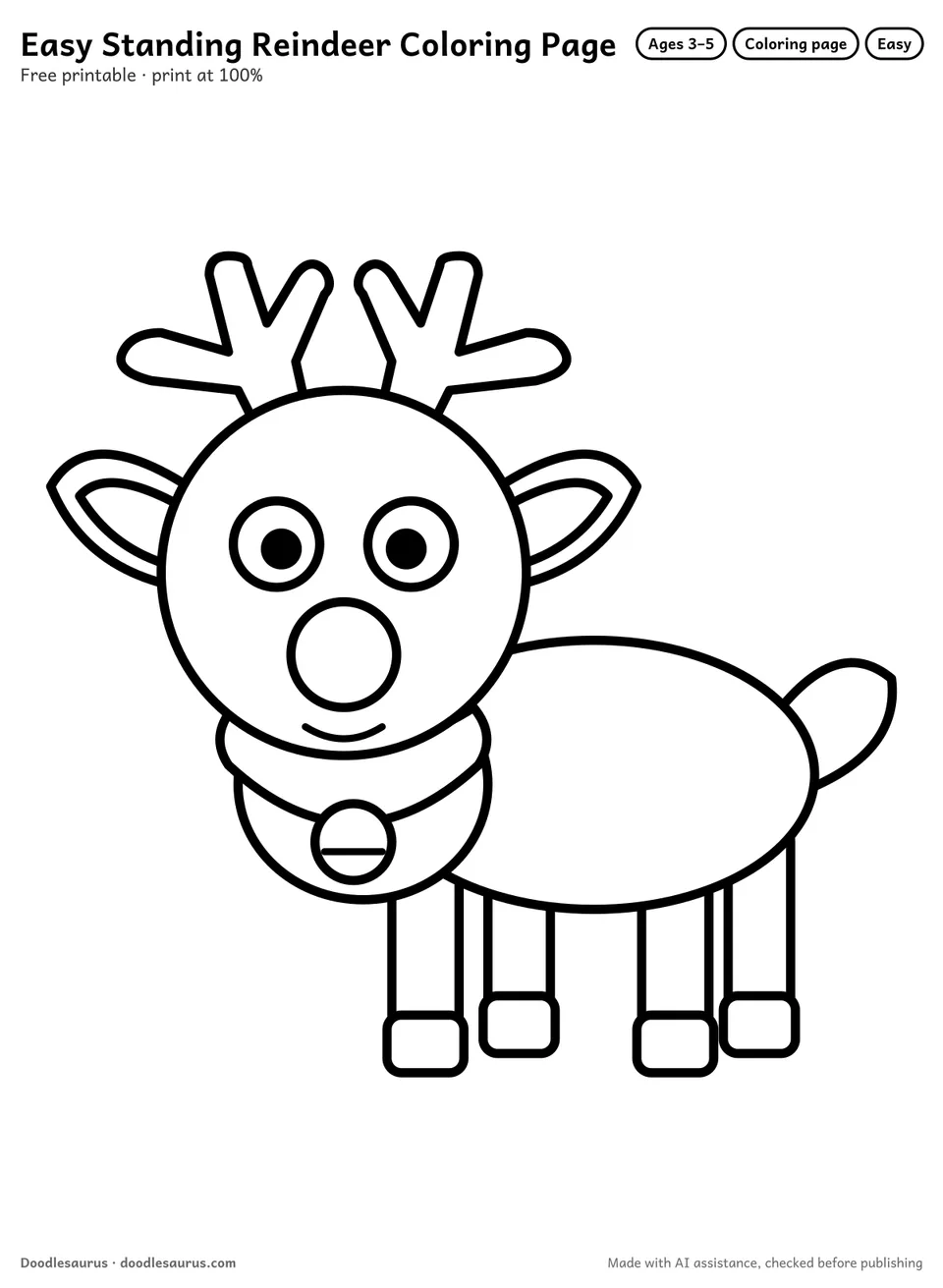
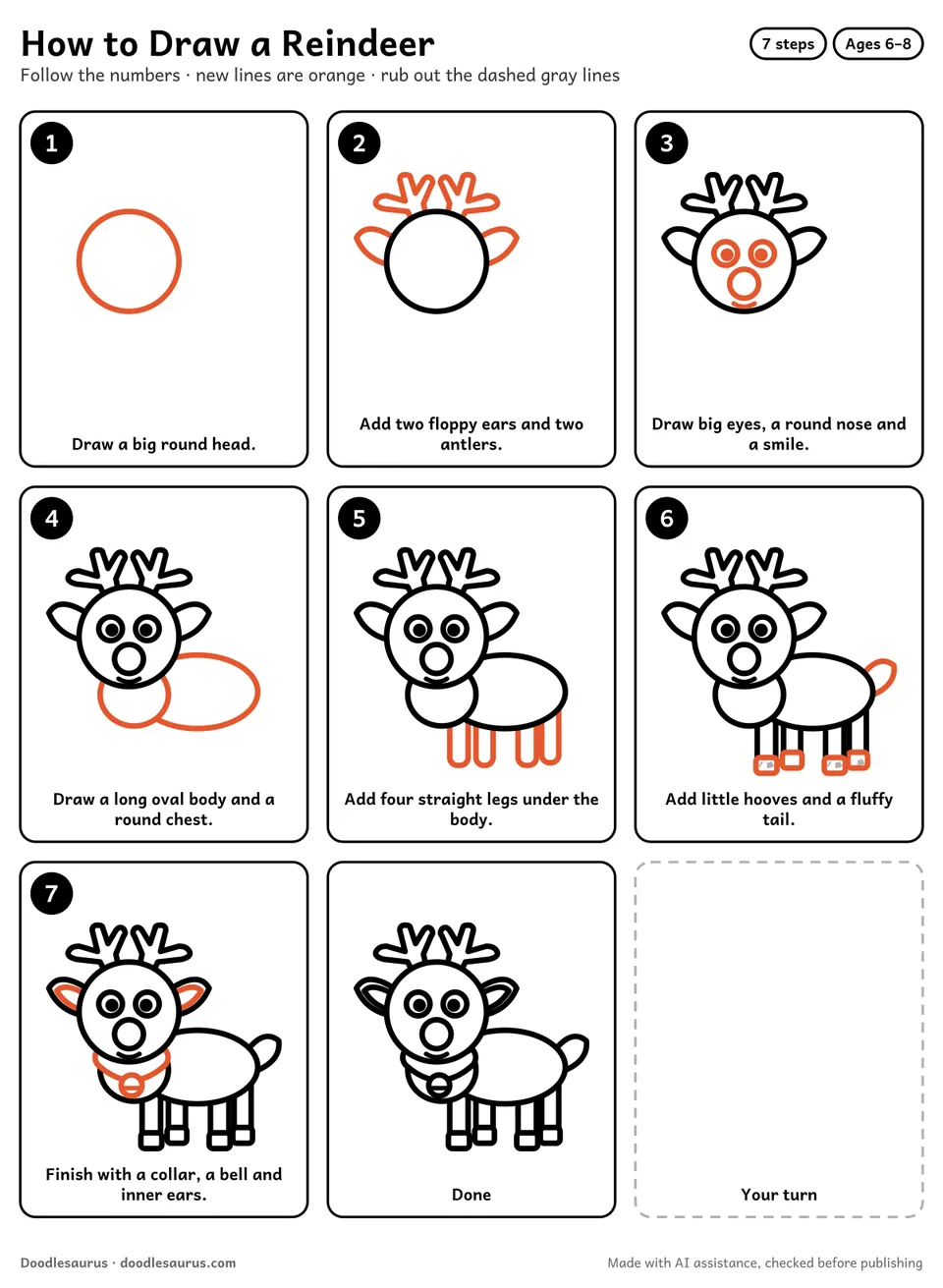
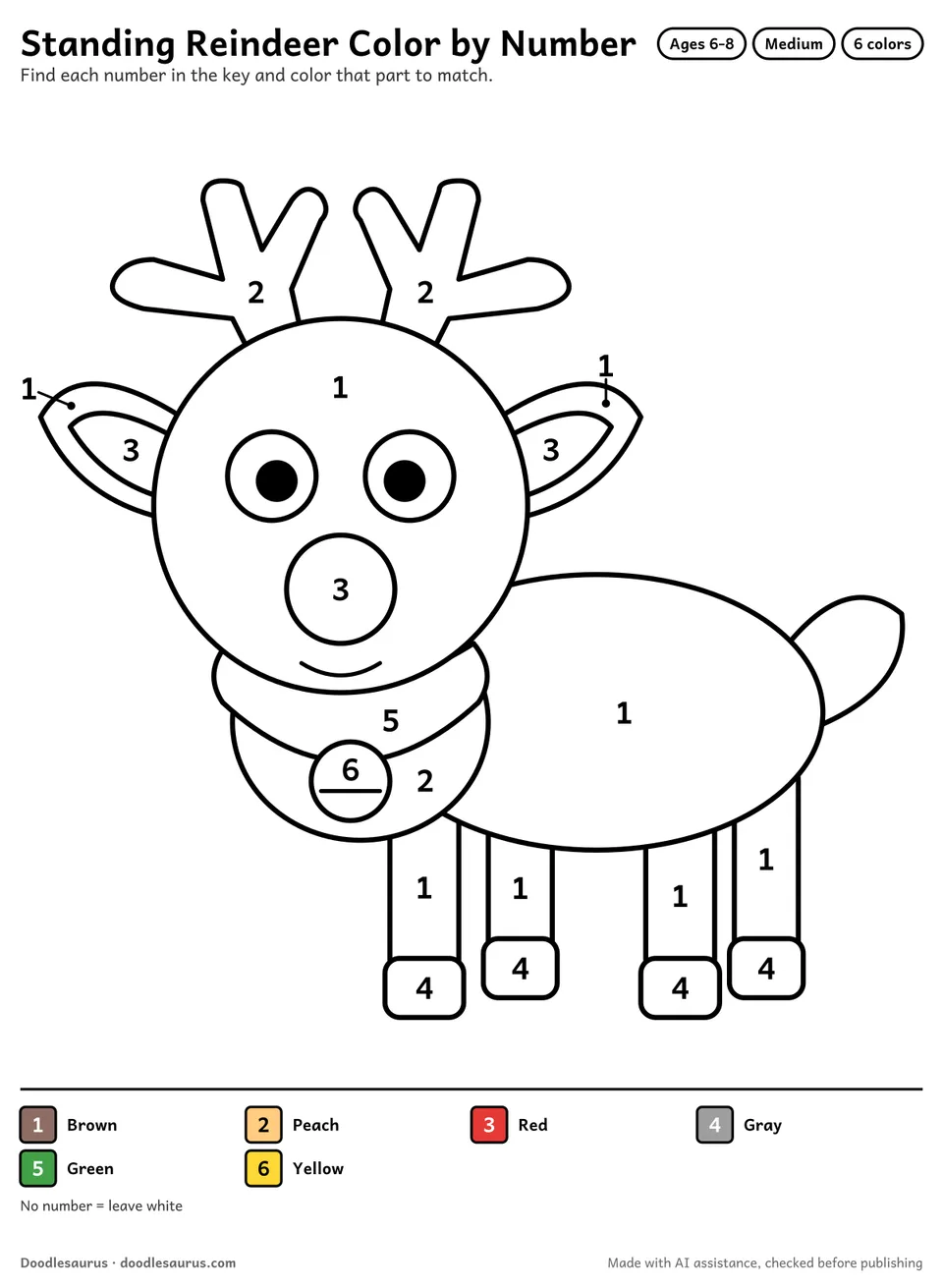
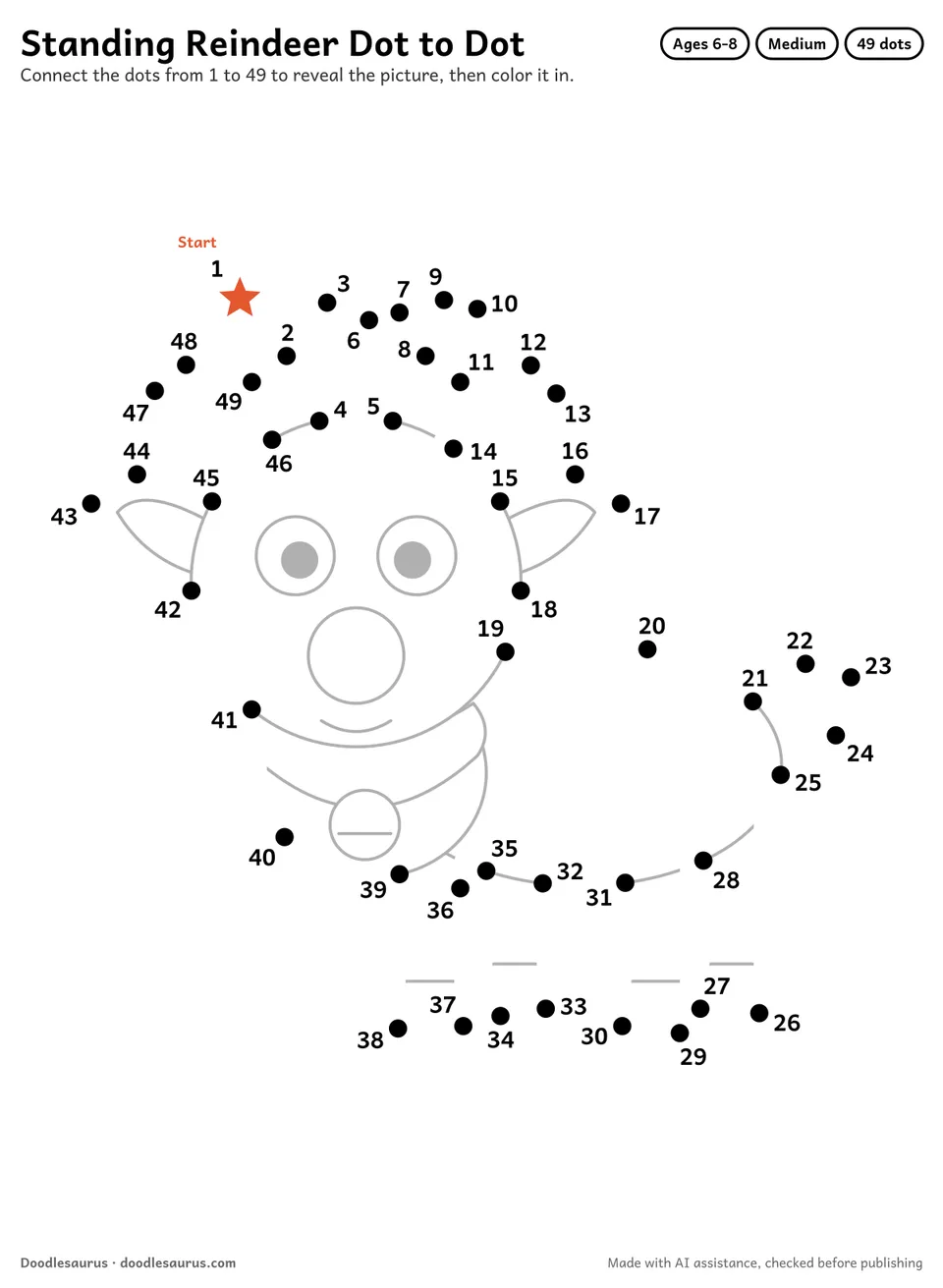
More mazes
Frequently asked questions
Is the step from the easy reindeer to the hard one too big?
It is a big one, because there is no medium page. The easy reindeer has 41 cells of 12 mm and a 19-cell route, and the hard reindeer has 240 cells of 5.5 mm and an 86-cell route.
Is Finish in a new place on the hard reindeer?
No. Both levels finish outside the back end of the body, just below the tail. Only Start moves: it is outside the left side, just below the left ear, on the easy page and above the head, between the antlers, on the hard page.
Do the antlers belong to the maze?
No. On both pages the antlers are only an outline above the maze. On the hard page the Start arrow sits between them.
Does the maze reach into the tail?
Only on the hard page, where corridors run into both ears and the tail. On the easy page the passages reach just into the base of both ears, and the tail is only an outline.
About this printable
- Made with AI assistance (vector drawing authored by a language model) and checked by automated tests and an AI reviewer.
- Checked by automated tests and an AI reviewer on 22 Oct 2026.
- Free for personal and single-classroom use. See the license. Read the license · How these are made · Report a problem.
- Vector PDF, 2 pages, 186×254 mm art box — prints edge-safe on A4 and US Letter.
New printables, twice a month
Our newsletter starts soon, with new sheets twice a month and a free 10-page starter pack for every new reader.