Shark Maze with a Tall Back Fin
Shark maze with a tall back fin: 107 cells of 8 mm for ages 6 to 8, or 257 narrow cells with paths into the fins and tail for ages 9 to 12. Free to print.
Choose a level
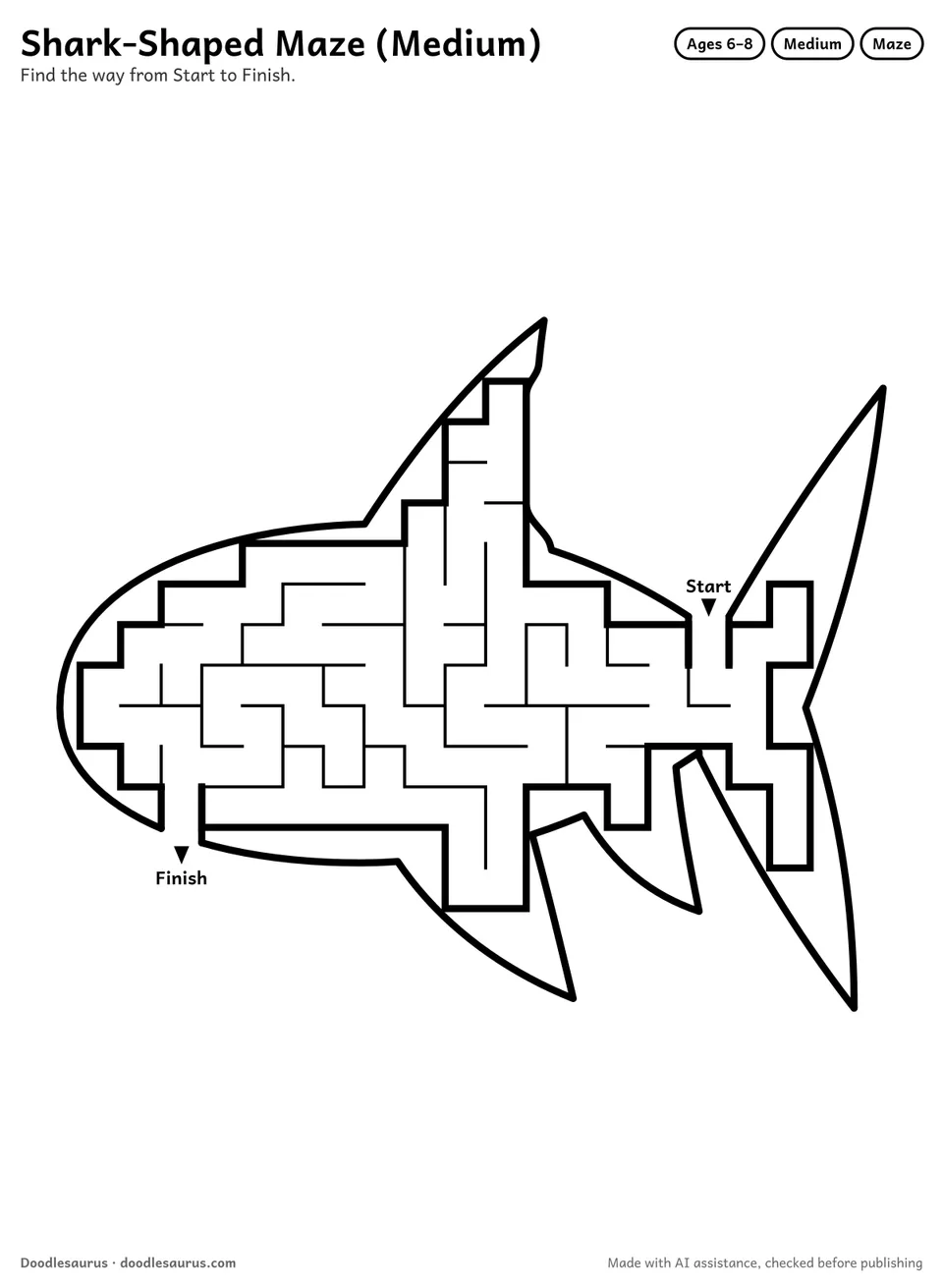
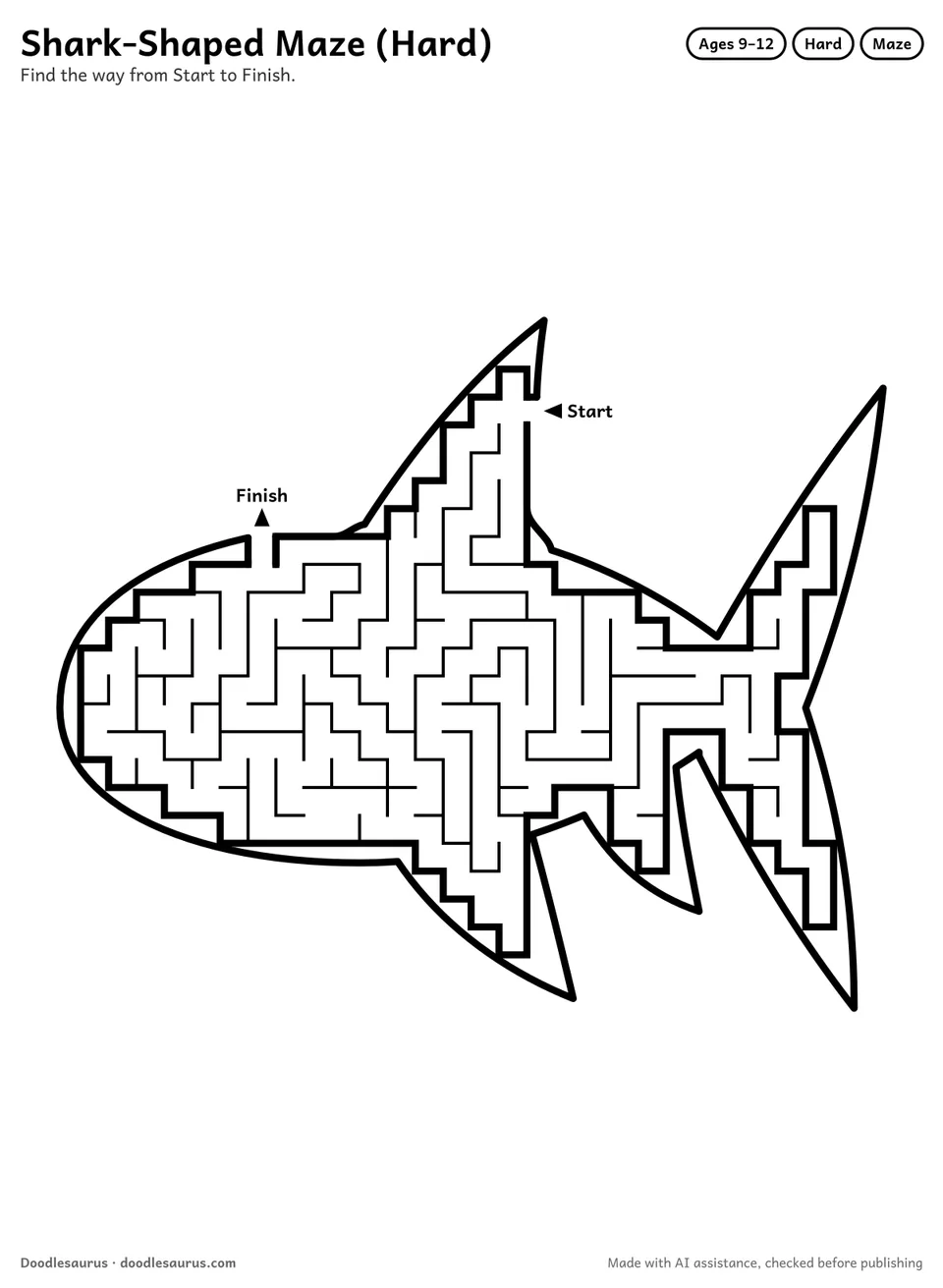
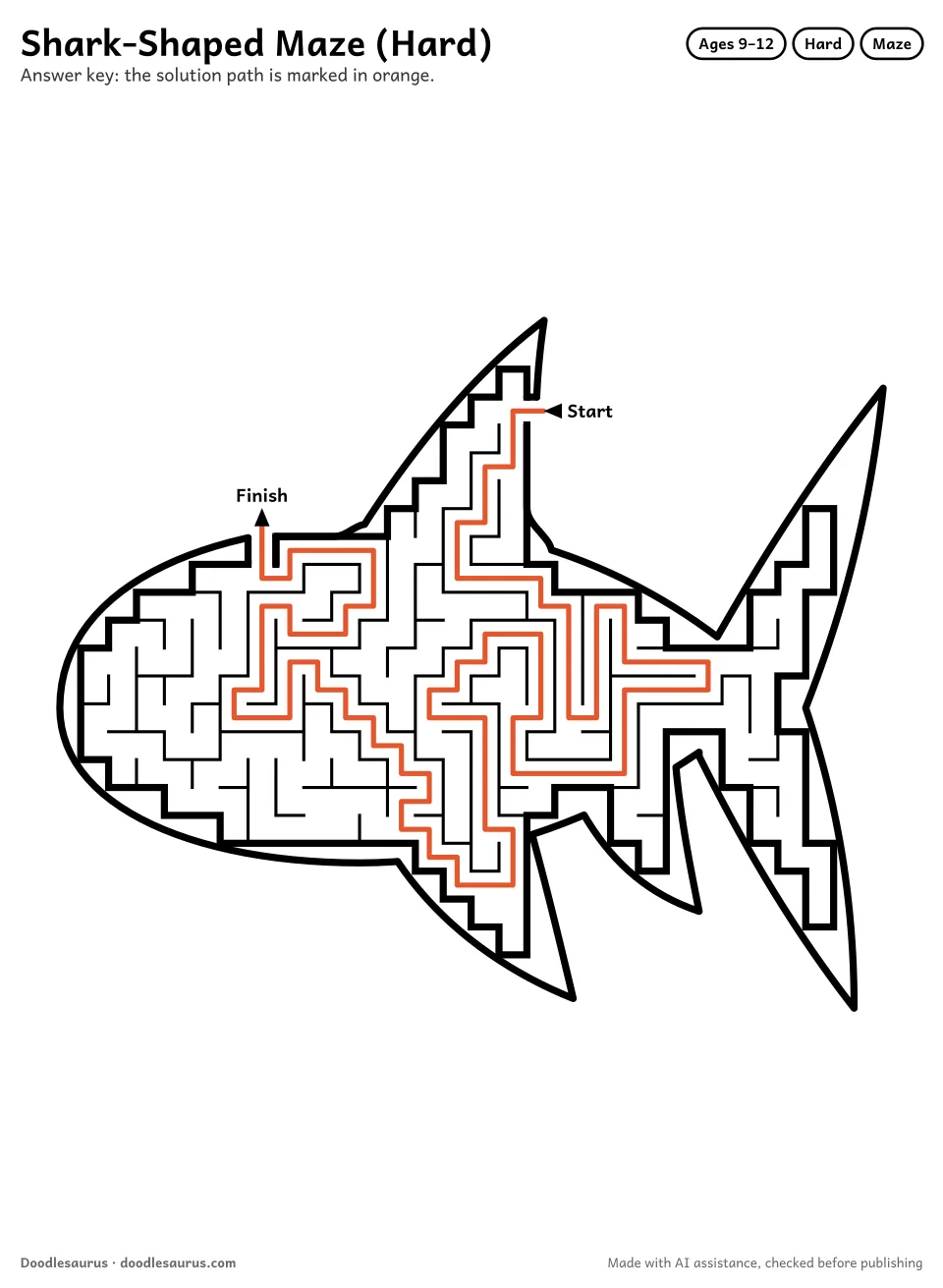
Into the fin and the tail
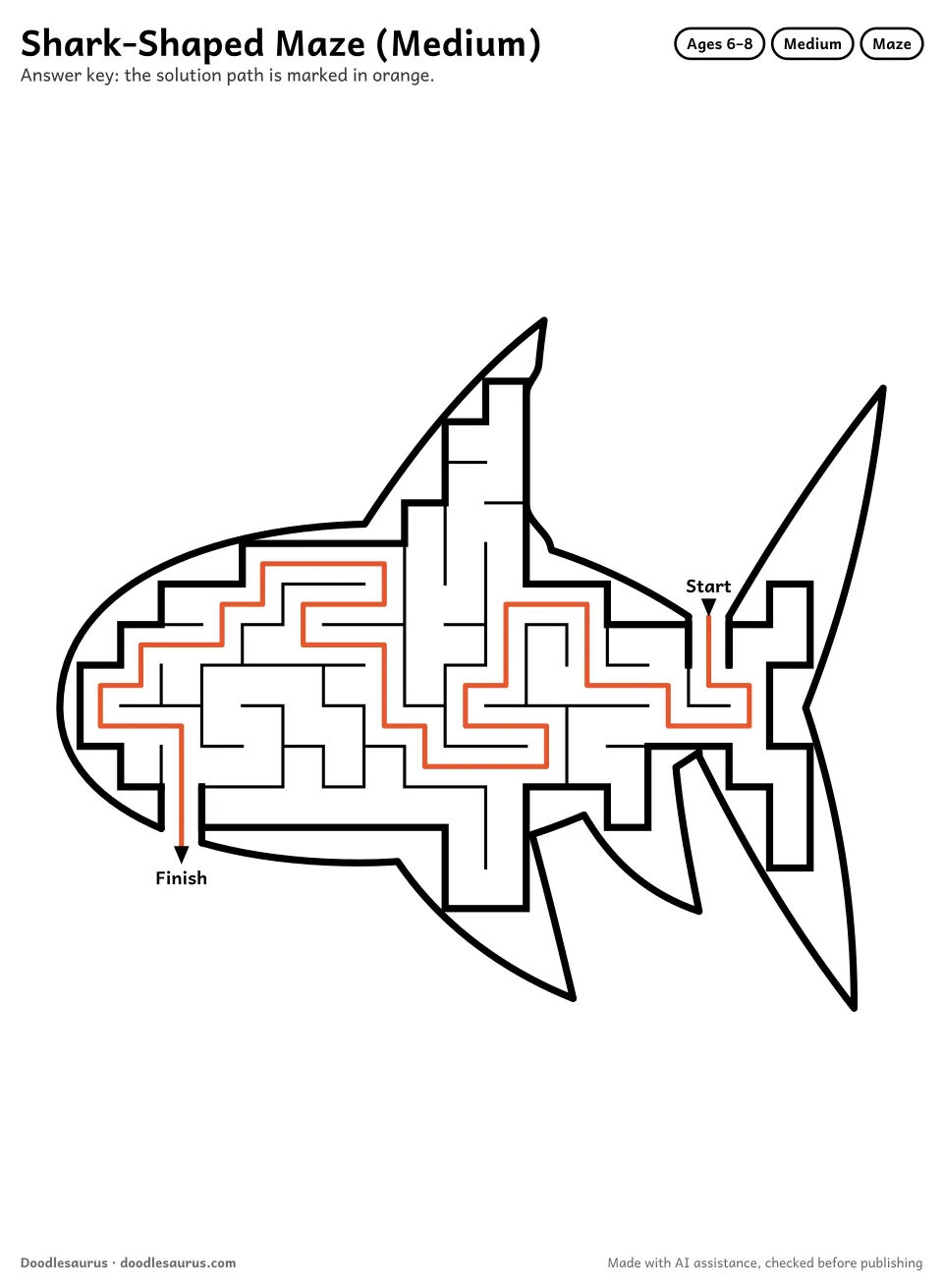
Corridors in this shark maze climb into the tall back fin and the base of the crescent tail, because the walls step along inside the shark’s edge in little squares. Around them is the outline of a long body, that back fin, the tail and two smaller fins underneath. Each arrow joins the maze through a short channel in the outline. The second page of each PDF is an answer key with the route traced in orange.
Two sizes of path
The slim shape cannot hold enough wide 12 mm paths for an easy level, so the shark starts at medium. That page is for ages 6 to 8 and has 107 cells of 8 mm. The route runs 46 cells from the notch just in front of the upper tail point, along the body and through the head, to a Finish under the jaw. Only the bases of the fins underneath hold maze. The tips of the tail stay outside it.
The hard shark fits 257 cells of 5.5 mm for ages 9 to 12, with a route of 102 and passages that also turn into the side fin and both points of the tail. It starts on the back edge of the tall back fin, just below its tip. It ends on top of the head. At 5.5 mm those tail points are narrow already, and shrinking the A4 or US Letter page would leave them too tight for a pencil, so 100 percent is the setting to use.
At home and in class
The maze only needs a pencil, so it works well on a car trip or in a waiting room. Teachers can use it as a settling task at the start of the day, and many children color the shark once the path is found.
Skills practiced & tips
- Point to Start and Finish together first, because they sit in a different place on each level.
- Let your child run a finger along the path before using a pencil.
- On the hard shark, check the corners of the tail and fins for hidden turns.
- If the pencil hits a dead end, back up to the last fork instead of erasing everything.
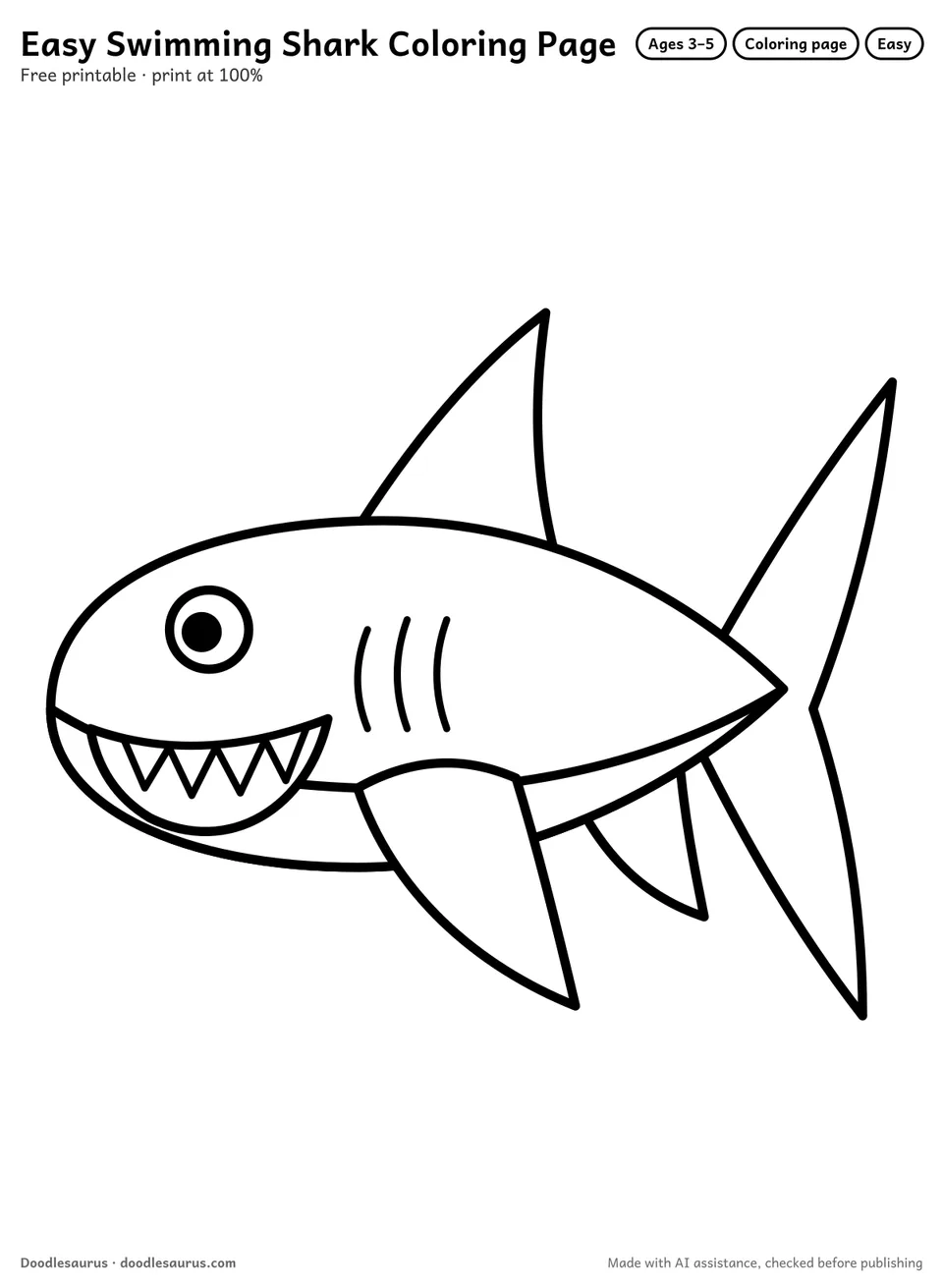
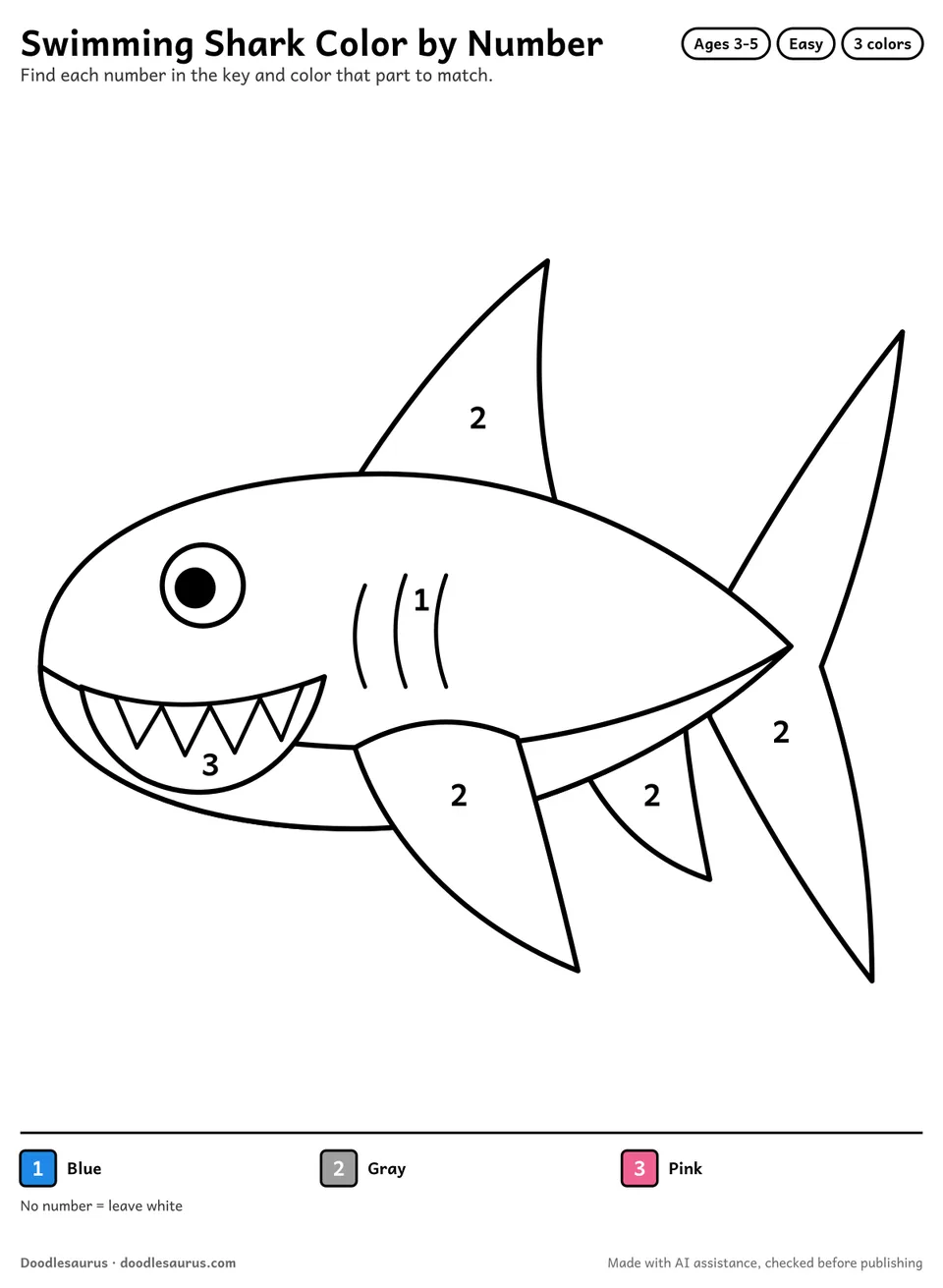
- After solving, color the shark gray or blue and add a few waves around it.
Shark fun facts
- A shark swims by sweeping its tail fin from side to side.
- A shark can lose a tooth and grow a new one to replace it many times over its life.
- The tall fin on a shark's back is called the dorsal fin and helps keep it steady as it swims.
Classroom ideas
- Grade 1: one child describes the medium route aloud using up, down, left and right while a partner draws it.
- Grade 2: compare the two route lengths, 46 and 102 cells, and work out how many cells longer the hard route is.
- Grades 4 to 6: time each attempt on the hard shark and graph how fast the class gets with practice.
More shark activities
More mazes
Frequently asked questions
What makes the hard shark tight at the tail?
The corridors are only 5.5 mm wide, and passages also turn into the side fin and both points of the tail. The hard shark has 257 cells and a 102-cell route. On the medium shark, with 8 mm paths, there are 107 cells and a 46-cell route.
Why is there no easy shark maze?
An easy maze uses wide 12 mm paths, and the shark's slim body, fins and tail do not hold enough of those to make a real puzzle. The shark comes in medium for ages 6 to 8 and hard for ages 9 to 12. Younger children can follow the medium route with a finger while an adult reads out the turns.
Where on the back fin does the hard shark start?
On its back edge, just below the tip. Finish is on top of the head.
Does the medium shark route run from tail to head?
Yes. It starts on top of the body, in the notch just in front of the upper tail point, runs 46 cells along the body and through the head, and ends below the head, under the jaw.
Which parts of the shark hold the maze?
On both levels the corridors climb into the tall back fin and the base of the tail. The medium shark has maze only in the bases of the fins underneath, while the hard shark also turns passages into the side fin and both points of the tail.
About this printable
- Made with AI assistance (vector drawing authored by a language model) and checked by automated tests and an AI reviewer.
- Checked by automated tests and an AI reviewer on 22 Oct 2026.
- Free for personal and single-classroom use. See the license. Read the license · How these are made · Report a problem.
- Vector PDF, 2 pages, 186×254 mm art box — prints edge-safe on A4 and US Letter.
New printables, twice a month
Our newsletter starts soon, with new sheets twice a month and a free 10-page starter pack for every new reader.