Afternoon on the Farm Spot the Difference (5 Differences)
Show the answer key
Farm spot the difference with a house, a cat beside its ball of yarn, a picket fence and an apple tree: 5, 7 or 10 changes, each with an answer key.
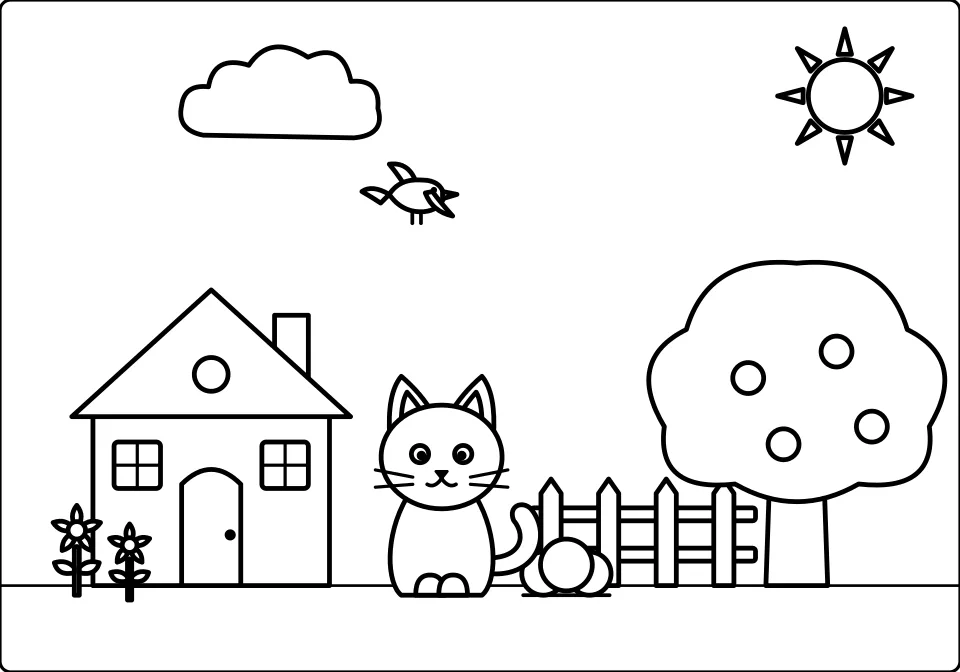
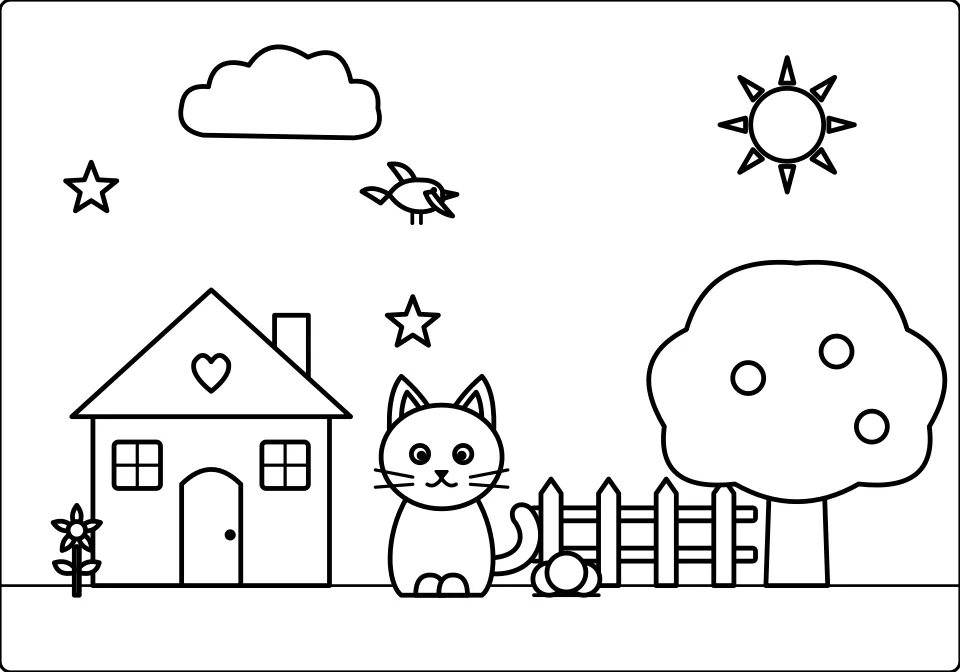
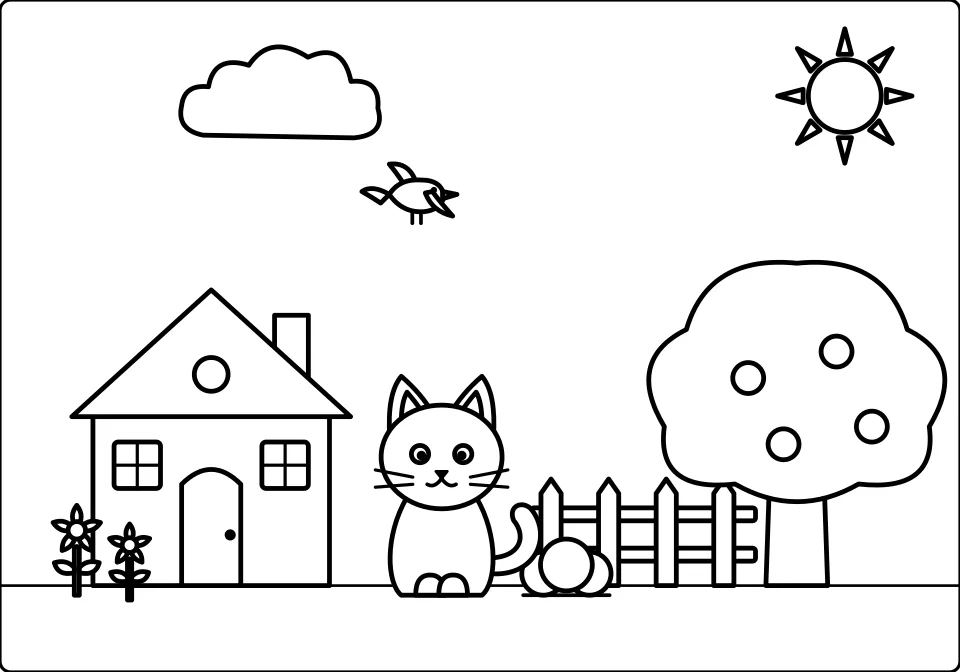
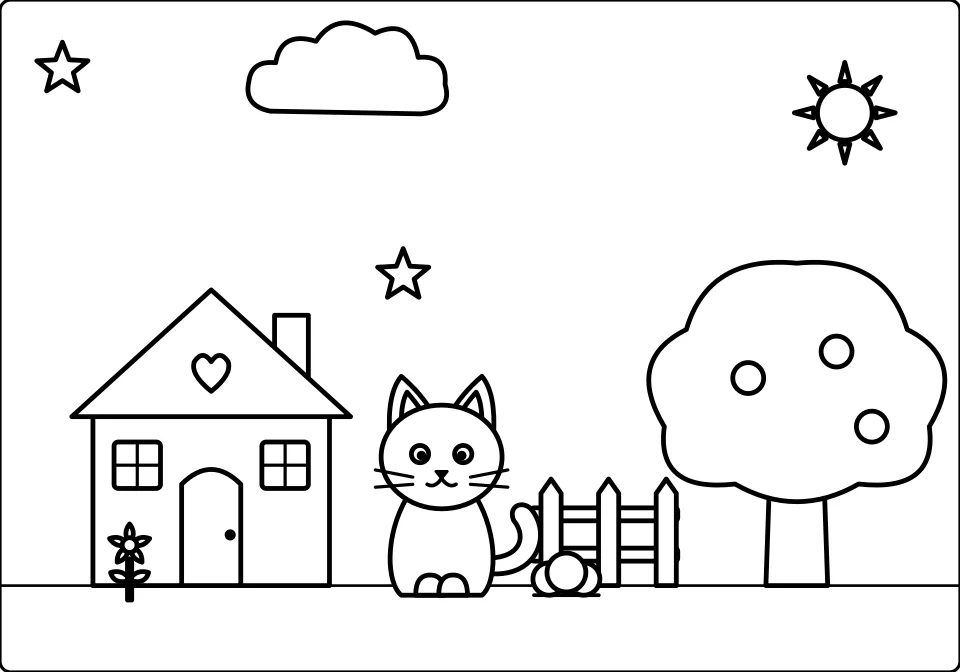
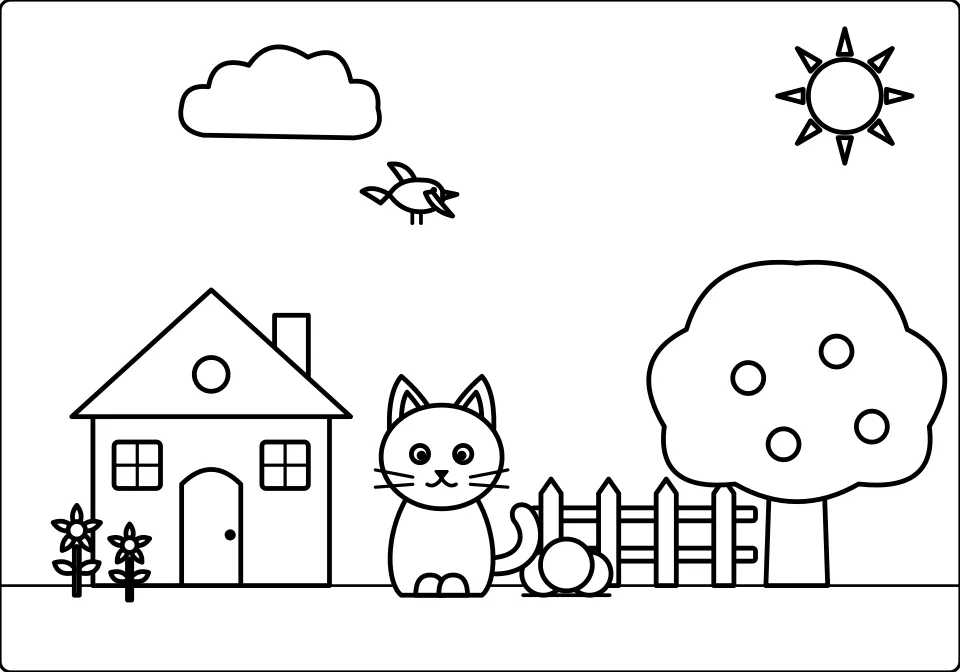
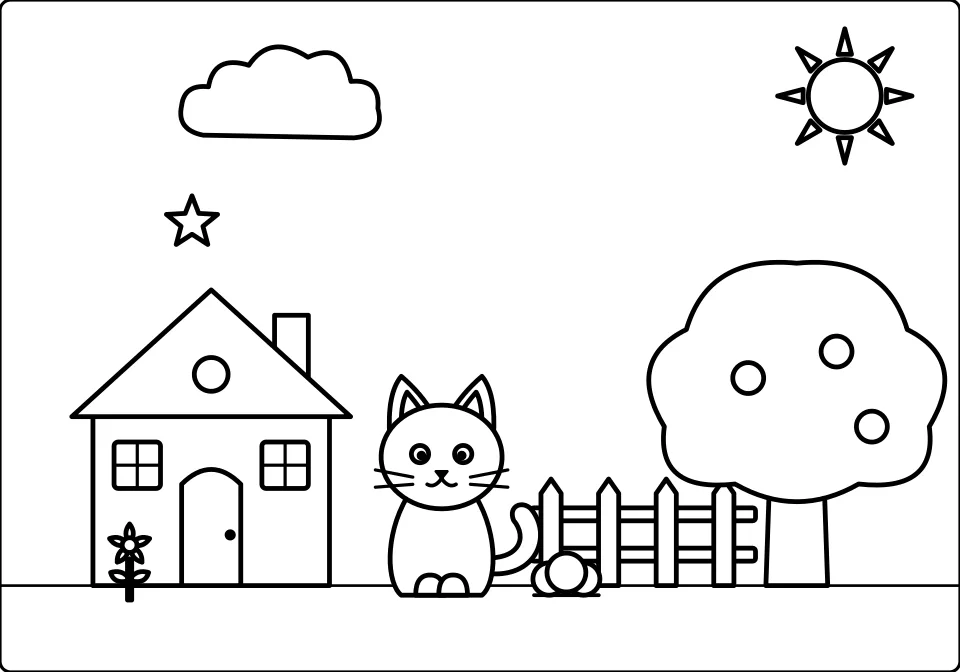
A quiet afternoon on the farm, drawn twice. Picture A and picture B sit one above the other on a single page: a small house with two front windows and a round attic window, a cat sitting on the grass next to a ball of yarn, a picket fence, an apple tree with four apples, a cloud, a bird in flight and a sun in the corner. The second picture looks the same at first glance, and then the hunt begins.
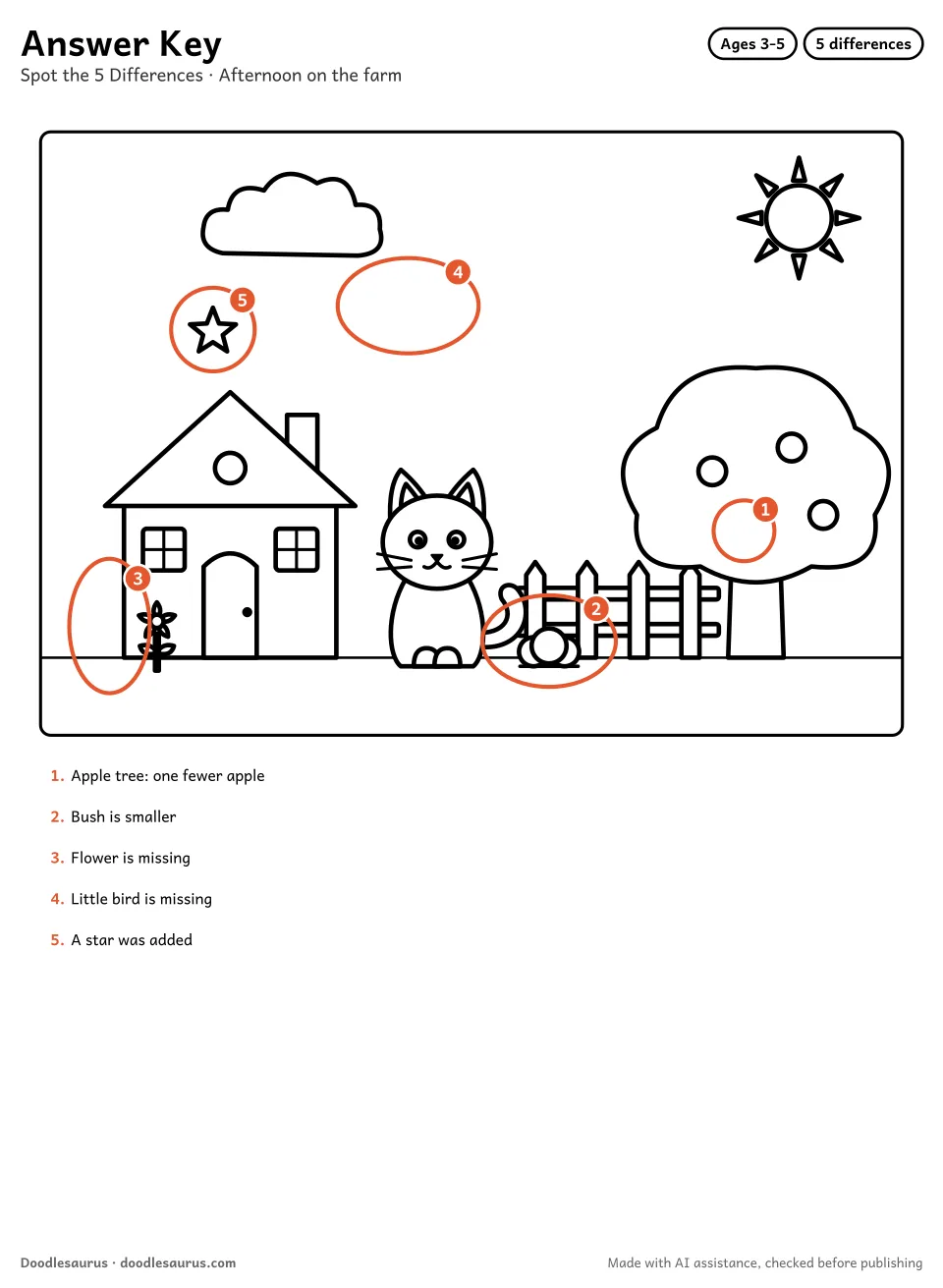
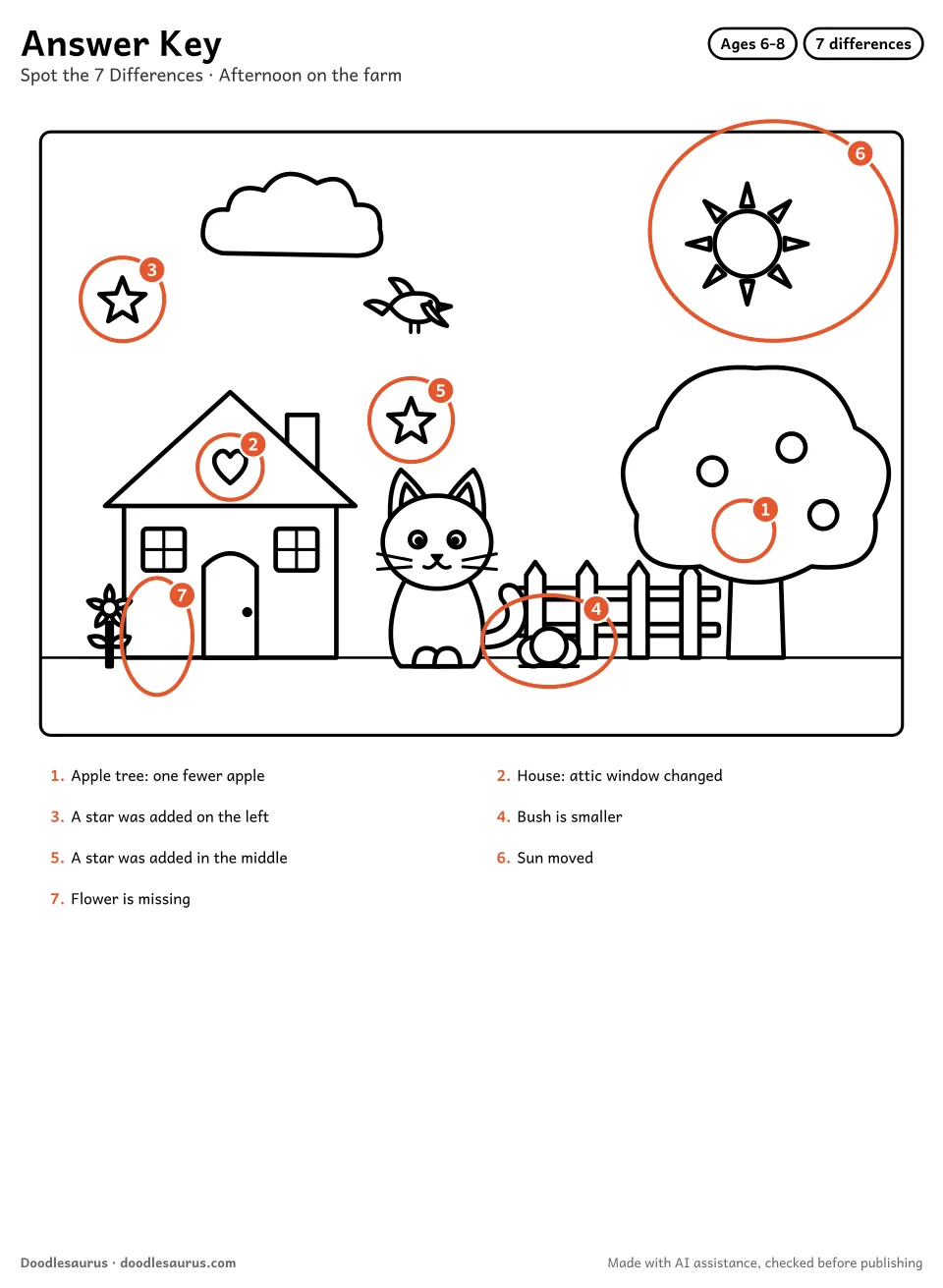
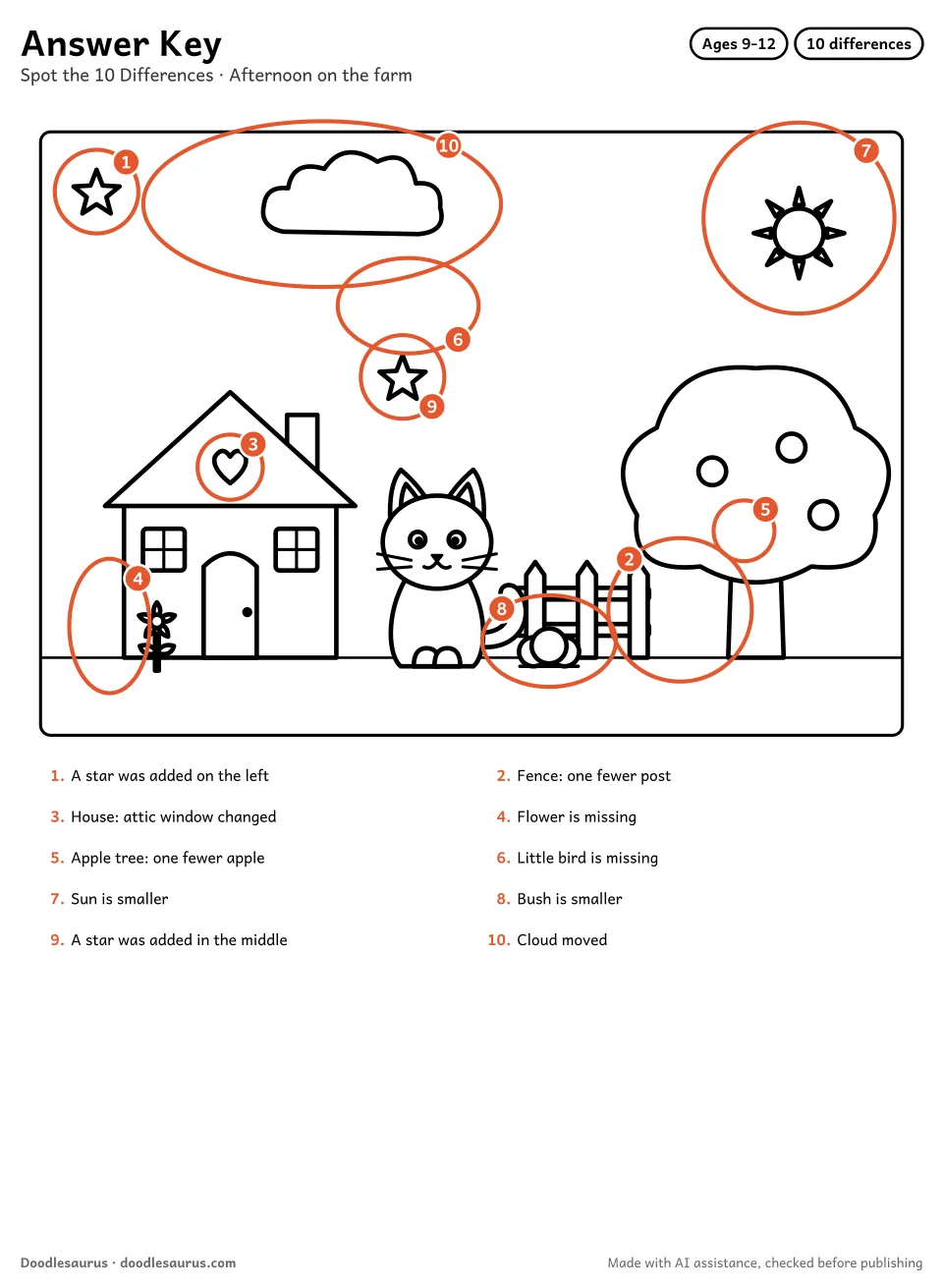
Big, obvious changes make the 5-difference version right for ages 3 to 5: an object that has vanished, or a bush drawn smaller. Ages 6 to 8 move on to 7 differences and subtler moves, like a sun that has shifted to a new spot or an attic window that has turned into a heart. With 10 differences, the version for ages 9 to 12 mixes swapped details, changed counts and small shifts in position, so older children need to compare the two pictures slowly and in order. Every level is a two-page PDF: the puzzle on page one and an answer key on page two, where each change is circled, numbered and explained in one short line.
Working alone, a child circles each change in picture B with a pencil or crayon. In pairs, one player takes picture A and the other picture B; they describe what they see out loud and agree on a difference before anyone marks it. Younger children often want to color both pictures afterward, which turns the puzzle into a double coloring page.
Teachers use the 5 and 7 levels as a five-minute brain break between lessons. Hand out the puzzle page only and keep the answer key at your desk. A fast finisher can be asked to write one sentence about every change found. Both files place the two pictures at the same size, so leave the A4 or US Letter print at 100 percent and skip fit to page.
There are three pages: one with 5 differences, one with 7 and one with 10. Each page shows the same farm scene twice, and the changes are listed on its own answer key.
The 5-difference page was built for ages 3 to 5. Its changes are large, such as an object that is missing or a bush drawn at a smaller size.
The 10-difference page puts swapped details, changed counts and small shifts in position side by side, so children aged 9 to 12 do best comparing the two pictures in a fixed order.
Page two repeats picture B with each change circled and numbered in orange, followed by a short written list, for example a star was added or the sun has moved.
Our newsletter starts soon, with new sheets twice a month and a free 10-page starter pack for every new reader.