Under the Sea Spot the Difference (5 Differences)
Show the answer key
Ocean spot the difference puzzles under the sea: striped fish, seaweed, a scallop shell and a starfish, with 5, 7 or 10 changes and an answer key for each.
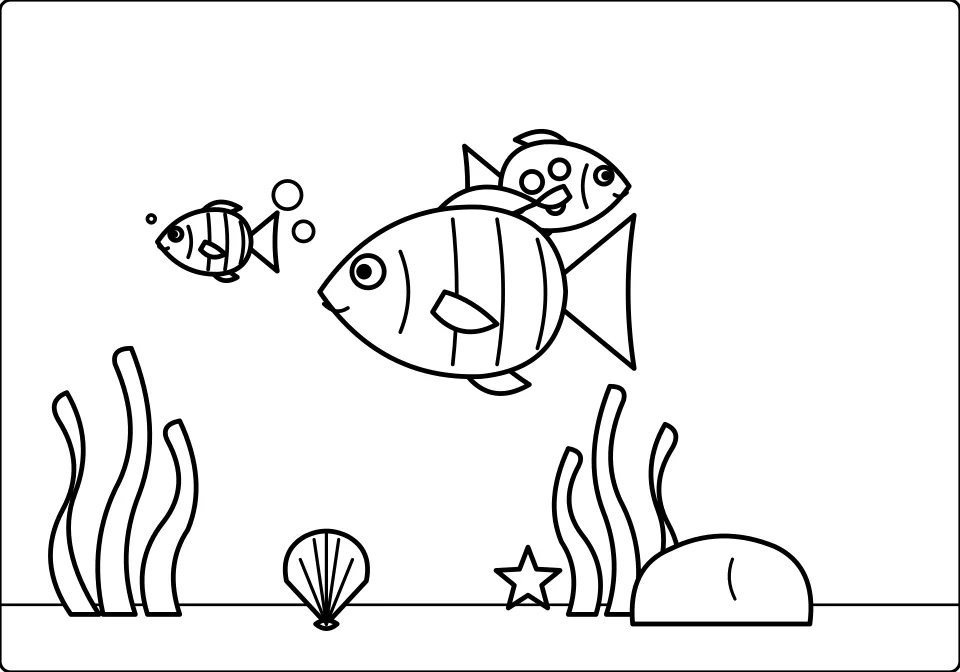
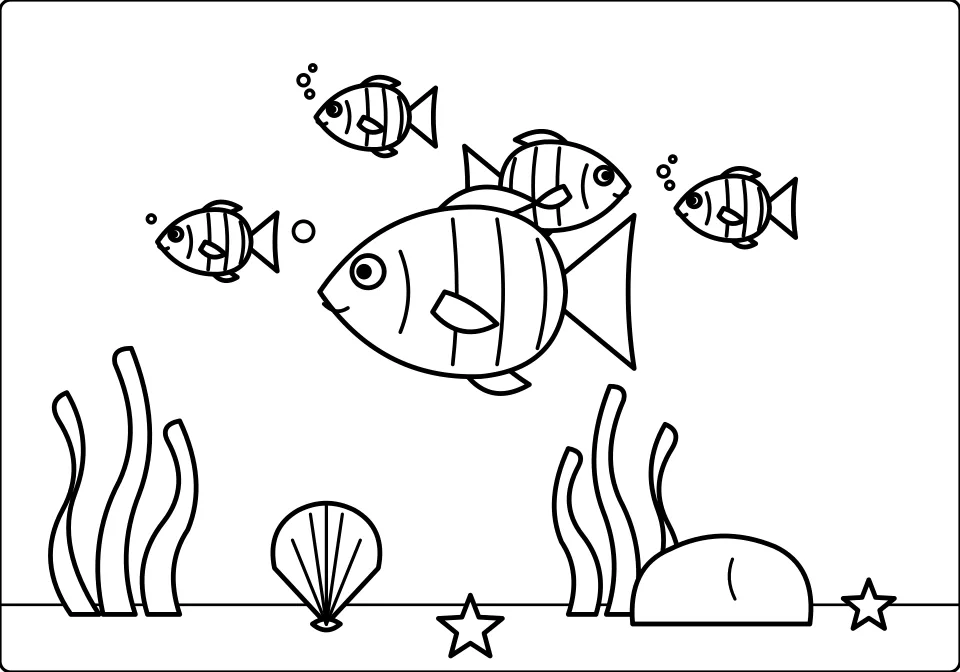
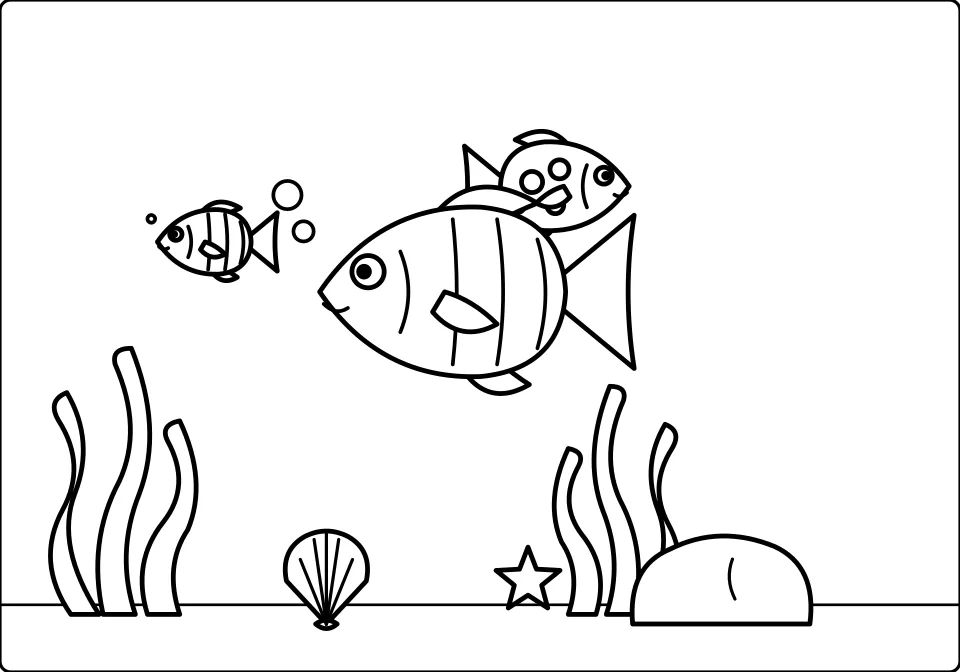
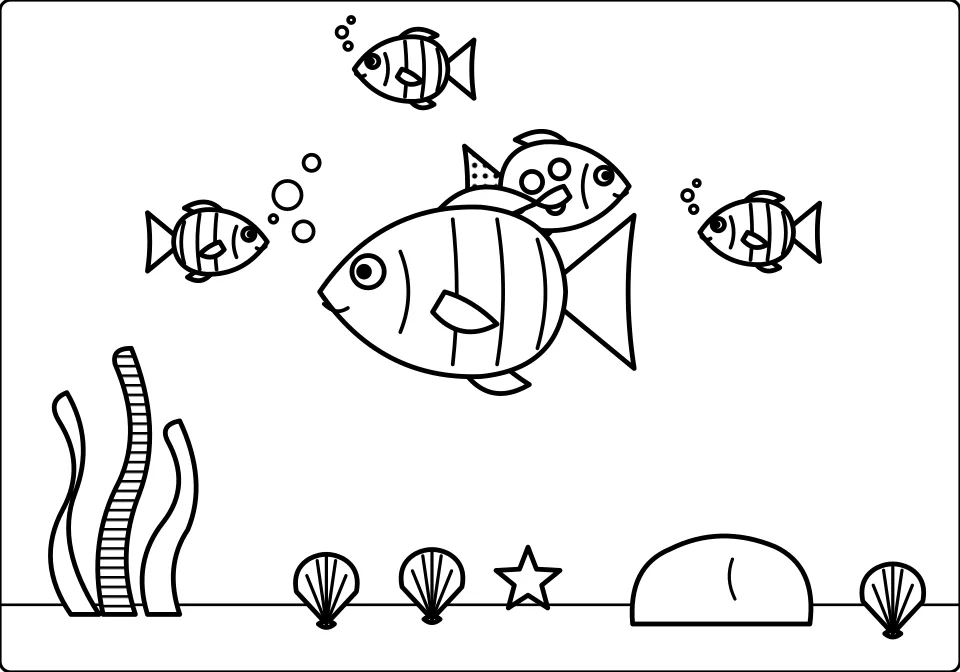
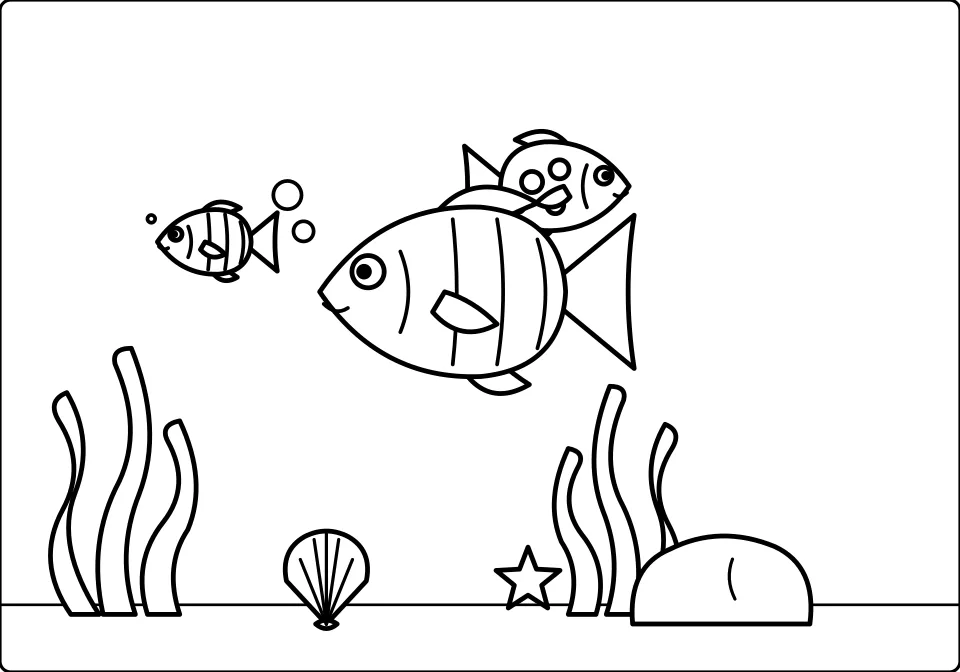
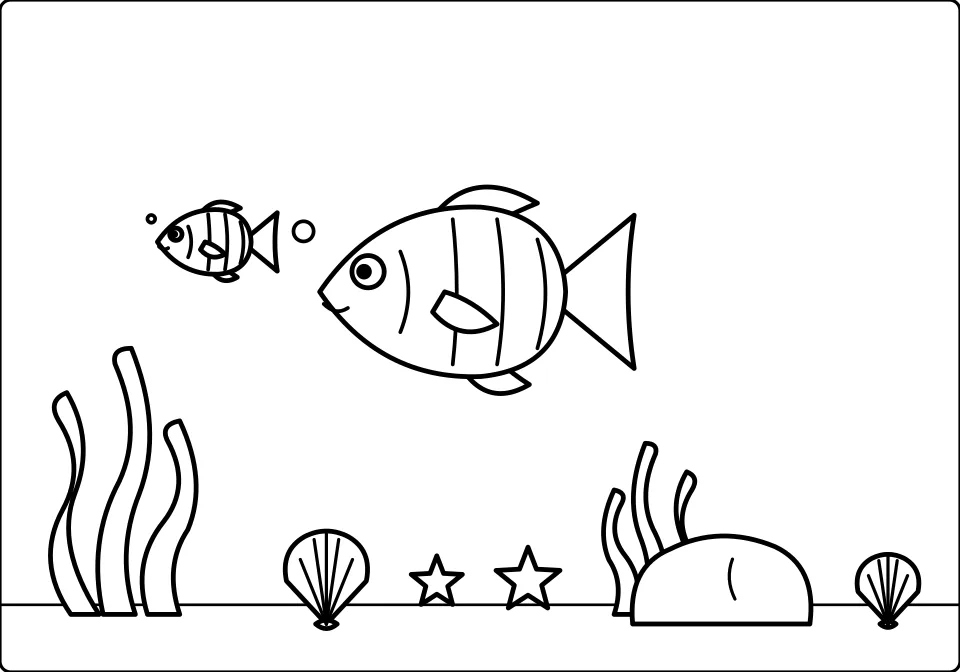
Under the sea, a big striped fish glides past a smaller striped fish and a spotted one. Bubbles rise and wavy seaweed grows on both sides, while a ridged scallop shell, a starfish and a rounded rock rest on the sandy floor. That is picture A. Picture B, printed directly below it, has been quietly altered, and the task is to find every change.
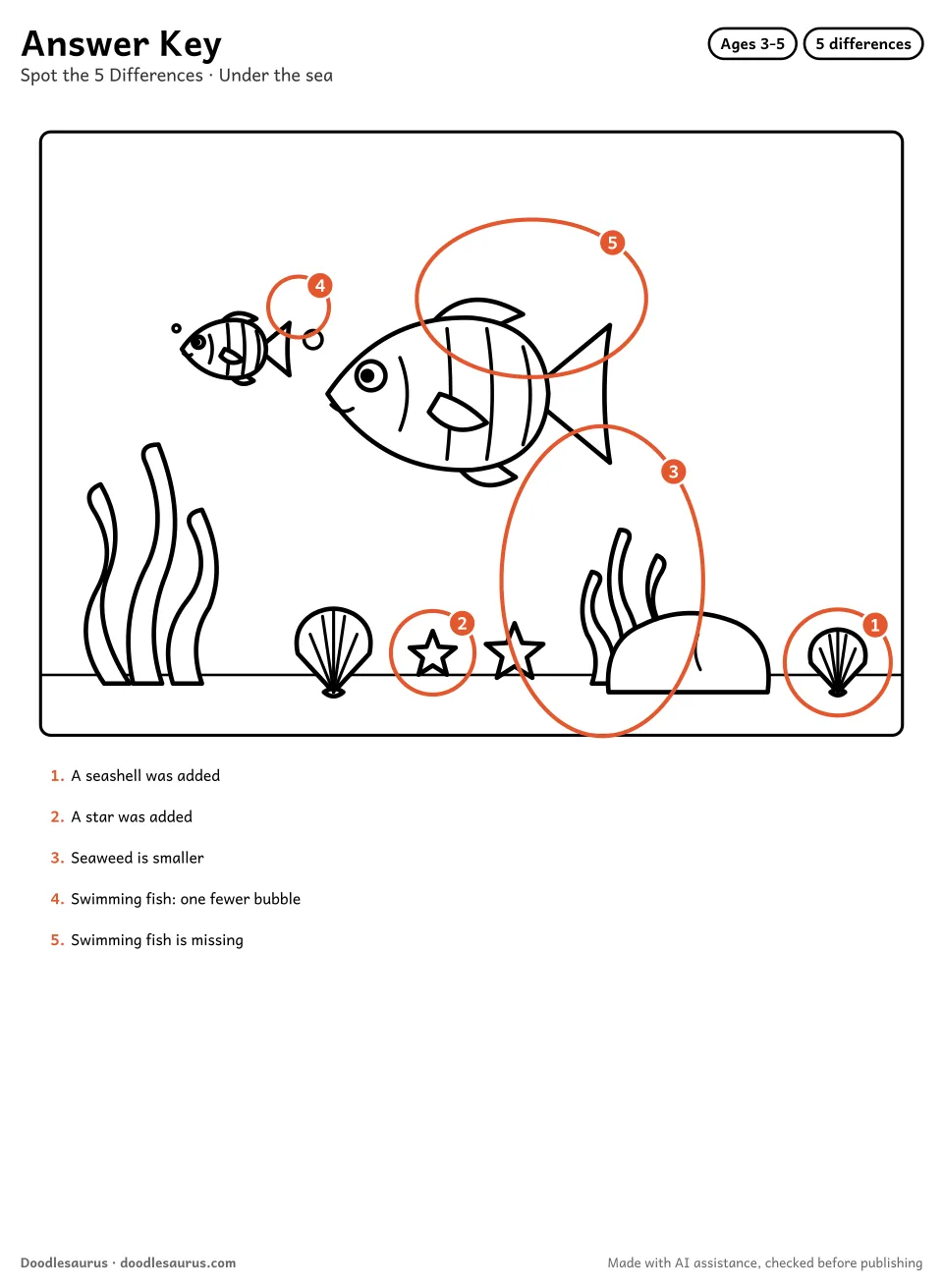
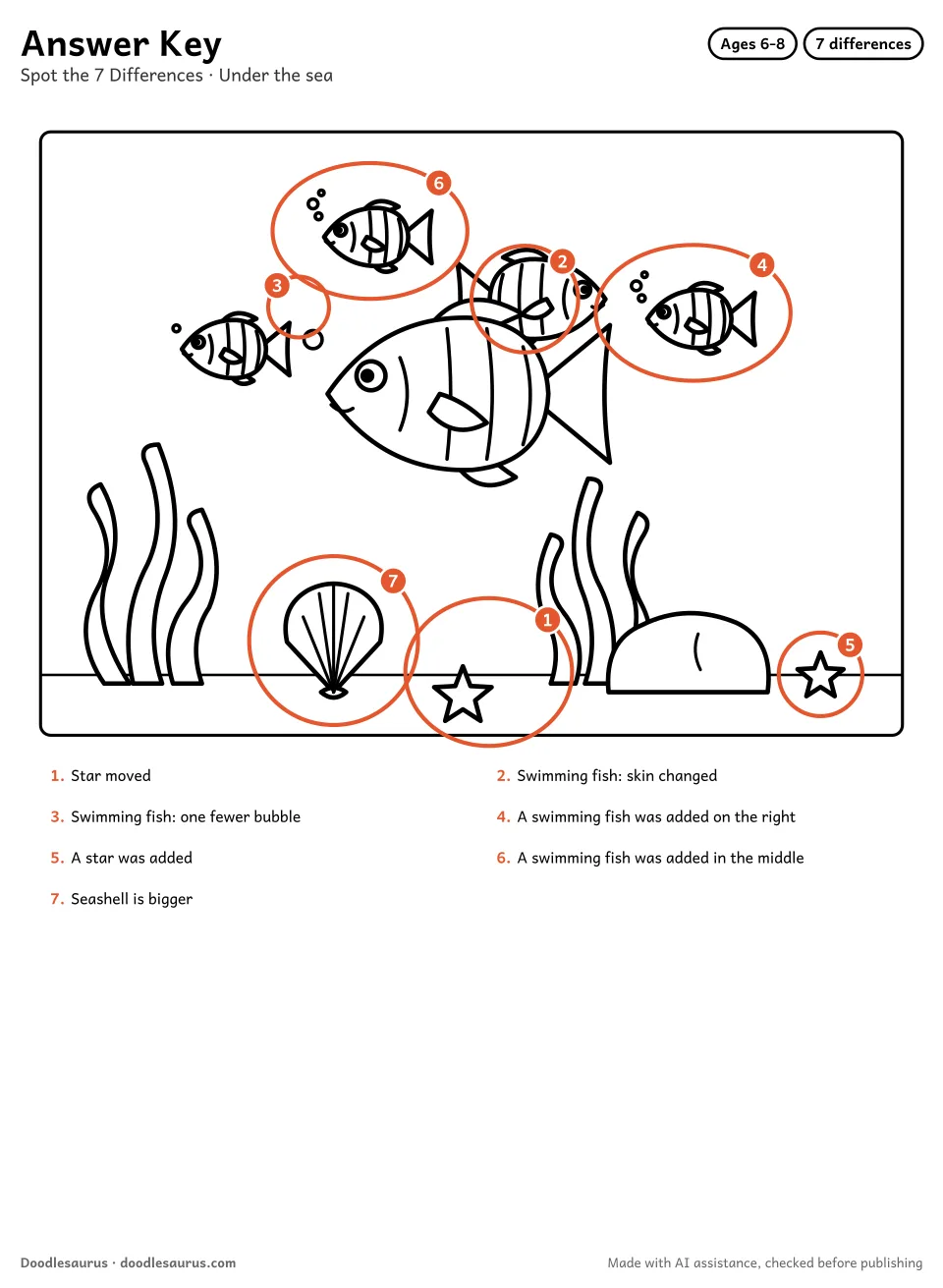
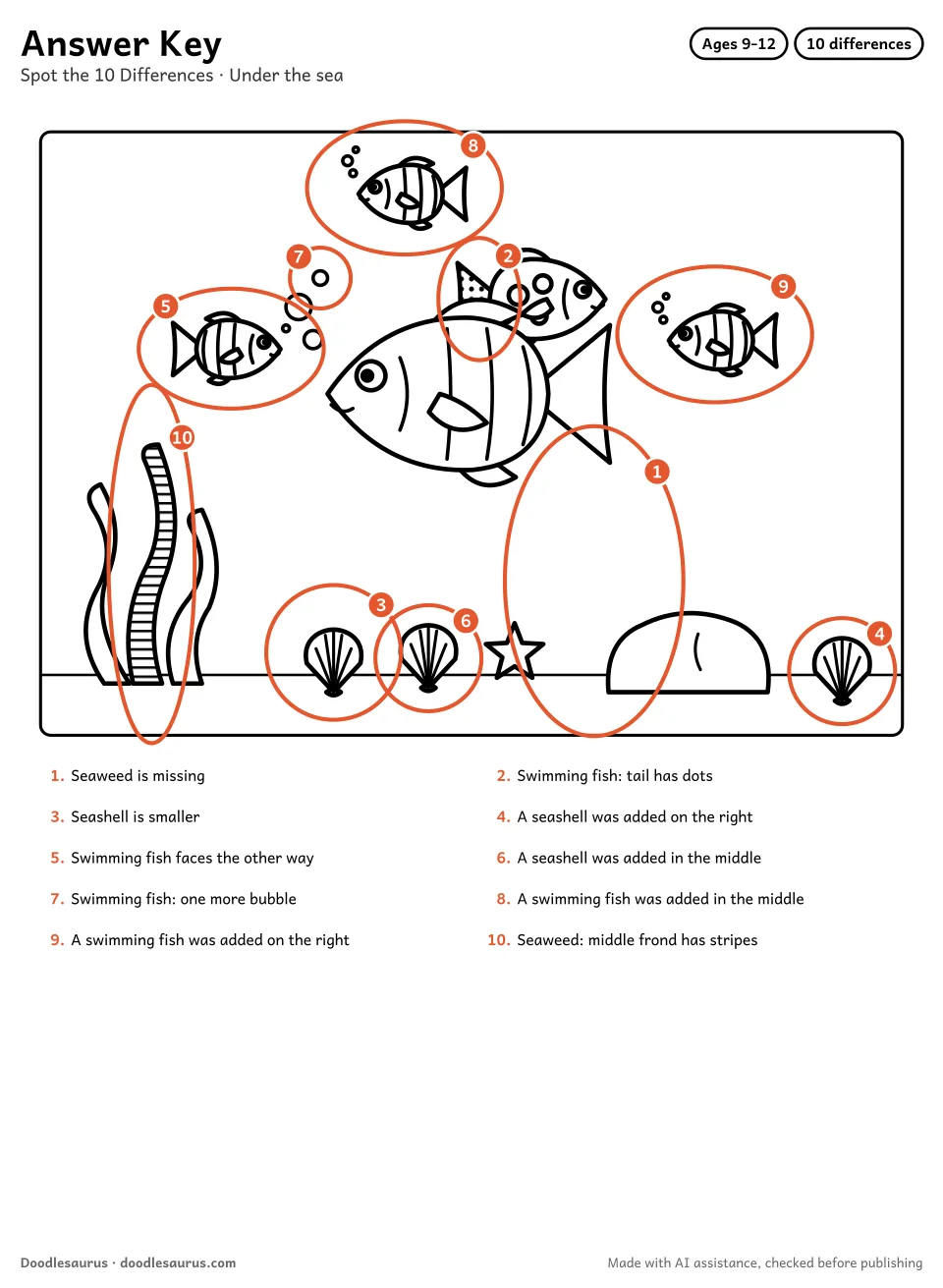
Small children can find every change on the 5-difference page without help. For ages 3 to 5 it adds a shell and a star, takes away a fish and a bubble and makes one clump of seaweed smaller. Ages 6 to 8 work through 7 differences, with two fish and a star added, another star moved, the shell made bigger, one fish’s skin pattern swapped and a bubble taken away. The 10 changes for ages 9 to 12 go further: dots on a fish’s tail, stripes on a seaweed frond, a fish that swims the opposite way, two extra shells and an extra bubble. Each A4 or US Letter PDF has two pages: the puzzle and an answer key that circles and numbers every difference, then spells it out in a line of text.
A child working alone compares the pictures from the bottom row up, circling changes in picture B as they go. For partner play, fold the sheet between the two scenes so each player sees only one picture. They take turns describing a detail, and a change counts only when both agree.
The 5 and 7 pages fit a short pause between lessons. They need no setup beyond a stack of printouts. Ask students to whisper their count to you before the key goes up on the board. Dots on a tail are easy to lose on a shrunken copy, so the A4 or Letter file should go through the printer at 100 percent.
The 5-level adds a shell and a star, takes away a fish and a bubble and makes a clump of seaweed smaller. The 7-level adds two fish and a star, moves a star, makes the shell bigger, takes away a bubble and changes one fish's skin. The 10-level draws dots and stripes inside shapes, flips a fish to face the other way and adds two shells and two fish.
Yes. Fold the page along the gap between the two pictures so each child holds one scene, then let them compare by talking.
On the 10-difference page a fish flips to face the other way, and dots and stripes appear inside shapes, so children have to look inside each outline as well as around it.
The second page shows the changed picture with orange numbered circles and a short list below, one line per difference.
Our newsletter starts soon, with new sheets twice a month and a free 10-page starter pack for every new reader.