Singing Bird on a Twig Color by Number (4 Colors)
- brown
- orange
- green
- yellow
Show the answer key

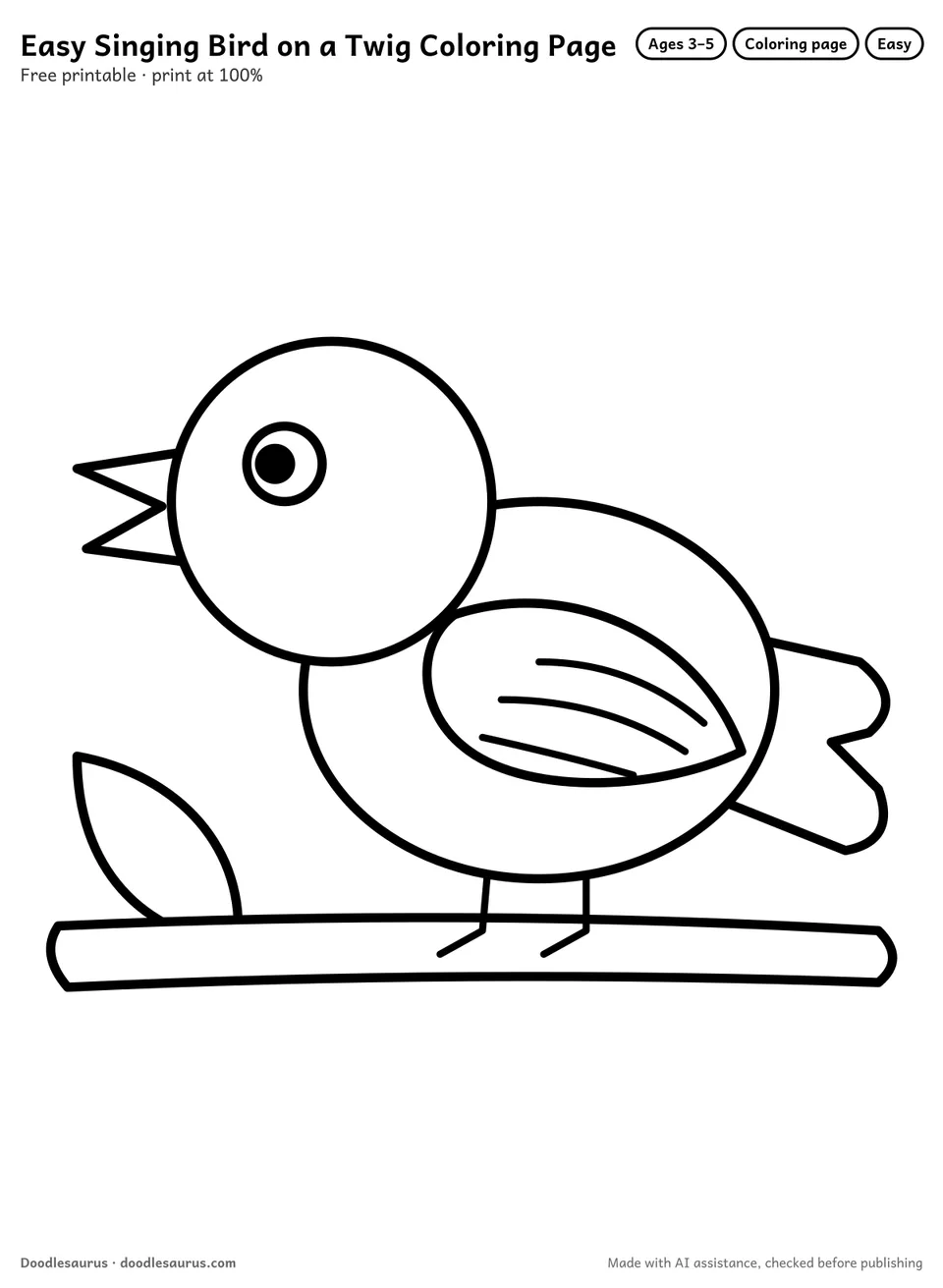
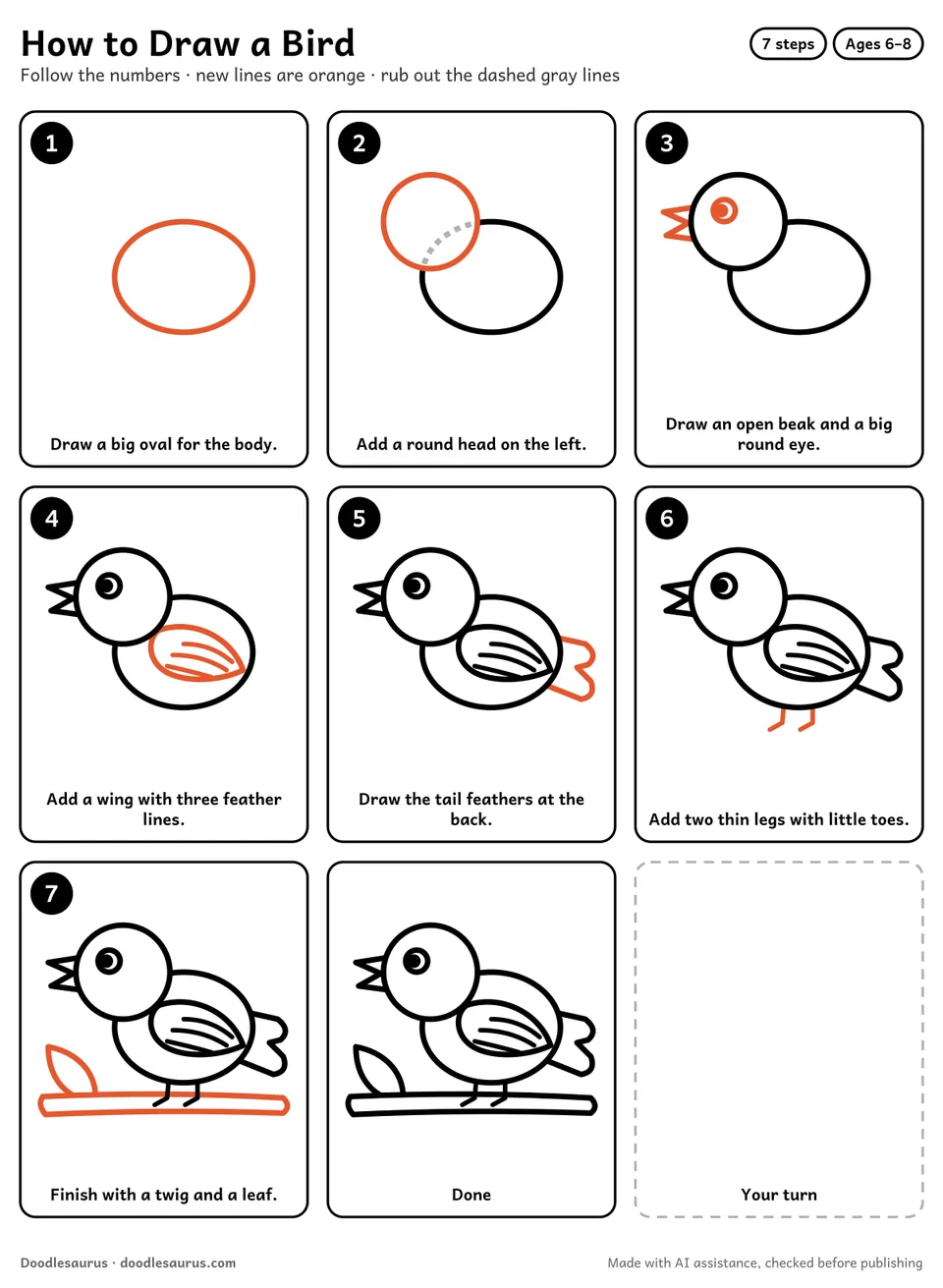
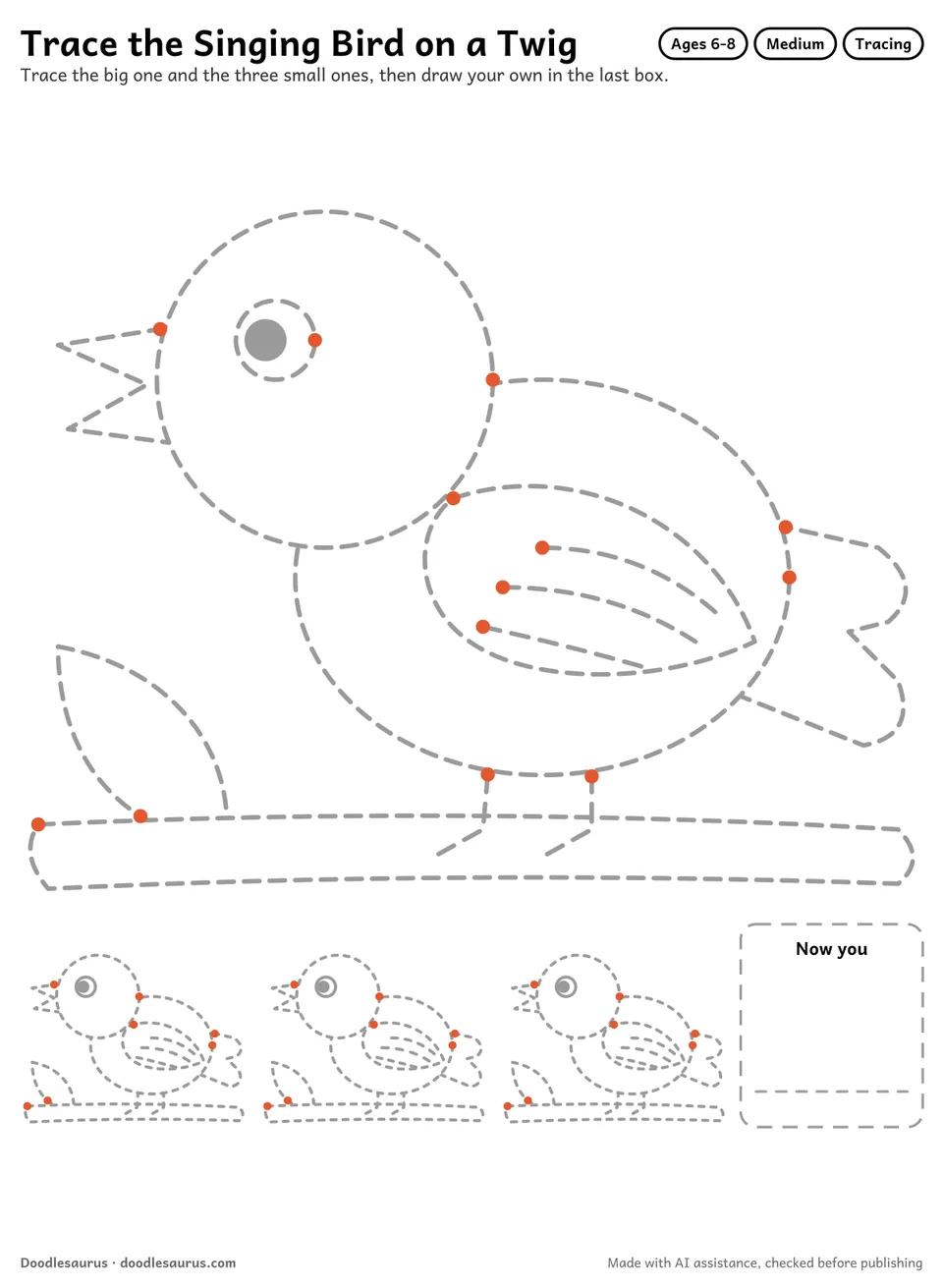
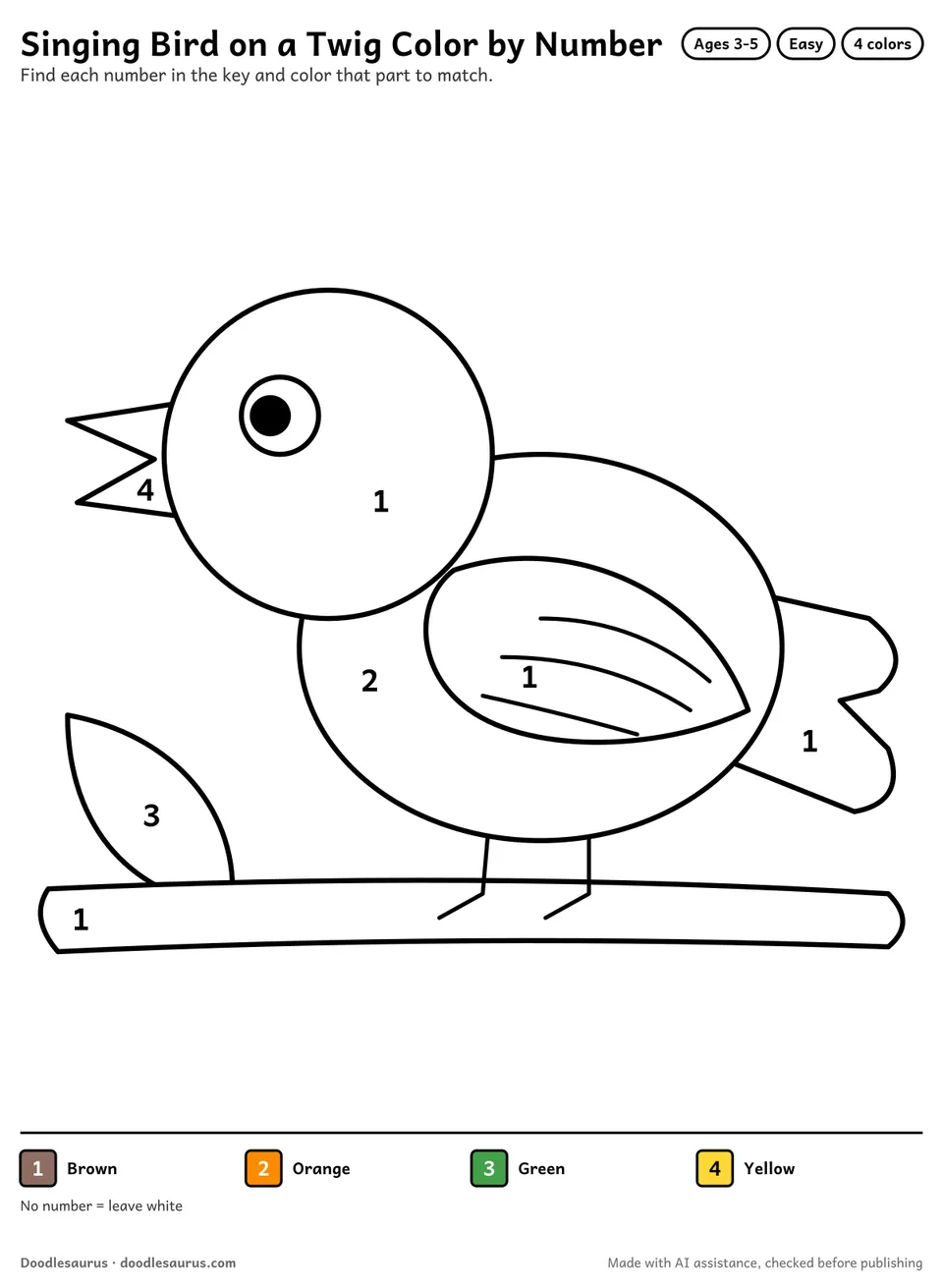
A songbird sings on a twig in this free bird color by number printable for ages 3 to 5, with 7 numbered spaces, 4 colors and a colored answer page.
Four of the seven numbered spaces in this bird color by number are brown, so a young child spends most of the time with one crayon: the big round head, the wing, the notched tail and the twig the bird is perched on. Its beak is wide open, as though it is halfway through a song, and a single leaf sprouts from the left end of the twig. Along the bottom, a strip lists each number beside a filled swatch with the color written out.
Orange, number 2, is the egg-shaped body, and the brown wing with its three feather lines sits right on top of it. Green, number 3, is the leaf. Yellow, number 4, goes in the open beak, where the number is small enough to blur if the A4 or US Letter file is shrunk to fit, so print it at 100 percent. The eye ring has no number and stays white around the black pupil.
There is one bird sheet, marked easy for ages 3 to 5, and its seven spaces make a calm first color by number. Once the beak is done, page two of the PDF has the bird fully colored with its numbers still showing.
Yellow, number 4. The beak is small, and a sharp pencil keeps the two points of the open mouth neat. The other three colors are brown for the head, wing, tail and twig, orange for the body and green for the leaf, so the key has four colors.
No. There is one bird sheet, marked easy for ages 3 to 5. A key with fewer colors would have to give the wing and the body the same color, and the wing would vanish into the body, so the bird keeps its four colors and a single level. Older children can still enjoy it and add feather patterns or a sky of their own.
The key gives it a brown head, wing and tail over an orange body, much like the gray-brown back and orange-red breast of an American robin.
The second page of the PDF shows the bird fully colored with the numbers still visible. It can also be downloaded as its own file.
Our newsletter starts soon, with new sheets twice a month and a free 10-page starter pack for every new reader.