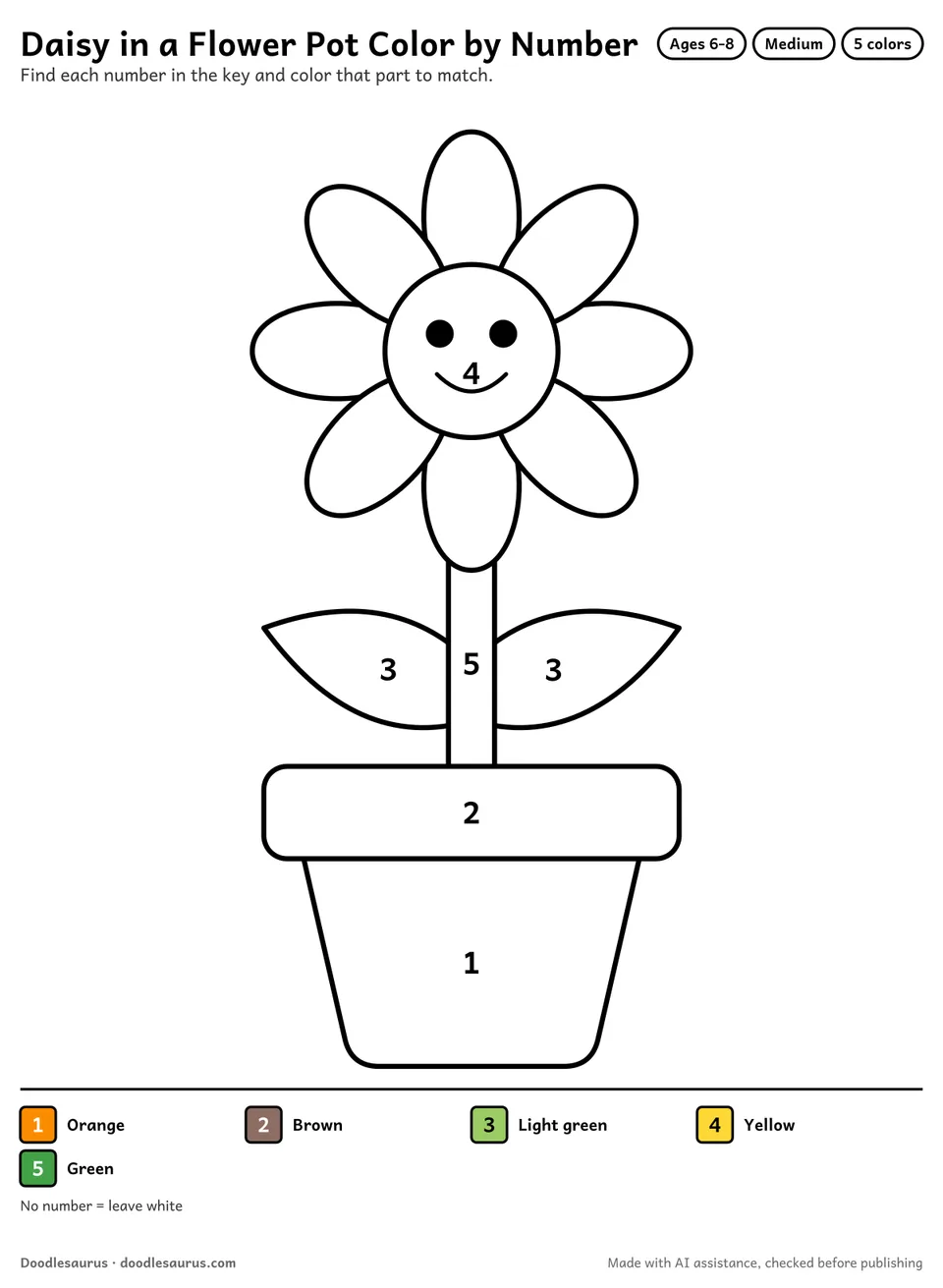
Daisy in a Flower Pot Color by Number (5 Colors)
- orange
- brown
- light green
- yellow
- green
Show the answer key

Flower color by number printable with a smiling daisy in a pot: 5 colors for ages 6 to 8, white petals left unnumbered and a colored answer page.
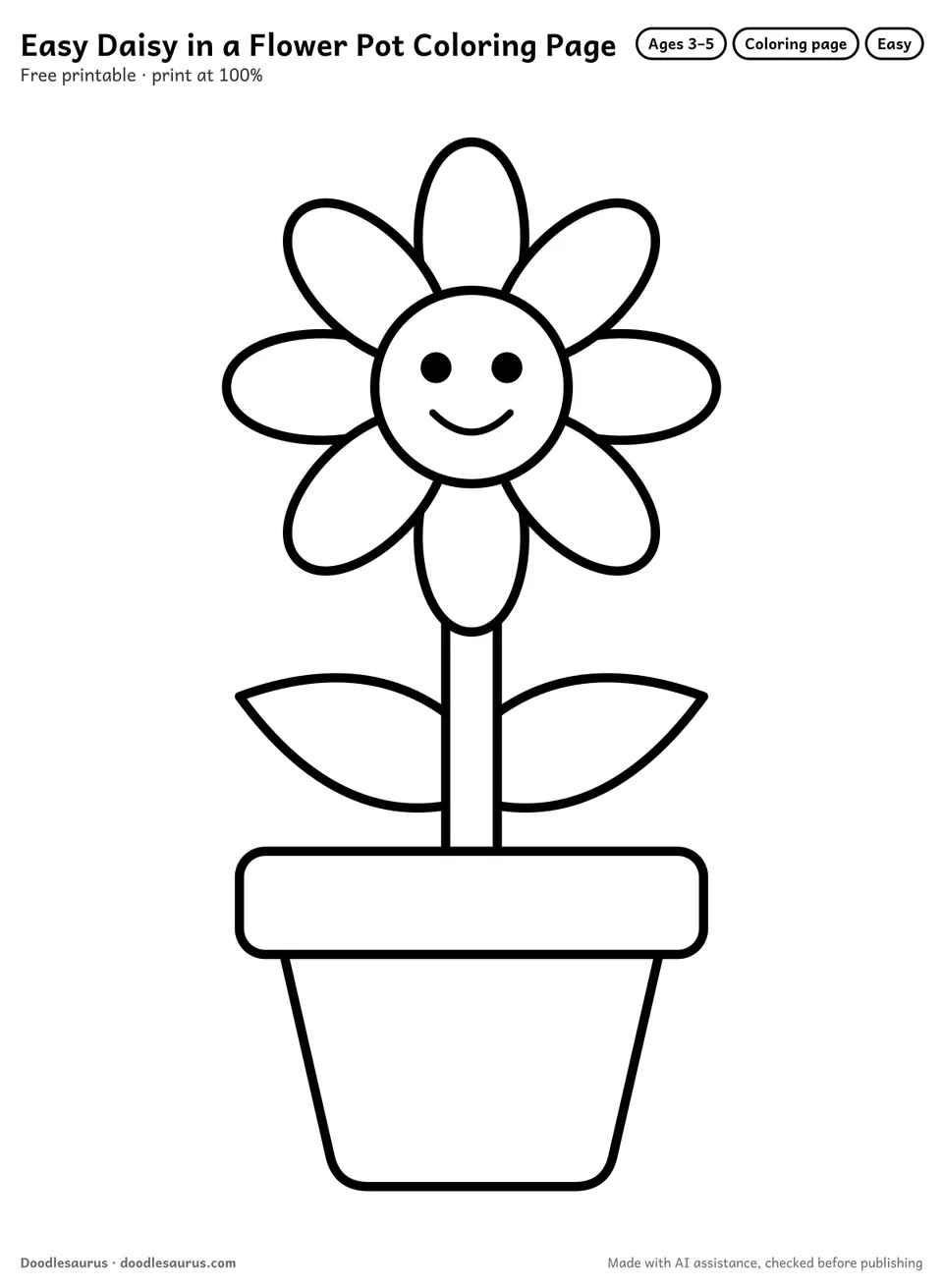
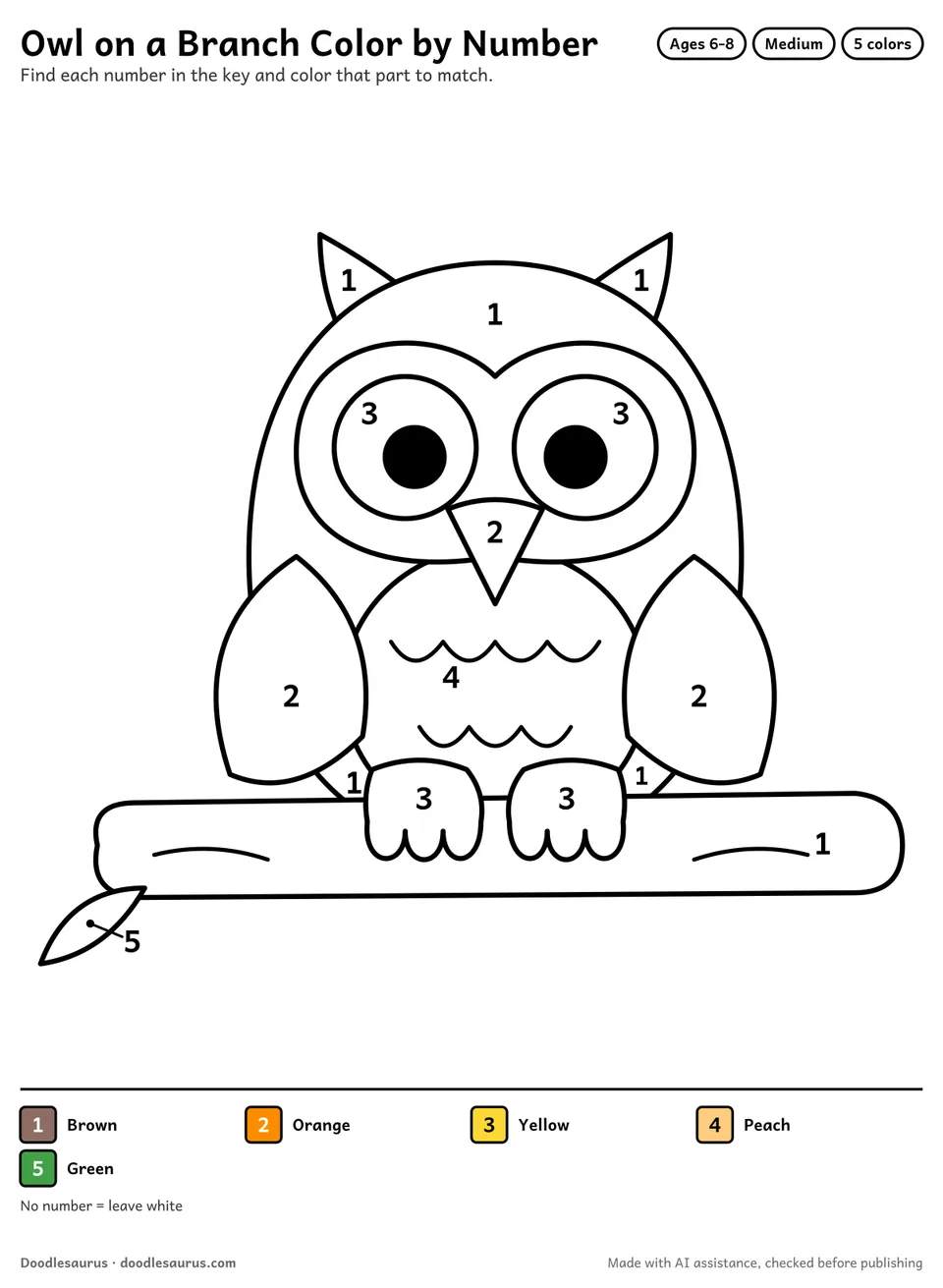
The eight petals are the one part of this flower color by number that never gets a number. A daisy has white petals, and the note under the key says a part with no number stays white, so only the pot, rim, stem, two leaves and round center take color. That makes six numbered parts out of fourteen. The two eyes on the center come printed solid black.
Orange is 1 and goes on the pot, which narrows toward the base. Brown, number 2, is the rim. Choose a brown clearly darker than the orange so the two stay apart. Light green, number 3, covers both pointed leaves, and yellow, number 4, fills the round center. Green, number 5, is the thin stem. With five colors in the key, the sheet is a medium page for ages 6 to 8.
The leaves are a soft light green and the stem a deeper green. Because they touch, shade is all that keeps them apart, and merging them to fit a four-color key would lose the stem, so there is no easy version. The stem is also the narrowest numbered part. At 100 percent on A4 or US Letter paper its small number stays clear. A second page in each PDF shows the finished flower in color, handy for self-checking at a classroom table.
Brown is 2 and orange is 1, and the rim sits right across the top of the pot, so a brown clearly darker than the orange keeps the two apart. With light green leaves, a yellow center and a green stem, that makes five colors on one medium page for ages 6 to 8.
That would bring the key down to the four colors an easy page allows, but the leaves touch the stem and would run into it. So the daisy keeps all five colors on a single medium page.
A daisy has white petals, so the eight petals are left unnumbered. The note under the key says no number means leave white, and the answer page shows them white.
Light green, number 3, is for the two leaves. The darker green, number 5, is for the thin stem between them.
Our newsletter starts soon, with new sheets twice a month and a free 10-page starter pack for every new reader.