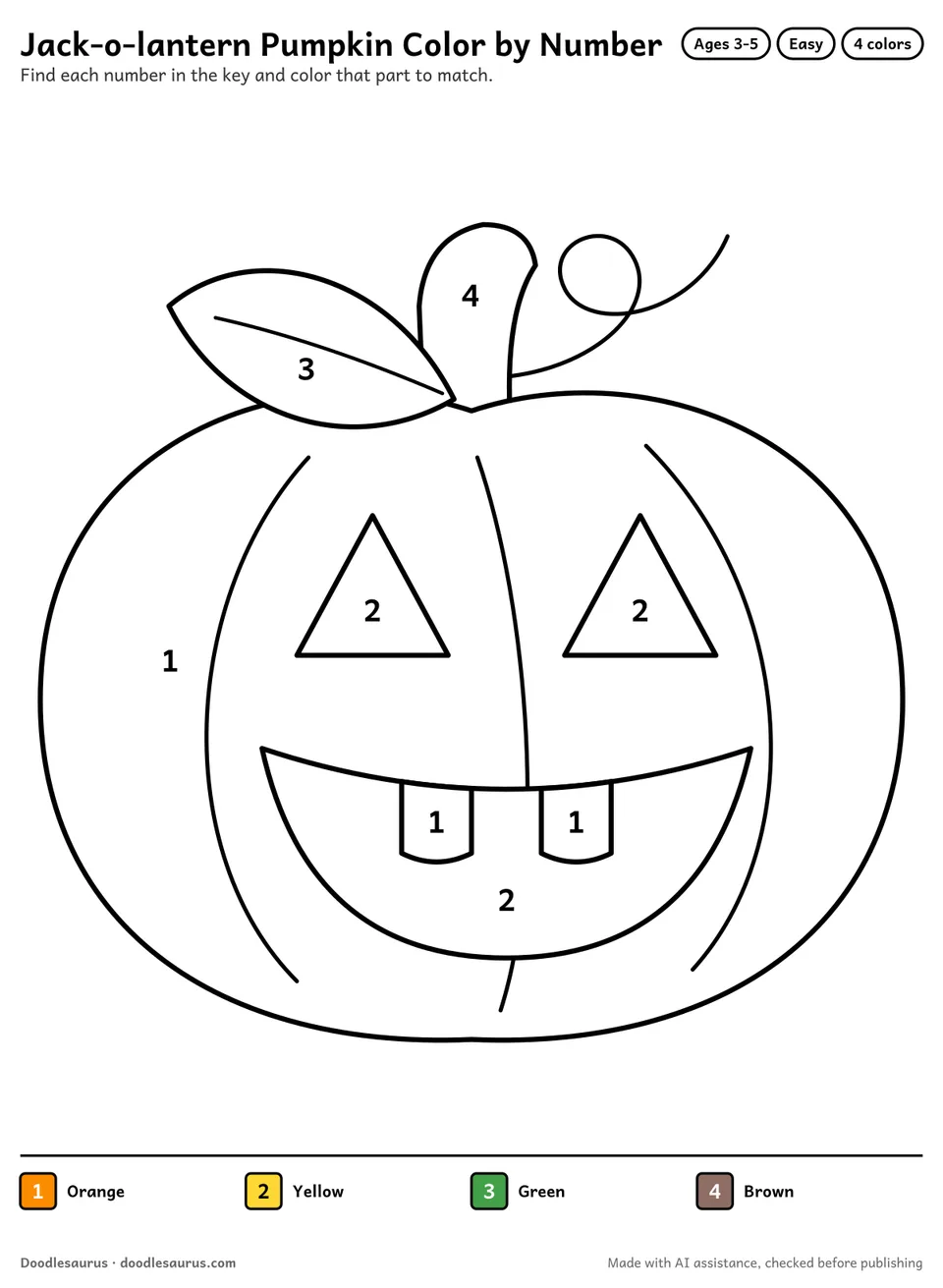
Jack-o-lantern Pumpkin Color by Number (4 Colors)
- orange
- yellow
- green
- brown
Show the answer key

This pumpkin color by number turns a smiling jack-o'-lantern into 8 numbered parts and 4 colors for ages 3 to 5, in A4 and US Letter PDFs.
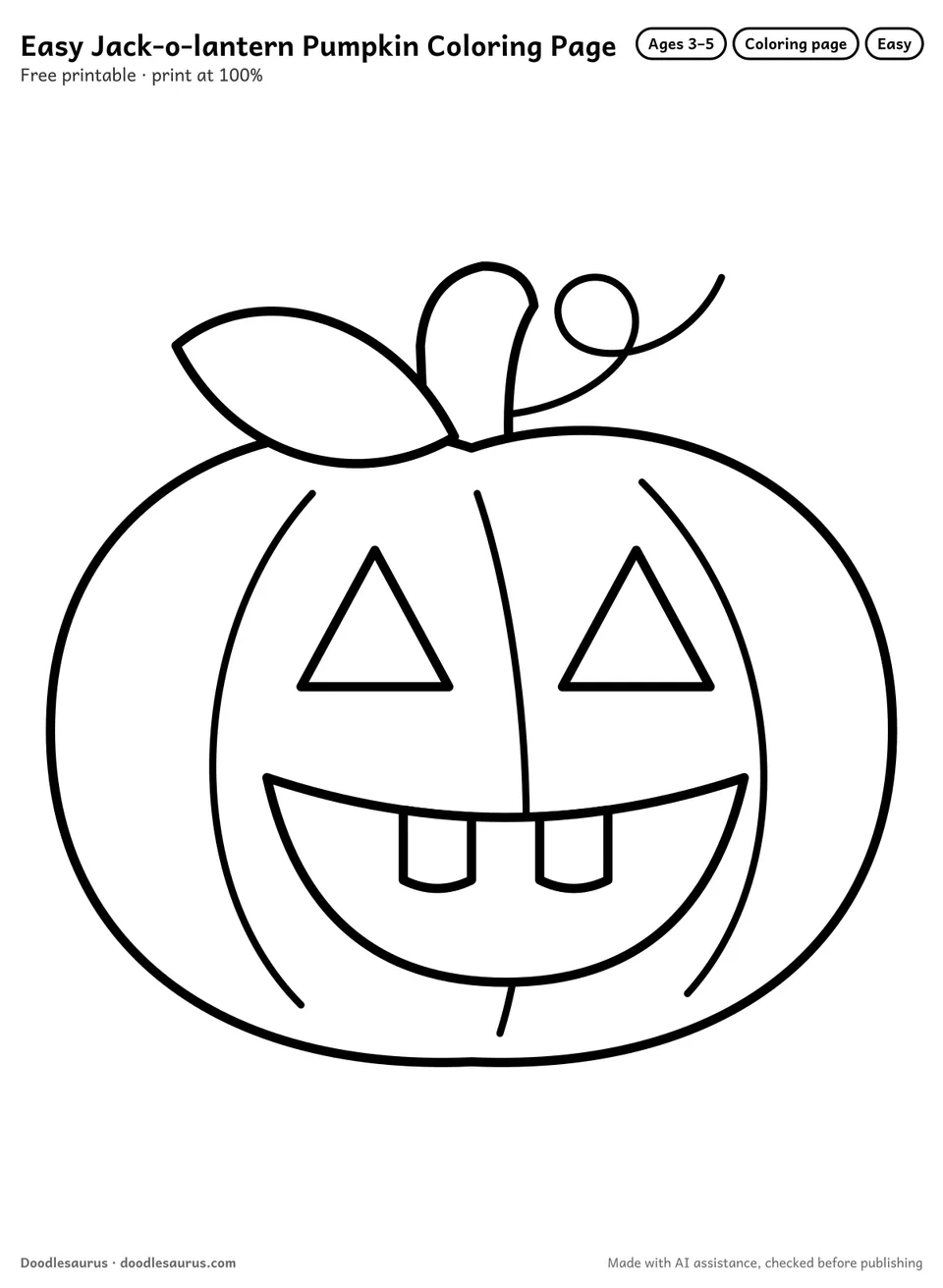
Yellow in the eyes and the mouth is what makes this jack-o’-lantern look lit from inside once it is colored. It is the same smiling pumpkin as on the coloring page, with three rib lines, triangle eyes, a wide grin, two square teeth, a stem, a leaf and a curly vine, and eight of its parts carry a number.
Orange is number 1 and covers the pumpkin and both teeth, so a child sees that one number can mark more than one place. Yellow, number 2, goes in the two eyes and the mouth. Green, number 3, is the leaf, and brown, number 4, is the stem. A shorter key would have to make the stem orange like the pumpkin it touches, so the page keeps all 4 colors and comes in one level, for ages 3 to 5.
Every closed shape has a number, so the whole pumpkin gets colored. The vine is the only plain line, and it can stay that way or be traced in green at the end. Small as they are, the two teeth hanging from the top of the mouth still hold a 1 each, and scaling the A4 or Letter file below 100 percent makes those hard to read. The answer key, in color, follows on page 2.
Yellow, number 2, which makes the face look lit from inside. The other colors are orange for the pumpkin and both teeth, green for the leaf and brown for the stem, four in all.
No. The whole drawing uses just four colors, and a shorter key would have to paint the stem orange like the pumpkin it touches. So the page keeps all four and comes in one level for ages 3 to 5. Older children can add shading with colored pencils.
No. Every closed shape has a number, so the whole pumpkin gets colored. Only the curly vine is a plain line with no number.
They share number 1 with the pumpkin, so they take the same orange. Coloring them before the big pumpkin keeps them from being covered by mistake.
Our newsletter starts soon, with new sheets twice a month and a free 10-page starter pack for every new reader.