
Flower Coloring Pages
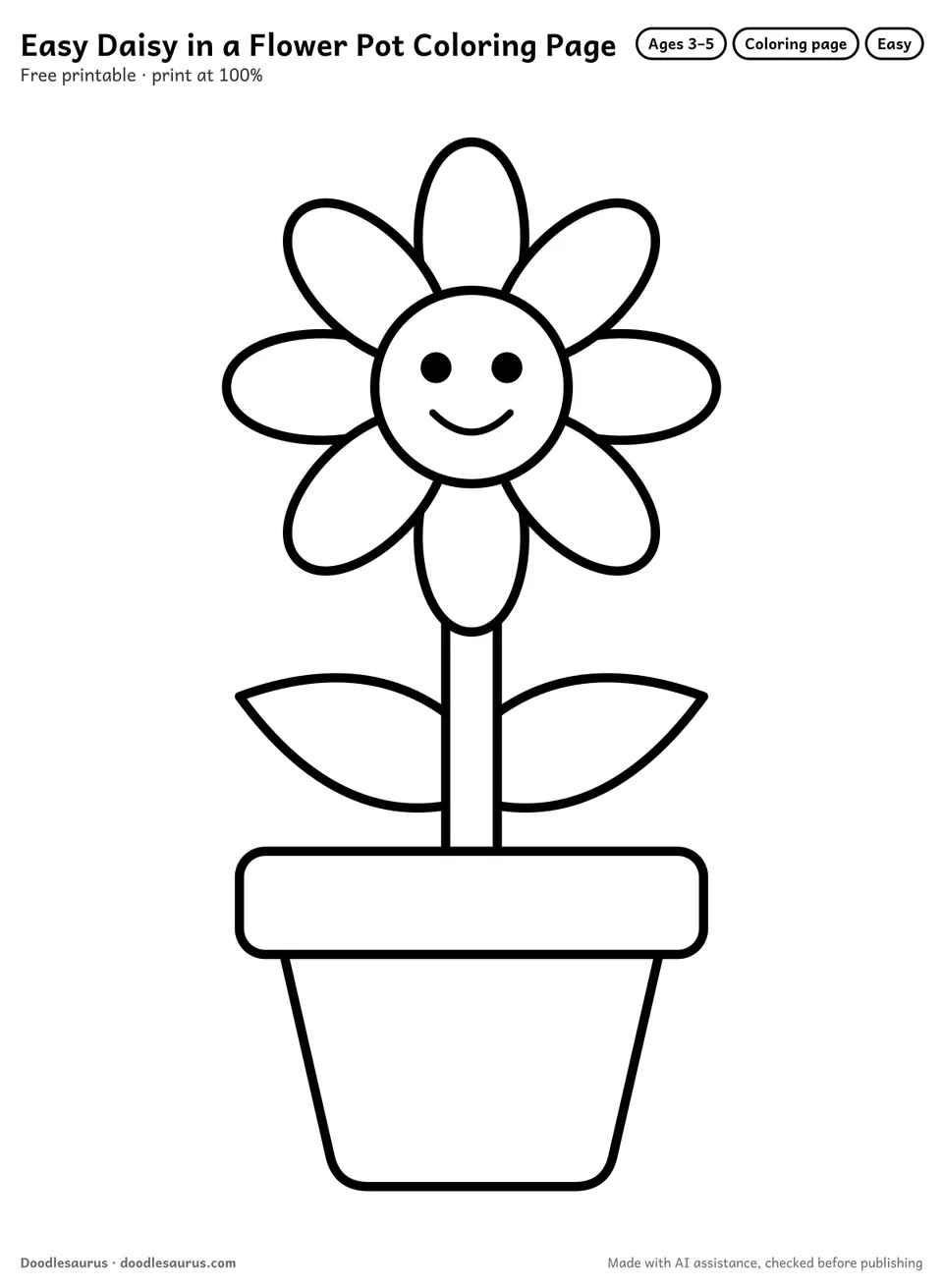
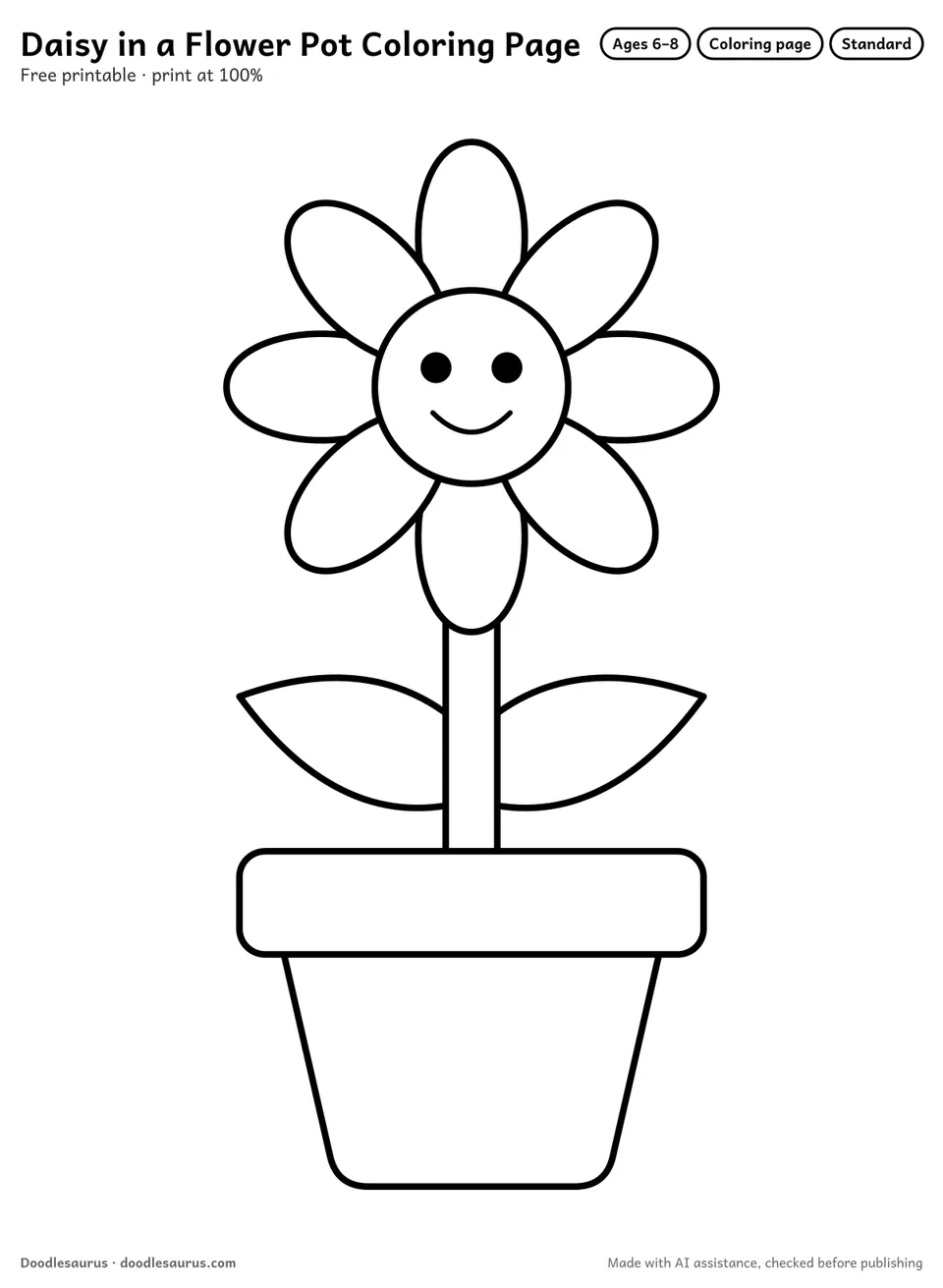
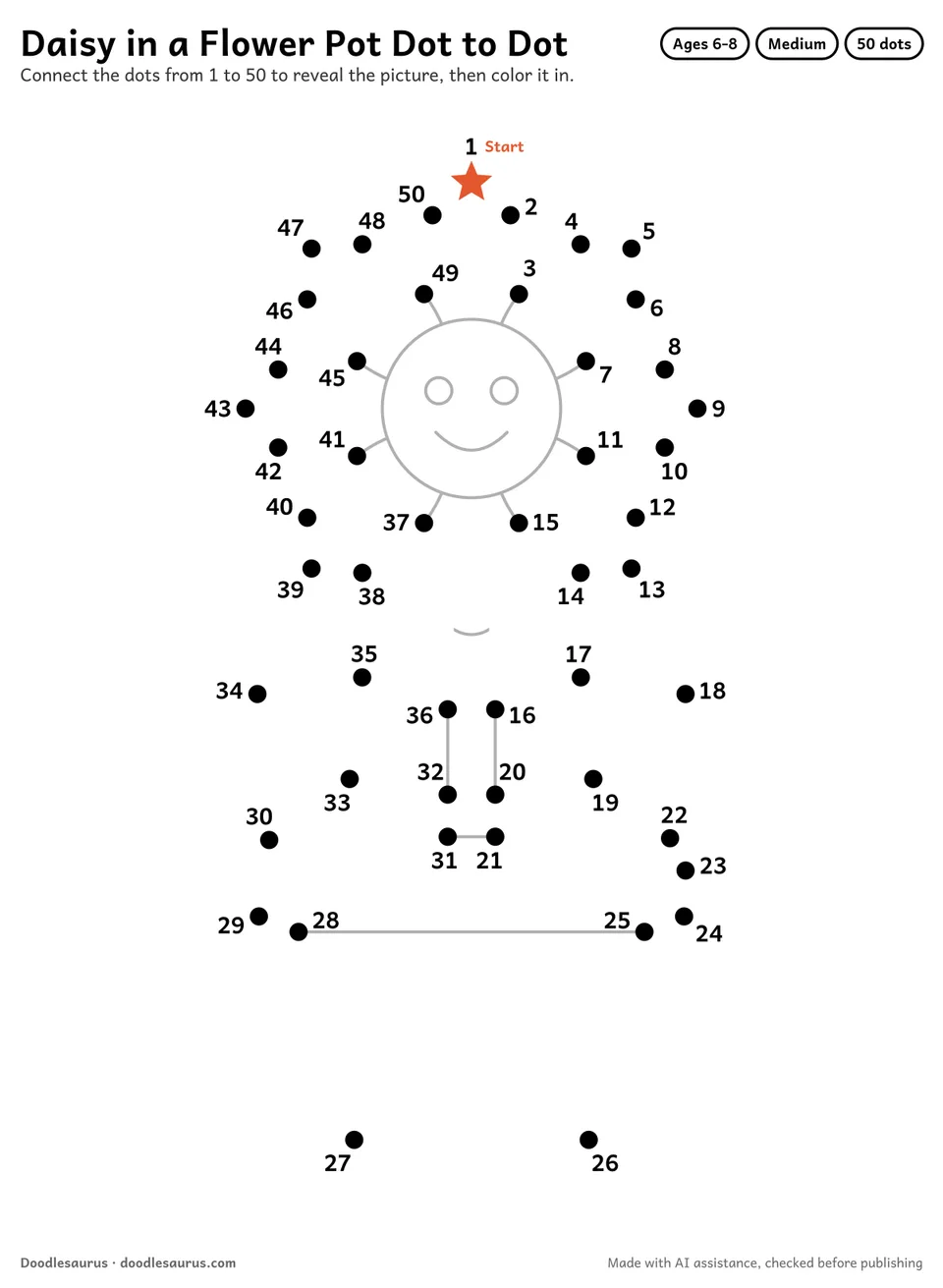
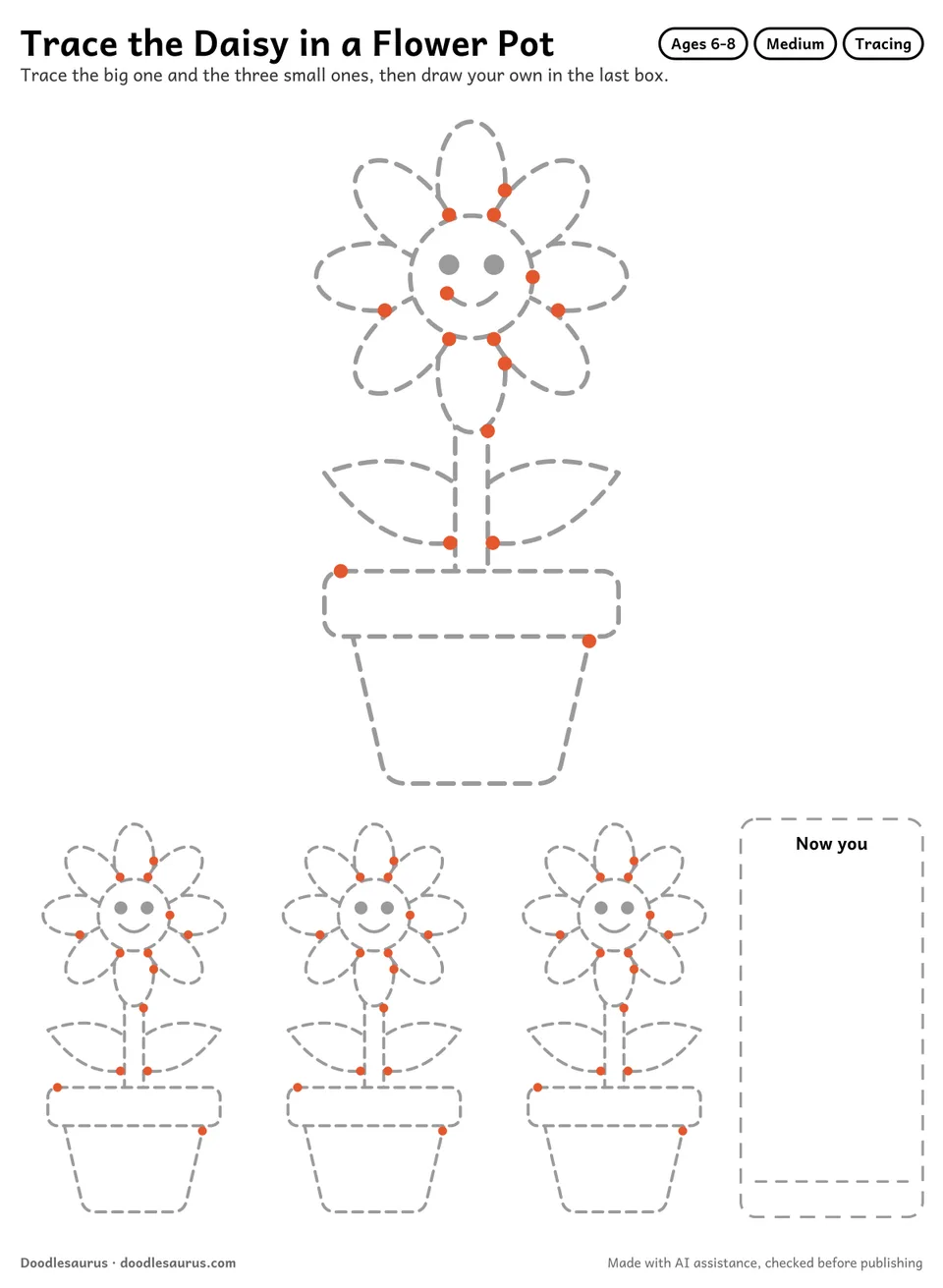
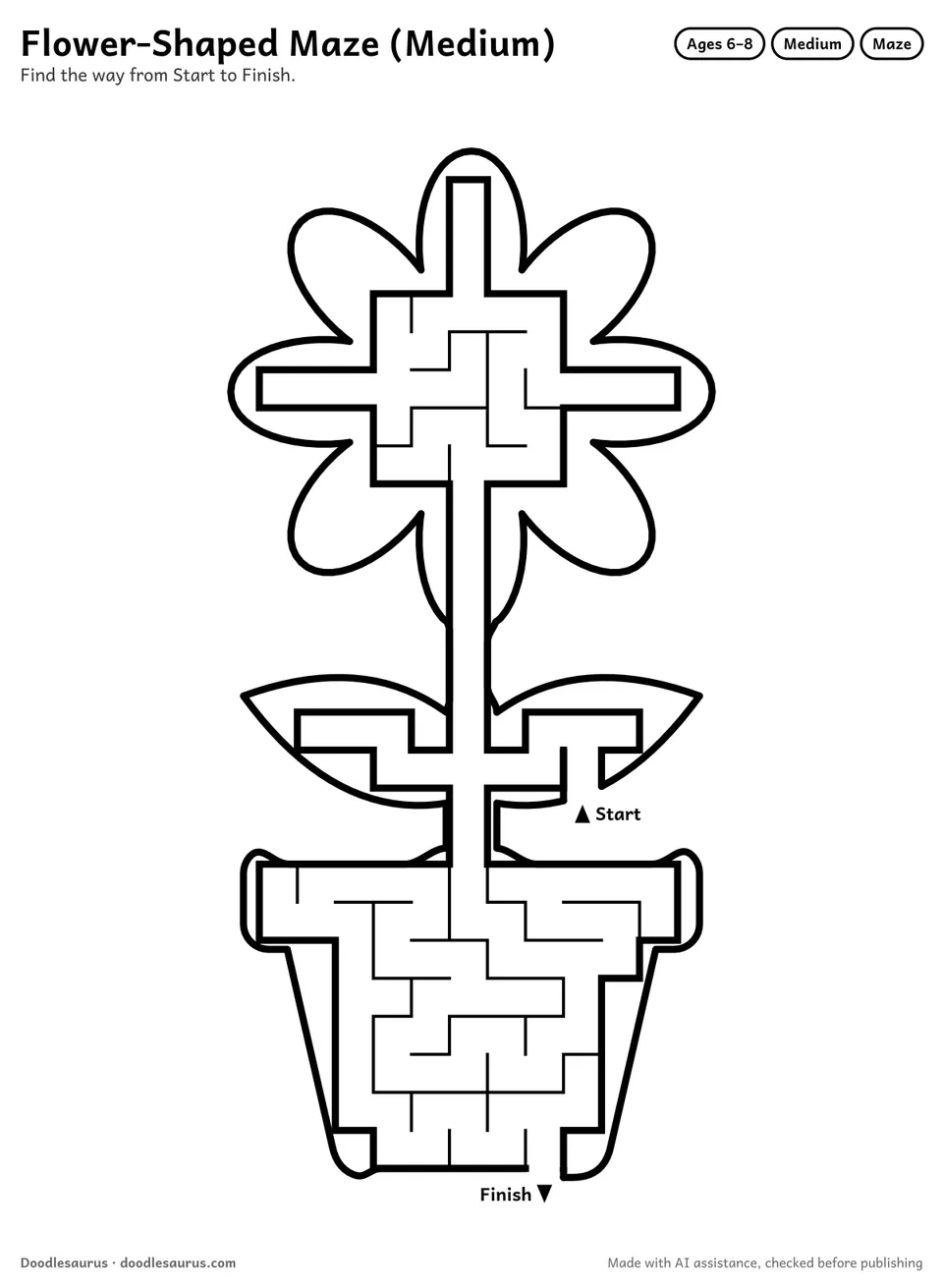
A smiling daisy in a flower pot, with eight petals and two leaves, on free flower coloring pages: bold lines for ages 3 to 5 and thinner ones for 6 to 8.
Printable flower coloring sheets
Filter by age or difficulty
Nothing matches that filter yet.
Eight oval petals circle a round center with two dot eyes and a small smile, so the daisy on these flower coloring pages looks back at whoever is coloring it. It grows in a flower pot on a straight stem with one pointed leaf on each side, and the pot has a wide rounded rim on top that narrows toward a flat base. Altogether there are 14 spaces to fill.
A crayon inside each petal
Heavy outlines on the easy version keep a crayon inside each petal at ages 3 to 5. The standard version has thinner lines for ages 6 to 8, with room for colored pencils, shading and small patterns on the pot. The two dot eyes are the smallest marks on the page, so keep fit to page off and the A4 or US Letter PDF at 100 percent.
Spring, seedlings and cards
A potted flower fits a spring topic. It also makes a card for Mother’s Day. Some children add a sunny window behind the pot or a watering can beside it. In a UK classroom, flower colouring like this pairs well with a lesson on what plants need, especially with real seedlings growing on the windowsill.
What to color
- Eight oval petals arranged in a ring
- A round center with two dot eyes and a smile
- A straight stem with a pointed leaf on each side
- A wide, rounded rim at the top of the pot
- A pot that narrows toward its flat base
Tips
- Leave the petals white like a real daisy, or try pink, lilac or pale blue.
- Color the center yellow but go around the eyes so they stay sharp.
- Use two greens, a light one for the leaves and a darker one for the stem.
- Give the rim a darker shade than the pot so the two parts stand apart.
- Draw a windowsill or a table under the pot to finish the scene.
Flower fun facts
- A daisy head is made of many tiny flowers: the white rays around the edge and the small yellow florets packed in the middle.
- The word daisy comes from the Old English for day's eye, because the common daisy opens in daylight and closes at dusk.
- Most flower pots have a hole in the bottom so extra water can drain away from the roots.
Classroom ideas
- Pre-K (ages 4 to 5): count the eight petals together, touching each one before coloring it.
- Kindergarten: label stem, leaf, petal and pot with word cards after coloring.
- Grade 1: plant seeds in paper cups and compare the seedlings with the daisy on the page over two weeks.
- Grade 2: write a short care guide for the potted daisy that covers water, light and soil.
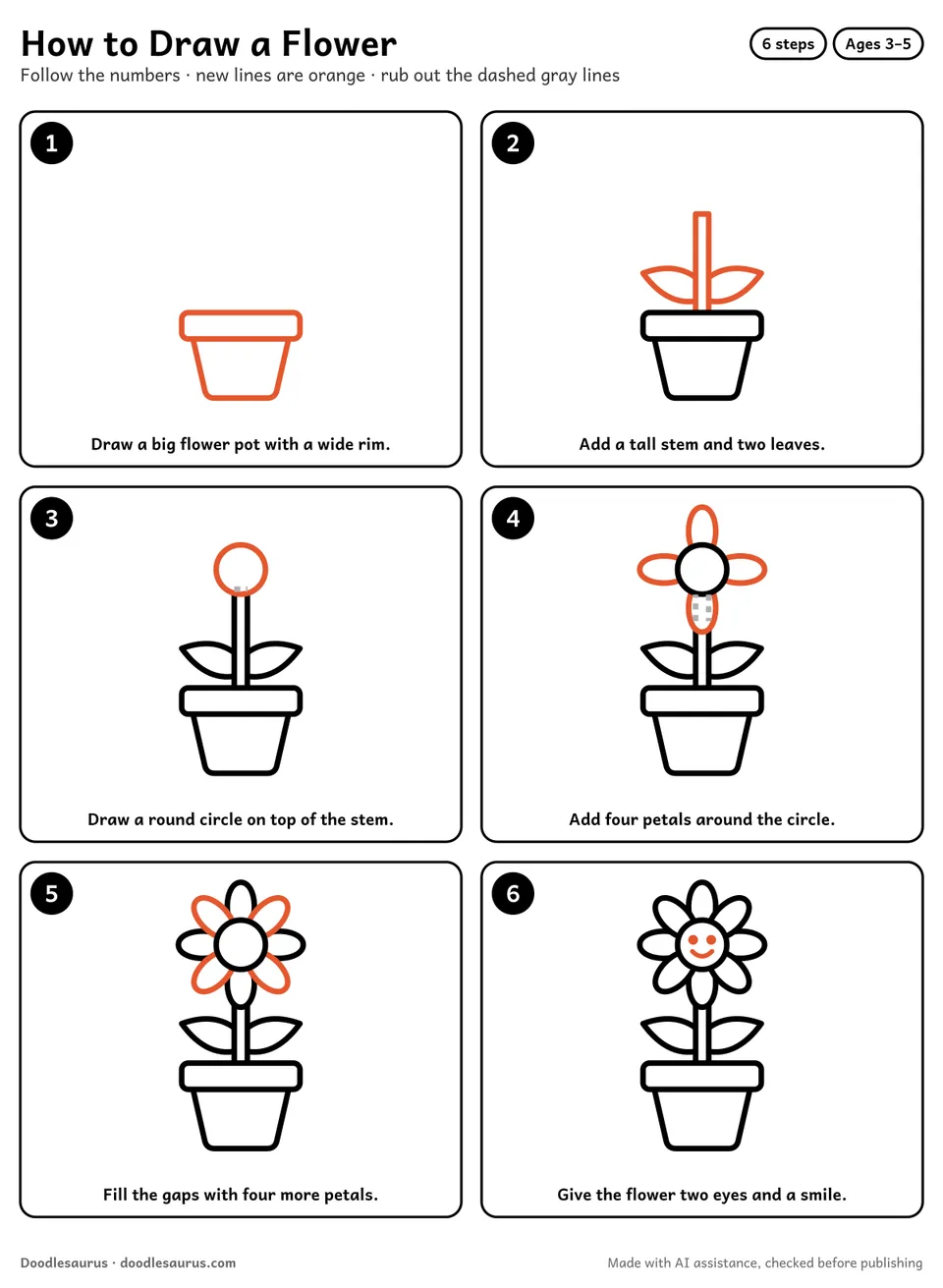
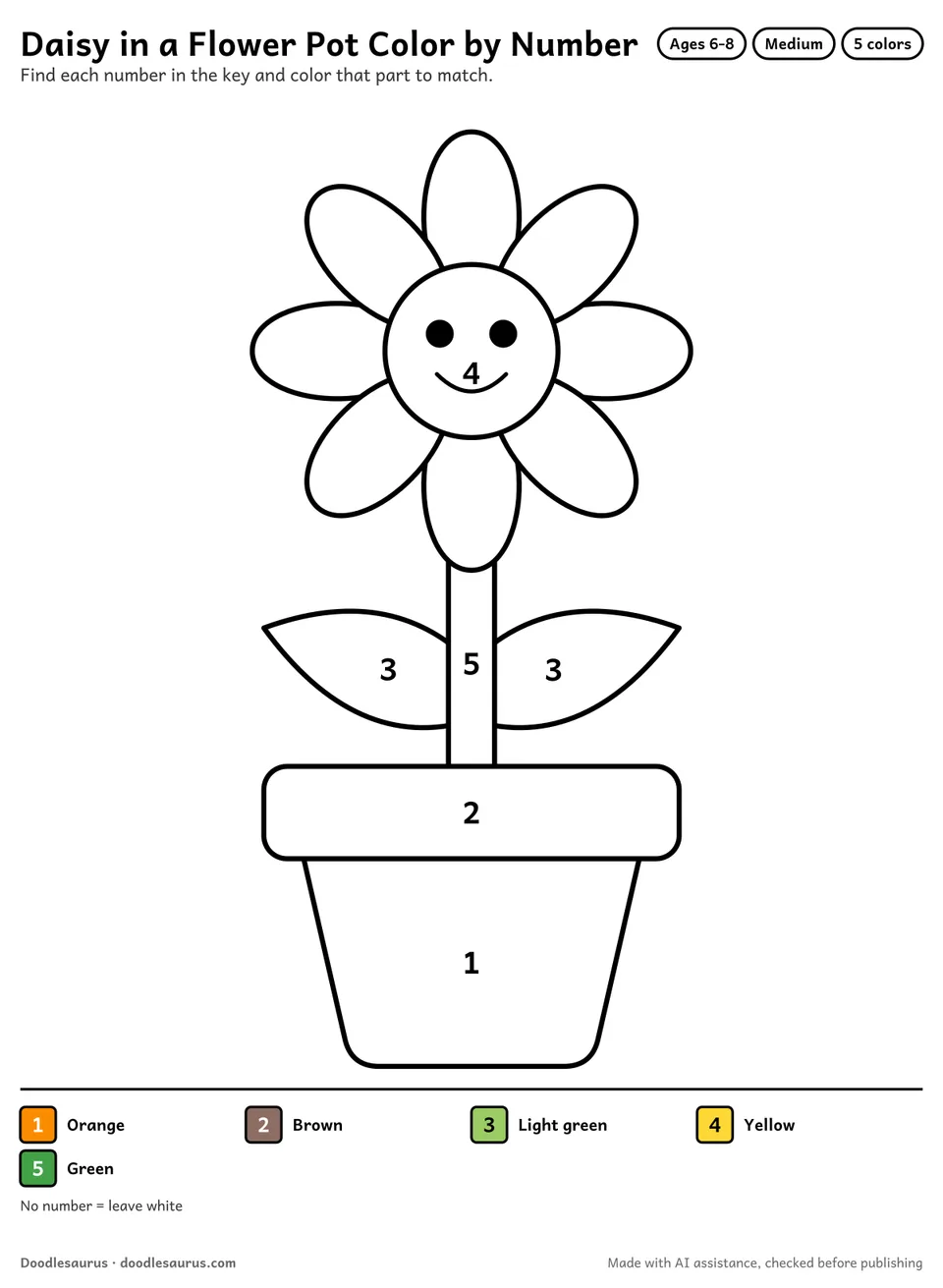
More flower activities
Related coloring pages
Frequently asked questions
Do the two dot eyes need a steady hand?
They are the smallest marks on the page. The easy file, for ages 3 to 5, has heavy outlines that help a crayon stay inside, and the standard file, for ages 6 to 8, uses thinner lines with more room for detail. Both show the same potted daisy with 14 spaces to color.
How many petals does the daisy have?
Eight oval petals, set in a ring around the round center. Touching each one and counting it before coloring makes an easy start for younger children.
What is there to color below the petals?
A straight stem with a pointed leaf on each side, and a flower pot with a wide, rounded rim that narrows toward a flat base. Two greens for the leaves and stem, and a darker shade for the rim than for the pot, keep the parts apart.
Does the flower have to be white?
No. Many daisies are white with a yellow middle, but children can choose any color they like for the petals.
New printables, twice a month
Our newsletter starts soon, with new sheets twice a month and a free 10-page starter pack for every new reader.
AI-assisted vector art, checked before publishing. About the AI · License