
Flower Connect the Dots with 35, 50 or 87 Dots
Flower connect the dots pages of a smiling daisy in a pot, in 35, 50 or 87 dots. A free flower dot to dot for A4 or US Letter, with answer pages.
Choose a level
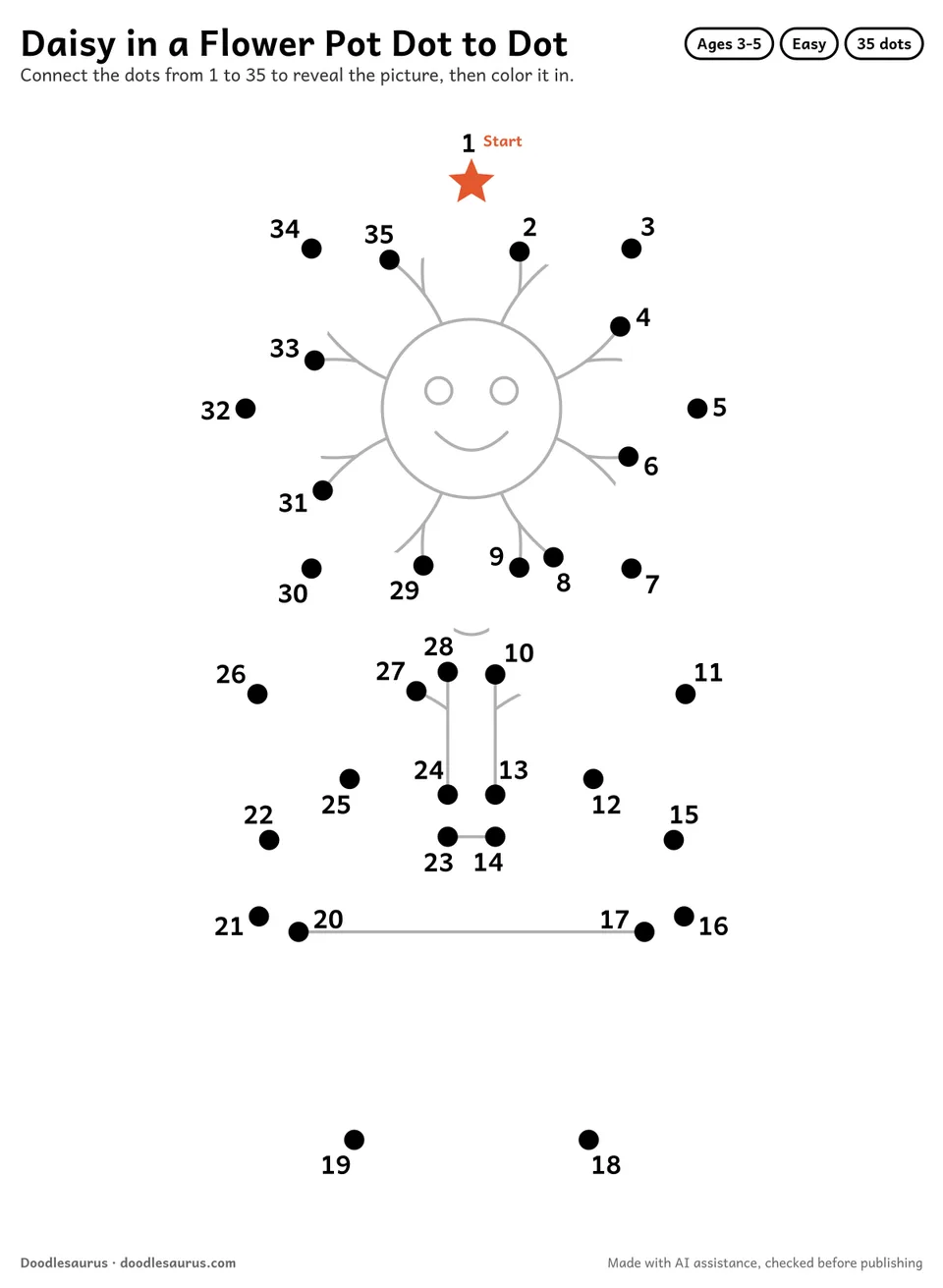
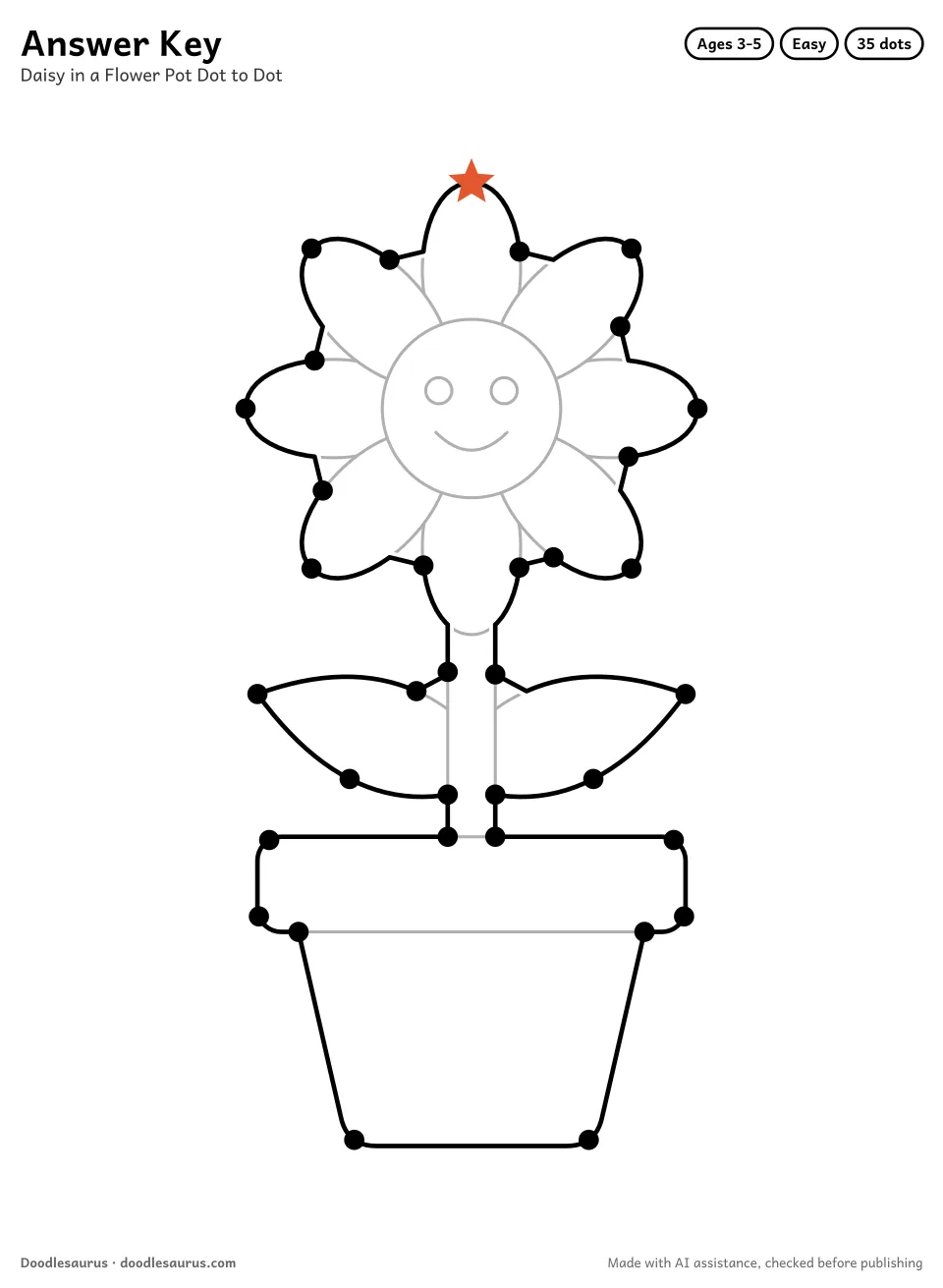
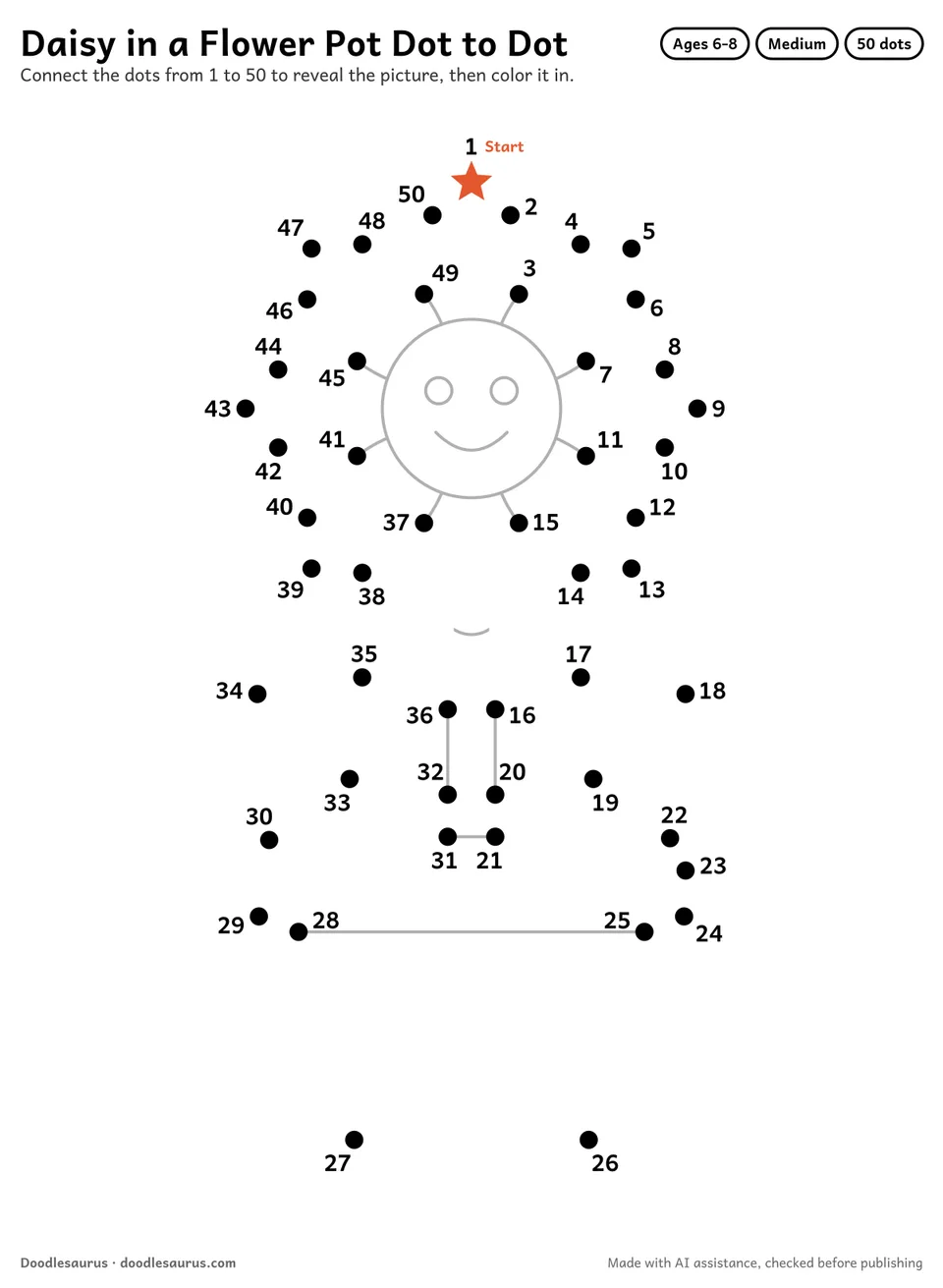
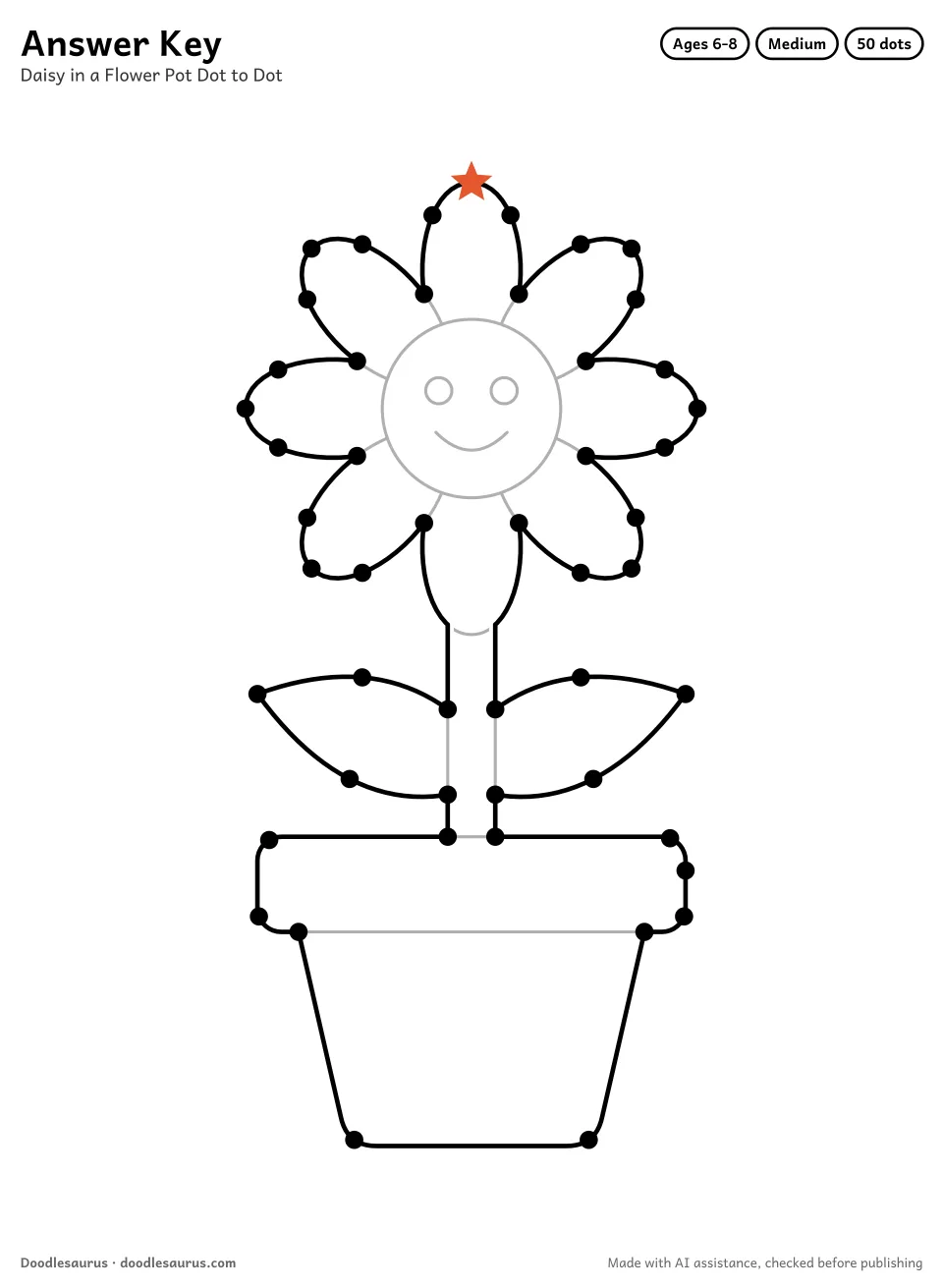
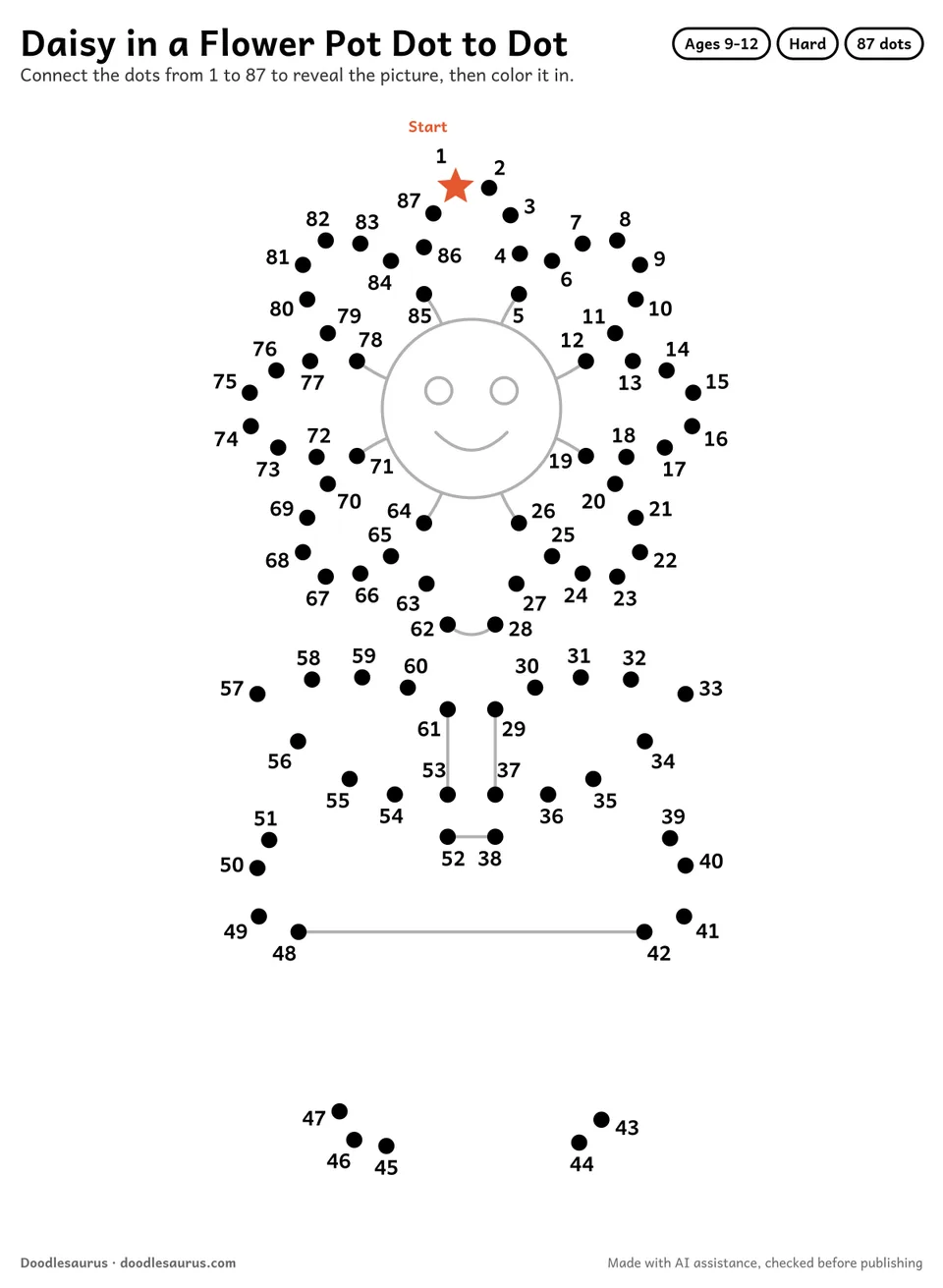
Eight rounded petals around a smiling center, a stem with a leaf on each side and a pot with a rim make up this flower connect the dots. Joined in 35 dots, the easy sheet suits ages 3 to 5, while the medium sheet has 50 for ages 6 to 8 and the hard sheet 87 for ages 9 to 12. With more dots, the petal tips and the curves of the leaves come out rounder.
Clockwise from the top petal
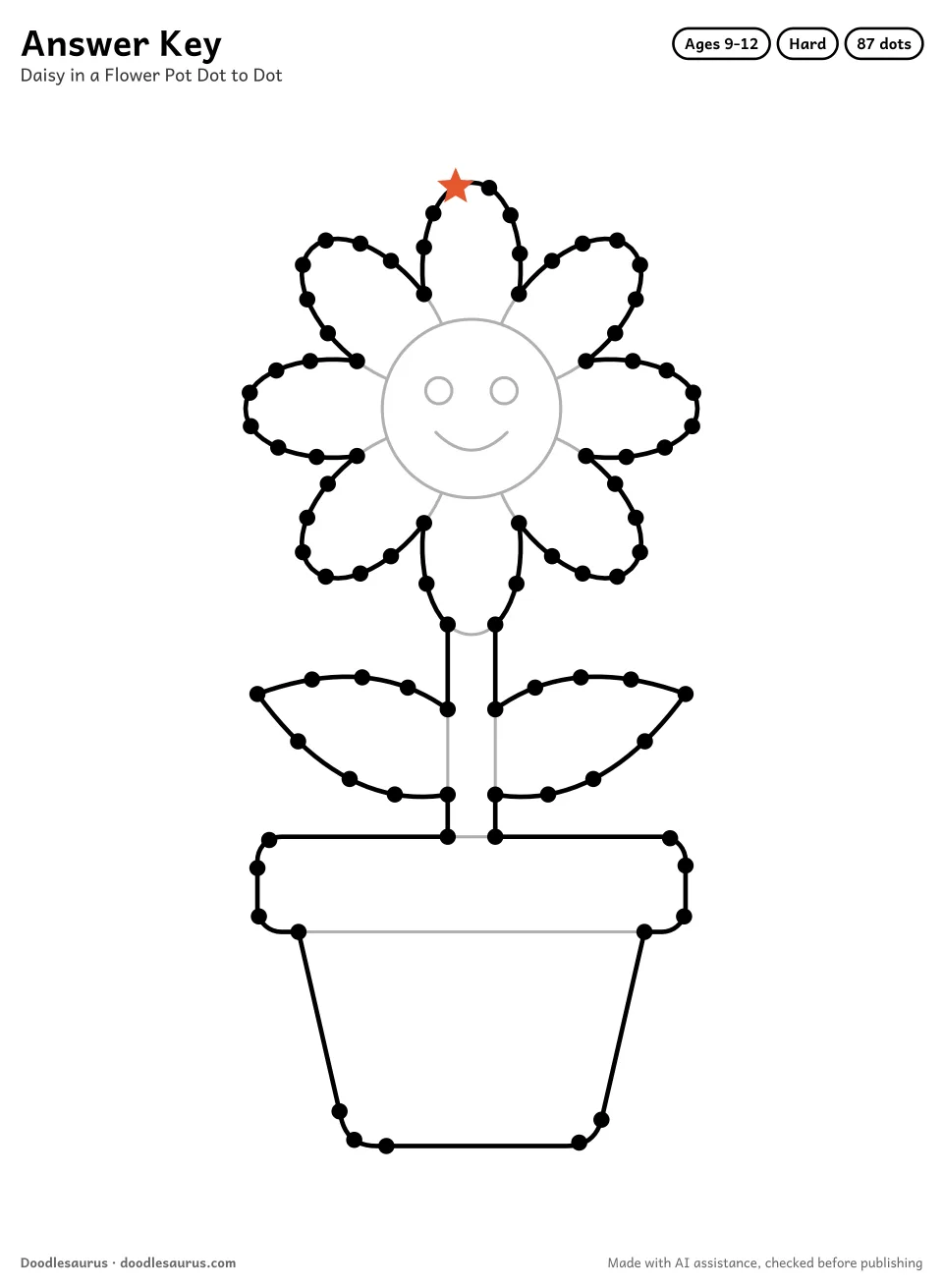
An orange star marks number 1 near the tip of the top petal. The line runs clockwise around the right-hand petals, then down the right side of the stem and out around the right leaf. It steps along the rim, drops down the side of the pot, crosses the flat bottom and climbs the left side, and the left leaf and the left petals bring it back up to the star. The easy sheet cuts straight across the narrow gaps between the petals, so the inner edges of its petals print in gray.
A smiling center
A pale gray round center with two eyes and a smile sits in the middle of all three pages, with little lines where each petal meets it, the stem running between the leaves and the line of the pot rim. A smiling flower appears even before the outline does. The 87 dots on the hard page crowd together near the leaves and the stem, and they read best from the A4 or US Letter PDF printed at 100 percent. Each PDF has an answer page showing the joined line.
Skills practiced & tips
- Put the pencil on the orange star near the tip of the top petal first.
- The numbers go clockwise, so the right-hand petals come before the pot.
- On the medium and hard pages, slow down at the base of each petal, where the line turns sharply back out.
- On the 87-dot page, look for numbers that sit close together beside the leaves.
- The round flower center is gray, not dotted, so color it yellow once the last dot is joined.
Flower fun facts
- The common lawn daisy can flower for most of the year in mild places.
- Leaves turn sunlight, water and air into food for the plant through photosynthesis.
Classroom ideas
- Kindergarten (ages 5 to 6): do the 35-dot daisy together on the board, counting each dot aloud.
- Grade 1: before joining, circle every number on the 50-dot page that ends in 0.
- Grades 4 and 5: on the 87-dot page, find 10, 20, 30 and on up to 80 first as a skip-counting warm-up.
More flower activities
More dot to dot
Frequently asked questions
What happens at the base of each daisy petal?
The line turns sharply back out, so the medium and hard pages are worth a slow look there. The easy page has 35 dots for ages 3 to 5, the medium page 50 for ages 6 to 8 and the hard page 87 for ages 9 to 12, all drawing the same daisy in its pot.
Why are the gaps between the easy petals gray?
The 35-dot line cuts straight across the narrow gaps between the petals, so their inner edges are printed in gray. On all three pages the round center with its eyes and smile is gray too, along with the short lines where the petals join it, the stem between the leaves and the pot rim.
Is the circle around the face part of the dot path?
No. The dots follow only the outside edge of the petals, stem, leaves and pot. The round center is printed in gray on every page, so even the 87-dot daisy has its face.
Why do the petals look rounder on the hard page?
With more dots, the petal tips and the curves of the leaves come out rounder. The 87-dot page keeps the same gray face as the other two, with many more dots around it.
About this printable
- Made with AI assistance (vector drawing authored by a language model) and checked by automated tests and an AI reviewer.
- Checked by automated tests and an AI reviewer on 22 Oct 2026.
- Free for personal and single-classroom use. See the license. Read the license · How these are made · Report a problem.
- Vector PDF, 2 pages, 186×254 mm art box — prints edge-safe on A4 and US Letter.
New printables, twice a month
Our newsletter starts soon, with new sheets twice a month and a free 10-page starter pack for every new reader.