Leaf Coloring Pages
Leaf coloring page of one big maple leaf with five pointed tips and five veins, free as an A4 or Letter PDF in a bold easy version and a finer one.
Printable leaf coloring sheets
Filter by age or difficulty
Nothing matches that filter yet.
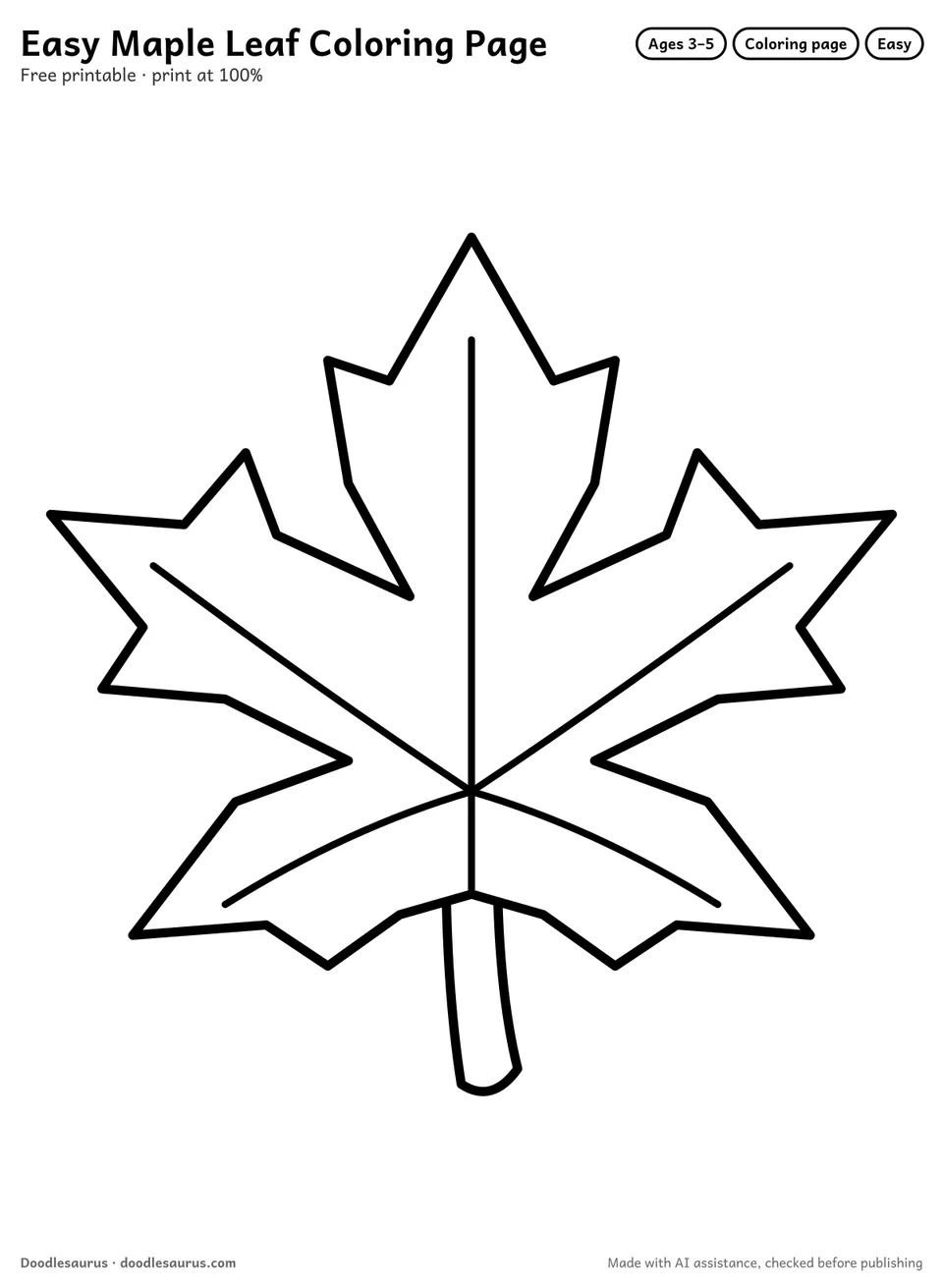
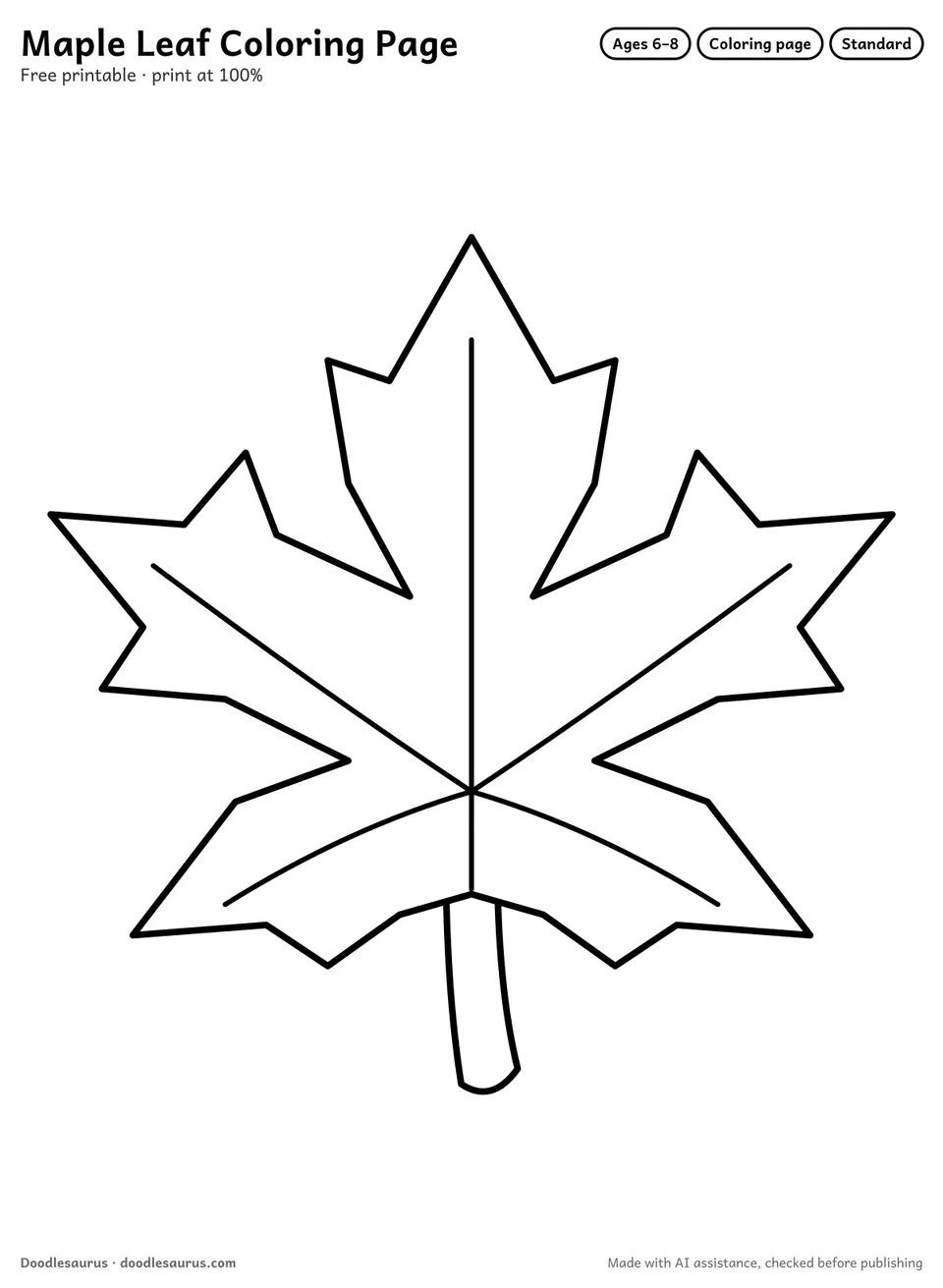
This leaf coloring page is one maple leaf, and its outline is what children notice first. There are five main tips, one tall at the top, two wide at the sides and two smaller at the bottom, and the edge zigzags between them in sharp little points. Five veins spread out from a spot near the base. A short stem hangs below.
Two closed shapes
Only the leaf and the stem are closed spaces, which keeps the page calm and open. The veins stop just inside the edge. A child can fill the whole leaf in one color, or use the veins as borders and give each section its own shade of red, orange or yellow. Ages 3 to 5 get bold outlines on the easy page. On the standard page, for ages 6 to 8, thinner lines leave more room for blending one color into the next.
Fall walks and seasons
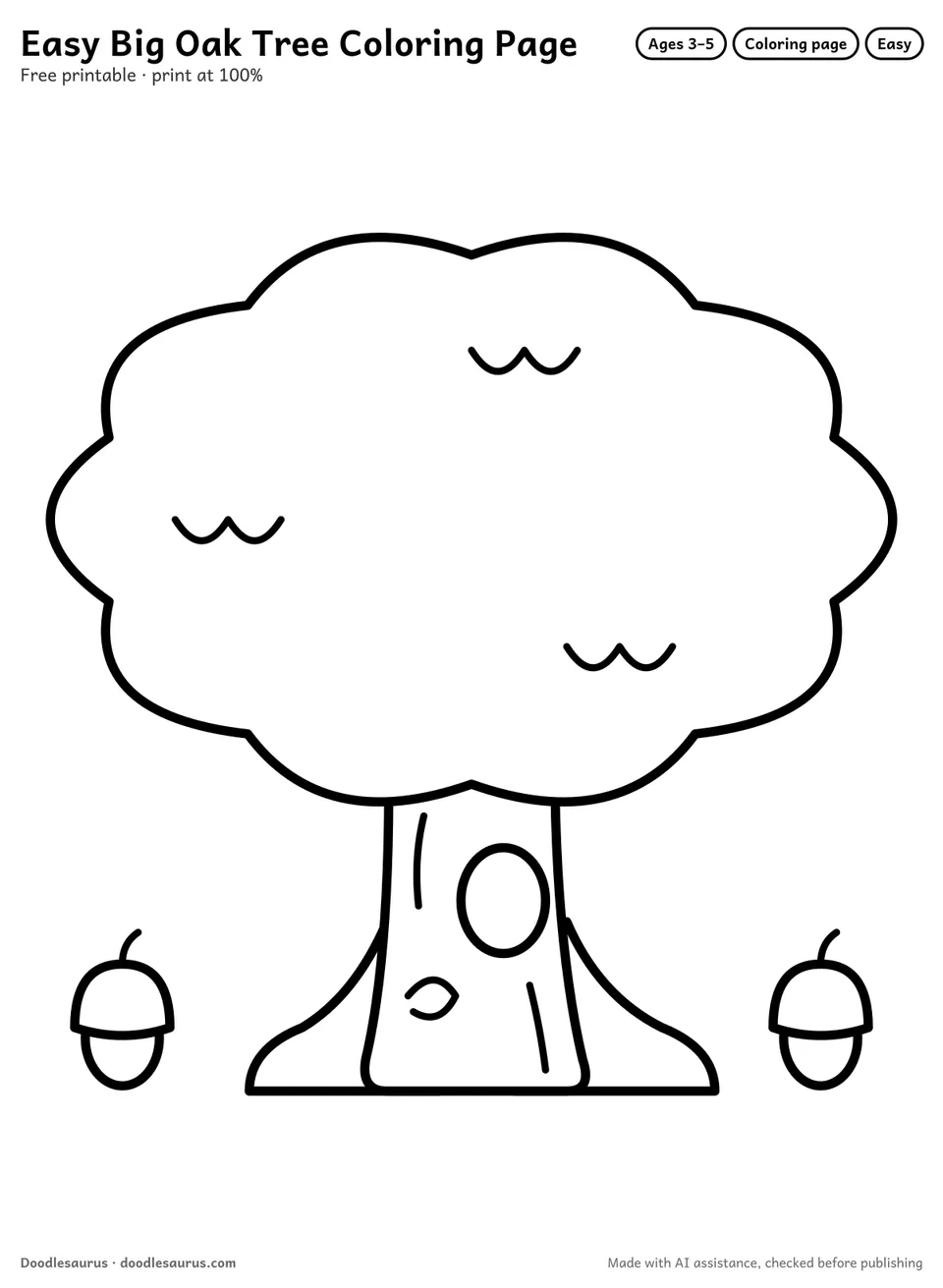
The leaf fits a fall nature walk, a lesson on the seasons or a Thanksgiving table, and the white space around it has room for falling leaves, acorns or a tree trunk. The zigzag points are the first thing to blur if the A4 or US Letter file is shrunk to fit, so print it at 100 percent.
What to color
- A large maple leaf with five main pointed tips
- A zigzag edge with smaller points between the tips
- A straight middle vein running up to the top tip
- Two veins reaching out to the side tips and two curving down to the lower tips
- A short stem with a rounded end
Tips
- Use the veins as guide lines and give each section its own autumn shade.
- Blend red into orange or yellow for a leaf that is changing color.
- Color the stem brown and press a little harder near the base of the leaf.
- Try a green leaf for summer and a red one for fall, then compare them side by side.
- Draw a few smaller falling leaves in the white space around the big one.
Leaf fun facts
- A red maple leaf is the main symbol on the flag of Canada.
- Maple syrup is made by boiling sap from maple trees, and it takes about 40 gallons of sap to make 1 gallon of syrup.
- Leaves turn yellow and orange in autumn because the green chlorophyll fades and uncovers colors that were there all along.
- Maple seeds have papery wings and spin like little helicopters as they fall.
Classroom ideas
- Pre-K (ages 3 to 5): go on a short leaf walk, then color the bold maple leaf in the colors the children found.
- Kindergarten: count the five big tips and the five veins together before coloring.
- Grade 1: color three copies, one green, one orange and one brown, and put them in order to show the season changing.
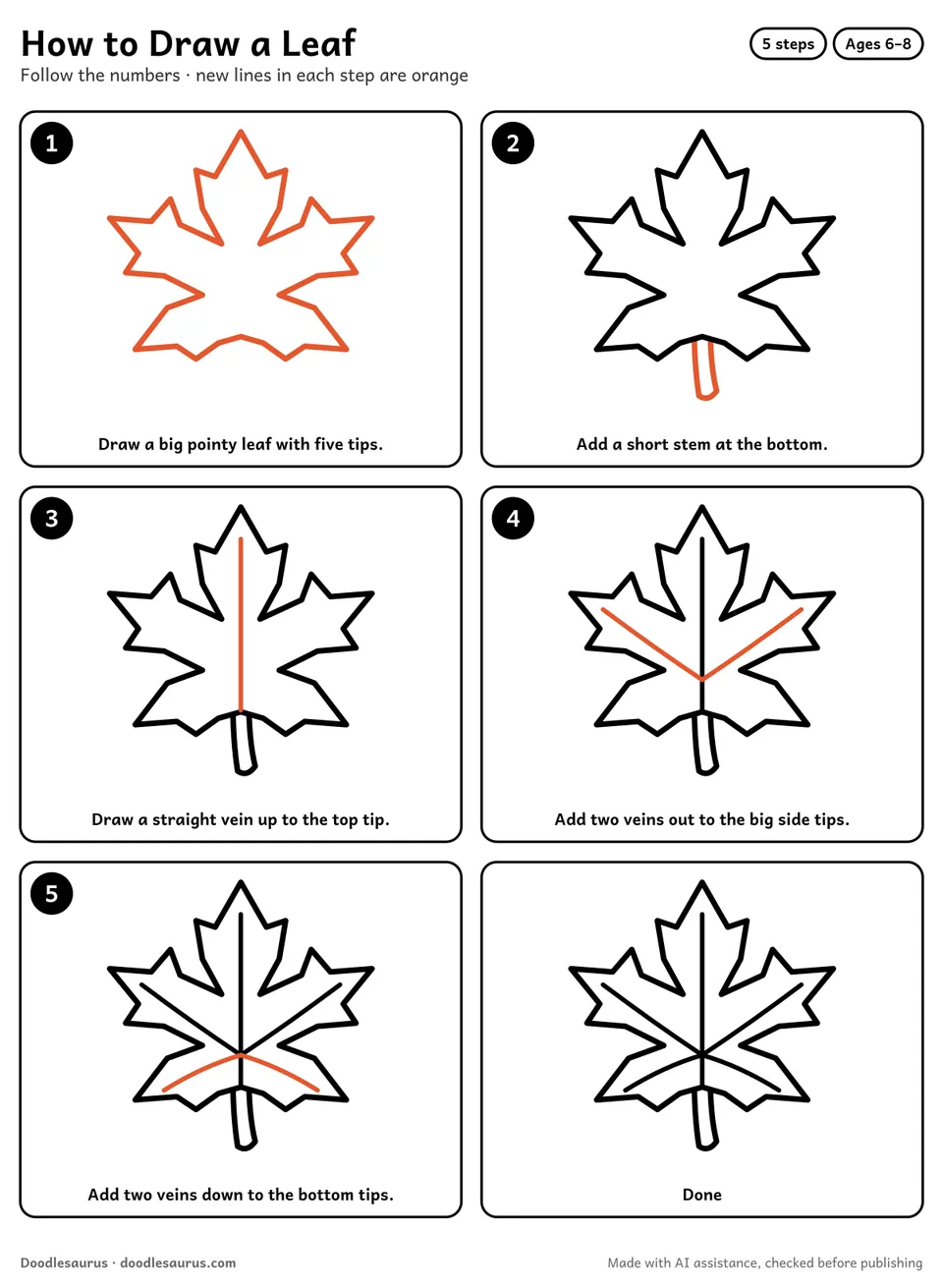
- Grade 2: compare the drawing with a real maple leaf and label the tip, vein and stem.
More leaf activities
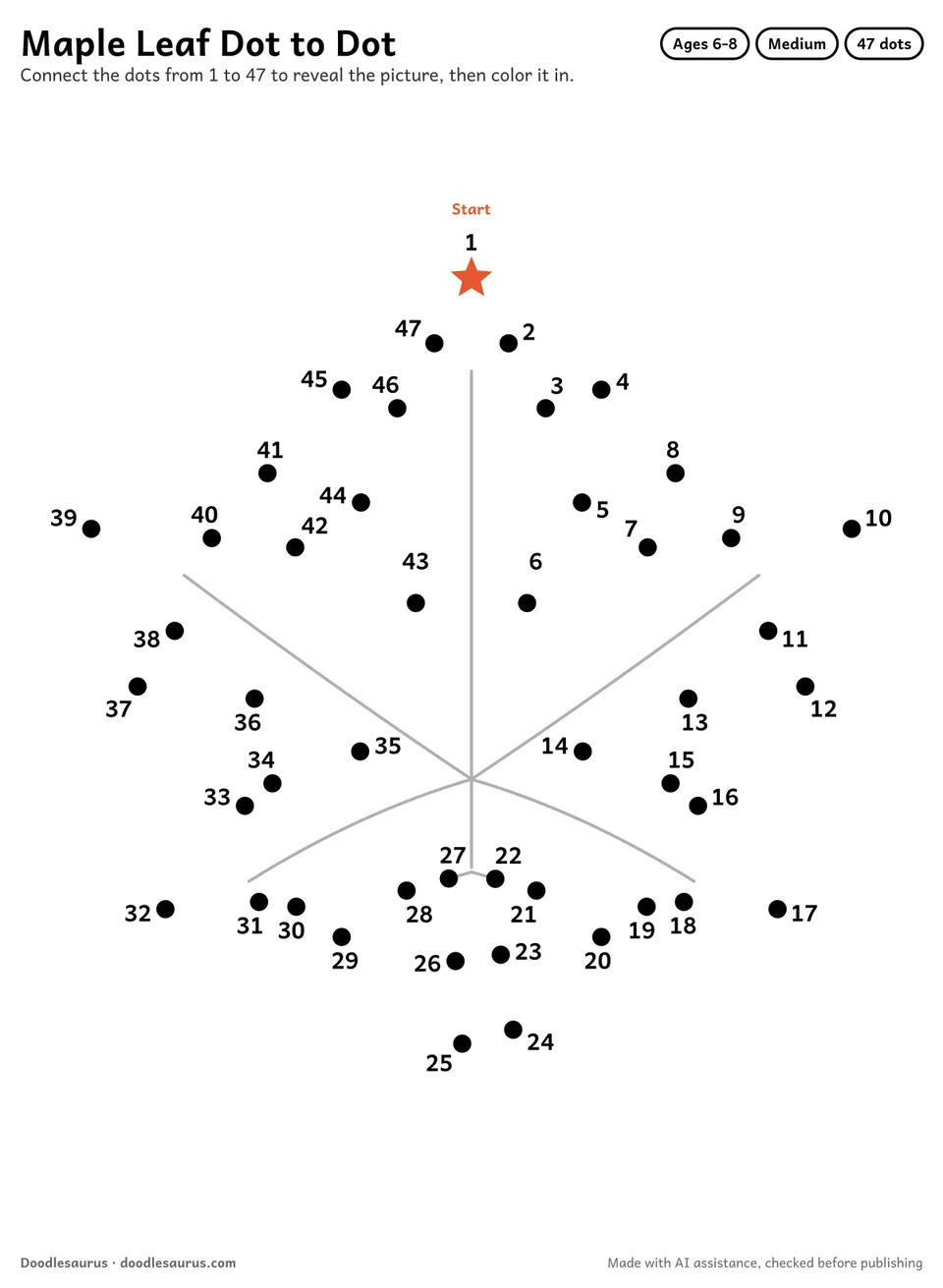
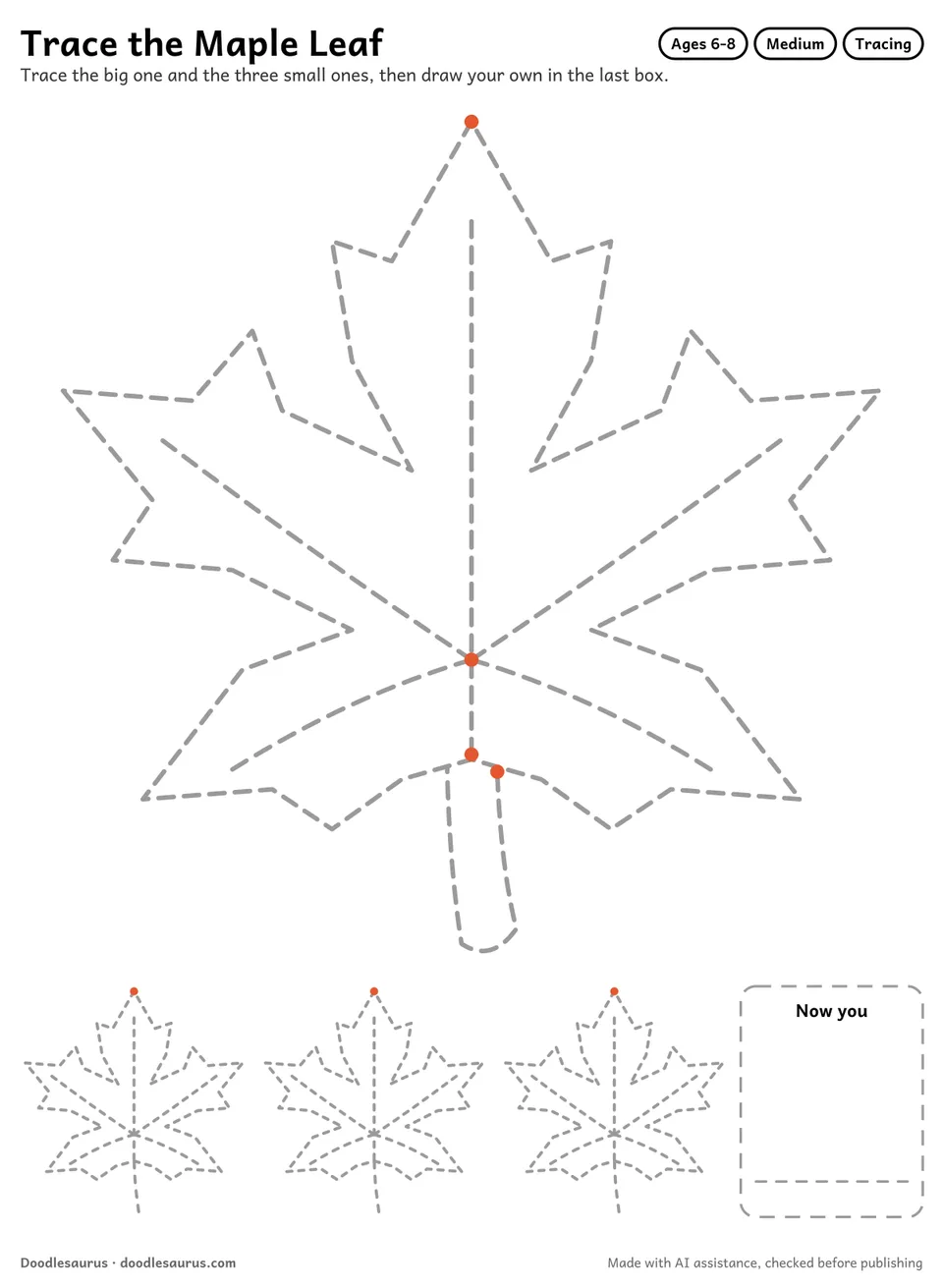
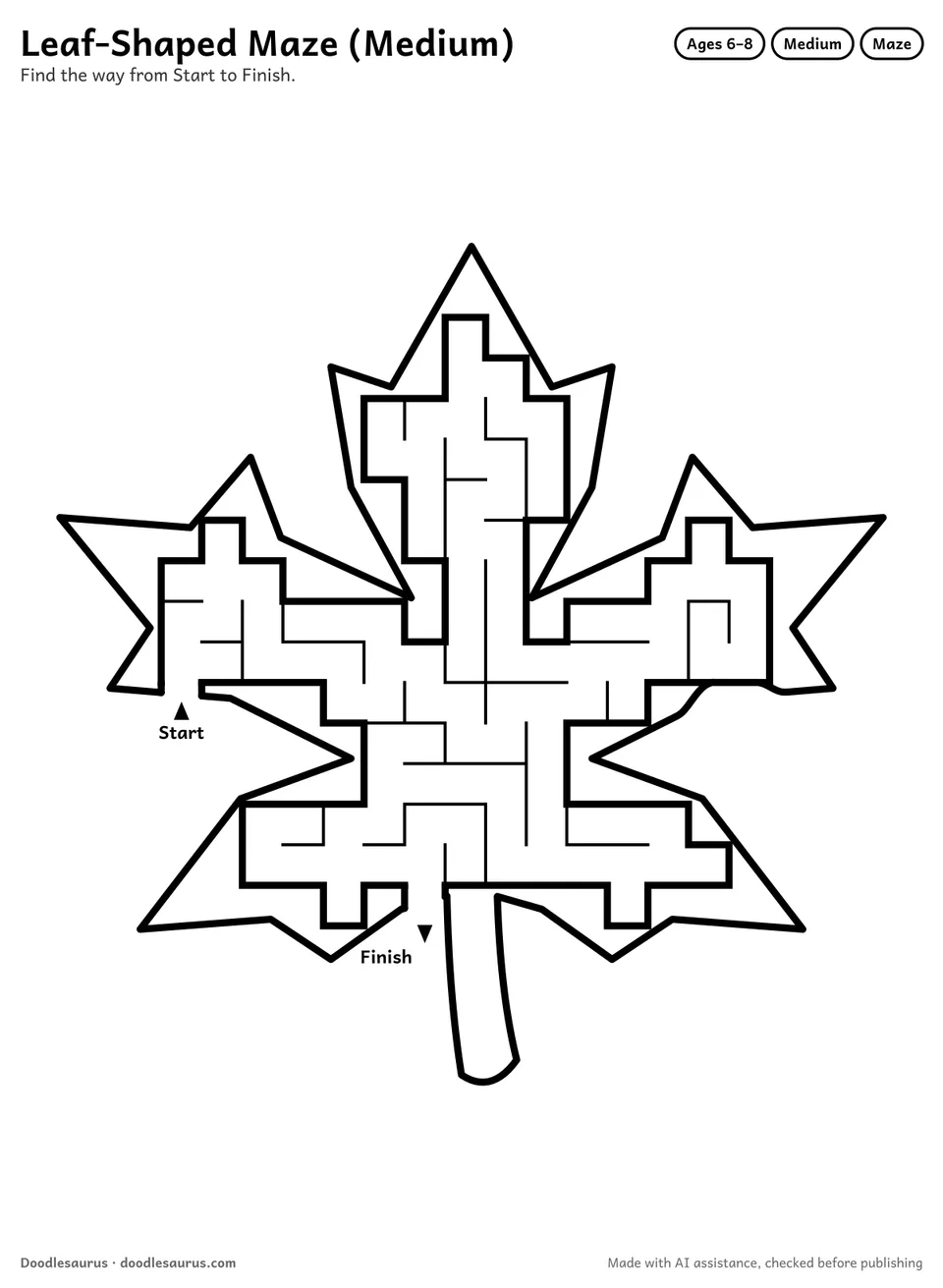
Related coloring pages
Frequently asked questions
Which leaf page suits blending colors?
The standard page, for ages 6 to 8. Its thinner lines leave more room for blending one color into the next and suit colored pencils and markers. The easy page, for ages 3 to 5, uses thick outlines.
How many spaces are there to color?
There are two closed shapes, the leaf and the stem. The five veins stop just short of the edge, so children can fill the whole leaf in one color or treat each section between the veins as its own patch.
What kind of leaf is it?
A maple leaf. It has five main tips with small zigzag points between them, five veins spreading out from near the base and a short stem with a rounded end.
Should the leaf be red, orange or green?
Any of them. A green leaf suits summer and a red one fall, and coloring both lets children compare them side by side. For a leaf that is changing color, blend red into orange or yellow.
New printables, twice a month
Our newsletter starts soon, with new sheets twice a month and a free 10-page starter pack for every new reader.
AI-assisted vector art, checked before publishing. About the AI · License