Butterfly Coloring Pages
Butterfly coloring pages with four spotted wings and curly antennae, in bold lines for ages 3 to 5 or finer ones for 6 to 8, on A4 or Letter.
Printable butterfly coloring sheets
Filter by age or difficulty
Nothing matches that filter yet.
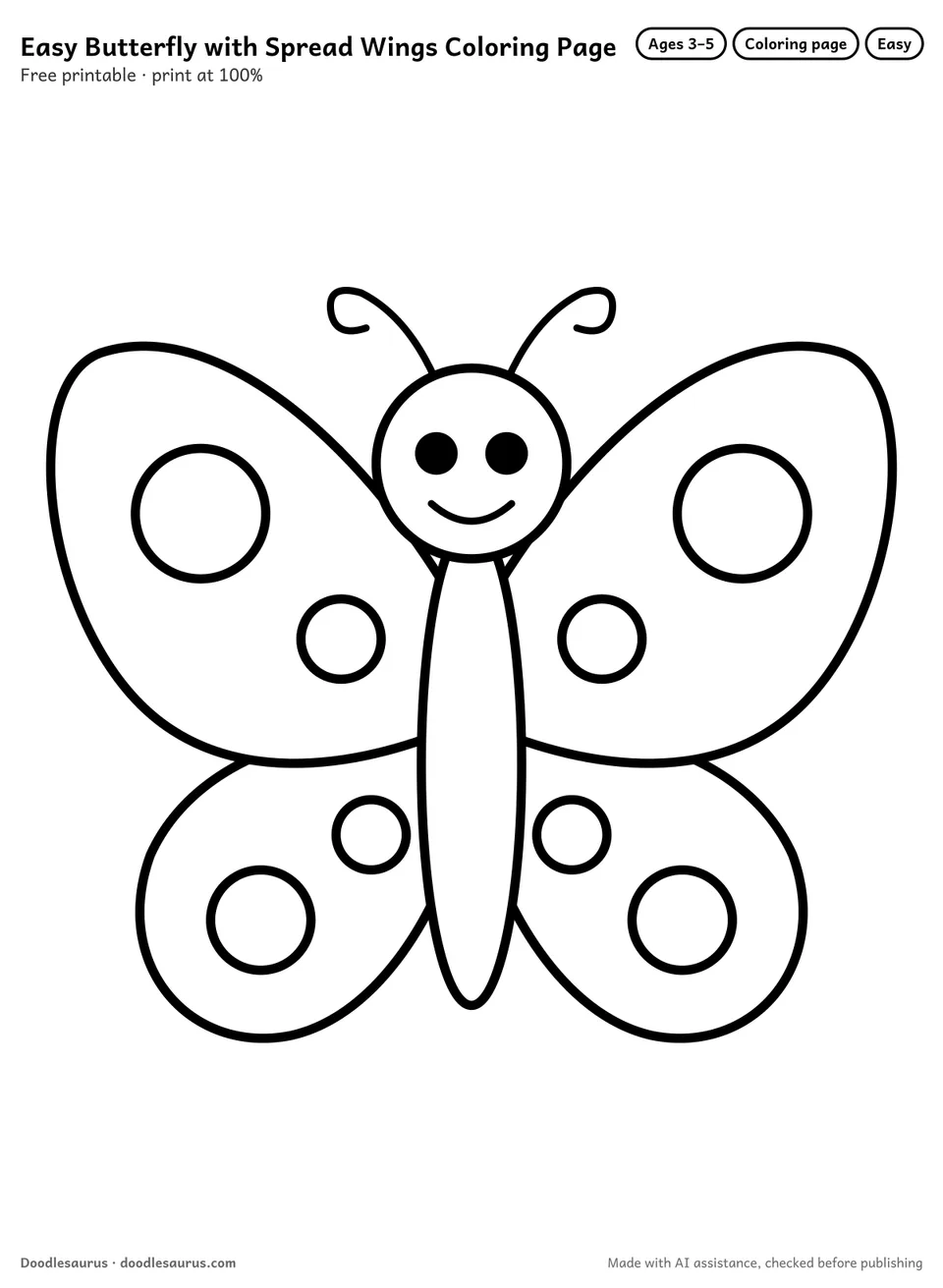
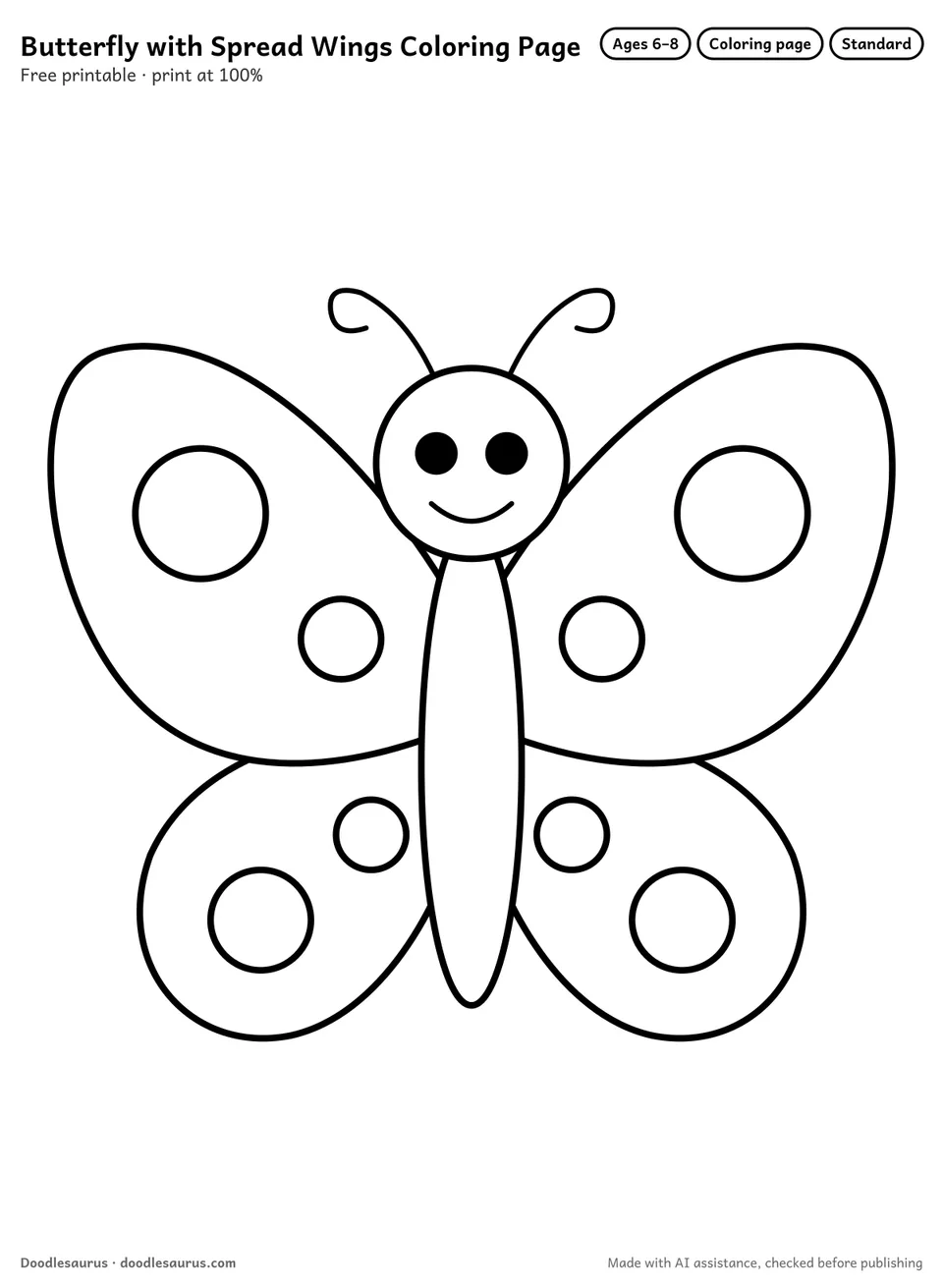
Spread wide and matching, the wings take up most of both butterfly coloring pages: two upper wings that reach toward the top corners and two lower wings that are smaller and rounder. A long oval body runs down the middle. A round head sits on top, with two black eyes, a smile and two antennae that curl over at the ends.
Heavy lines for crayons, thin lines for spots
Heavy black lines on the easy page help ages 3 to 5 keep a crayon inside the big wing shapes. The small spots are easier to fill neatly with colored pencils on the standard page, whose thinner lines suit ages 6 to 8. Neither level adds or removes a shape. Both have 14 spaces.
Symmetry, spring and life cycles
The left and right wings match, so a finished page can be folded down the middle to show the two halves lining up. That fold works best when the wings are centered, which happens when the A4 or US Letter PDF prints at 100 percent rather than fit to page. A spring topic, a garden project or a lesson on how a caterpillar changes all suit the butterfly too.
What to color
- Two large upper wings that reach toward the top corners
- Two rounder lower wings tucked underneath
- Eight round spots, one big and one small on every wing
- A long oval body down the middle
- A round head with two black eyes and a smile
- Two thin antennae that curl over at the tips
Tips
- Color the left and right wings to match, since a real butterfly's pattern is the same on both sides.
- Pick one color for the upper wings and a lighter one for the lower wings.
- Fill the spots with colors that stand out against the wing color.
- Use dark brown or black for the body so the wings look brighter beside it.
- Draw flowers or a sun in the white space around the wings.
Butterfly fun facts
- A butterfly's wings are covered in tiny scales, and the name of its insect group, Lepidoptera, means scale wing.
- Butterflies can taste with their feet, which helps a female check whether a plant is right for her eggs.
- Every butterfly starts as an egg, then lives as a caterpillar and a chrysalis before it becomes an adult with wings.
Classroom ideas
- Preschool (ages 3 to 5): fold the finished page down the middle and talk about how both halves of the butterfly match.
- Kindergarten: count the spots together, eight in all, and then the wings, four.
- Grade 1: color the butterfly during a life cycle lesson, then draw an egg, a caterpillar and a chrysalis around it.
- Grades 2 and 3: hang the butterflies in a symmetry display and have partners check that each pair of wings matches.
More butterfly activities
Related coloring pages
Frequently asked questions
Are the small spots a problem for little hands?
They are the harder part for a crayon. The easy page, for ages 3 to 5, has heavy black lines that keep a crayon inside the big wing shapes, and the small spots are easier to fill neatly with colored pencils on the standard page, whose thinner lines suit ages 6 to 8. Both levels have the same 14 spaces.
What are the 14 spaces?
Four wings, eight spots, the body and the head. Each wing holds one big spot and one small spot, and every spot is its own closed space.
Where else can my child find this butterfly?
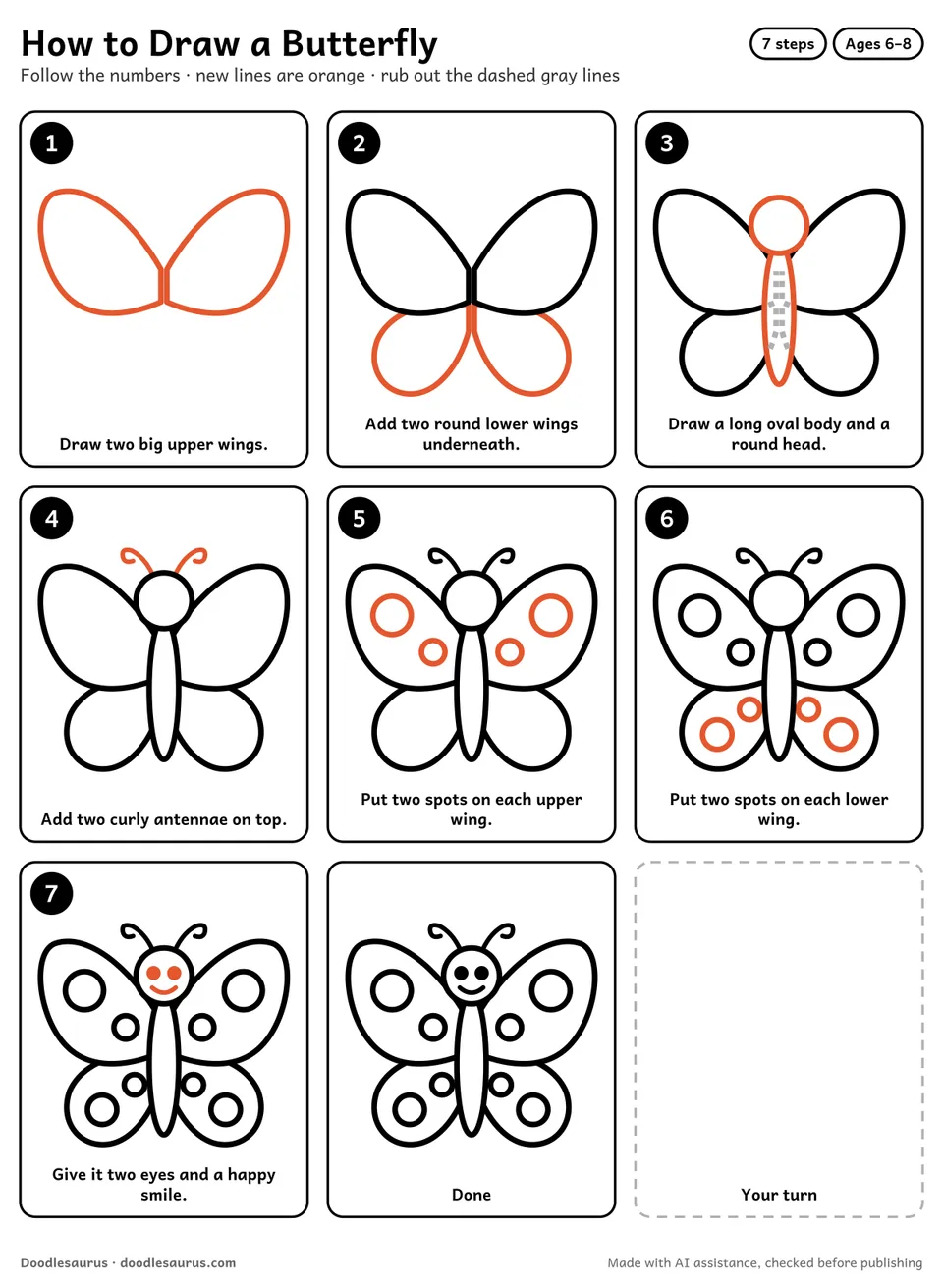
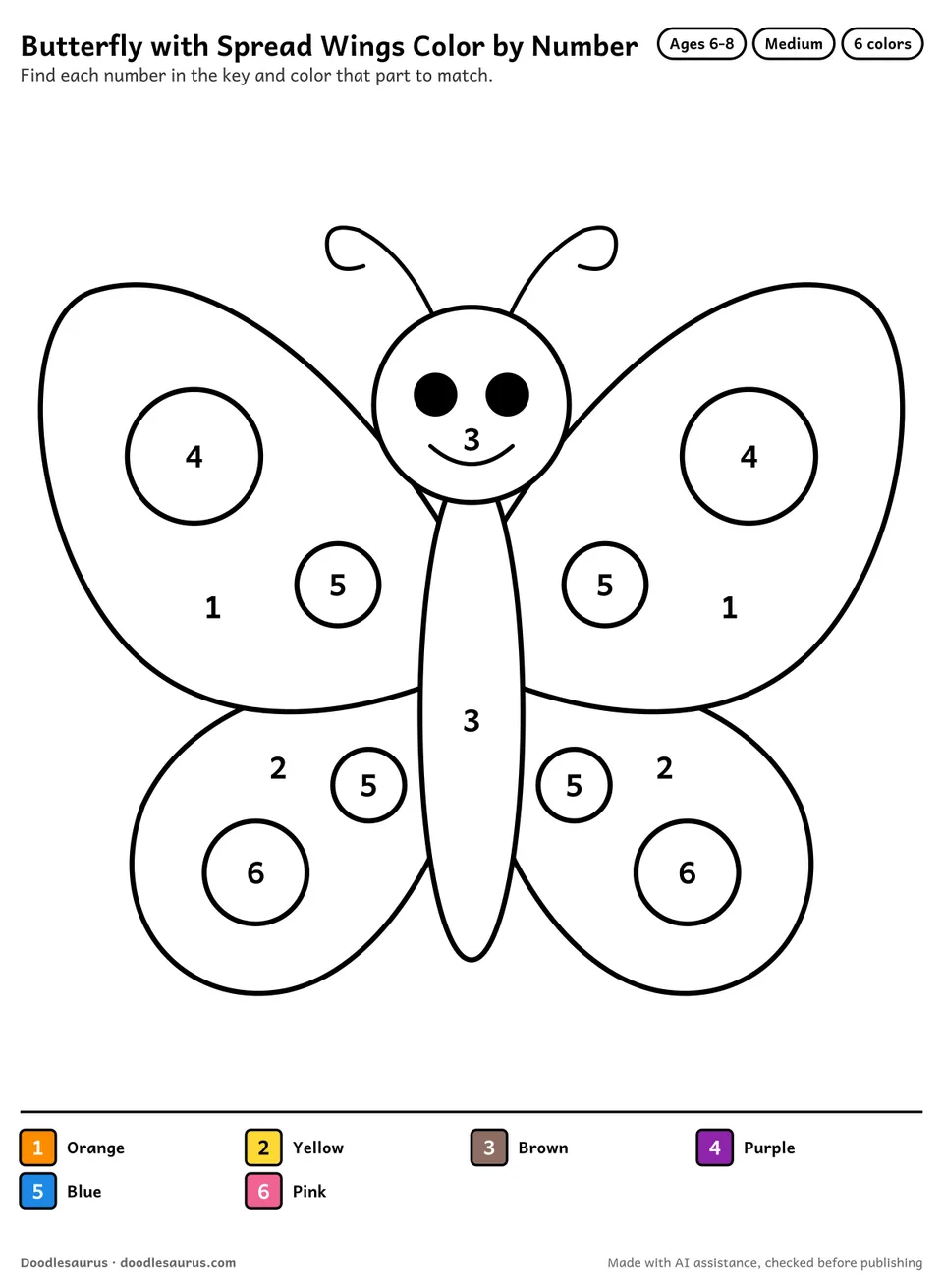
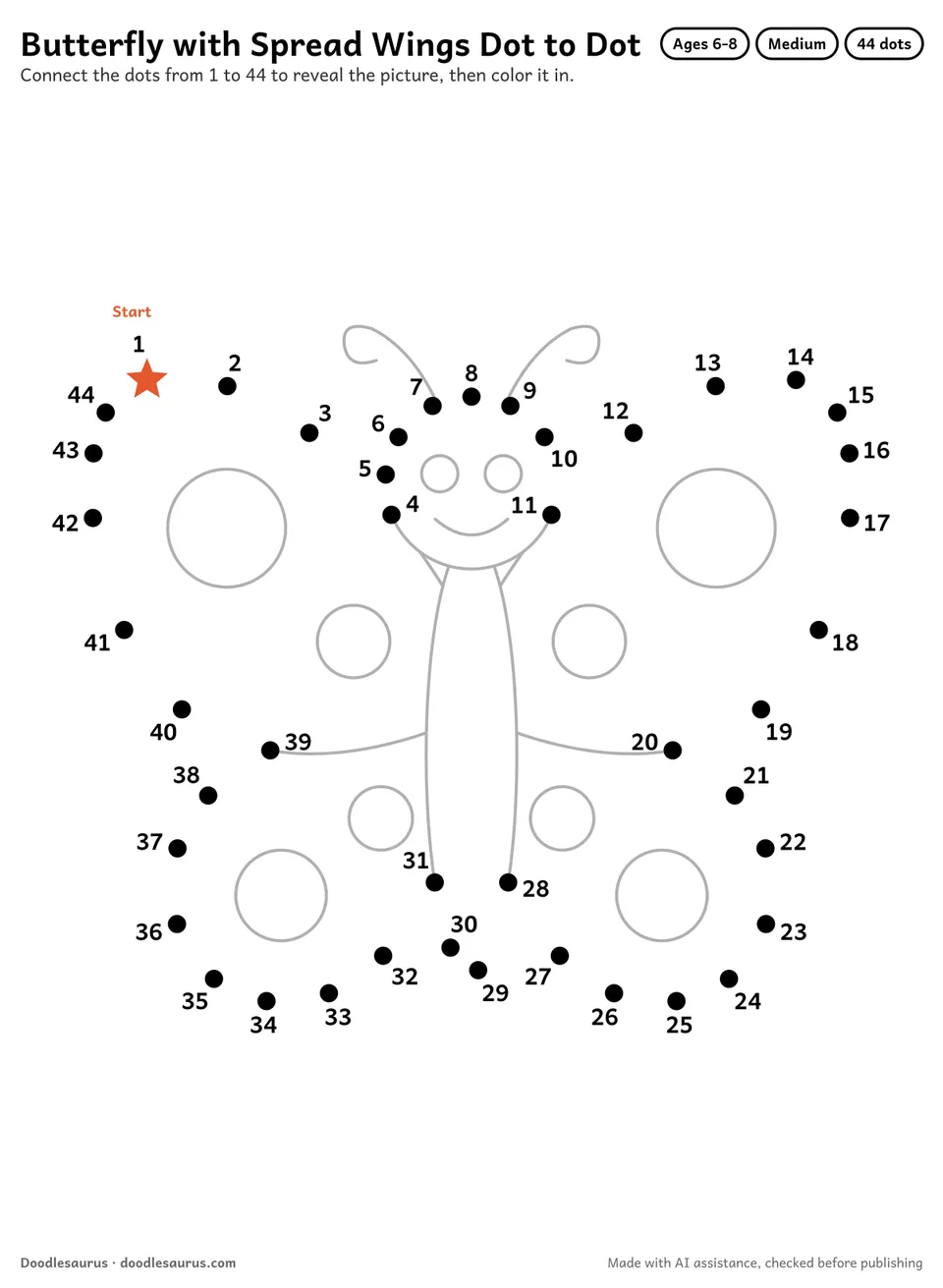
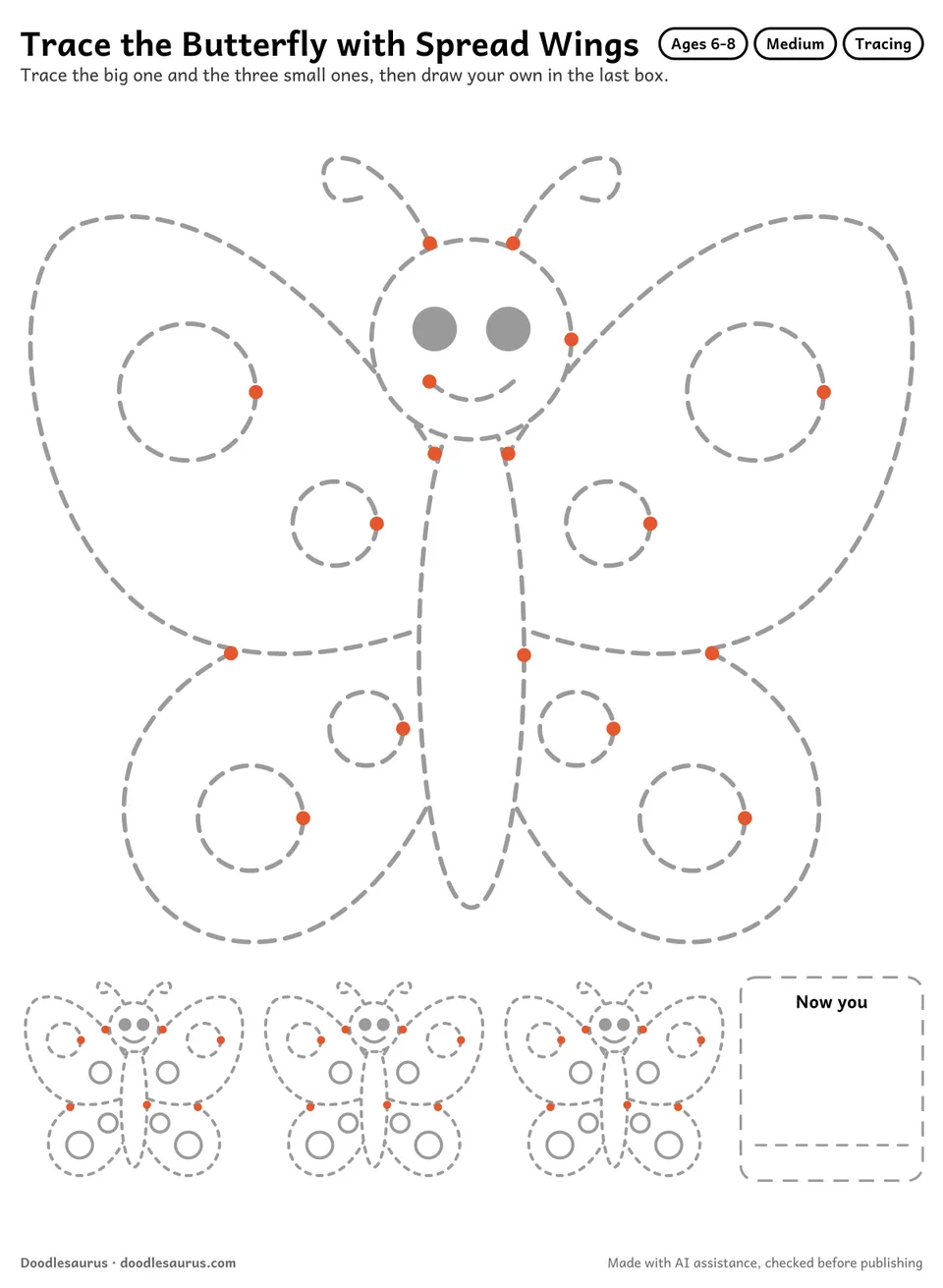
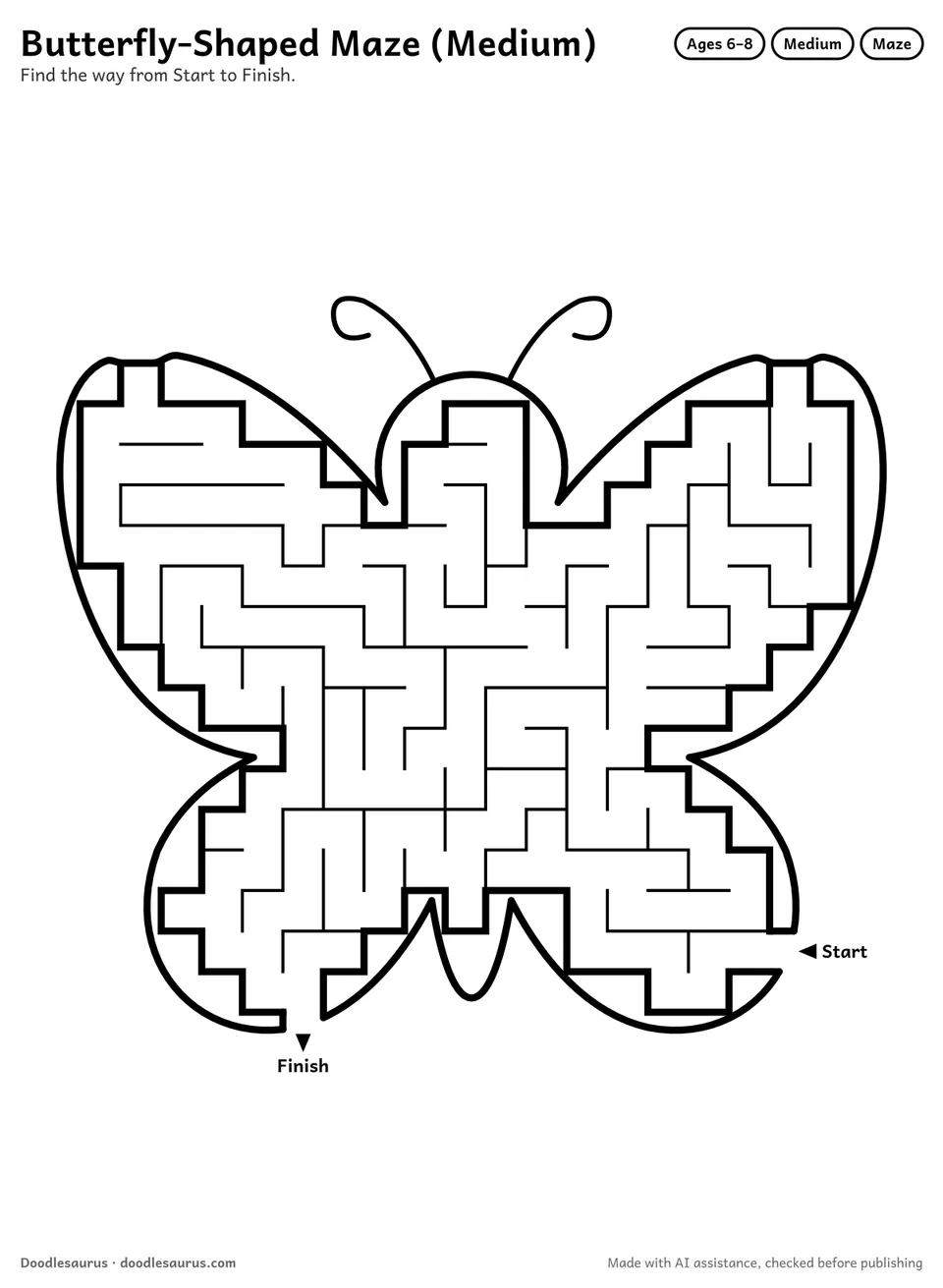
The same butterfly appears as a 7-step drawing guide, a dot to dot with 30, 44 or 62 dots, two tracing sheets, a color by number in two levels and a butterfly-shaped maze.
Can my child use any colors they like?
Yes. Real butterflies come in almost every color, so any choice works. Making the left and right wings match is a nice extra challenge.
New printables, twice a month
Our newsletter starts soon, with new sheets twice a month and a free 10-page starter pack for every new reader.
AI-assisted vector art, checked before publishing. About the AI · License