
Bear Dot to Dot in 31, 50 and 71 Dots
Three bear dot to dot levels of one standing bear: 31 dots for ages 3 to 5, 50 for 6 to 8 and 71 for 9 to 12. Free connect the dots on A4 or Letter.
Choose a level
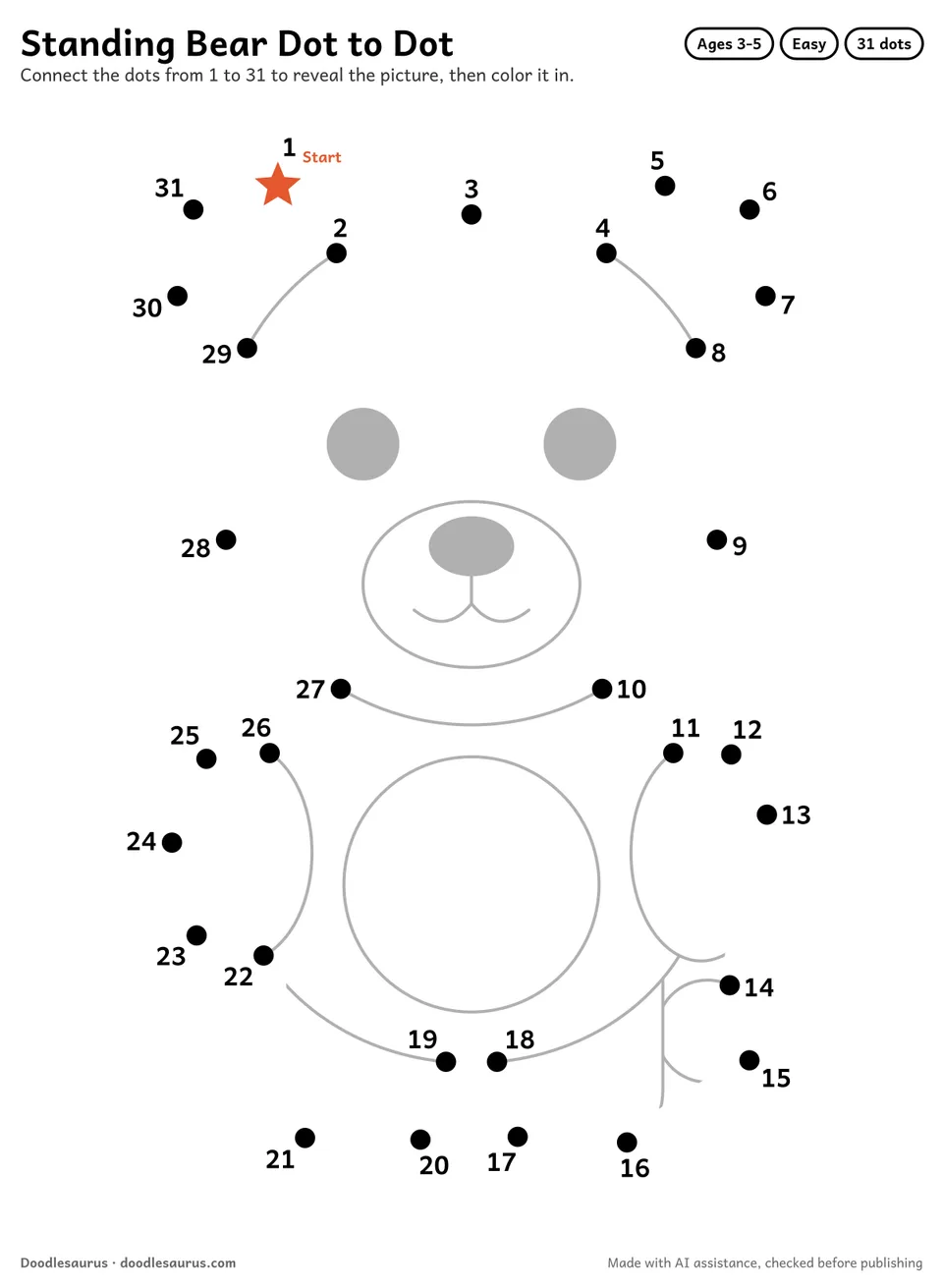
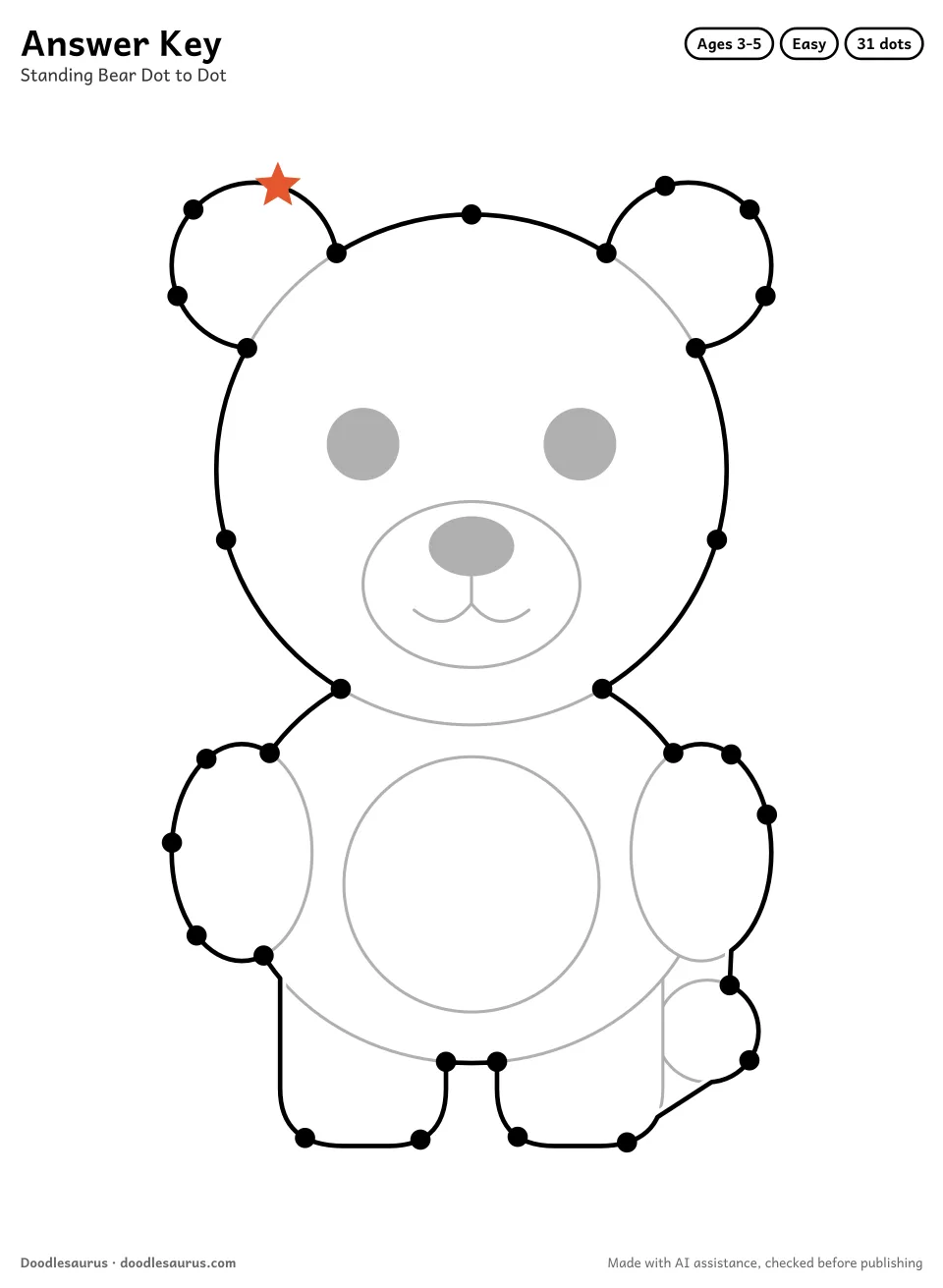
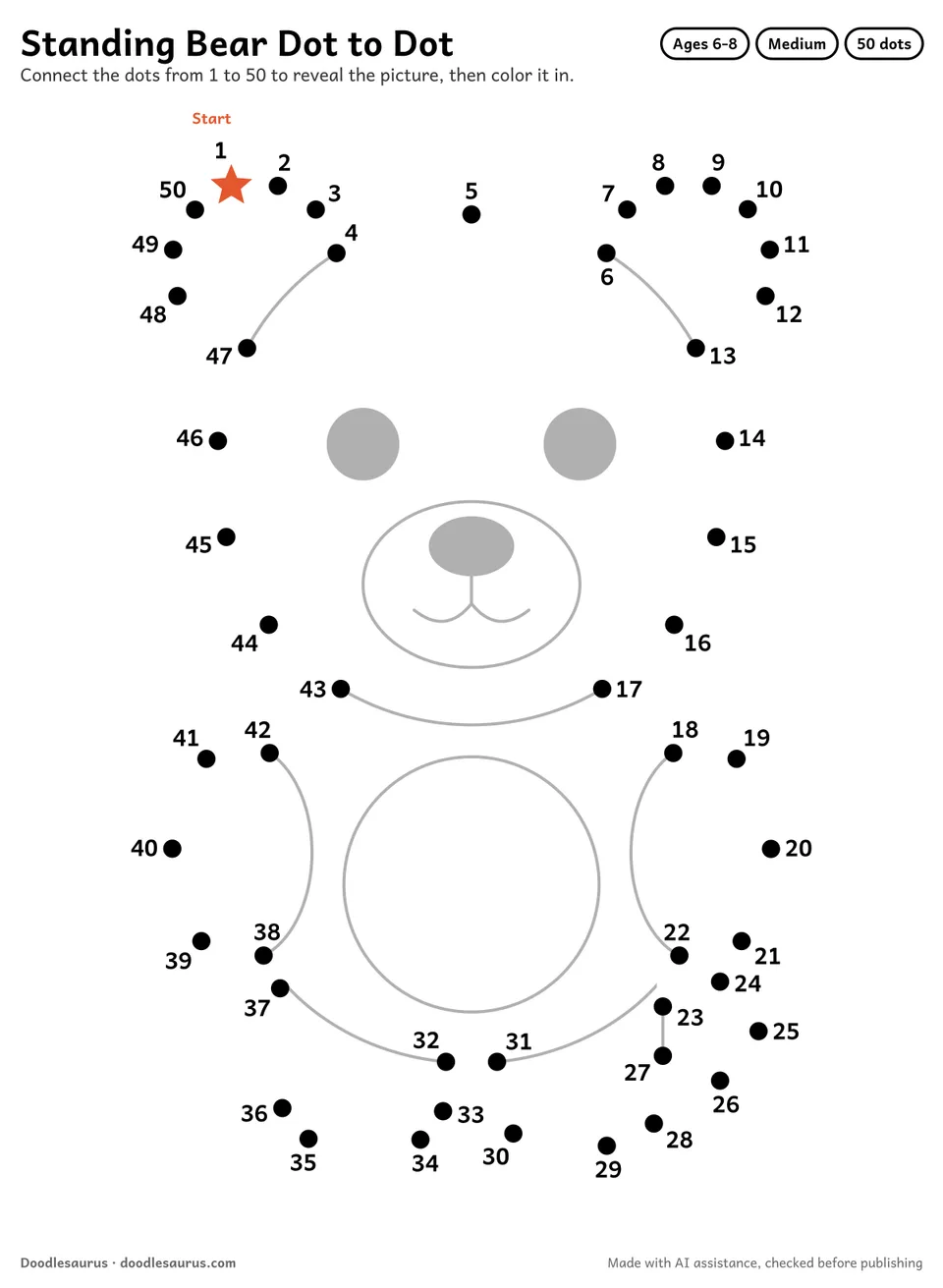
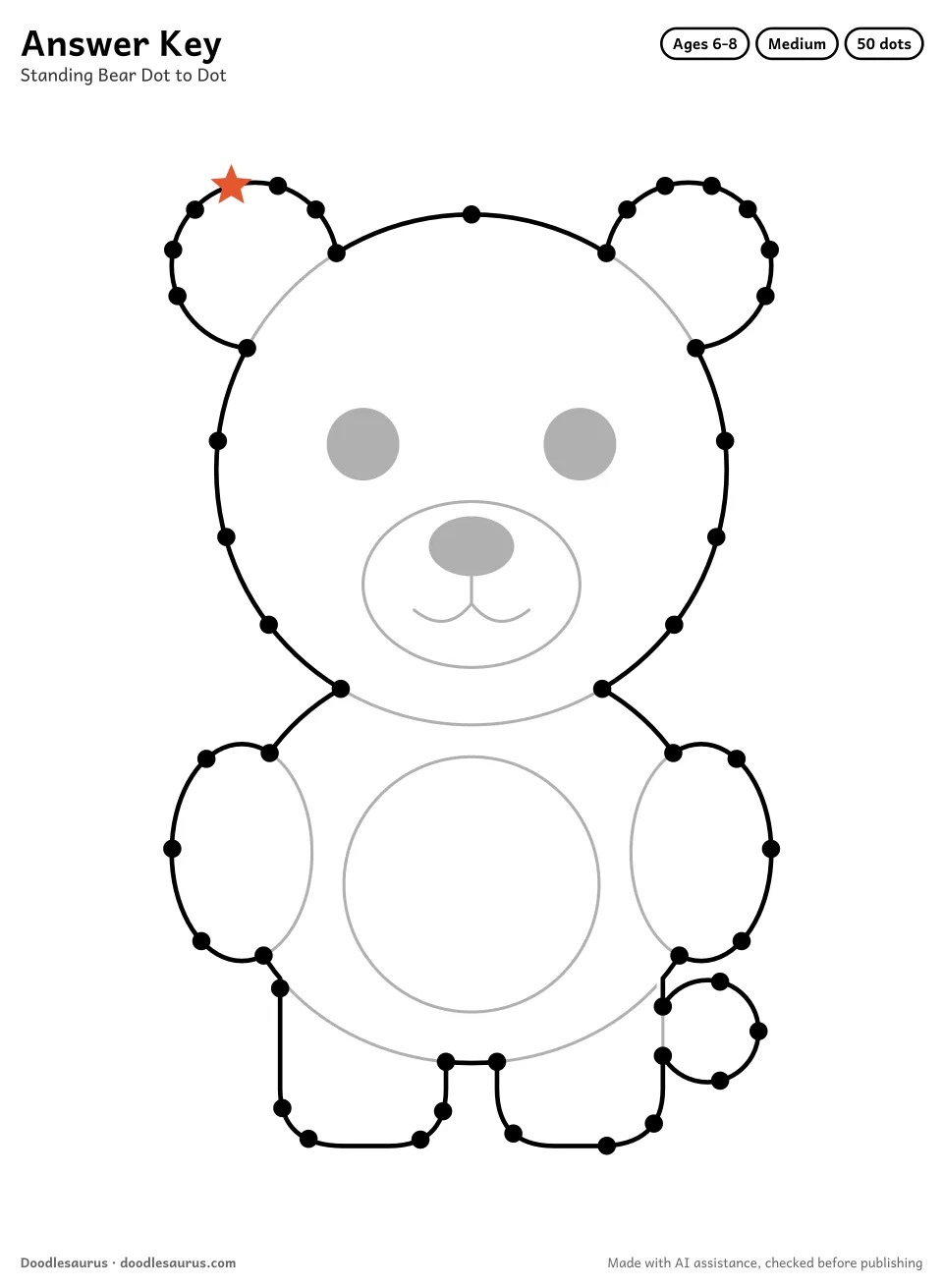
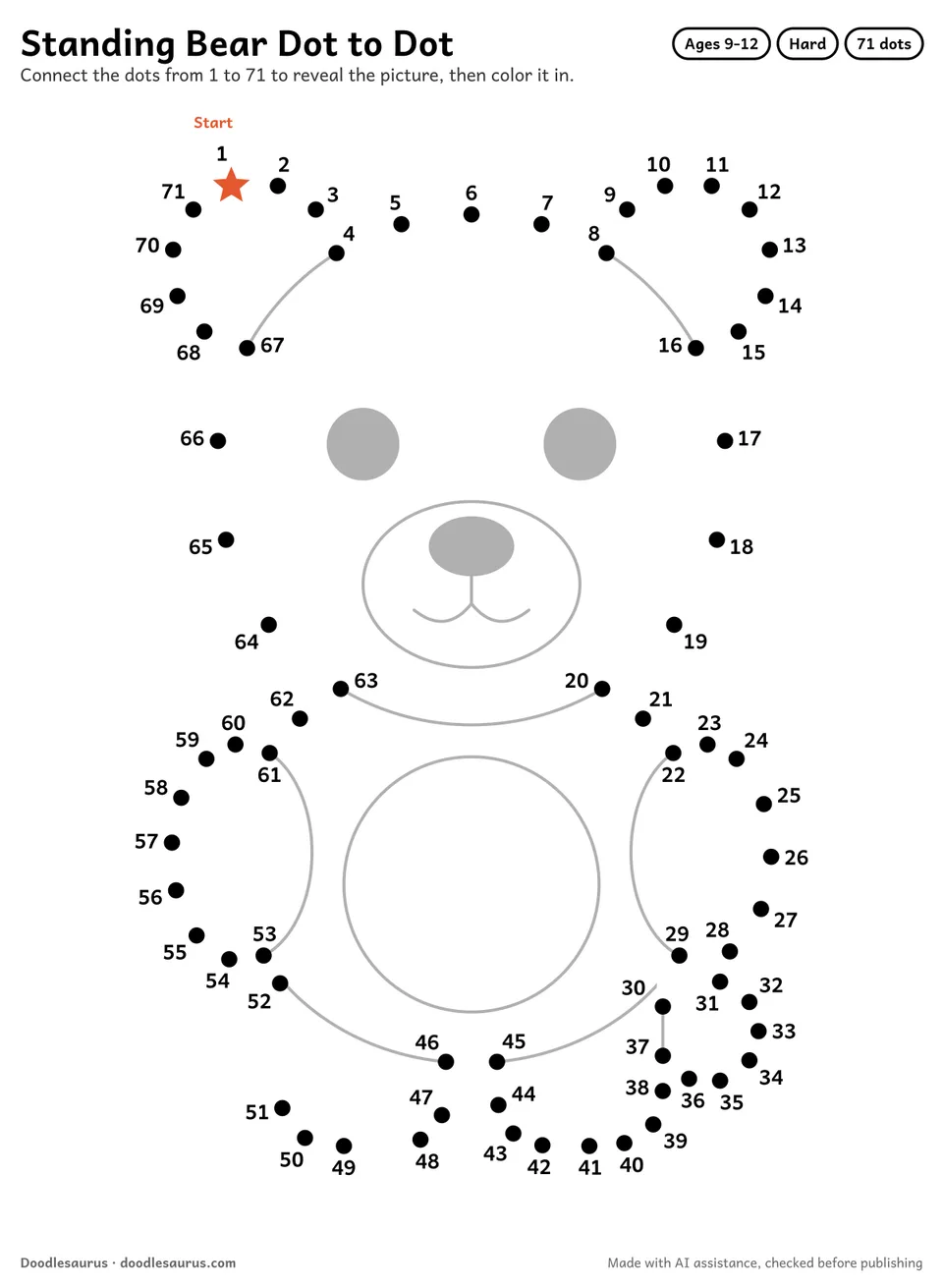
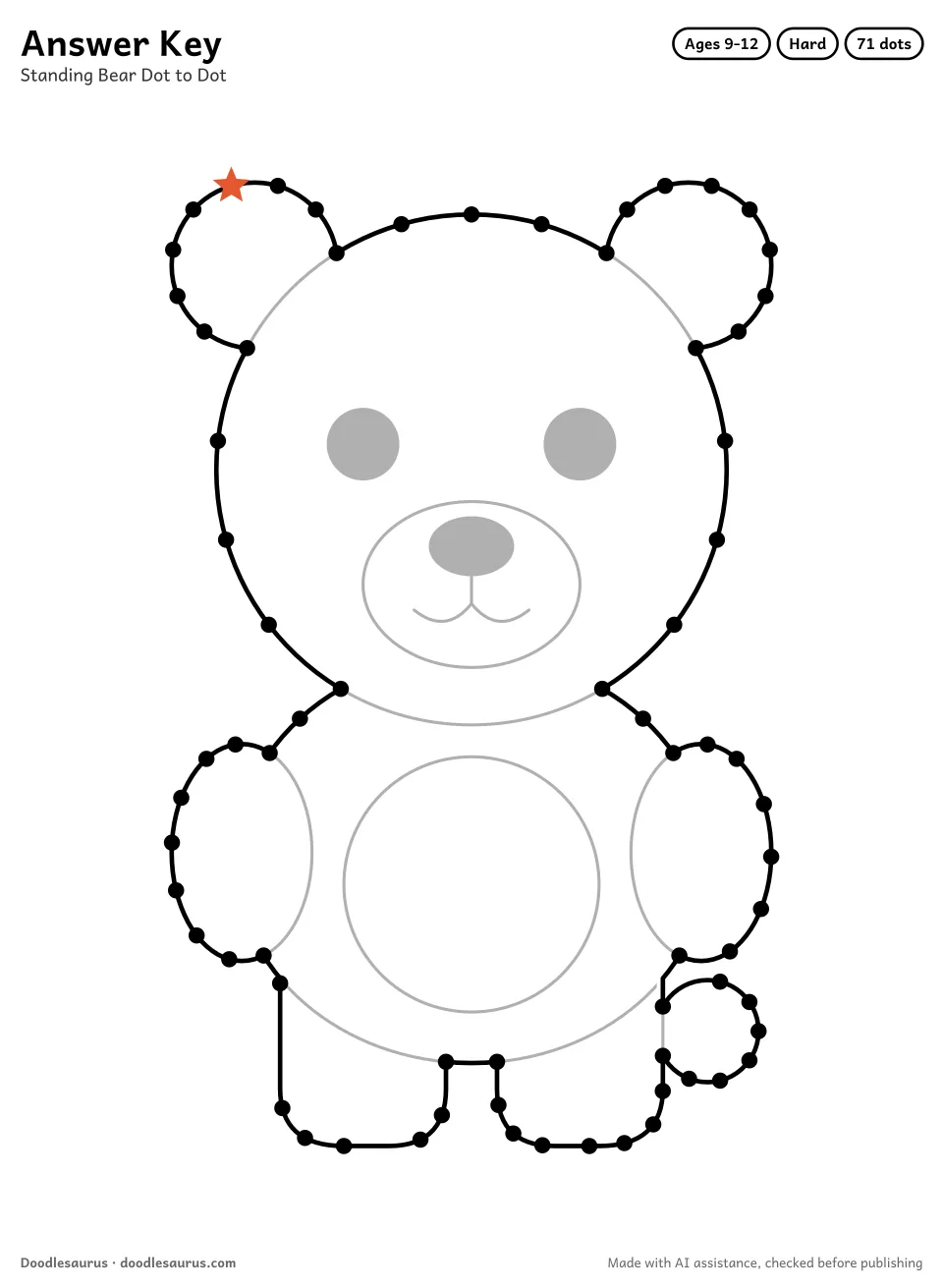
Two round ears on a big round head, arms that bulge out at the sides and a curled tail on the lower right: that is the standing bear on all three pages. A child who moves up a level still knows what will appear. The easy page has 31 dots for ages 3 to 5, the medium page has 50 for ages 6 to 8, and the detailed page has 71 for ages 9 to 12.
Clockwise from the left ear
Number 1 sits above the orange star on the left ear. The line runs clockwise: down the inside of that ear, across the top of the head, around the right ear, down the side of the head and the arm, and around the tail. It crosses the bottoms of both feet with a short notch between the legs. Then it climbs the left side and rounds the left ear to finish beside the start. The easy line takes a short cut from the tail to the foot, which is why the inner side of the tail is gray on that page.
A face and a tummy to start with
Every sheet already shows the eyes, the muzzle with its oval nose and smile, the inner ears, the chin line, the inner edges of the arms and legs and a big round belly in soft gray. The detailed sheet uses smaller dots and packs extra numbers into the top of the head, the shoulders and the tail. Shrinking it to fit squeezes that tail even tighter, so it reads best from the A4 or US Letter PDF at 100 percent. Each level has its own answer page. It shows the joined outline and doubles as a second bear to color.
Skills practiced & tips
- Find the number 1 above the orange star on the left ear before your child begins.
- Slow down around the tail, where several numbers sit close together.
- Have older children say the next number before they lift the pencil off the dot.
- Draw the lines in pencil first and go over them in marker once the bear is complete.
- When a line goes to the wrong dot, return to the last correct number and carry on from there.
Bear fun facts
- Polar bears and brown bears are the two largest kinds of bear.
- A bear's sense of smell is one of the strongest of any land animal.
- The giant panda is a true bear that eats almost nothing but bamboo.
Classroom ideas
- Preschool (ages 3 to 5): join the 31 dots as a group on the board first, then let each child do their own copy.
- Grade 1: use the 50-dot bear for counting practice and ask students to circle every even number before joining the dots.
- Grades 3 to 5: hand out the 71-dot page as a quiet early-finisher task and let students self-check with the answer page.
More bear activities
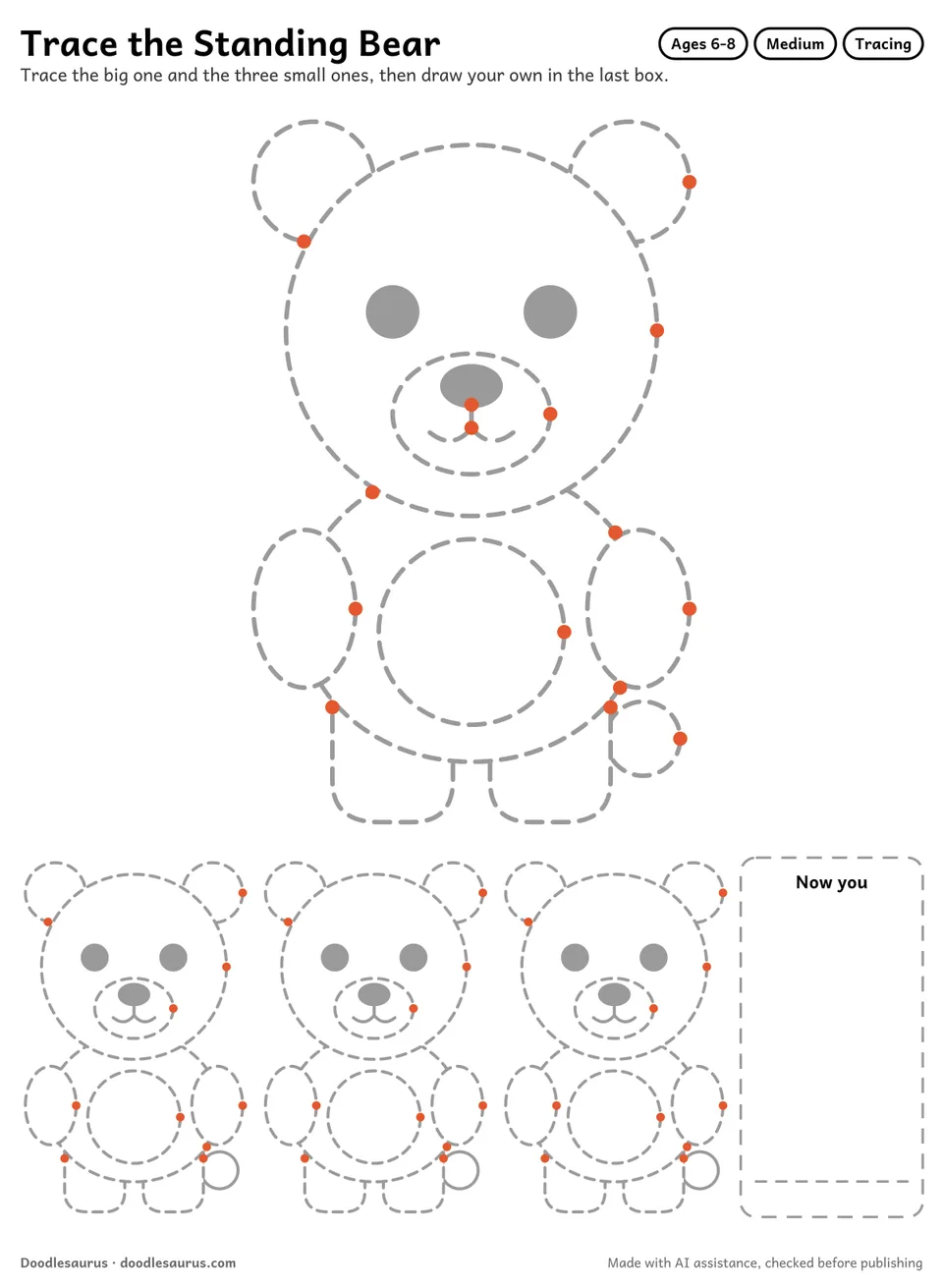
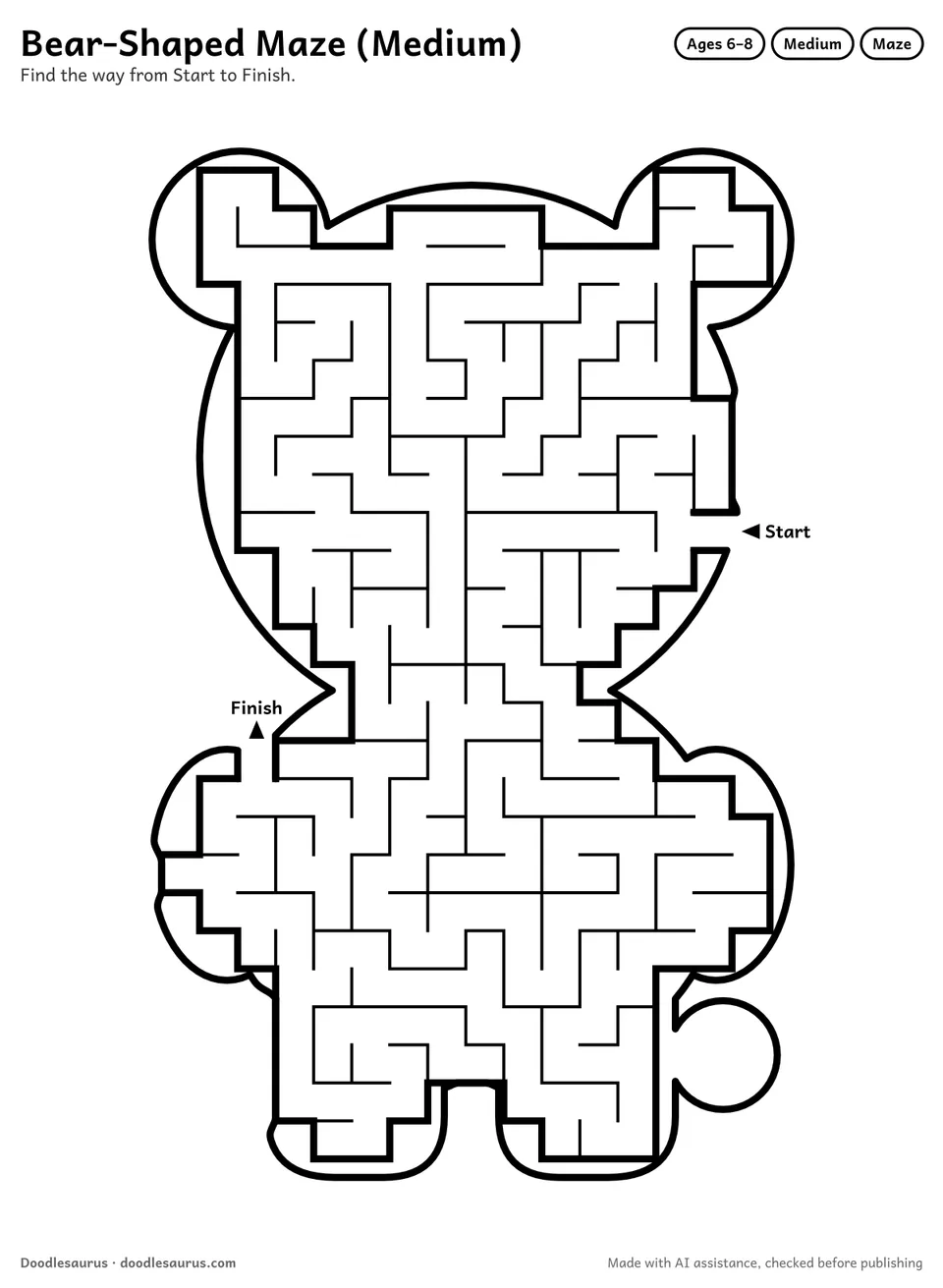
More dot to dot
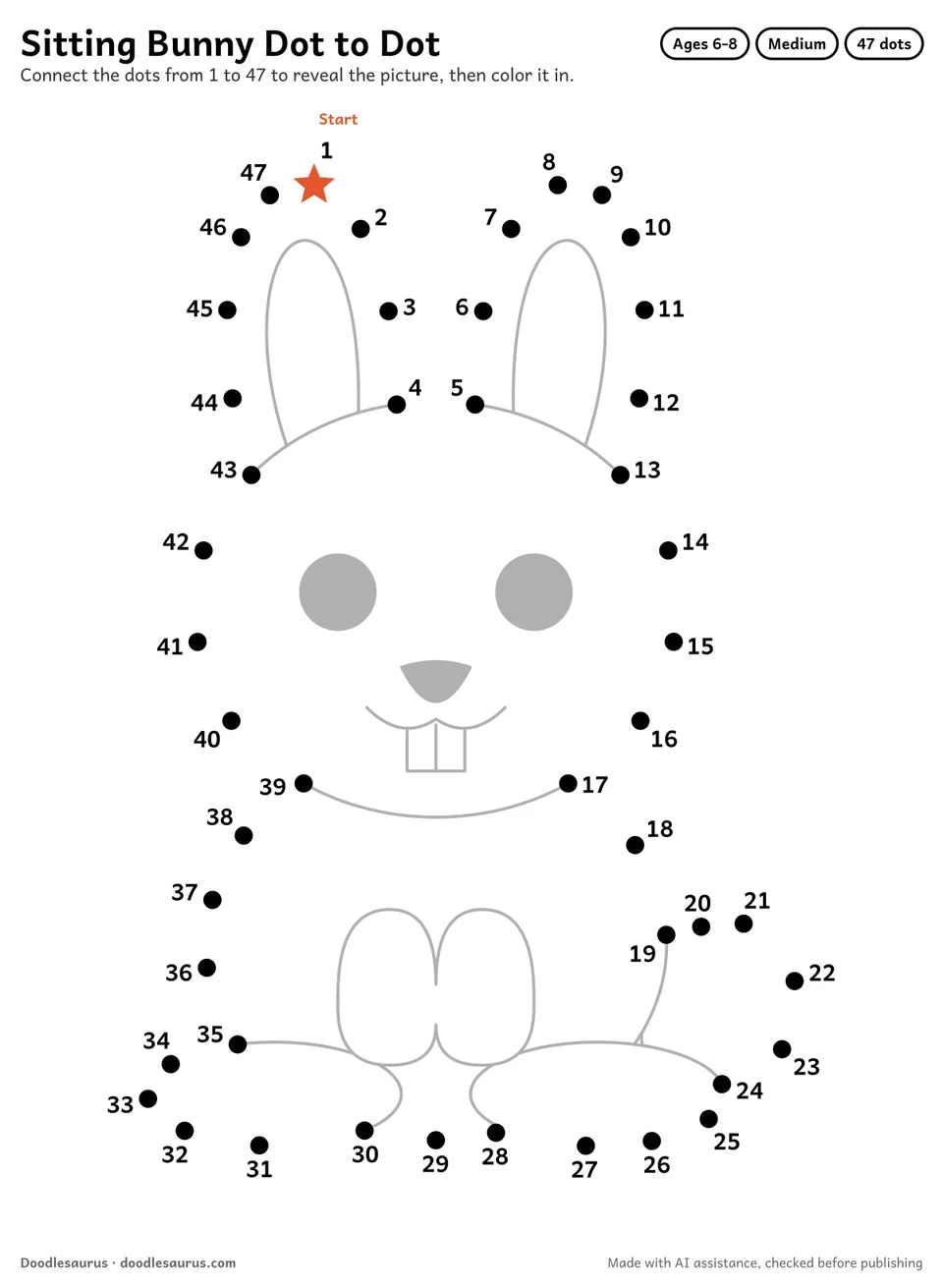
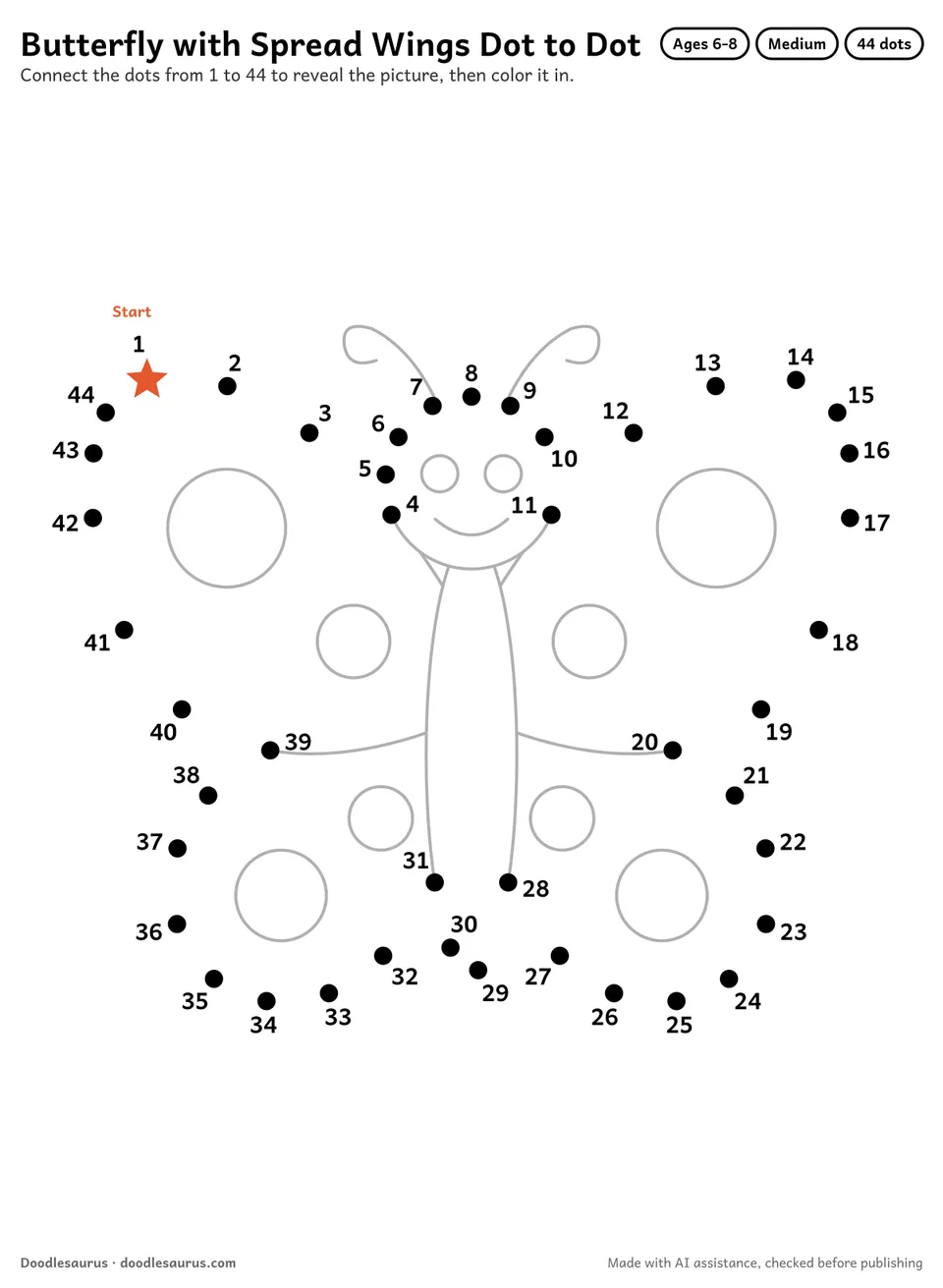
Frequently asked questions
Will the 71-dot bear look new to a child who did the 31-dot one?
No. It is the same standing bear with the same gray face and belly, only drawn with more points as the level goes up: 31 dots on the easy page, 50 on the medium page and 71 on the detailed page.
Why does the face show up before the dots are joined?
On all three pages the eyes, the muzzle with its nose and smile, the inner ears, the chin line, the arm edges, the legs and a round belly are printed in light gray as clues. The 71-dot page has the same gray clues but more, smaller dots to join. On the easy page the inner side of the tail is gray as well, because the line takes a short cut from the tail to the foot.
What does the line do between the bear's legs?
It crosses the bottom of both feet and makes a short notch up between the legs before climbing the left side. Every level starts at an orange star labeled Start on top of the bear's left ear, as you look at the page, and the last number comes back beside it.
Why does the tail need extra care?
The line goes all the way around the round tail on the lower right, and the 71-dot page packs extra numbers there, as it does on the top of the head and the shoulders.
About this printable
- Made with AI assistance (vector drawing authored by a language model) and checked by automated tests and an AI reviewer.
- Checked by automated tests and an AI reviewer on 22 Oct 2026.
- Free for personal and single-classroom use. See the license. Read the license · How these are made · Report a problem.
- Vector PDF, 2 pages, 186×254 mm art box — prints edge-safe on A4 and US Letter.
New printables, twice a month
Our newsletter starts soon, with new sheets twice a month and a free 10-page starter pack for every new reader.