Bunny Dot to Dot Pages with 30, 47 or 60 Dots
Bunny dot to dot printables with 30, 47 or 60 dots, long ears, a bumpy tail and a face already in gray. Free connect the dots PDFs for A4 or US Letter.
Choose a level
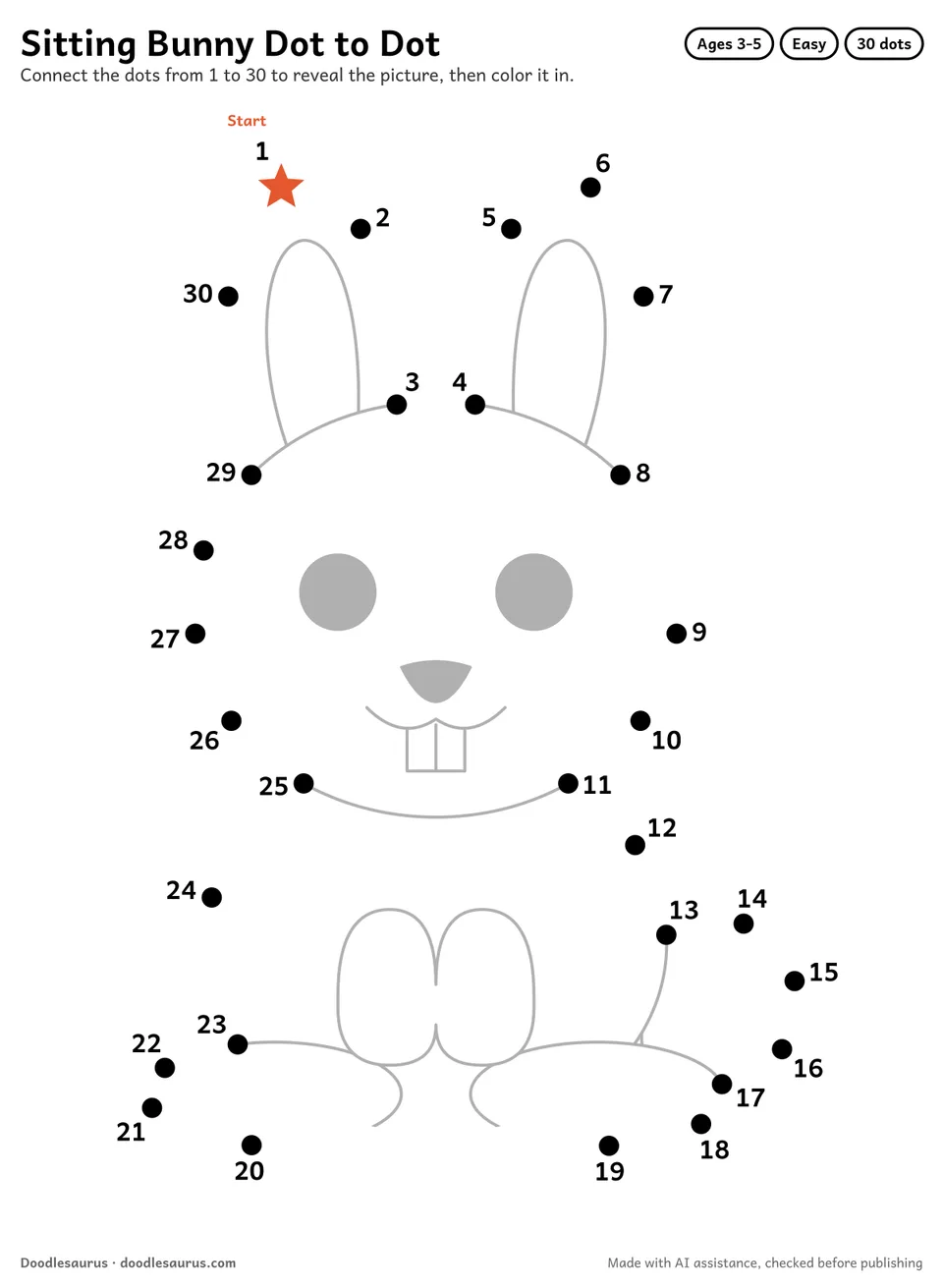
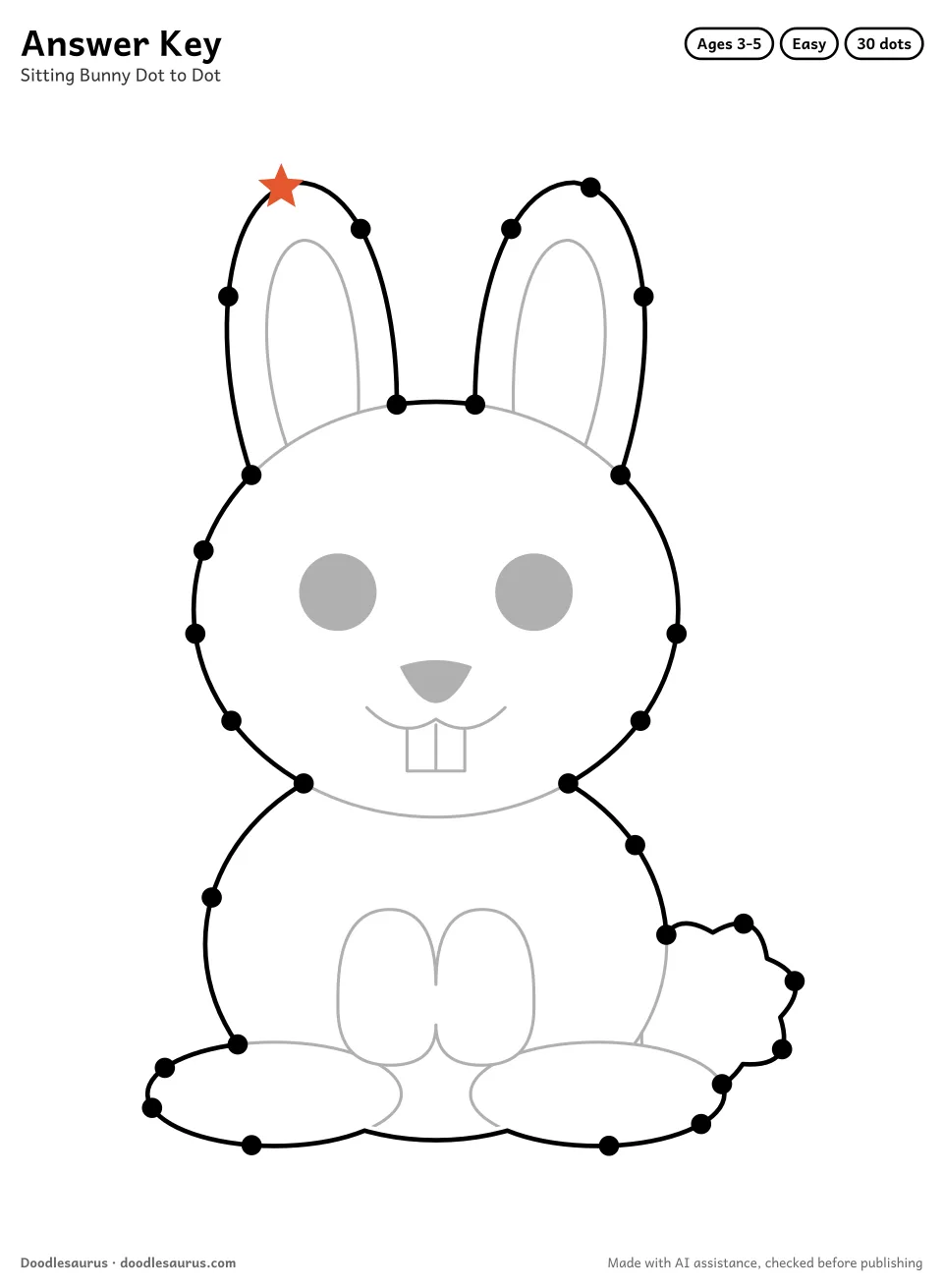
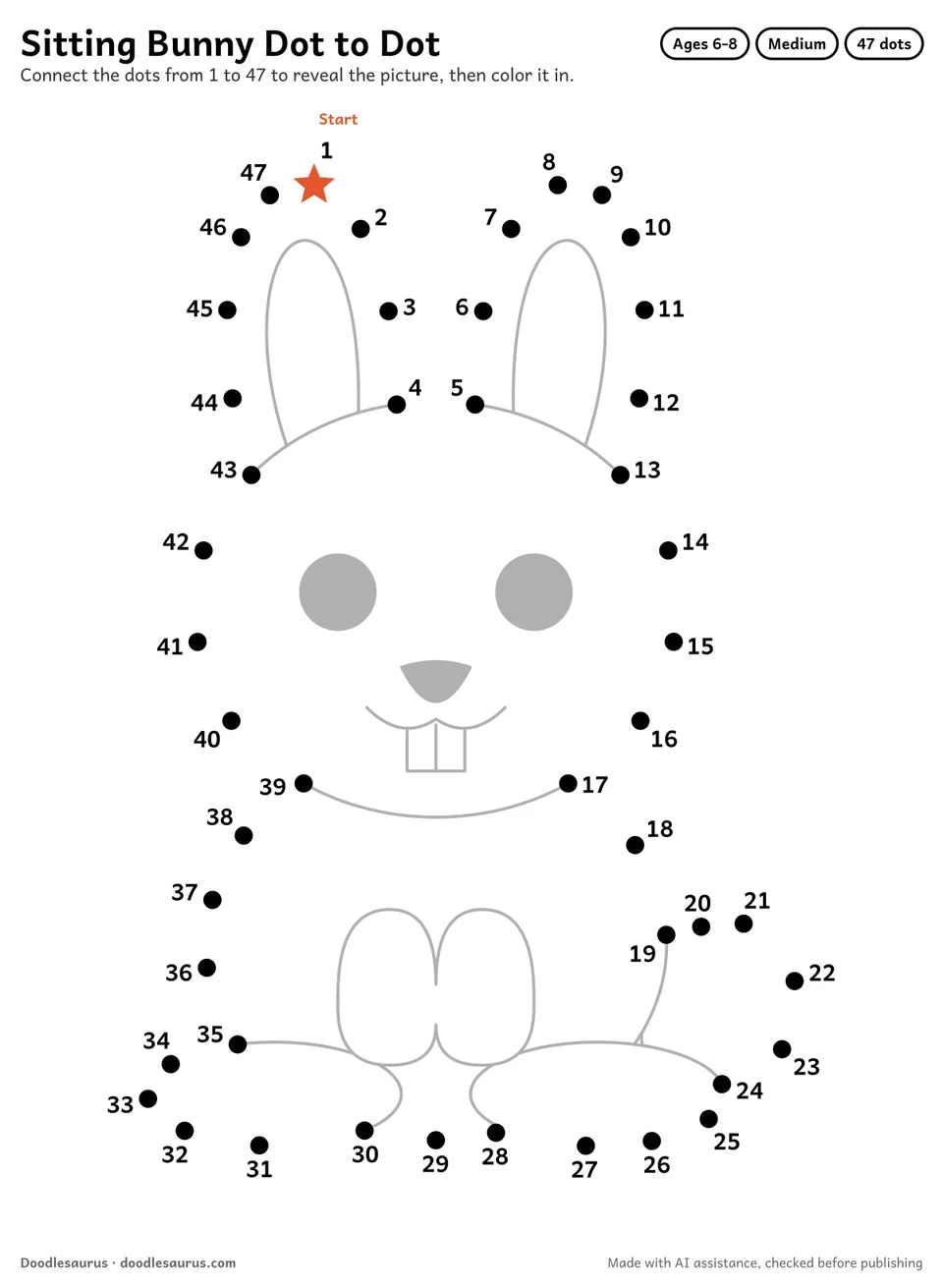
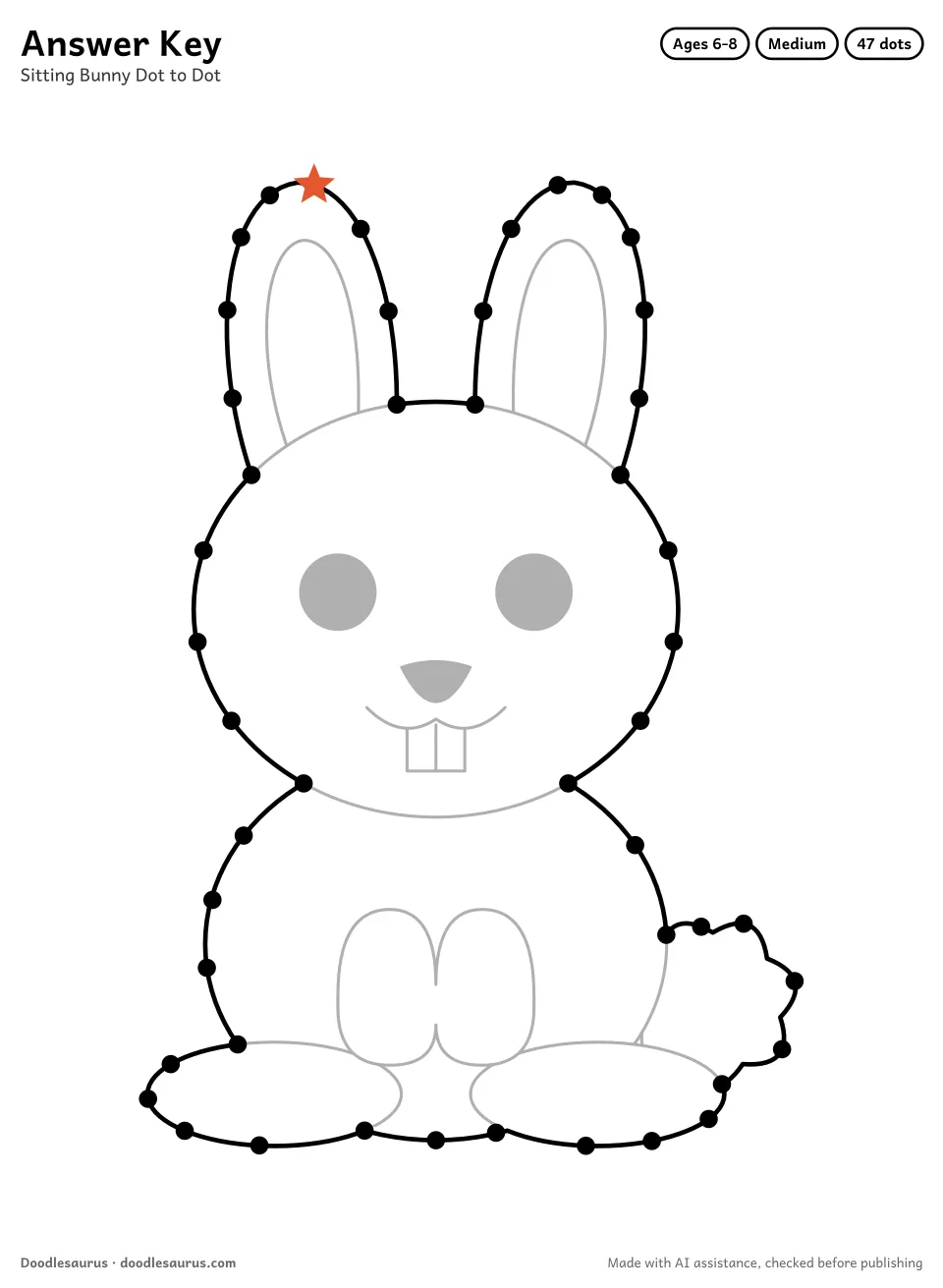
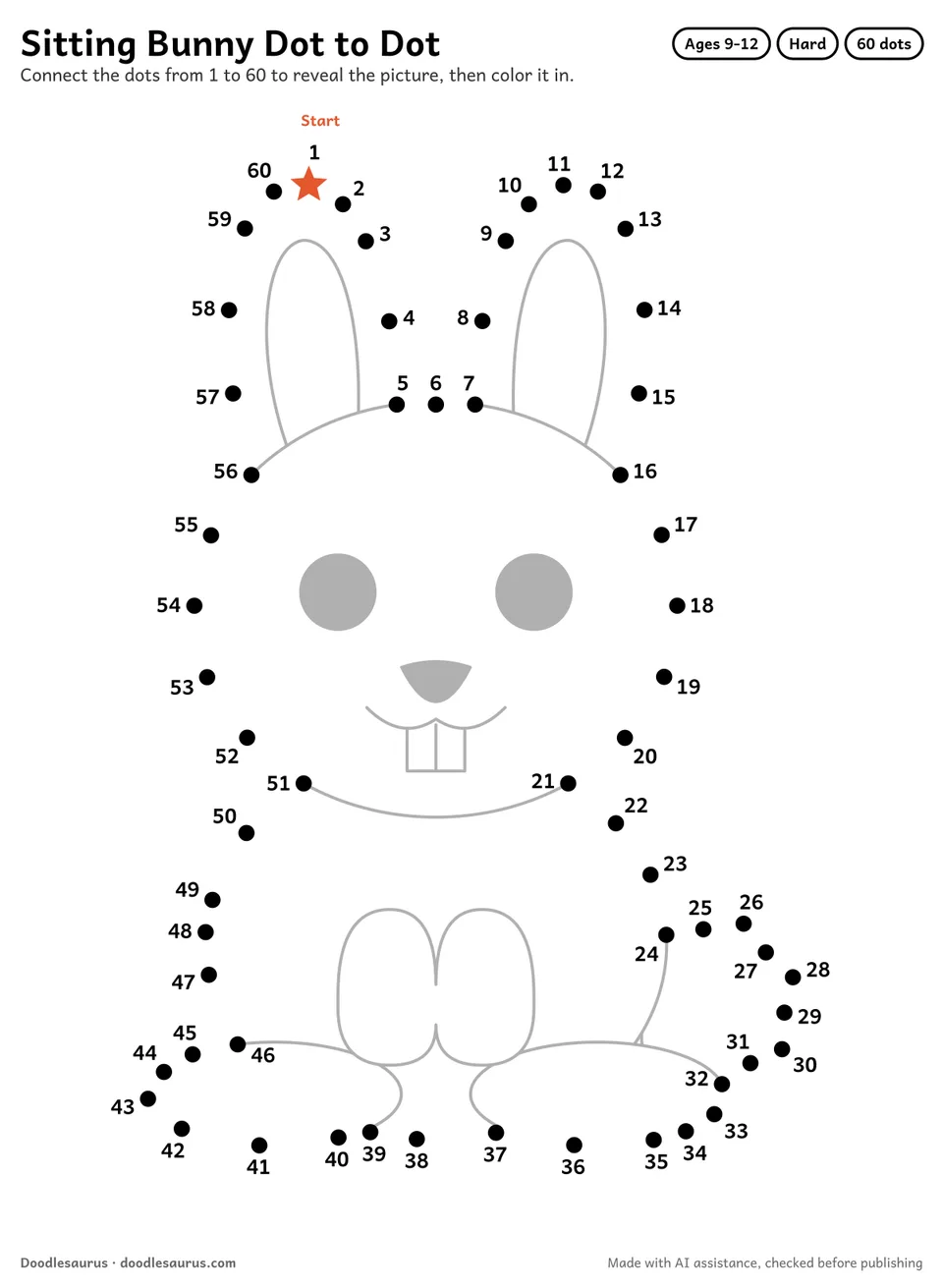
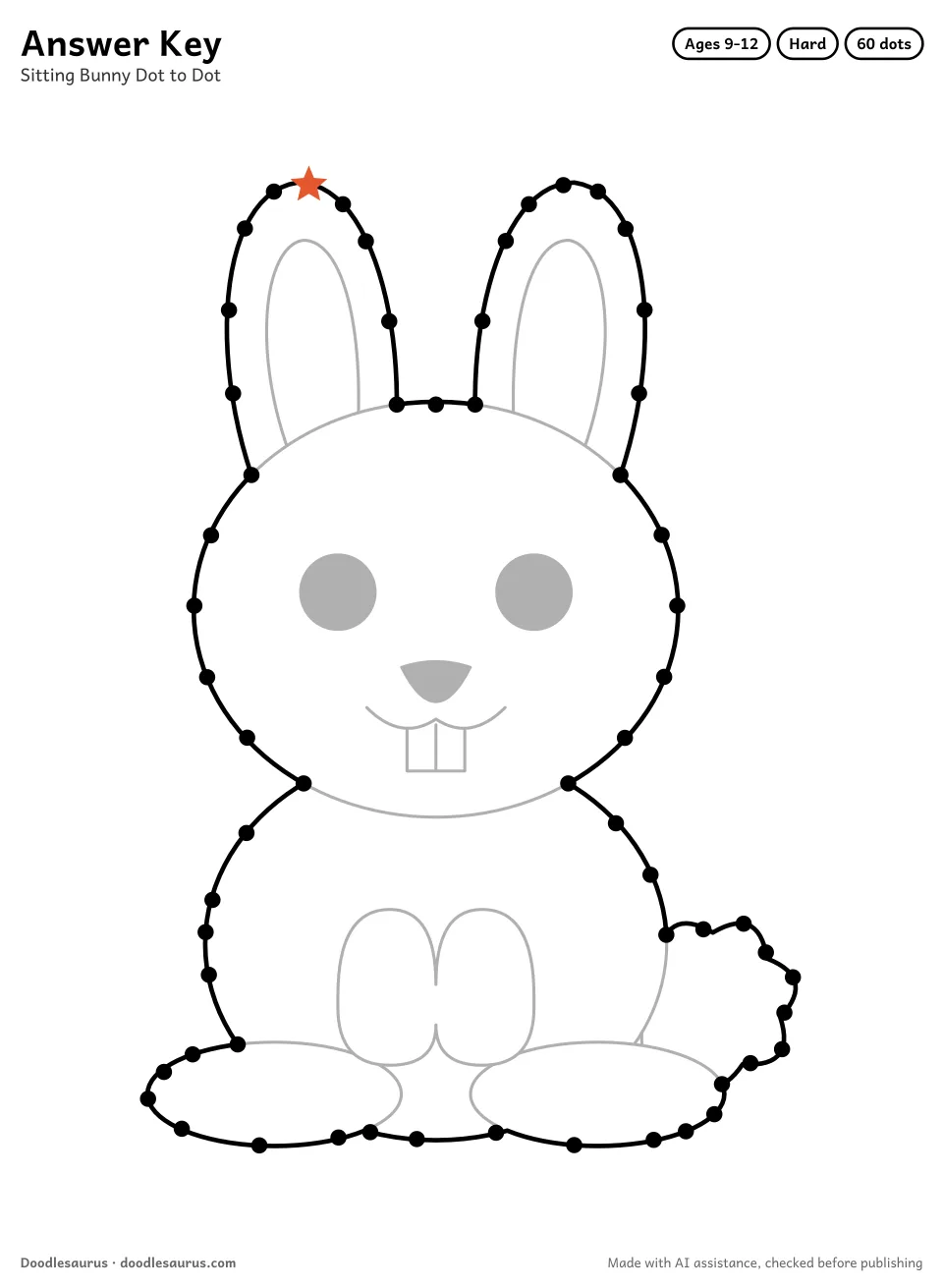
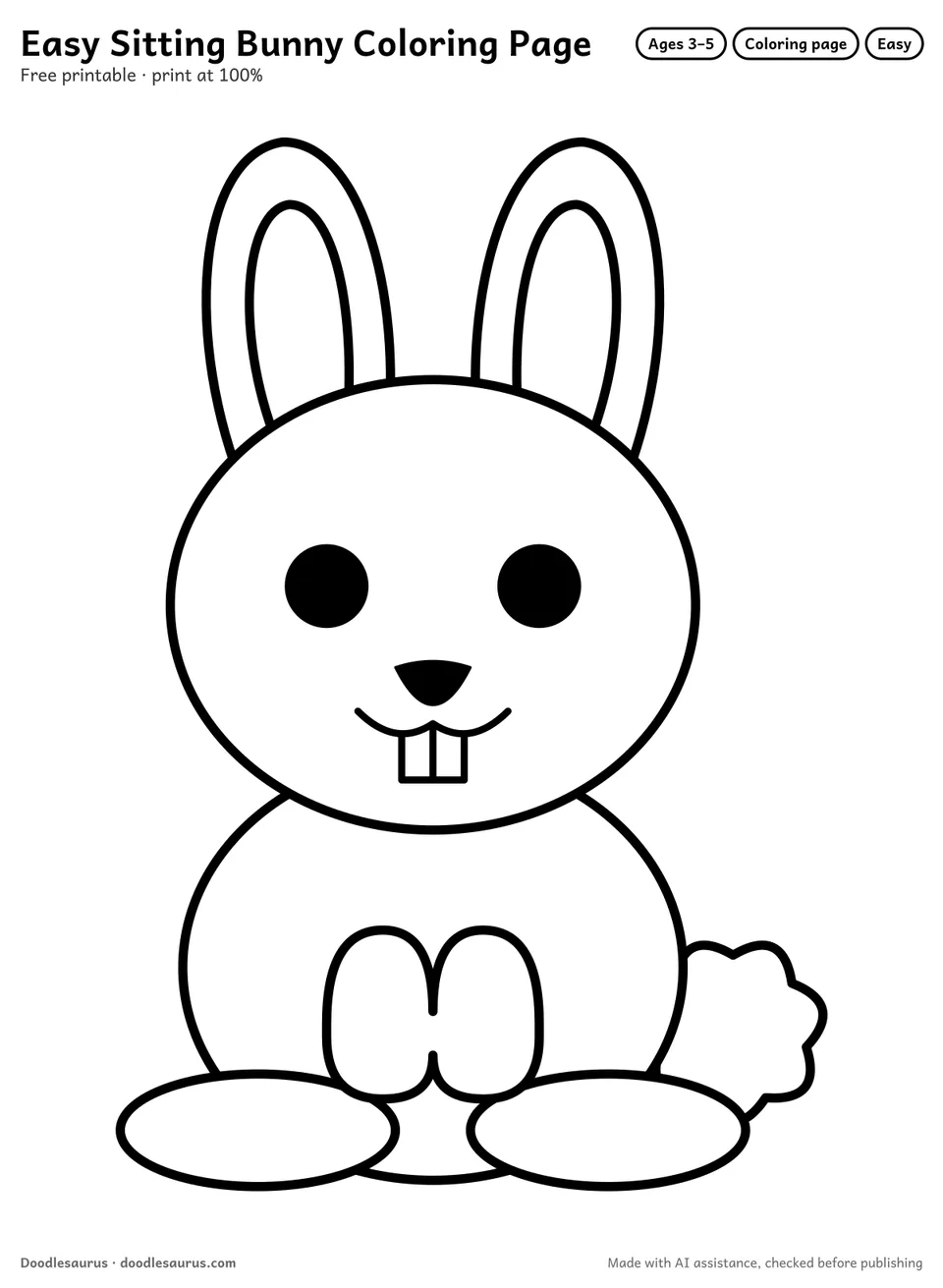
Long upright ears meet in a dip at the top of this sitting bunny’s head. That makes it easy to recognize. The bumpy, cloud-shaped tail low on the right is where most children slow down. This bunny dot to dot uses the same rabbit on all three sheets. The easy one has 30 dots for ages 3 to 5, the medium one 47 for ages 6 to 8 and the hard one 60 for ages 9 to 12.
Around the bumpy tail
Counting begins at the orange star on top of the left-hand ear. The first numbers go down the inside of that ear, dip between the ears and climb the right one, then follow the right cheek and body toward the tail. The dots bunch together there. After the tail they cross the flat, wavy base under the feet and climb the left side, coming back up the outside of the left ear to close the shape.
Inner ears, teeth and paws
The inside of the bunny is already sketched in pale gray. That covers the inner ears, the line of the head below them, round eyes, a nose, a smile with two front teeth, the chin, the haunches, two front paws and the edge of the tail. The hard sheet keeps all of that and adds extra dots along the ears and around the tail. Those tail numbers are the first to blur when a page is reduced, so the A4 or Letter file is best printed at 100 percent. Every level’s answer key shows the finished outline, for checking or as a spare bunny to color.
Skills practiced & tips
- Find the orange Start star at the tip of the left-hand ear before counting begins.
- Slow down around the tail, where several dots sit close together.
- On the 60-dot page, check that the line dips from 4 down to 5, 6 and 7 and back up to 8 between the ears.
- Draw in pencil first so a wrong jump can be erased without spoiling the picture.
- Once the outline is finished, color the bunny and add grass under its feet.
Bunny fun facts
- Most rabbits are busiest around dawn and dusk and rest for much of the day.
- A happy rabbit sometimes leaps and twists in the air, a move owners call a binky.
- Rabbits are born with their eyes closed and almost no fur, while baby hares are born furred.
Classroom ideas
- Pre-K (ages 3 to 5): count from 1 to 30 together while each child joins the easy bunny.
- Grade 1: use the 47-dot page in a math center and ask children to color every even-numbered dot before joining them.
- Grades 3 to 5: give the 60-dot bunny to fast finishers and have them check their outline against the answer key.
More bunny activities
More dot to dot
Frequently asked questions
Does the bunny look the same at 30 dots and at 60?
Yes. All three pages draw the same sitting bunny: the easy page has 30 dots for ages 3 to 5, the medium page 47 dots for ages 6 to 8 and the hard page 60 dots for ages 9 to 12.
Why is the face already printed on the page?
On all three pages the eyes, nose, smile and two front teeth appear in light gray, together with the inner ears, the chin, the two front paws and the line that marks off the tail. That lets a young child recognize the bunny early.
How does the bunny's line end up back at the left ear?
After the tail it crosses the flat, wavy base under the feet and climbs the left side. The last number comes back up the outside of the left-hand ear to the orange star at its tip, where counting began, as you look at the page.
What changes on the 60-dot bunny?
It keeps the same gray lines and adds extra dots along the ears and the tail. Between the ears the line dips from 4 down to 5, 6 and 7, then climbs back up to 8.
About this printable
- Made with AI assistance (vector drawing authored by a language model) and checked by automated tests and an AI reviewer.
- Checked by automated tests and an AI reviewer on 22 Oct 2026.
- Free for personal and single-classroom use. See the license. Read the license · How these are made · Report a problem.
- Vector PDF, 2 pages, 186×254 mm art box — prints edge-safe on A4 and US Letter.
New printables, twice a month
Our newsletter starts soon, with new sheets twice a month and a free 10-page starter pack for every new reader.