
Cat Connect the Dots Pages with 30, 44 or 65 Dots
Cat connect the dots in three levels, with 30, 44 or 65 numbered dots around a sitting cat. Each cat dot to dot printable has its own answer page.
Choose a level
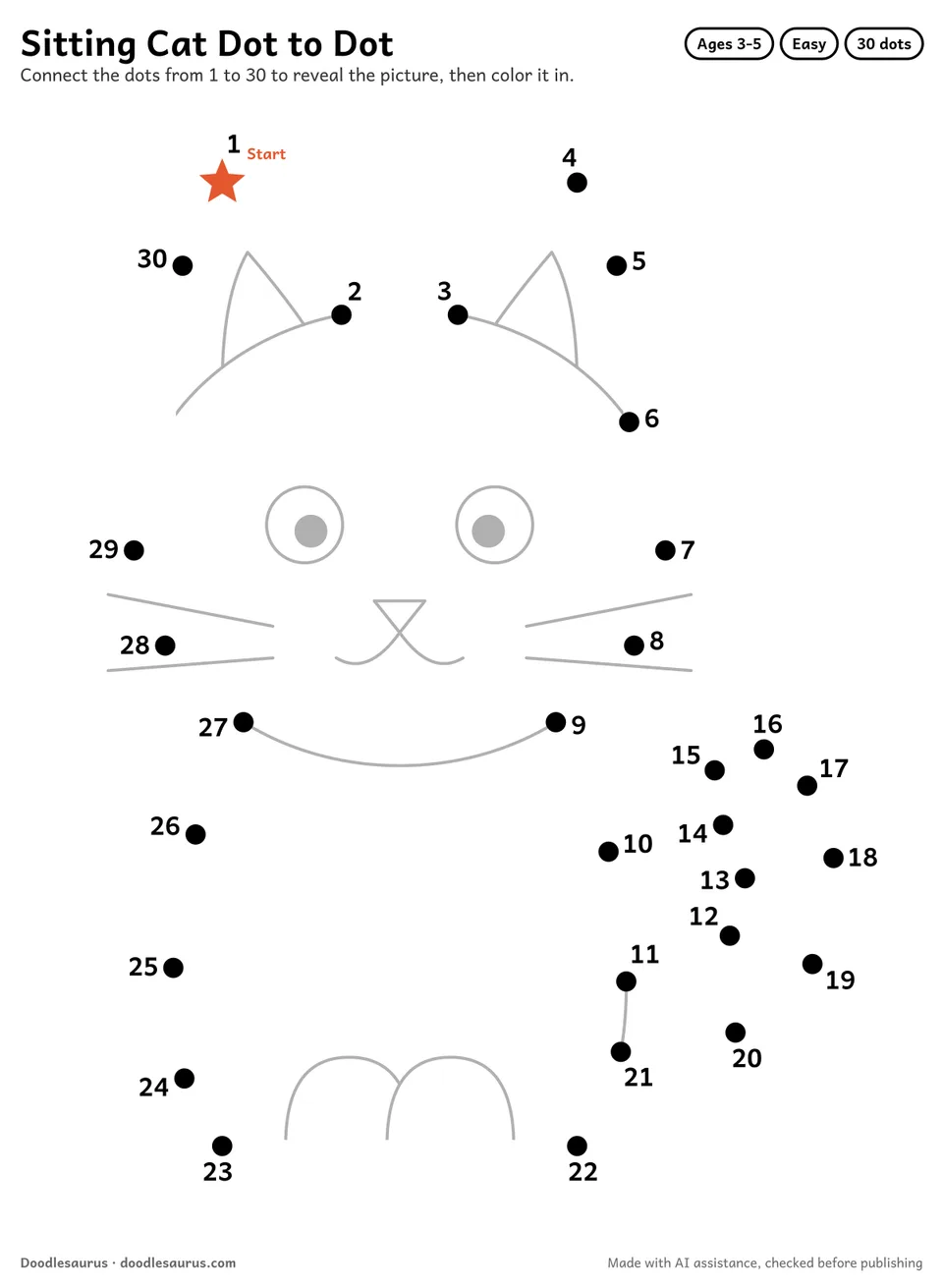
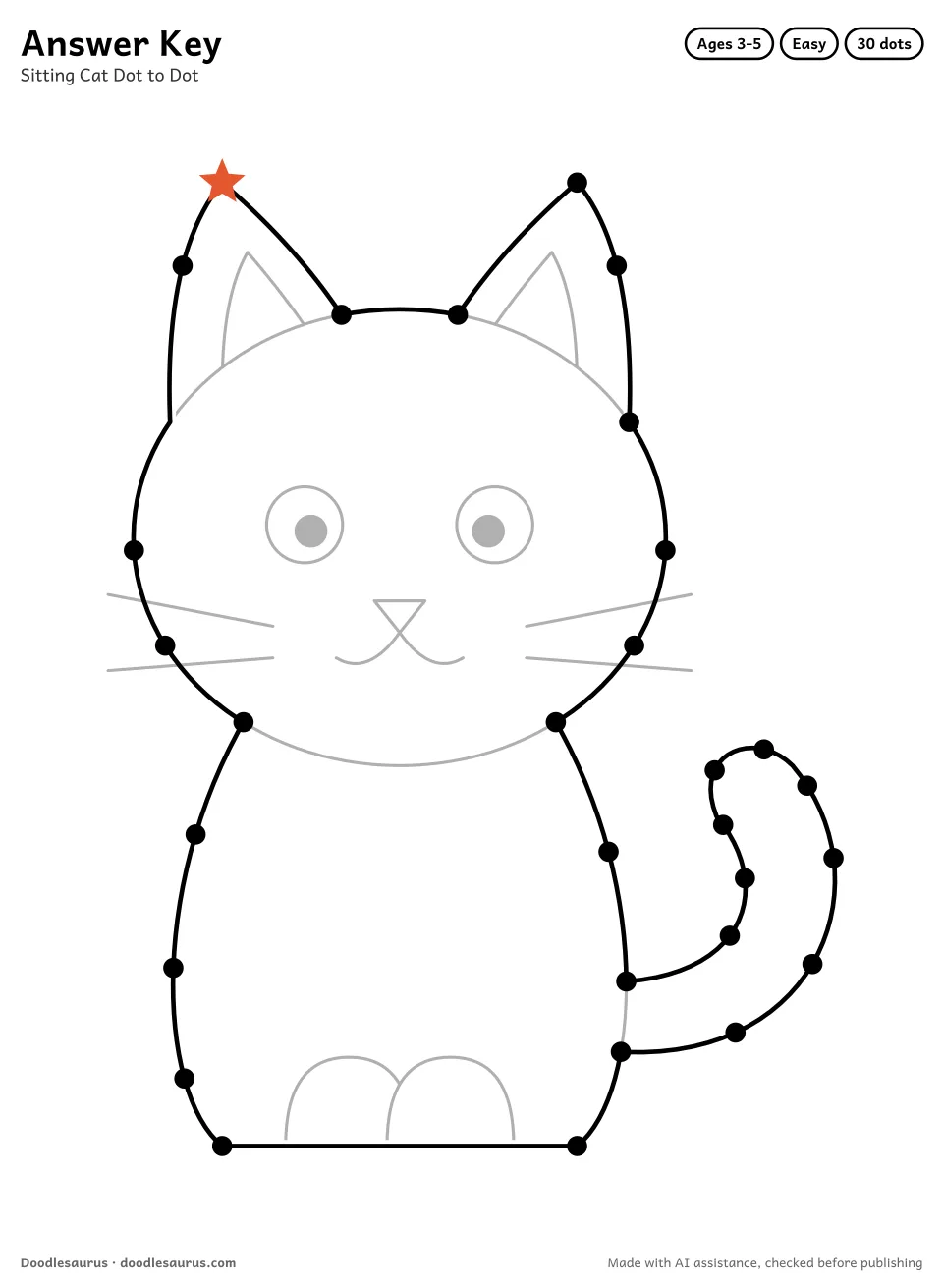
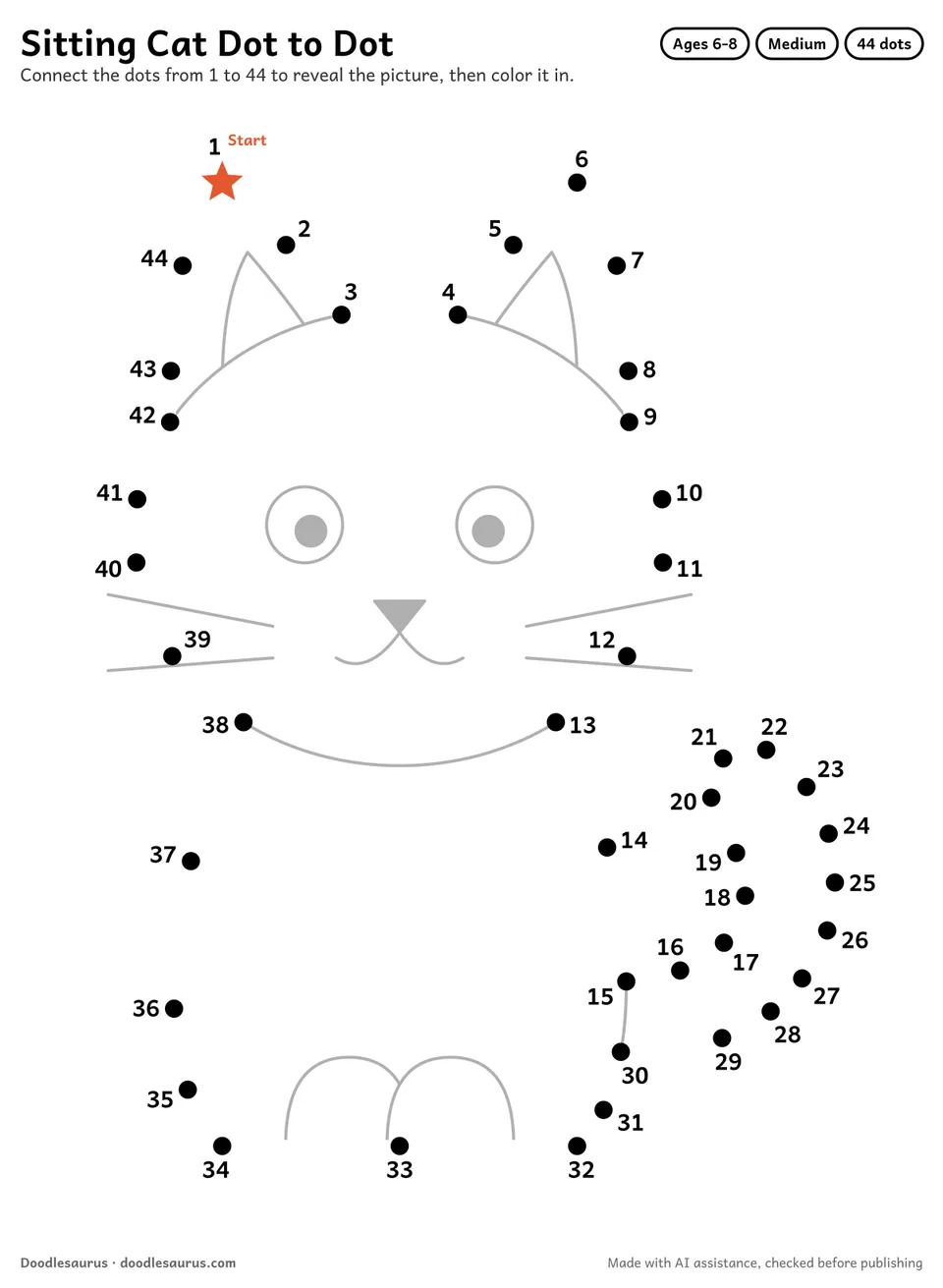
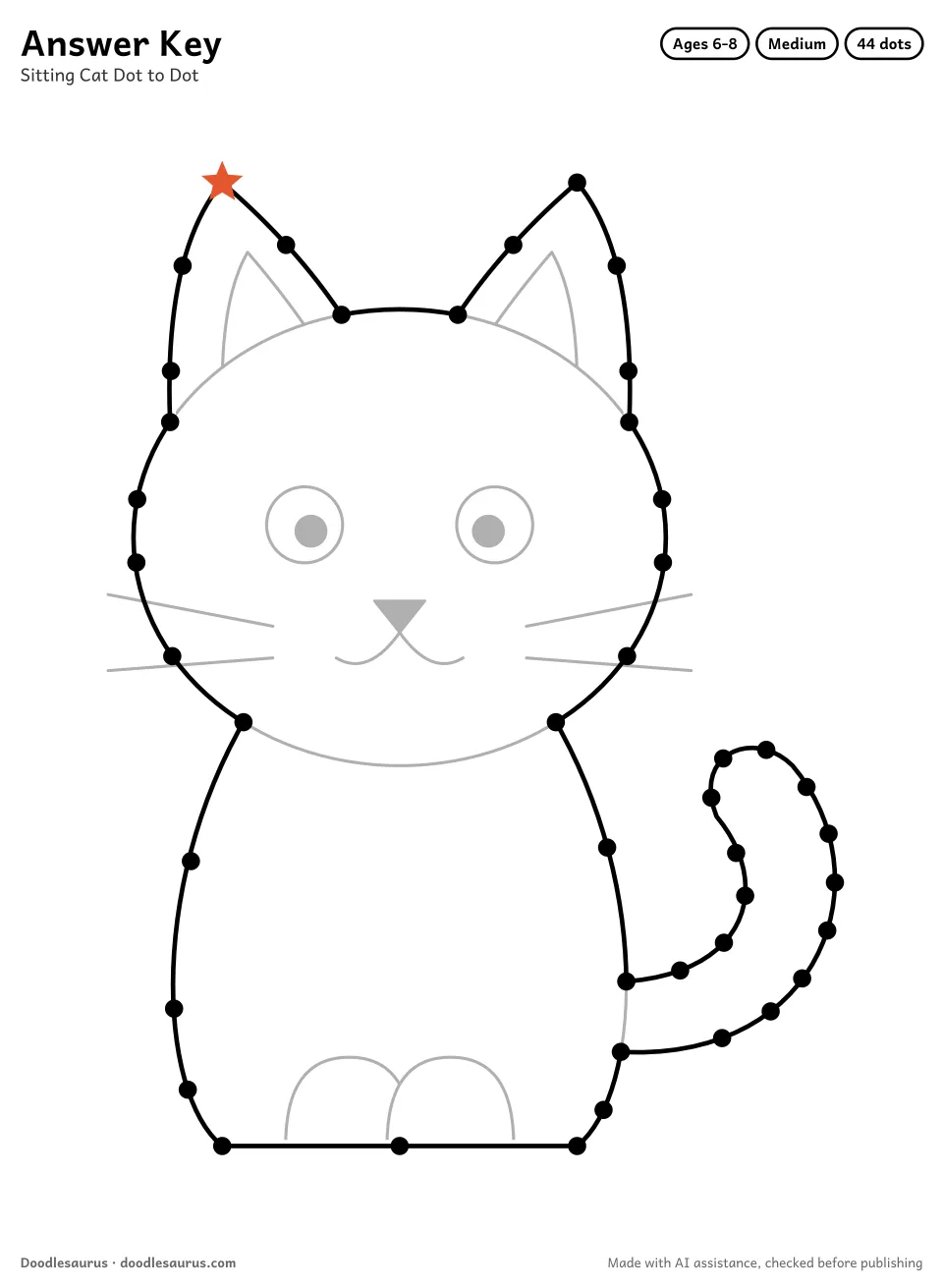
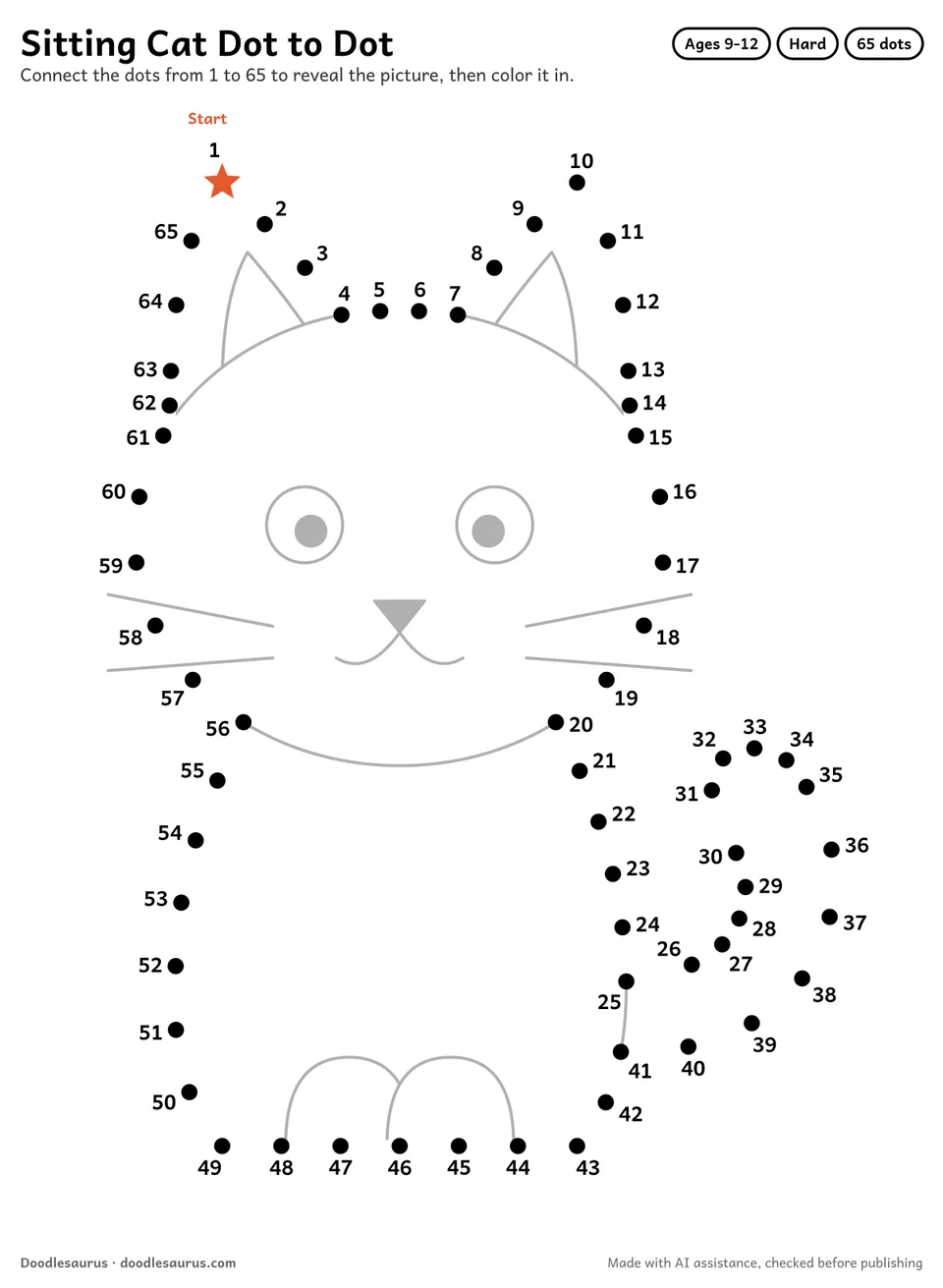
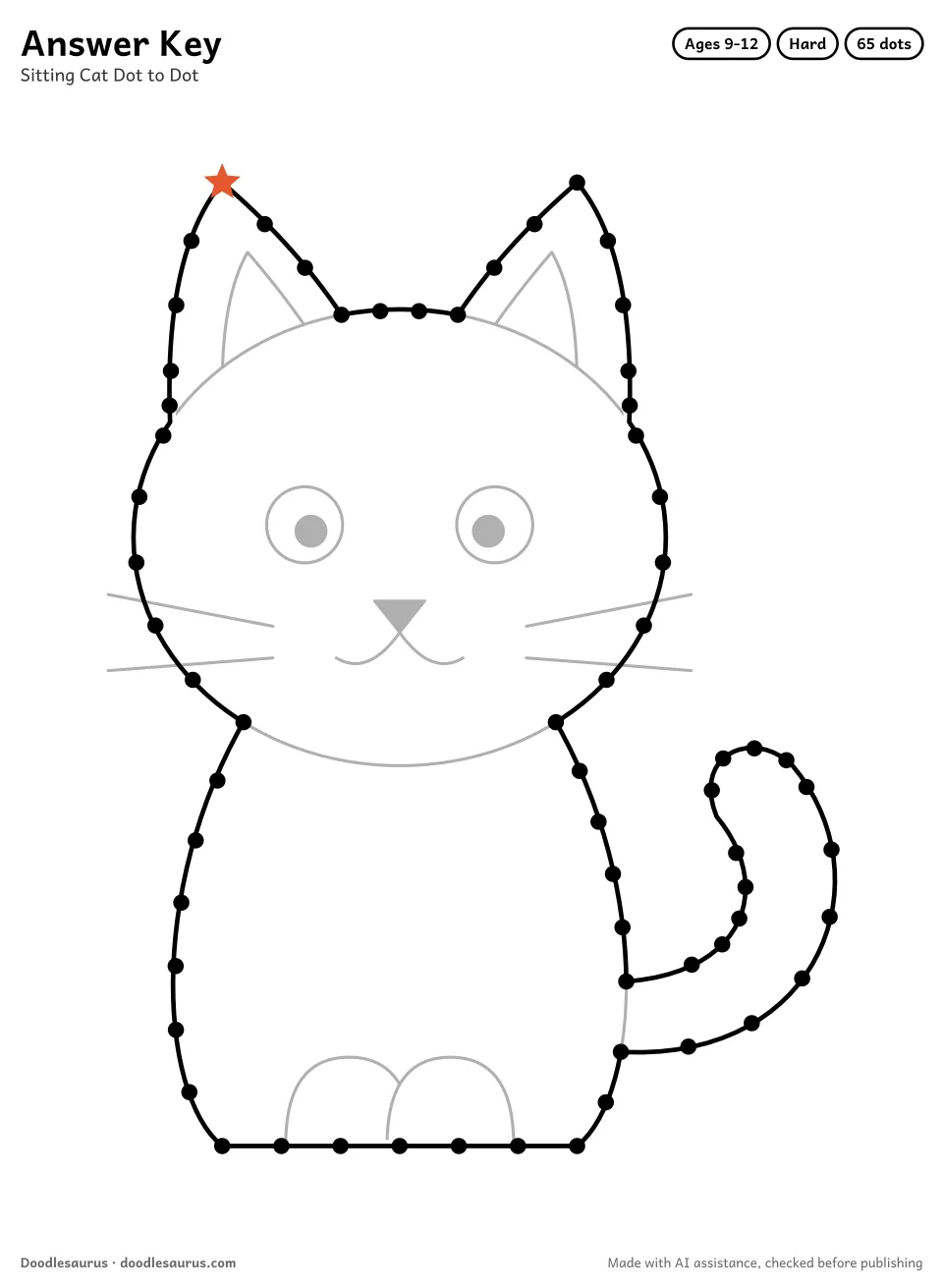
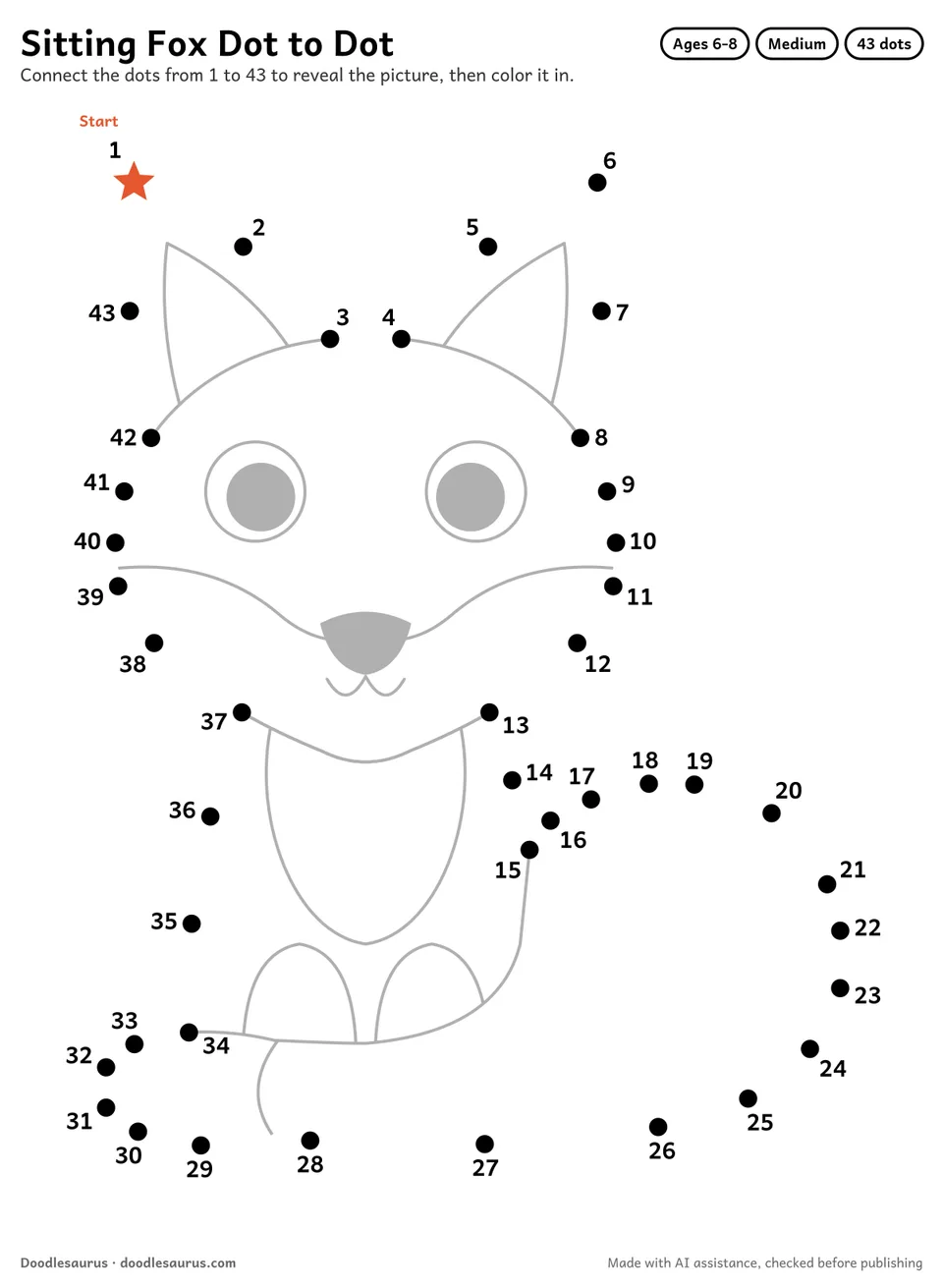
This cat connect the dots draws one sitting cat with two tall pointed ears and a tail curling up on its right side. All three pages build that outline from numbered dots, and the count is what sets them apart: 30 dots on the easy page for ages 3 to 5, 44 on the medium page for ages 6 to 8 and 65 on the detailed page for ages 9 to 12.
From the left ear, around the tail and back
Start is an orange star on the tip of the cat’s left ear. The numbers dip across the top of the head, climb the right ear and run down the right side, then loop around the curled tail and along the flat base before they climb the left side back to the star.
Much of the inside is printed in light gray before anyone picks up a pencil: the inner ears and the head line in front of them, two eyes, a triangle nose, a smile, four whiskers, the chin, two front paws and the inner edge of the tail. On the easy page, that leaves a young child joining up an outline around a face that is already there. The detailed page keeps the same gray lines, but its extra dots crowd in around the tail, where the numbers sit close together and need careful reading.
Checking the finished cat
Each level has its own answer page with the completed outline, for checking the work or for printing a second cat to color. To keep those tail numbers readable, print the A4 or Letter file at 100 percent.
Skills practiced & tips
- Put a finger on the Start star first so your child knows where the pencil goes down.
- Say each number aloud before drawing the line to it.
- On the 65-dot page, use a ruler for the straight run of dots along the bottom.
- Join the dots in pencil, then trace over the finished cat in marker before coloring.
- If a number gets skipped, go back to the last correct dot instead of erasing the whole line.
Cat fun facts
- The oldest known burial of a person with a cat, found on the island of Cyprus, is about 9,500 years old.
- Kittens are usually born with blue eyes, and the color often changes in the first few months.
- Adult cats rarely meow at each other; most of their meowing is aimed at people.
Classroom ideas
- Preschool (ages 3 to 5): use the 30-dot cat in a small group and count to 30 together as each child draws.
- Grade 1: give the 44-dot page as morning work and ask students to circle every number that ends in zero.
- Grades 4 and 5: offer the 65-dot cat to early finishers, then let them check their outline against the answer page.
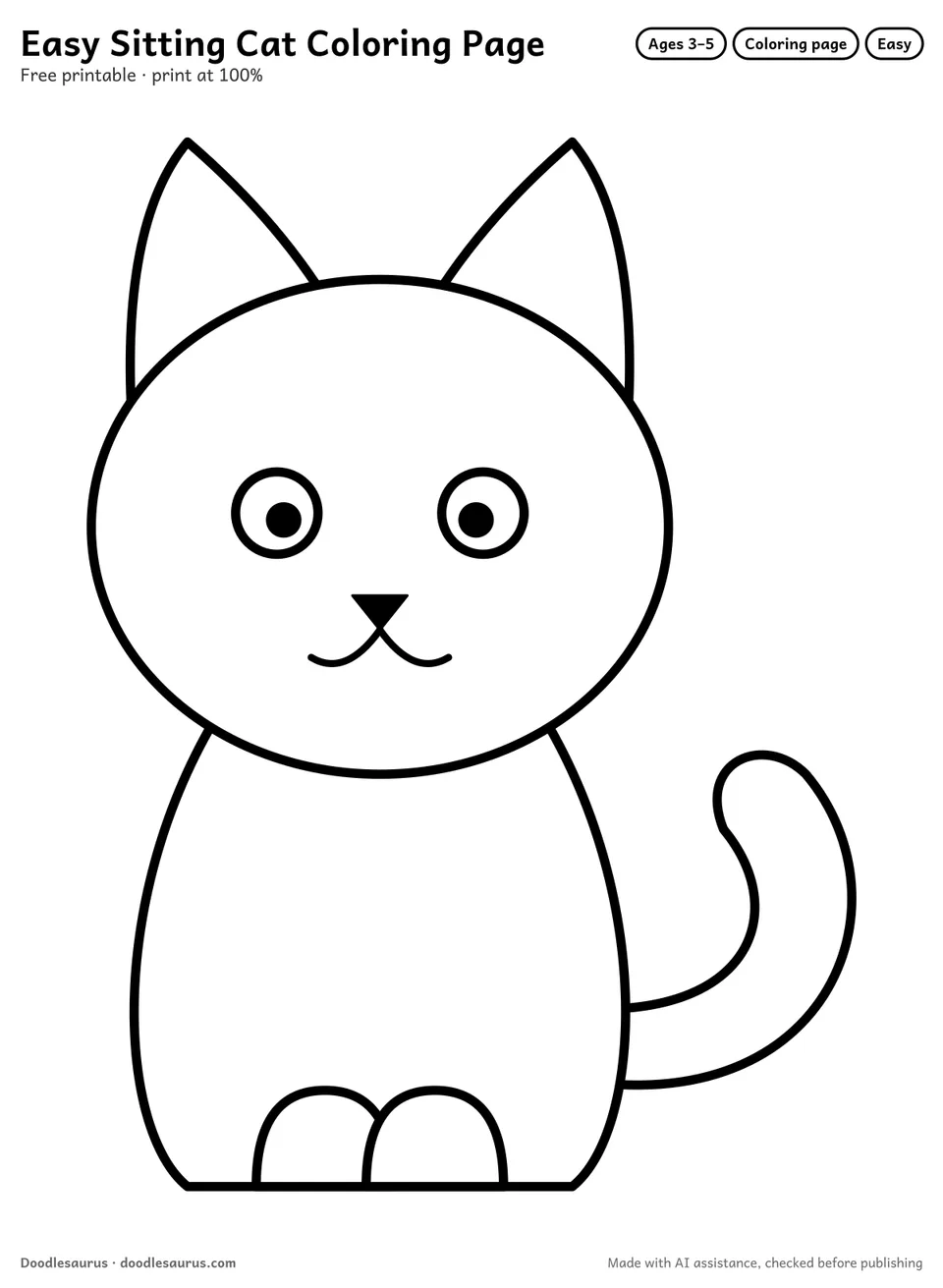
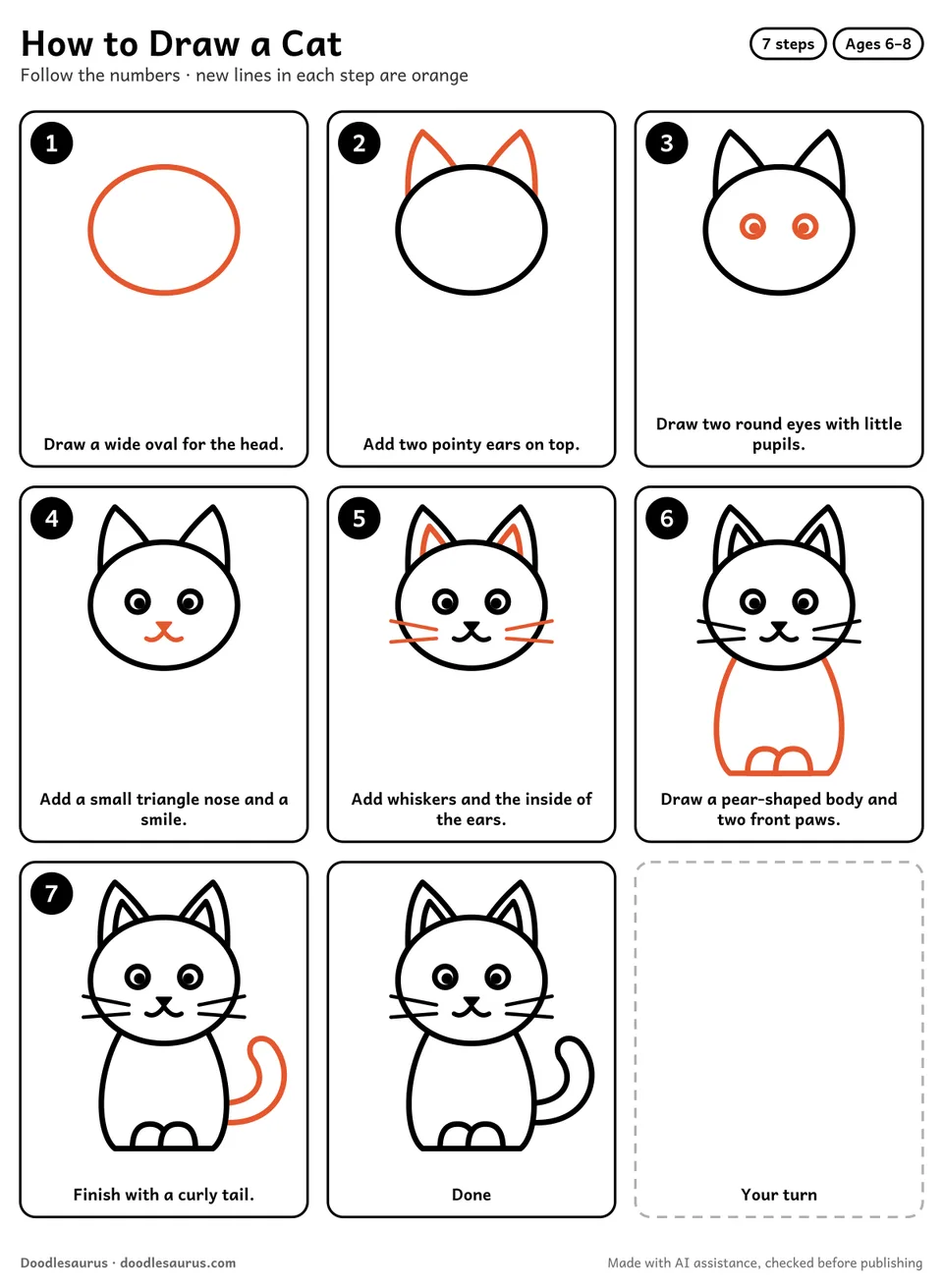
More cat activities
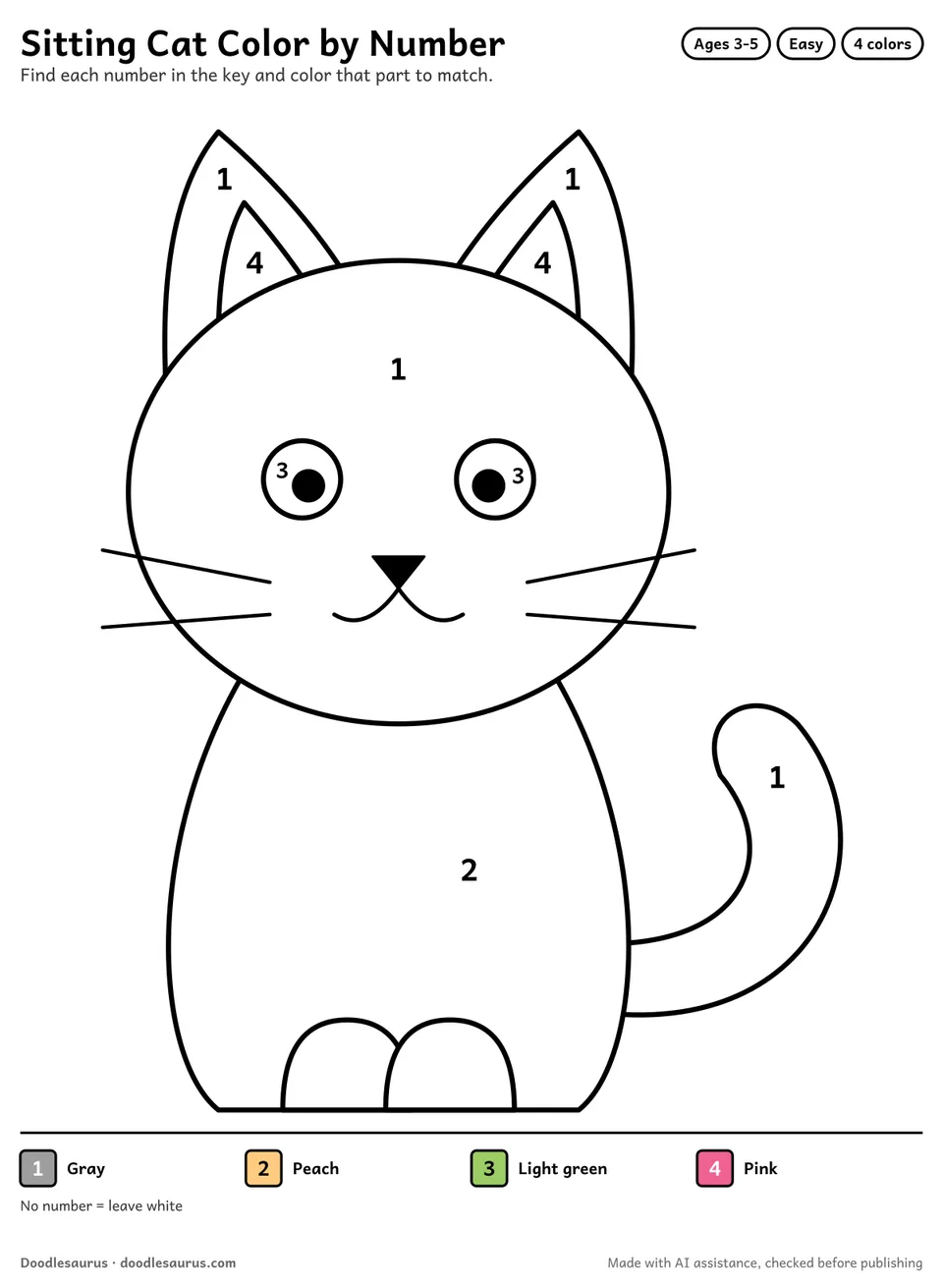
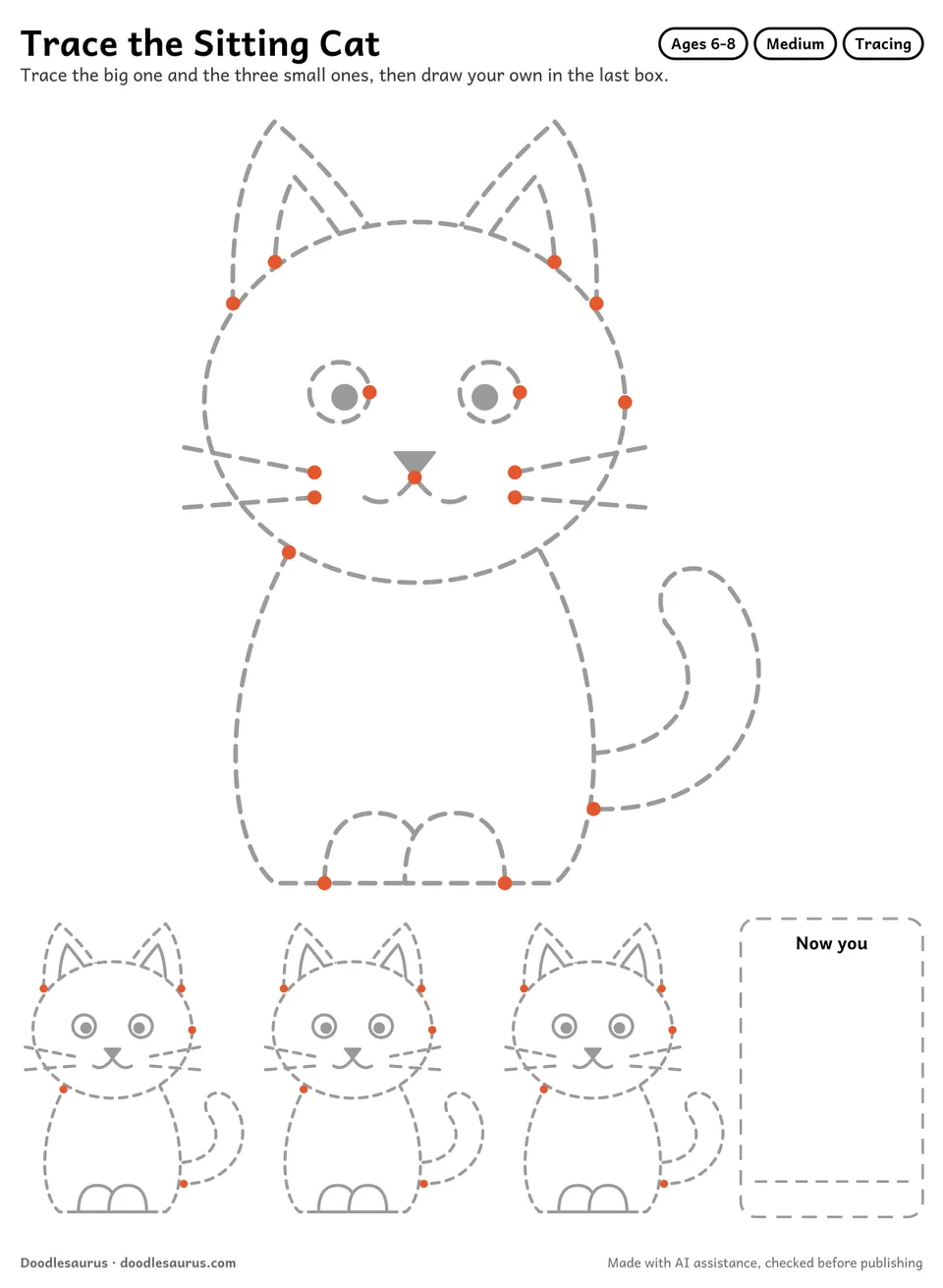
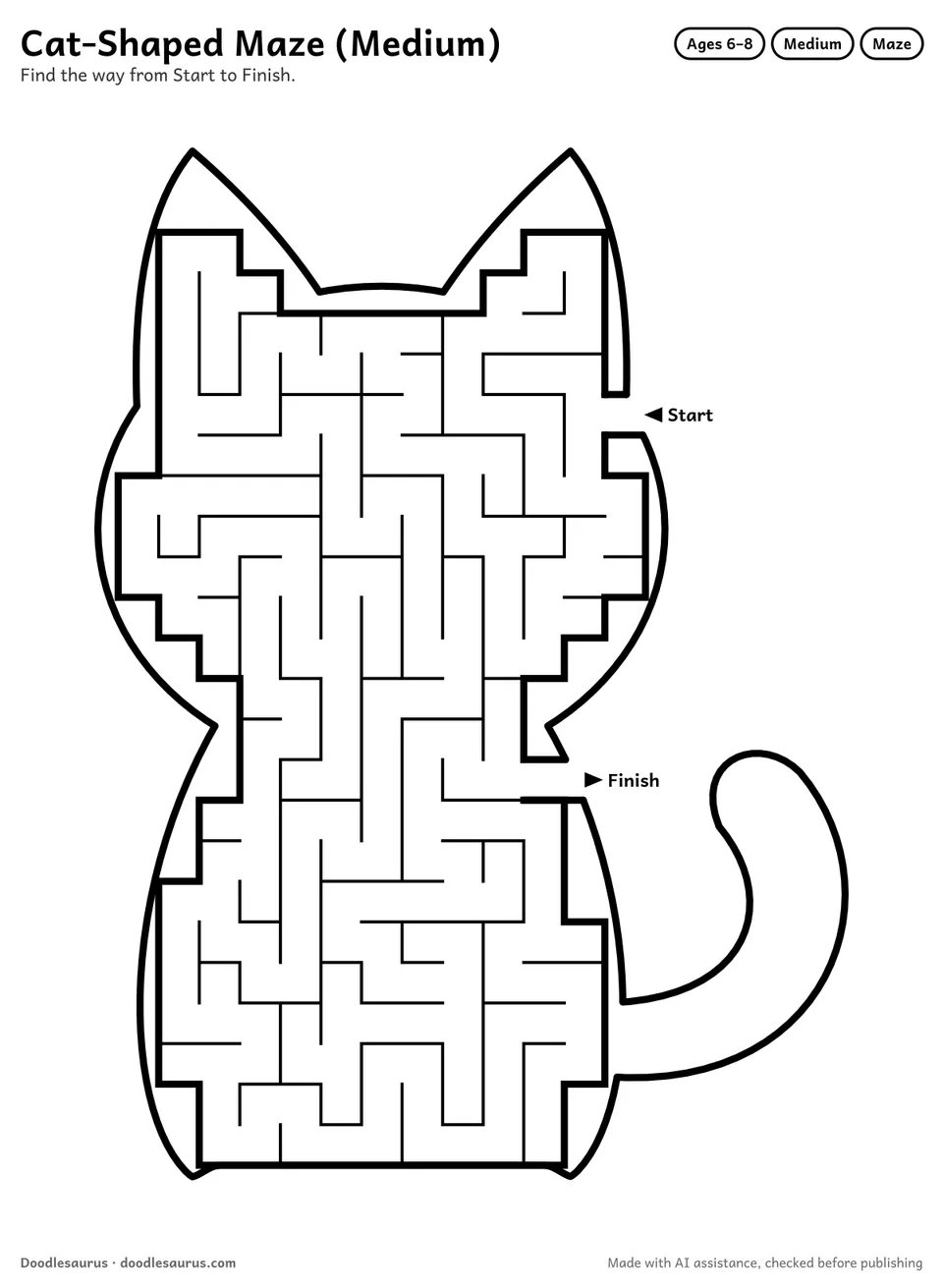
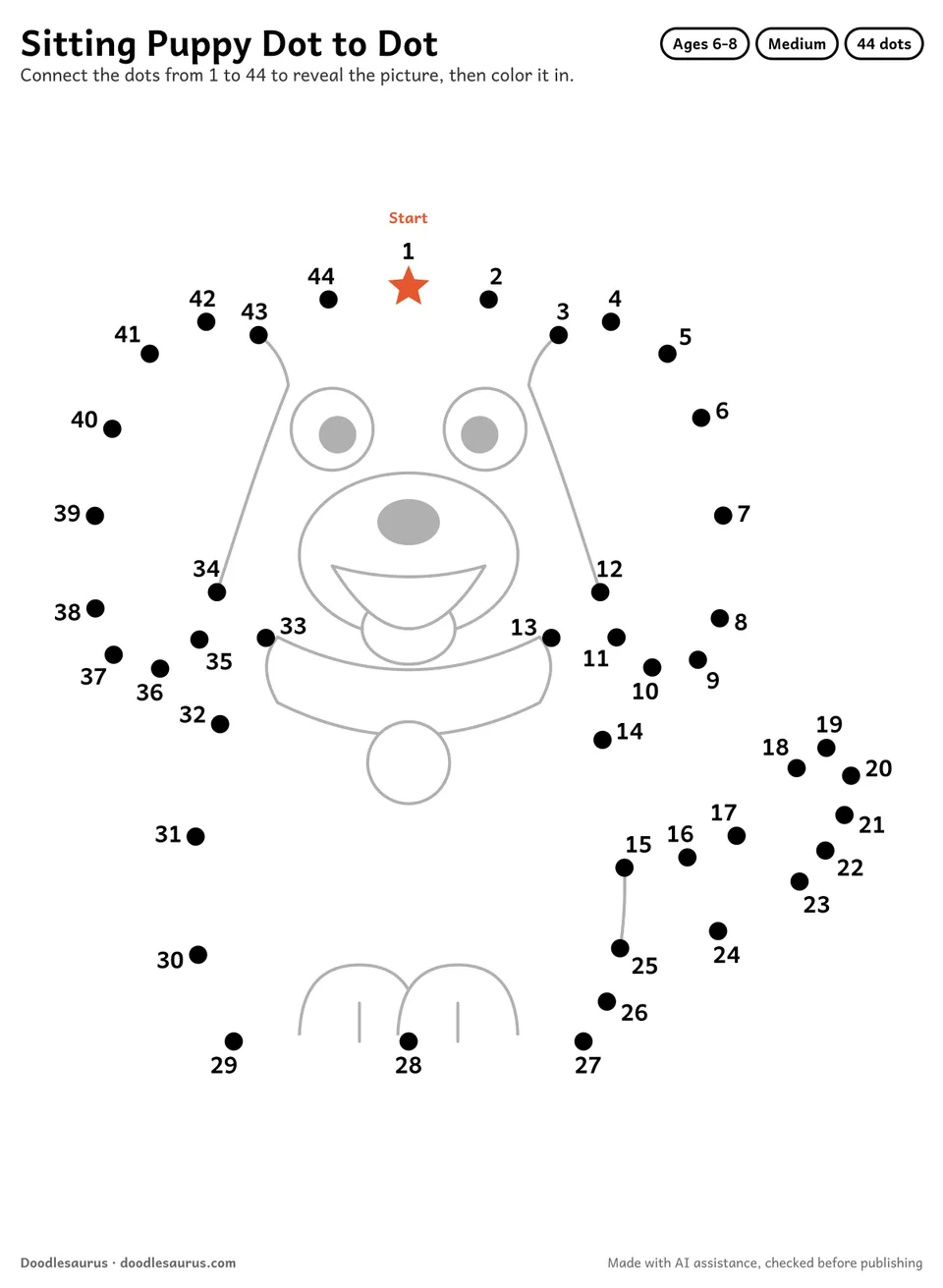
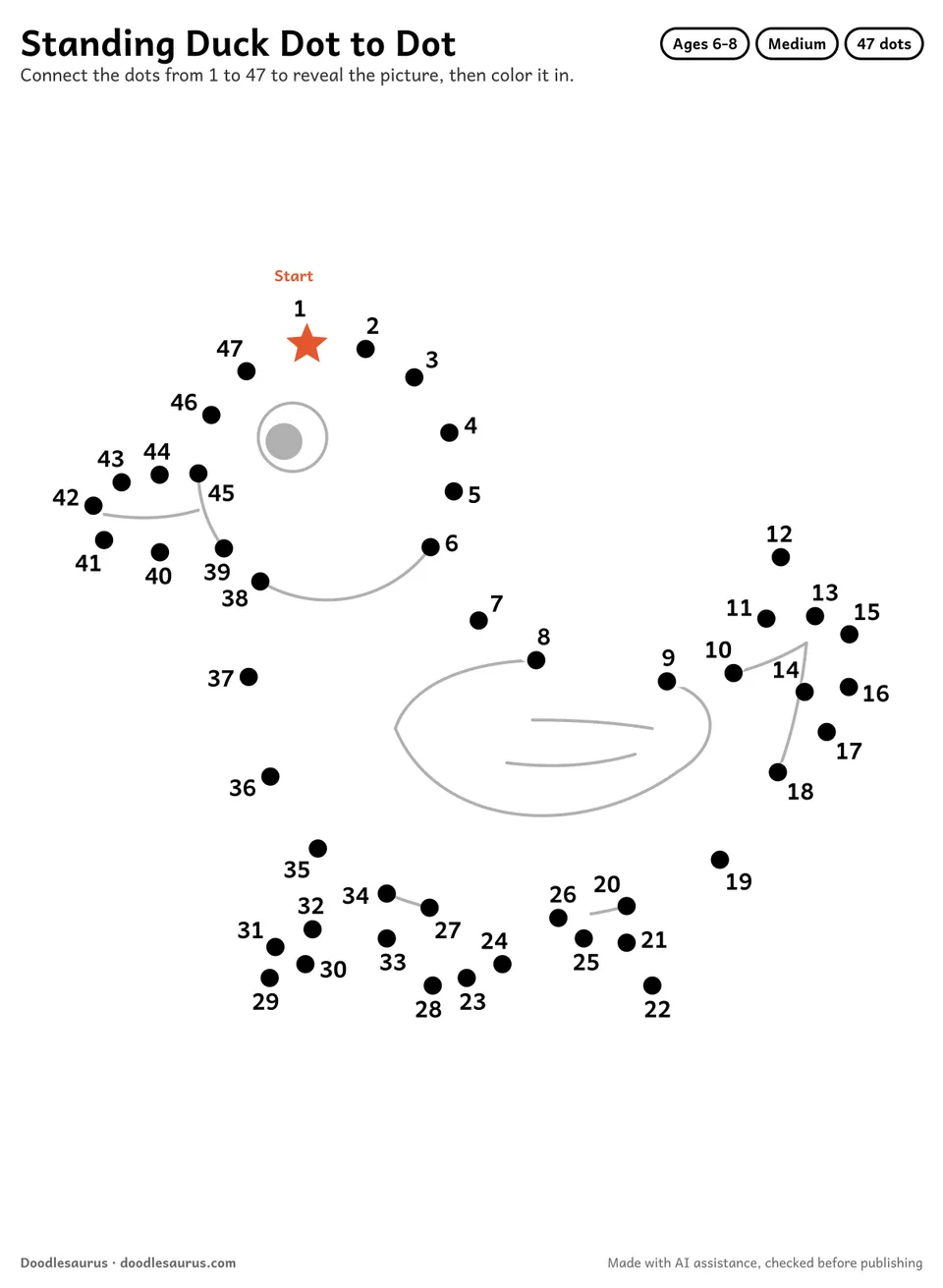
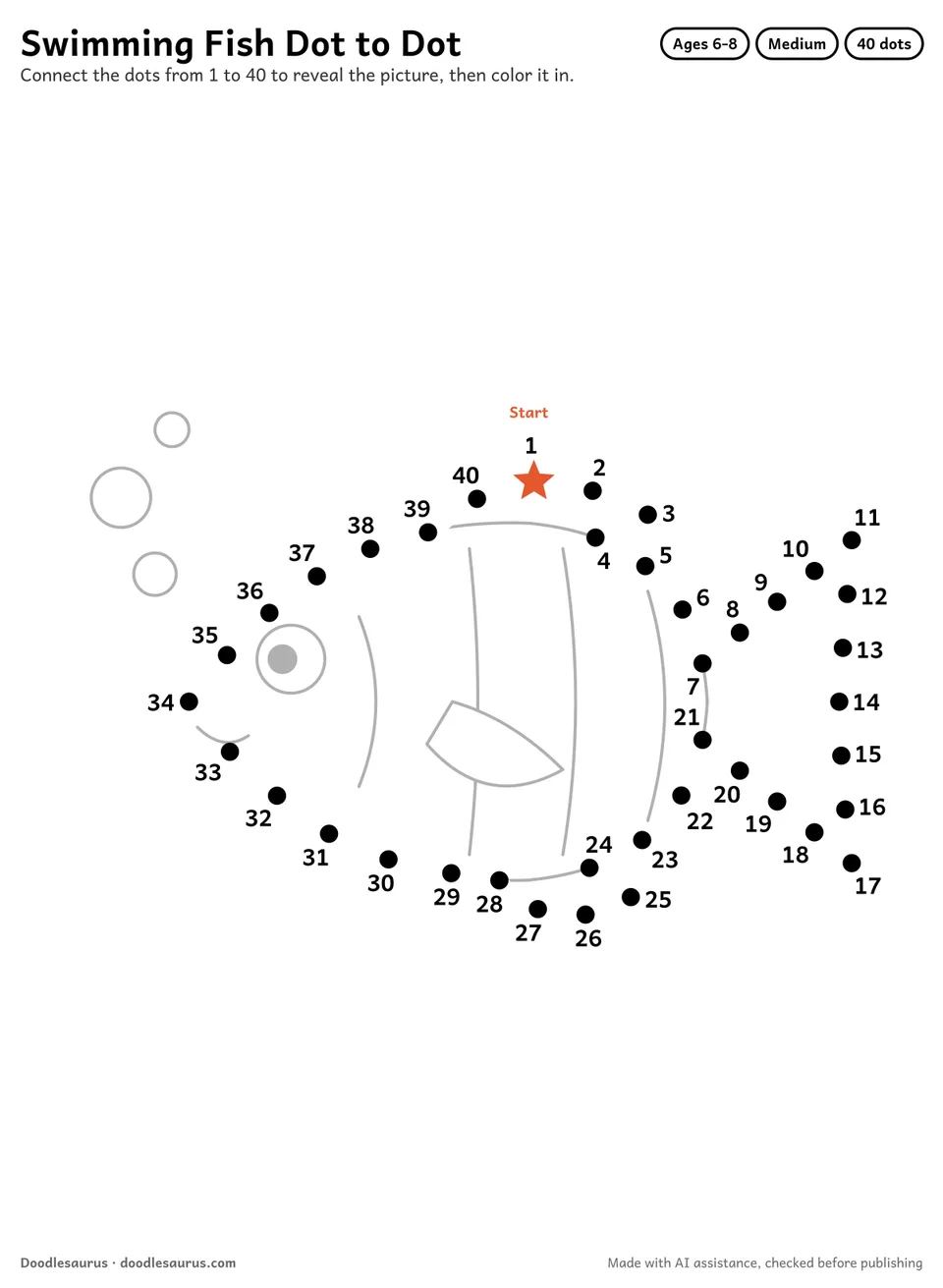
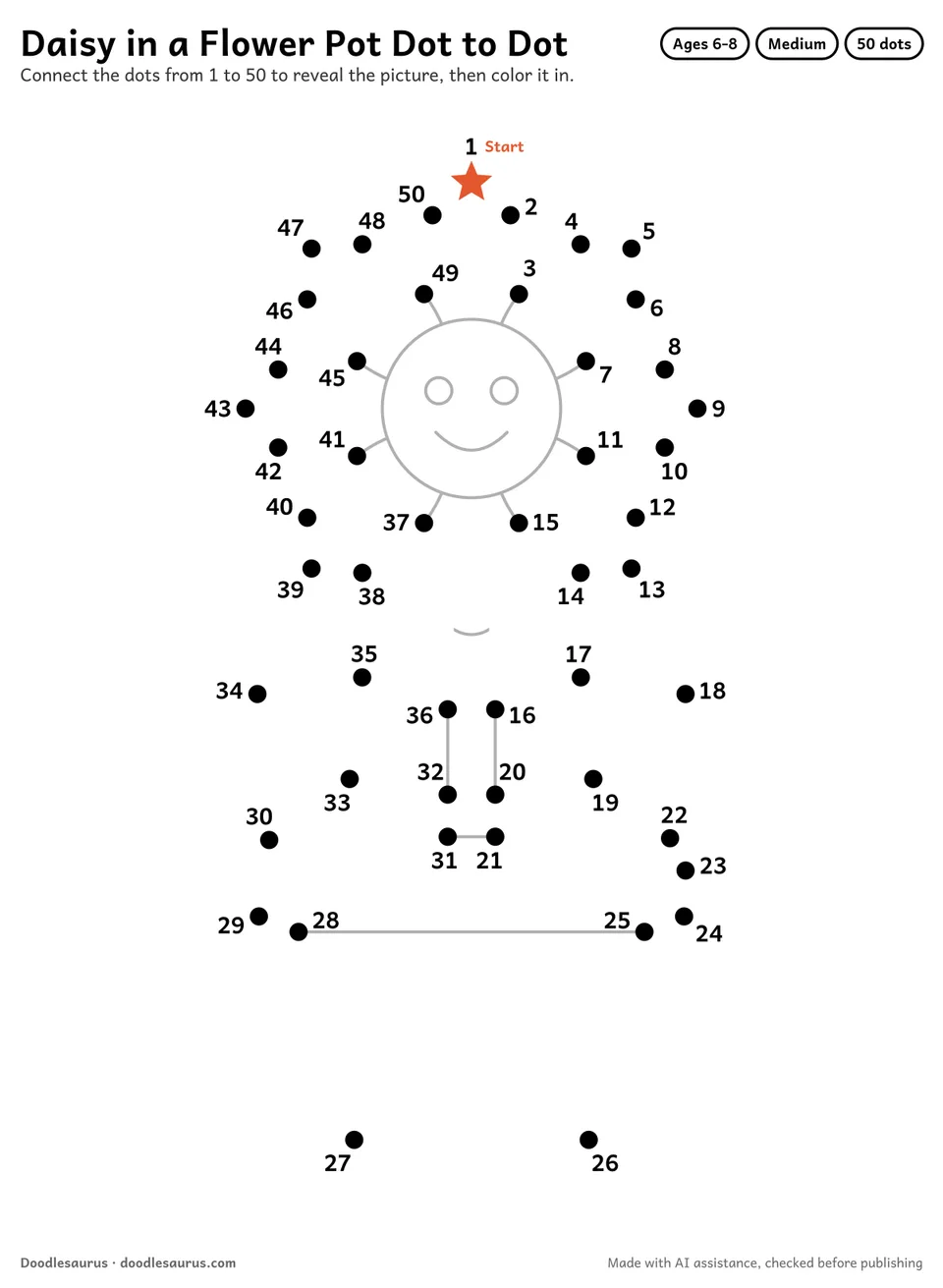
More dot to dot
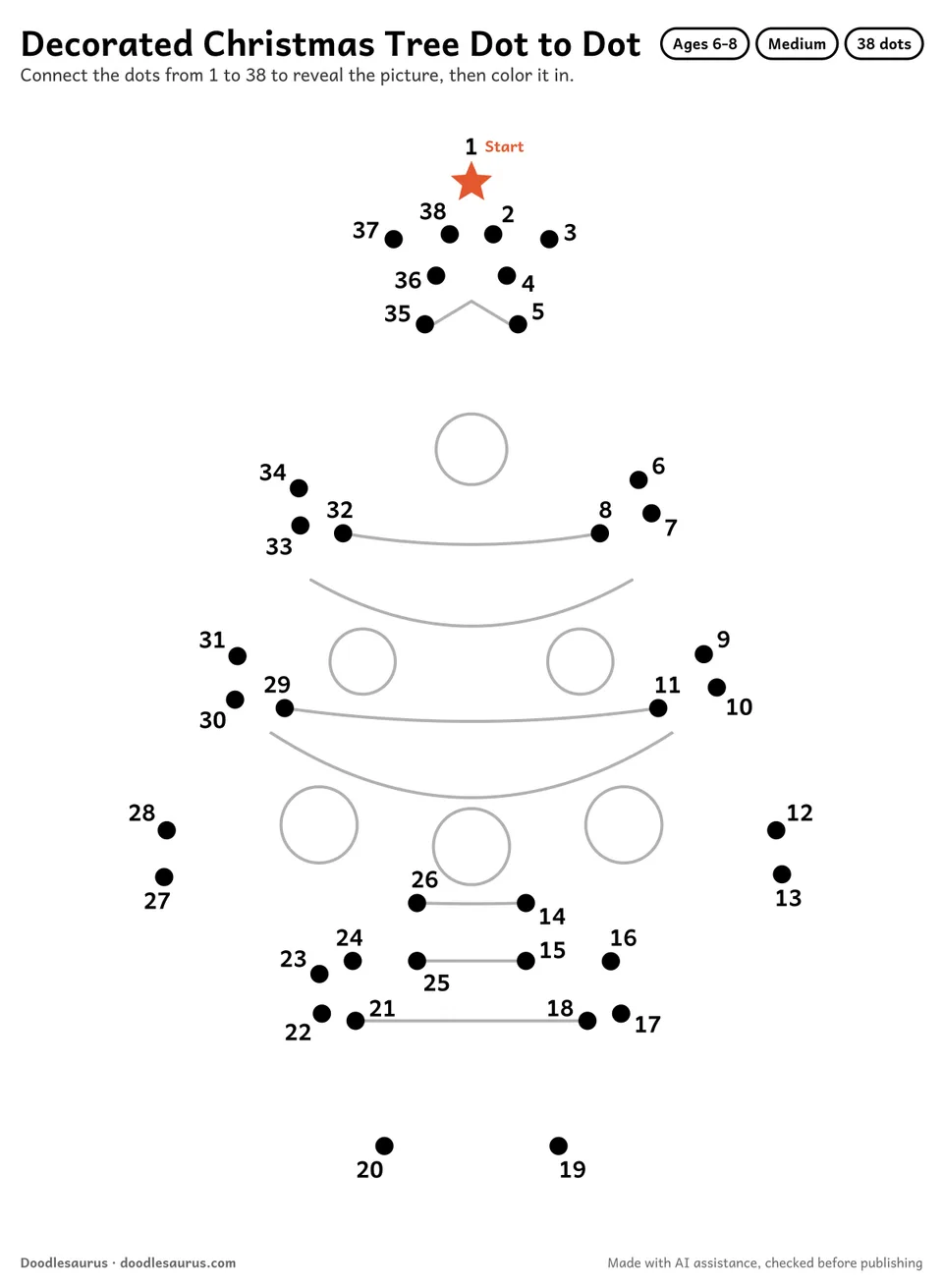
Frequently asked questions
Is the 30-dot cat the same cat as the 65-dot one?
Yes. All three levels use the same sitting cat, so a child who moves up a level still knows what picture to expect. The easy page has 30 dots for ages 3 to 5, the medium page 44 for ages 6 to 8 and the detailed page 65 for ages 9 to 12.
Do the whiskers and eyes need joining too?
No. The inner ears, the head line in front of them, the eyes, nose, smile, whiskers, chin, front paws and the inner edge of the tail are already printed in light gray. They look the same on every level; the 65-dot page only adds numbered dots around the outline.
Is there an answer sheet?
Yes, one for each level. It shows the finished cat outline, so it also works as a plain picture to color.
Why is the 65-dot cat harder than the 30-dot one?
More dots sit closer together, most of all around the curled tail, so the numbers are smaller and easier to skip. A ruler helps on the straight run of dots along the bottom.
About this printable
- Made with AI assistance (vector drawing authored by a language model) and checked by automated tests and an AI reviewer.
- Checked by automated tests and an AI reviewer on 22 Oct 2026.
- Free for personal and single-classroom use. See the license. Read the license · How these are made · Report a problem.
- Vector PDF, 2 pages, 186×254 mm art box — prints edge-safe on A4 and US Letter.
New printables, twice a month
Our newsletter starts soon, with new sheets twice a month and a free 10-page starter pack for every new reader.