Standing Penguin with a Scarf Dot to Dot (30 Dots)
Show the answer key

Penguin dot to dot for ages 3 to 12: a standing penguin in a scarf, in 30, 46 or 61 dots, its back shaded gray. Each A4 or US Letter PDF has answers.


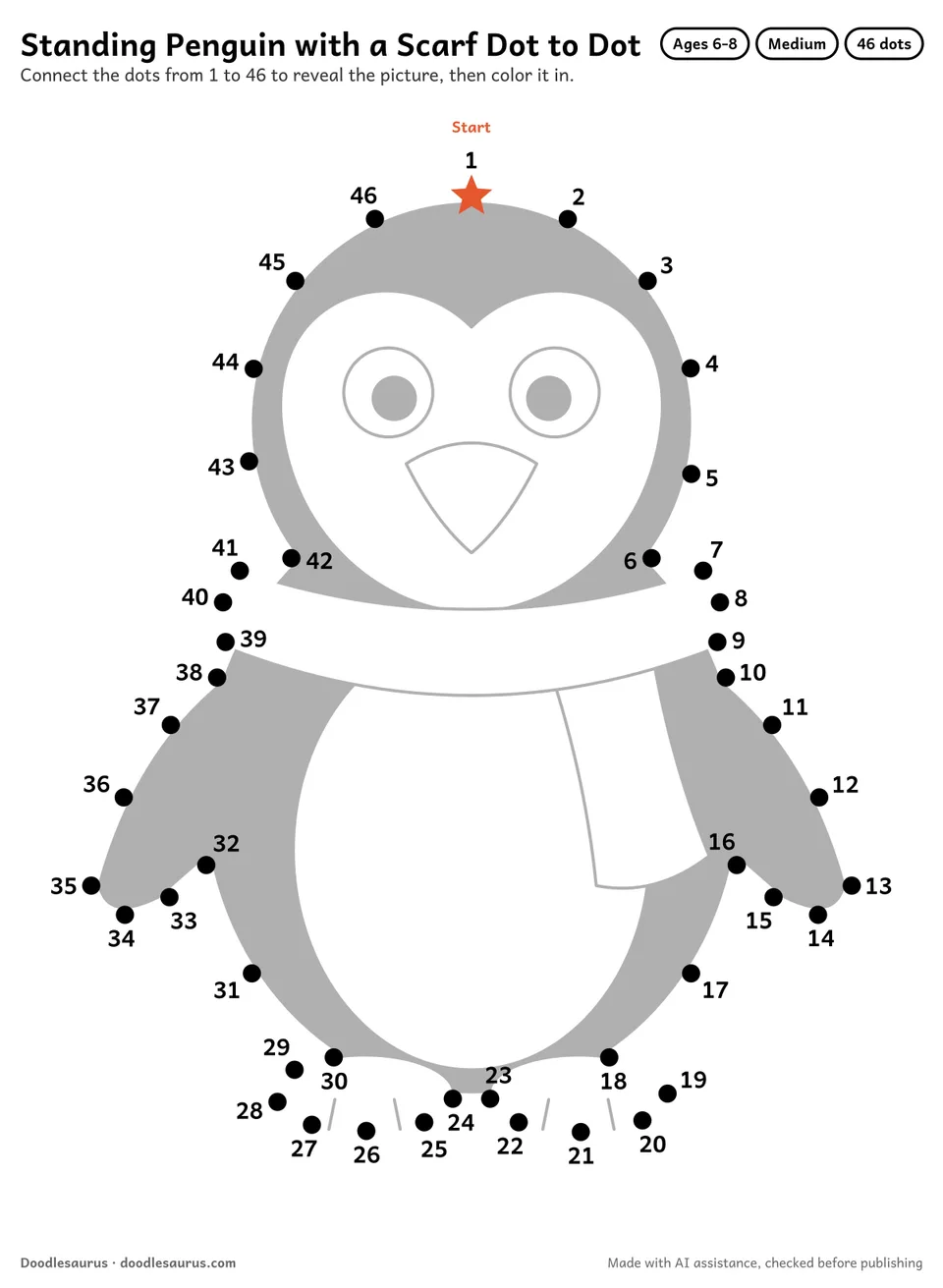
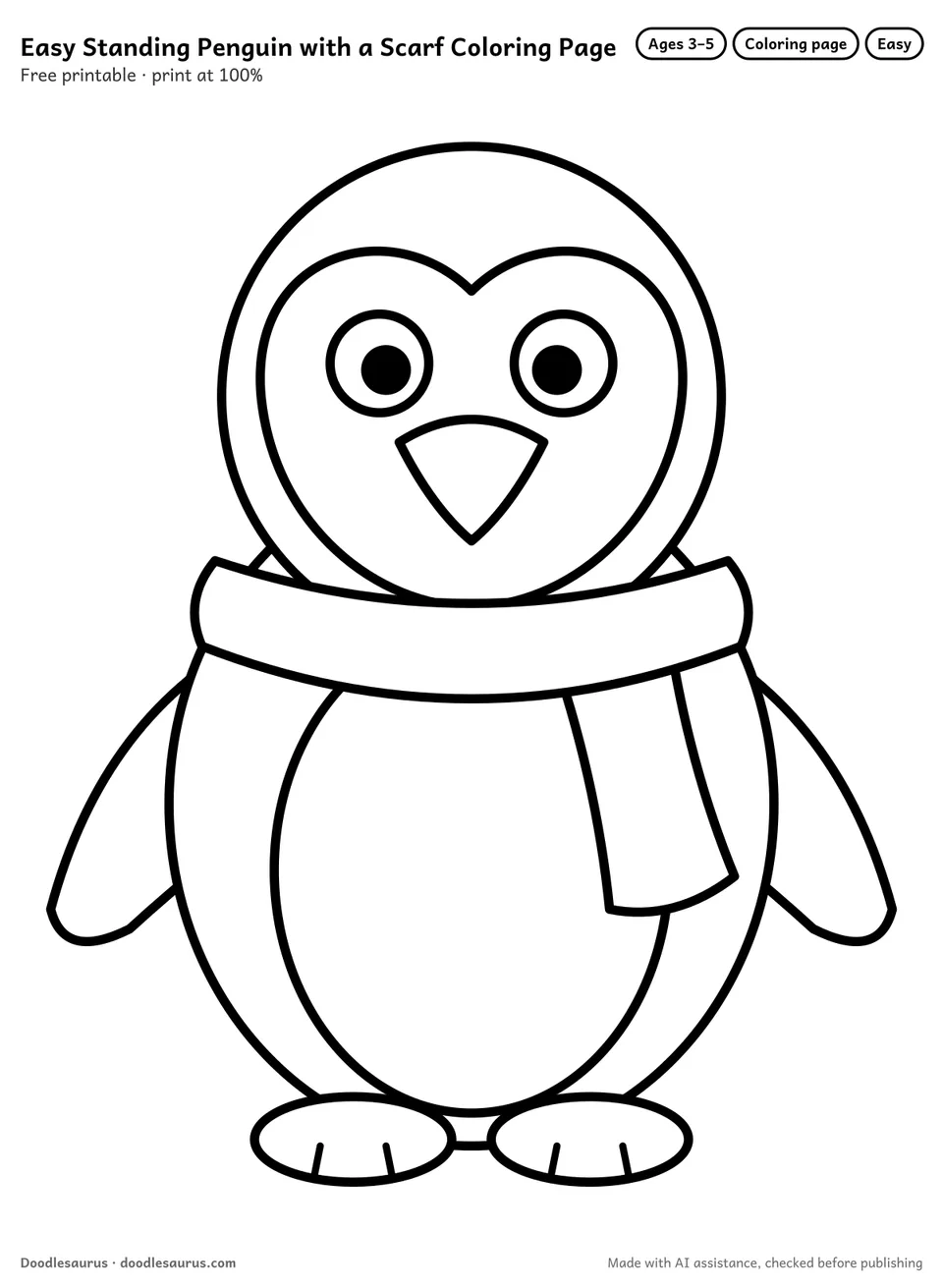
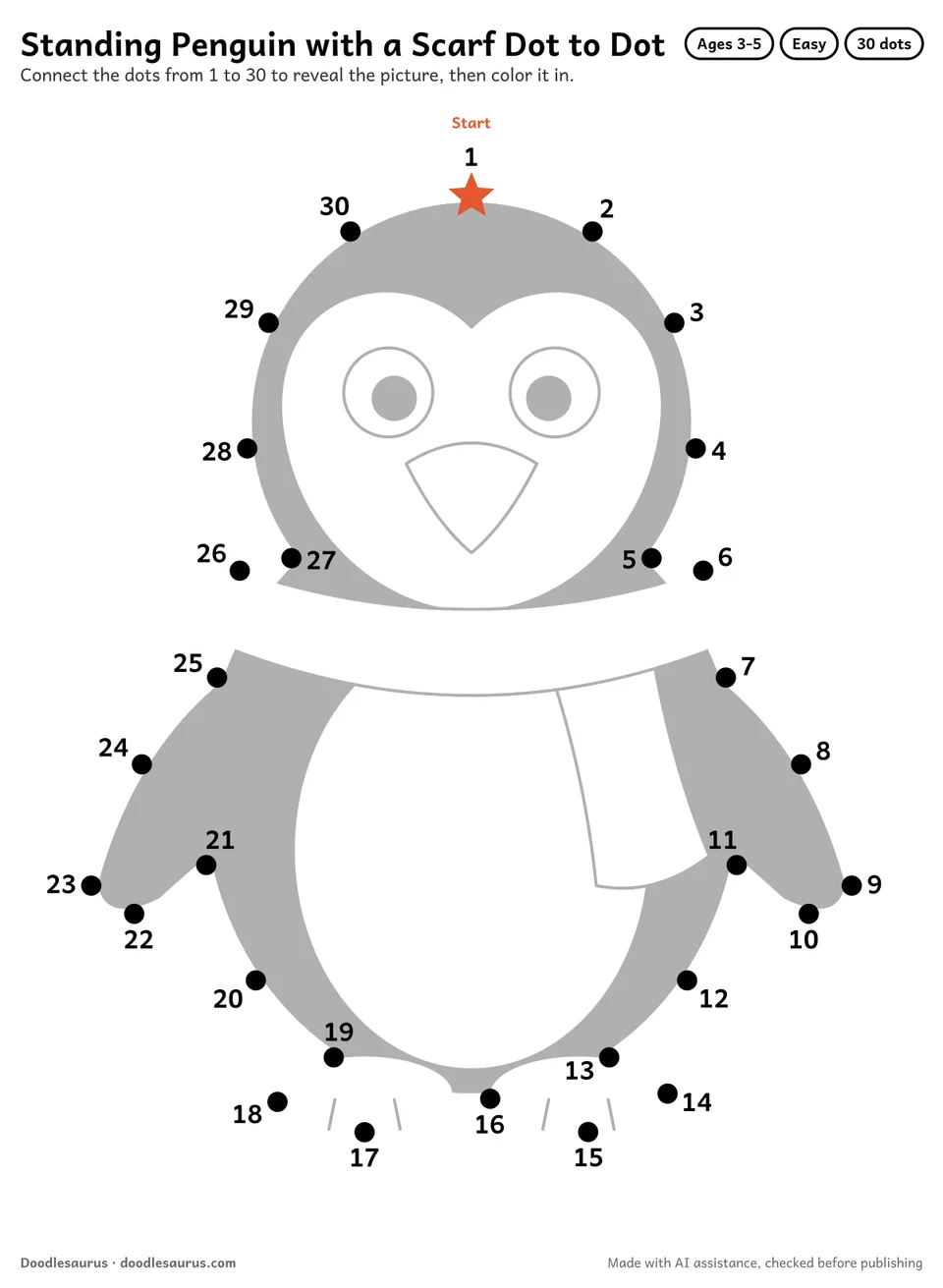
Most of this penguin is shaded before a single dot is joined. The head, back and flippers are soft gray, leaving a white heart-shaped face with ringed eyes and a beak, a scarf with a hanging end and a big white belly, plus short gray toe lines on two flat feet. Younger children see a penguin straight away and then get to close its outline.
From the orange Start star on top of the head, the numbers run around the right side of the head and step out at the neck, where the scarf bulges. They trace the right flipper out to its tip and back, follow the body down to the feet, cross the bottom between the two feet and climb the left side the same way.
Ages 3 to 5 start with 30 dots, and on that page it helps to count the dots of each flipper before drawing them. The medium page raises the count to 46 for ages 6 to 8. On the hard page, with 61 dots for ages 9 to 12, the flippers and feet have tight little groups of numbers that ask for careful reading, and those groups stay legible when the A4 or Letter file prints at 100 percent.
There is an answer page for every level, showing the finished outline. After that, children can color over the gray back and flippers in black and leave the face and belly white.
That is where the scarf bulges, with a small bump on each side of the neck. The scarf is printed in gray on every page, and all three levels draw the same penguin: 30 dots for ages 3 to 5, 46 for ages 6 to 8 and 61 for ages 9 to 12.
At an orange Start star in the middle of the top of the head, in the same spot on all three pages. The numbers then travel down the right side, cross between the feet and come back up the left.
On every page the dark back and flippers are shaded light gray, and the face patch, eyes, beak, scarf, belly and toe lines are drawn in gray, so the picture is recognizable early.
On the answer page the joins bend with the round head, the belly and the feet instead of running straight from dot to dot. Seeing that helps children soften their own lines when they go over the outline.
Our newsletter starts soon, with new sheets twice a month and a free 10-page starter pack for every new reader.