
Stegosaurus Dot to Dot with Plates and Tail Spikes
Stegosaurus dot to dot for a dinosaur unit: a walking stegosaurus in 40, 50 or 60 dots, over six plates and four tail spikes. Prints on US Letter or A4.
Choose a level
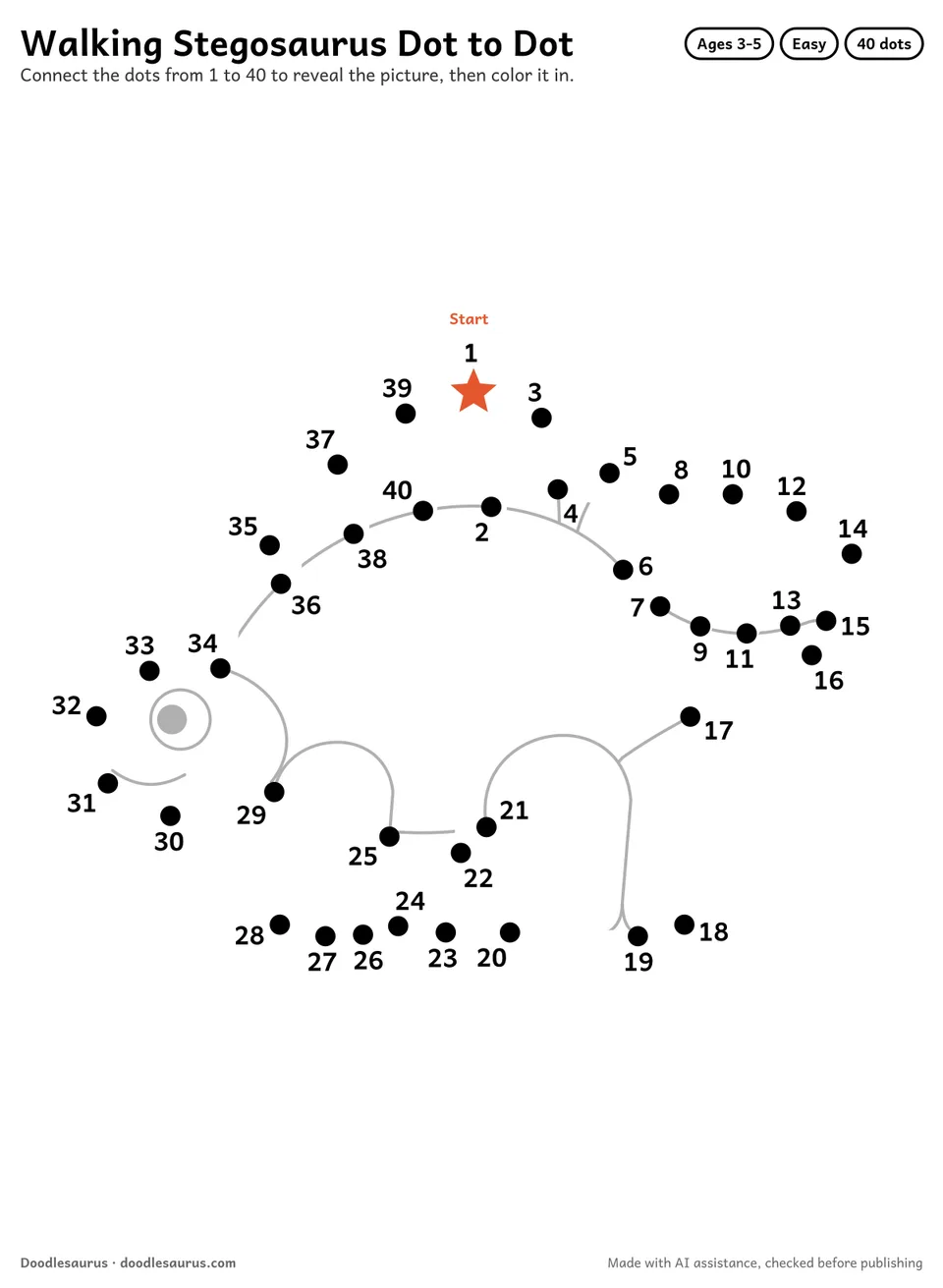
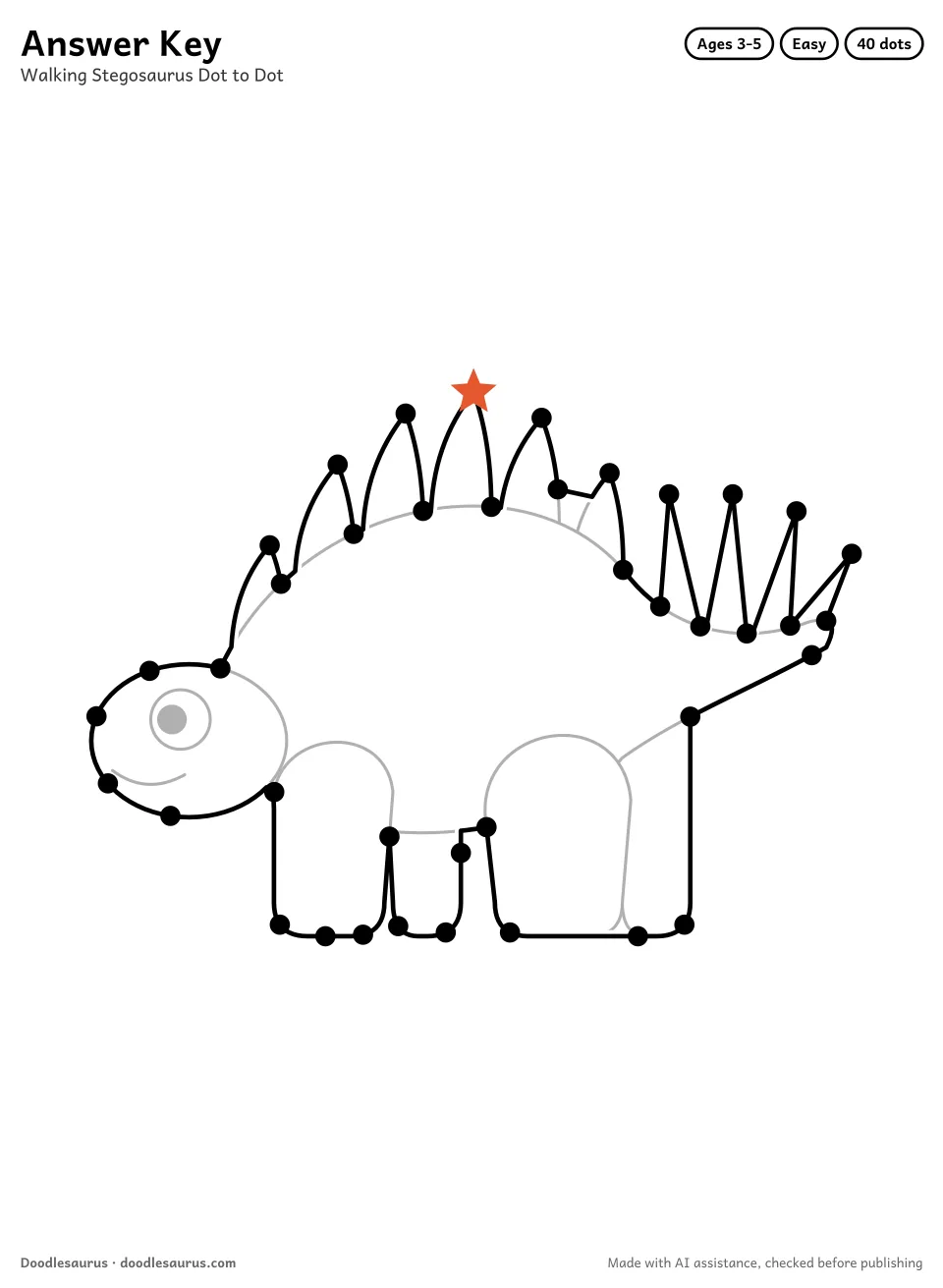
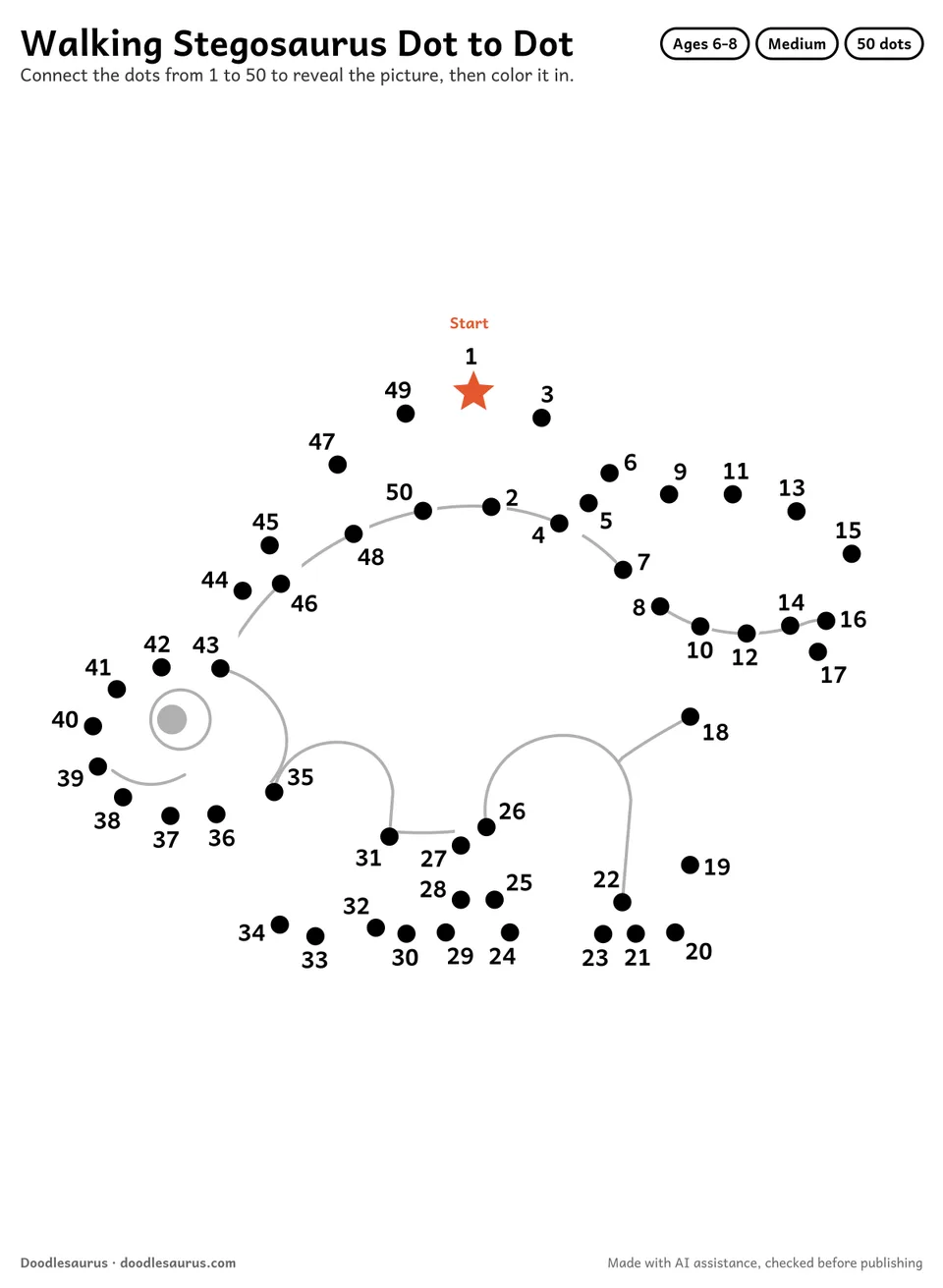
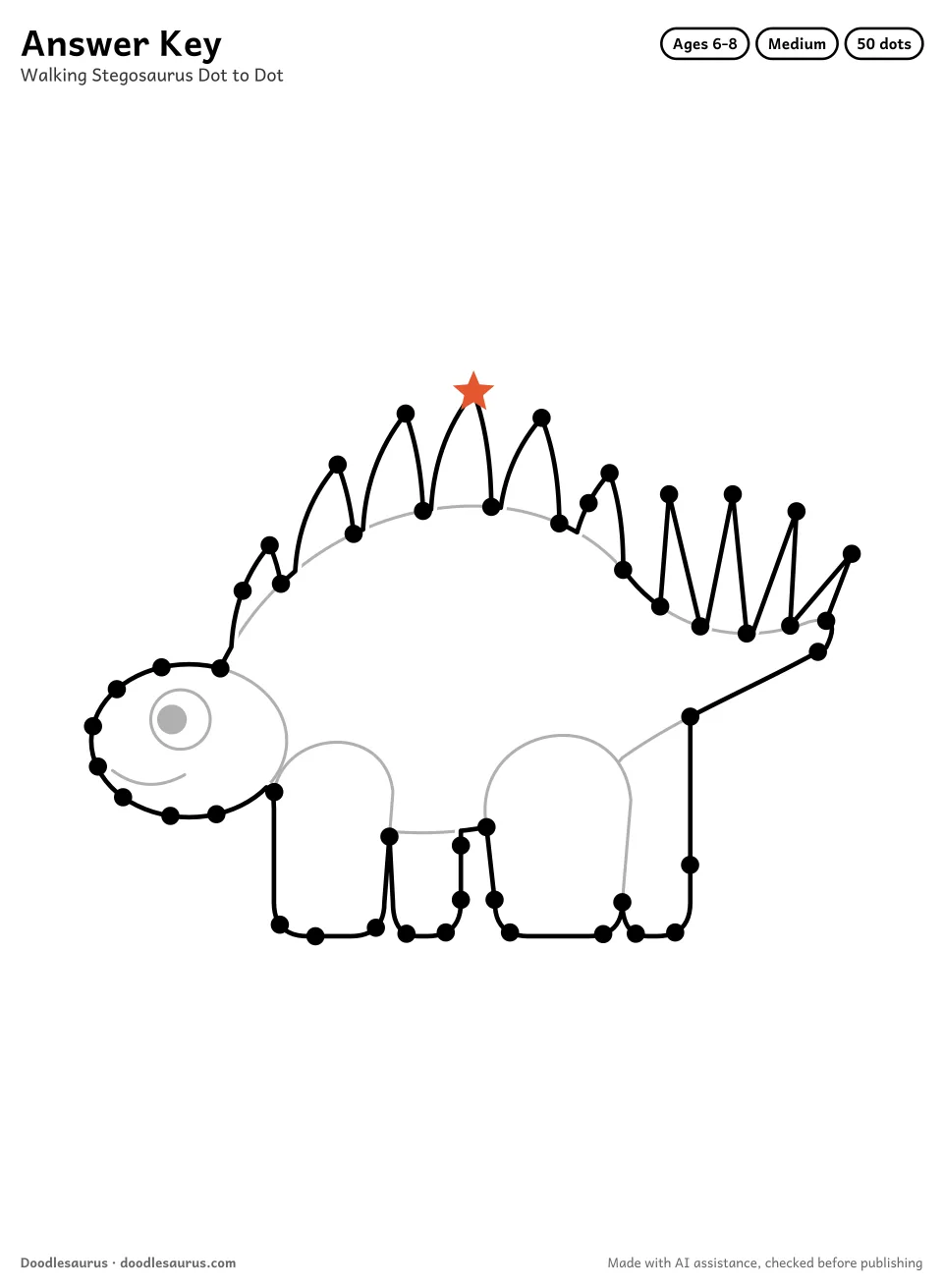
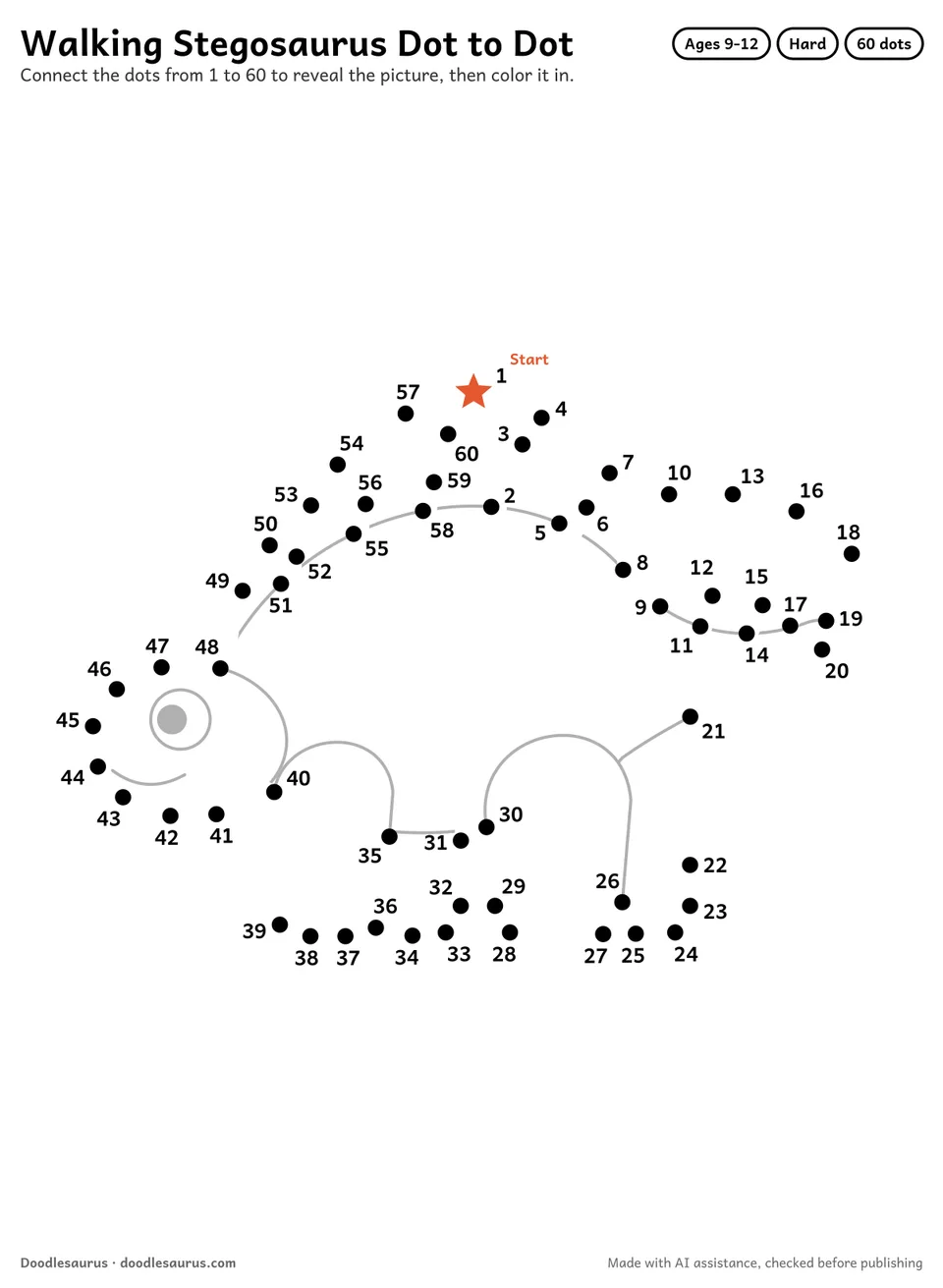
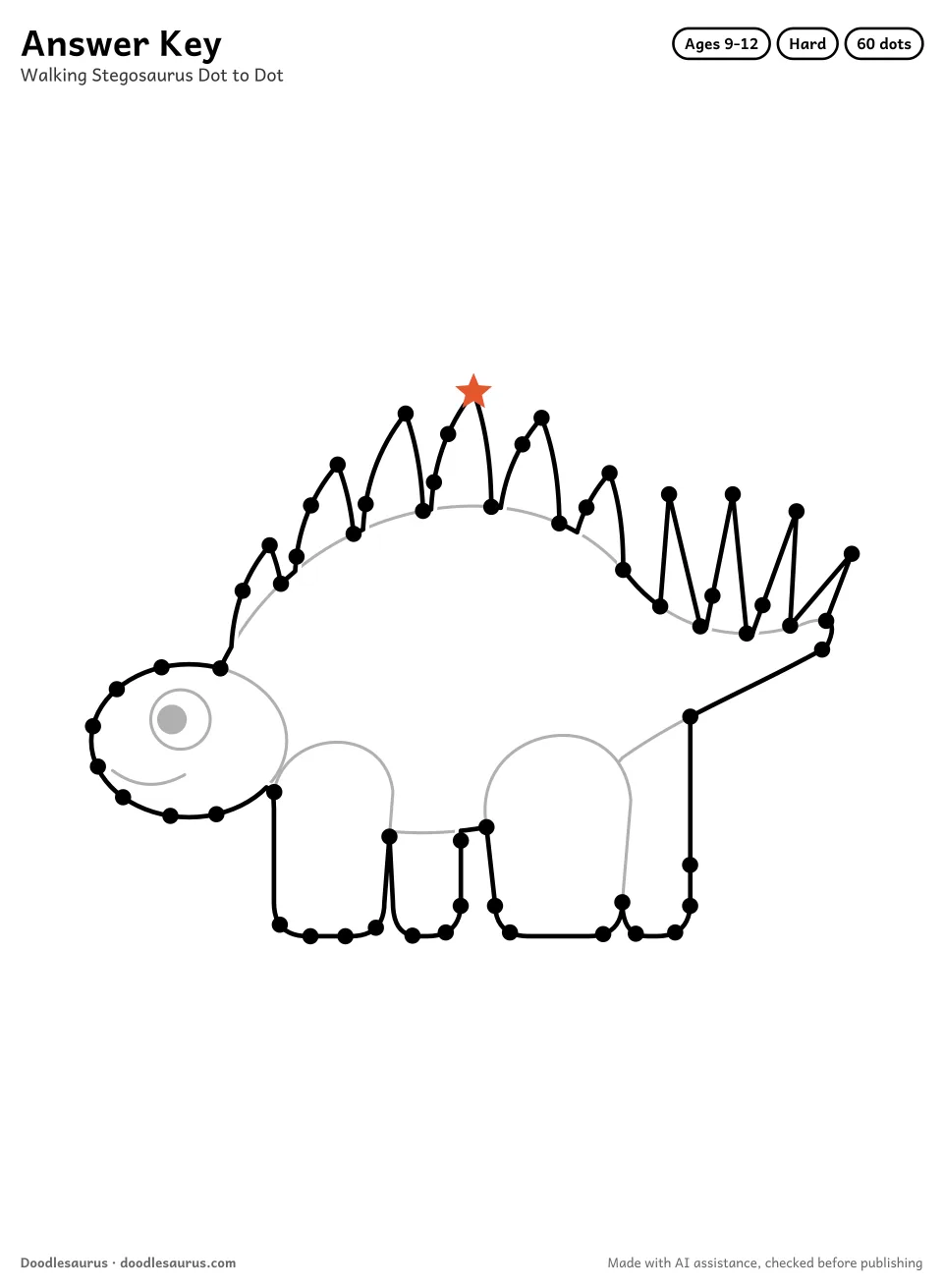
Six pointed plates rise along this dinosaur’s back and four tall spikes stand on its tail, and every plate and spike tip has its own dot on all three pages. That turns the line into a long zigzag.
Over the plates and spikes
The tallest plate, in the middle of the back, holds the orange Start star. The numbers head right, dipping between the plates, then zigzag up and down the tail spikes and out to the pointed tip. They come back along the underside of the tail, drop down the back leg and run along the feet, stepping up into the gaps between the legs. Last, the path curves around the head and climbs over the front plates to the star.
The easy line takes two shortcuts. It cuts across the narrow dip between the two plates to the right of the star, where two short gray lines mark the bottom of the dip. It also runs straight past the small gap between the two back legs.
40, 50 or 60 dots
With 40 dots, the easy page for ages 3 to 5 gives the whole head just six dots. The medium page (50 dots, ages 6 to 8) and the hard page (60 dots, ages 9 to 12) spread nine dots around the head, so it comes out rounder. The hard page puts its extra dots into the front plates, the tail spikes and the feet. A gray eye and smile, the line of the back below the plates, the neck and the inner edges of the legs are printed on every page, so children can spot the dinosaur early. The answer pages keep those lines in place. Scaling the page down crowds the numbers around the tail spikes, so the A4 or Letter file is worth printing at 100 percent.
Skills practiced & tips
- Put a finger on the orange star at the top of the tallest plate before starting.
- Expect the line to zigzag up and down over the plates and spikes.
- On the 40-dot page, the whole head has only six dots, numbers 29 to 34, so check the answer page to see how round it should be.
- On the 40-dot page, dots 23 to 28 sit close together along the front feet, so read them carefully.
- On the 50-dot page, look carefully near the feet, where several dots sit close together.
- On the 60-dot page, take the front plates slowly, since dots 49 to 60 zigzag up and down in a tight group.
Stegosaurus fun facts
- Many Stegosaurus fossils have been found in rocks in the western United States, in states such as Colorado, Wyoming and Utah.
- A bone from a meat-eating dinosaur called Allosaurus has a hole that matches the shape of a Stegosaurus tail spike.
Classroom ideas
- Preschool (ages 3 to 5): count from 1 to 40 together, pausing at 10, 20 and 30 to check that everyone is on the same dot.
- Grade 1: ask students to guess the animal after joining the first ten dots, then finish the page to check.
- Grades 2 and 3: offer the 50-dot page as an early-finisher task during a dinosaur unit, with the answer page for checking.
- Grades 4 and 5: hand out the 60-dot page, and let students name the dinosaur before they reach the head.
More stegosaurus activities
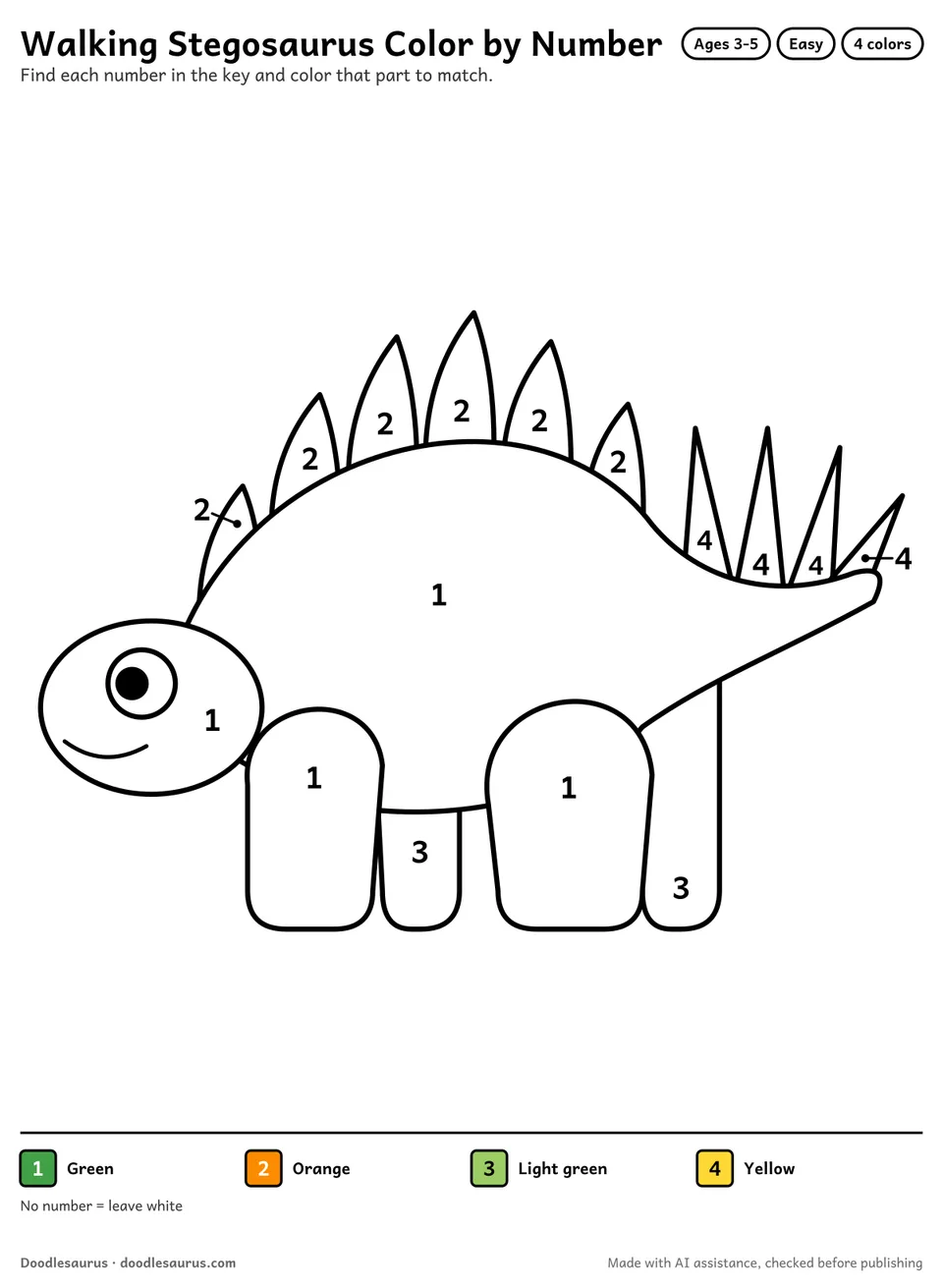
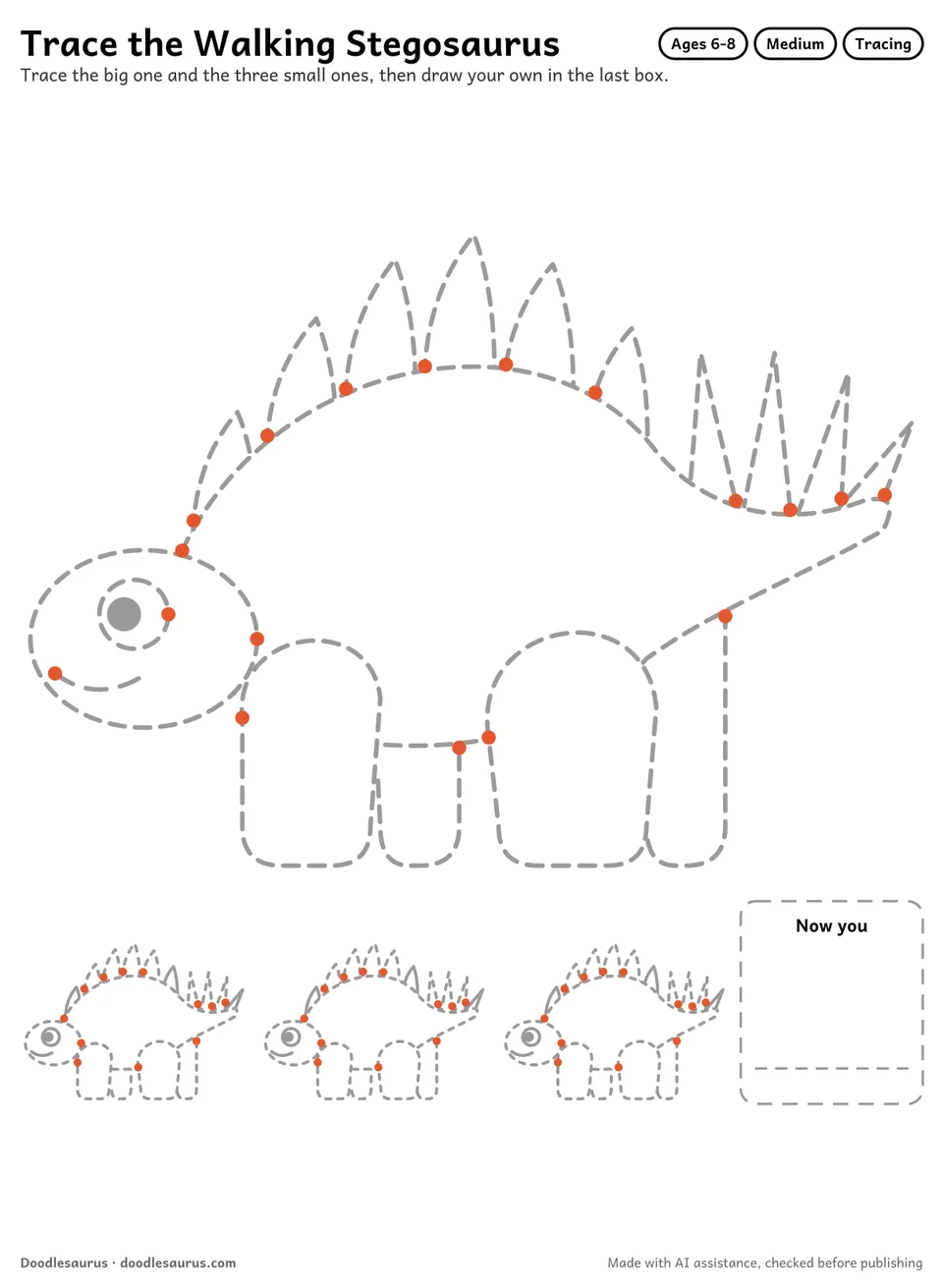
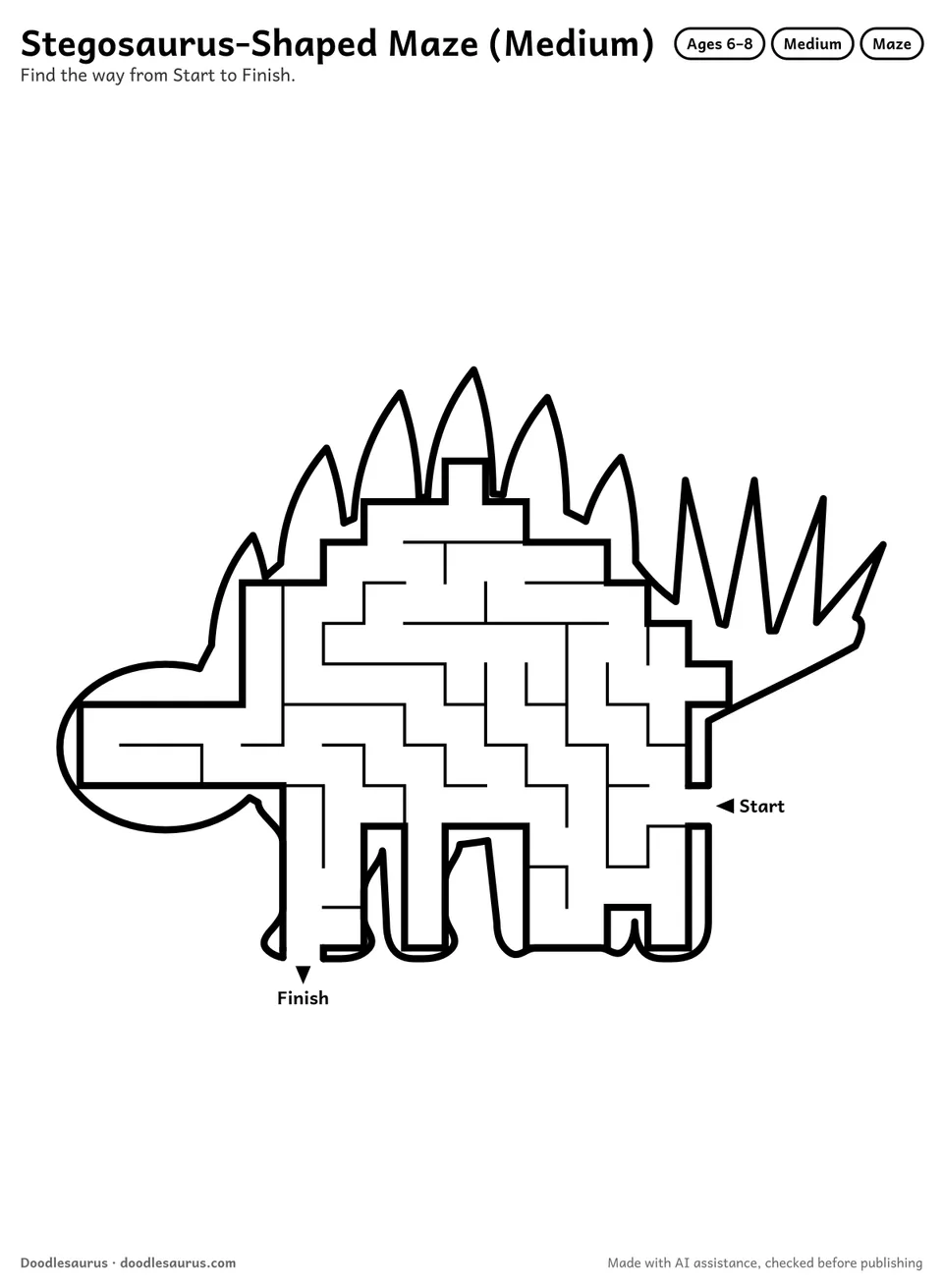
More dot to dot
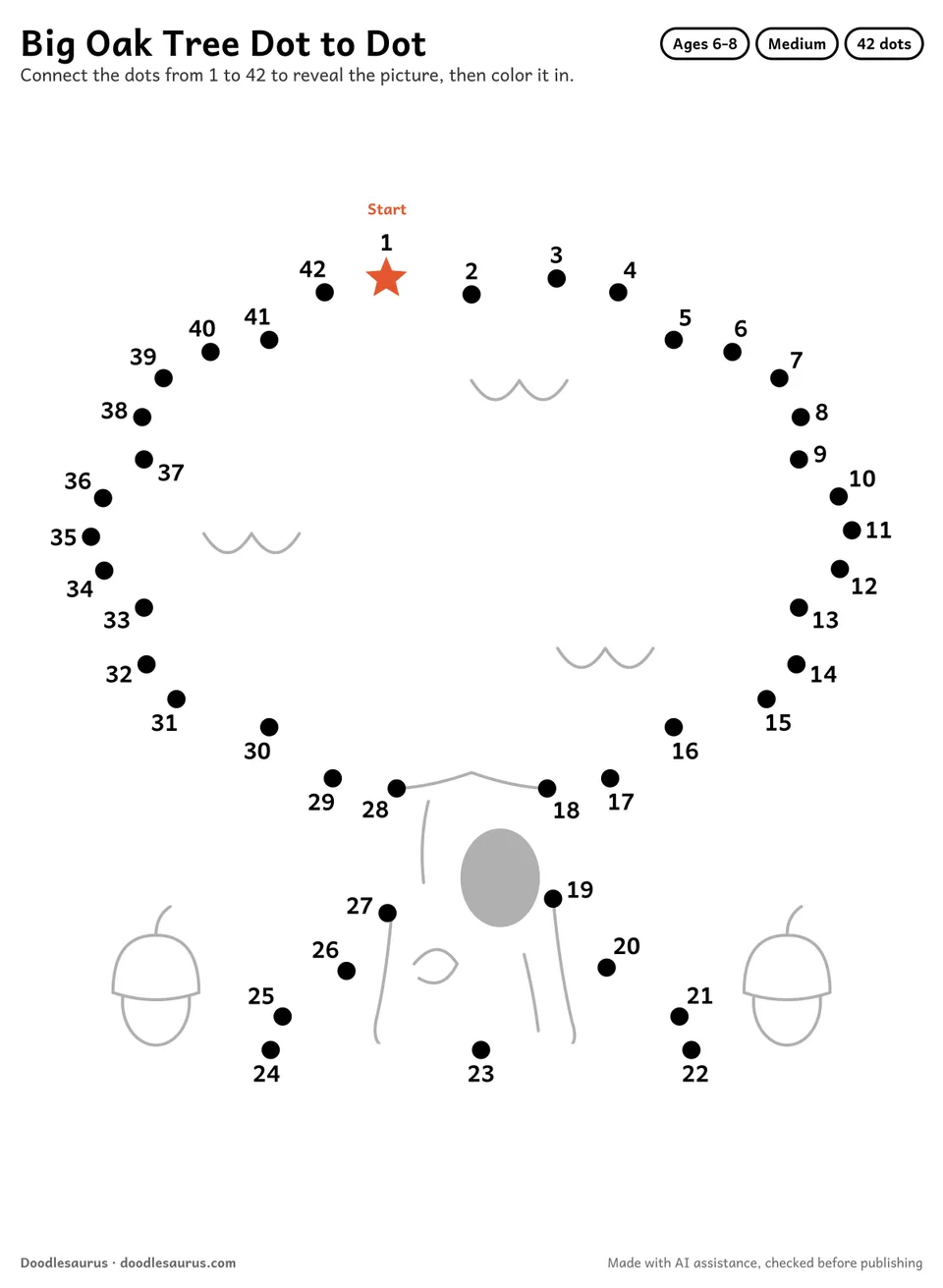
Frequently asked questions
Why does even the easy stegosaurus need 40 dots?
Each of the six plates and four tail spikes has a dot on every tip, so the line becomes a long zigzag on all three pages. The medium page has 50 dots for ages 6 to 8 and the hard page 60 for ages 9 to 12, while the easy page is for ages 3 to 5.
What changes on the hard page?
The gray face and body lines stay the same, and half of the extra dots go over the front plates, where 12 numbers zigzag up and down instead of 7. The tail spikes and the feet get a few more dots too, while the head keeps the same nine dots as the medium page.
What do the two short gray lines near the star mark?
On the easy page they mark the bottom of the narrow dip between the two plates to the right of the star, where the line cuts straight across. Every page also prints the eye, the smile, the curve of the back under the plates, the line of the neck and the inner edges of the legs in light gray, which show where the head and body will be.
What does the answer page show?
Each level has a second page with the joined outline of the dinosaur, including the plates, spikes and legs. The answer pages also keep the gray eye, smile and body lines in place.
Why is the head rounder on the harder pages?
The easy page uses six dots for the whole head, numbers 29 to 34, so the joins are long and straight. The medium and hard pages spread nine dots around it.
About this printable
- Made with AI assistance (vector drawing authored by a language model) and checked by automated tests and an AI reviewer.
- Checked by automated tests and an AI reviewer on 22 Oct 2026.
- Free for personal and single-classroom use. See the license. Read the license · How these are made · Report a problem.
- Vector PDF, 2 pages, 186×254 mm art box — prints edge-safe on A4 and US Letter.
New printables, twice a month
Our newsletter starts soon, with new sheets twice a month and a free 10-page starter pack for every new reader.