Penguin Maze in Three Sizes
A standing penguin maze to print free in three levels: 102 wide cells for ages 3 to 5, 255 for ages 6 to 8 and 562 narrow ones for ages 9 to 12.
Choose a level
Flippers, feet and a bump at the neck
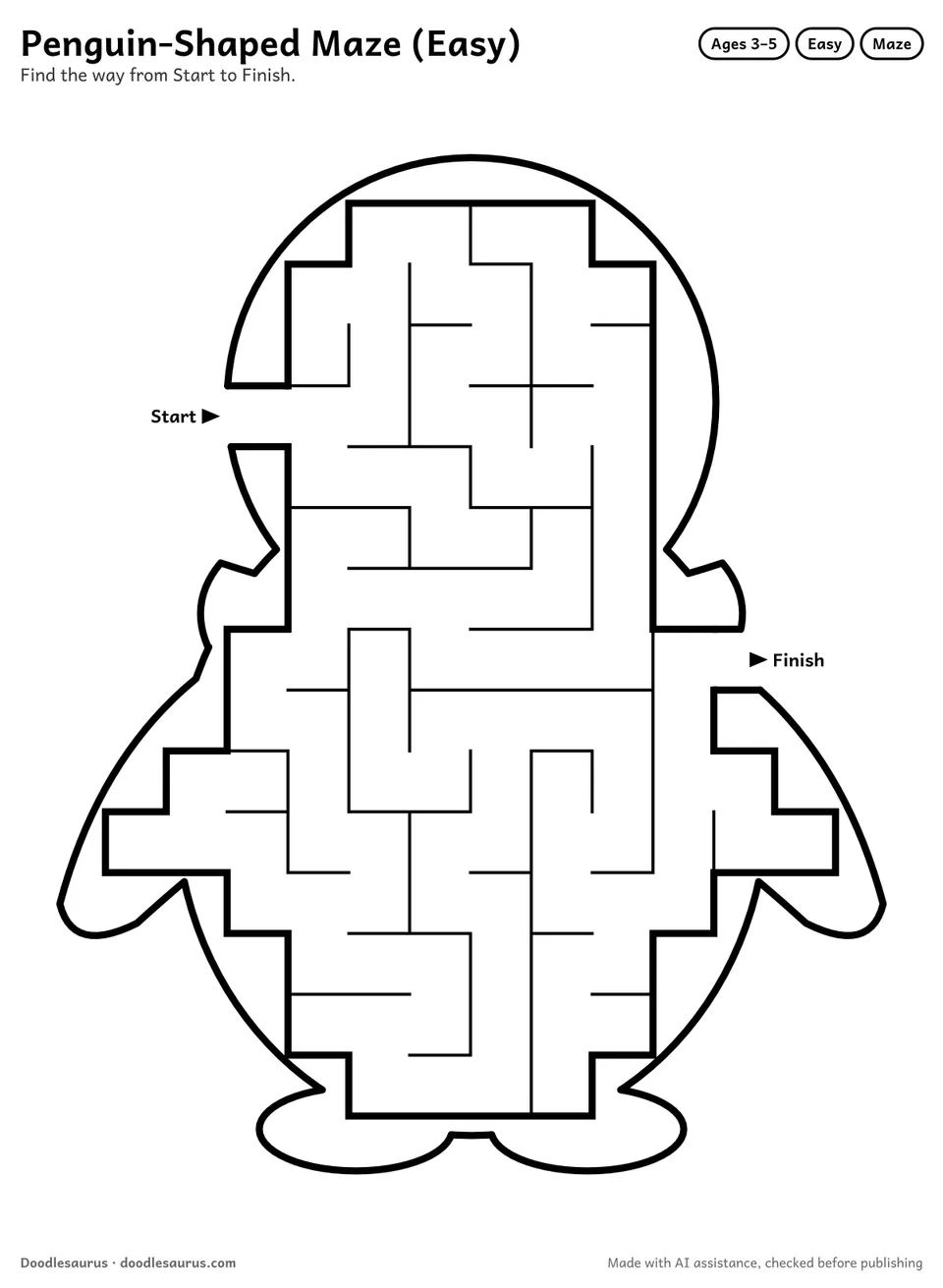
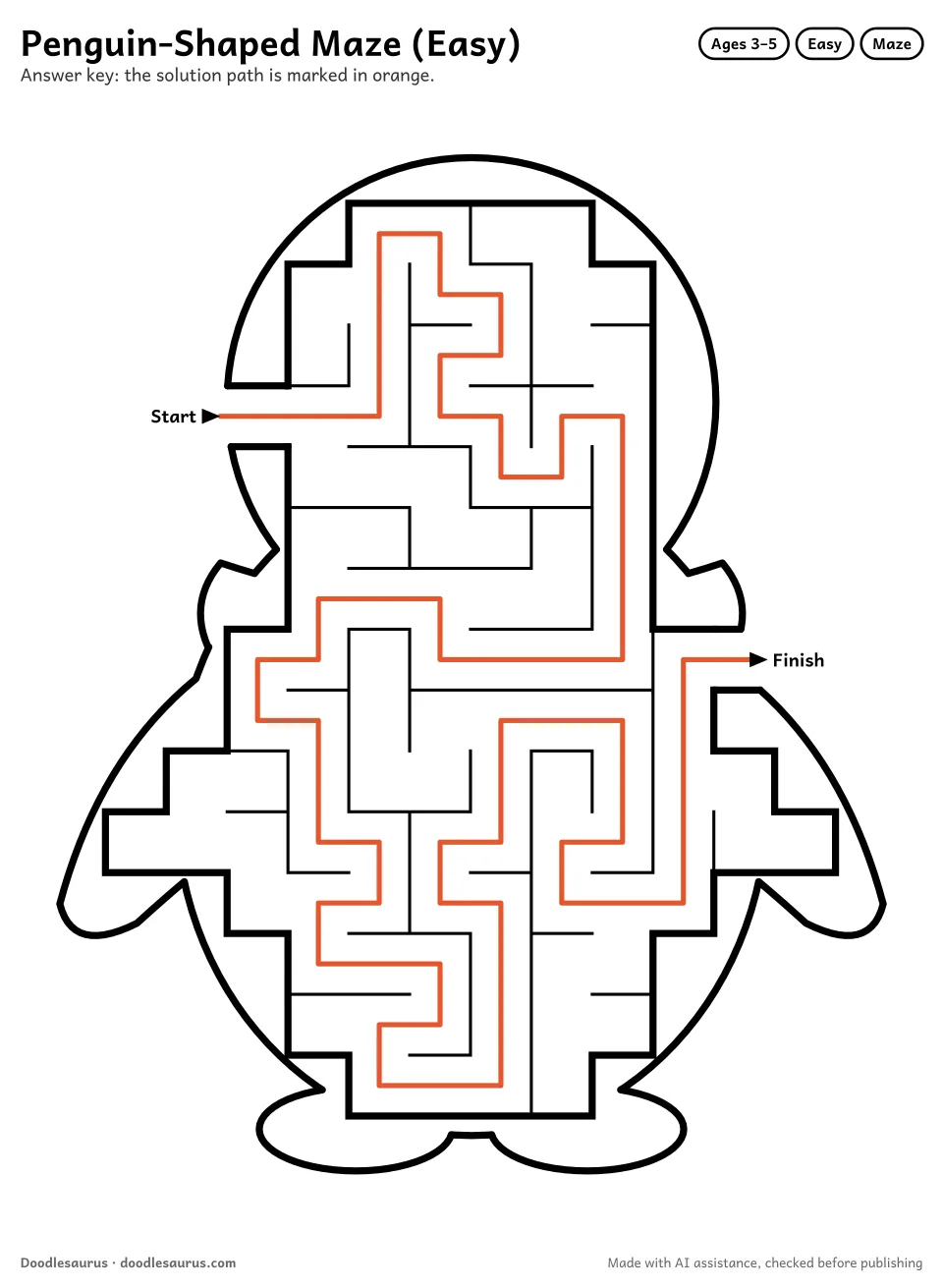
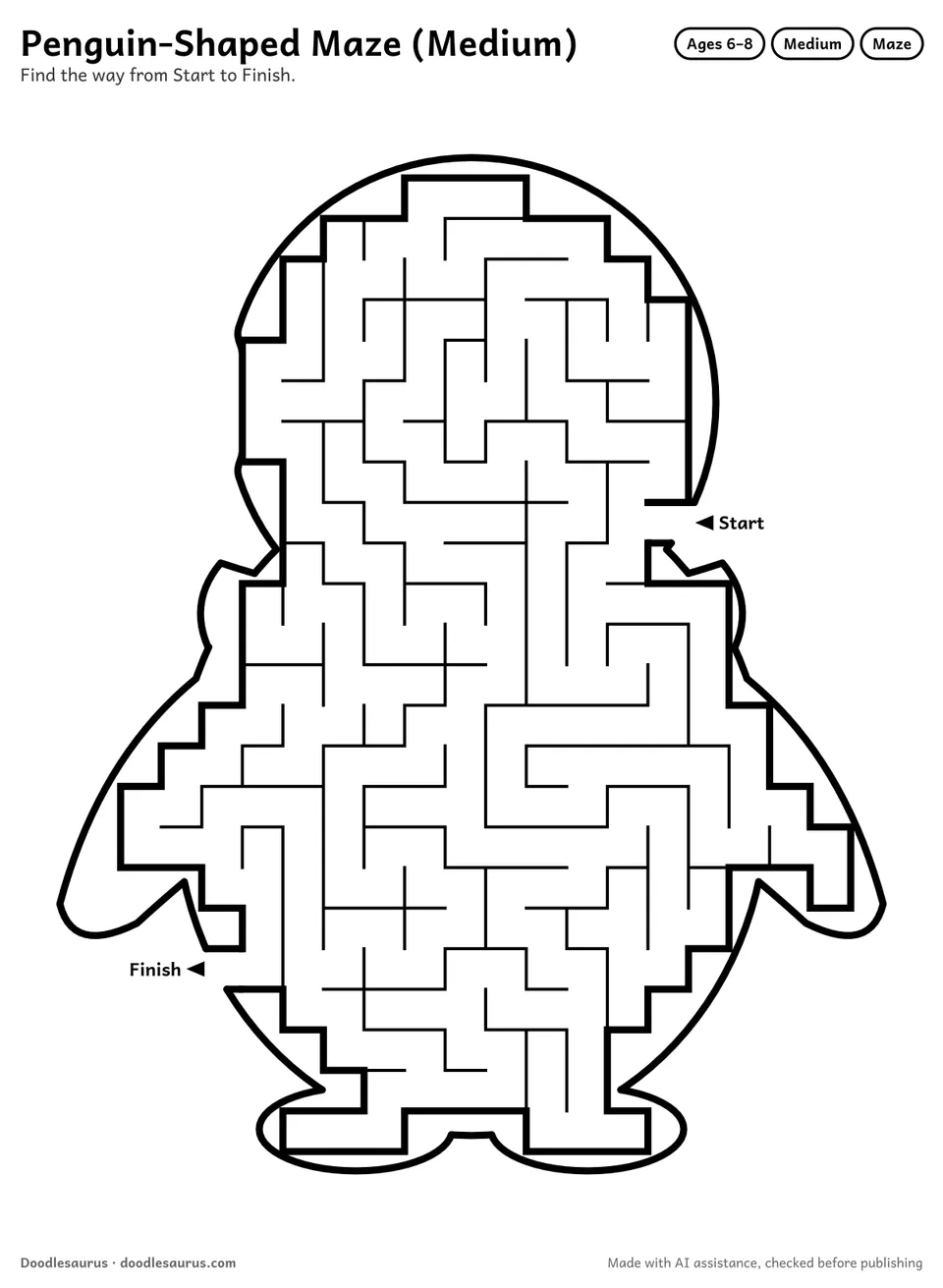
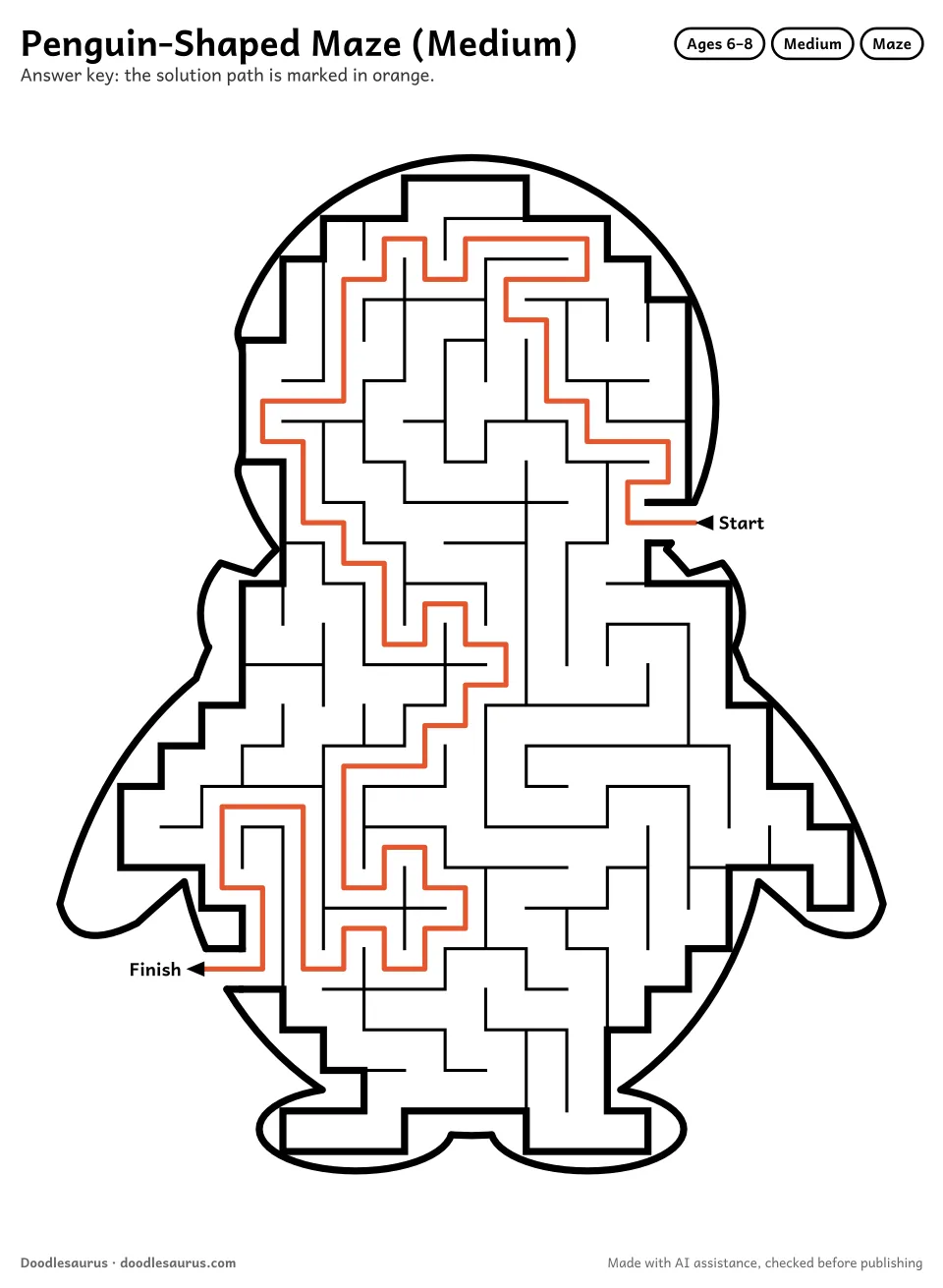
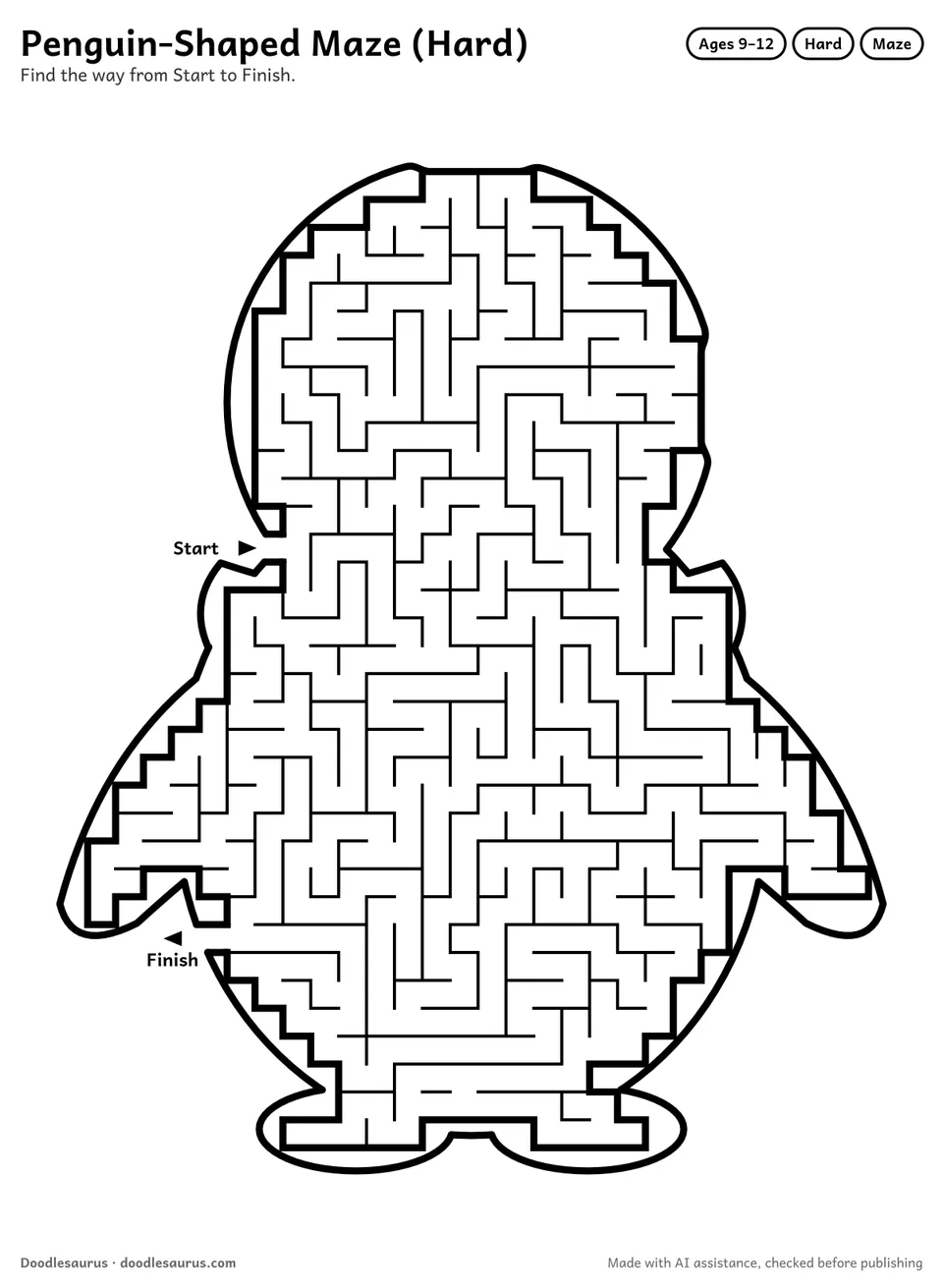
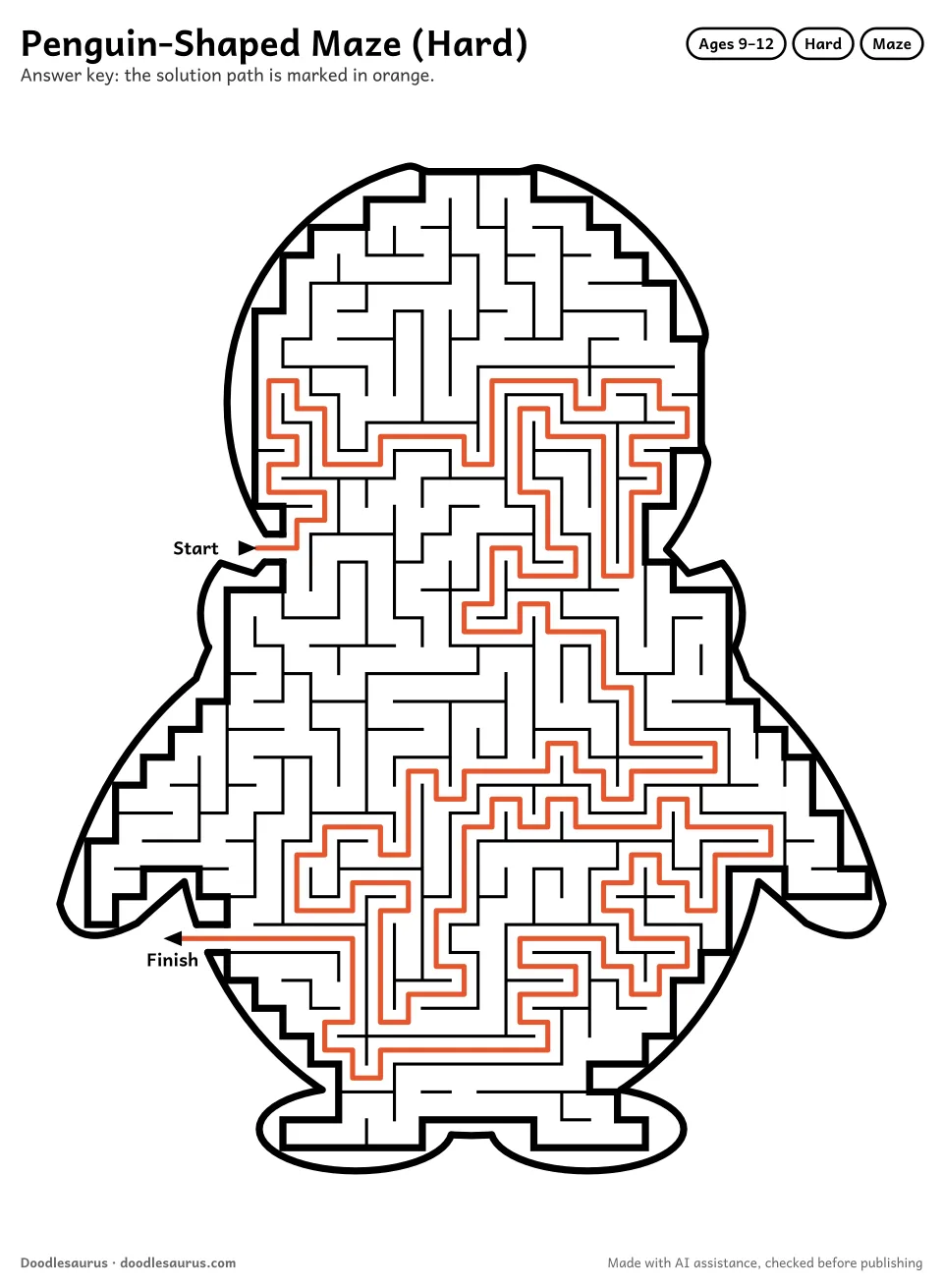
This penguin maze fits its corridors inside a standing penguin: a round head, a small bump at each side of the neck, two flippers held out at the sides and two oval feet along the bottom. The walls stay just inside the smooth outline. The way in and the way out are arrows beside gaps cut in the outer wall, and Start moves on every level, so finishing one maze does not give away the next. An answer key with the route marked in orange fills page two of every PDF.
Three levels
On the easy penguin, 102 cells of 12 mm give a crayon plenty of room, which suits ages 3 to 5. Its route crosses 63 of them, from the left side of the head up through the head, down through the body and back up to leave just above the right flipper. The medium penguin packs 255 cells of 8 mm into the same outline for ages 6 to 8, and its 77-cell route starts on the right side of the head, loops over the top, comes down the left side and through the middle of the body, and ends just below the left flipper.
Older solvers, ages 9 to 12, get the hard penguin: 562 cells of 5.5 mm and a path that winds through 213 of them. It runs from the left side of the head across the lower half of the head, down through the middle of the body, out toward the right flipper and back down toward the feet before it ends just below the left flipper, as on the medium maze. Scaling the A4 or US Letter PDF down would squeeze those corridors, so this one prints at 100 percent with fit to page off.
At home and in class
Teachers use it as a quiet start to the day, and at home it goes in a bag with a pencil for the car. Afterward, the penguin can be colored around the line.
Skills practiced & tips
- Look for both arrows before starting, since Start sits in a different place on every level.
- Run a finger along the corridors first, then use a pencil.
- Switch to a new color for each try so the newest path is easy to spot.
- Give younger children the easy penguin with a crayon and older ones a sharp pencil for the hard one.
- When the path is finished, color the penguin black and white around it and add a scarf.
Penguin fun facts
- Penguins use their flippers to swim and their feet and tail to steer.
- The little penguin is the smallest penguin and usually stands about a foot tall.
- A penguin's dark back and light front help hide it from animals above and below it in the sea.
Classroom ideas
- Pre-K (ages 3 to 5): use the easy penguin as a pencil-control warm-up, first with a finger and then with a thick crayon.
- Grade 1: let pairs solve the medium penguin and count how many dead ends they reached on the way.
- Grades 4 to 6: compare the three answer keys and graph the route lengths of 63, 77 and 213 cells.
- Year 3 (UK): ask pupils to write left, right, up and down directions for the easy route.
More penguin activities
More mazes
Frequently asked questions
How large are the corridors on each penguin maze?
The easy penguin has 102 cells of 12 mm and a route of 63 cells. The medium penguin has 255 cells of 8 mm with a 77-cell route, and the hard penguin has 562 cells of 5.5 mm with a route that runs through 213 of them.
Do the medium and hard penguins finish in the same place?
Yes, both end just below the left flipper. They differ at Start: the medium maze starts outside the right side of the head, just above the bump at the neck, and the hard maze starts outside the left side of the head, lower than on the easy maze and also just above the bump. The easy penguin starts outside the left side of the head and ends outside the right side of the body, just above the right flipper.
What can a child do with the finished penguin?
Color it black and white around the drawn path, with a scarf if they like. Before that, the orange route on page two of the PDF is there for checking the answer.
Is the penguin used in other activities?
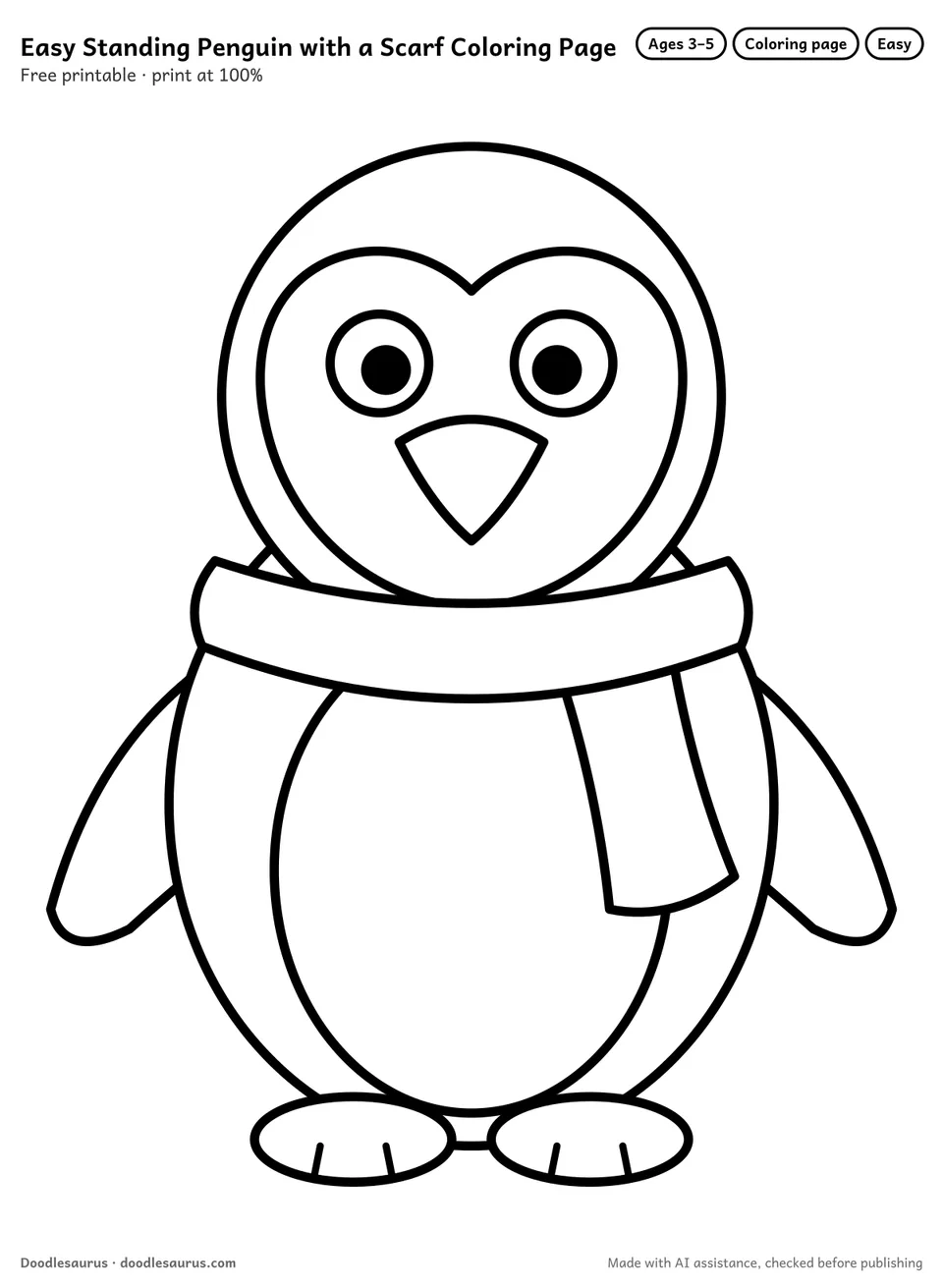
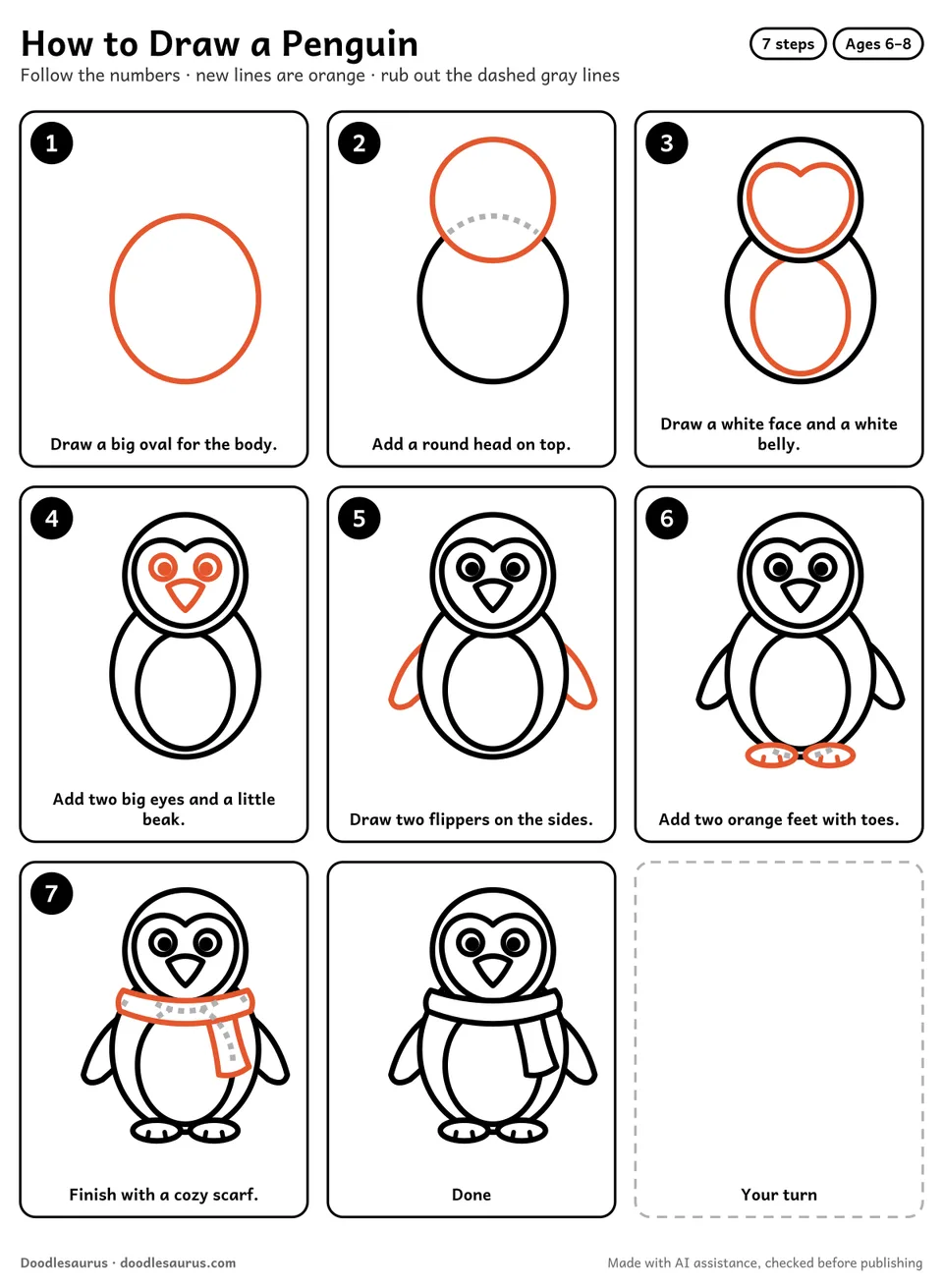
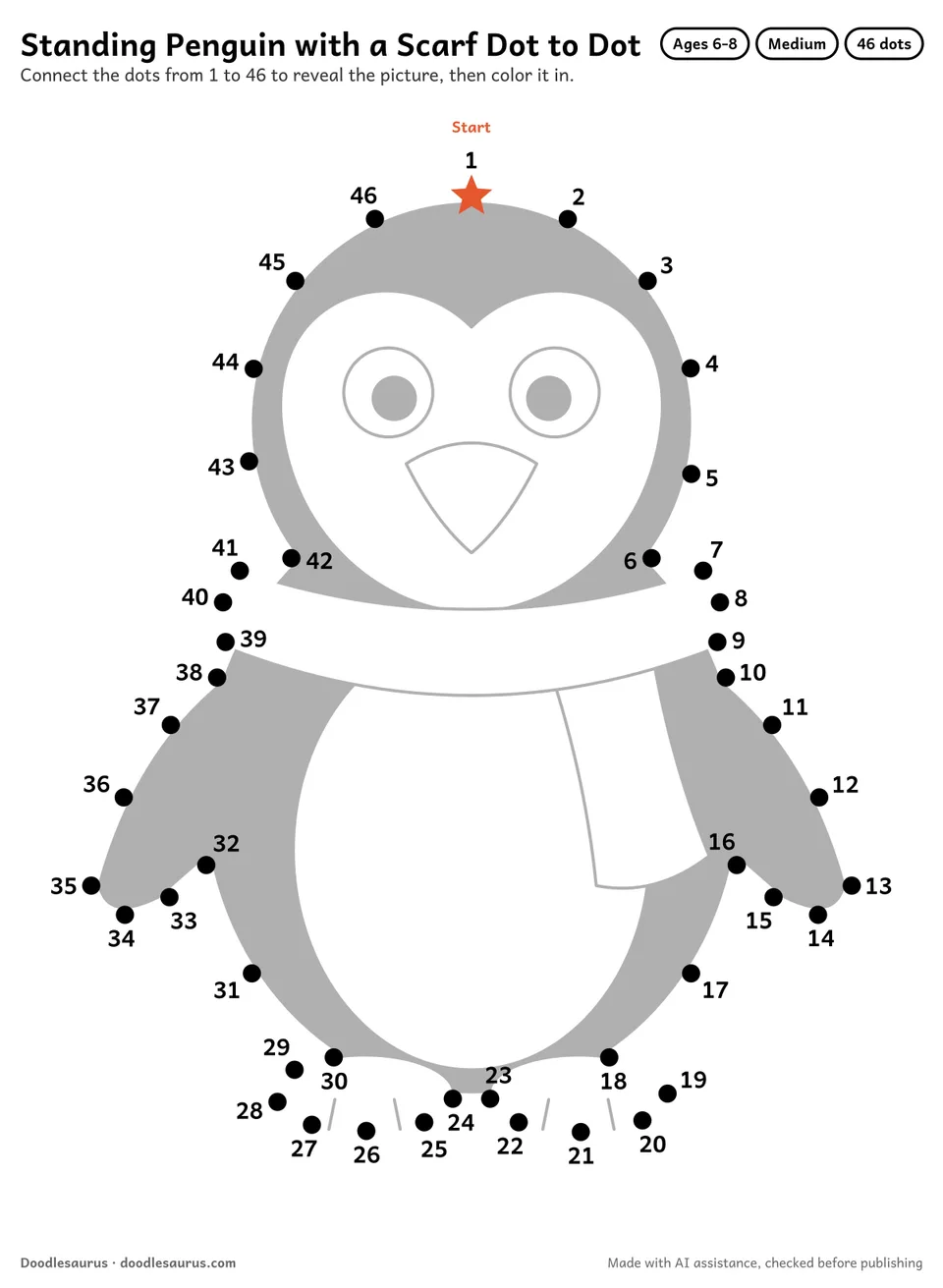
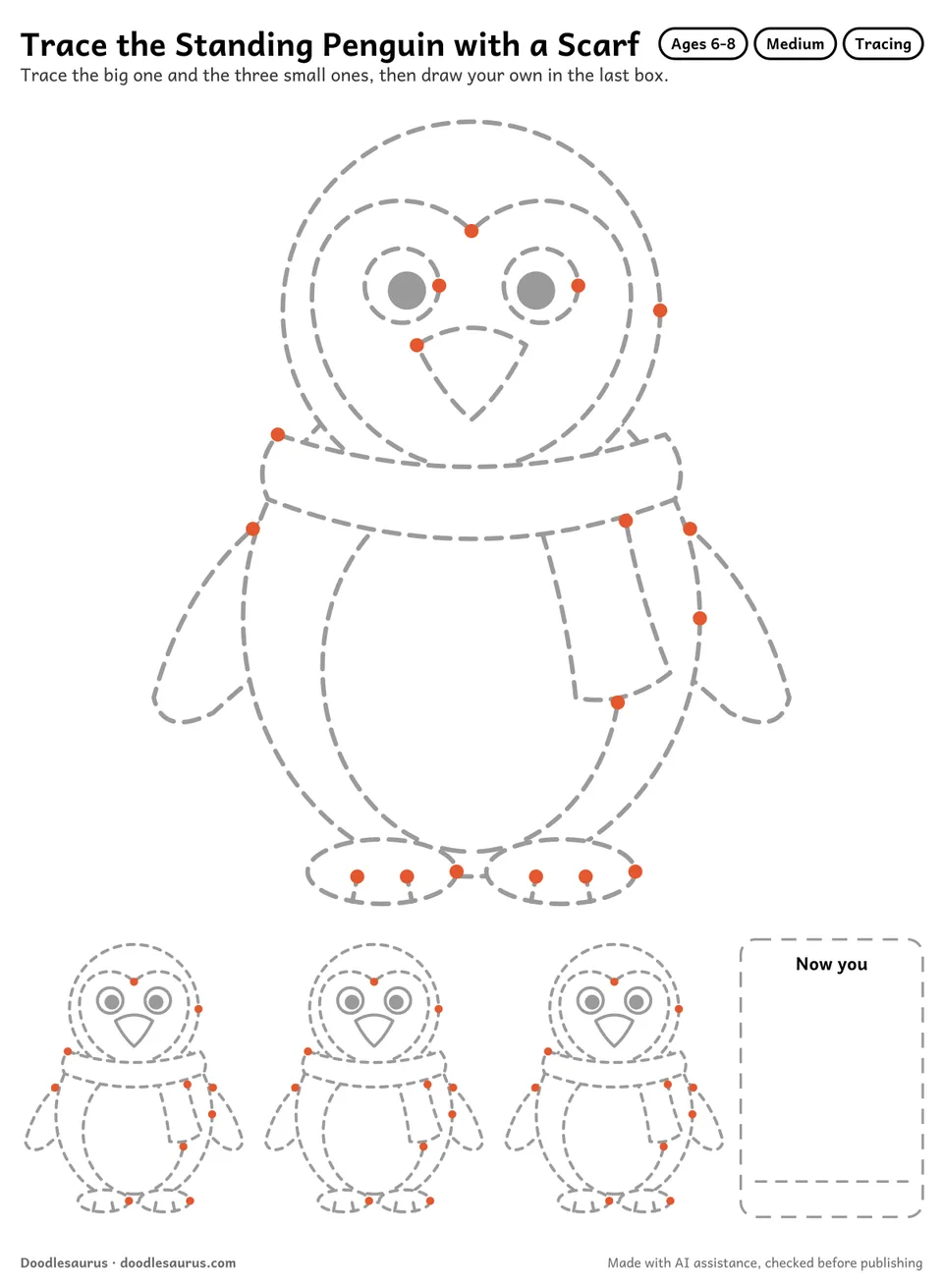
Yes. The same standing penguin appears as a coloring page, a 7-step how to draw sheet, a dot to dot and a tracing worksheet.
About this printable
- Made with AI assistance (vector drawing authored by a language model) and checked by automated tests and an AI reviewer.
- Checked by automated tests and an AI reviewer on 22 Oct 2026.
- Free for personal and single-classroom use. See the license. Read the license · How these are made · Report a problem.
- Vector PDF, 2 pages, 186×254 mm art box — prints edge-safe on A4 and US Letter.
New printables, twice a month
Our newsletter starts soon, with new sheets twice a month and a free 10-page starter pack for every new reader.