
Fish Coloring Pages
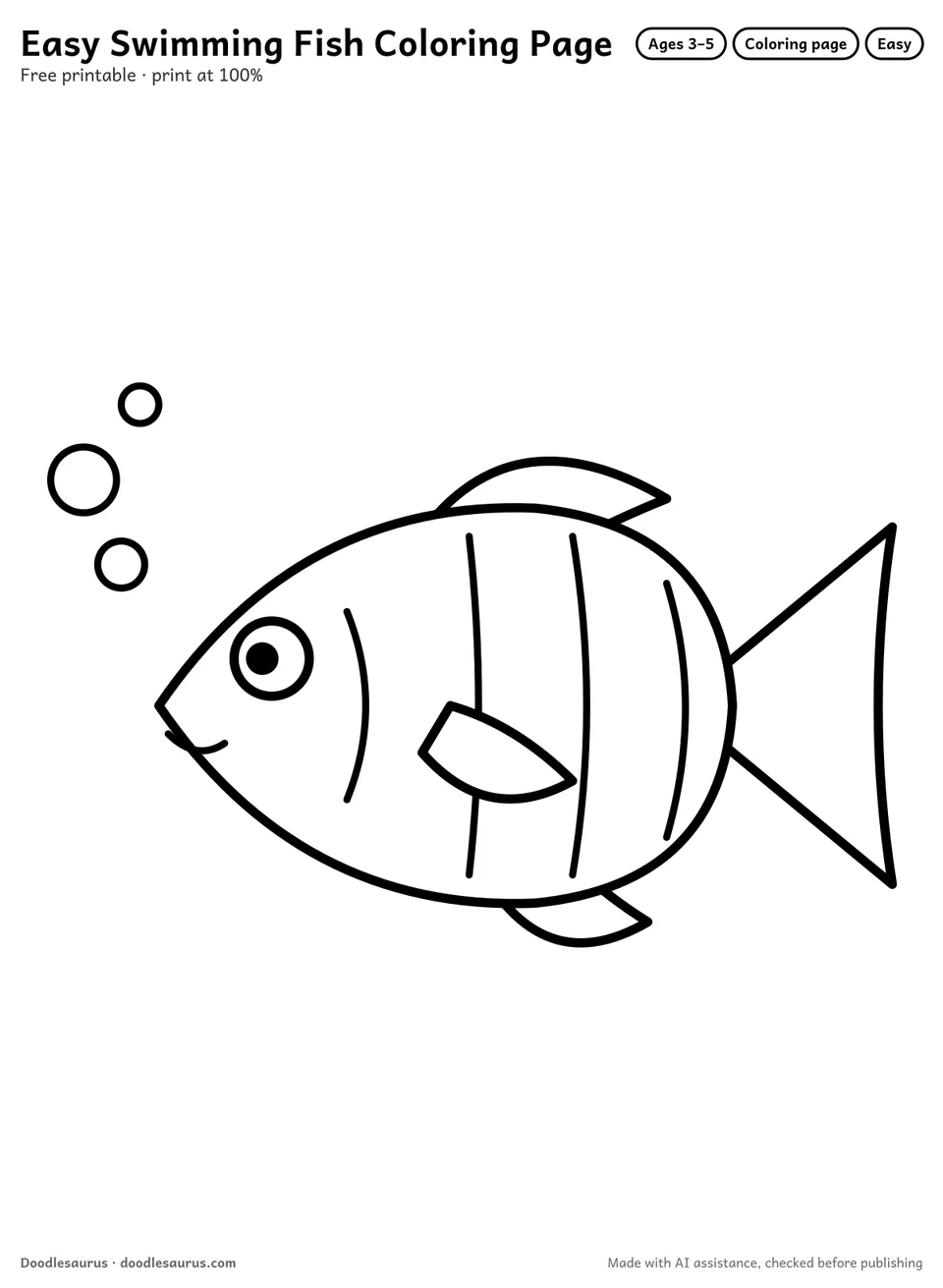
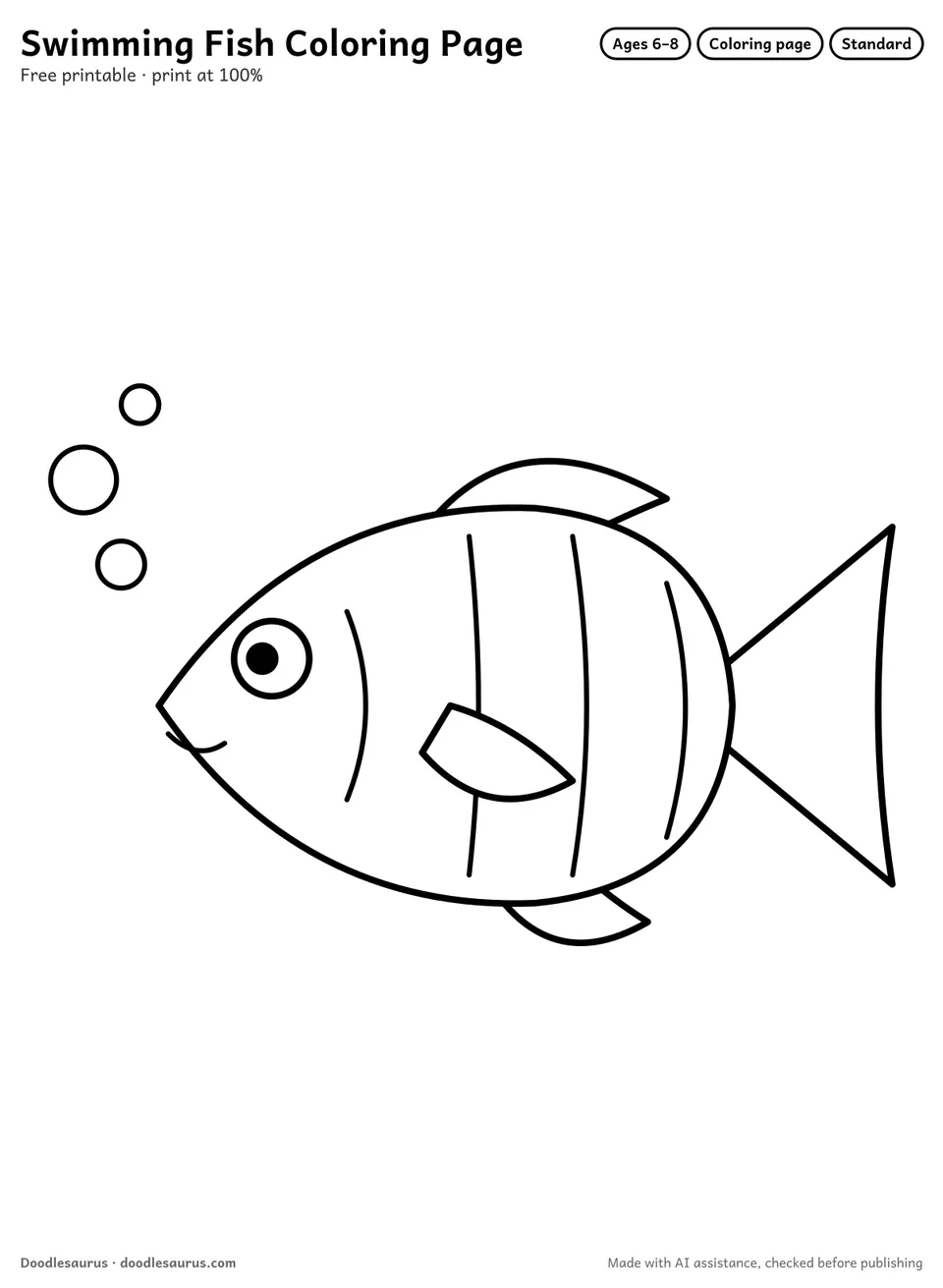
Fish coloring pages with a striped fish and three bubbles: six wide regions in bold lines for ages 3 to 5, or finer lines for 6 to 8. A4 or Letter.
Printable fish coloring sheets
Filter by age or difficulty
Nothing matches that filter yet.
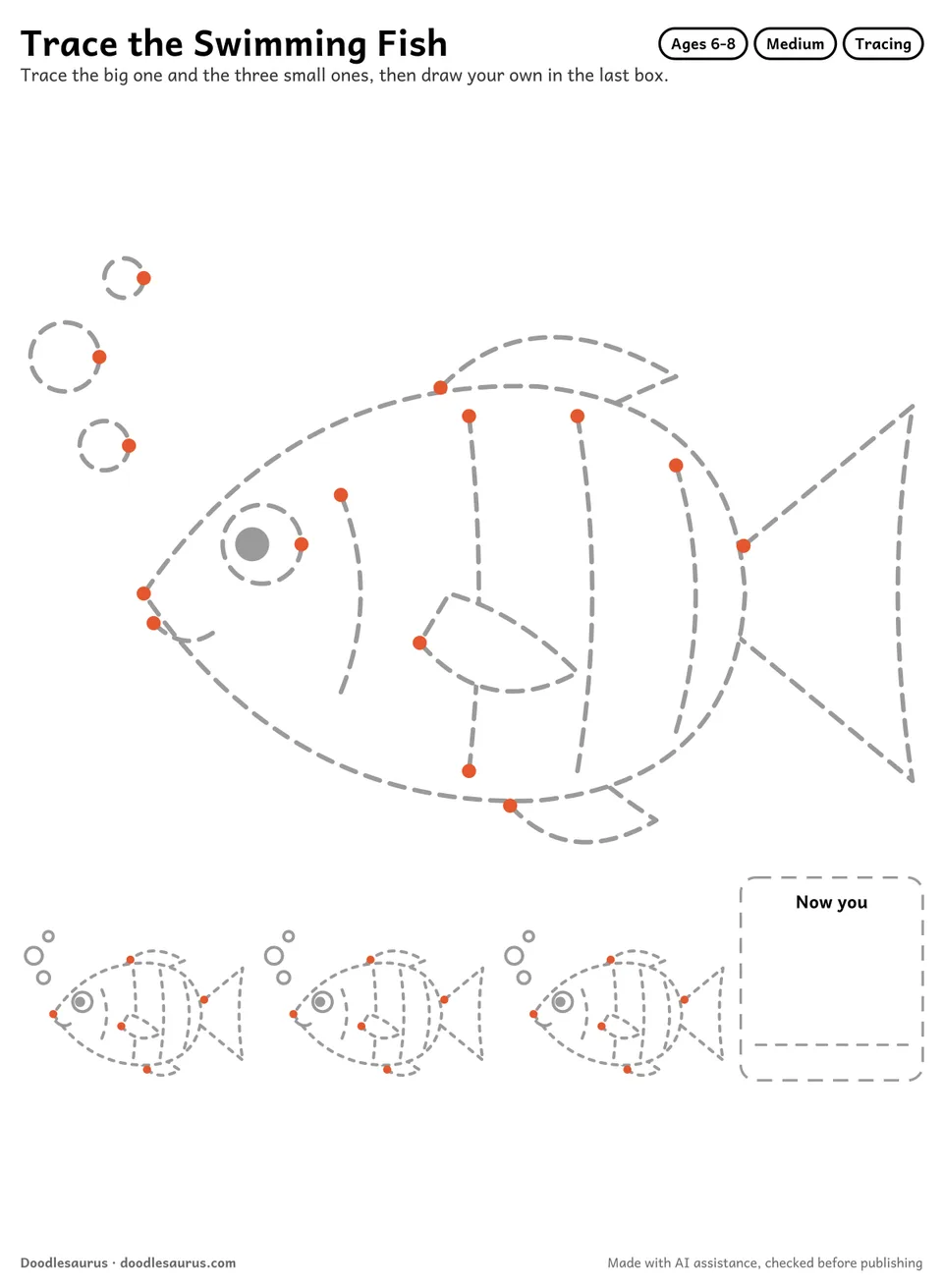
Three bubbles of different sizes rise from the mouth of a single fish swimming to the left. These fish coloring pages keep it simple. The fish has an egg-shaped body with a pointed nose, a big triangular tail, a fin on top and one underneath, a leaf-shaped side fin, a round eye, a gill line and three curved stripes.
Six wide regions
Thick bold outlines on the easy sheet suit ages 3 to 5. Its 6 coloring regions are wide enough for a fist-grip crayon. Markers work too, since the heavy lines hide stray strokes. The standard fish is the same picture in finer lines for ages 6 to 8, where a child can shade each stripe differently or add scales inside the body.
Under the sea at home and in class
At home the fish suits an under-the-sea afternoon, a bath-time theme or a quiet moment after school. In class it pairs with an ocean topic in preschool. Kindergarten and first grade can use it for parts-of-a-fish labeling, and second grade for research, with each child coloring the fish as a real species. The fish sits in the middle of the sheet with room to spare, as long as the A4 or US Letter PDF prints at actual size rather than fit to page.
What to color
- An egg-shaped body with the pointed mouth end facing left
- A large triangular tail fin at the back
- A curved fin on top and a smaller fin underneath
- A leaf-shaped side fin in the middle of the body
- A round eye with a dark pupil, a gill curve and three curved stripes
- Three bubbles of different sizes rising in front of the mouth
Tips
- Alternate two colors across the stripes for a quick clownfish or angelfish look.
- Color the fins a lighter shade than the body so they stand out.
- Leave the bubbles white and color a blue background around them.
- Draw a sandy floor and a strand of seaweed under the fish before coloring.
- Use the easy sheet with markers; the thick lines hide stray strokes.
Fish fun facts
- Most fish have no eyelids, so they cannot close their eyes even when resting.
- Fish sense movement in the water through a row of pressure-sensitive cells along each side called the lateral line.
- Many fish scales grow growth rings, a little like a tree trunk, which scientists use to estimate a fish's age.
Classroom ideas
- Preschool (ages 3 to 5): color the easy fish and count the three bubbles and three stripes out loud.
- Kindergarten: color the standard fish, then sort a set of sea-animal pictures into fish and not fish.
- First grade: label tail, fin, eye and gill on the finished picture using a word bank.
- Second and third grade: color the fish to match a real species researched in a class book and write two facts beside it.
More fish activities
Related coloring pages
Frequently asked questions
Do markers work on the easy fish?
Yes. The 6 regions on the easy sheet are wide, and its thick, bold outlines hide stray strokes, so markers and fist-grip crayons both work. The standard sheet has the same fish in finer lines for colored pencils and more careful work, at ages 6 to 8.
Where should a young child start?
With the three bubbles in front of the mouth. They are small and quick to finish, and then the wide body, the tail and the fins come next.
Is the fish available in other activity formats?
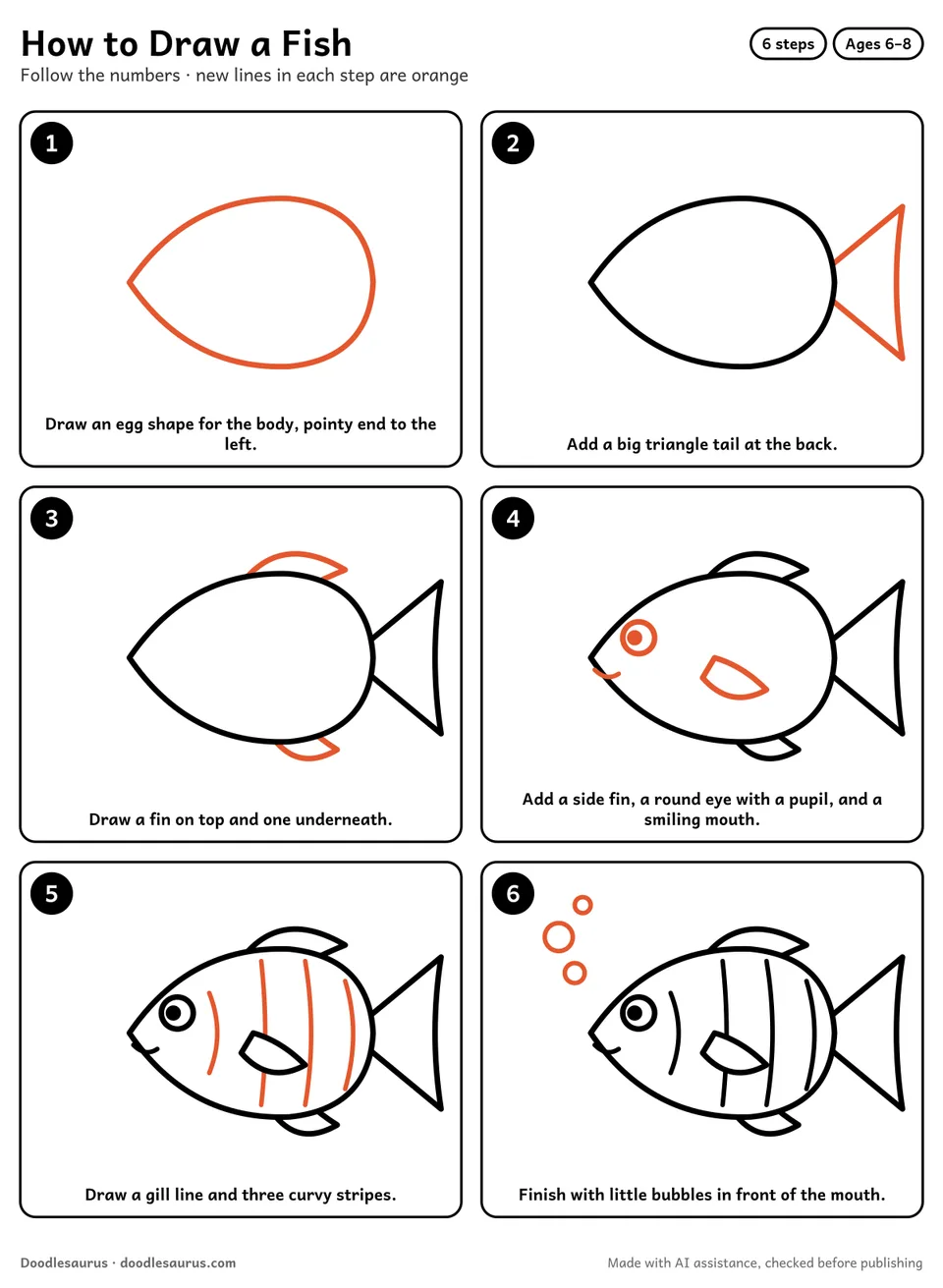
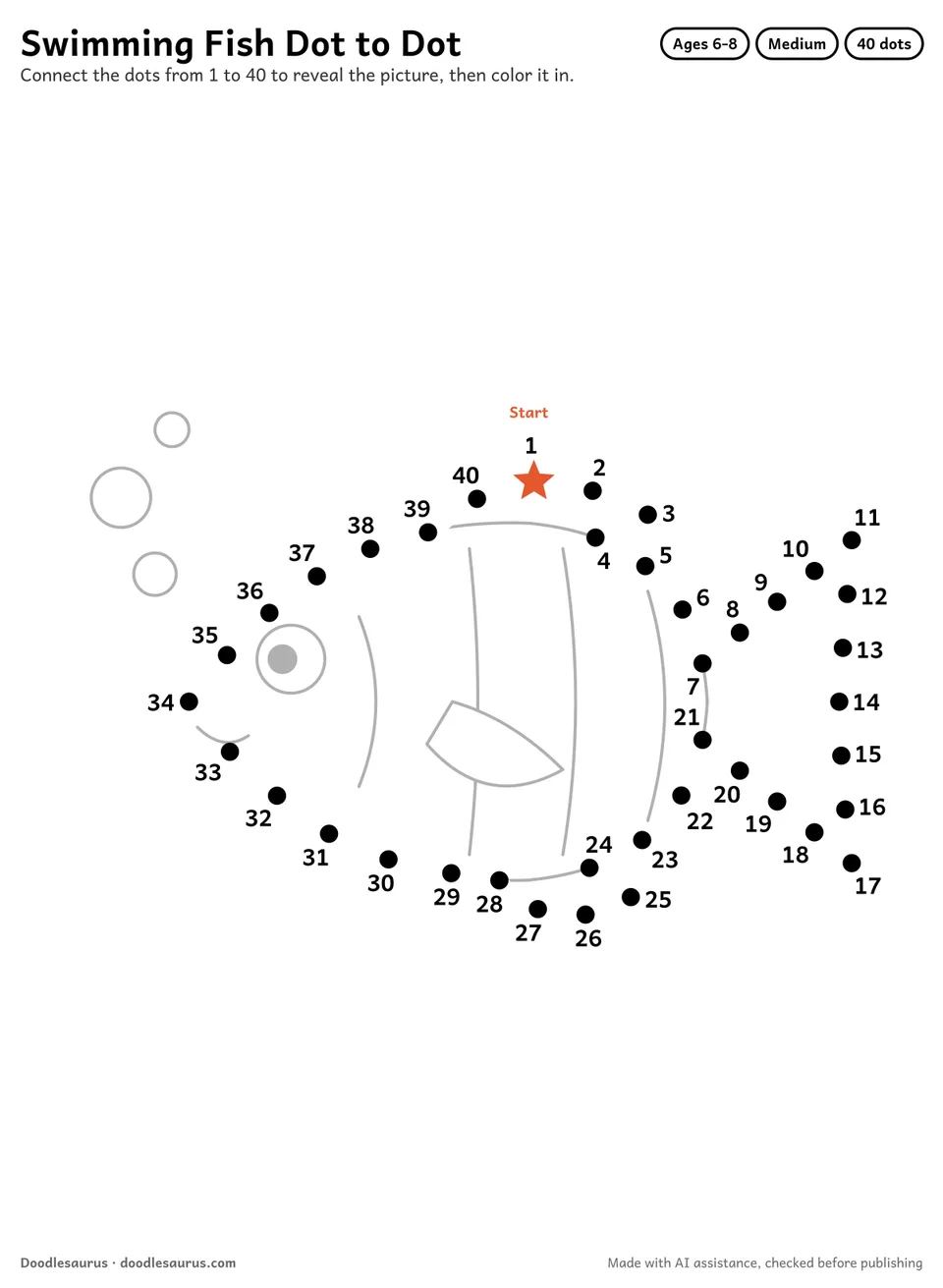
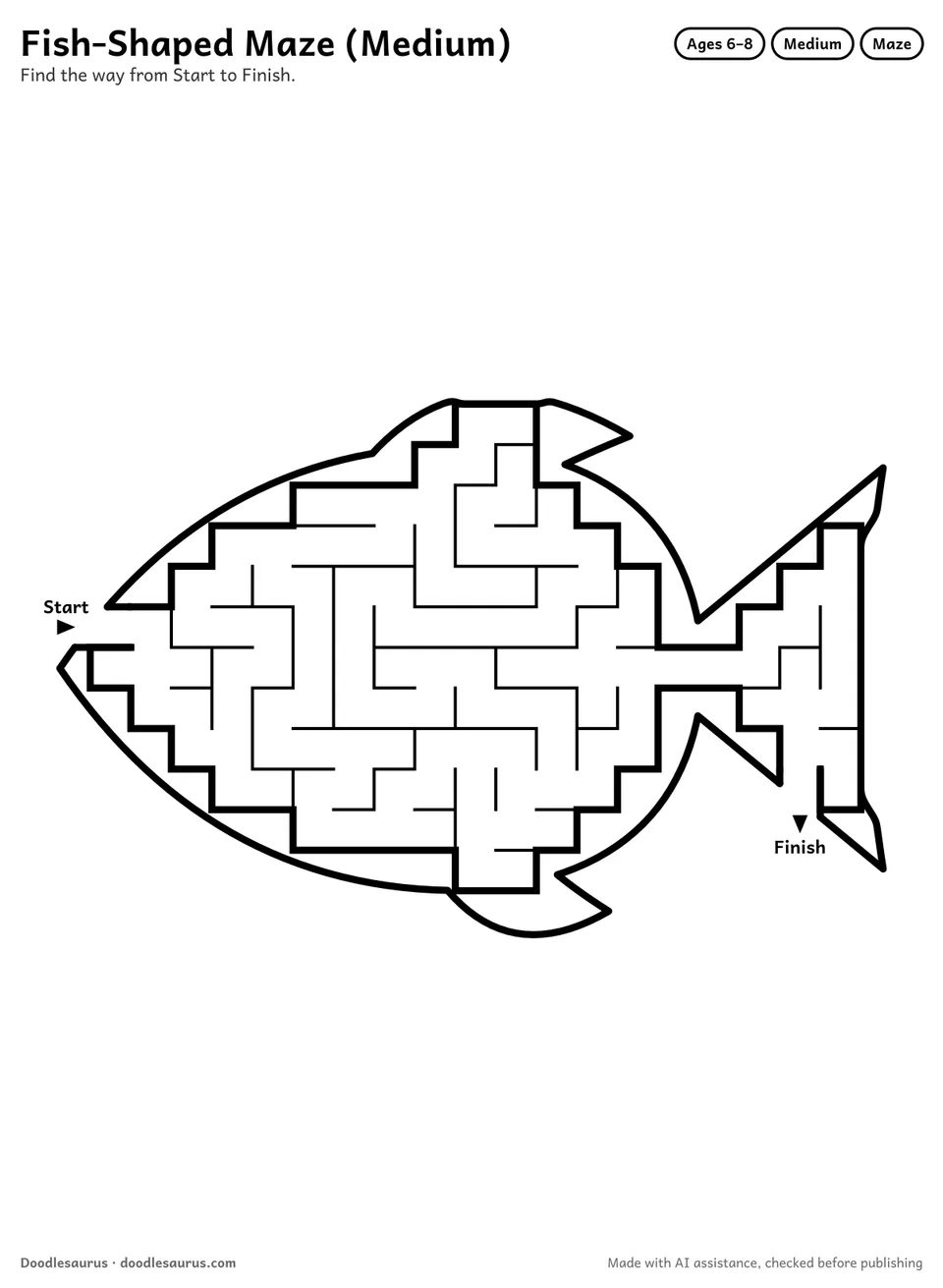
Yes. The same swimming fish is drawn as a 6-step how to draw sheet, a dot to dot in 24, 40 and 57 dots, an easy and a medium tracing worksheet, and a fish-shaped maze in three levels.
New printables, twice a month
Our newsletter starts soon, with new sheets twice a month and a free 10-page starter pack for every new reader.
AI-assisted vector art, checked before publishing. About the AI · License