
Fish Tracing Worksheets with Stripes and Bubbles
Free fish tracing worksheets: a swimming fish with three stripes and three bubbles, one large for ages 3 to 5, three small for 6 to 8. A4 or Letter.
Choose a level
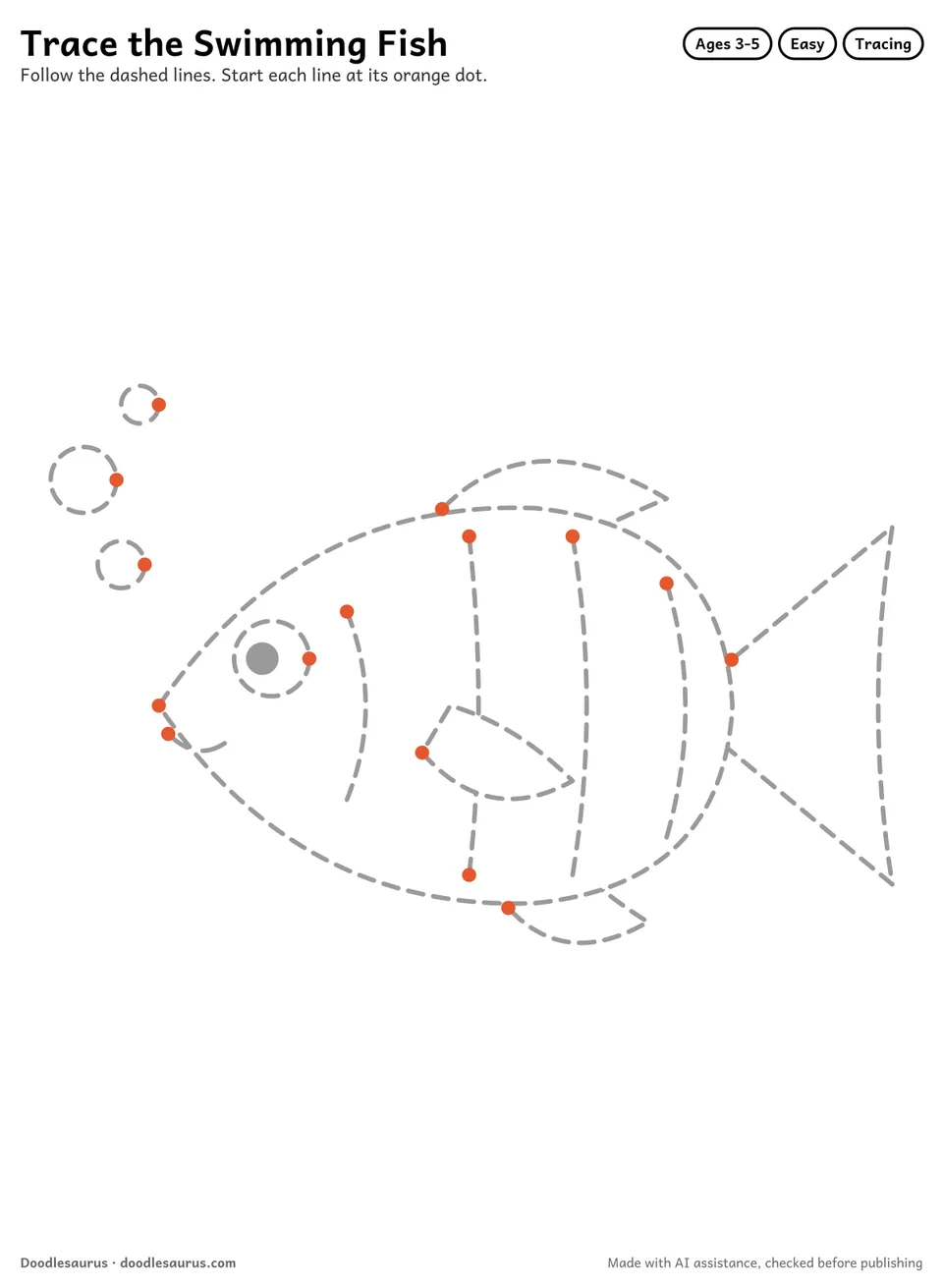
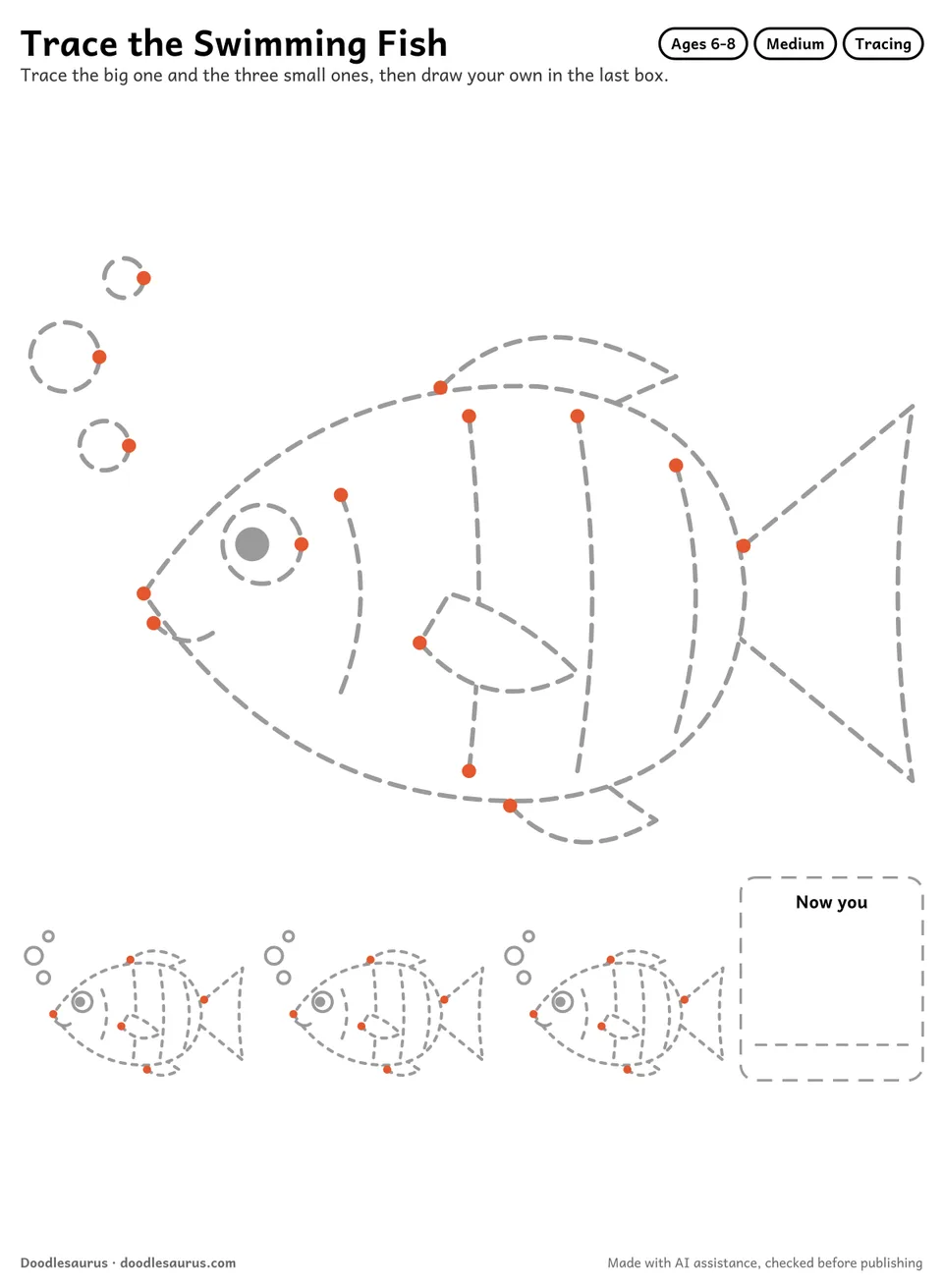
Swimming Fish Tracing Worksheet
Facing left with an egg-shaped body, this swimming fish is drawn entirely in gray dashes. Every dashed line starts from an orange dot. Around the body are a triangle tail, a fin above and below and a side fin, with a round eye, a gill line, three stripes and three bubbles near the mouth.
One large fish
Alone in the middle of the page for ages 3 to 5, the fish is big, and most of its lines are long, smooth arcs that keep the pencil moving at an even pace. The straight edges of the tail are different. Each one ends in a sharp point, which means stopping at a corner and changing direction. The bubbles are tiny loops that ask for slower, rounder movements.
Three small fish and a Now you box
A row of three small copies runs under the same large dashed fish on the page for ages 6 to 8. Their stripes and fins are short, so a sharpened pencil and a steady hand help. Printing smaller than 100 percent squeezes those dashes, so keep the A4 or US Letter PDF at full scale. The row closes with a dashed Now you box for drawing the fish freehand from memory.
Skills practiced & tips
- Have your child follow each dashed line from its orange dot to the end before lifting the pencil.
- Start with the big egg-shaped body, then move on to the tail, fins and stripes.
- Use the three bubbles as a warm-up for drawing small circles.
- Turn the paper slightly if a curve feels awkward to reach.
- Let your child color the fish once all the dashes are covered.
Fish fun facts
- A fish's top fin is called the dorsal fin, and it helps keep the fish steady as it swims.
- The whale shark is the largest fish alive today and can grow longer than a school bus.
- Seahorses are fish, even though they swim upright and look very different from most fish.
Classroom ideas
- Preschool: slide the easy page into a clear sleeve and trace it with dry-erase markers during an ocean week.
- Kindergarten: use the medium sheet over two short sessions, finishing with a freehand fish in the empty box.
- Grade 1: after tracing, students add a speech bubble to their freehand fish and write what it might say.
More fish activities
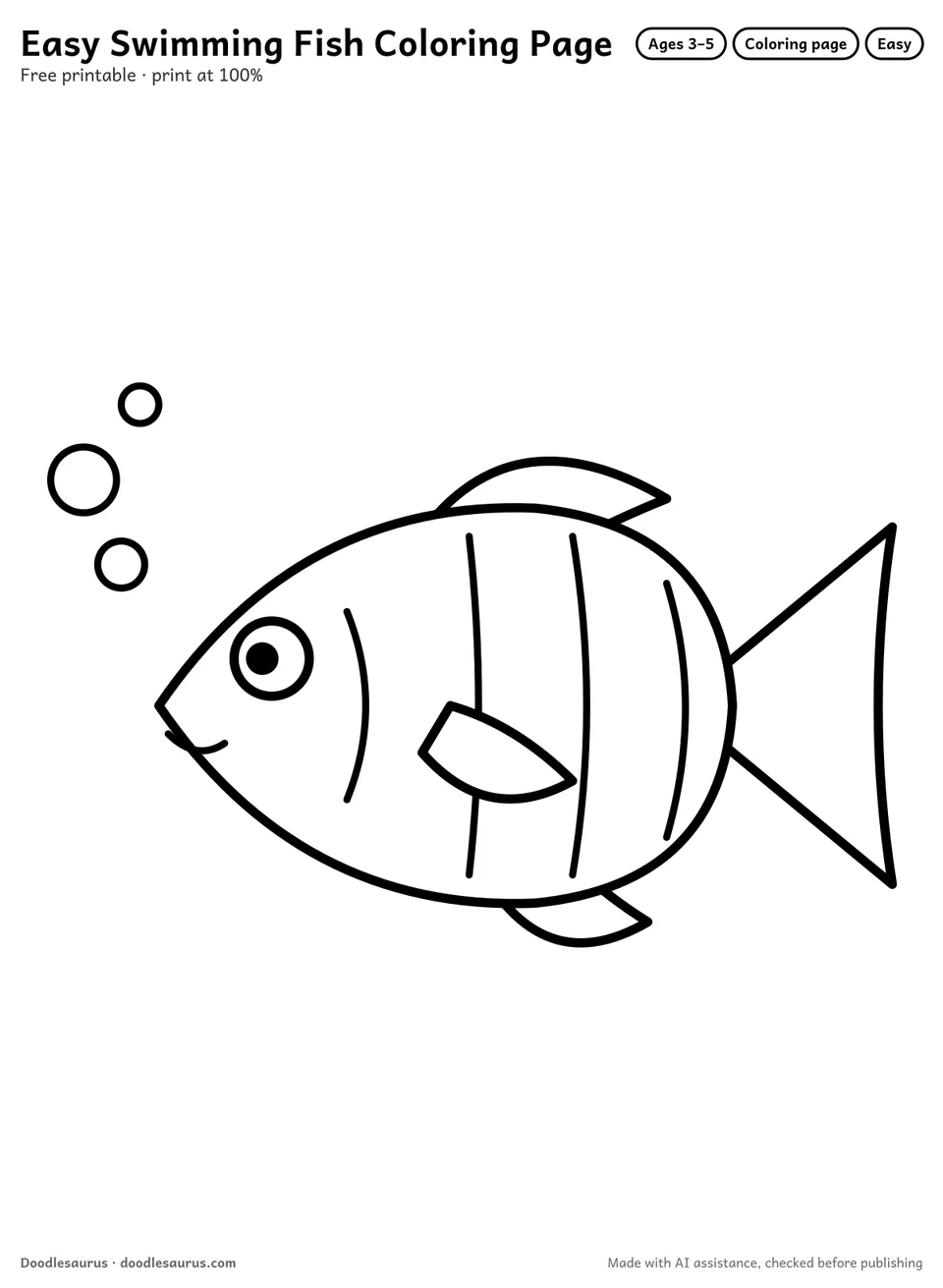
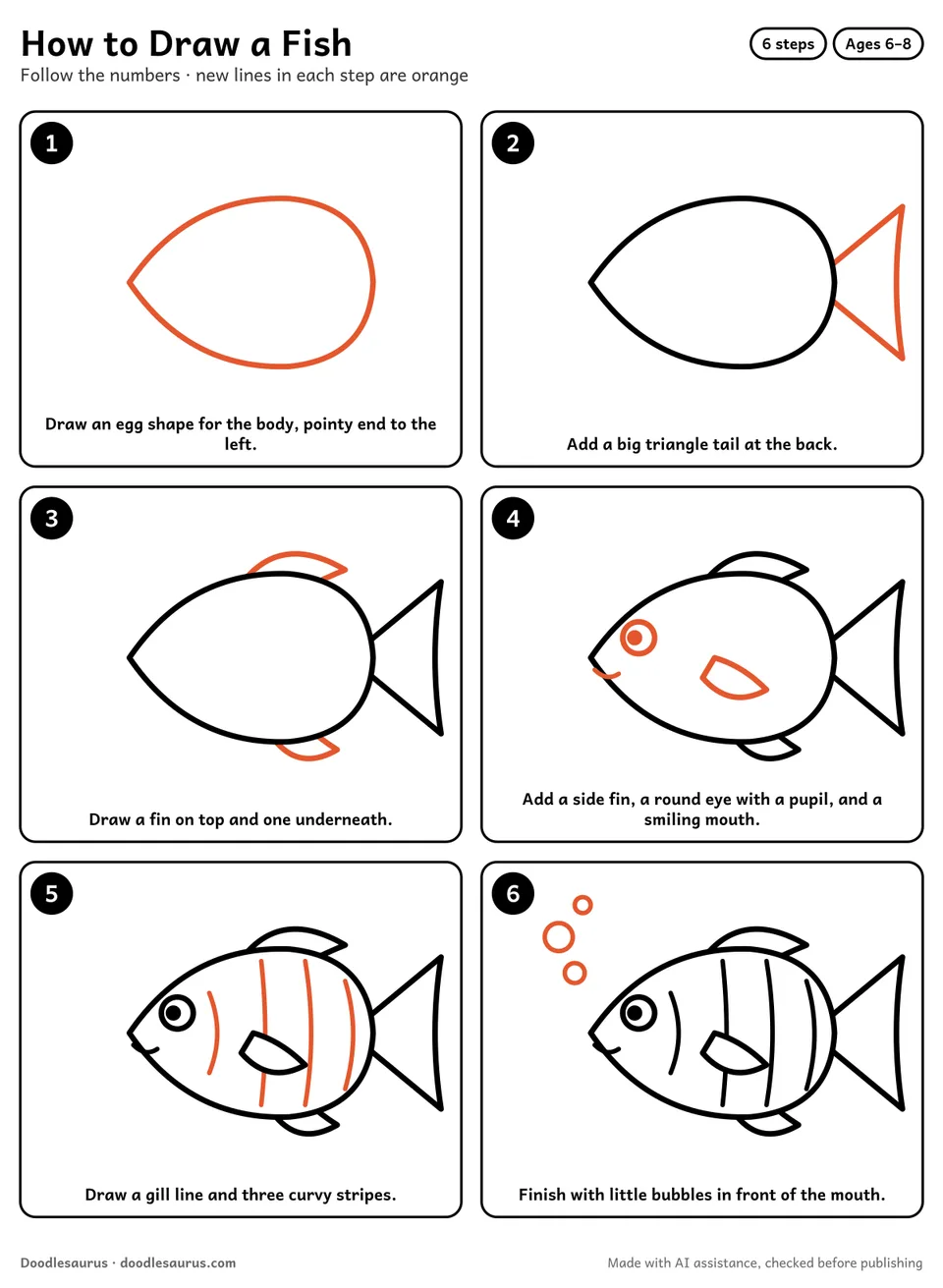
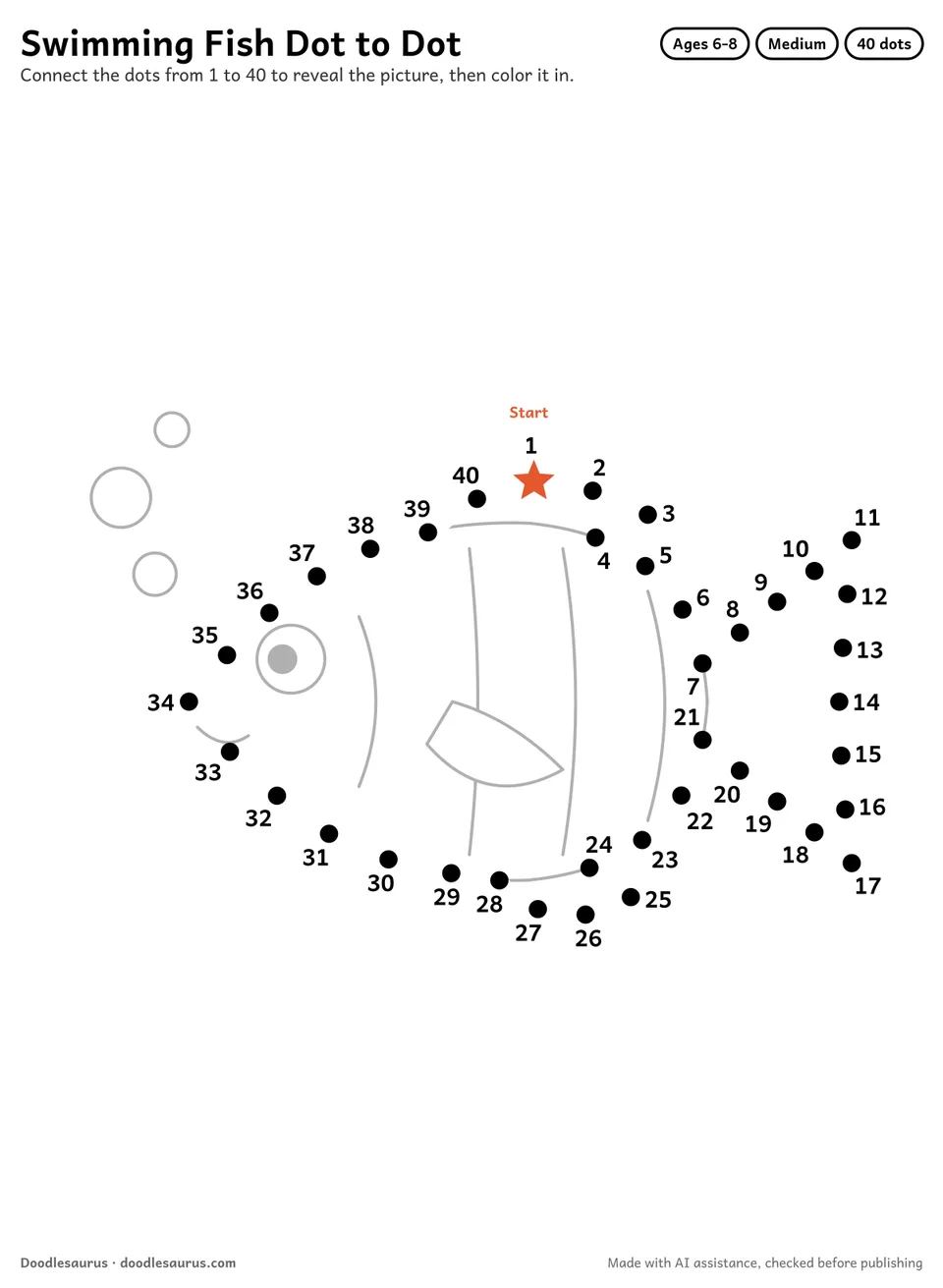
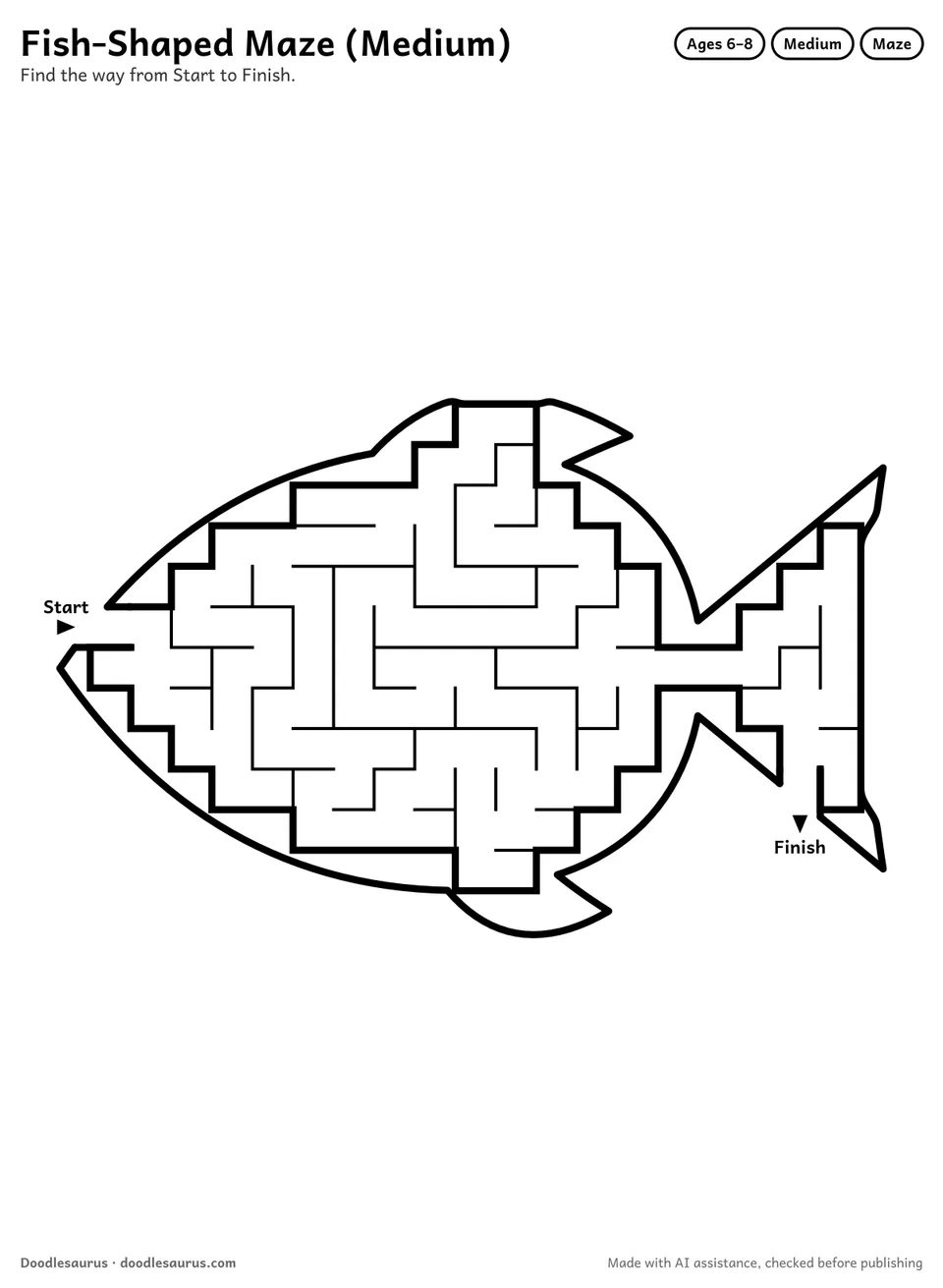
More tracing
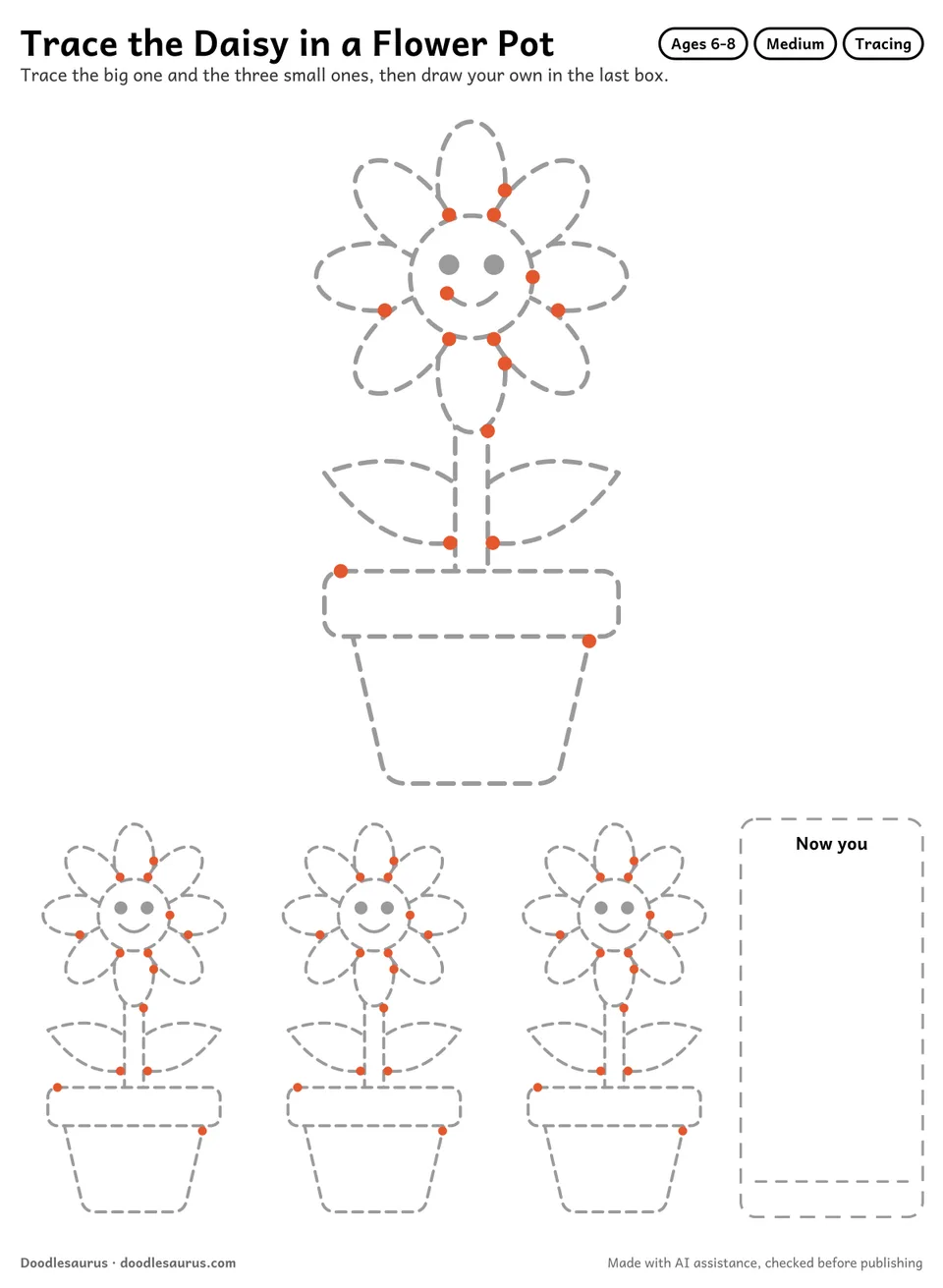
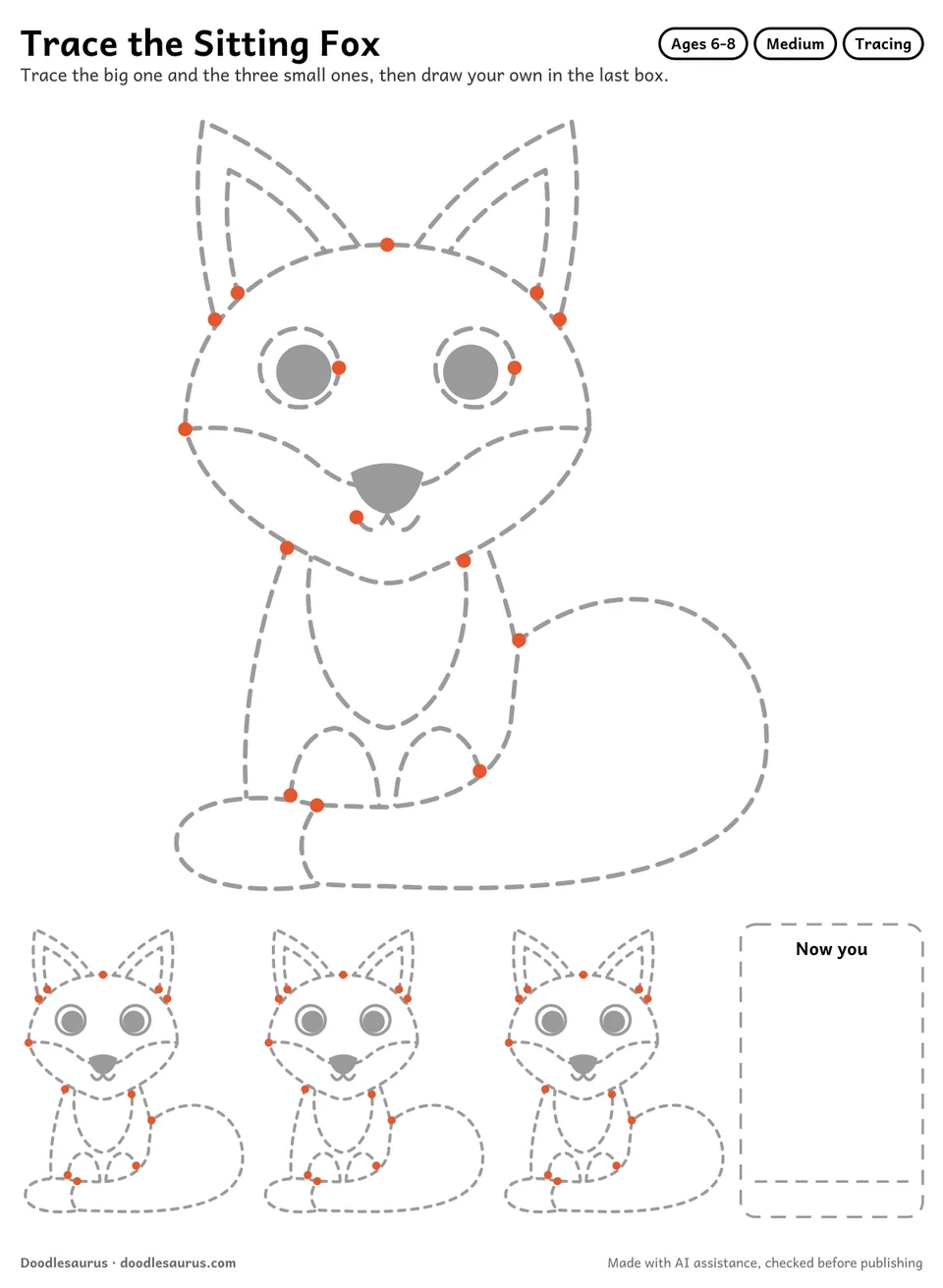
Frequently asked questions
How do the easy and medium fish sheets differ?
The easy sheet for ages 3 to 5 shows one big dashed fish and nothing else. The medium sheet for ages 6 to 8 adds three small fish to trace and a box labeled Now you for a freehand try.
Why does every line have an orange dot?
The dot shows where that stroke starts. A child who always begins on the dot follows each dashed line in one direction instead of jumping around the page.
What are the three circles in front of the mouth?
Bubbles of different sizes. Each one is a tiny loop, so tracing them makes a good warm-up for drawing small circles.
About this printable
- Made with AI assistance (vector drawing authored by a language model) and checked by automated tests and an AI reviewer.
- Checked by automated tests and an AI reviewer on 22 Oct 2026.
- Free for personal and single-classroom use. See the license. Read the license · How these are made · Report a problem.
- Vector PDF, 1 page, 186×254 mm art box — prints edge-safe on A4 and US Letter.
New printables, twice a month
Our newsletter starts soon, with new sheets twice a month and a free 10-page starter pack for every new reader.