
Whale Coloring Pages
Whale coloring sheet with a friendly whale spouting three drops of water, its tail fluke up high. Free whale coloring pages with eight areas, A4 or Letter.
Printable whale coloring sheets
Filter by age or difficulty
Nothing matches that filter yet.
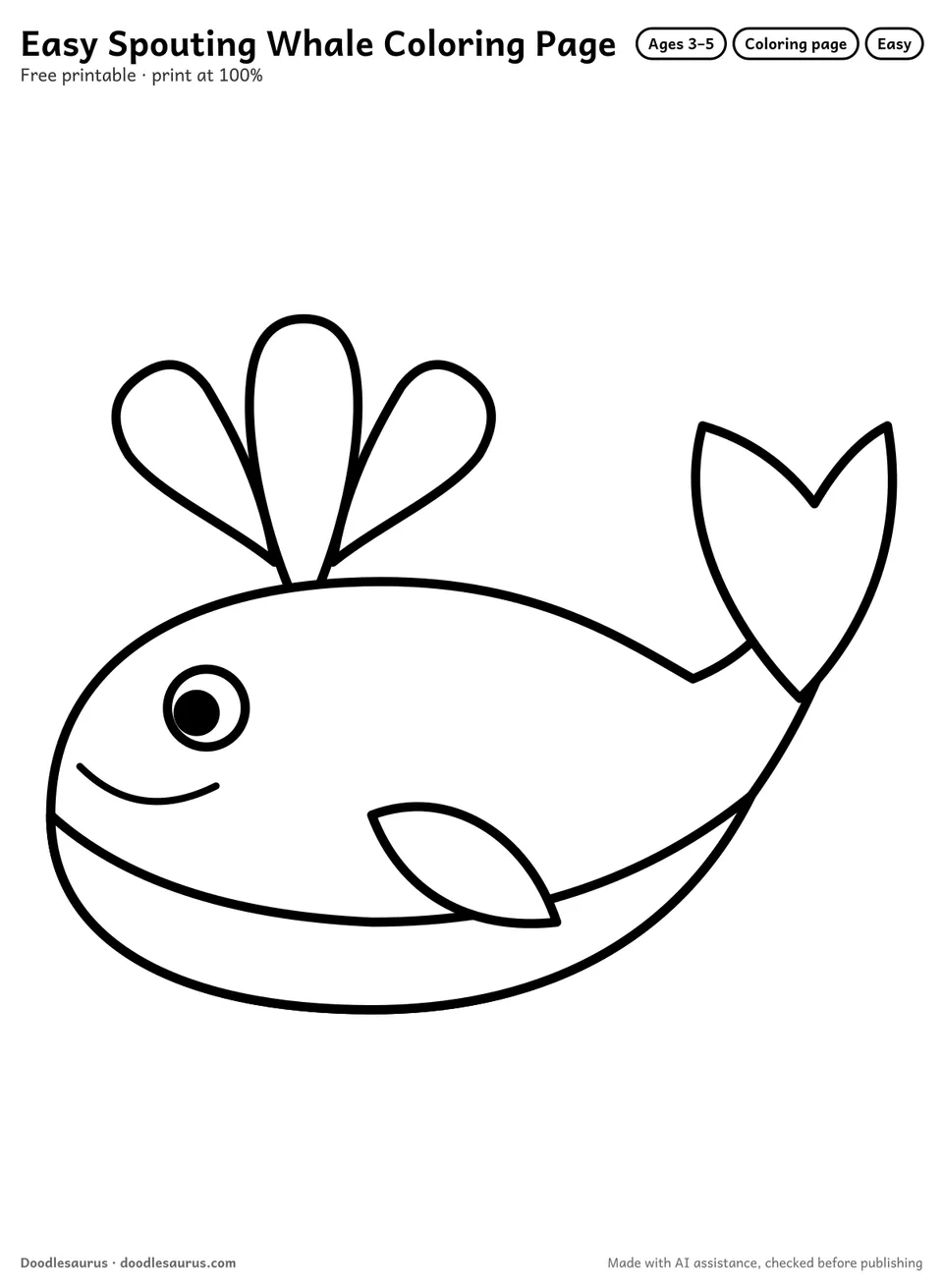
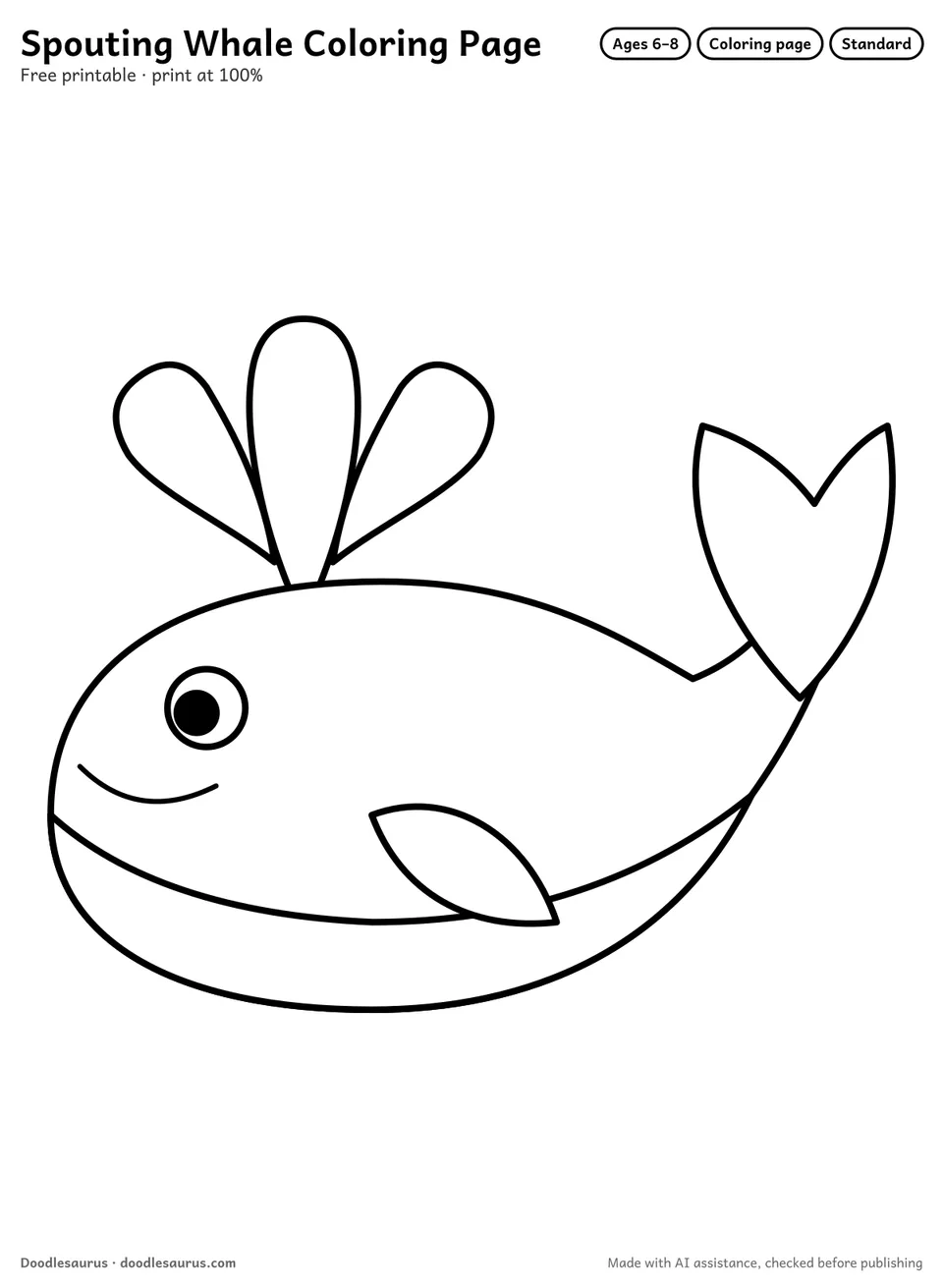
Spray rises from the blowhole in three rounded drops on this whale coloring sheet, and the tail fluke, with its two pointed tips, lifts up into the top right corner. The whale swims to the left. Its big rounded body tapers toward the back, with a separate band along the underside for the belly and a leaf-shaped flipper just above it. The face is kept simple: one round eye with a solid pupil and a curved smile.
What the line weight changes
The drawing has eight closed areas on both pages. Heavy black outlines on the easy page forgive a crayon that wanders over the edge, which suits ages 3 to 5. The standard page, for ages 6 to 8, uses thinner lines for colored pencils and careful hands.
Using it at home and in class
A whale fits an ocean topic or a lesson on animals that breathe air. Torn blue paper glued around it makes a quick sea. The whale is centered with a full margin, and that only holds if the A4 or US Letter file prints at a scale of 100 percent, not fit to page.
What to color
- A round whale body facing left that narrows toward the tail
- A wide belly band running along the underside
- One leaf-shaped flipper resting on the belly line
- A tail fluke with two pointed tips, raised at the upper right
- Three rounded water drops spouting from the top of the head
- A round eye with a solid black pupil above a curved smile
Tips
- Color the belly band pale gray or white so it stands out from the darker back.
- Use light blue for the three spout drops and a deeper blue or gray for the body.
- Leave a white ring around the black pupil to keep the eye bright.
- Draw a few wavy lines under the whale before coloring to add the sea.
- Hand over a fat crayon for the easy page and sharp pencils for the standard one.
Whale fun facts
- The blue whale is the largest animal known to have ever lived, bigger than any dinosaur.
- Whales are mammals, so they breathe air and feed their young on milk.
- A whale's tail moves up and down when it swims, while a fish's tail swings from side to side.
Classroom ideas
- Preschool (ages 3 to 5): color the easy whale, then count the three spout drops and the two tail tips together.
- Kindergarten: after coloring, children point to and name the tail, flipper, eye and belly.
- Grades 1 and 2: pair the standard page with a short read-aloud about ocean mammals and write one whale fact under the picture.
- Year 2 (UK): glue the finished whales onto a long strip of blue paper for a class ocean display.
More whale activities
Related coloring pages
Frequently asked questions
What if a crayon wanders over the edge of the easy whale?
The heavy black outlines forgive it, which suits ages 3 to 5. The standard page uses thinner lines for ages 6 to 8, and both show the same whale with eight areas to color.
What colors should a whale be?
Real whales are mostly blue-gray, dark gray or black, often with a paler belly. Children can follow that or choose freely, and a light blue for the spout drops helps them read as water.
How many water drops and tail tips are there?
Three rounded drops spout from the top of the head, and the tail fluke has two pointed tips. Preschoolers can count both together once the whale is colored.
Are there other activities with this whale?
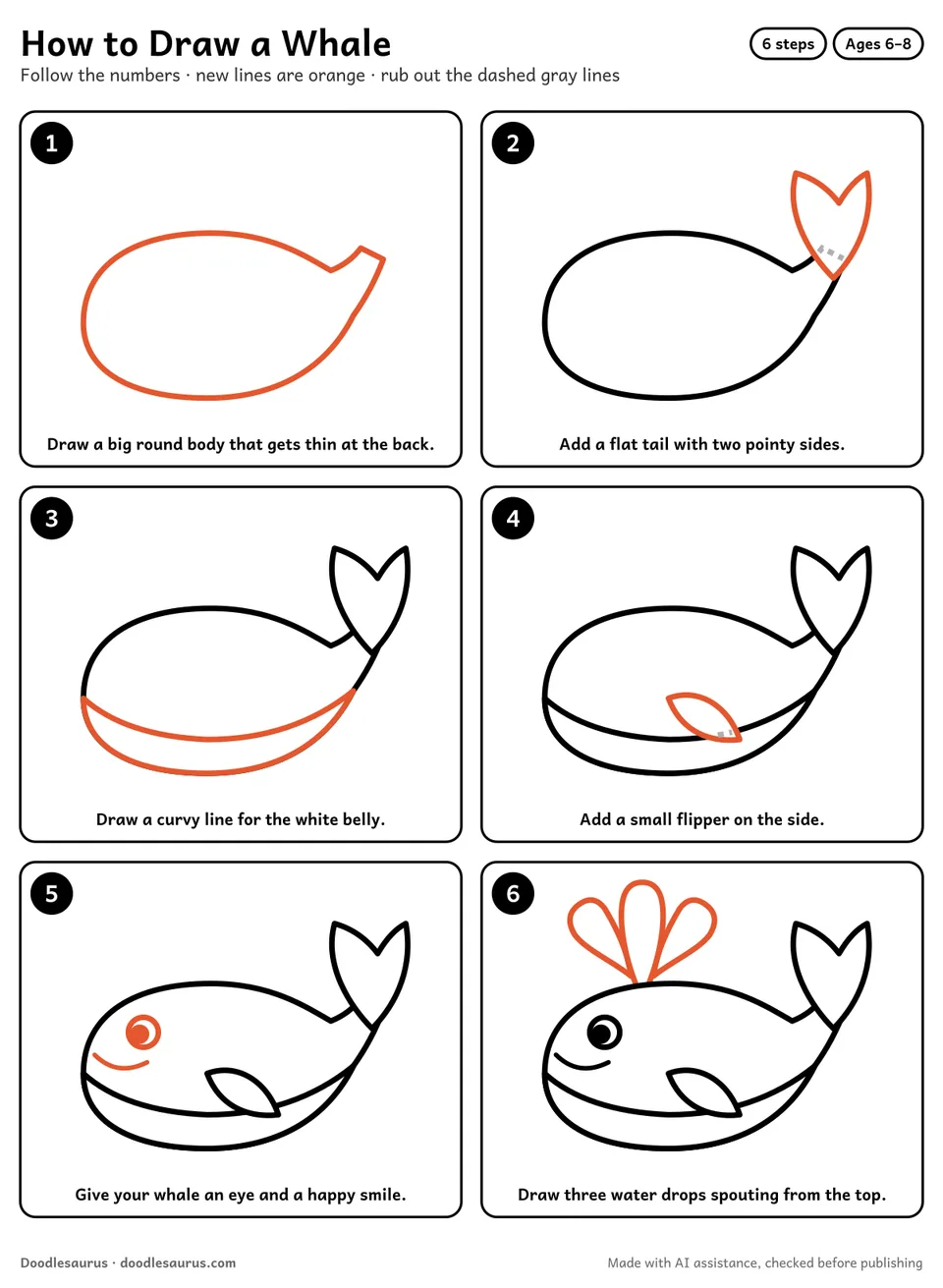
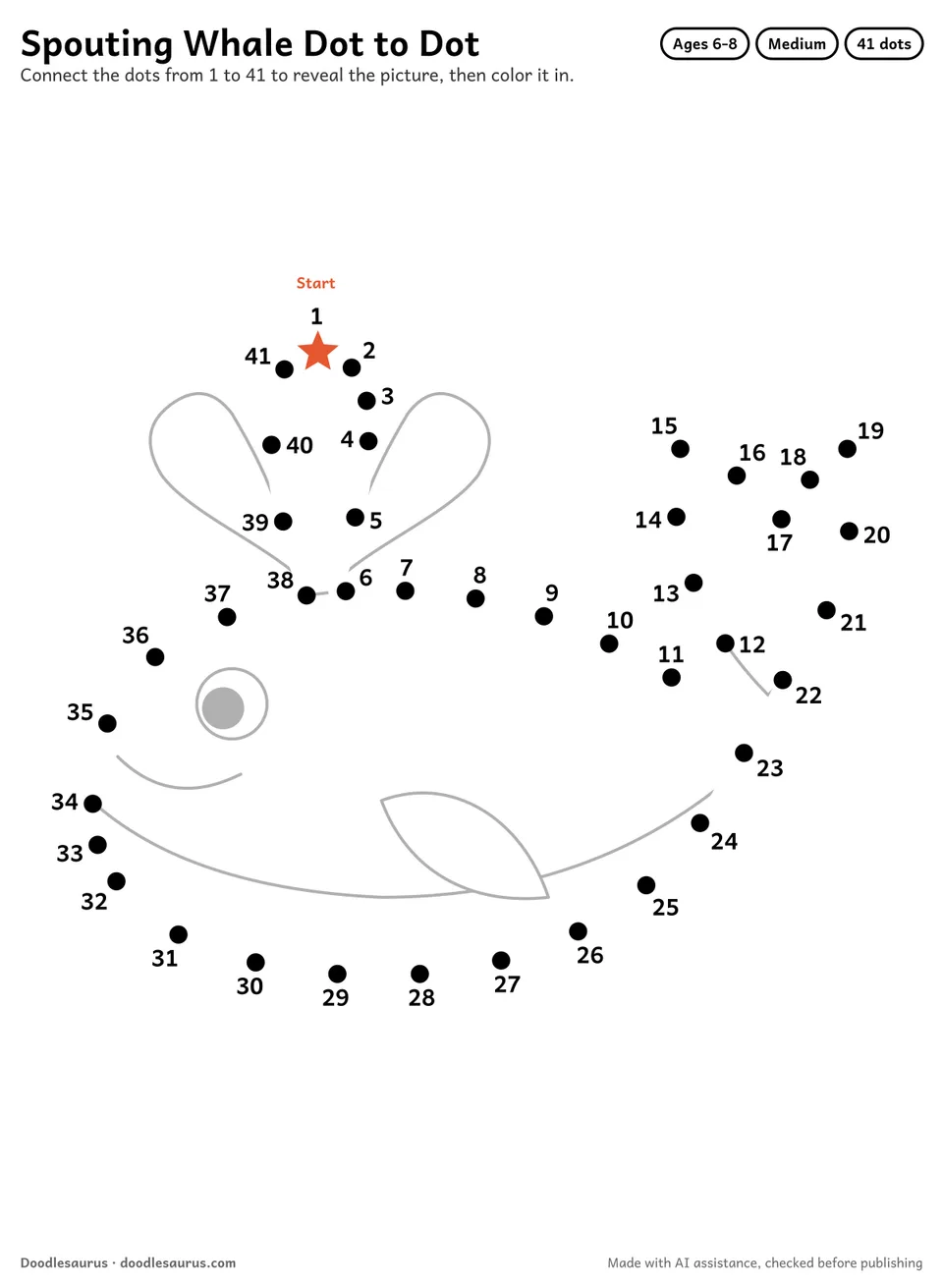
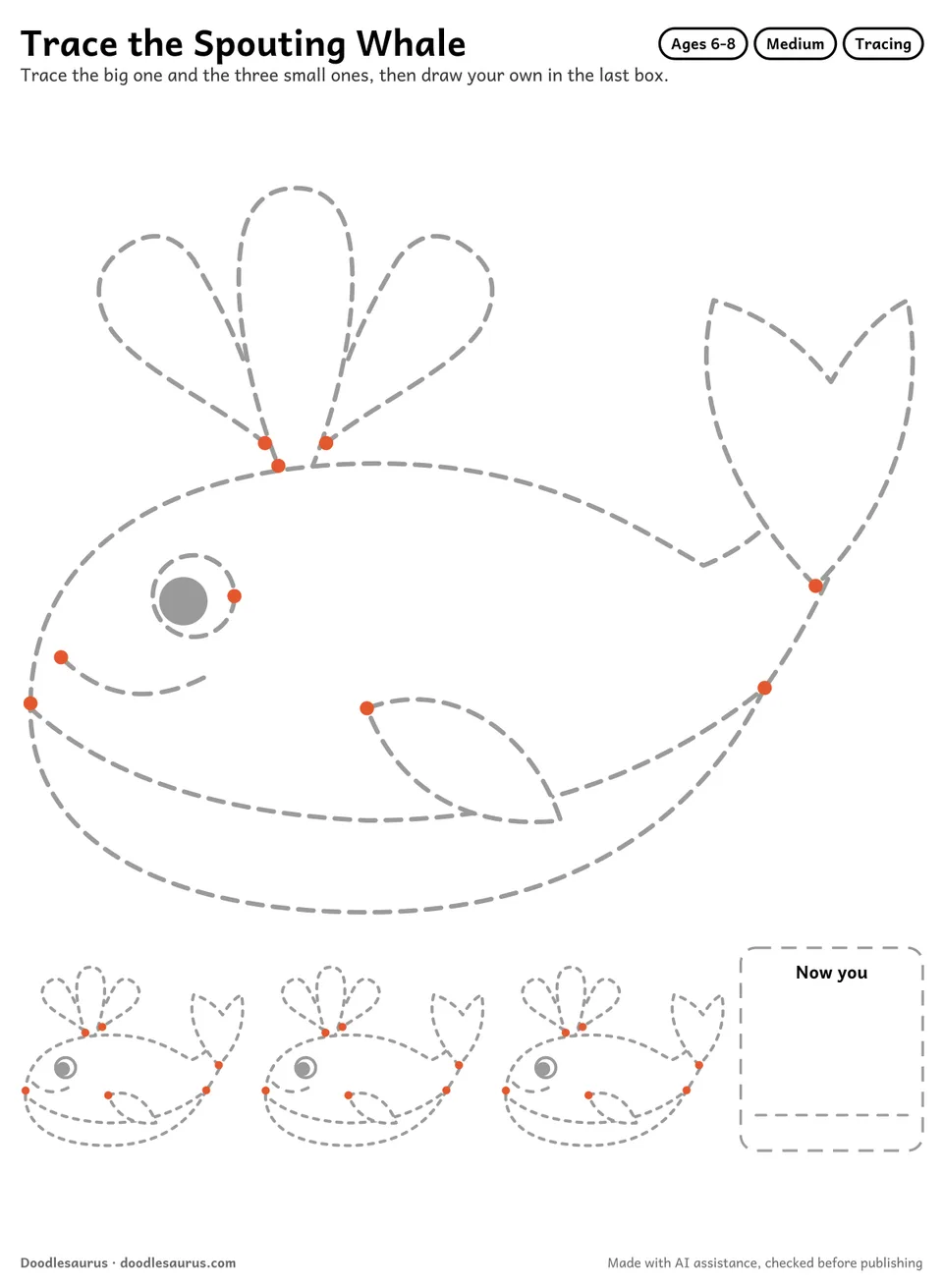
Yes. The same spouting whale is available as a six-step how to draw sheet, a dot to dot with 27, 41 or 60 dots, and a tracing worksheet in two levels.
New printables, twice a month
Our newsletter starts soon, with new sheets twice a month and a free 10-page starter pack for every new reader.
AI-assisted vector art, checked before publishing. About the AI · License