
Turtle Coloring Pages
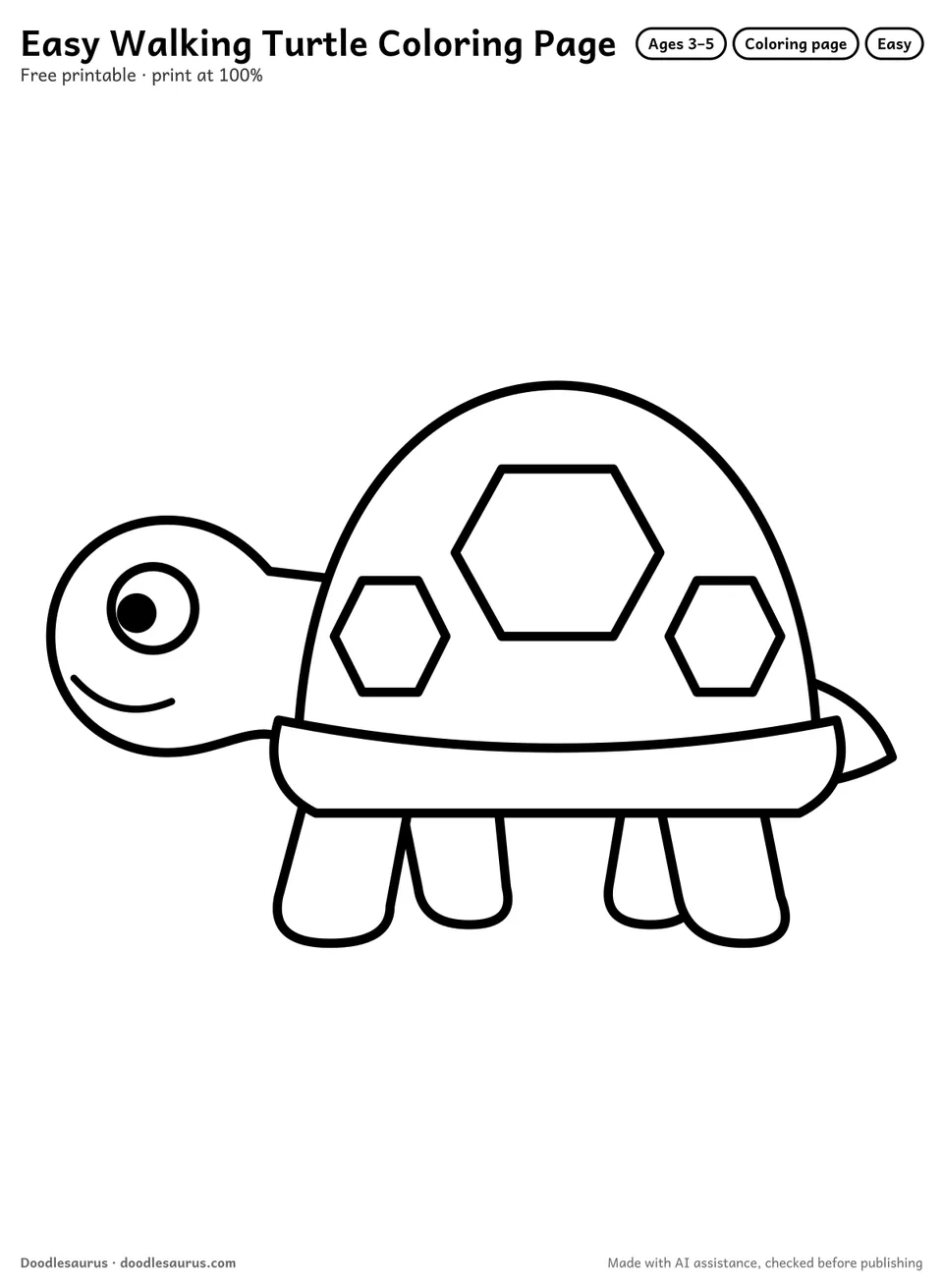
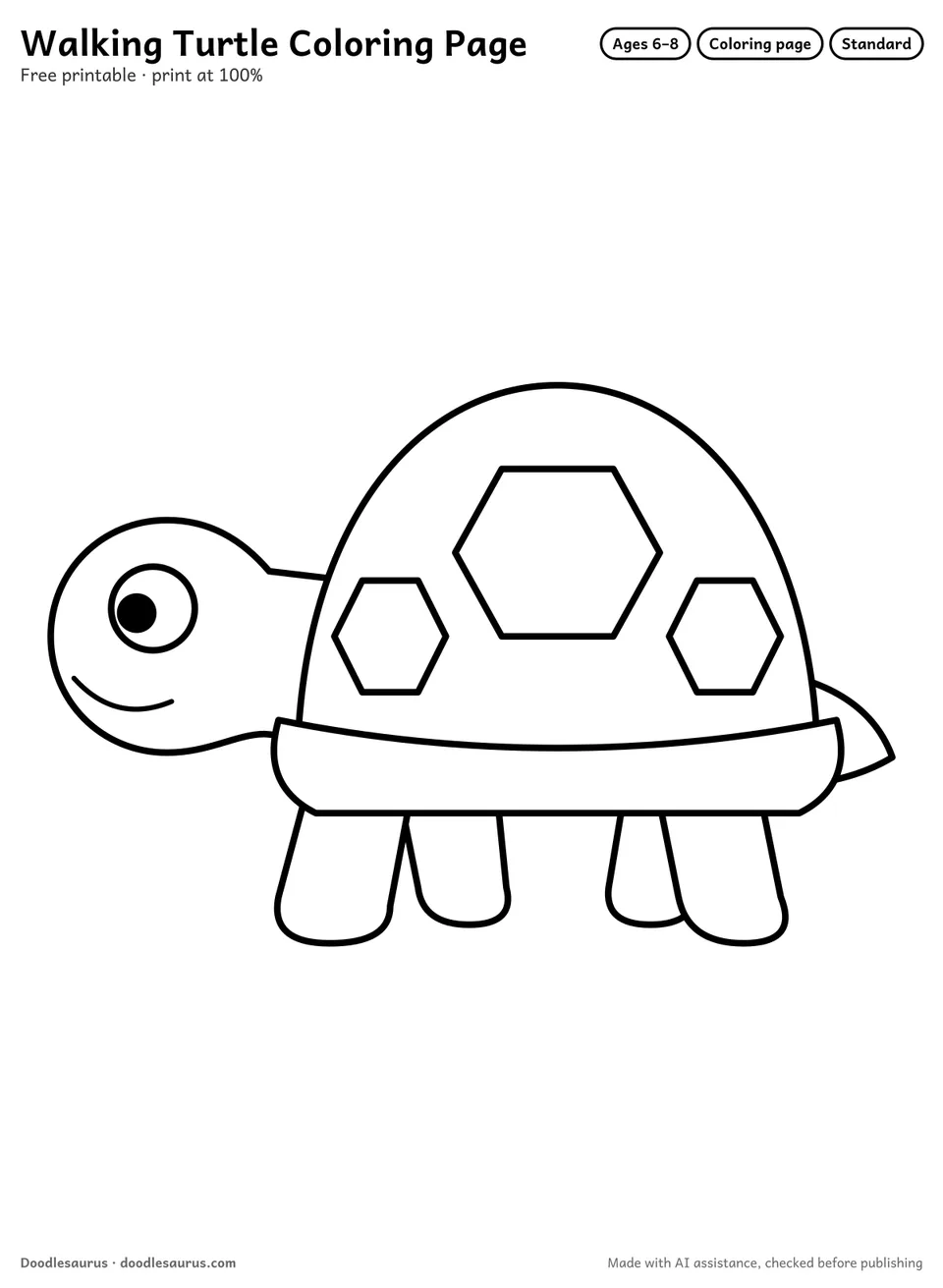
Turtle coloring pages of a smiling turtle walking left, with three hexagon plates on its shell. Free turtle coloring sheets with 12 spaces, A4 or Letter.
Printable turtle coloring sheets
Filter by age or difficulty
Nothing matches that filter yet.
The shell on these turtle coloring pages carries three hexagons, a large one in the middle and a smaller one on each side of its tall dome. The turtle is seen from the side, stepping toward the left edge of the paper, with its round head on a short neck, a single big eye, a dark pupil and a wide smile. A broad rim runs under the shell. Below it come four stubby legs and a little pointed tail.
Big sweeps or crisp edges
Both pages contain the same 12 spaces, so only the line weight changes. Heavy black strokes on the easy page help ages 3 to 5 who color in big sweeps. The standard page uses thinner lines for ages 6 to 8. They leave crisp edges for colored pencils.
Ideas for using them
A turtle fits a pond, ocean or reptile unit. Kindergartners can hunt for every hexagon and fill them all with one color before starting the rest. Afterwards, children can add a rock or a pond in the empty space. With fit to page turned off, the A4 or US Letter file prints the turtle at its intended size, margin included, at 100 percent.
What to color
- A round head on a short neck, with one big eye and a smiling mouth
- A tall dome-shaped shell
- Three six-sided plates on the shell, a large one between two smaller ones
- A wide rim running along the lower edge of the shell
- Four stubby legs, two near ones and two set slightly behind
- A small pointed tail poking out at the back
Tips
- Make the three plates a lighter shade than the shell so they pop out.
- Use one green for the head, legs and tail so the body reads as a single animal.
- Keep a white ring around the dark pupil to give the eye some sparkle.
- Hand over fat crayons for the easy page and sharpened pencils for the standard one.
- Sketch a pond edge, a log or a few pebbles under the feet before coloring.
Turtle fun facts
- A turtle's shell is part of its skeleton, joined to its ribs and backbone, so a turtle can never climb out of it.
- The plates on a turtle's shell are called scutes, and they are made of keratin, the same material as human fingernails.
- Turtles have no teeth; they bite with a hard, sharp-edged beak.
Classroom ideas
- Preschool (ages 3 to 5): color the easy turtle, then count its legs, plates and eyes out loud as a group.
- Kindergarten: hunt for every hexagon on the page and fill them all with one color before starting the rest.
- Grades 1 and 2: cut out word cards for head, shell, leg and tail and glue each one beside the finished turtle.
- Grade 2 science: use the colored page as the cover of a small booklet about pond animals.
More turtle activities
Related coloring pages
Frequently asked questions
Does the easy turtle leave anything out?
No. Both drawings have the same 12 spaces. The easy page outlines them in heavy strokes for ages 3 to 5, while the standard page uses thinner lines that suit colored pencils and ages 6 to 8.
What are the plates on the shell?
On a real turtle they are called scutes, and they are made of keratin, the same material as fingernails. This turtle has three, drawn as hexagons, a large one in the middle and a smaller one on each side.
What colors work well for a turtle?
Green skin with a brown or olive shell is the classic look, and a yellow rim adds contrast along the bottom. Children who prefer a fantasy turtle can give each plate its own bright color.
Which other turtle printables use this drawing?
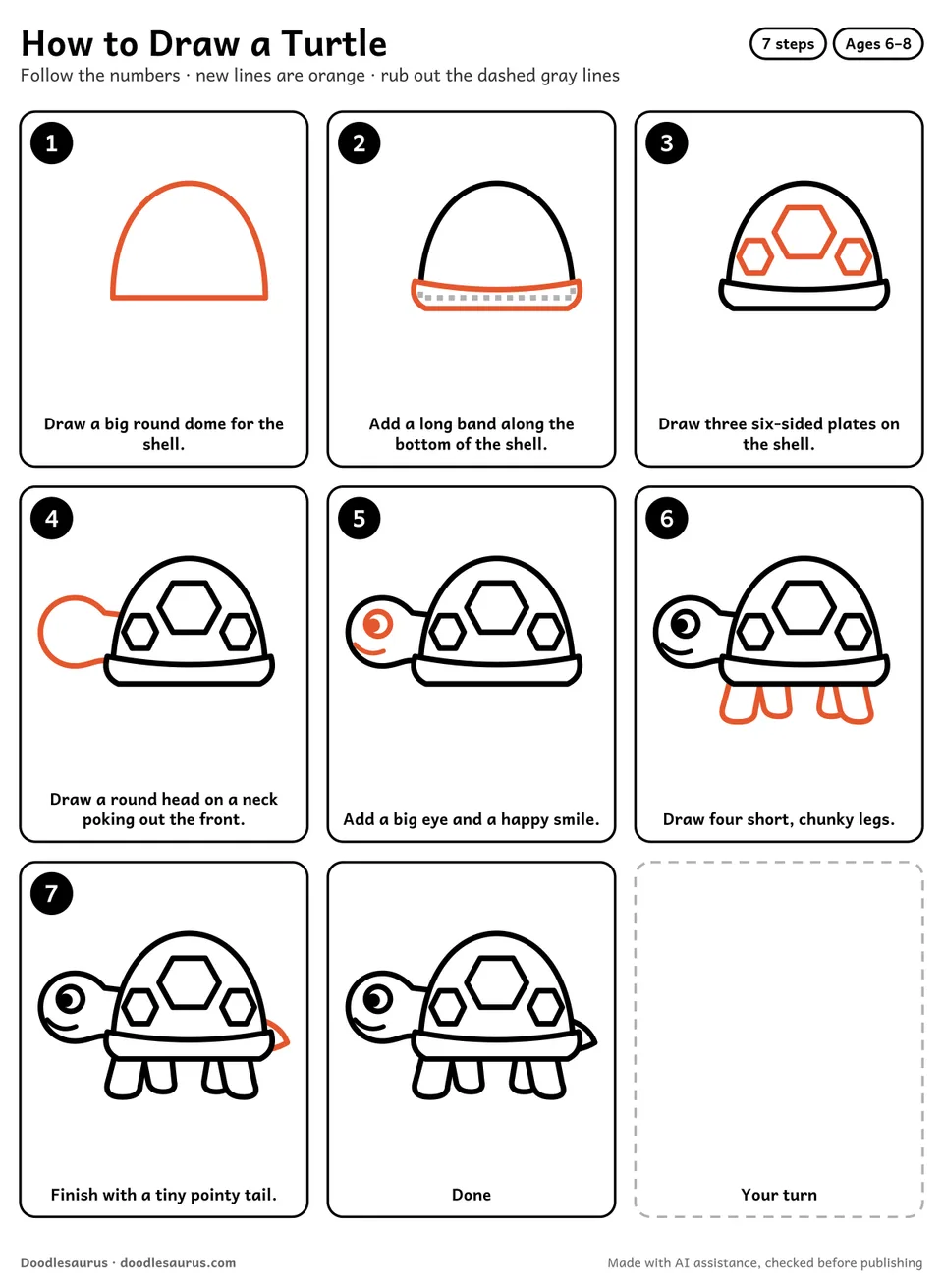
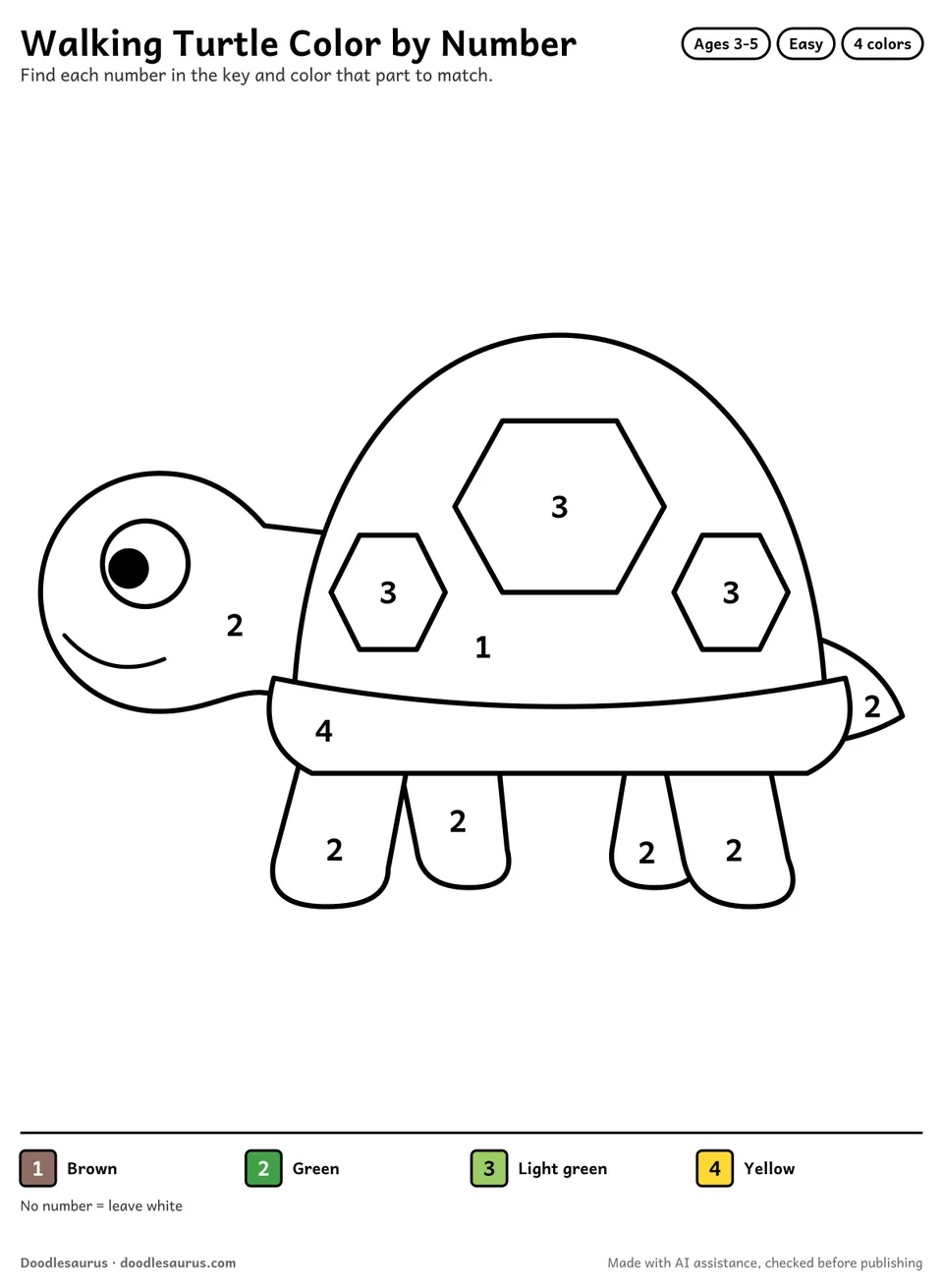
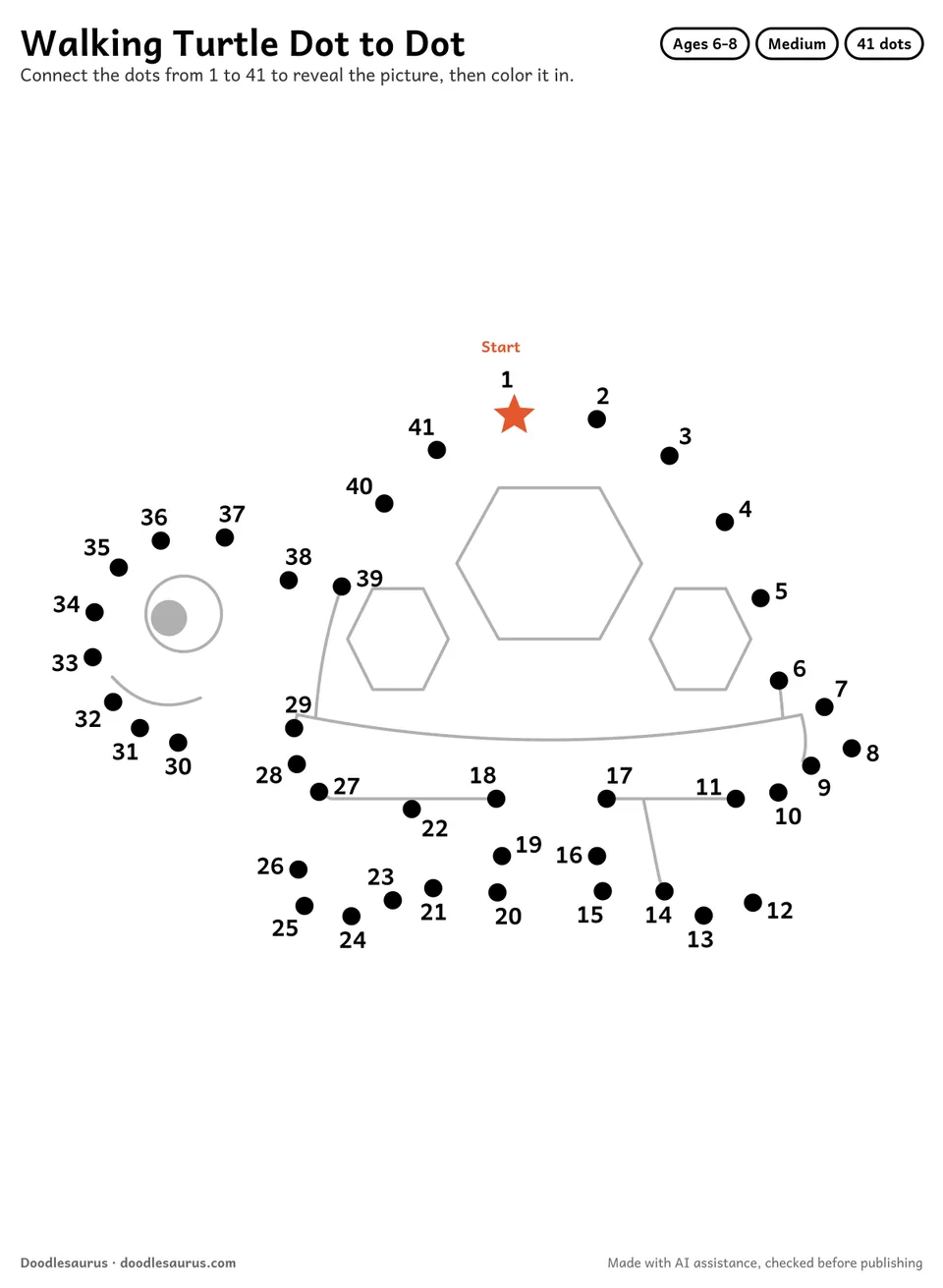
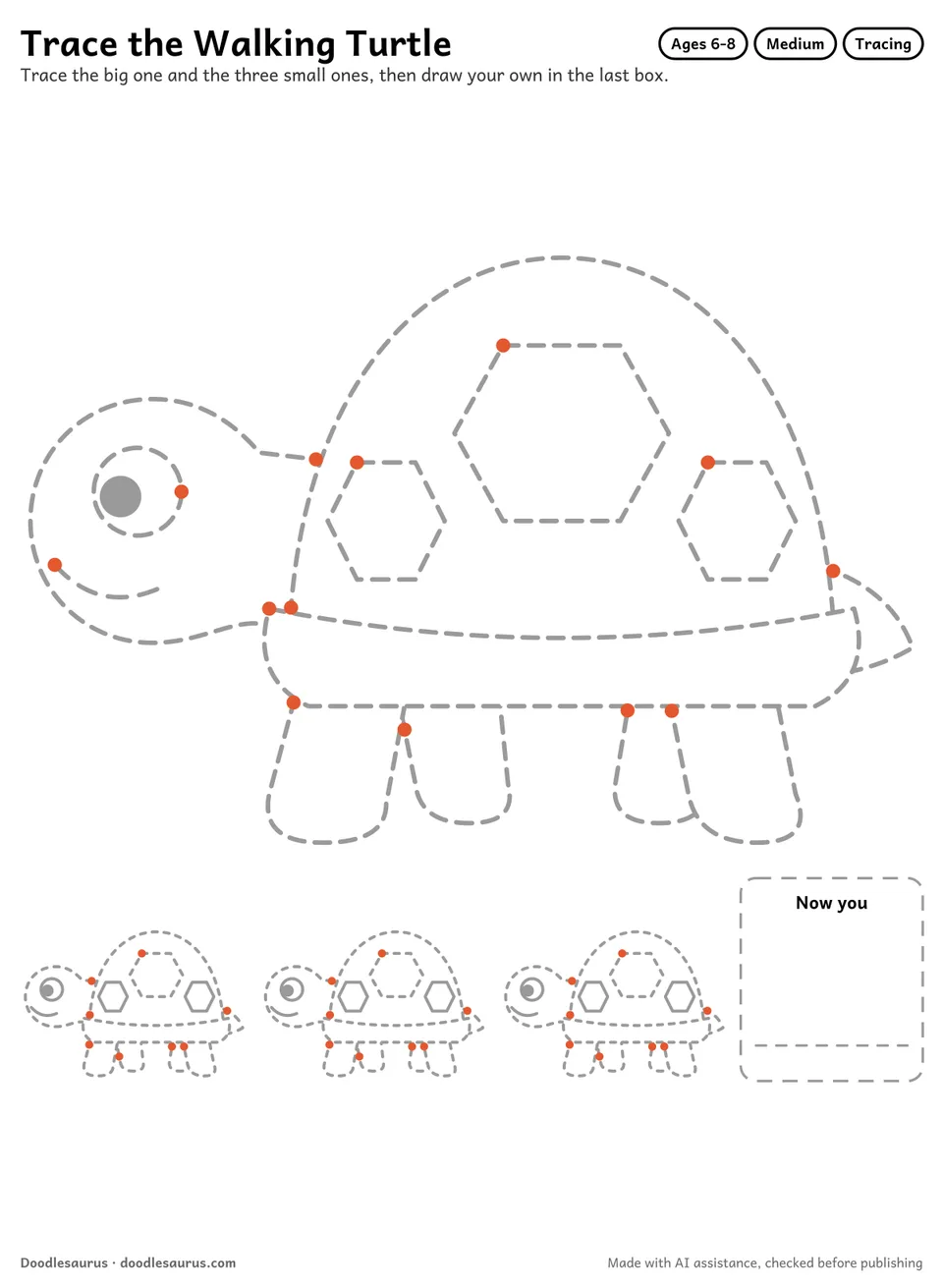
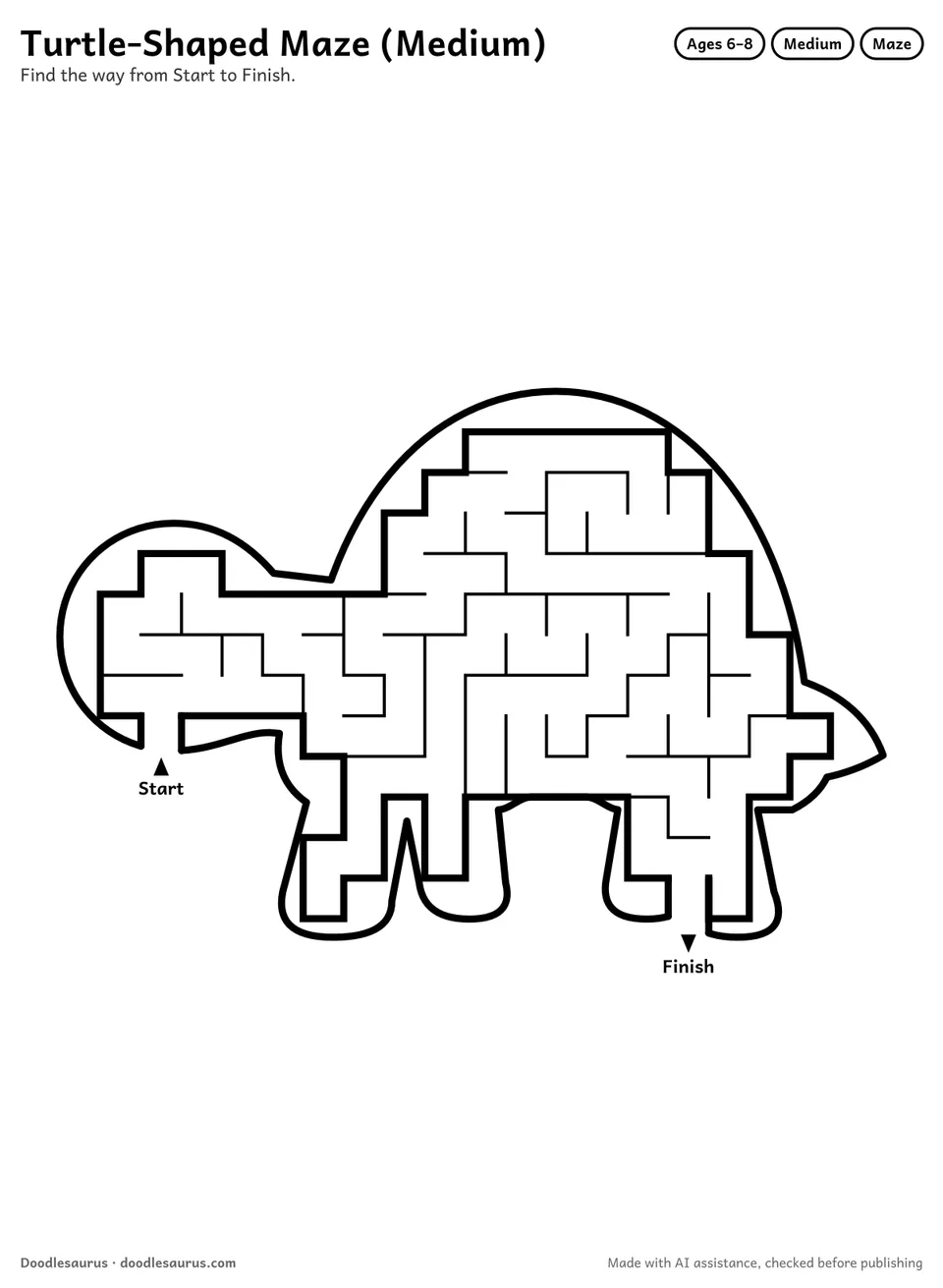
The same walking turtle appears in a 7-step how to draw sheet, dot to dot pages with 30, 41 or 59 dots, two tracing worksheets, a 4-color color by number sheet and a turtle-shaped maze at three levels.
New printables, twice a month
Our newsletter starts soon, with new sheets twice a month and a free 10-page starter pack for every new reader.
AI-assisted vector art, checked before publishing. About the AI · License