Bunny Coloring Pages
A cute bunny coloring page of one rabbit sitting up, with tall ears, two front teeth and a fluffy tail. Bold or finer lines, in A4 and Letter sizes.
Printable bunny coloring sheets
Filter by age or difficulty
Nothing matches that filter yet.
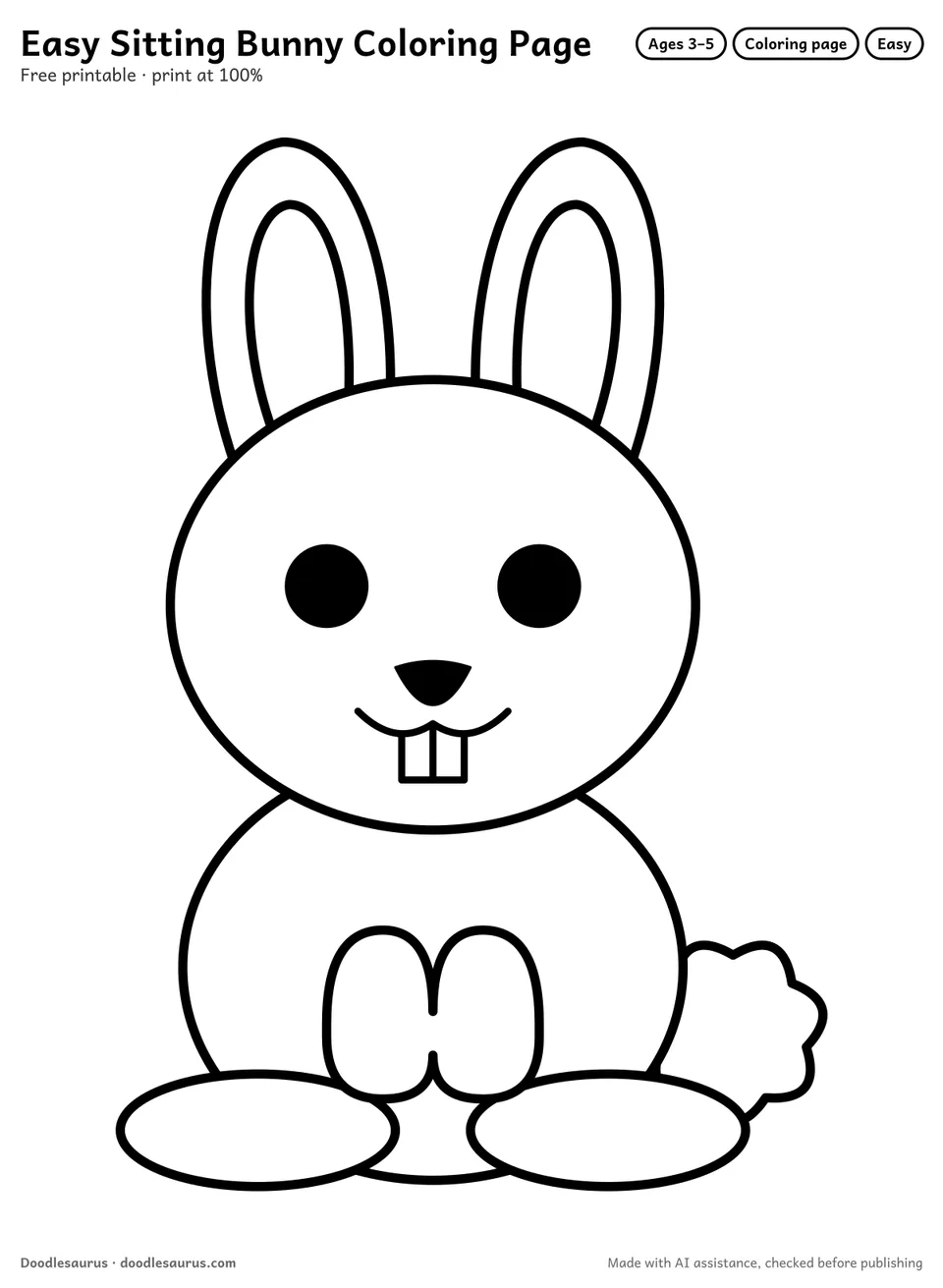
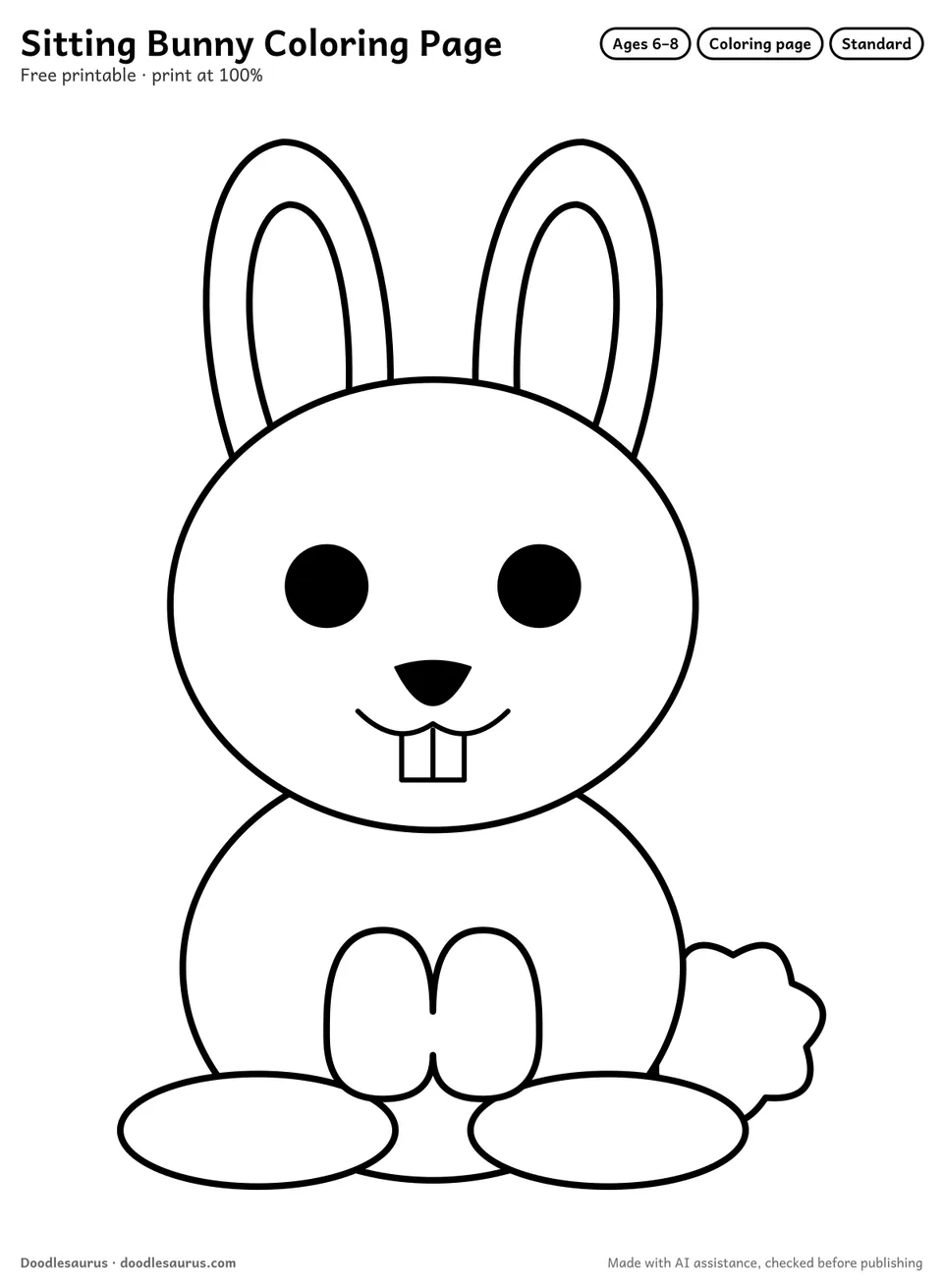
Two long ears stand straight up on the rabbit in these bunny coloring pages, each with a slim inner ear shape. Below them sit an oval head with black dot eyes, a little nose and a grin that shows two square front teeth. The bunny faces forward. The rest is simple: front paws pressed together on a round body, two big oval feet on the ground and a puffy, cloud-shaped tail sticking out on the right.
Ten regions, two line weights
Each sheet has 10 regions. The bunny itself does not change, only the line weight does. Thick, bold lines on the easy sheet help hands of 3 to 5 keep a fat crayon inside the ears and feet. The standard sheet uses finer outlines for ages 6 to 8, which leave the teeth and inner ears room for careful detail with colored pencils.
Spring, Easter and baby animals
Children often add grass, a carrot or a basket in the blank space around the feet, which stays as large as drawn when the A4 or US Letter file prints at 100 percent. In a UK early years class these are bunny colouring pages for a topic on baby animals, and the easy one with pastel crayons is a good place to start.
What to color
- Two long upright ears, each with a narrow inner ear shape
- An oval head with solid black dot eyes and a small black nose
- A smile showing two square front teeth
- A round body with two front paws pressed together in the middle
- Two big oval back feet resting on the ground
- A cloud-shaped fluffy tail poking out on the right
Tips
- Shade the inner ears pink or peach before filling the outer ears with the main fur color.
- Leave the two front teeth white so they stand out against the face.
- Try a brown or gray bunny with a white tail, like a wild cottontail.
- Give the bold easy sheet to a child using fat crayons and the standard one to a child with colored pencils.
- Draw grass, a carrot or a few eggs around the feet to fill the empty margin.
Bunny fun facts
- A rabbit's front teeth keep growing for its whole life and are worn down by chewing.
- Baby rabbits are called kits or kittens.
- A rabbit's eyes sit high on the sides of its head, so it can see almost all the way around without turning.
Classroom ideas
- Preschool (ages 3 to 5): color the easy bunny in spring, then count ears, eyes, teeth and feet out loud as a group.
- Kindergarten: label ear, tooth, paw, foot and tail with word cards glued beside the picture.
- Grade 2: color the standard bunny and write a short paragraph about where it lives and what it eats.
- Year 1 (UK): add the bunny to an Easter or spring display alongside pupils' own drawings of baby animals.
More bunny activities
Related coloring pages
Frequently asked questions
Which sheet is right for a child who colors with a fat crayon?
The easy one. Its heavy, bold outlines forgive a wobbly crayon, and both pages show the same sitting bunny with the same 10 regions to fill. The standard sheet has thinner lines that suit pencils and children aged 6 to 8.
Can my child color it like a wild rabbit?
Yes. A brown or gray body with a white tail looks like a wild cottontail. The inner ears can go pink or peach, and the two front teeth look best left white.
Is this a good Easter coloring page?
Yes, many families print it in March and April. The bunny has plenty of white space around its feet, so a child can add eggs, a basket or flowers to turn it into an Easter scene.
What other bunny activities use this drawing?
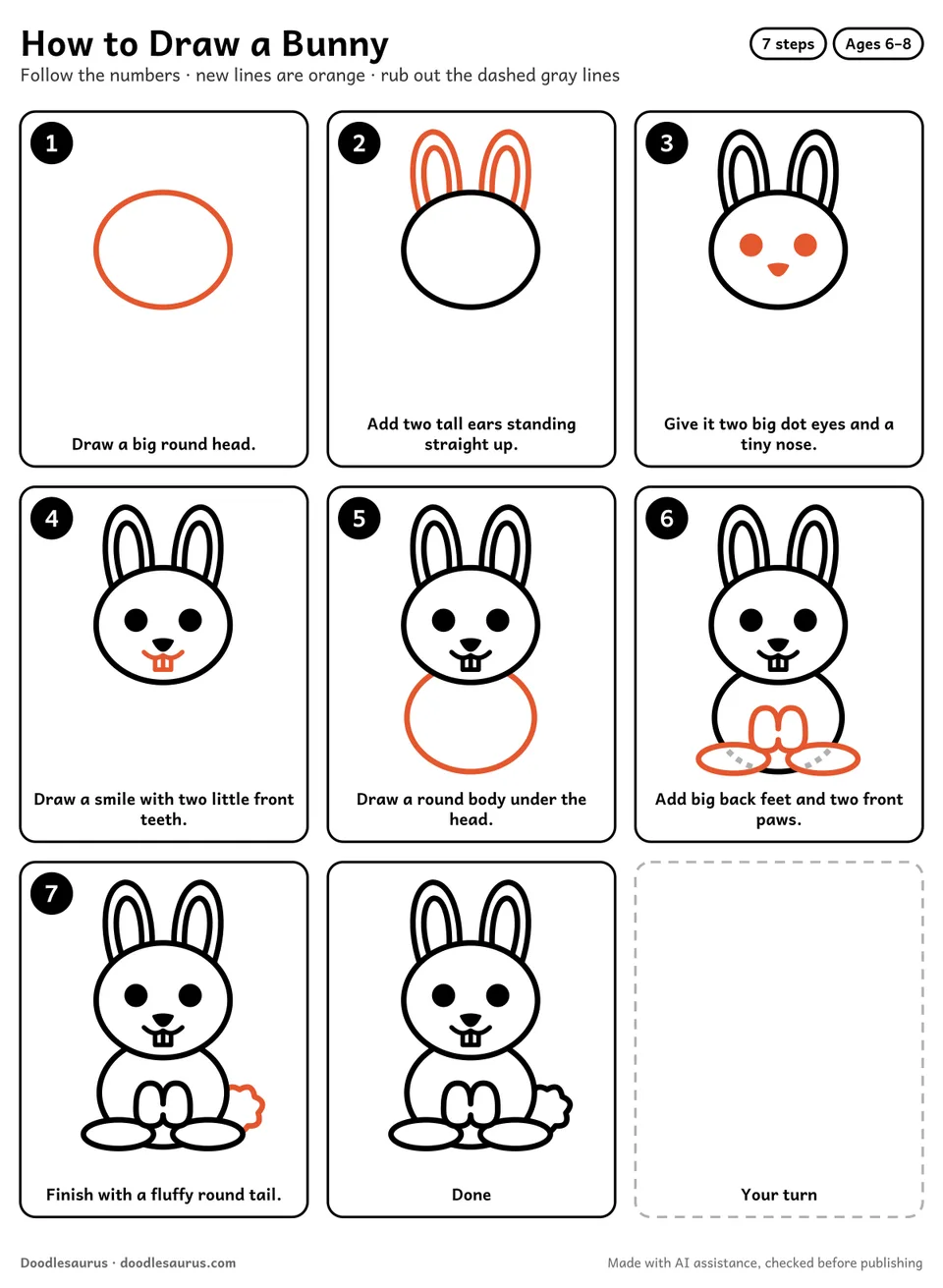
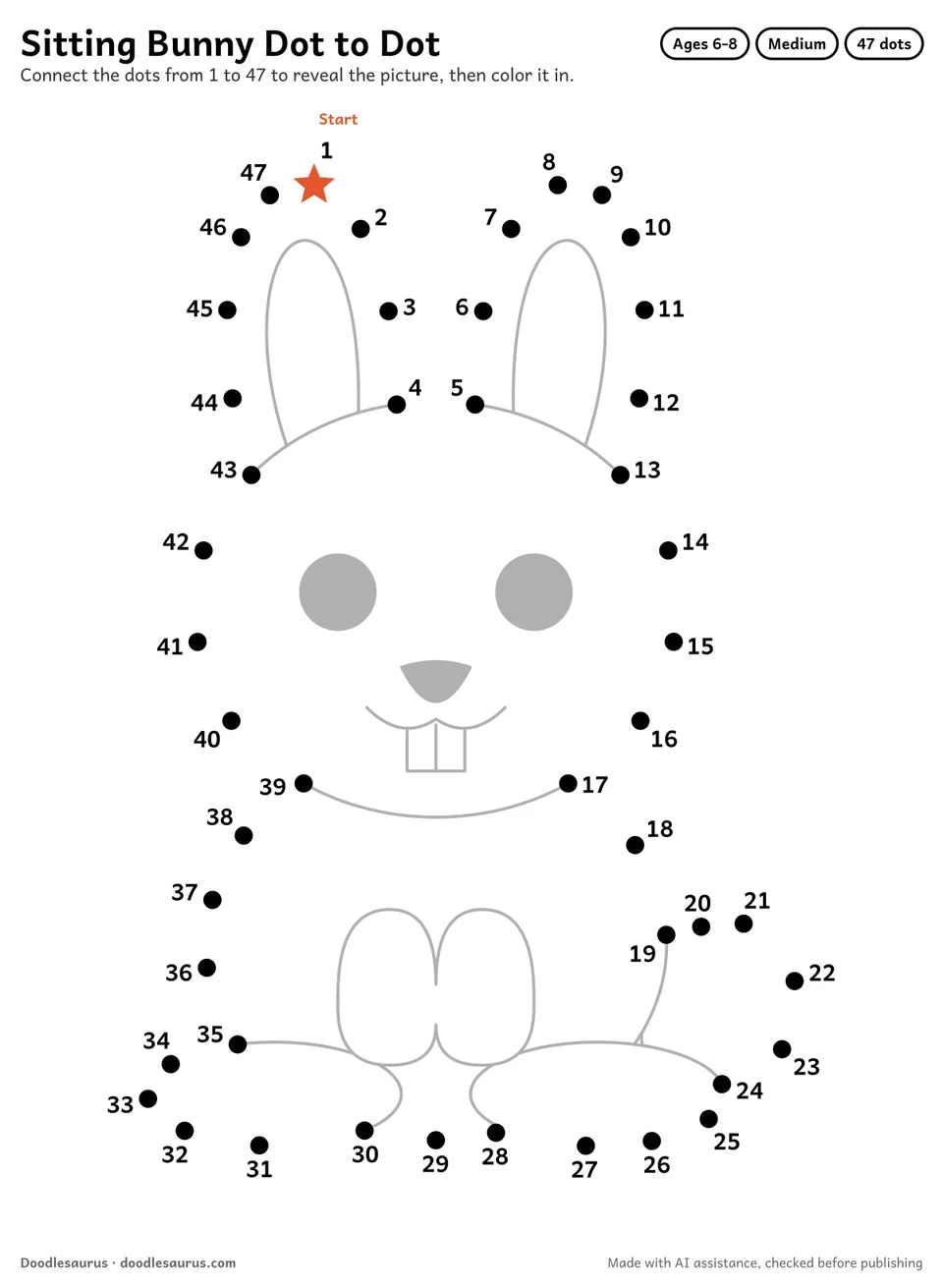
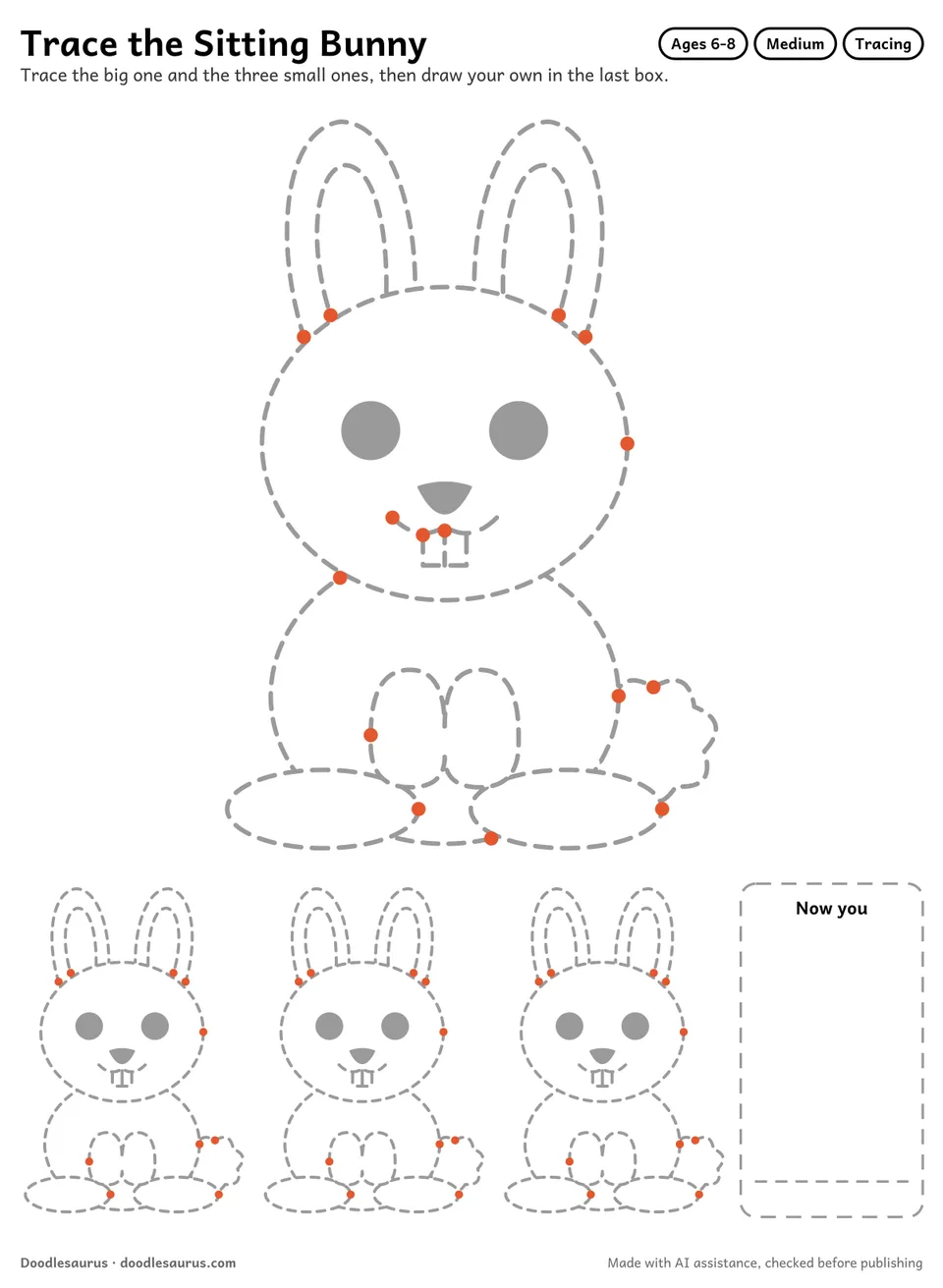
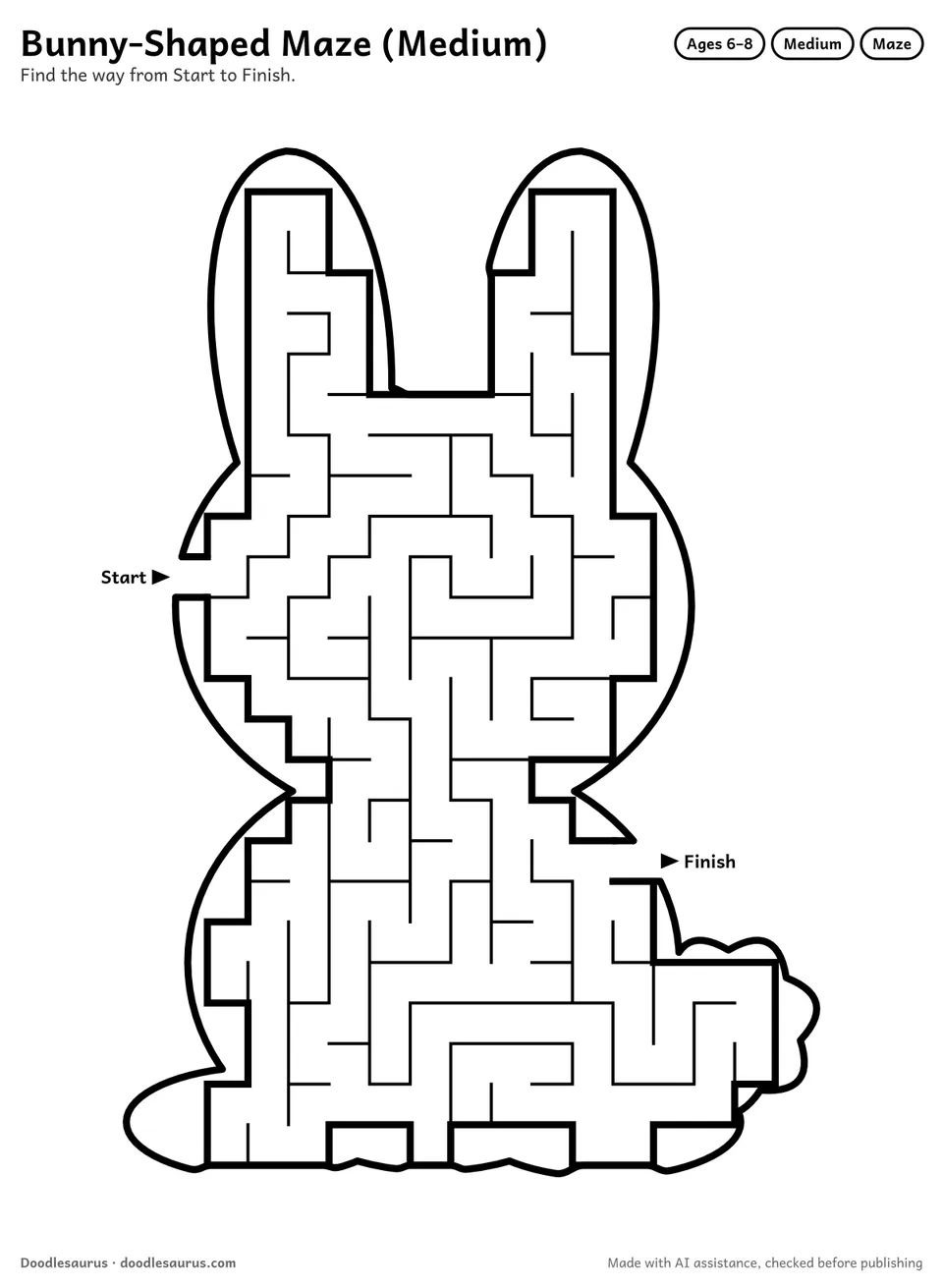
The same sitting bunny appears as a 7-step how to draw sheet, a dot to dot with 30, 47 or 60 dots, a tracing worksheet and a bunny-shaped maze in three levels.
New printables, twice a month
Our newsletter starts soon, with new sheets twice a month and a free 10-page starter pack for every new reader.
AI-assisted vector art, checked before publishing. About the AI · License