
Fox Coloring Pages
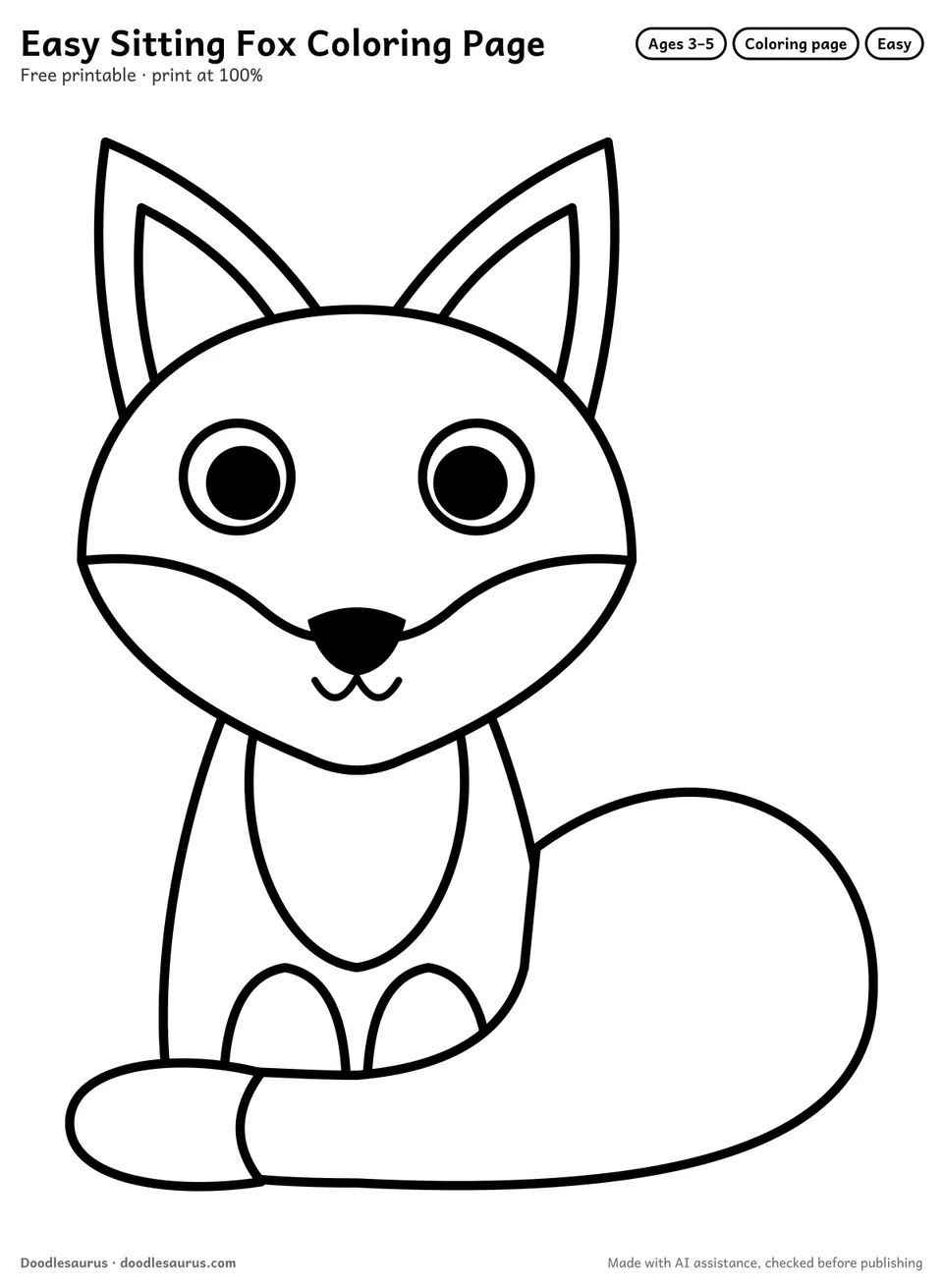
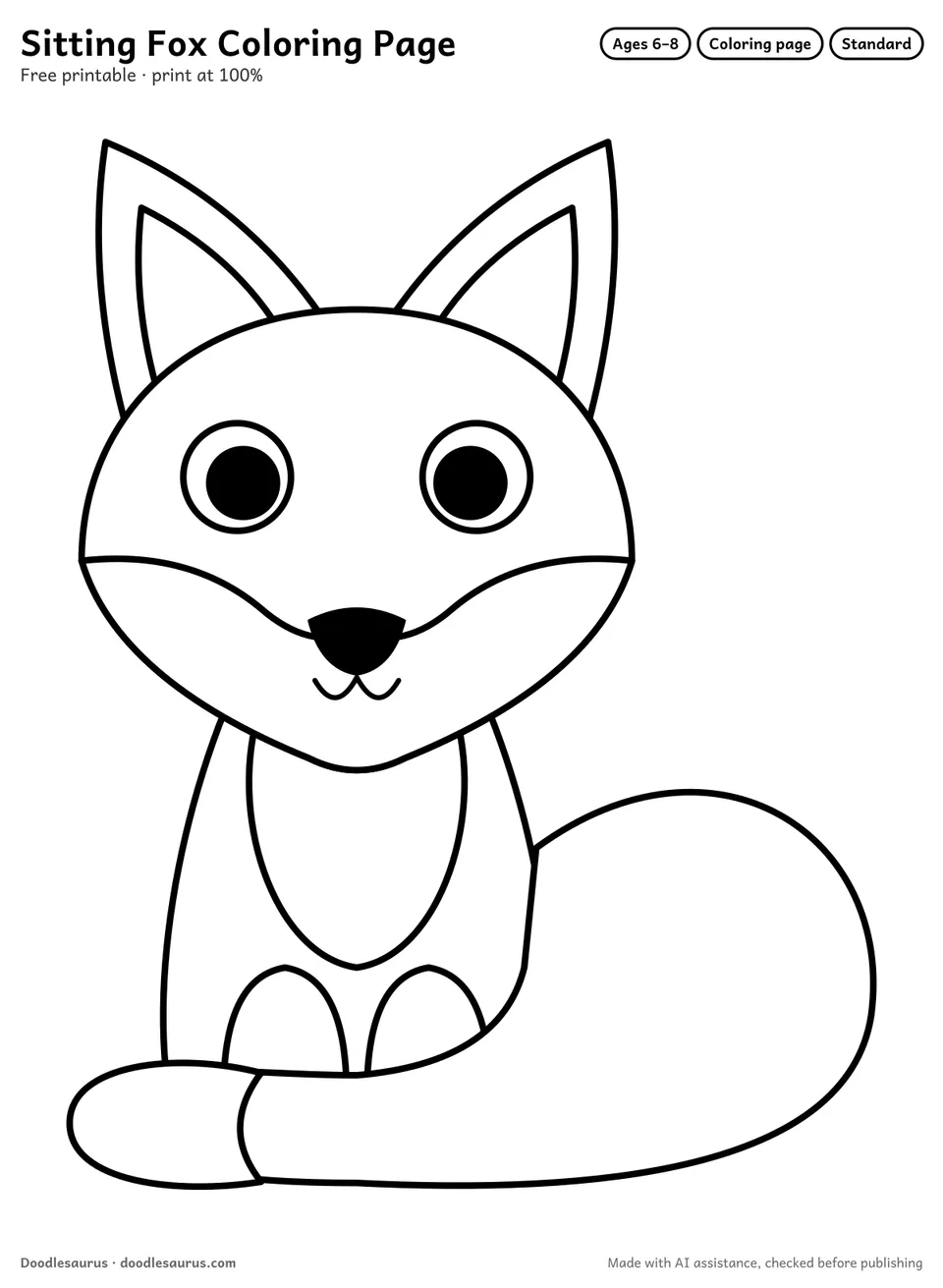
Wrapped in its bushy tail, the fox on this cute fox coloring page has 14 spaces, in bold lines for ages 3 to 5 or thin lines for 6 to 8. A4 or Letter.
Printable fox coloring sheets
Filter by age or difficulty
Nothing matches that filter yet.
On both fox coloring pages, the tail is nearly as big as the rest of the fox, wrapping around the front of the paws and finishing in a separate tip on the left. Above it, the fox sits upright and looks straight at you, with two tall ears on a wide head and a pale band of cheeks sweeping down to a small black nose. Its eyes come with pupils already filled in. The body is slim, with an oval chest patch and two little paws.
Only the line weight changes
Both levels share one drawing and the same 14 spaces. Thick strokes on the easy sheet hide small slips, a good fit for ages 3 to 5 and chunky crayons. For ages 6 to 8 the standard sheet thins the outlines, which makes it easier to blend orange into white or add fur texture with colored pencils.
Autumn tables and woodland units
Fox pages suit an autumn table or a woodland animals unit. A quiet afternoon after a nature walk works too. The open space on the right is for leaves, grass or a den. With fit to page off, the A4 or US Letter PDF prints at 100 percent and the fox stays centered, tail tip and all, with a clean border.
What to color
- Two tall pointed ears, each with a narrow inner ear shape
- A wide head with a pale band of cheeks dipping down to a black nose
- Two big round eyes with solid black pupils and a tiny curved mouth
- A slim upright body with an oval patch for the white chest
- Two small front paws side by side at the bottom
- A huge bushy tail that curls around the front, ending in a separate tip shape
Tips
- Save white or cream for the cheeks, the chest and the tail tip, and color those last.
- Give the two front paws a dark brown or black, the way many red foxes have dark legs.
- Fill the tail with long strokes that follow its curve so it looks soft and thick.
- Try an arctic fox in pale gray and white, or a silver fox in gray and black.
- Sketch a few autumn leaves or a log in the empty corner on the right before coloring.
Fox fun facts
- Foxes belong to the dog family, along with wolves and coyotes.
- A baby fox is called a kit, and a female fox is called a vixen.
- Many red foxes have a white tip on the end of their tail.
- A fox often curls its bushy tail over its nose and feet to stay warm while it sleeps.
Classroom ideas
- Preschool (ages 3 to 5): color the bold fox during an autumn or woodland week and point to the ears, eyes, nose, chest, paws and tail together.
- Kindergarten: count the 14 spaces as a group, then color them with only three crayons to practice planning.
- Grades 1 and 2: compare a red fox and an arctic fox in pictures, then color the sheet as one of them and write a caption explaining the choice.
More fox activities
Related coloring pages
Frequently asked questions
What changes between the easy and the standard fox?
Only the line weight. Both pages show the same fox with 14 spaces to fill. The easy one is drawn in heavy outlines for ages 3 to 5, and the standard one uses thinner lines that leave more room inside each space for ages 6 to 8.
Can it be colored as a different kind of fox?
Yes. An arctic fox works in pale gray and white, and a silver fox in gray and black. The cheeks, chest and tail tip are separate spaces, so the pale parts are easy to keep apart.
What colors make the fox look like a real red fox?
Use orange or rusty red for the head, ears, body and most of the tail. Leave the cheeks, chest and tail tip white, and make the paws dark brown or black.
Does this fox appear in other activities?
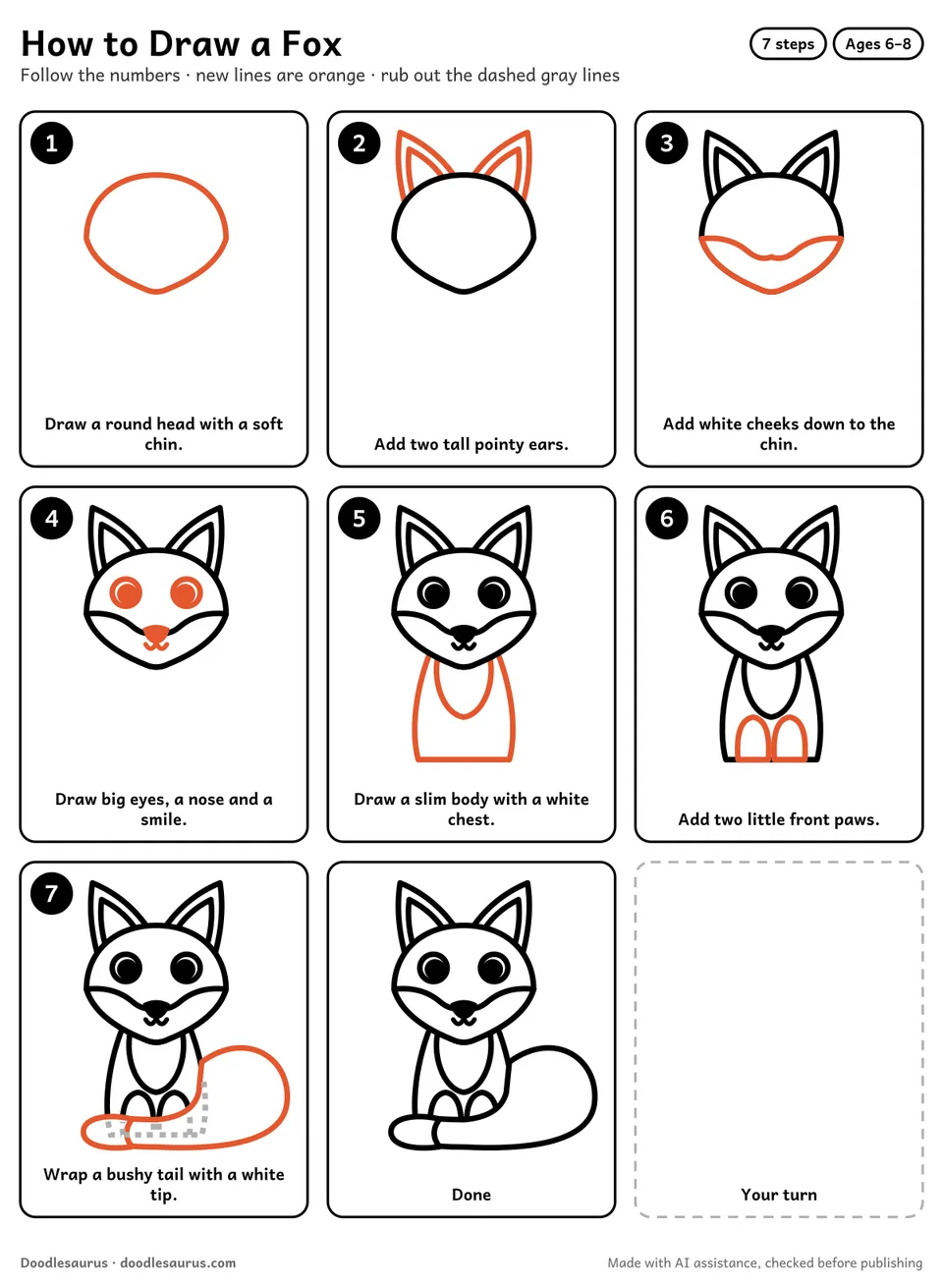
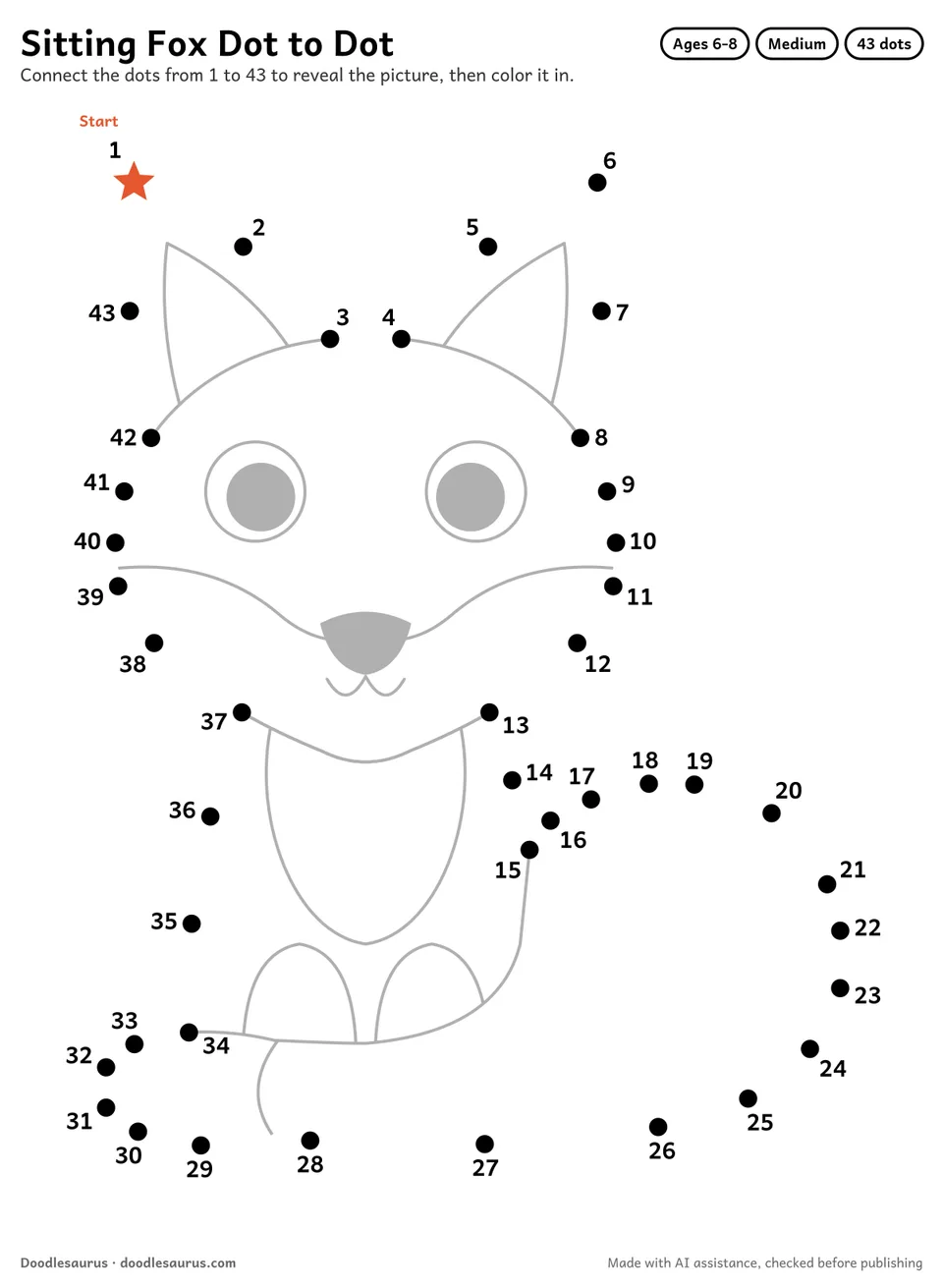
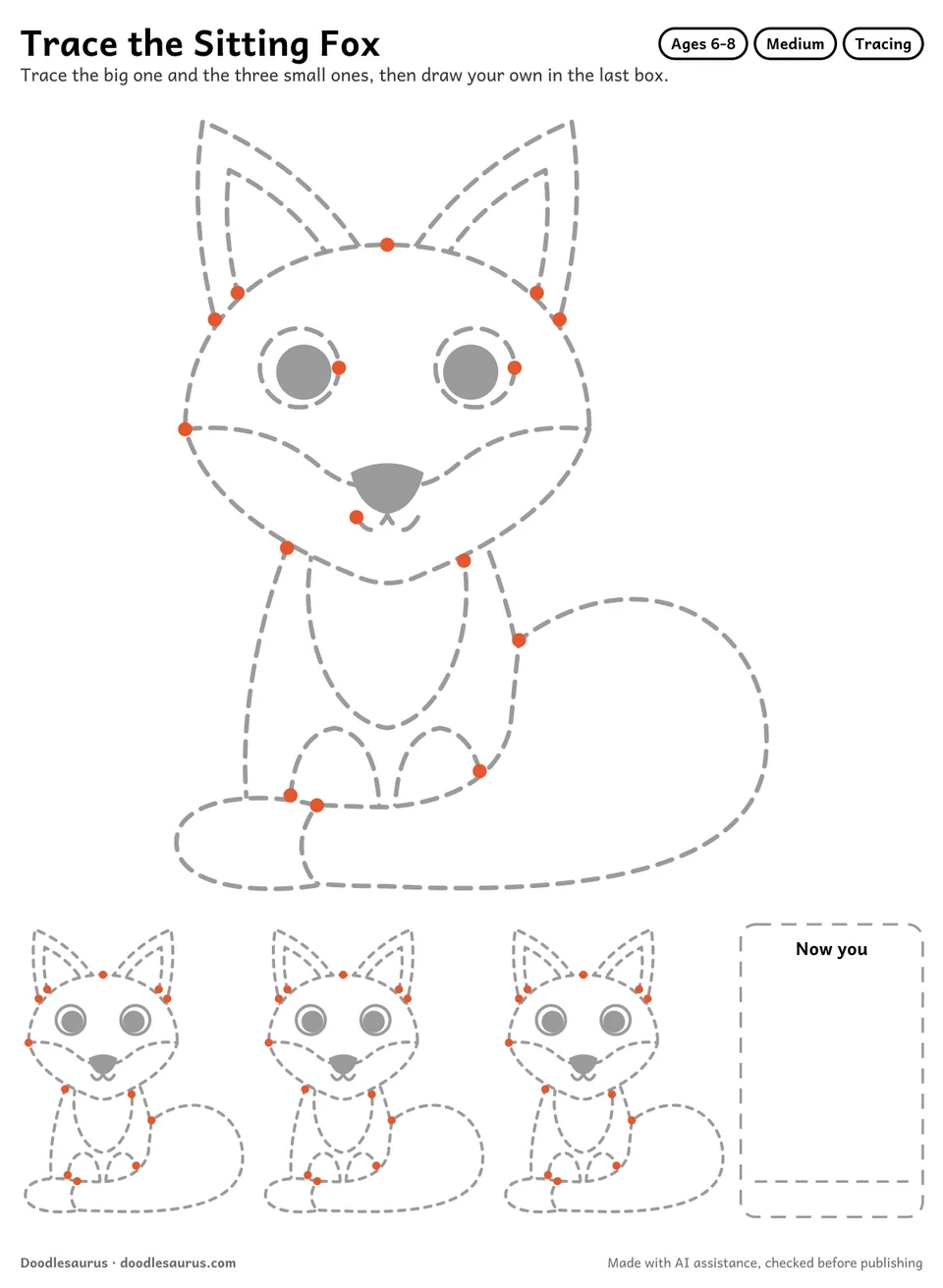
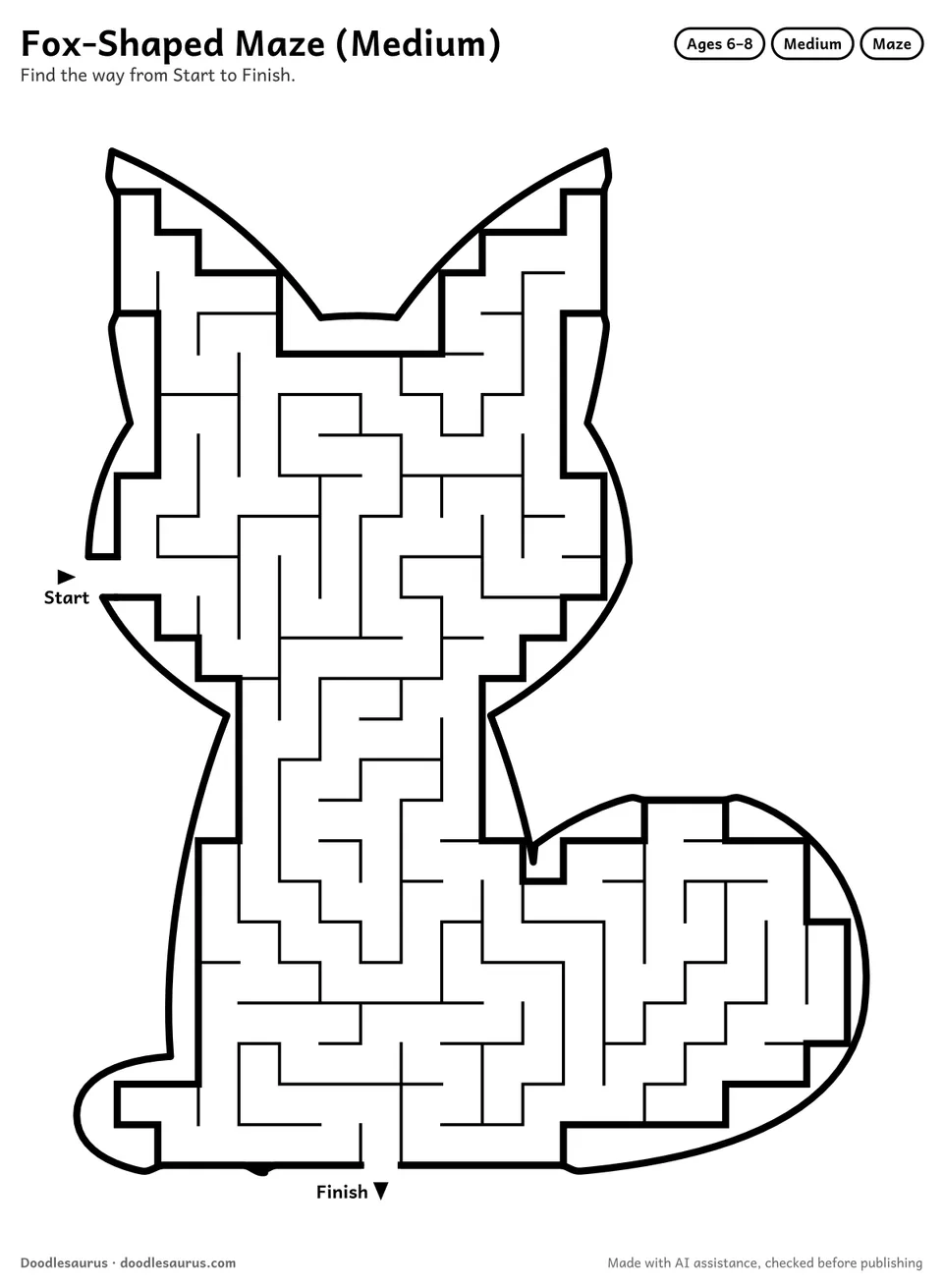
Yes. The same sitting fox is a 7-step how to draw sheet, a dot to dot with 30, 43 or 66 dots, two tracing worksheets and a fox-shaped maze in two levels.
New printables, twice a month
Our newsletter starts soon, with new sheets twice a month and a free 10-page starter pack for every new reader.
AI-assisted vector art, checked before publishing. About the AI · License