
Cat Coloring Pages
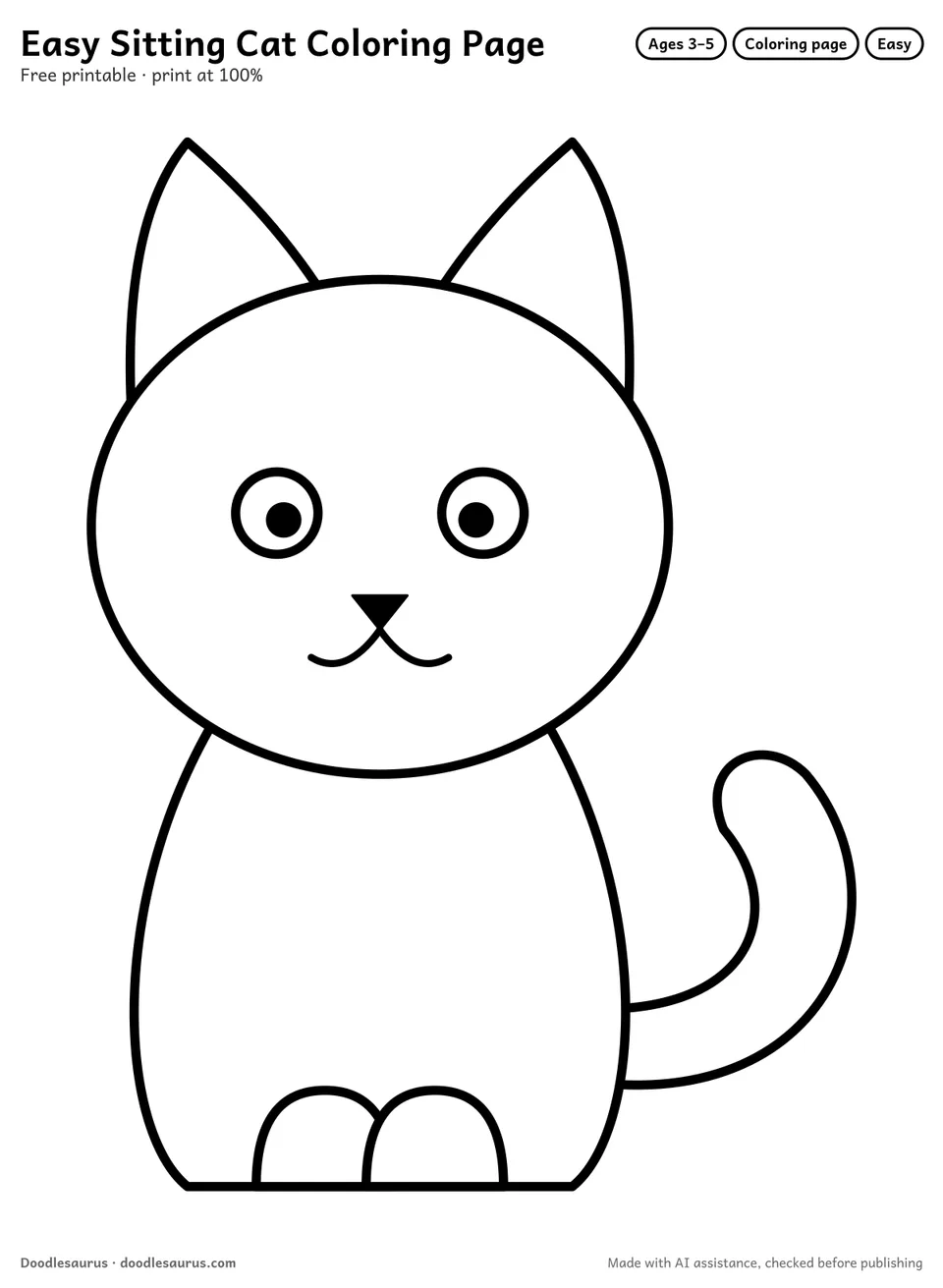
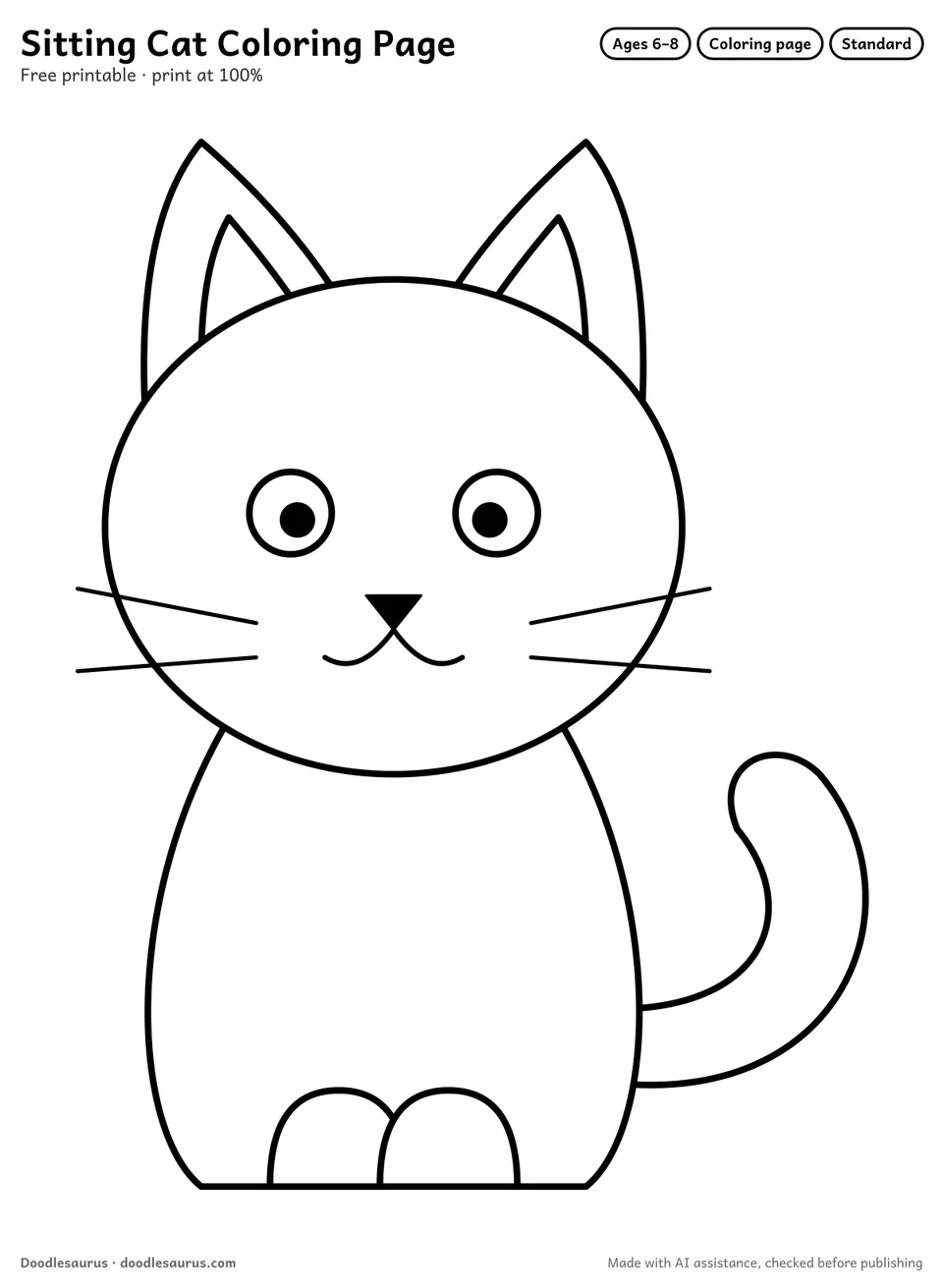
Free cat coloring pages of one sitting cat: bold lines for ages 3 to 5, or finer lines and whiskers for 6 to 8. Both coloring sheets print on A4 or Letter.
Printable cat coloring sheets
Filter by age or difficulty
Nothing matches that filter yet.
These cat coloring pages show one cat sitting up and facing forward, its tail curled up at its side. Every part is a plain shape: a wide round head, two pointed ears, round eyes, a triangle nose, a small smile, a pear-shaped body and two paws at the bottom.
Whiskers or no whiskers
The easy sheet leaves out the whiskers and the inner ear shapes, so each ear is one simple triangle. Thick black outlines close off 9 large regions with no narrow gaps, which suits ages 3 to 5 and a chunky crayon. The standard sheet draws the same cat in finer lines. It adds two whiskers on each cheek and an inner shape in each ear, which makes 11 regions, a better fit for ages 6 to 8 and sharper tools such as colored pencils.
At home and in class
The same cat appears at both levels. Two children of different ages can color side by side and end up with matching pictures. In preschool the easy cat fits a pets topic. In the early grades the standard cat works as a label-the-parts sheet, or as the picture for a short story about what the cat is waiting for.
Both sheets come as A4 and US Letter PDFs. The thin whiskers on the standard cat only stay sharp at 100 percent, so leave fit to page off.
What to color
- A big round head with two circular eyes and dark pupils
- Two tall pointed ears, each with an inner ear shape
- A small triangle nose above a curved smile
- A pear-shaped body with two rounded front paws at the base
- A long tail curling up beside the body
- Four whiskers, two on each cheek, on the standard version only
Tips
- On the standard cat, color the inner ears pink first while the crayon is sharp.
- Try a tabby by adding stripes to the body before filling it in.
- Leave the eyes white and color only the pupils for a bright look.
- Use the easy version with a thick crayon and the standard one with pencils.
- Add a collar, a cushion or a bowl in the empty space around the cat.
Cat fun facts
- A domestic cat usually has 18 toes, five on each front paw and four on each back paw.
- Cats spend roughly 12 to 16 hours of every day asleep.
- A cat's whiskers are about as wide as its body, which helps it judge whether it can fit through a gap.
Classroom ideas
- Preschool (ages 3 to 5): color the easy cat, then count the ears, eyes and paws together and find the one long tail.
- Kindergarten: color the standard cat and label head, ear, tail and paw with word cards.
- First and second grade: write three sentences about what this cat is waiting for, then color the picture to match the story.
- Year 1 to Year 2 (UK): use the cat as the cover for a pets topic booklet.
More cat activities
Related coloring pages
Frequently asked questions
Why are there no whiskers on the easy cat?
The easy page drops fine details such as whiskers, so each of its 9 large regions stays easy for a chunky crayon, and its ears are plain triangles. The standard cat has finer lines and adds four whiskers and an inner shape in each ear, which makes 11 regions for older children to work around.
Can my child turn the cat into a tabby?
Yes. Stripes drawn across the pear-shaped body before filling in make a tabby, and the empty space around the cat has room for a collar, a cushion or a bowl. In the UK, where these are cat colouring pages, the A4 file is the one to pick.
Are there other cat printables in the same pose?
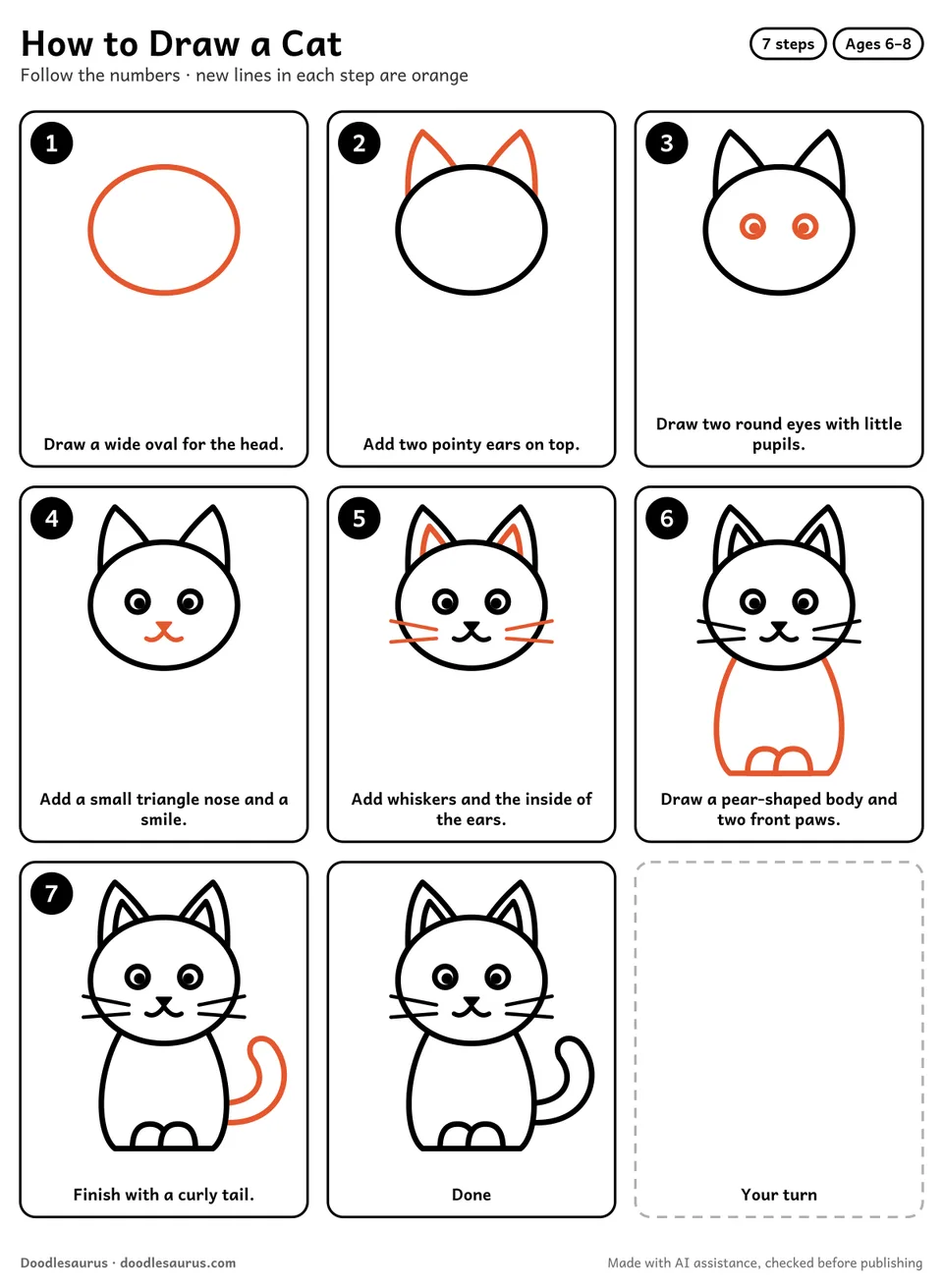
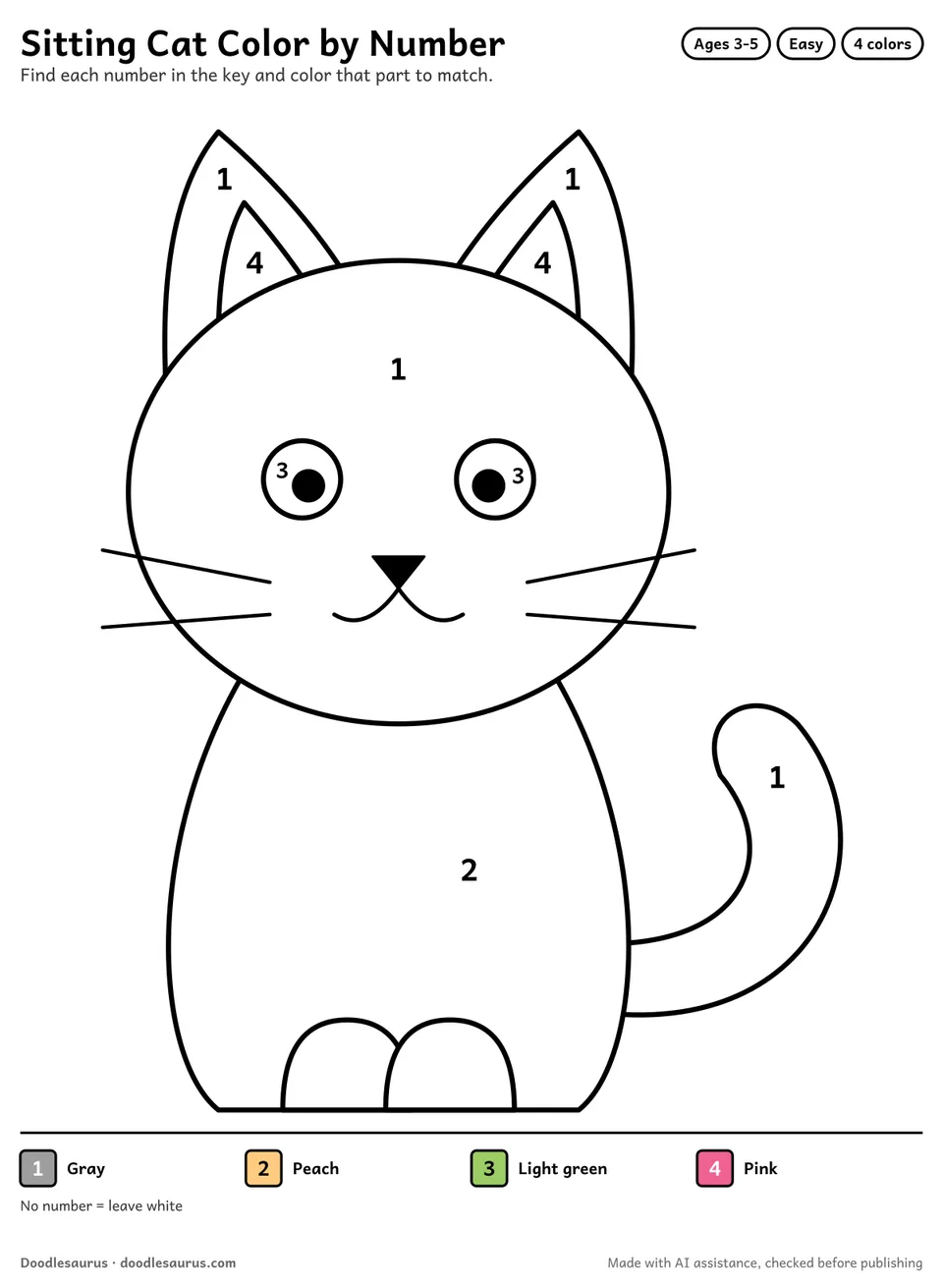
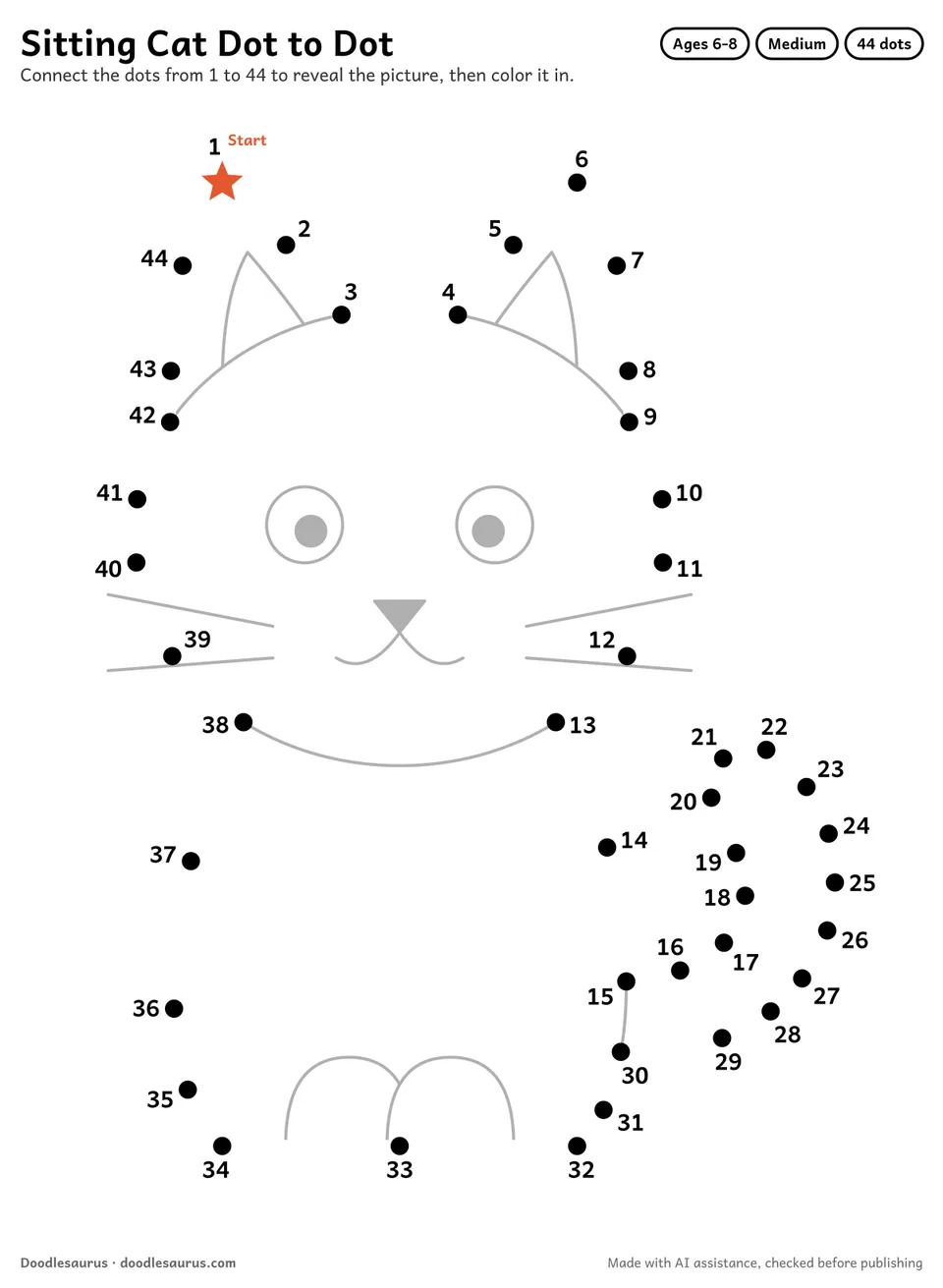
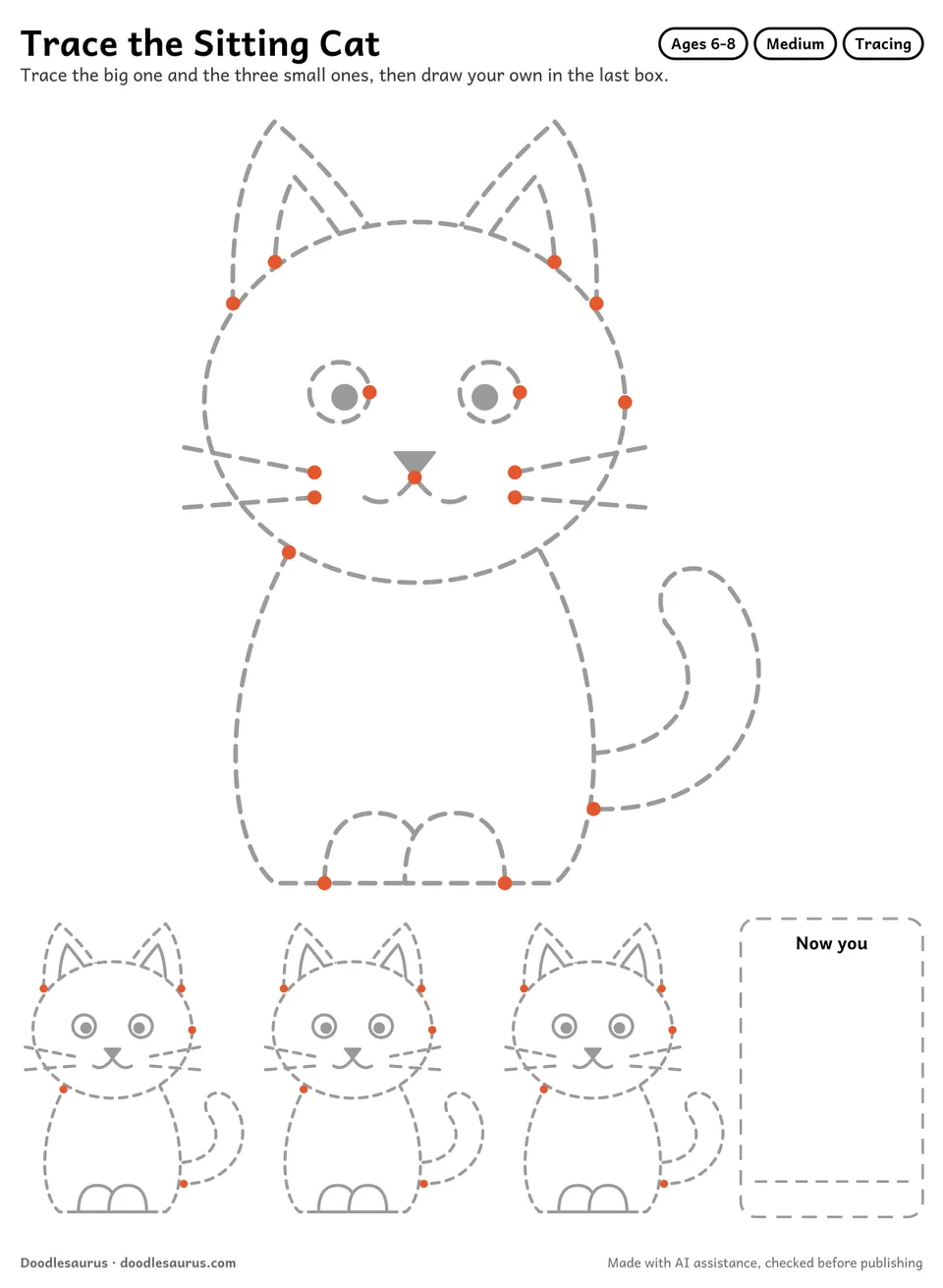
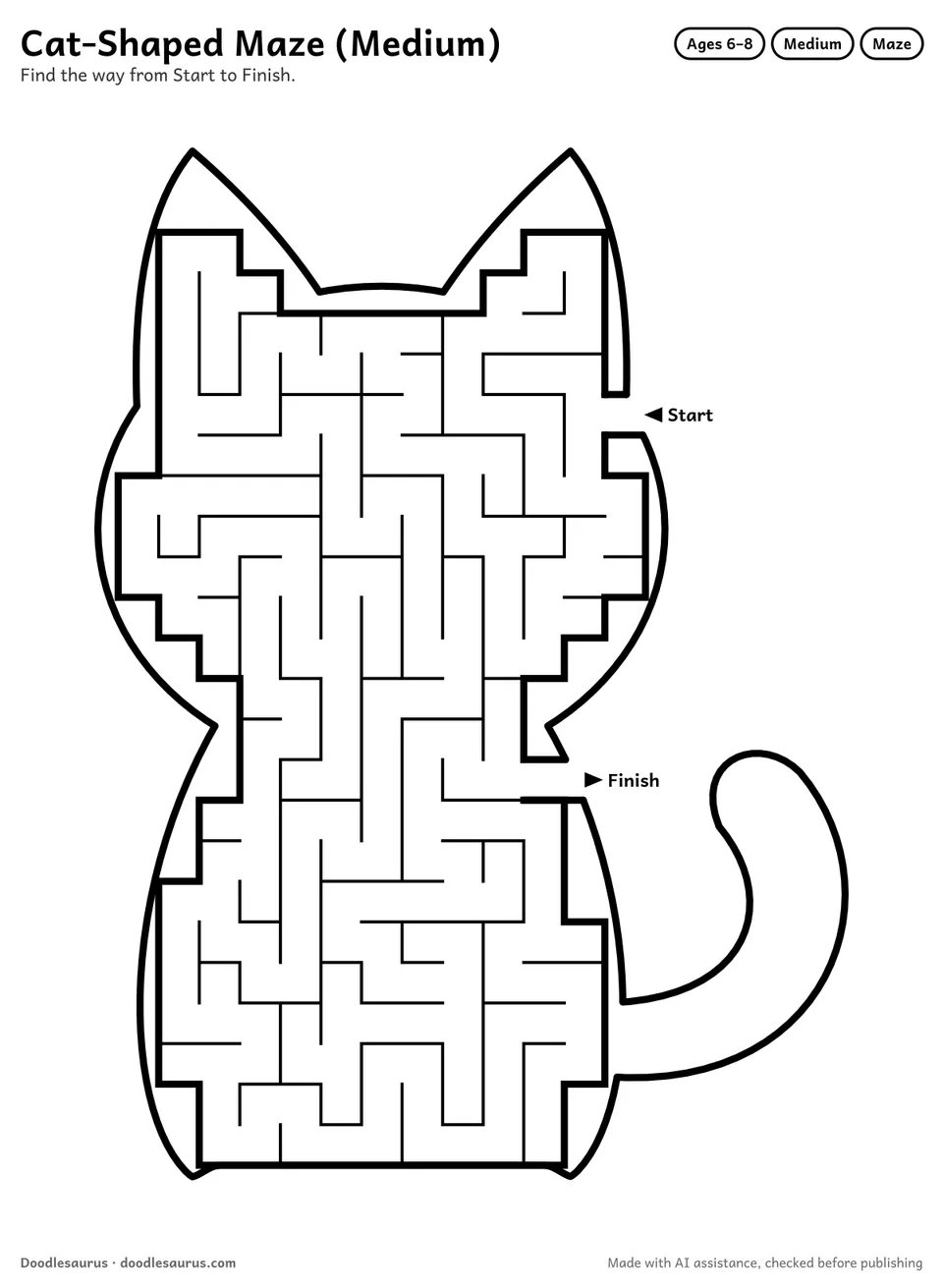
Yes. The same sitting cat appears as a 7-step how to draw sheet, a dot to dot in 30, 44 and 65 dots, a tracing worksheet, a 4-color color by number and a cat-shaped maze, plus a cat mask and a cat bookmark craft.
New printables, twice a month
Our newsletter starts soon, with new sheets twice a month and a free 10-page starter pack for every new reader.
AI-assisted vector art, checked before publishing. About the AI · License