
Dog Coloring Pages
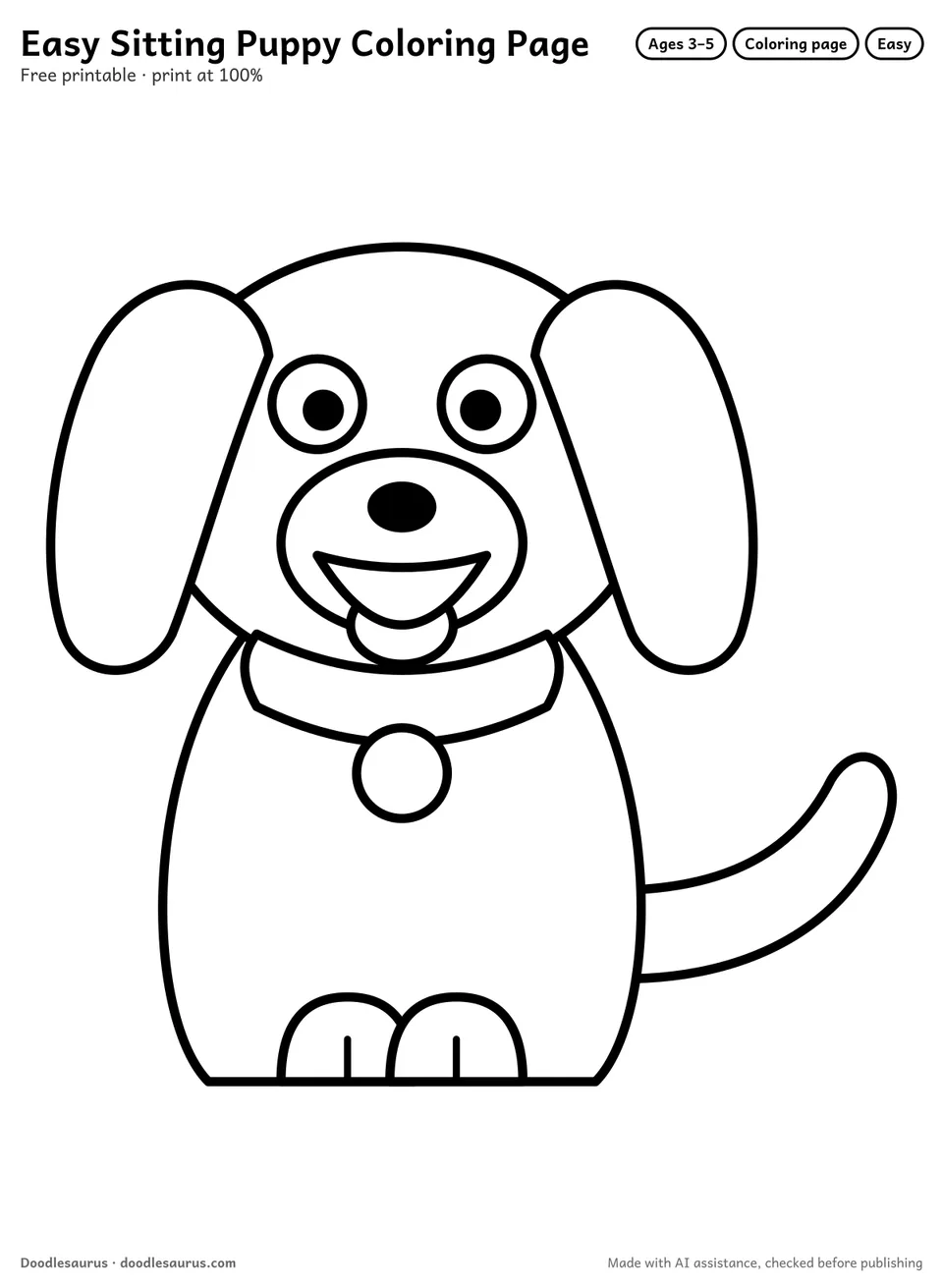
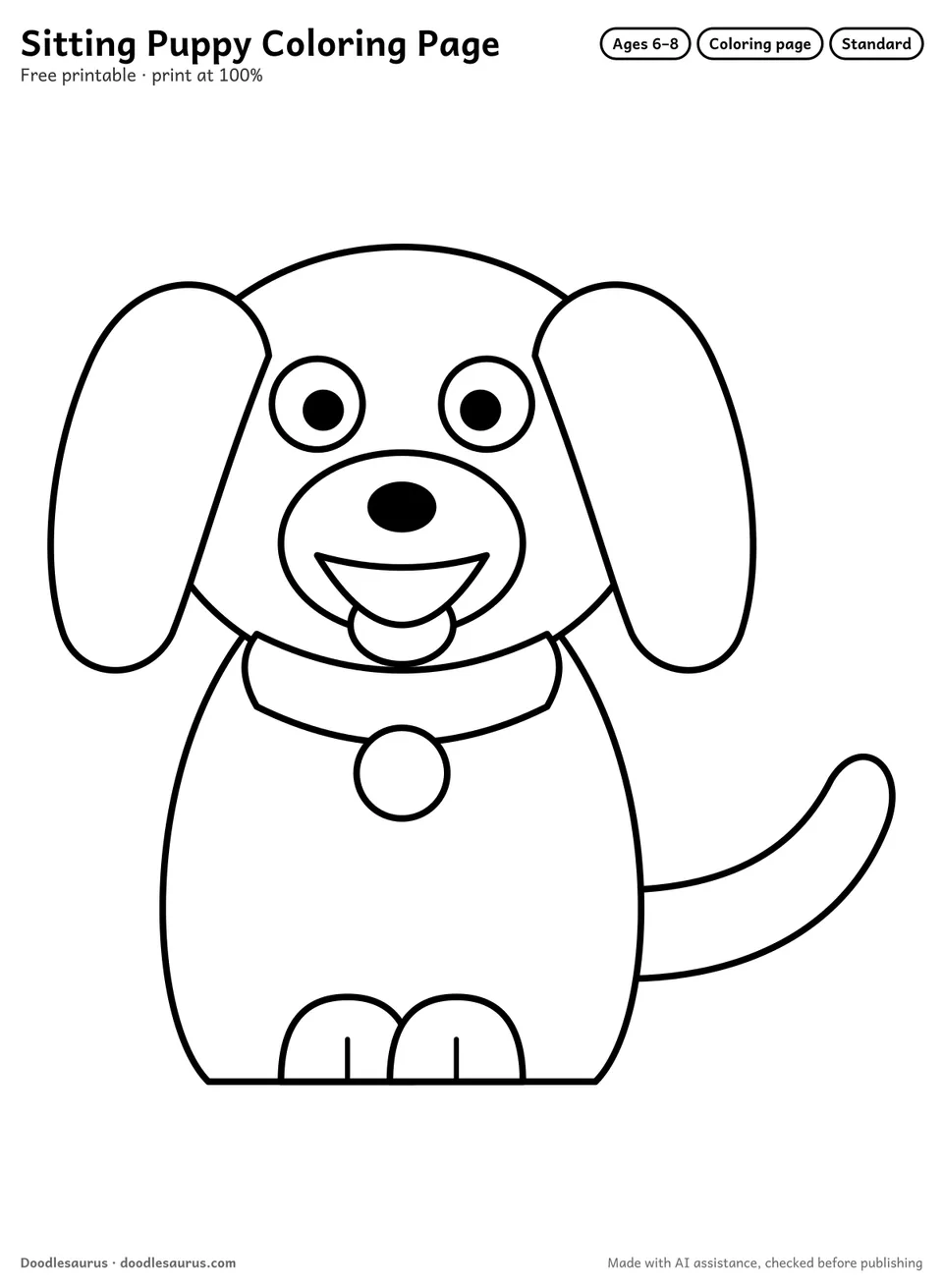
Dog coloring pages with a sitting puppy: floppy ears, a tongue out and a blank collar tag. Bold lines for ages 3 to 5, finer for 6 to 8, on A4 or Letter.
Printable dog coloring sheets
Filter by age or difficulty
Nothing matches that filter yet.
Both dog coloring pages show one puppy sitting up straight and looking right at you, its long ears hanging down both sides of a round head. Its mouth is wide open, with a little tongue showing. A collar with a round tag sits under the chin, the two front paws have toe lines, and a curved tail rises on the right.
Bold outlines or thin ones
Either sheet gives the puppy 14 spaces. Bold black outlines on the easy sheet, for ages 3 to 5, hide the small slips of a chunky crayon. The standard sheet, for ages 6 to 8, keeps every shape but thins the lines, which leaves more room for shading, spots and careful pencil work. Fit to page should stay off. At 100 percent the A4 or US Letter PDF centers the puppy with an even white border.
Pets and kindness
In class the puppy fits a pets or community helpers topic, or a UK Year 1 display of dog colouring pages, and it pairs well with a talk about kind ways to treat animals. At home a bowl, a ball or a bone in the space beside the tail finishes the picture.
What to color
- Two long floppy ears that hang down past the cheeks
- Big round eyes with solid black pupils
- An oval muzzle with a black button nose
- A wide open mouth and a round tongue poking out
- A collar with a round tag in the middle
- A tall body, two front paws with toe lines and a tail curving up on the right
Tips
- Pick the fur color first, then use a darker shade of it for the ears.
- Leave the muzzle pale so the black nose and pink tongue stand out.
- Give the collar a bright color and the tag a gold or silver one.
- Add brown or black patches to the body to turn the puppy into a spotted dog.
- Draw a bowl, a ball or a bone in the empty space beside the tail.
Dog fun facts
- Dalmatian puppies are born almost pure white, and their spots appear over the first few weeks.
- A dog's nose holds roughly 300 million scent receptors, while a person has about 6 million.
- Dogs cool down mainly by panting with their tongue out, because they sweat only a little through their paw pads.
Classroom ideas
- Preschool (ages 3 to 5): color the bold puppy and talk about how to care for a pet, from food and water to walks.
- Kindergarten: count the parts aloud together, two ears, two eyes, one nose, one tag and two paws, before coloring.
- Grades 1 and 2: invent a name for the puppy, write it on the tag, then write two sentences about its day.
- Year 1 (UK): add the finished dogs to a class display on pets and the people who look after them.
More dog activities
Related coloring pages
Frequently asked questions
Do the wobbles of a chunky crayon show on the easy puppy?
Not much. Bold black outlines on the easy page hide the small slips of a chunky crayon, which suits ages 3 to 5. The standard page keeps the same 14 spaces in thinner lines for ages 6 to 8.
What goes on the collar tag?
The round tag is left blank, so a child can write a pet's name on it, real or made up, before or after coloring.
What other activities use this puppy?
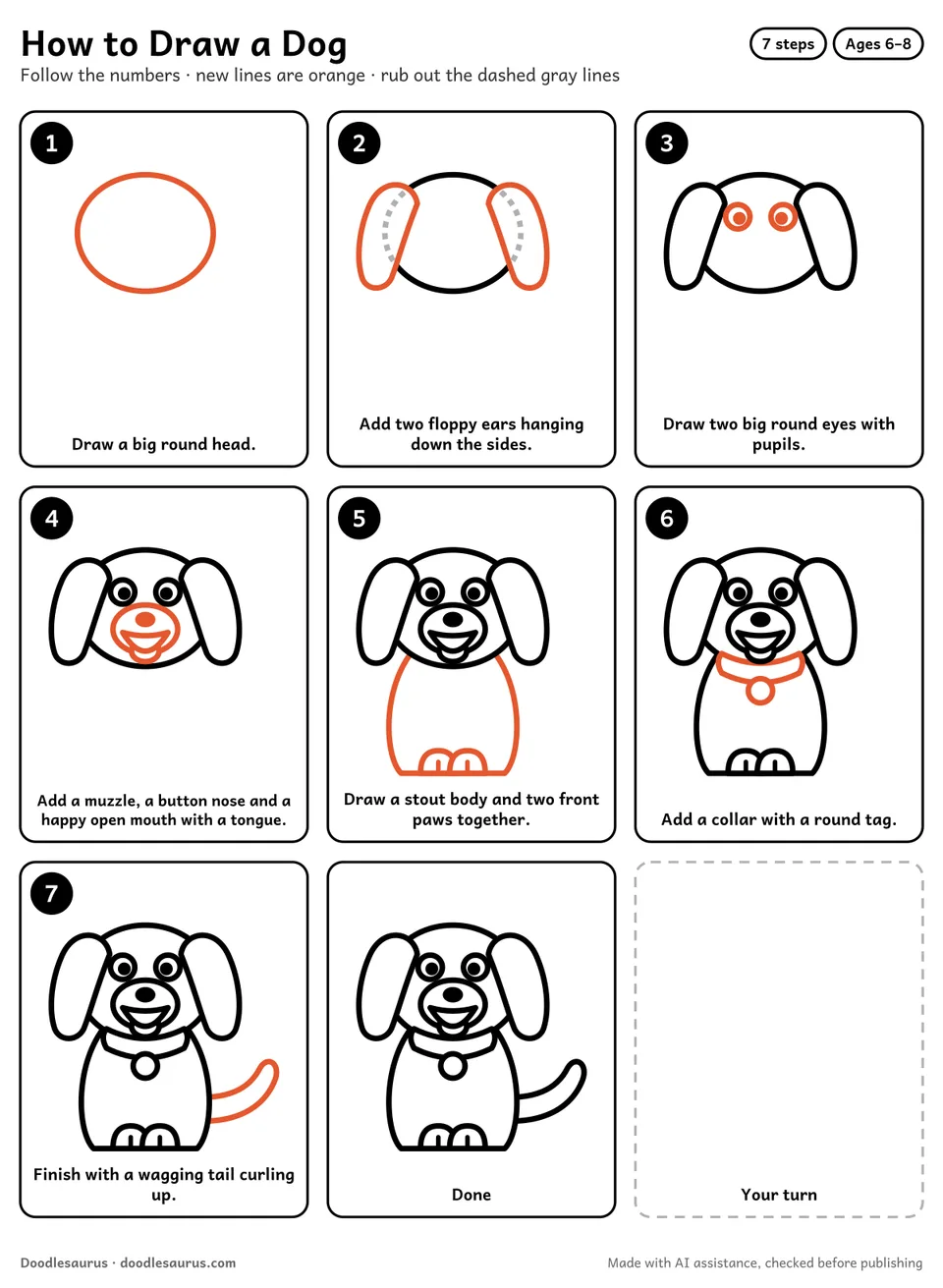
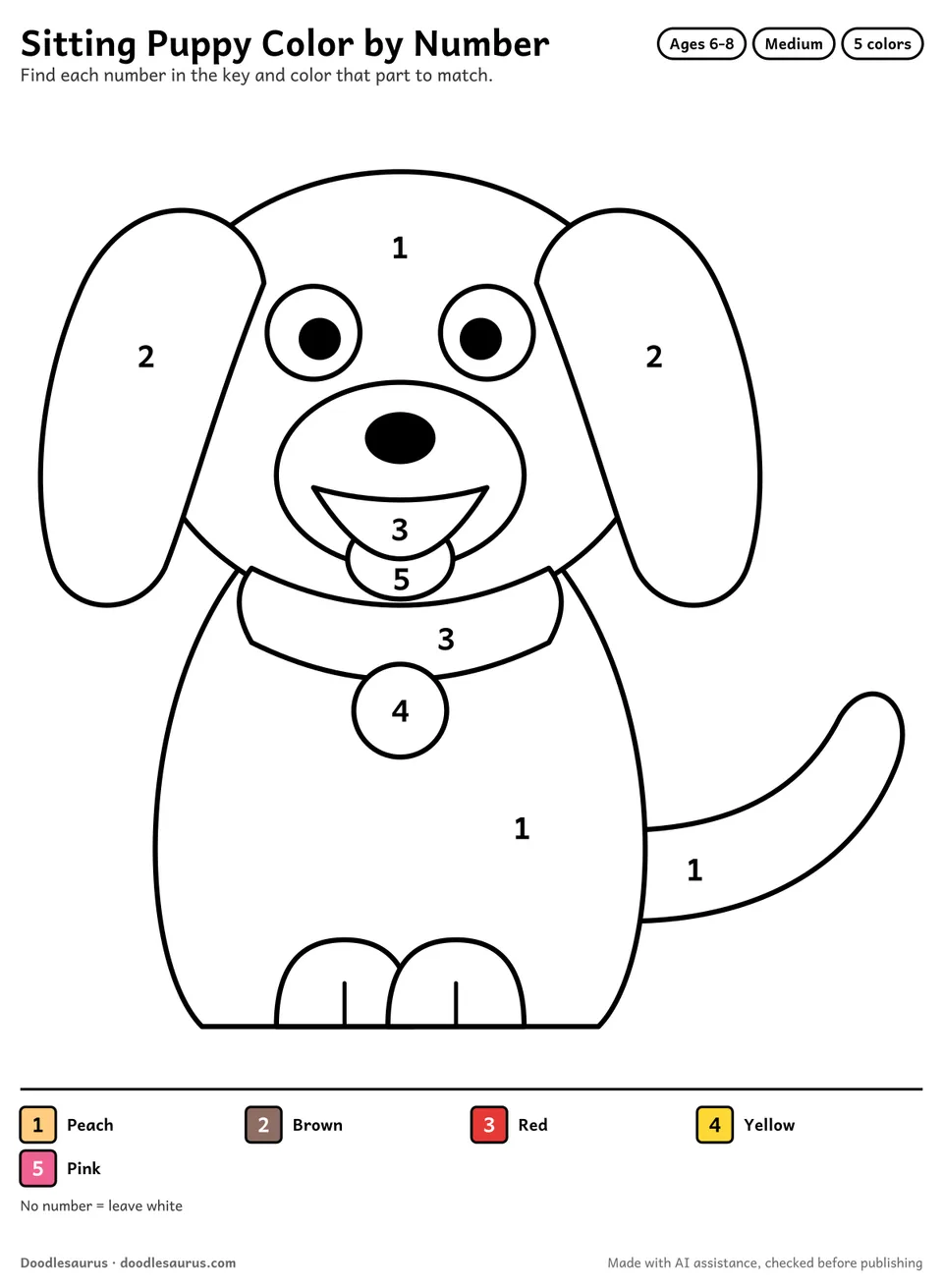
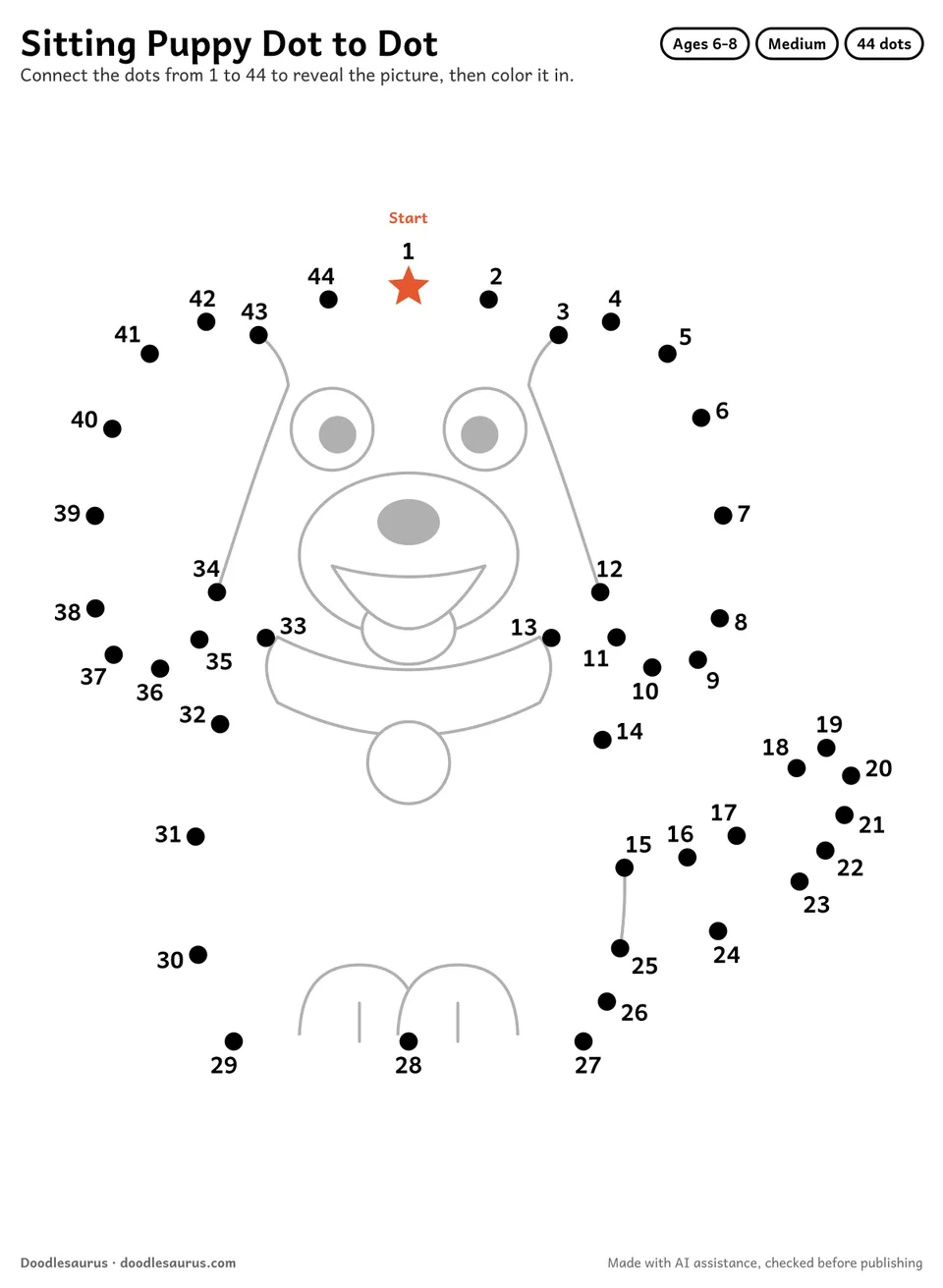
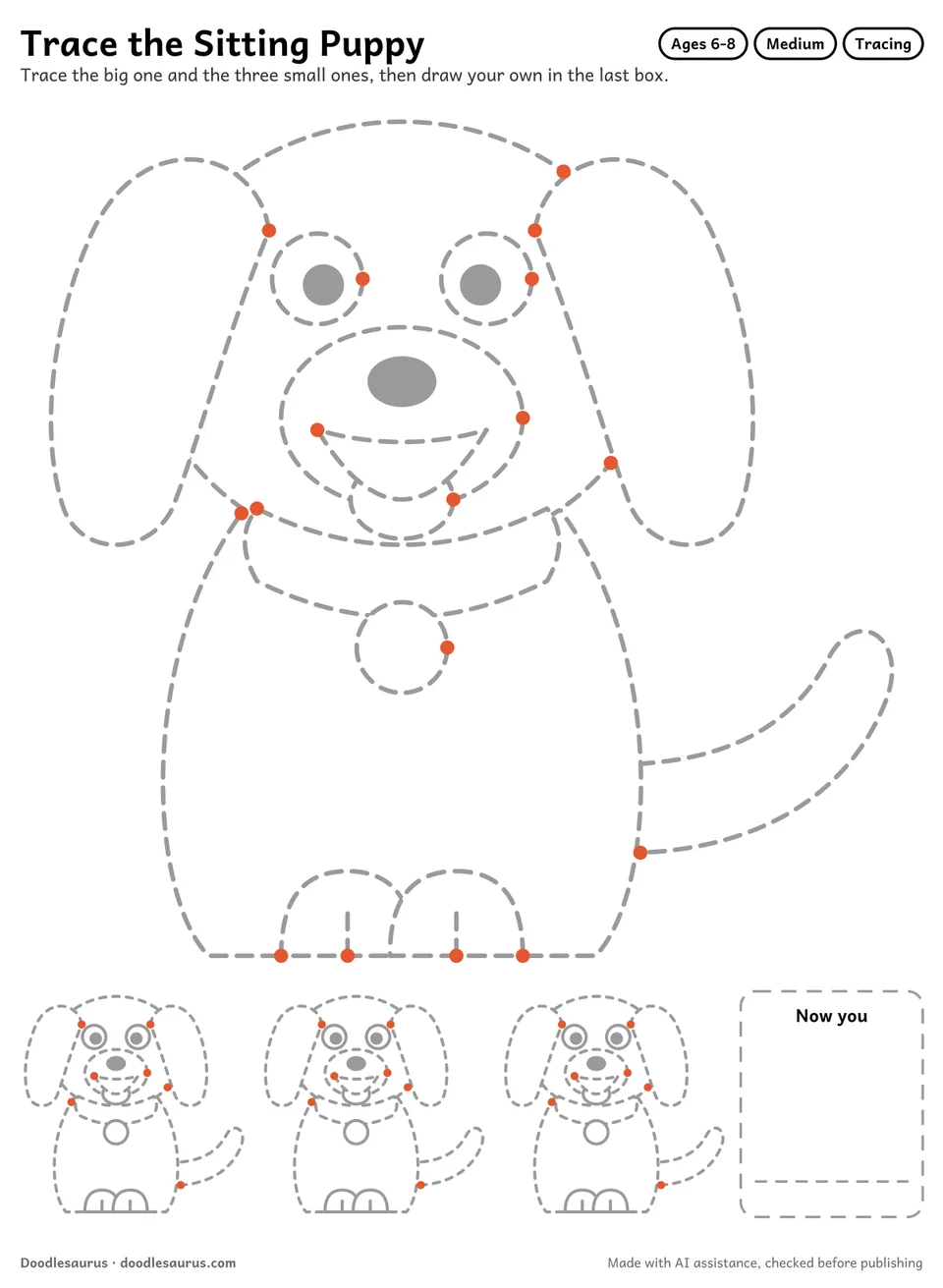
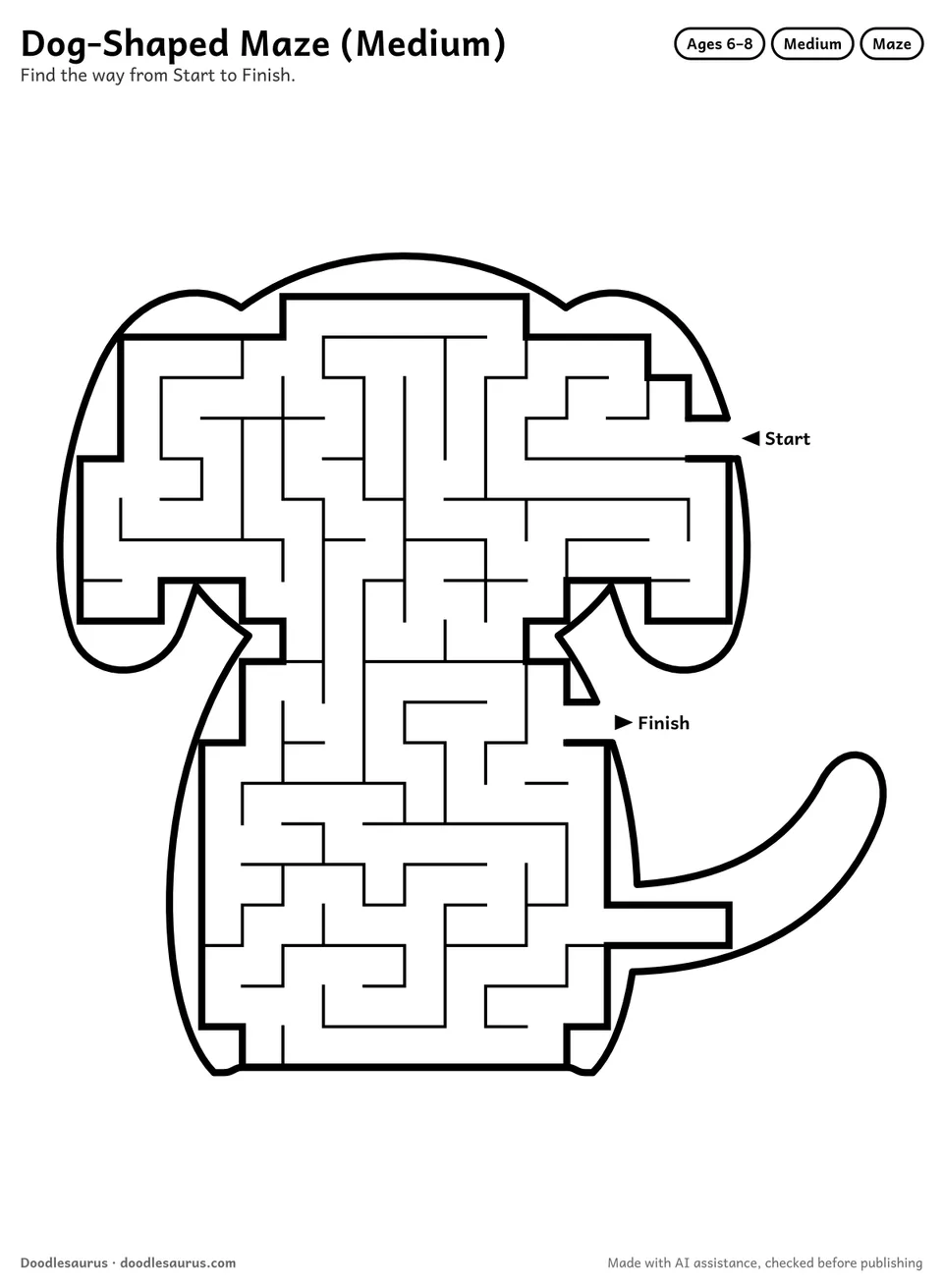
The same sitting dog is a 7-step how to draw sheet, a dot to dot with 30, 44 or 64 dots, two tracing worksheets, a 5-color color by number and a dog-shaped maze.
Is there a spotted or patterned version?
Not as a separate file. The body is one large open space, so children can draw their own spots, patches or stripes before they color.
New printables, twice a month
Our newsletter starts soon, with new sheets twice a month and a free 10-page starter pack for every new reader.
AI-assisted vector art, checked before publishing. About the AI · License