
Frog Coloring Pages
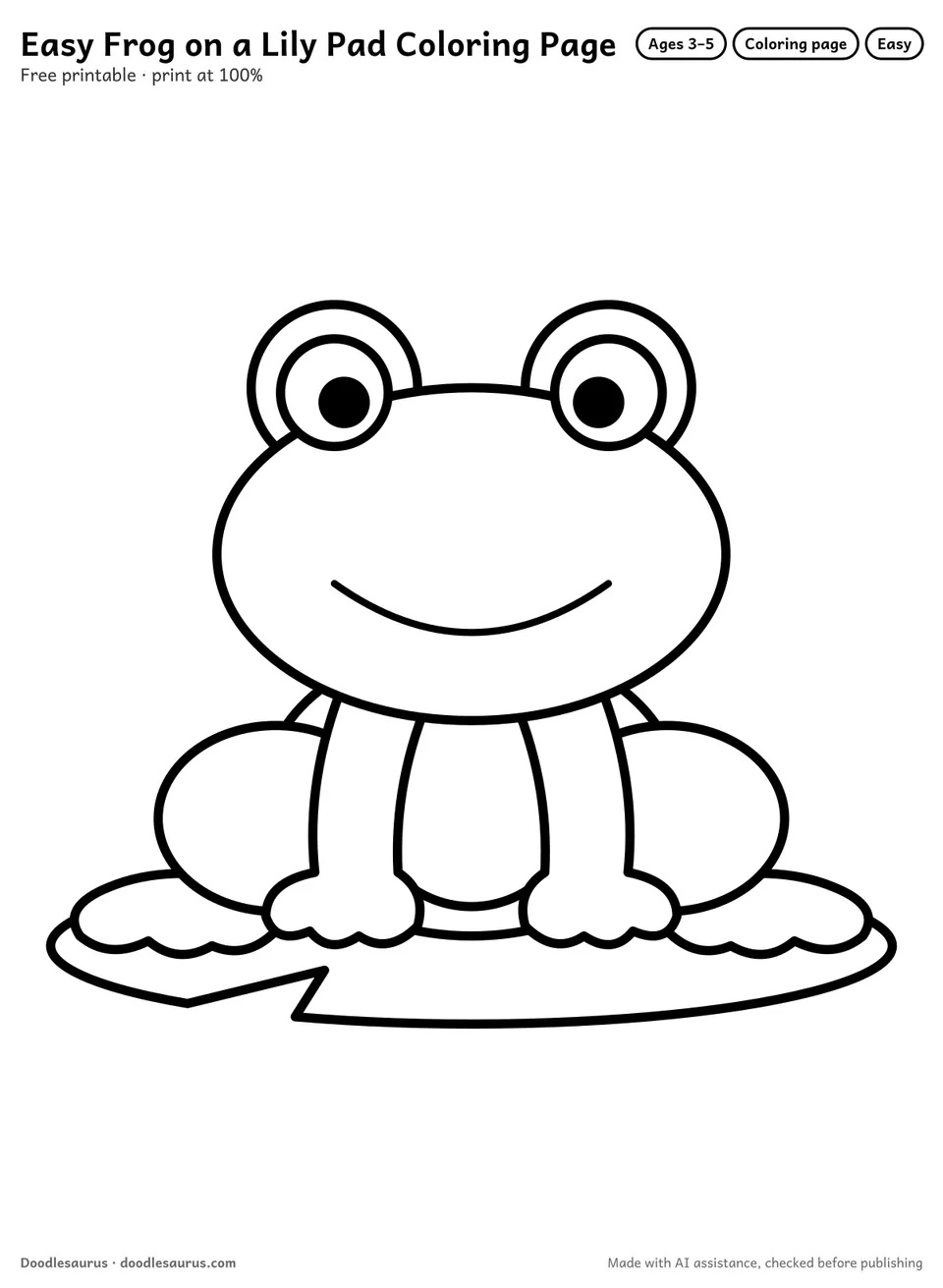
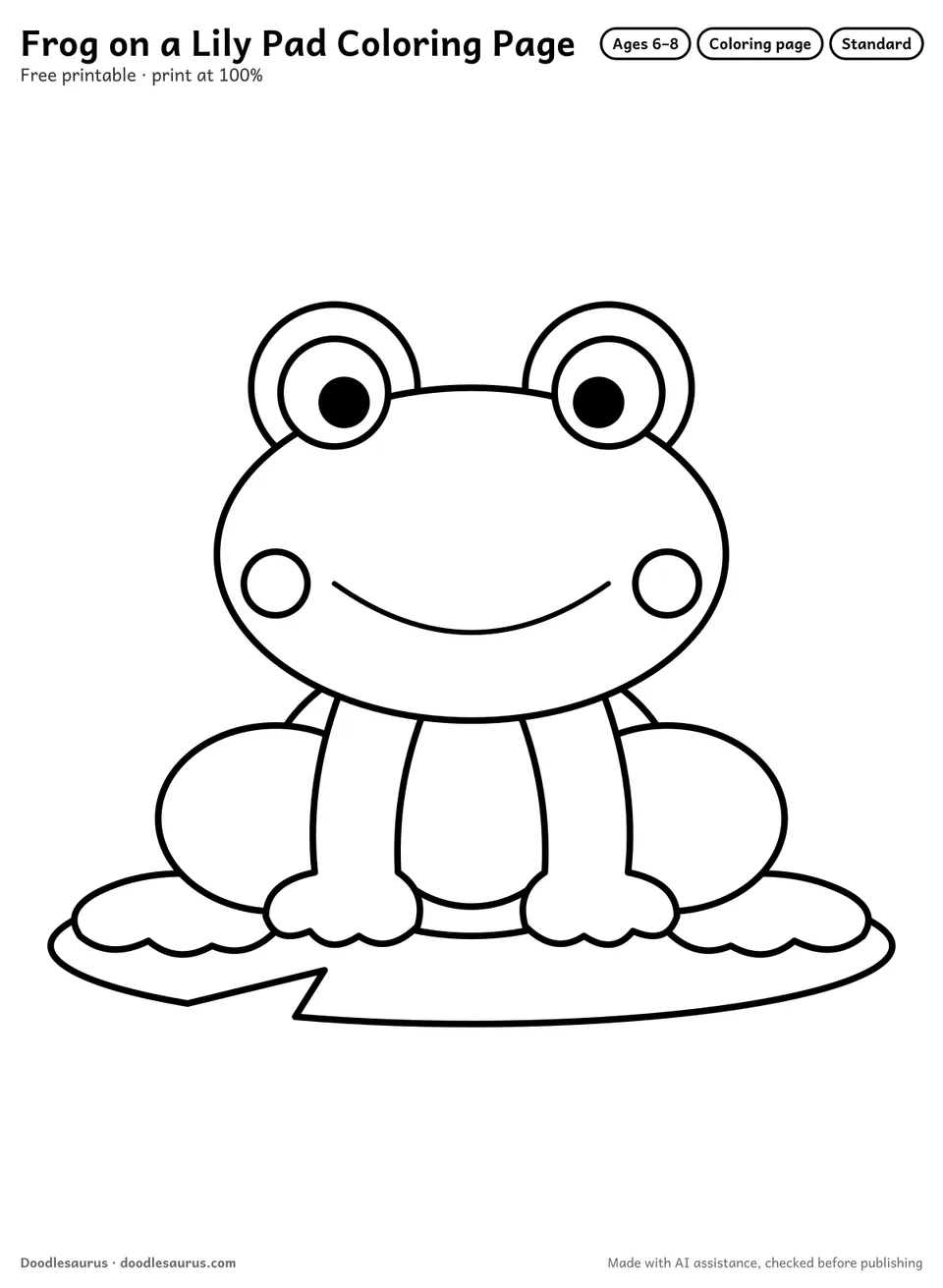
Frog coloring pages with a smiling frog on a notched lily pad: 14 big spaces for ages 3 to 5, or 16 with cheeks and finer lines for 6 to 8. A4 or Letter.
Printable frog coloring sheets
Filter by age or difficulty
Nothing matches that filter yet.
A frog with its eyes high on two raised bumps perches on a round lily pad in these frog coloring pages. The pad has a small V-shaped notch cut into its left edge, like a real water lily leaf. The face is a wide oval with a long smile and two round cheeks. Legs take up most of the rest. There are two straight front legs, a tall oval belly running from chin to bottom, and two big curved back thighs with flat webbed feet spread over the pad.
Cheeks on the standard frog
Without the cheeks beside the smile, the easy page has 14 spaces, all of them large, and its heavy black line helps ages 3 to 5 when a crayon slips past an edge. The standard page has all 16. Its lighter line lets pencils at ages 6 to 8 reach neatly into the toes and cheeks.
Ponds and life cycles
A pond, spring or life-cycle topic in class suits the frog. At home, siblings can work on the two levels side by side. The blank space around the pad leaves room for reeds, dragonflies or a water lily flower. Set the printer to 100 percent for the A4 or US Letter PDF and the frog stays centered with an even white border.
What to color
- Two raised eye bumps, each holding a round eye with a solid black pupil
- A wide oval face with a long, gentle smile
- Two small round cheeks, one on each side of the smile
- Two straight front legs ending in three-toed feet
- A tall oval belly that runs from under the chin down between the front legs
- Two bulging back thighs and flat webbed feet resting on a notched lily pad
Tips
- Pick two greens, a light one for the belly and cheeks and a darker one for the back and legs.
- Color the lily pad a different green, or yellow-green, so the frog stands out from it.
- Leave a white ring around each pupil so the eyes look shiny.
- Add spots to the back thighs before filling them in for a spotted pond frog.
- Draw a few ripple lines and a flower beside the pad in the empty space.
Frog fun facts
- Every frog begins life as a tadpole that hatches from an egg and breathes with gills.
- Most frogs do not drink with their mouths; they soak up water through their skin.
- Frogs live on every continent except Antarctica.
Classroom ideas
- Preschool (ages 3 to 5): color the bold frog during a pond or spring unit and count its eyes, legs and feet together.
- Kindergarten: after coloring, children cut out the frog and glue it onto blue paper as a class pond display.
- Grade 1 or 2: pair the finer-line frog with a life-cycle lesson and write egg, tadpole, froglet and frog around the picture.
More frog activities
Related coloring pages
Frequently asked questions
Why does the easy frog have fewer spaces than the standard one?
The easy page leaves the two round cheeks off the face, so it has 14 big spaces for small hands and fat crayons, drawn in thick, bold outlines. The standard page keeps both cheeks for 16 spaces and uses thinner lines that suit colored pencils and ages 6 to 8.
Does the frog have to be green?
No. Green is the usual choice, with a lighter shade for the belly and cheeks, but a tree frog in orange or blue looks just as good.
What else can we do with this frog?
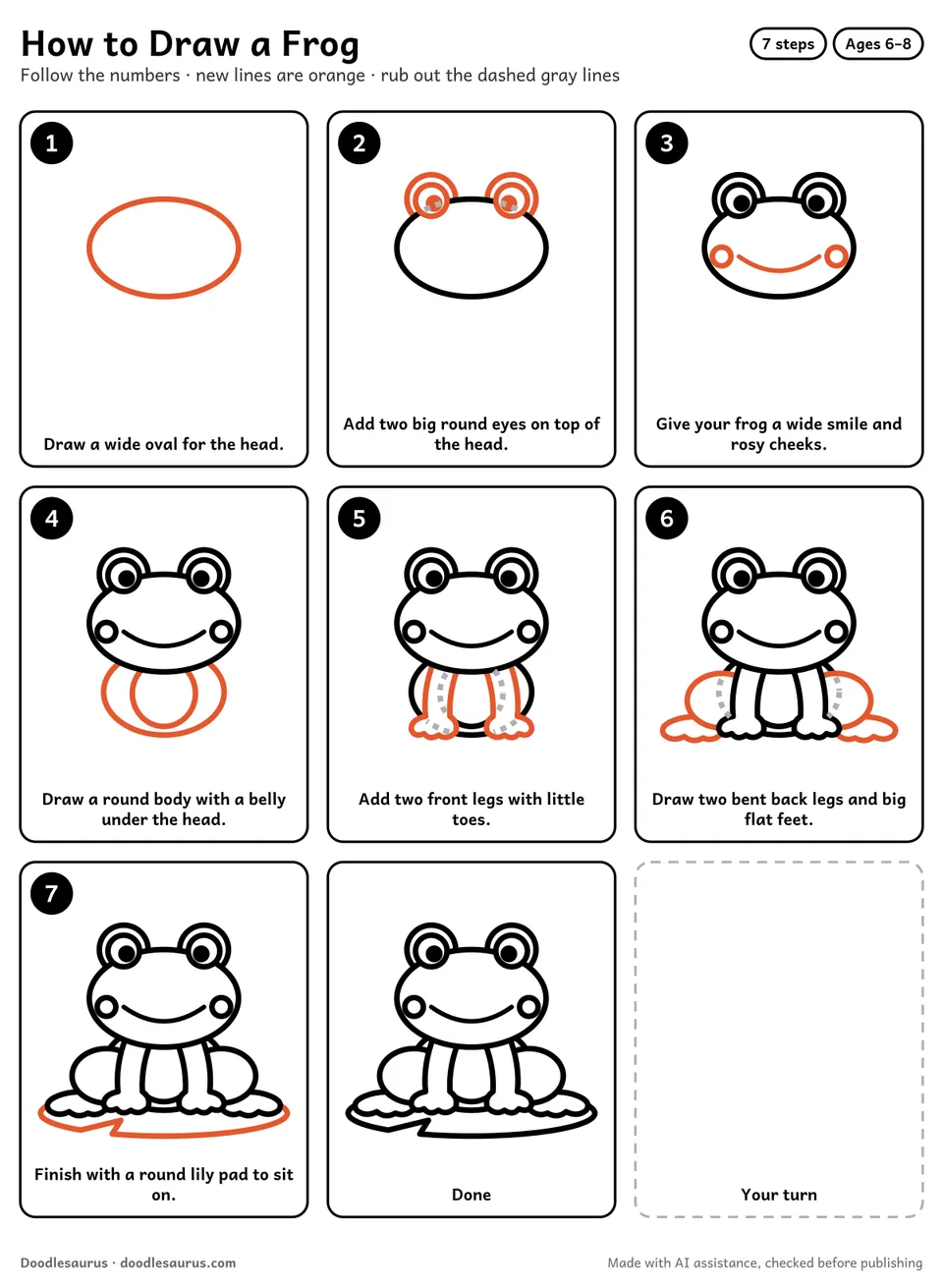
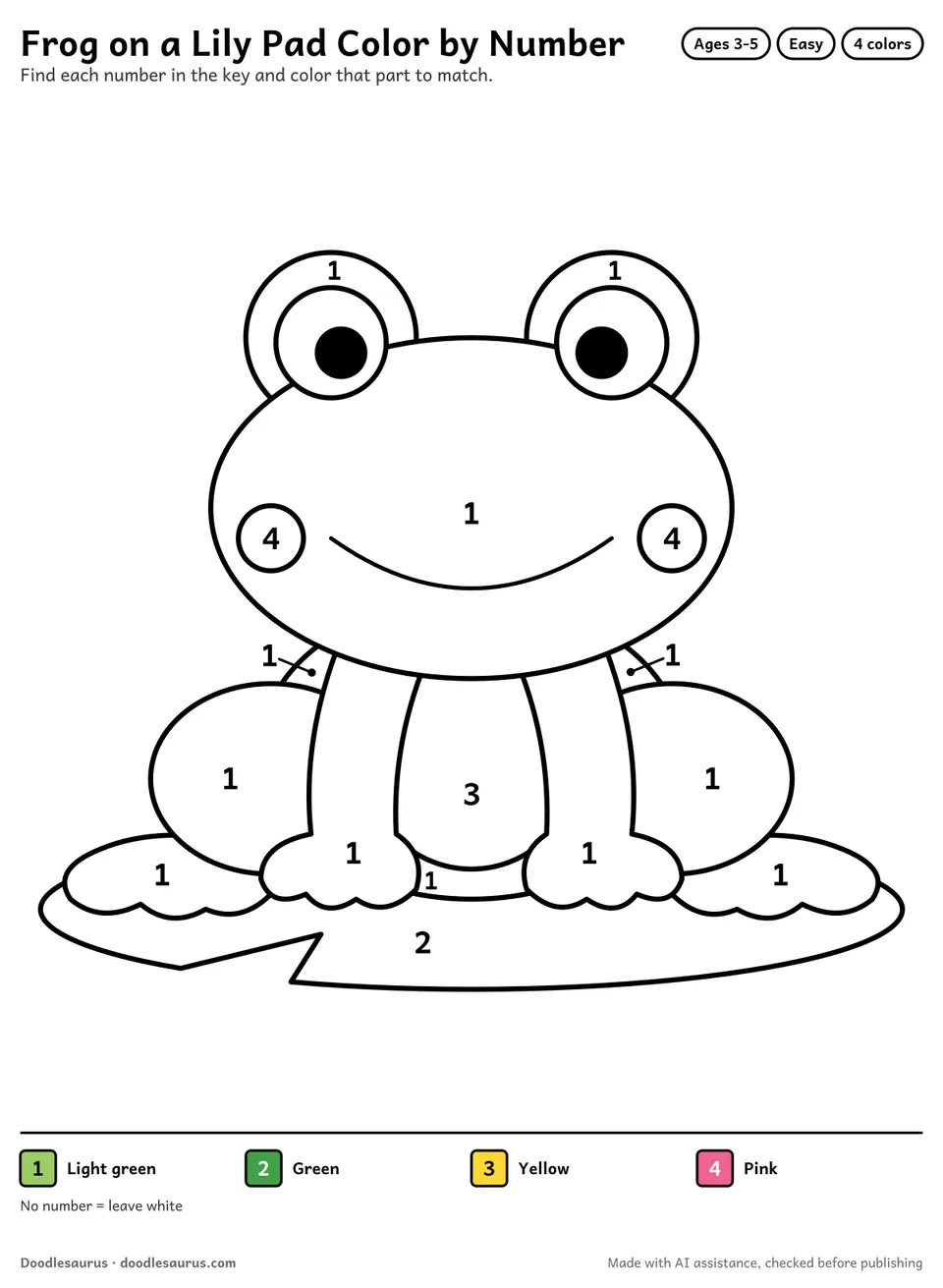
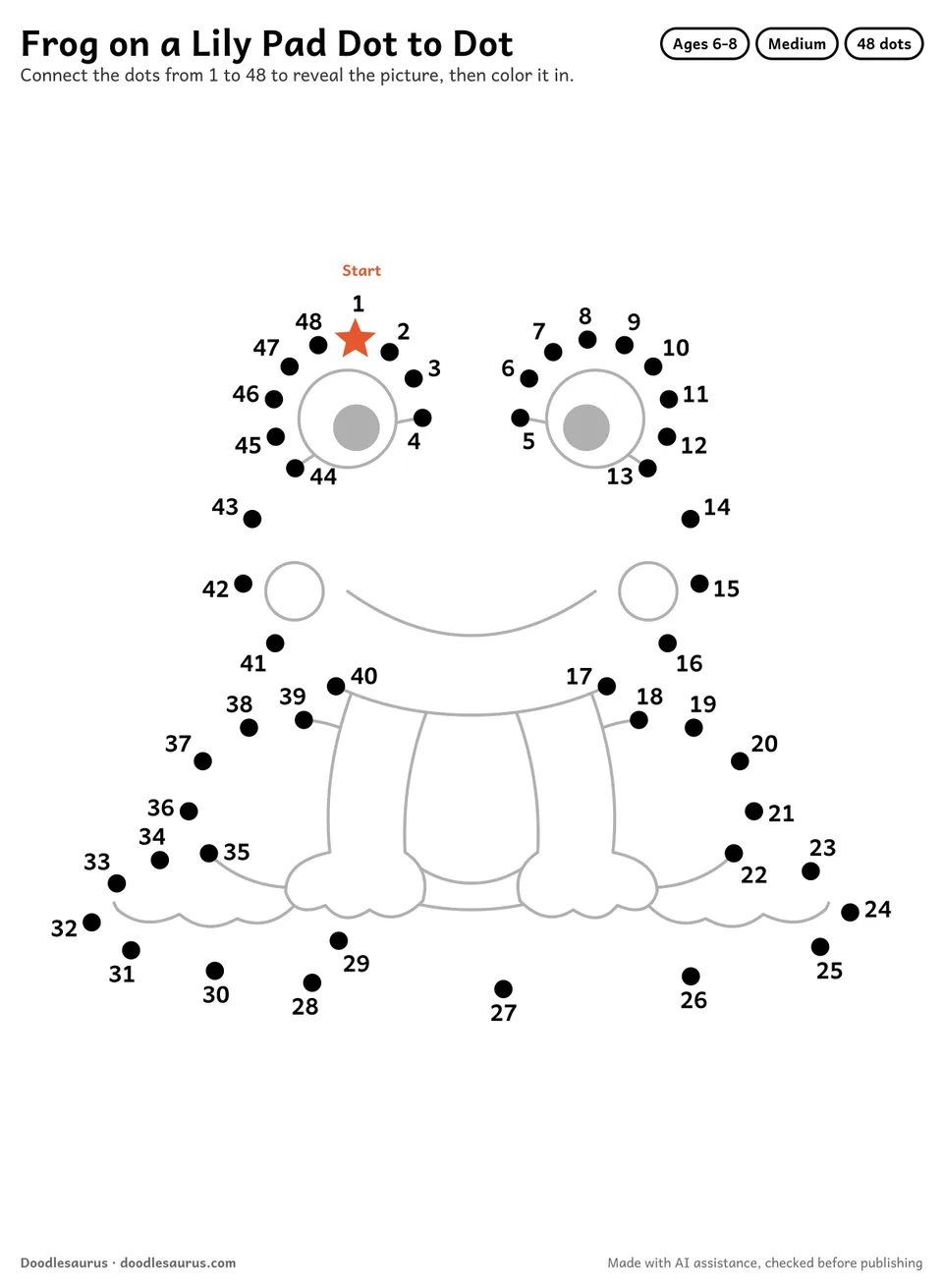
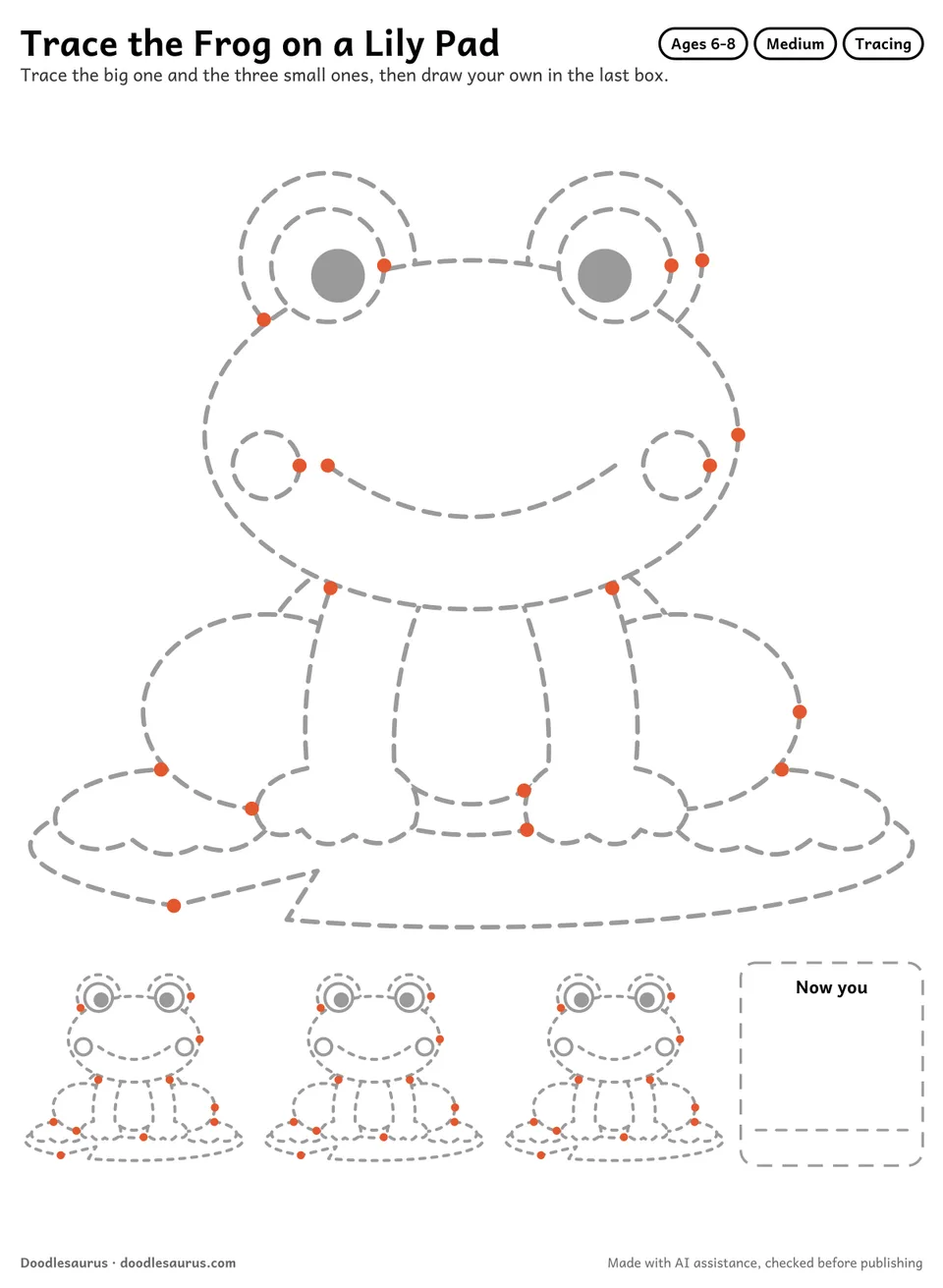
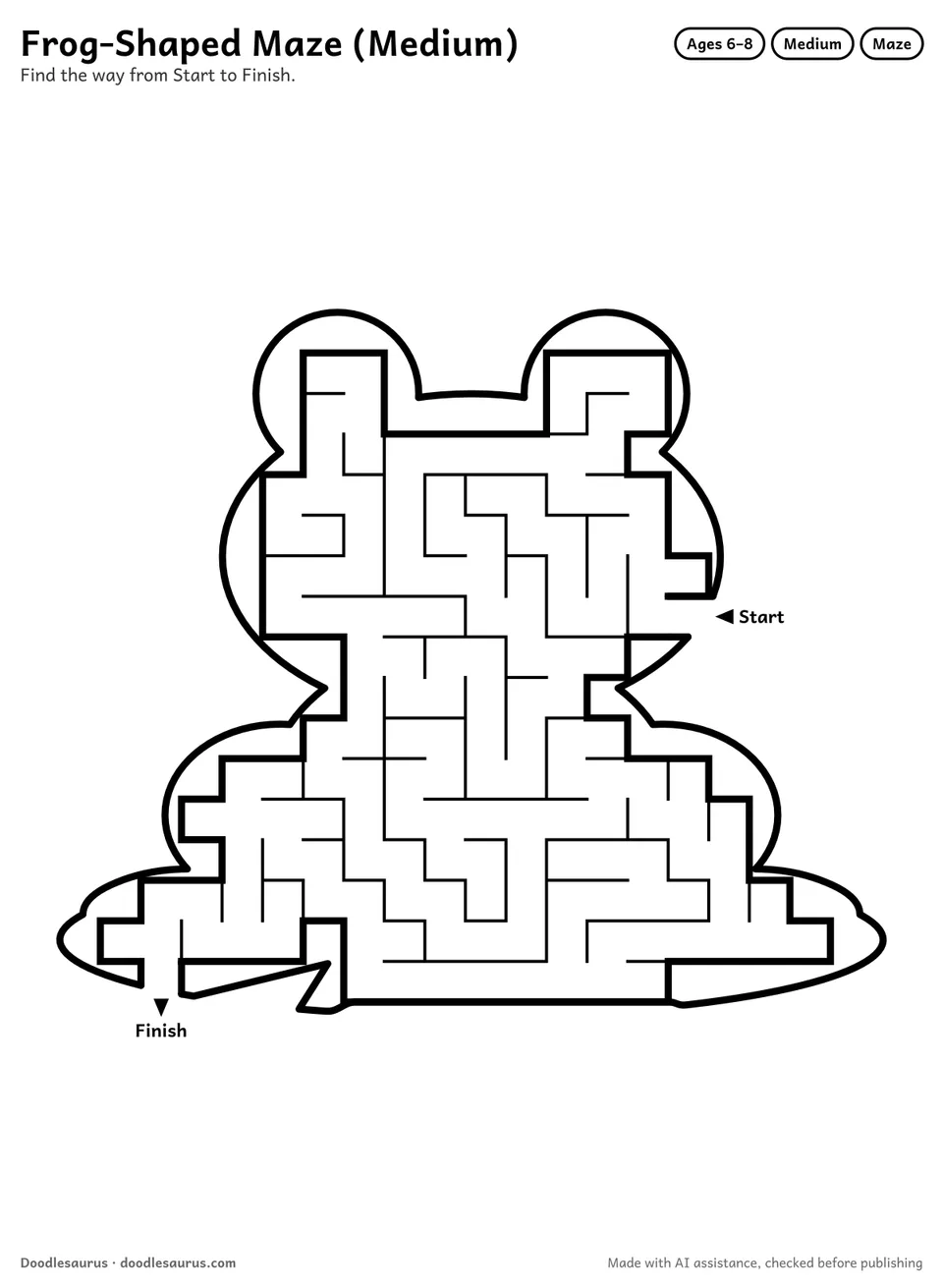
The same frog sitting on its lily pad is also a 7-step how to draw sheet, a dot to dot with 30, 48 or 63 dots, a tracing worksheet in two levels, a frog-shaped maze in two sizes and a 4-color color by number.
New printables, twice a month
Our newsletter starts soon, with new sheets twice a month and a free 10-page starter pack for every new reader.
AI-assisted vector art, checked before publishing. About the AI · License