
Frog Maze on a Lily Pad, Medium and Hard
On both levels of this frog maze the route starts beside the head and leaves below the lily pad: 160 cells for ages 6 to 8, 362 for ages 9 to 12.
Choose a level
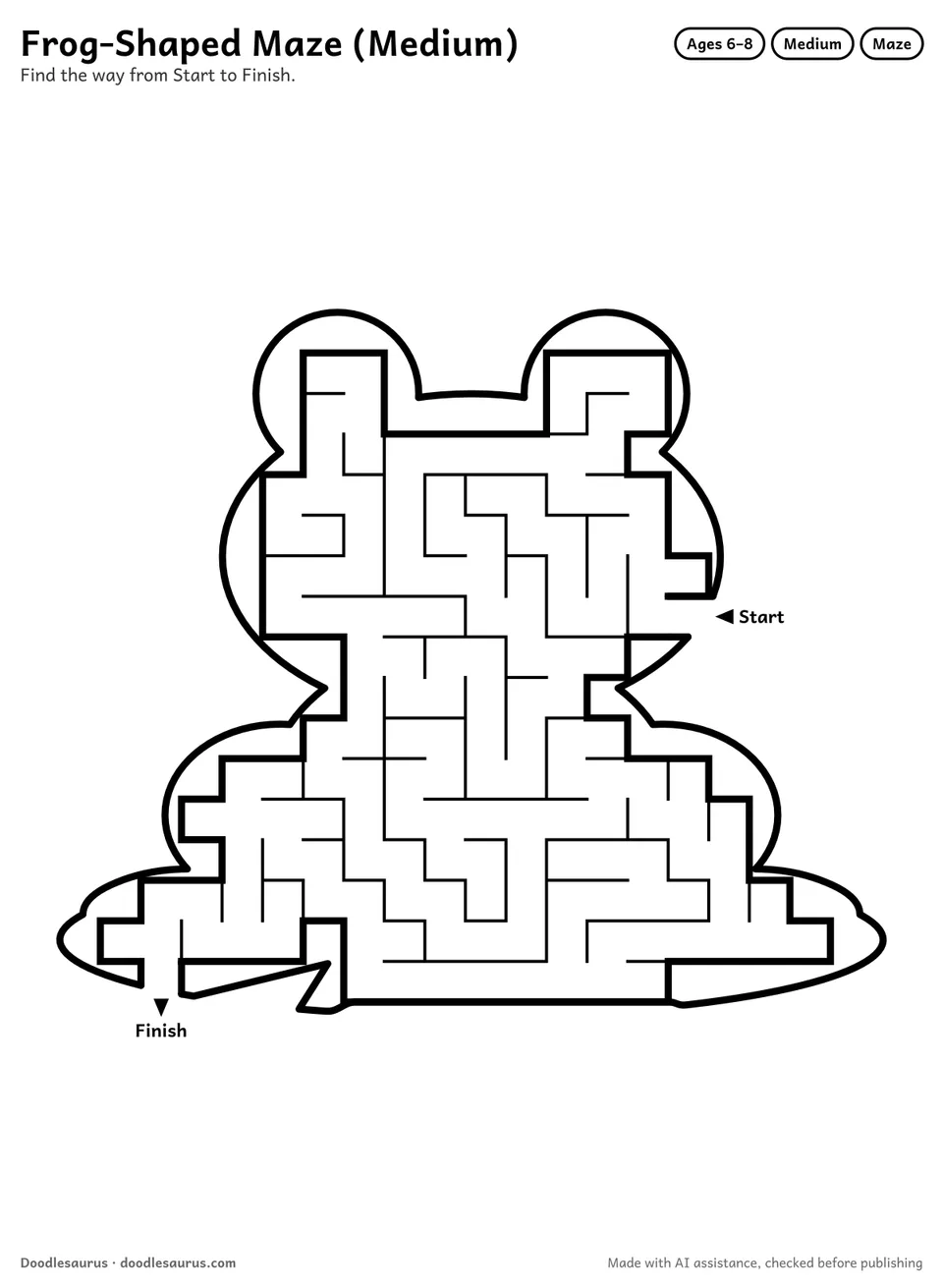
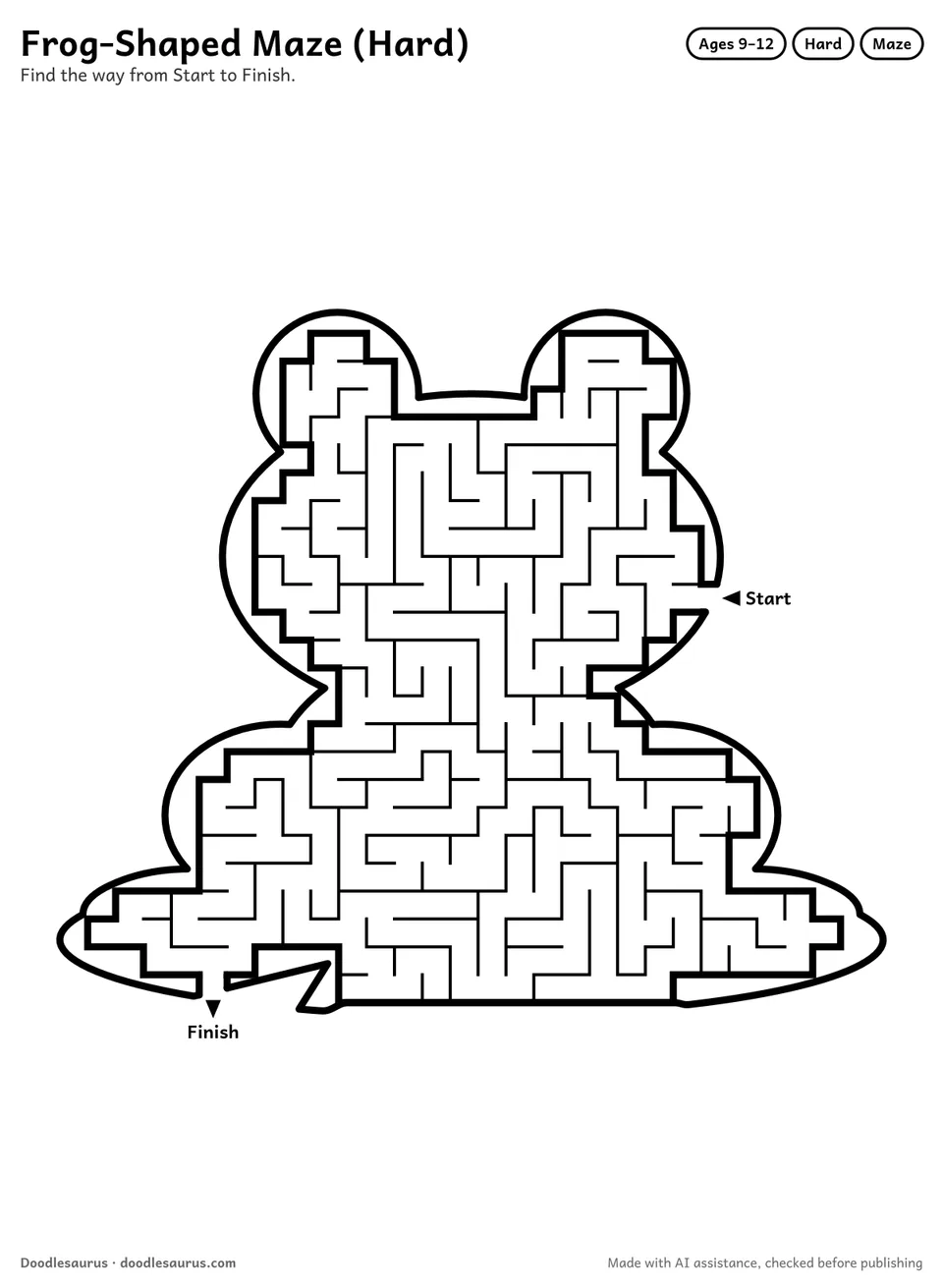
A frog on a lily pad
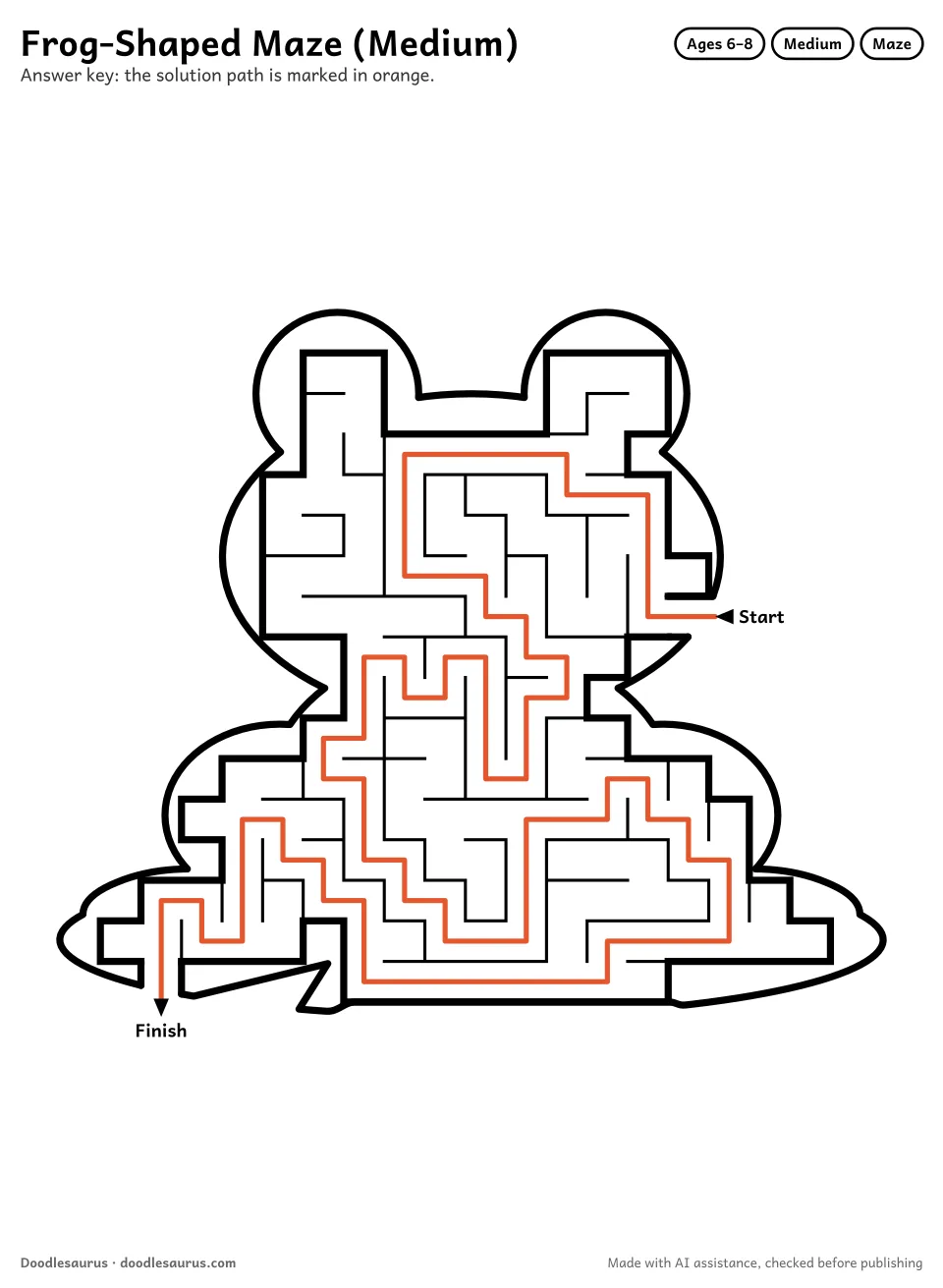
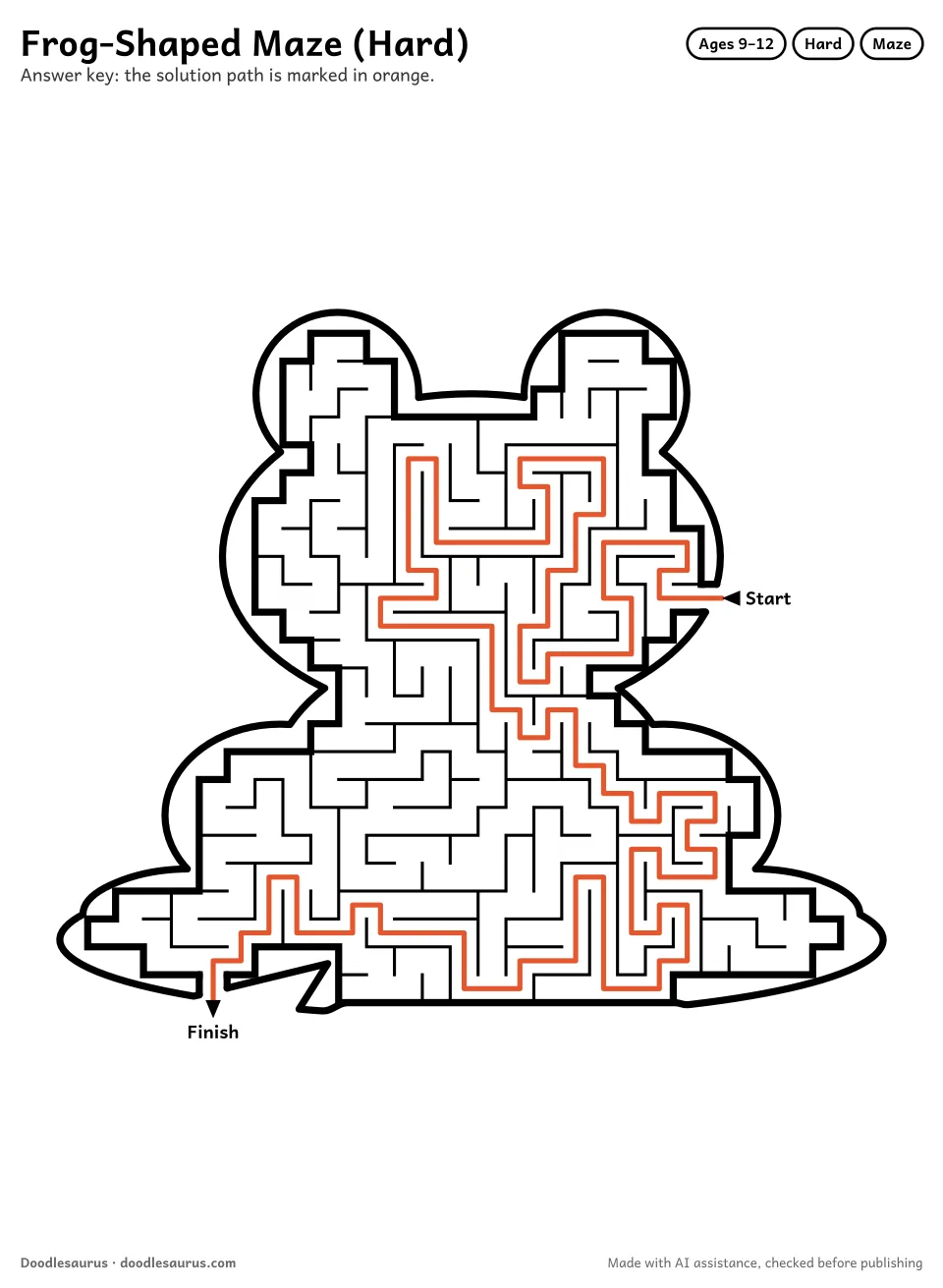
Two round eye bumps form the top of this frog maze. The wide head and bulging back legs make up the middle, and an oval lily pad stretches across the bottom. The walls stay inside that smooth outline, stepping along its curves in small squares. On both levels Start is on the right side of the head and Finish is below the left part of the pad, so a child always crosses the frog from right to left and downward. A short channel joins each arrow to the maze through a gap, and page two of the PDF shows the solution in orange.
Two levels
The medium frog is for ages 6 to 8. Its 160 cells are 8 mm wide. The 83-cell route climbs to the top of the head and winds down through the middle of the body. Then it swings out toward the right back leg, runs left along the bottom into the left back leg and leaves below the left part of the lily pad.
The hard frog is for ages 9 to 12. It packs 362 cells of 5.5 mm into the same shape, with paths that reach into both eye bumps and out to the edges of the lily pad. Many more side passages branch off. The 127-cell route starts a little higher on the head and winds through the upper head, then runs down the middle of the body into the right back leg. It works left along the bottom and leaves a little farther right than on the medium frog. At 100 percent the A4 or US Letter PDF keeps those 5.5 mm paths wide enough for a pencil.
Pond topics
It is easy to take on a trip or to a waiting room, and teachers can use it as a quiet morning task during a pond topic.
Skills practiced & tips
- Find both arrows before starting; on both frogs Start is on the right side of the head and Finish is below the left part of the lily pad.
- Let your child run a finger along the path first and use the pencil second.
- On the hard frog, try working backward from Finish when the route gets stuck.
- Switch to a fresh color for each new try so earlier lines do not get confusing.
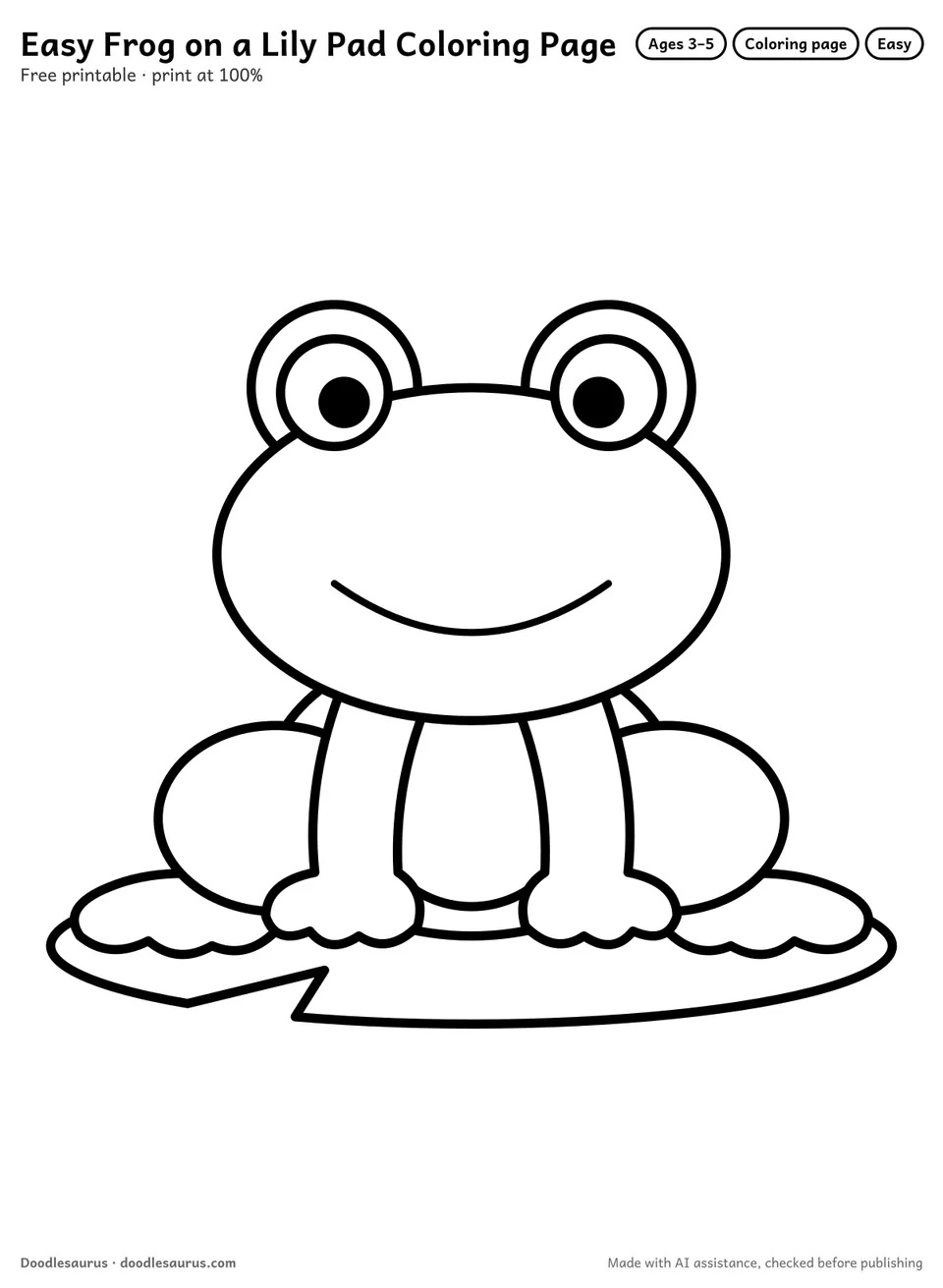
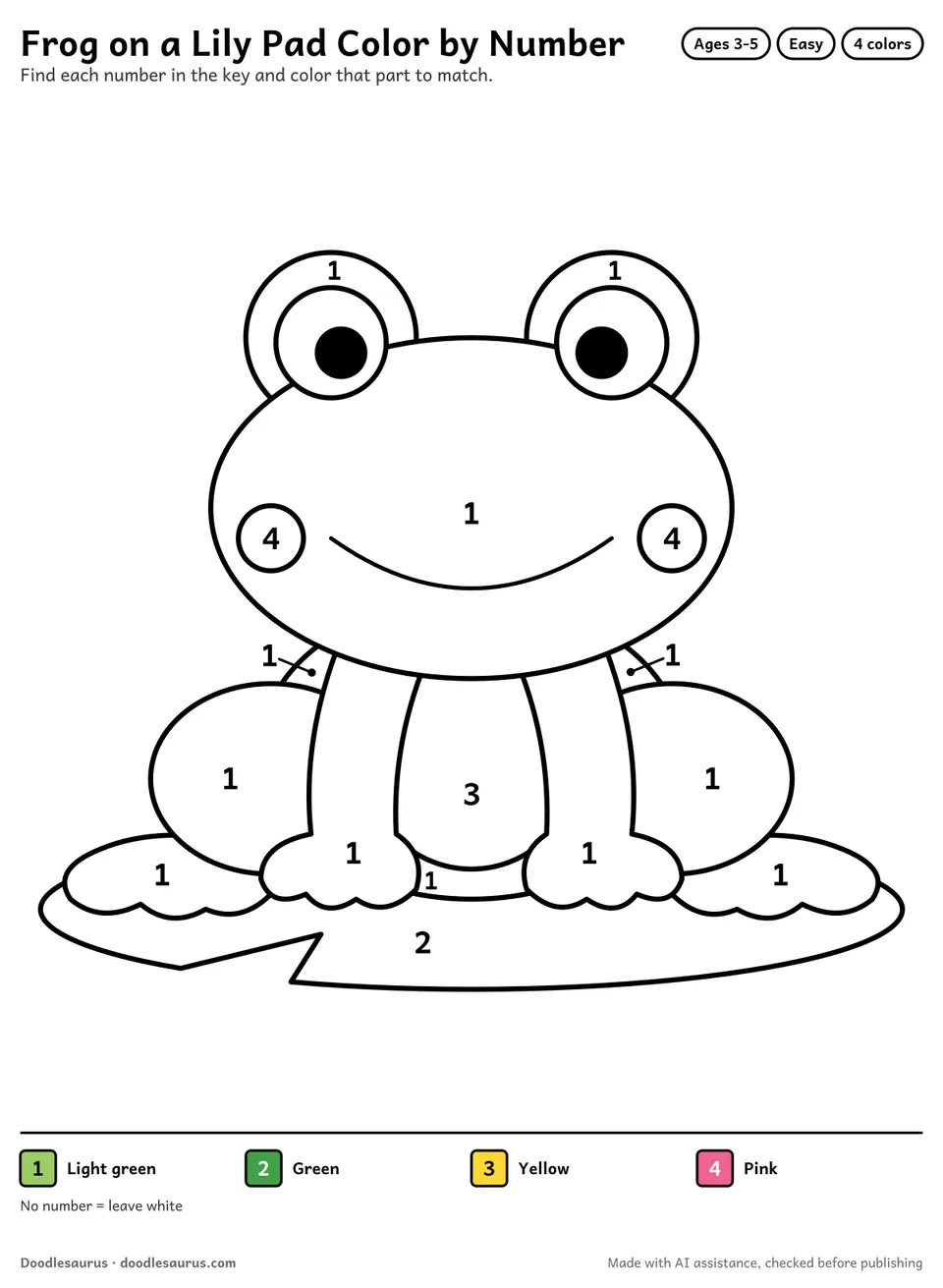
- When the maze is solved, color the frog green and the lily pad a different shade.
Frog fun facts
- A tadpole slowly grows legs and absorbs its tail as it turns into a young frog.
- Frogs swim by kicking with their long back legs, and many have webbed back feet that push against the water.
- Frogs live on every continent except Antarctica.
Classroom ideas
- Grade 2: students solve the medium frog and then explain their route to a partner using left, right, up and down.
- Grades 4 to 6: compare the two answer keys and work out the difference between the route lengths of 83 and 127 cells.
More frog activities
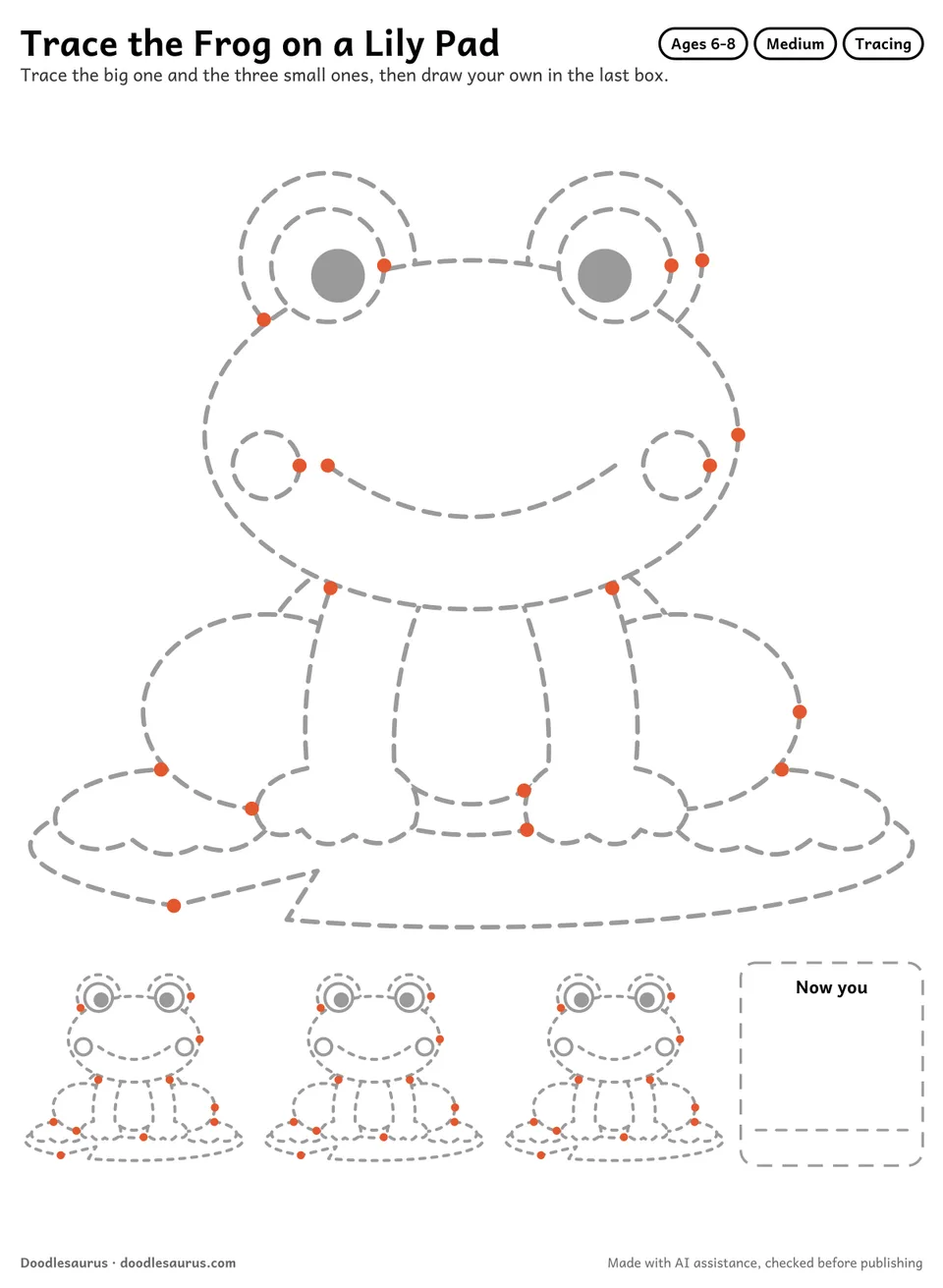
More mazes
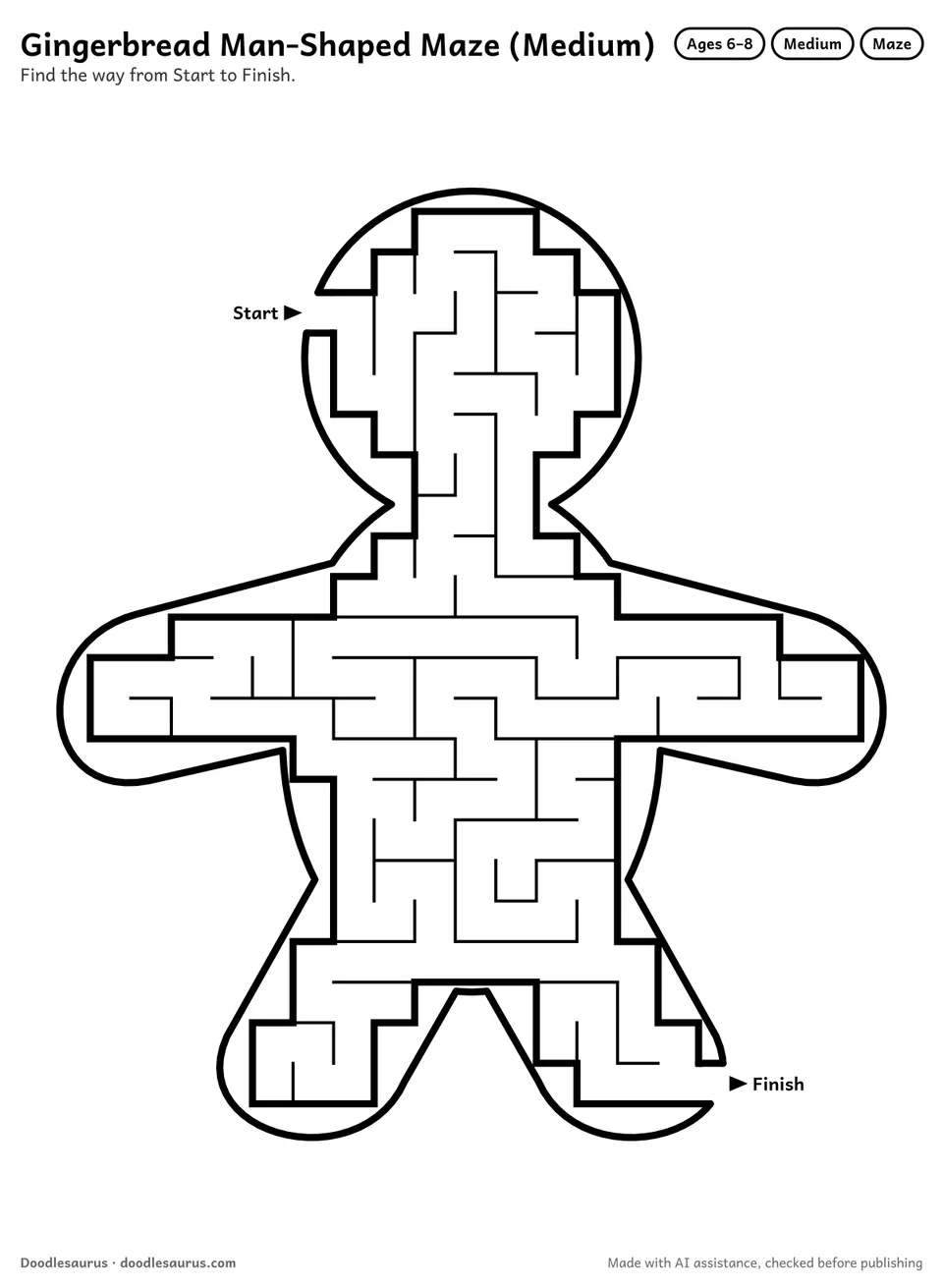
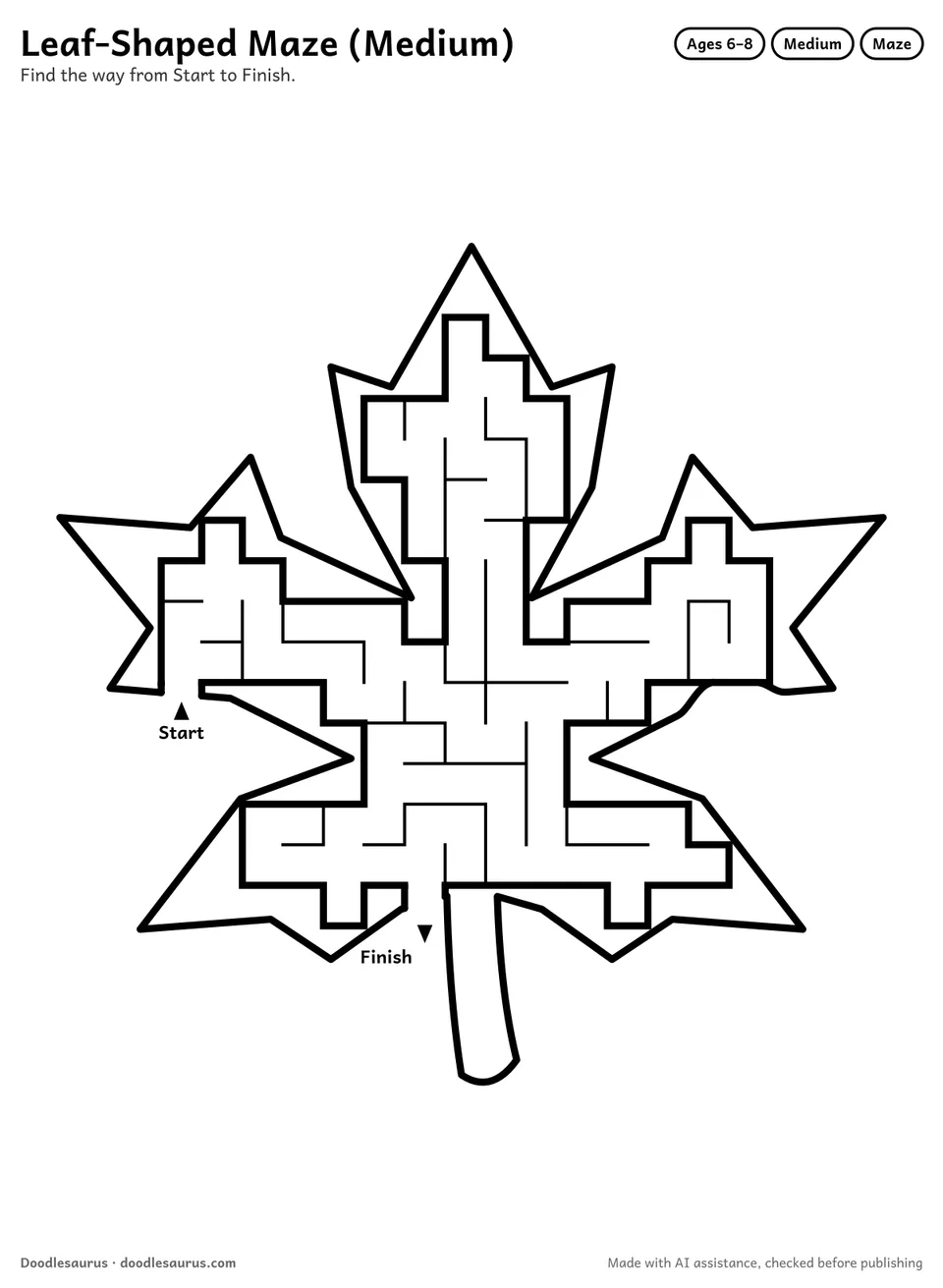
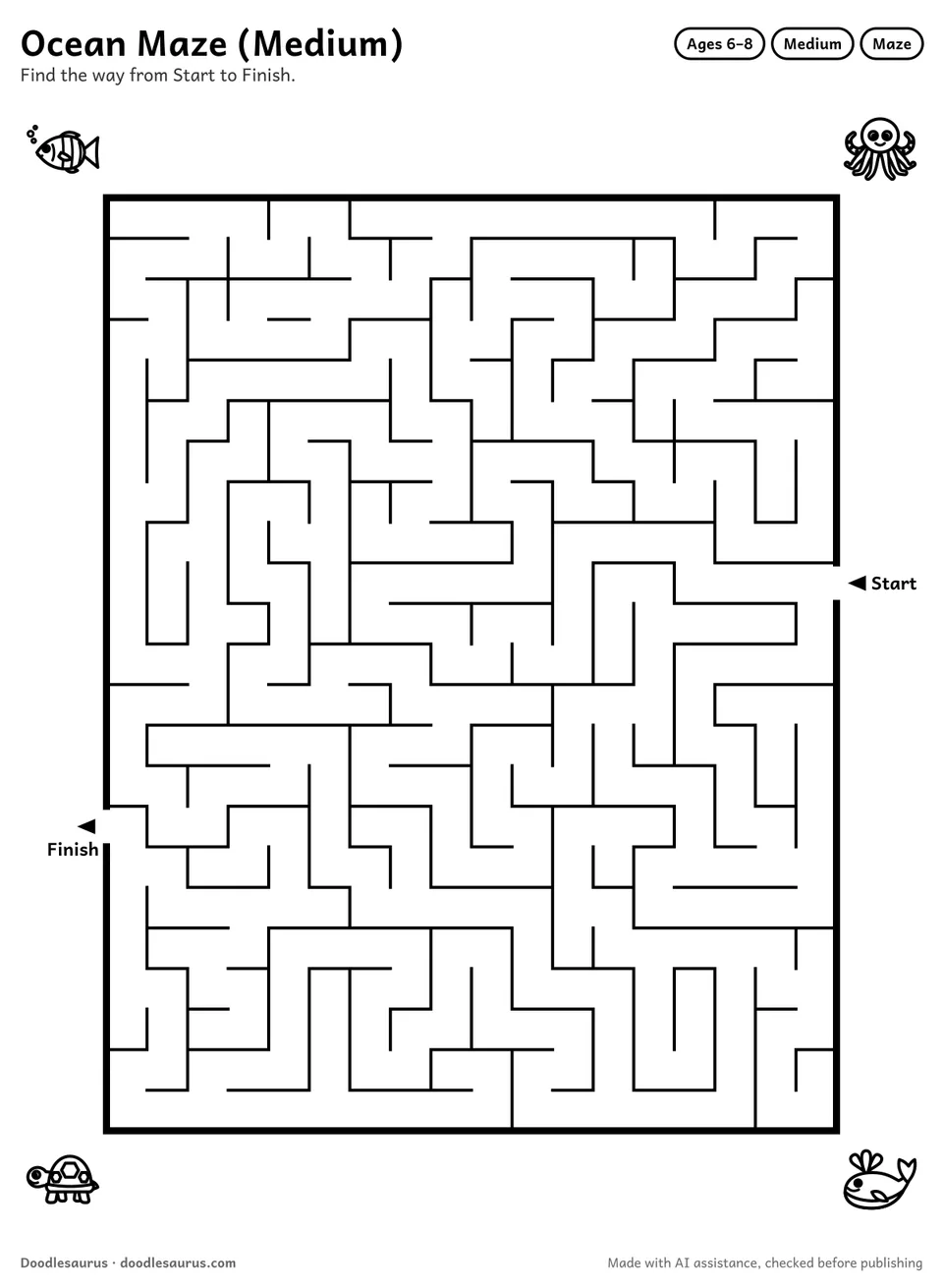
Frequently asked questions
Do the back legs hold part of the route?
Yes, on both levels. The medium route swings out toward the right back leg and then runs left along the bottom into the left back leg. The hard route runs down the middle of the body into the right back leg and works left along the bottom.
Will a six-year-old cope with the medium frog?
Yes. The medium frog is made for ages 6 to 8, with 160 cells of 8 mm and an 83-cell route. The hard frog, with 362 cells of 5.5 mm and a 127-cell route, is meant for ages 9 to 12.
Does a child cross the frog the same way on both levels?
Yes. On both frogs Start is outside the right side of the head, below the right eye, and Finish is below the left part of the lily pad, so the line always runs from right to left and downward. On the hard frog Start sits a little higher and Finish a little further right than on the medium frog.
What is different about the hard frog?
Its paths are 5.5 mm wide instead of 8 mm, and they reach into both eye bumps and out to the edges of the lily pad, with many more side passages to try.
What goes on the frog once the maze is solved?
Green for the frog and a different shade for the lily pad. Before that, the correct route is drawn in orange on page two of each PDF, so a finished maze can be checked in a few seconds.
About this printable
- Made with AI assistance (vector drawing authored by a language model) and checked by automated tests and an AI reviewer.
- Checked by automated tests and an AI reviewer on 22 Oct 2026.
- Free for personal and single-classroom use. See the license. Read the license · How these are made · Report a problem.
- Vector PDF, 2 pages, 186×254 mm art box — prints edge-safe on A4 and US Letter.
New printables, twice a month
Our newsletter starts soon, with new sheets twice a month and a free 10-page starter pack for every new reader.