
Duck Coloring Pages
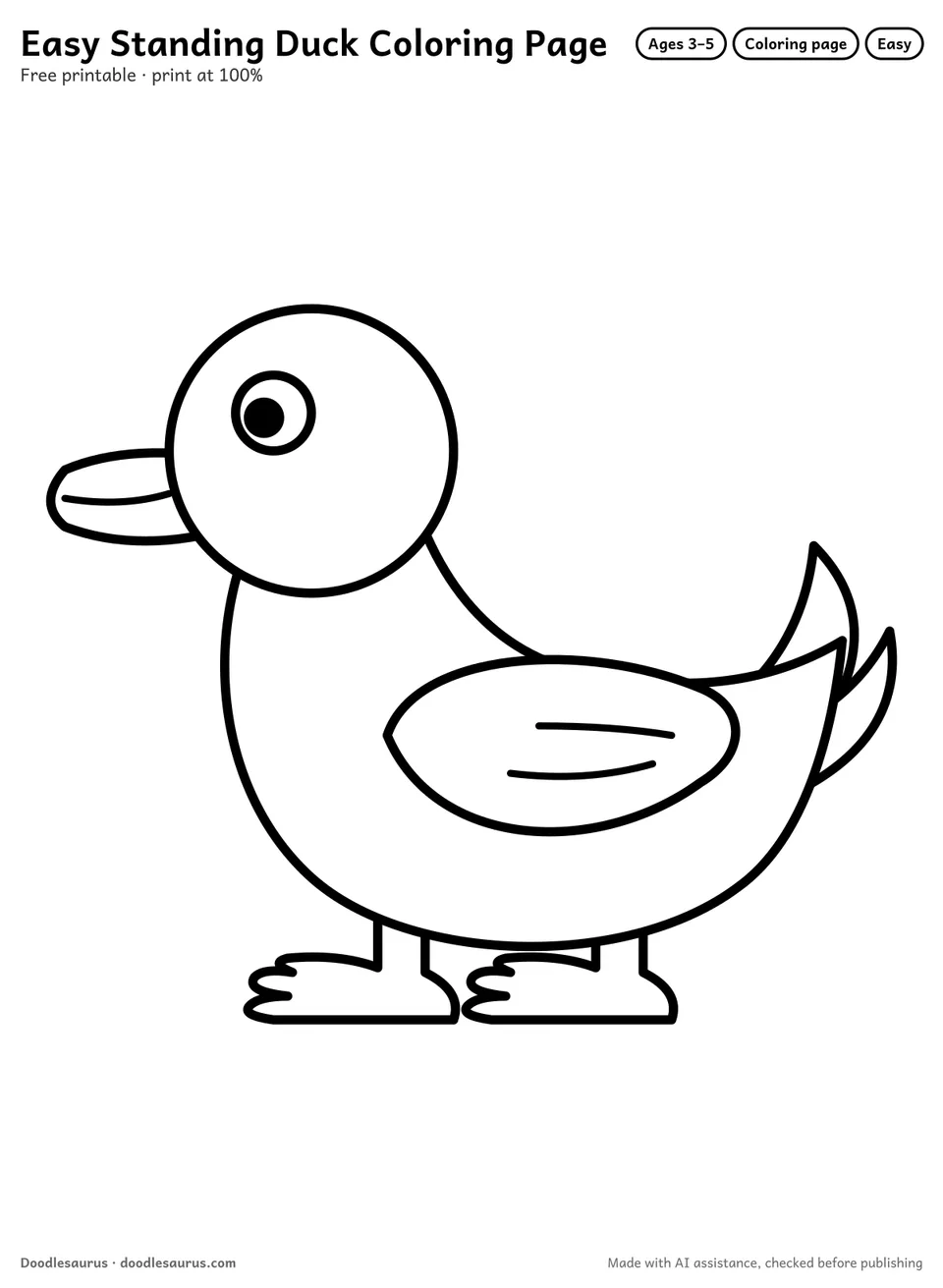
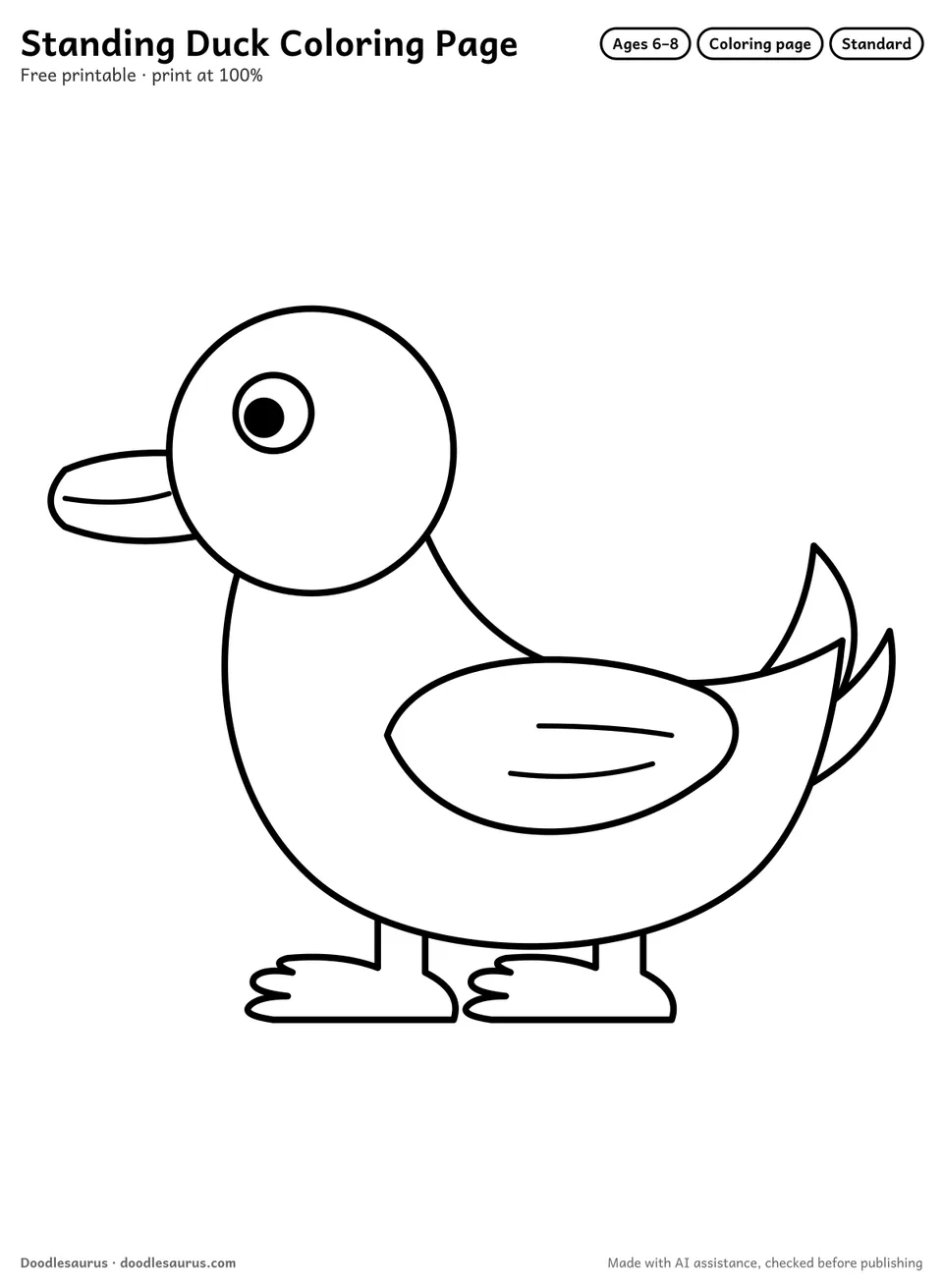
A duck coloring sheet with a flat bill, an oval wing and webbed feet, nine spaces in all. Bold lines for ages 3 to 5, finer for 6 to 8. A4 or Letter.
Printable duck coloring sheets
Filter by age or difficulty
Nothing matches that filter yet.
This duck coloring sheet has one duck standing side-on and facing left, with a big round head, a single eye and a long flat bill that has a short line where it opens. A curved neck drops into a plump body, an oval wing with two feather strokes crosses the middle, and two pointed tail feathers flick up at the back. Two short legs end in wide webbed feet. With only nine closed spaces, a young child can finish the bird in one sitting.
A clear edge to stop at
The drawing does not change between levels. On the easy sheet, for ages 3 to 5, heavy outlines give a crayon a clear edge to stop at. Thinner black lines on the standard sheet suit pencils and felt tips at ages 6 to 8.
Ponds, reeds and ducklings
The paper around the duck leaves room for reeds, a pond line under the feet or a few ducklings following in a row. The outline keeps an even margin on every side when the A4 or US Letter PDF goes to the printer at 100 percent, not fit to page. The duck suits a farm or pond topic in preschool. In the early grades it becomes a compare-with-a-real-mallard task.
What to color
- A large round head with one eye and a dark pupil
- A long flat bill pointing left, with a line where it opens
- A plump body joined to the head by a curved neck
- An oval wing marked with two feather strokes
- Two pointed tail feathers flicking up at the back
- Two short legs ending in wide webbed feet
Tips
- Start with the bill and feet in orange so the duck has a face and a footing early on.
- Pick a lighter shade for the body and a darker one for the wing so the two shapes stand apart.
- Turn it into a mallard with a green head, a brown chest and a gray body.
- Draw a wavy pond line under the feet before coloring the background blue.
- Give younger children chunky crayons for the bold sheet and older ones sharp pencils for the standard sheet.
Duck fun facts
- Ducks keep their feathers waterproof by spreading oil from a gland near the base of the tail.
- In mallards, the loud quack comes from the female; the male makes a quieter, rasping call.
- Ducklings can swim within a day of hatching and usually follow their mother in a line.
Classroom ideas
- Preschool (ages 3 to 5): color the bold duck during a farm or pond topic and count the two feet, two tail feathers and one eye together.
- Kindergarten: label bill, wing, tail and webbed feet with word cards glued around the picture.
- Grade 2: compare the duck with a photo of a real mallard and color the sheet to match, then write two sentences about what changed.
More duck activities
Related coloring pages
Frequently asked questions
Is the duck short enough for one sitting?
With only nine closed spaces, a young child can finish it in one sitting. The easy sheet, for ages 3 to 5, has heavy outlines that give a crayon a clear edge to stop at, while the standard sheet, for ages 6 to 8, uses a thinner black line that suits colored pencils.
Can it be colored as a mallard?
Yes. A mallard needs a green head, a brown chest and a gray body, with the bill and feet in orange. For a classic duckling, use yellow with an orange bill and feet instead.
Which other duck activities are there?
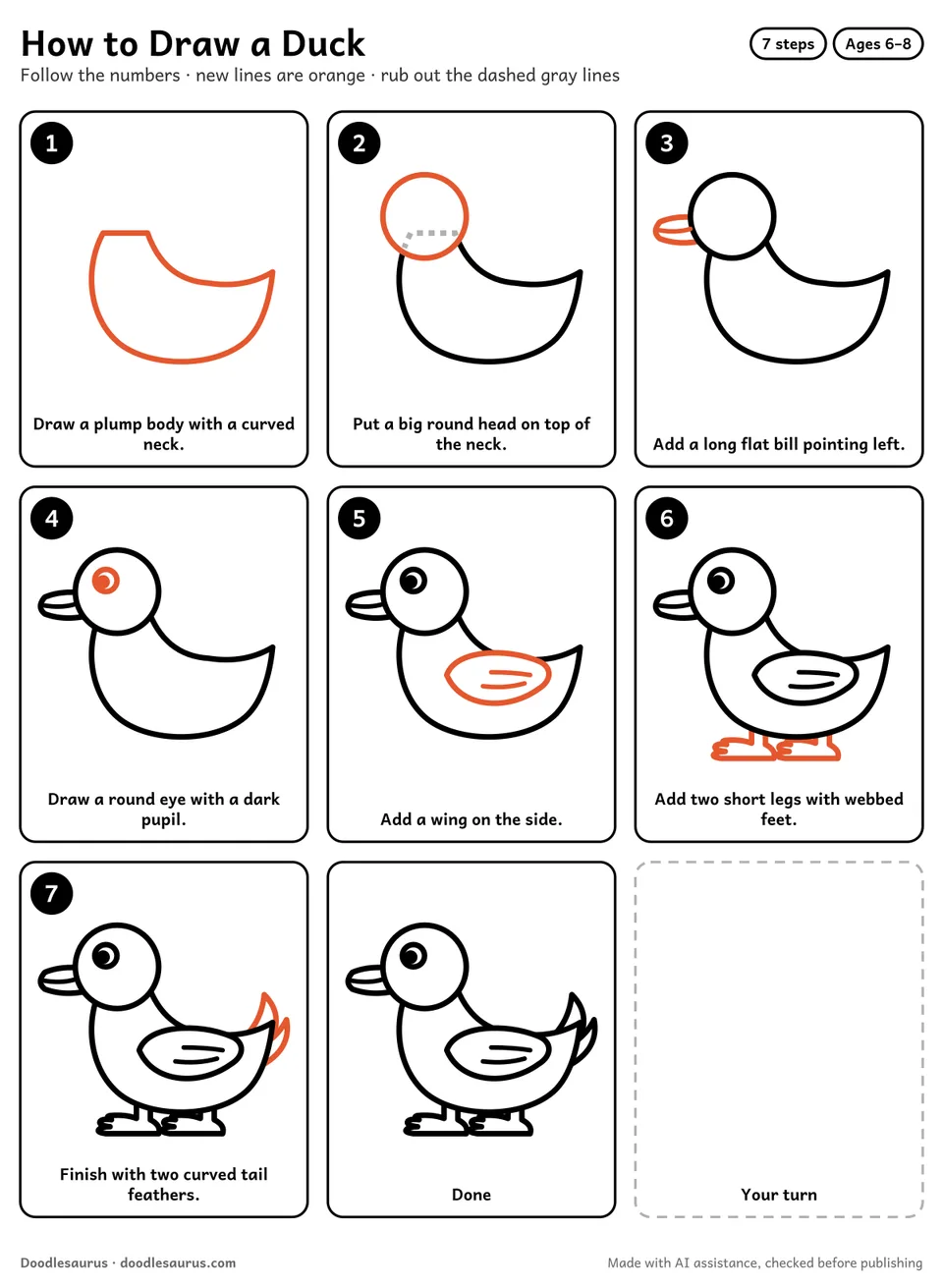
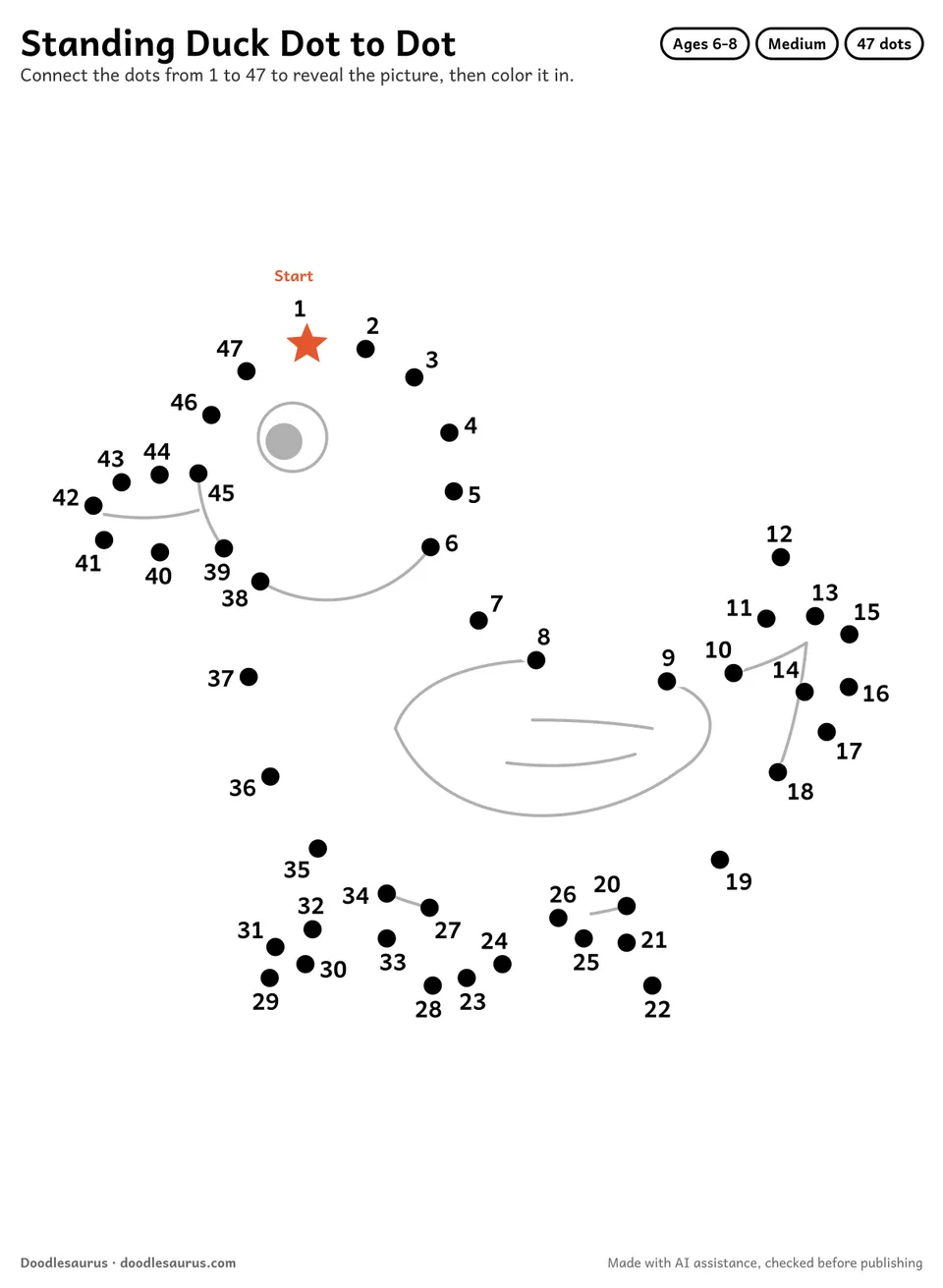
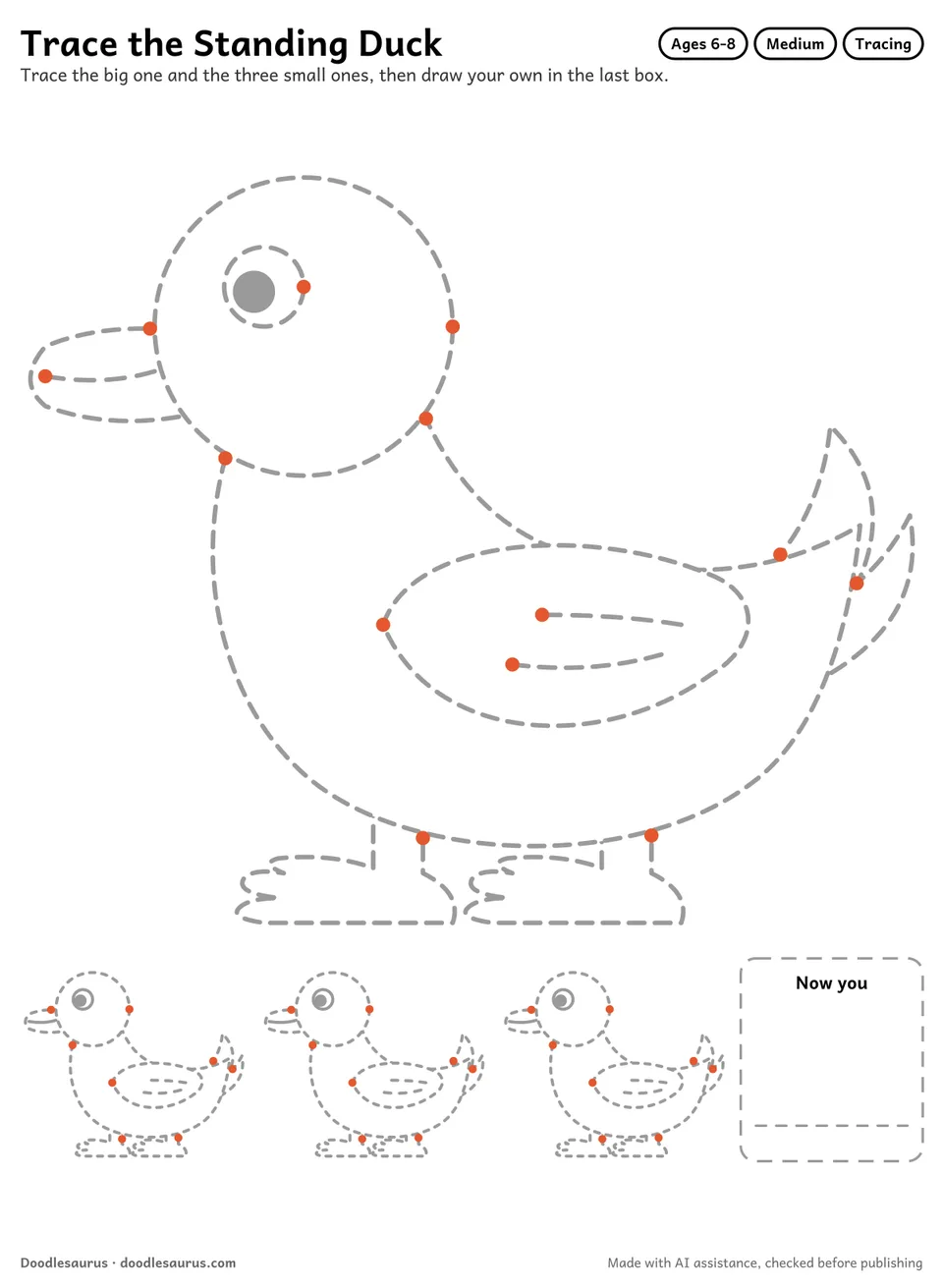
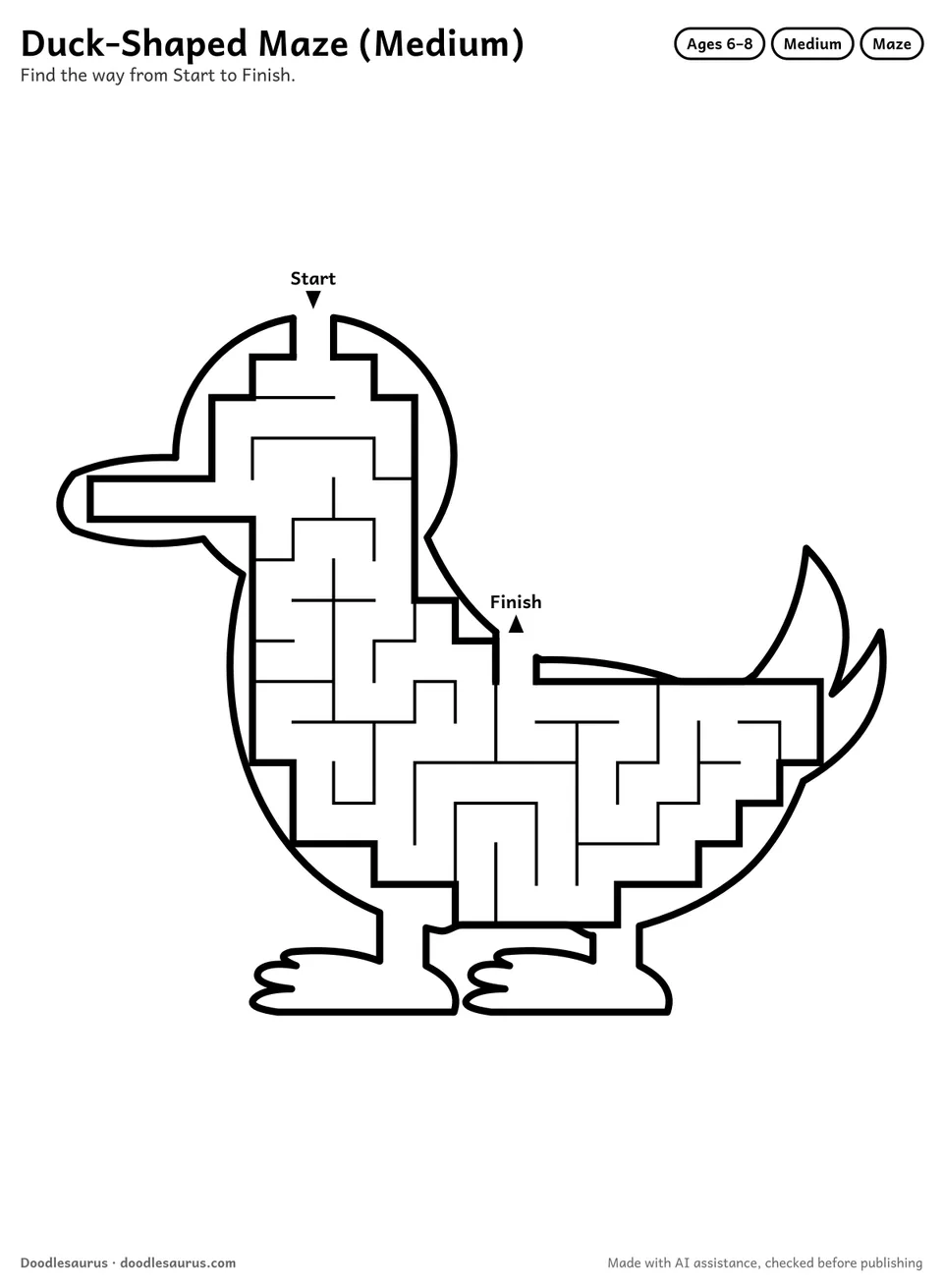
The same standing duck appears as a 7-step how to draw sheet, a dot to dot with 29, 47 or 57 dots, a two-level tracing worksheet and a duck-shaped maze in two sizes.
New printables, twice a month
Our newsletter starts soon, with new sheets twice a month and a free 10-page starter pack for every new reader.
AI-assisted vector art, checked before publishing. About the AI · License