
Whale Dot to Dot with a Spout, 27 to 60 Dots
Whale connect the dots starting at the top of a tall spout: 27, 41 or 60 dots around the back, fluke and belly, flipper in gray. US Letter and A4 PDFs.
Choose a level
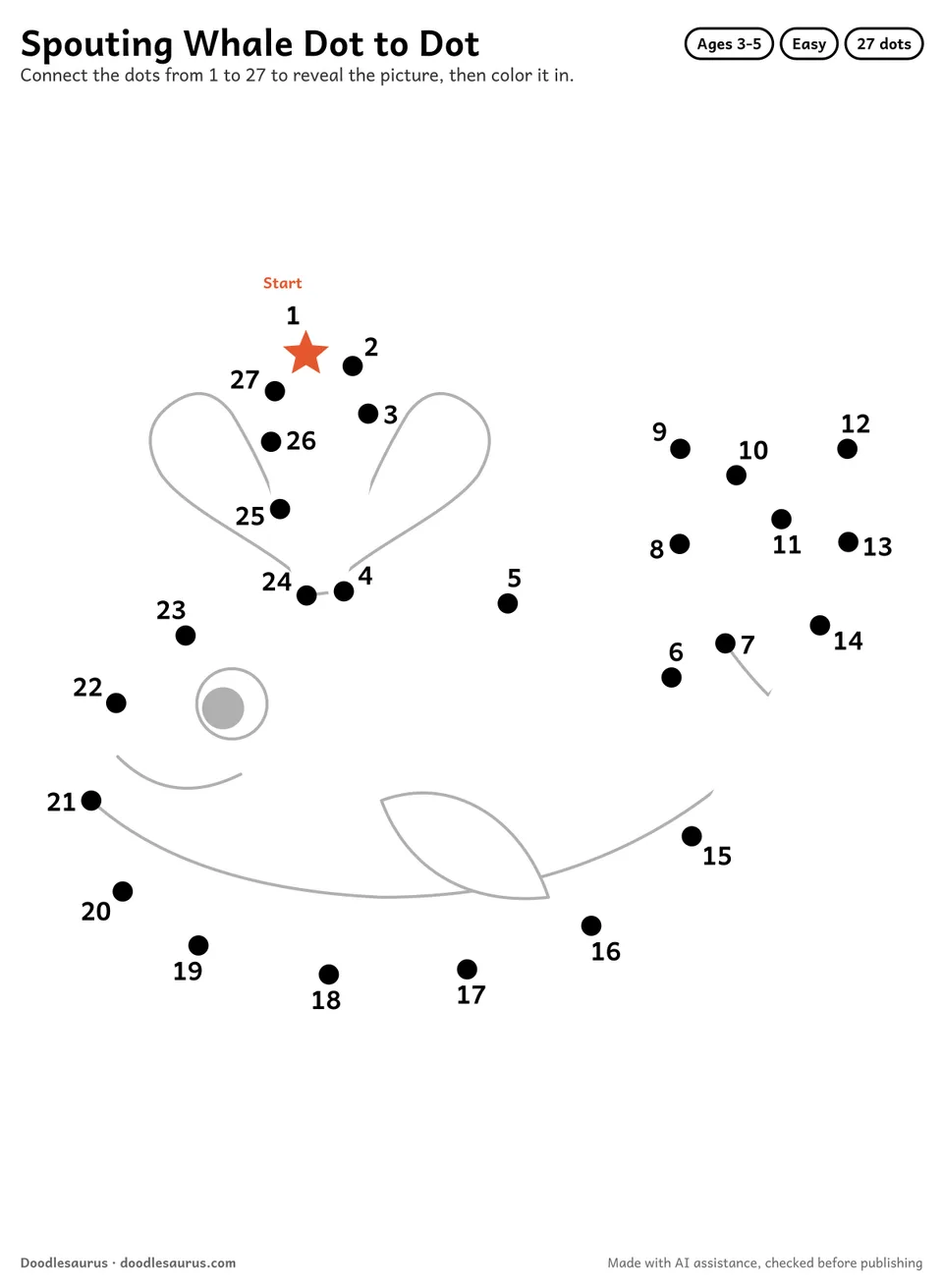
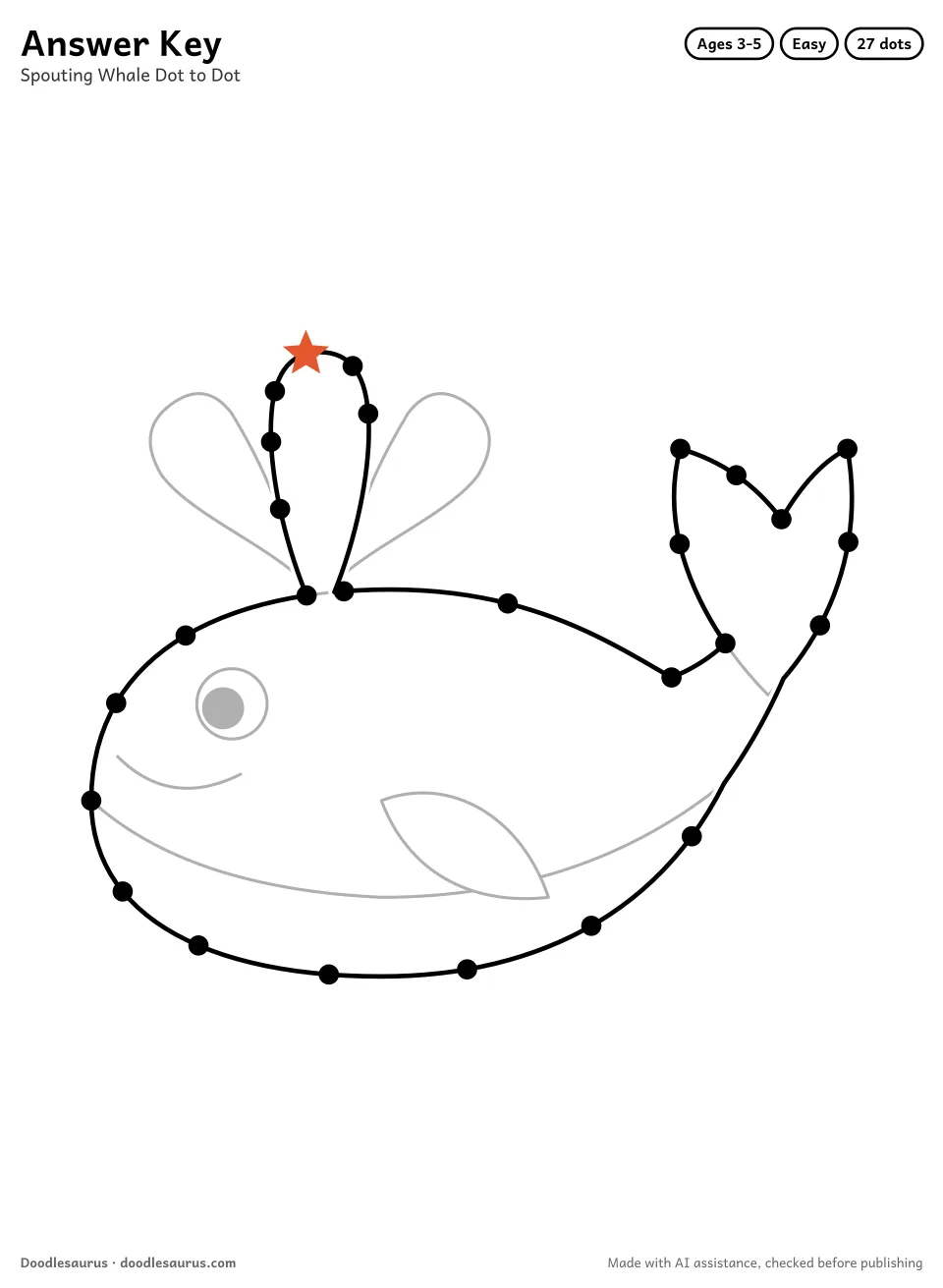
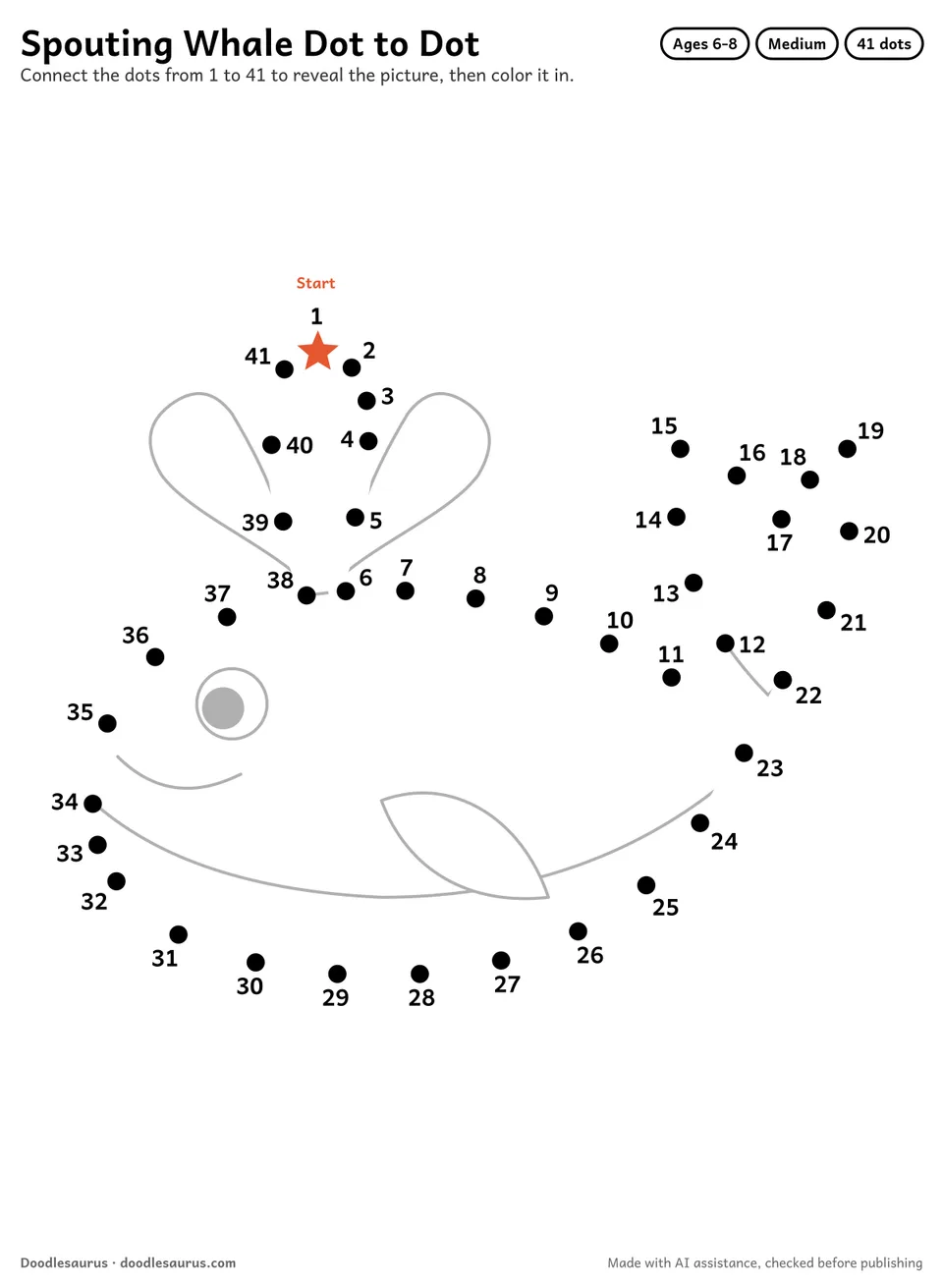
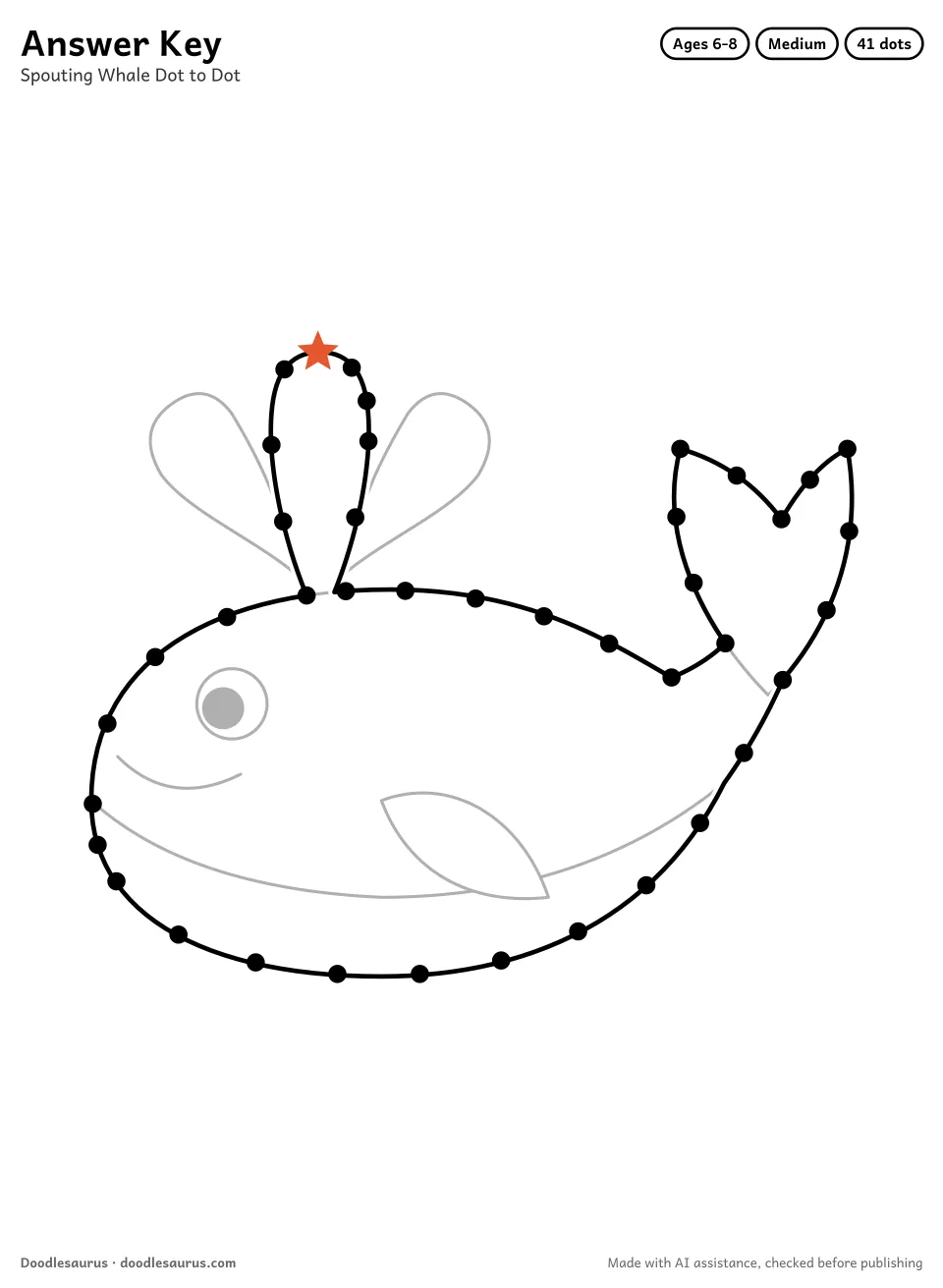
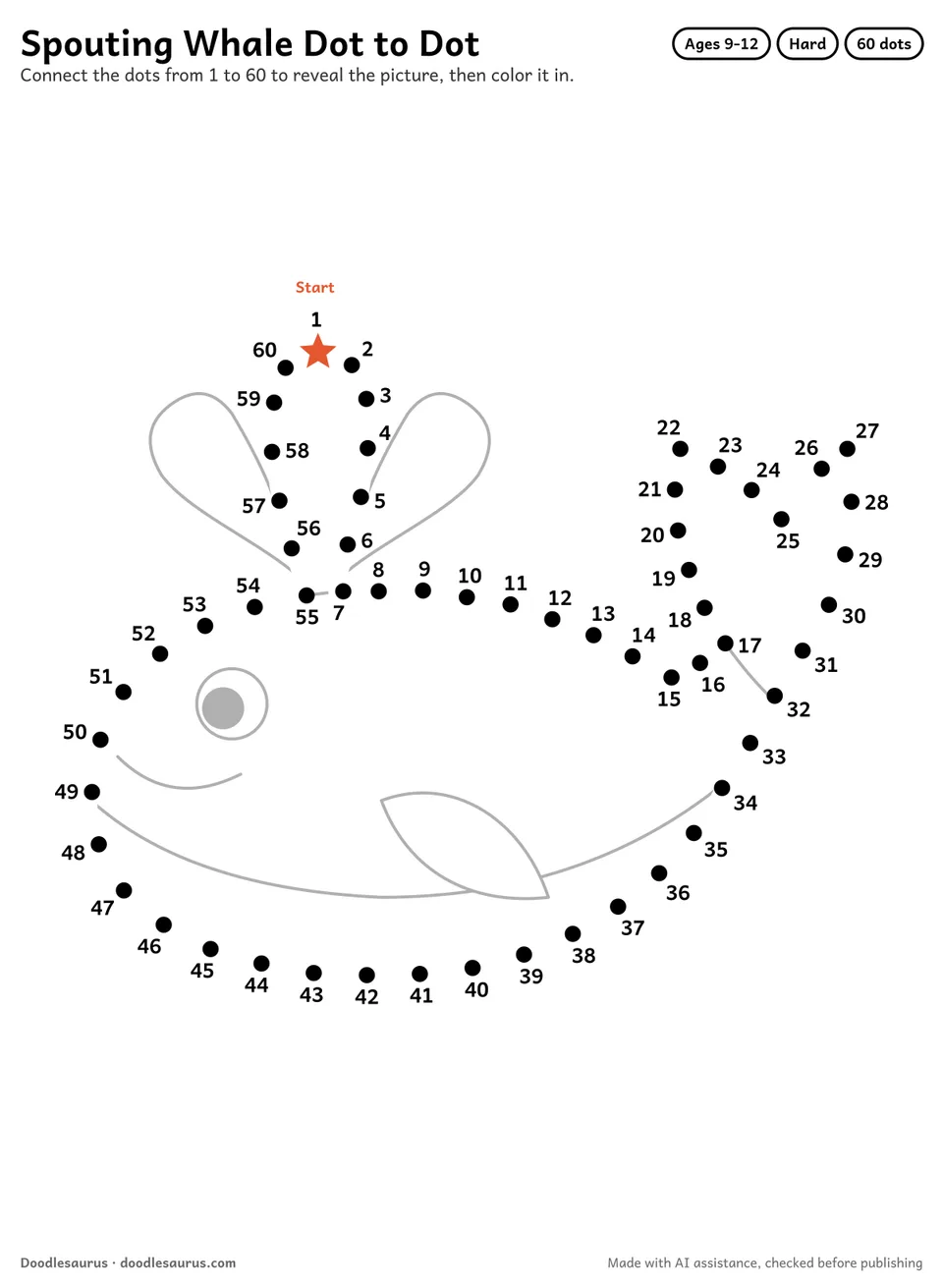
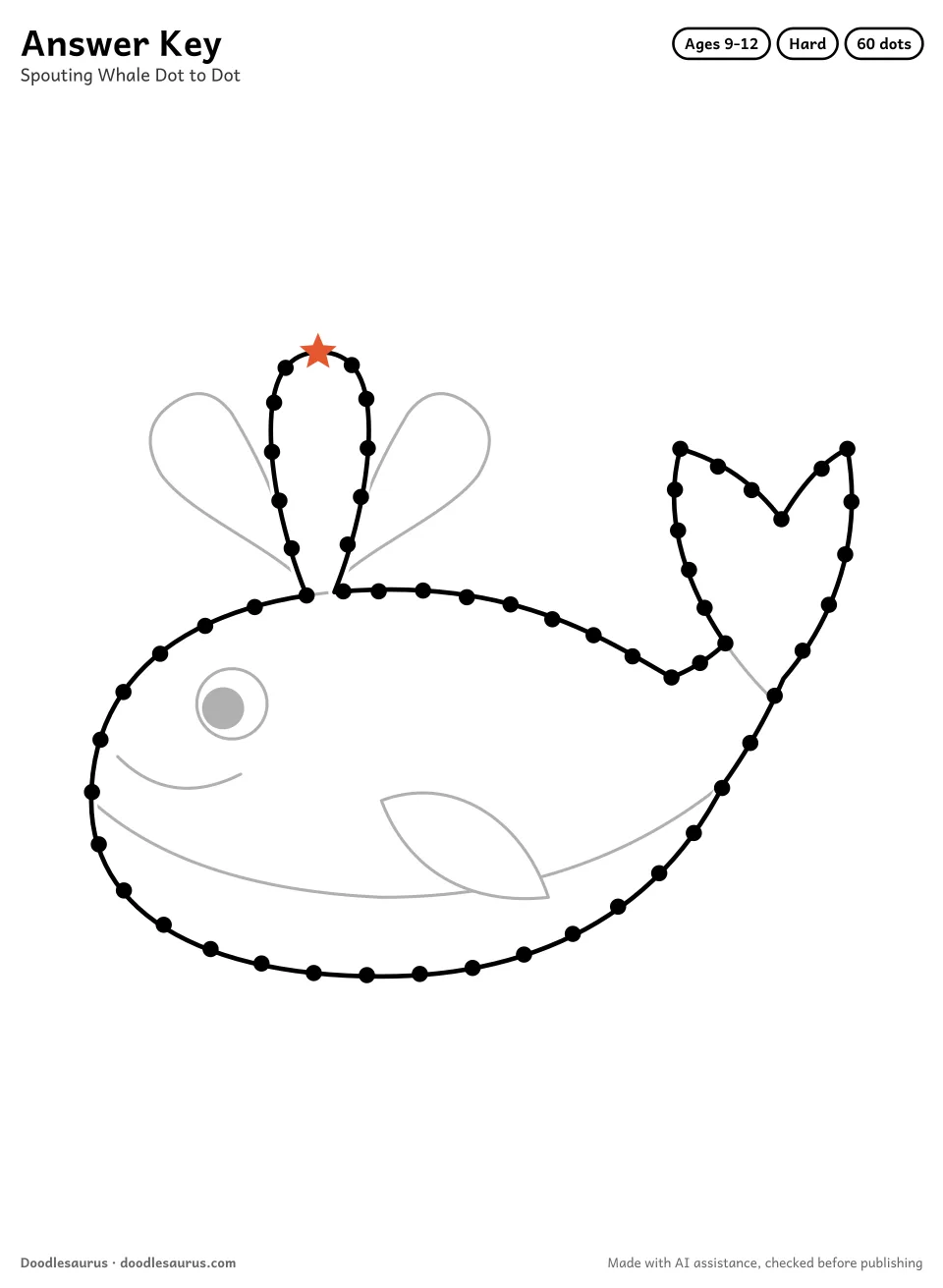
Instead of starting on the whale itself, this dot to dot begins at the top of a single tall water drop rising from the spout. The whale grows from there. It has a rounded head facing left, a two-pointed tail fluke and a smooth belly.
Spout, back, fluke and belly
Dot 1, the orange star labeled Start, sits at the very top of the drop. The numbers come down its right side and onto the curved back. Near the tail they climb into the fluke, zigzag across its two points and slide down the far edge, changing direction twice. Go slowly through the tail. After that they sweep along the round belly, come up around the front of the head and finish by climbing the left side of the drop to meet dot 1 again.
Gray spray and three counts
The eye, the smile, two curling side drops of spray, a flipper, the belly line and the base of the tail are printed in gray on every page, so the whale shows up early. Small hands start with 27 dots on the easy page for ages 3 to 5. The medium page has 41 for ages 6 to 8. The hard page has 60 for ages 9 to 12, with smaller dots that follow the curves of the back, belly and fluke closely. Each answer page doubles as a simple whale to color. On a page shrunk to fit, the gaps between dots stop being even, so the A4 or Letter file should print at 100 percent.
Skills practiced & tips
- Find dot 1 and the orange star together before the pencil touches the page.
- Draw slowly through the tail, where the numbers change direction twice.
- Let younger children say each number out loud before joining it.
- Once the outline is closed, color the gray spray drops light blue and the whale a darker blue.
- Join the dots in pencil first so a wrong turn can be erased.
Whale fun facts
- Whales breathe air, so they must rise to the surface to breathe through a blowhole on top of the head.
- The spout is mostly warm breath that turns to mist in cooler air, not a jet of seawater from inside the whale.
- Sperm whales can dive more than 1,000 meters below the surface to hunt.
Classroom ideas
- Preschool (ages 3 to 5): work through the 27-dot whale in pairs, one child reading the number and the other drawing the line.
- Grade 1: hand out the 41-dot page during a counting unit and ask students to circle every number that ends in 0 or 5.
- Grades 4 and 5: give the 60-dot whale to early finishers, then have them write two whale facts inside the finished outline.
More whale activities
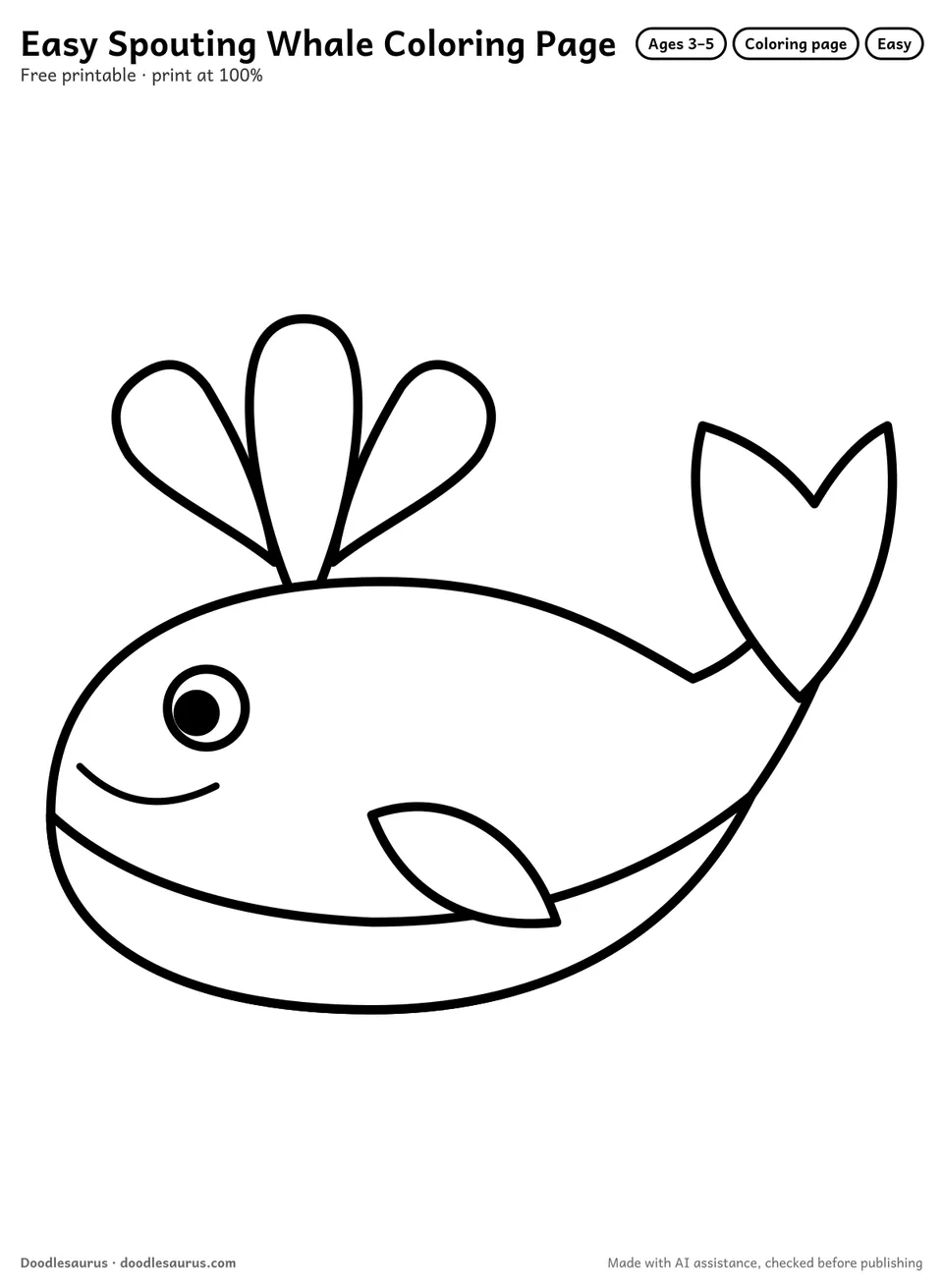
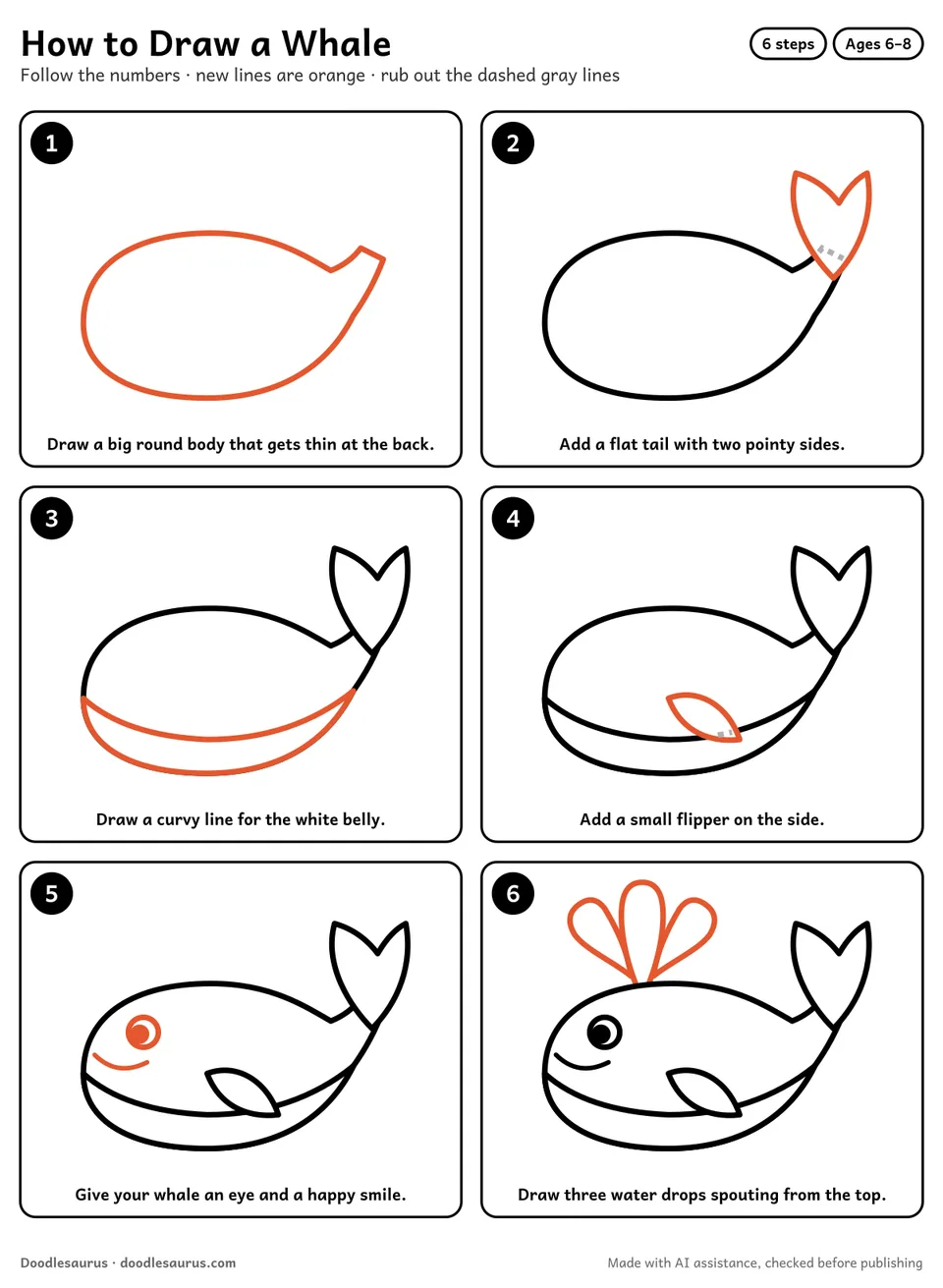
More dot to dot
Frequently asked questions
What do the extra dots on the 60-dot whale follow?
They are smaller and follow the curves of the back, belly and fluke closely. The easy page has 27 dots, the medium page 41 and the hard page 60, and the finished whale looks the same at every level.
Why does the dot to dot show only one water drop?
The numbered outline traces the whale and a single tall drop from its spout. On all three pages the two side drops, the flipper and the belly line are printed in gray.
Is there an answer key?
Yes. Each level has its own answer page with the joined outline, which also works as a simple whale to color.
Where is the tail tricky?
In the fluke. The numbers climb into it, zigzag across its two points and slide down the far edge, changing direction twice, so slow drawing helps there.
About this printable
- Made with AI assistance (vector drawing authored by a language model) and checked by automated tests and an AI reviewer.
- Checked by automated tests and an AI reviewer on 22 Oct 2026.
- Free for personal and single-classroom use. See the license. Read the license · How these are made · Report a problem.
- Vector PDF, 2 pages, 186×254 mm art box — prints edge-safe on A4 and US Letter.
New printables, twice a month
Our newsletter starts soon, with new sheets twice a month and a free 10-page starter pack for every new reader.