
Cat Maze Printables in Three Levels
A printable cat maze in three levels, from 94 wide cells for ages 3 to 5 up to 526 narrow ones for ages 9 to 12, with an orange answer key in each PDF.
Choose a level
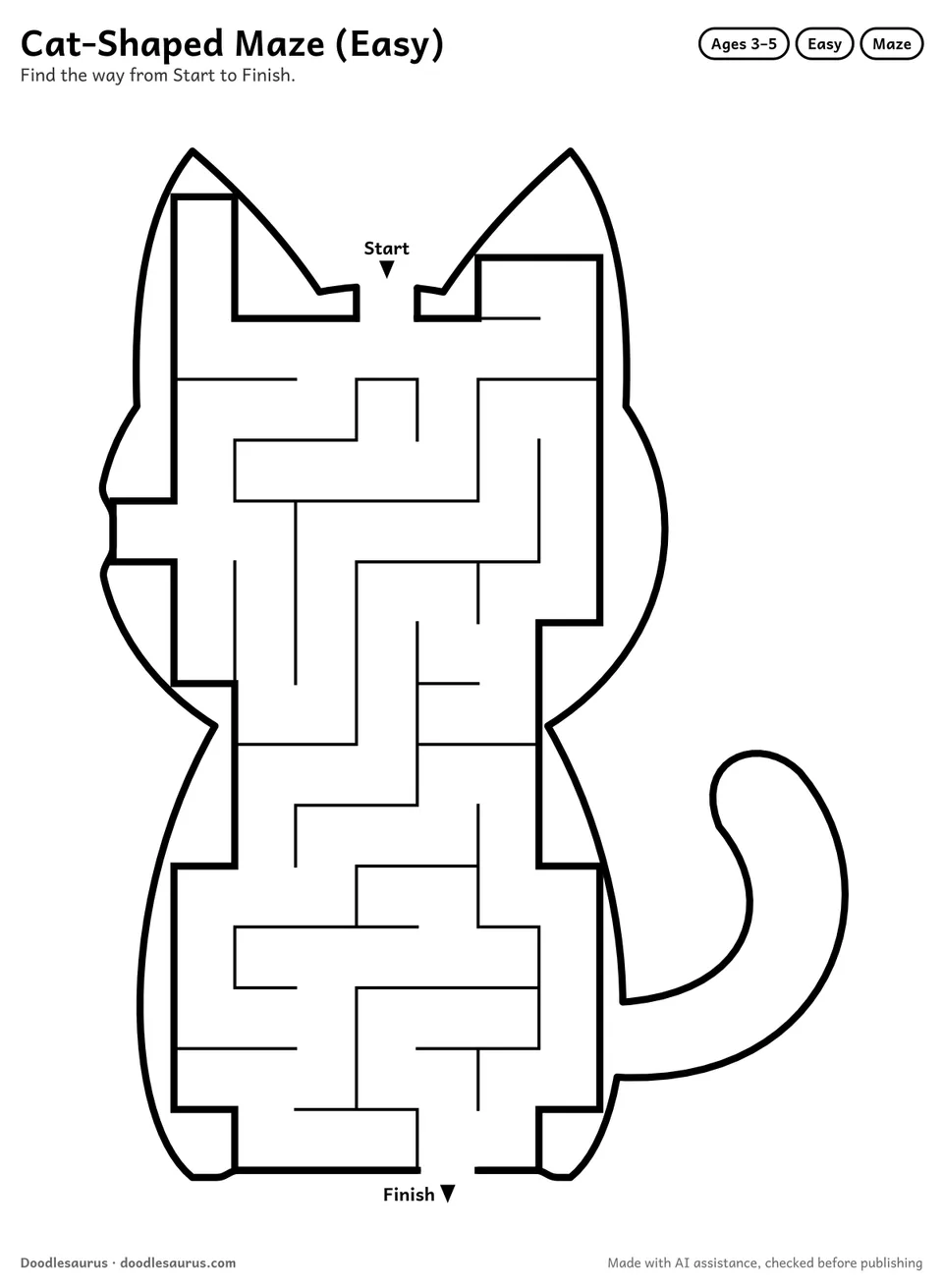
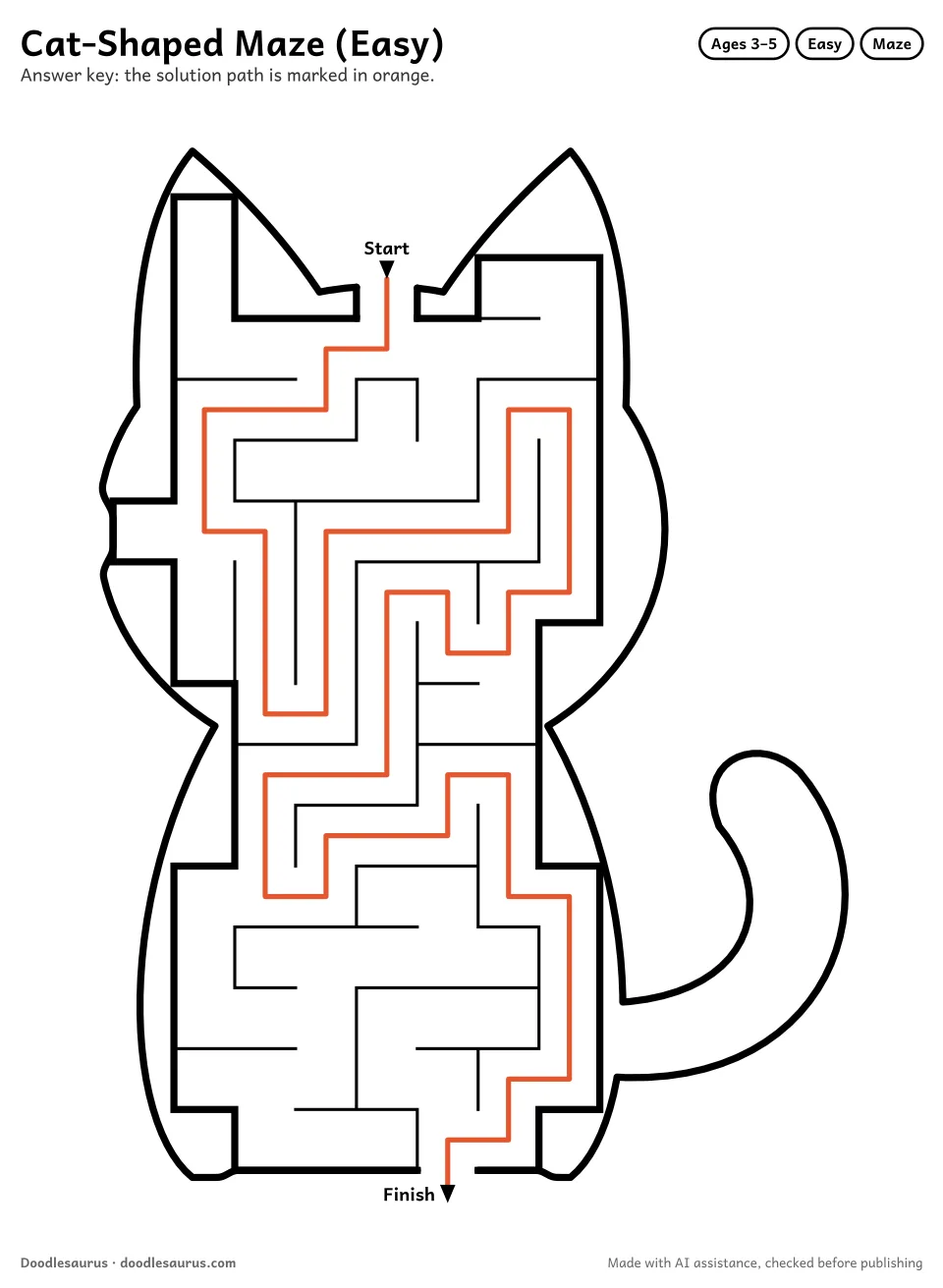
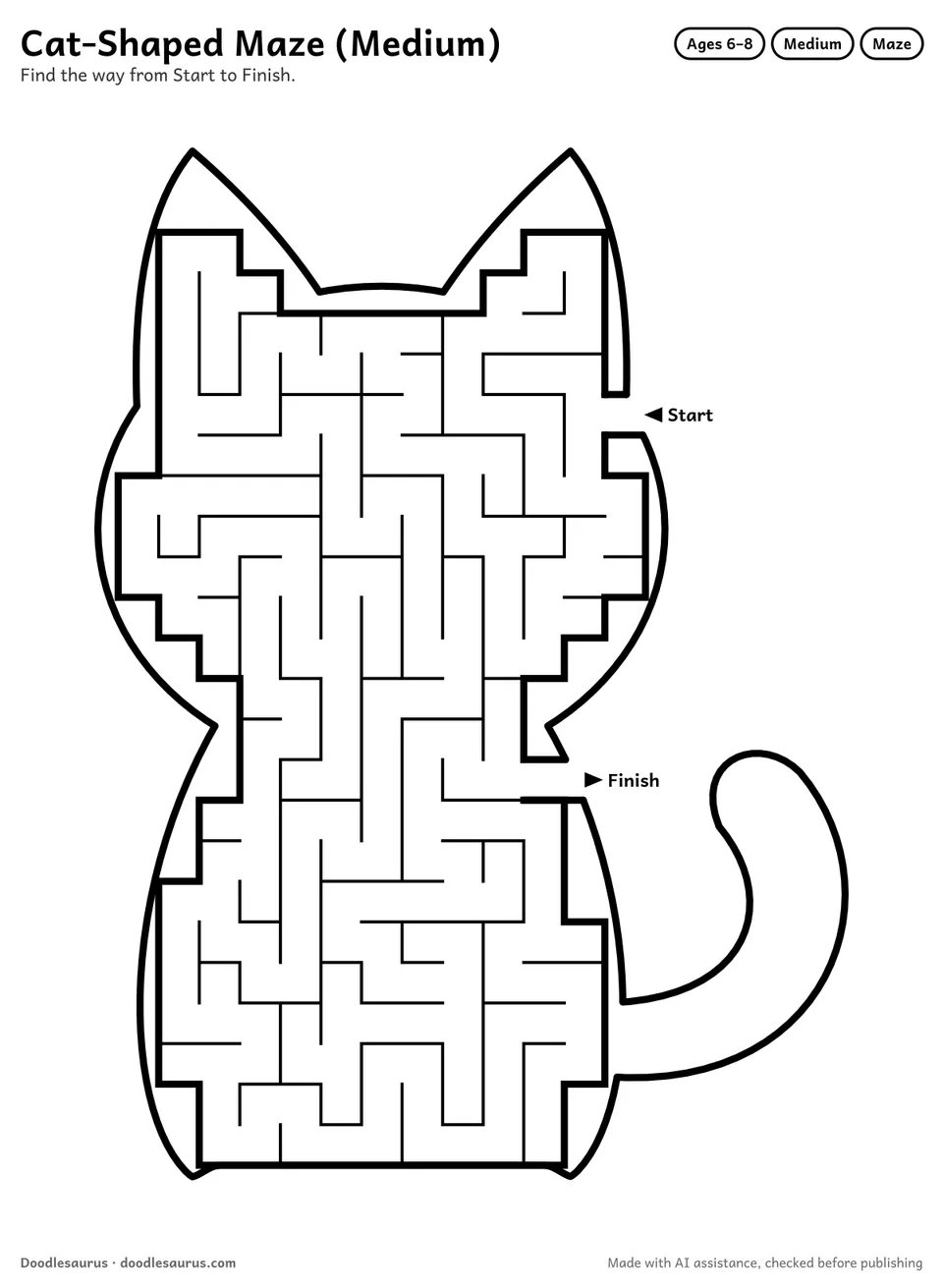
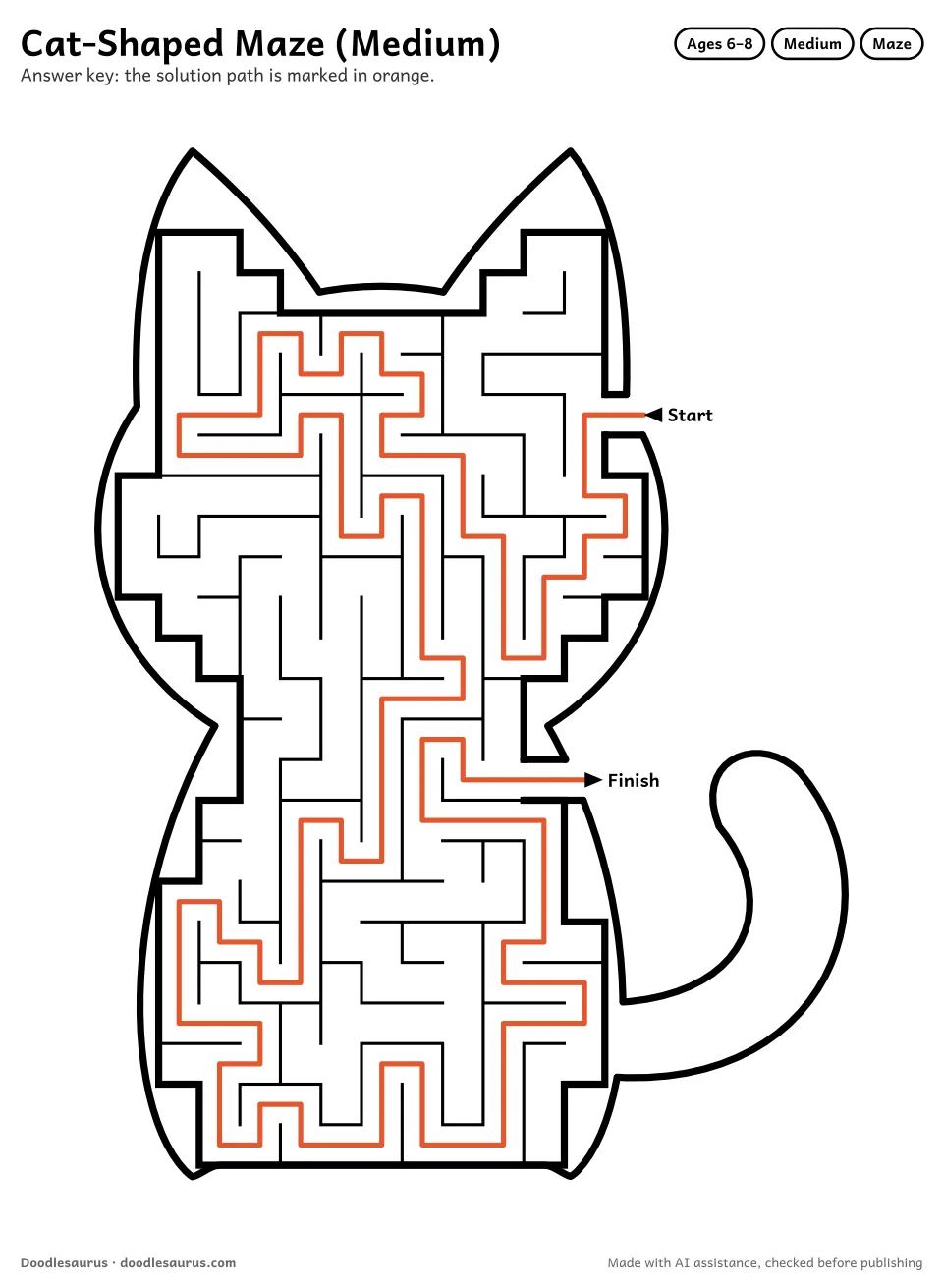
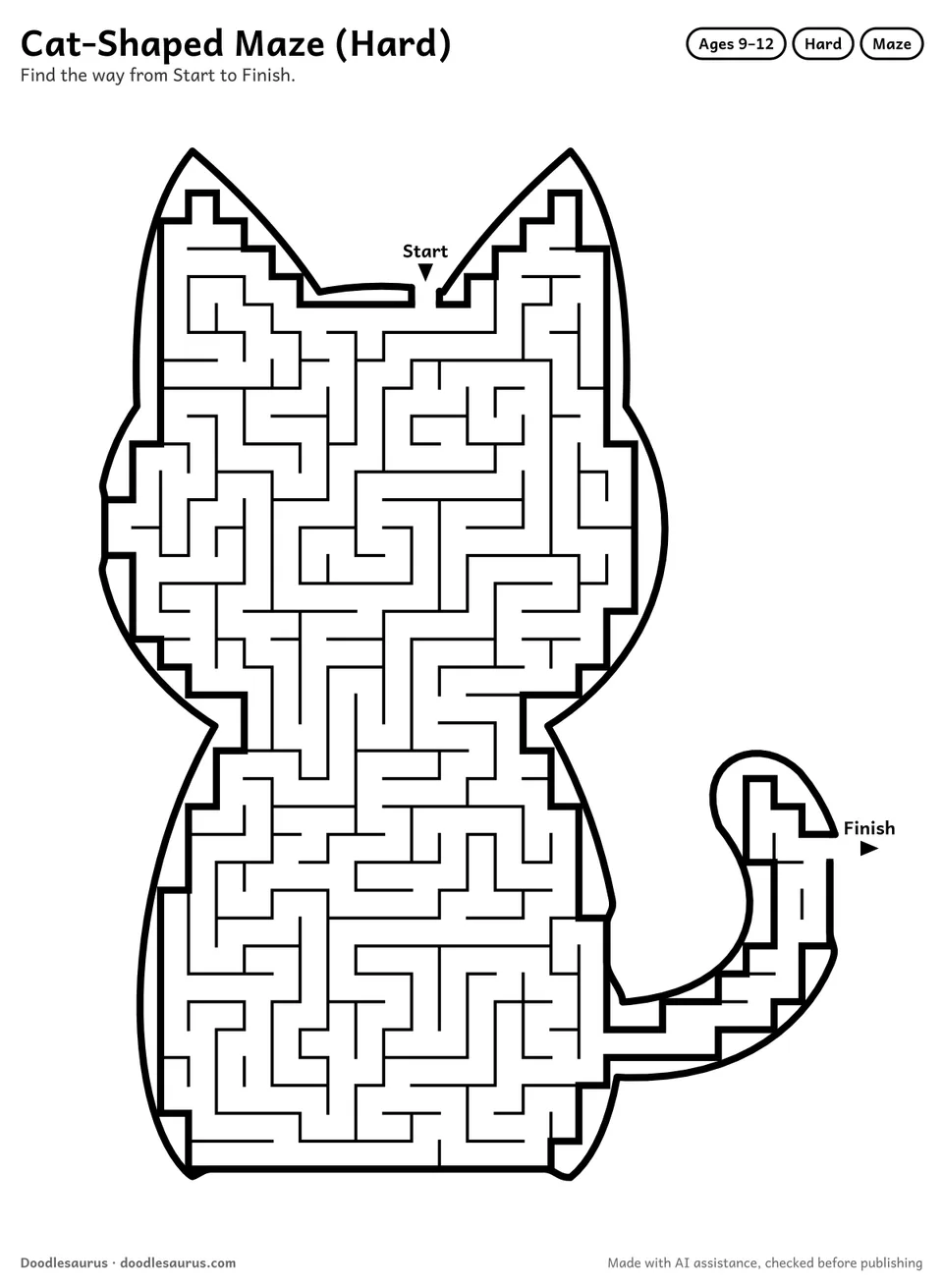
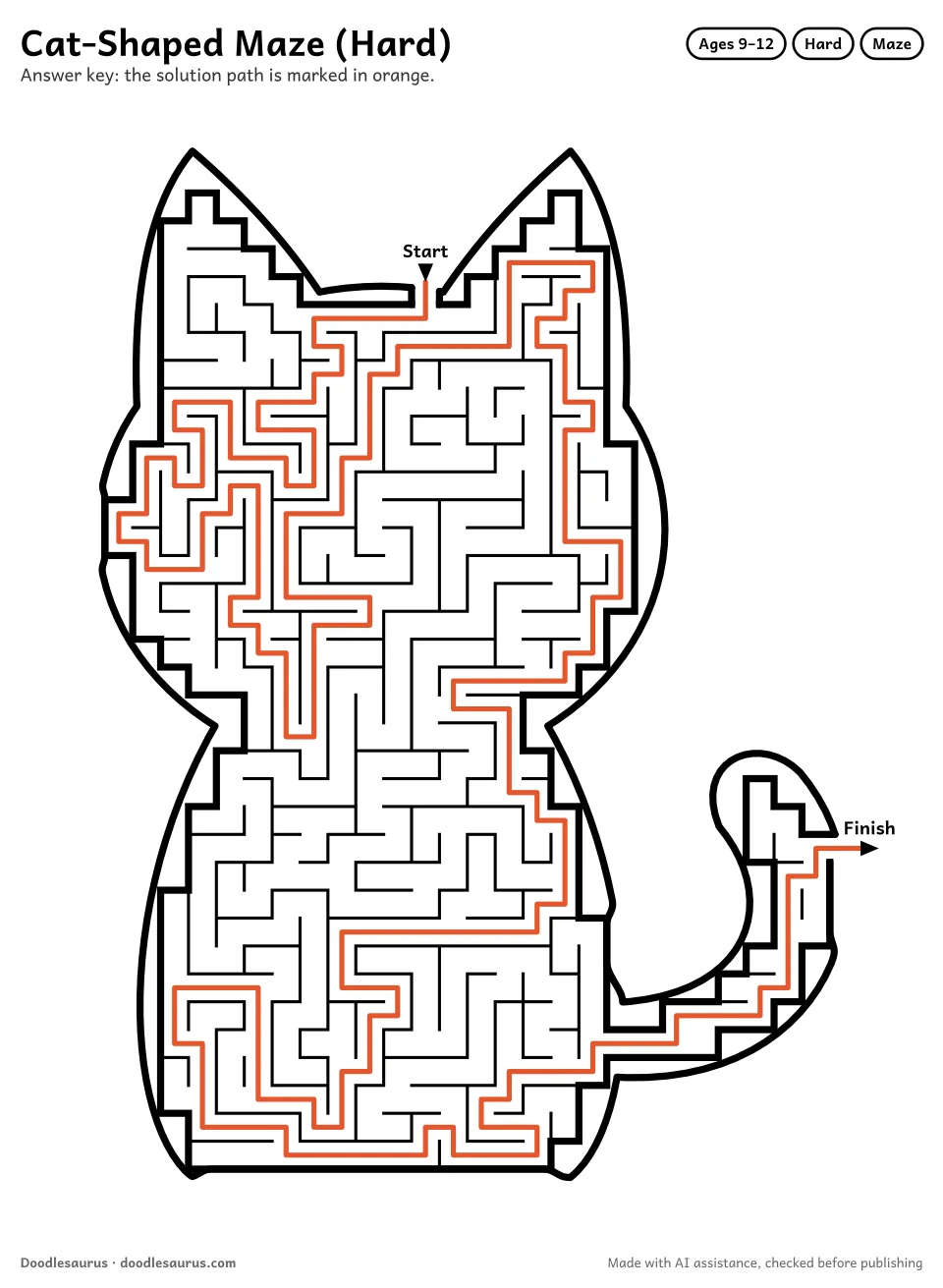
A maze inside a sitting cat
The corridors of this cat maze fill the outline of a sitting cat, from the two pointed ears and round head down to the wide body and curled tail. Start and Finish are arrows outside the shape. Each one sits beside a short channel that leads in through a gap in the outline, and the child draws one line from arrow to arrow without crossing a wall. Page 2 of each PDF is the answer key, with the route in orange.
Three cats, three corridor widths
The easy cat is built from 94 cells, each 12 mm across, so a three-year-old with a chunky crayon has room to wander into a dead end and back out again. Start sits above the head, between the ears, and Finish sits below the flat base. The medium cat moves both arrows to the right side. Its 224 cells are 8 mm across, sized for ages 6 to 8, with Start outside the head and Finish outside the body, just above the tail. On both of these levels the maze climbs partway up into each ear, and the tail is outline only.
The hard cat is a different job. Its 526 cells are 5.5 mm wide, the route runs through 208 of them, and the passages climb into both ears and curl out along the tail. Start is back above the head, as on the easy cat, but Finish now waits beside the tip of the tail, so a child who has solved the other two still has to find a new way out. Scaling the page down would squeeze those 5.5 mm corridors, so send the A4 or US Letter file to the printer at 100 percent with fit to page off.
Using the cat maze
At home it needs only a pencil and something firm to lean on, so it travels well. In class it makes a calm task for the first ten minutes of the morning. Once the route is done, many children color the cat around it and keep it as a picture.
Skills practiced & tips
- Trace the route with a finger before picking up a pencil.
- Use a new color for each attempt so the latest try is easy to tell apart.
- Check where the two arrows are first, because they move between levels.
- Once the path is drawn, color the cat around it as a tabby, a ginger or a tuxedo cat.
- Hand a 6-year-old the medium sheet and a sharpened pencil rather than a crayon.
Cat fun facts
- A cat swings its tail to keep its balance when it walks along a narrow fence or shelf.
- Adult cats rarely meow at each other; most of their meowing is aimed at people.
- Each of a cat's ears can turn on its own, so it can follow two sounds at once.
Classroom ideas
- Pre-K (ages 3 to 5): use the easy cat as a pencil-control warm-up, first with a finger and then with a thick crayon.
- Grade 1: time the medium cat and ask each child to count how many dead ends they ran into.
- Grades 4 to 6: compare the three answer keys and make a bar graph of the route lengths, 51, 112 and 208 cells.
- Year 3 (UK): have pupils write directions for the easy route using up, down, left and right.
More cat activities
More mazes
Frequently asked questions
How big are the corridors on each cat maze?
The easy cat has 94 cells of 12 mm and a route that crosses 51 of them. The medium cat has 224 cells of 8 mm with a 112-cell route, and the hard cat packs in 526 cells of 5.5 mm with a 208-cell route.
Is there only one way from Start to Finish?
On the easy cat, yes, and every wrong turn ends in a dead end. The medium and hard cats include a few small loops, so a child may reach Finish by a path that differs from the orange one on the answer key, and that still counts.
Is the hard cat just the easy one with more cells?
No. Start is in the same place, above the head between the ears, but Finish moves from below the flat base to beside the tip of the tail. The corridors also narrow from 12 mm to 5.5 mm, and the hard passages climb into both ears and curl out along the tail, which the easy maze leaves as outline.
Does this cat appear in other activities?
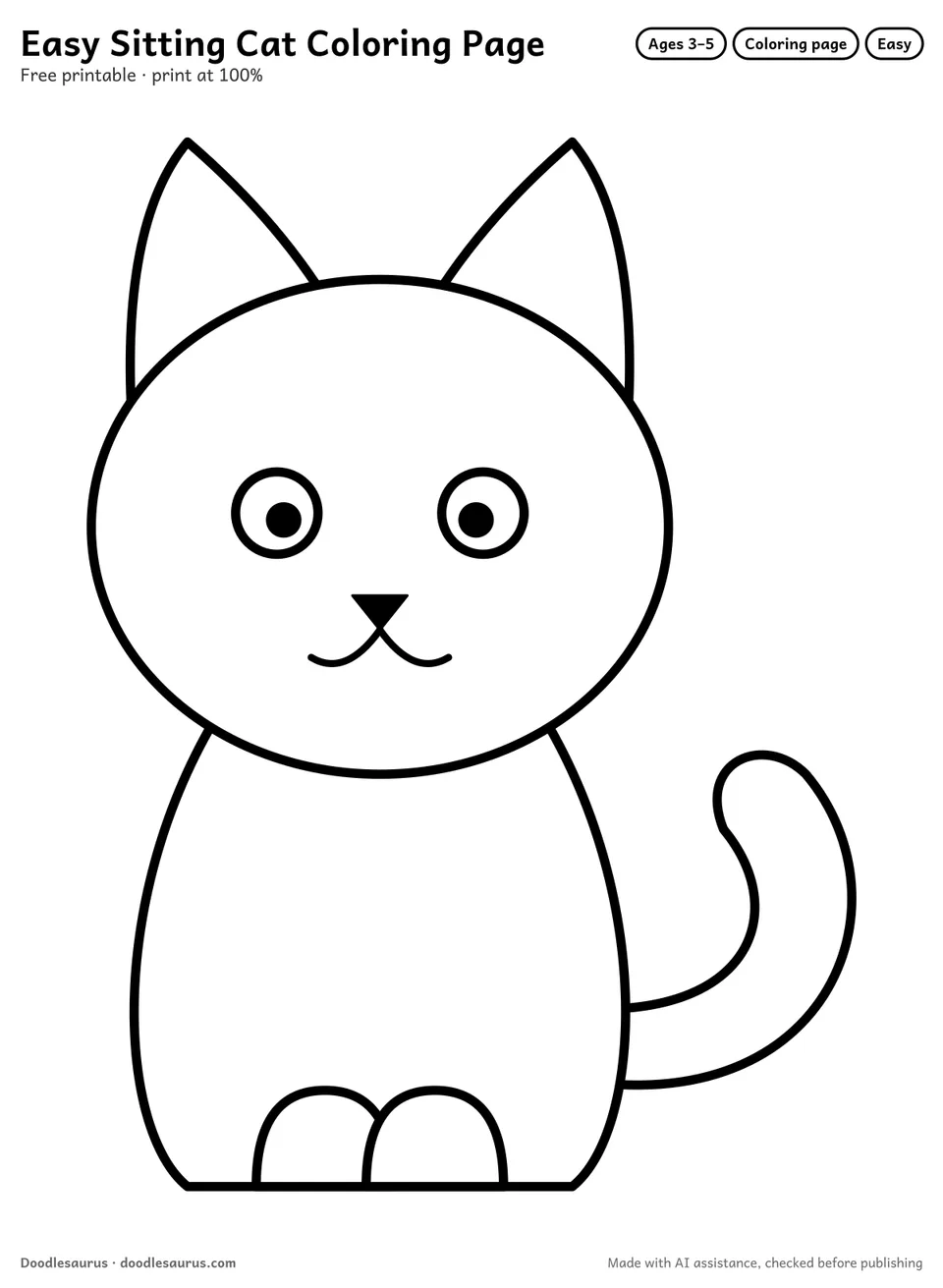
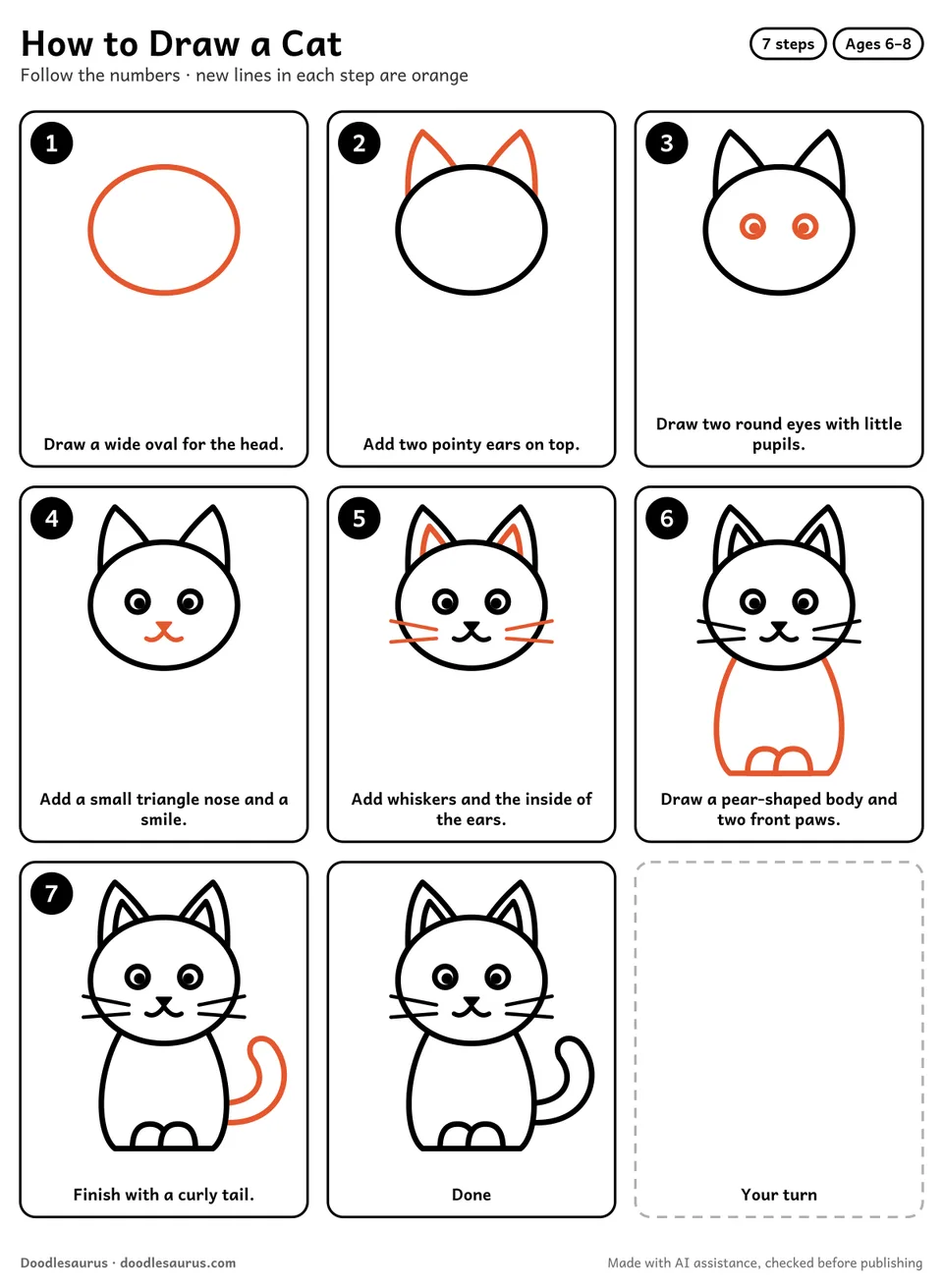
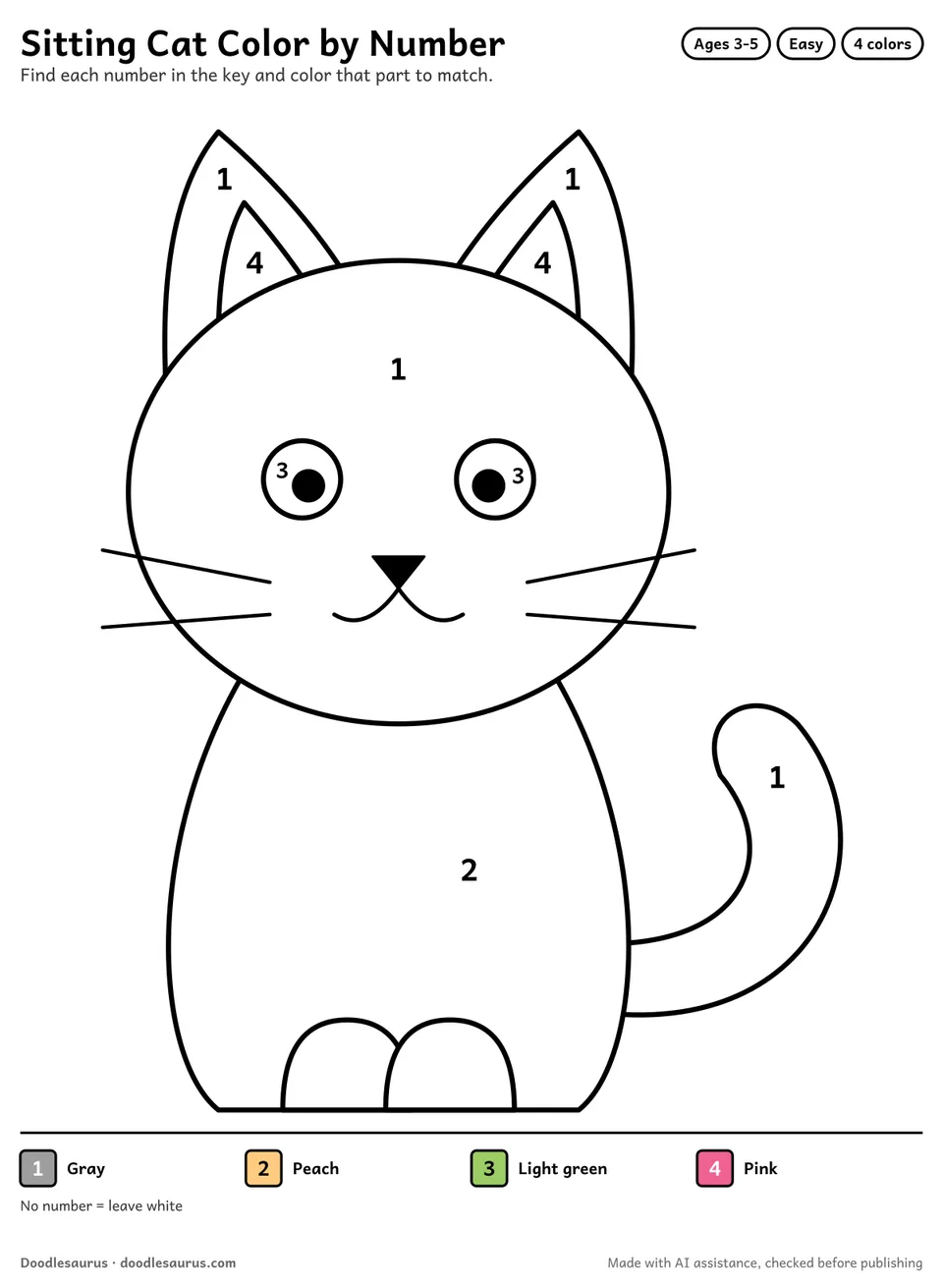
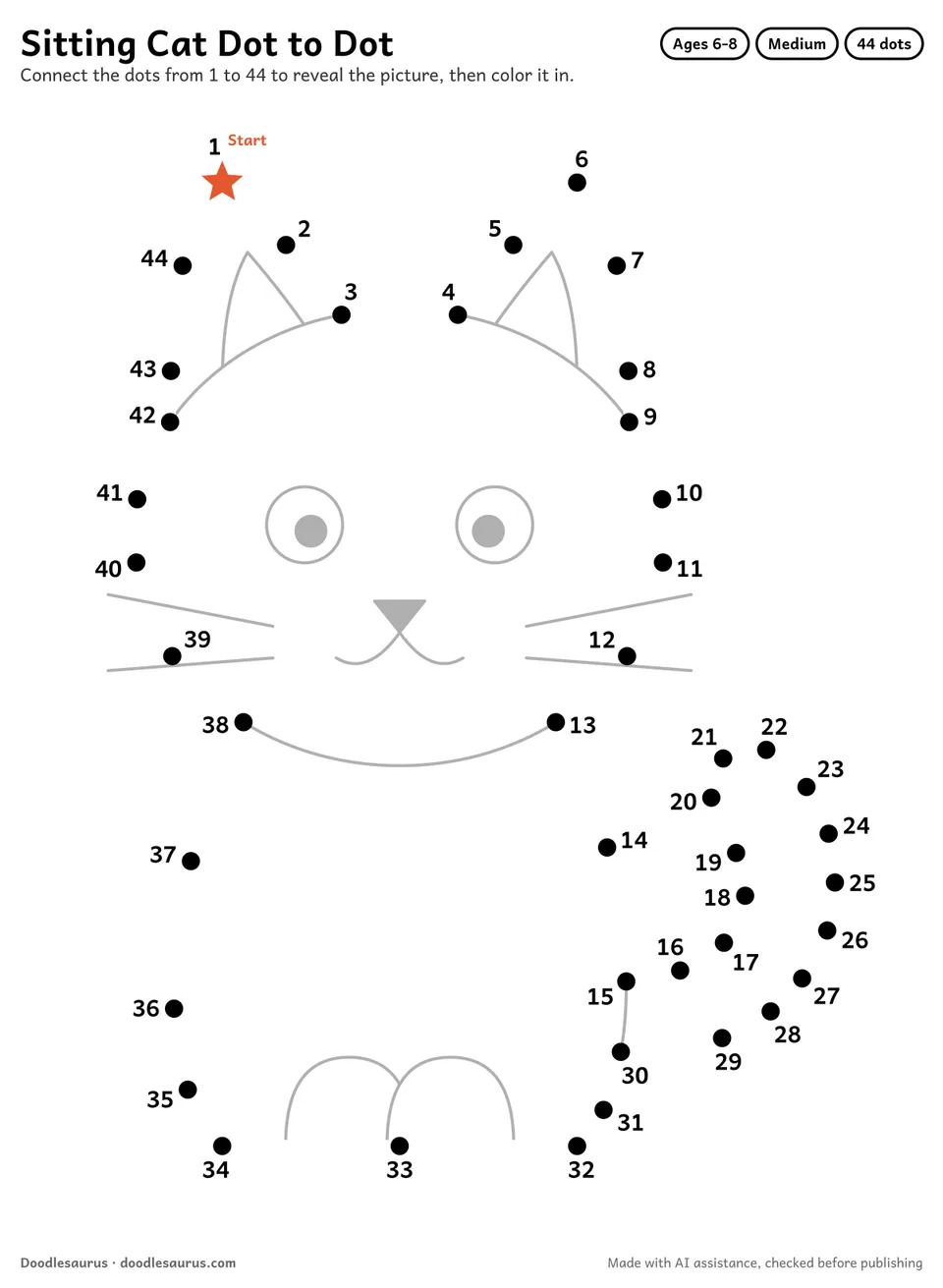
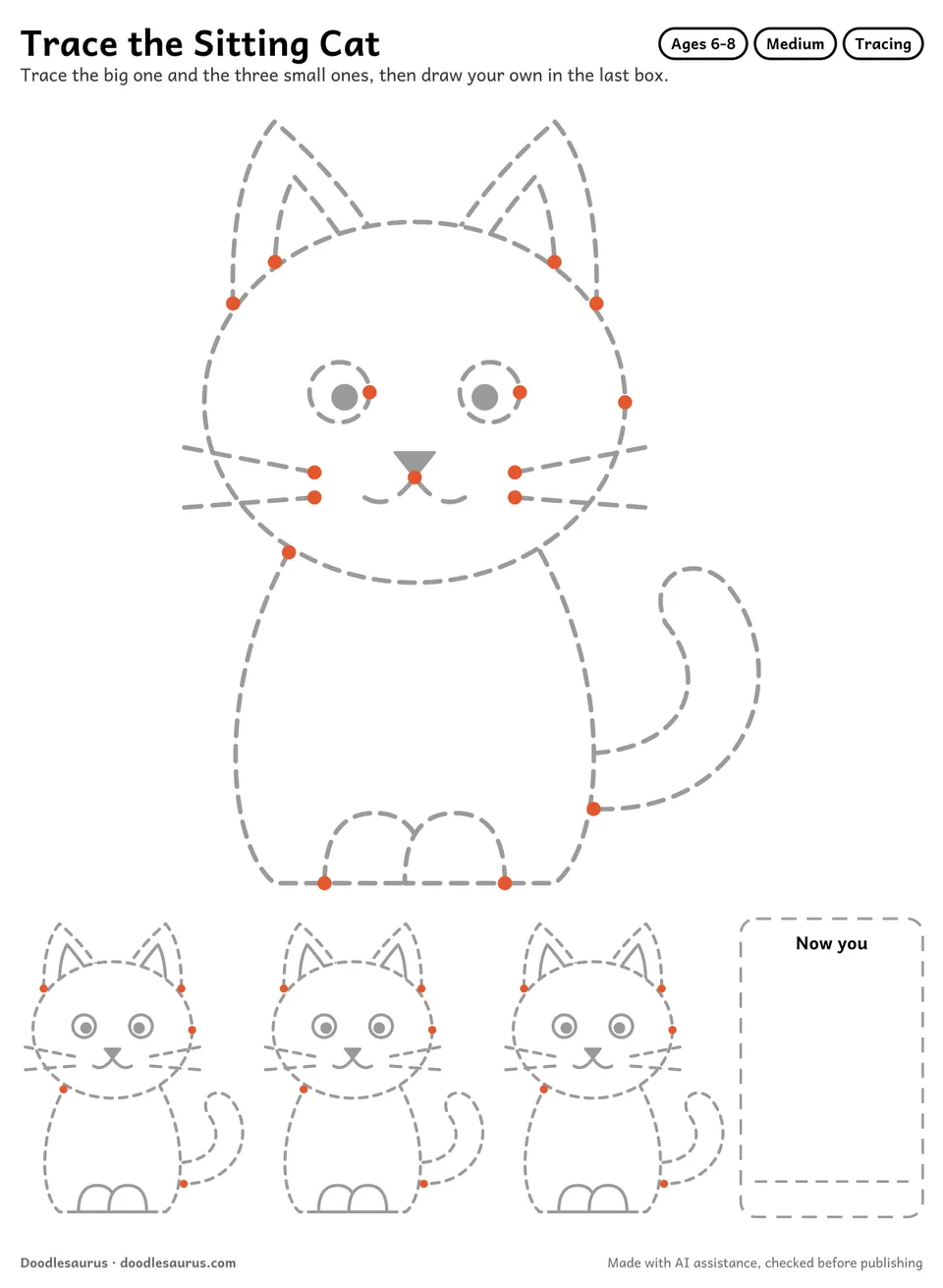
Yes. It is the same sitting cat used for the coloring page, the how to draw sheet, the dot to dot, the tracing worksheet and the color by number, and it also turns up as a cat mask and a cat bookmark craft.
About this printable
- Made with AI assistance (vector drawing authored by a language model) and checked by automated tests and an AI reviewer.
- Checked by automated tests and an AI reviewer on 22 Oct 2026.
- Free for personal and single-classroom use. See the license. Read the license · How these are made · Report a problem.
- Vector PDF, 2 pages, 186×254 mm art box — prints edge-safe on A4 and US Letter.
New printables, twice a month
Our newsletter starts soon, with new sheets twice a month and a free 10-page starter pack for every new reader.