Owl Maze Perched on a Branch
Print an owl maze perched on a branch: 58 wide cells for ages 3 to 5, 191 for ages 6 to 8 and 314 narrow ones for ages 9 to 12, with an orange answer key.
Choose a level
An owl on a branch
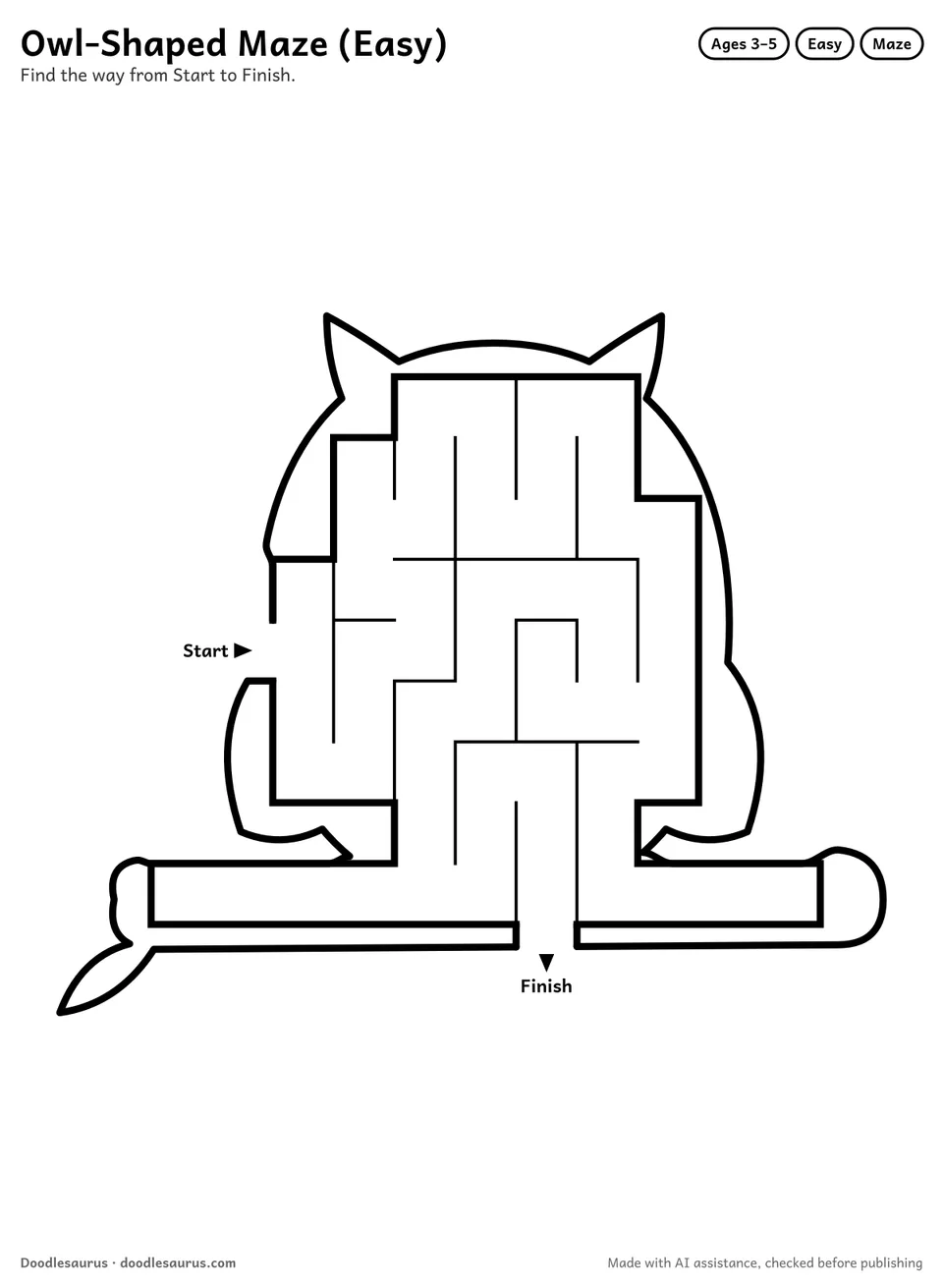
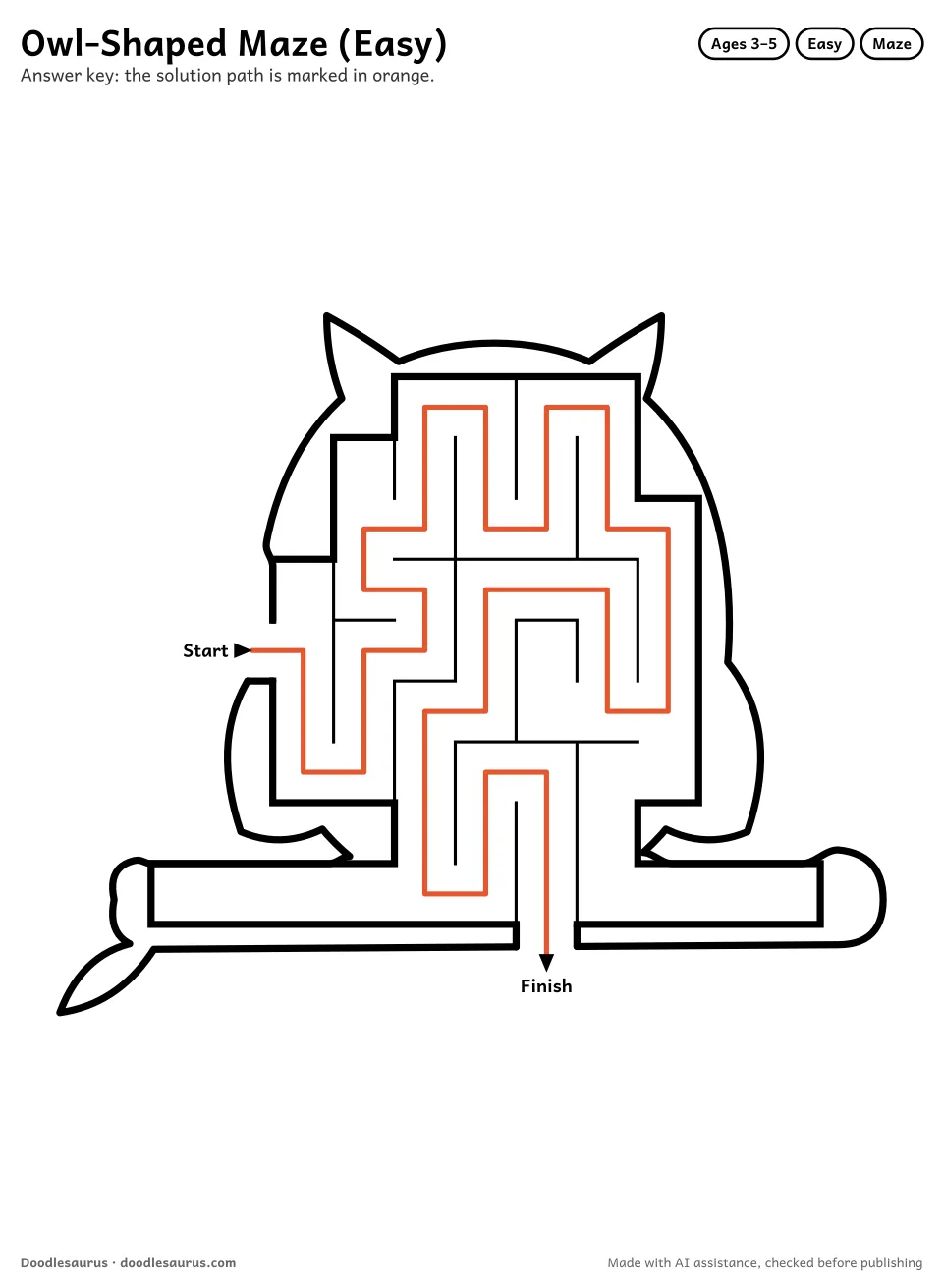
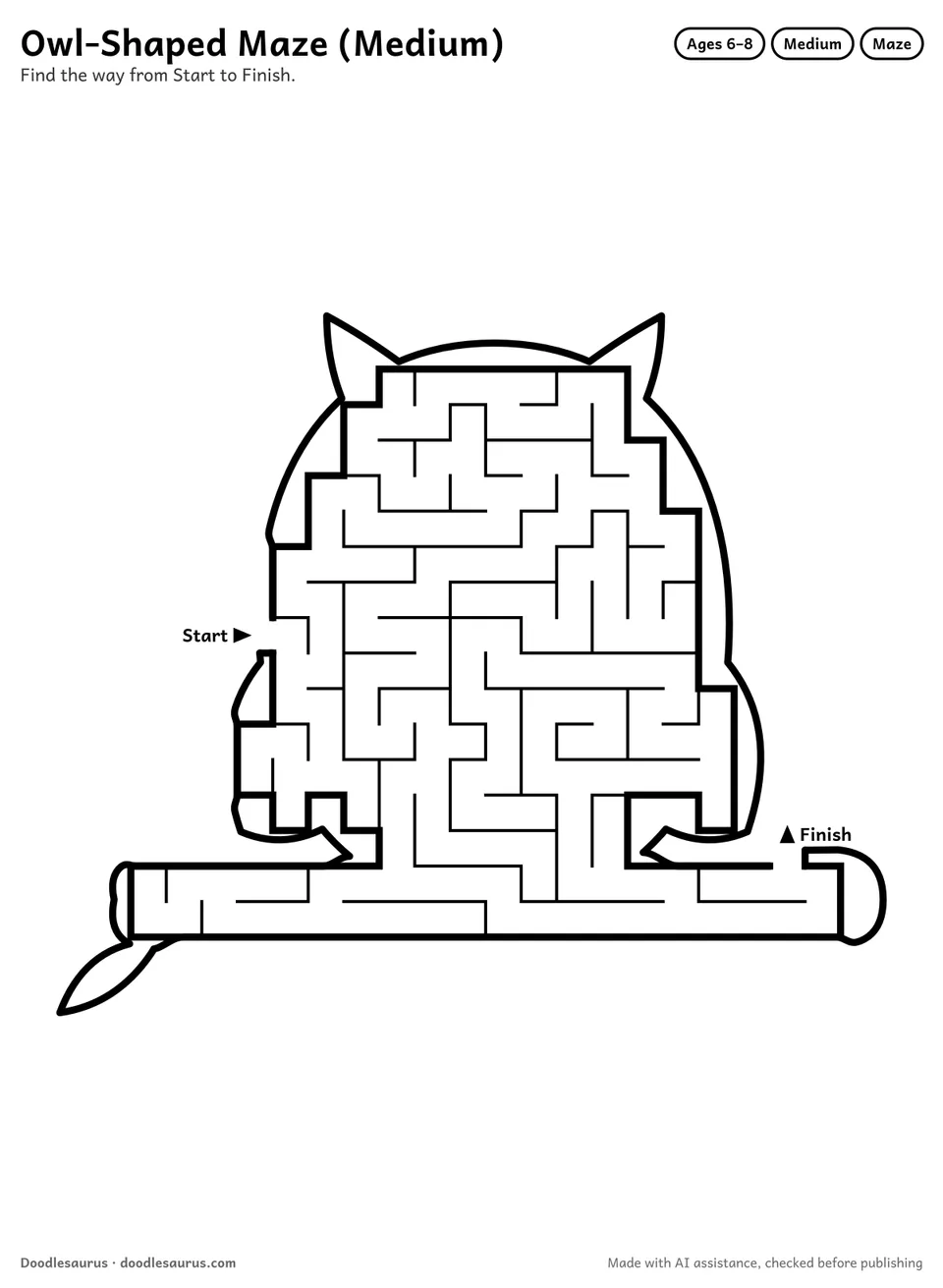
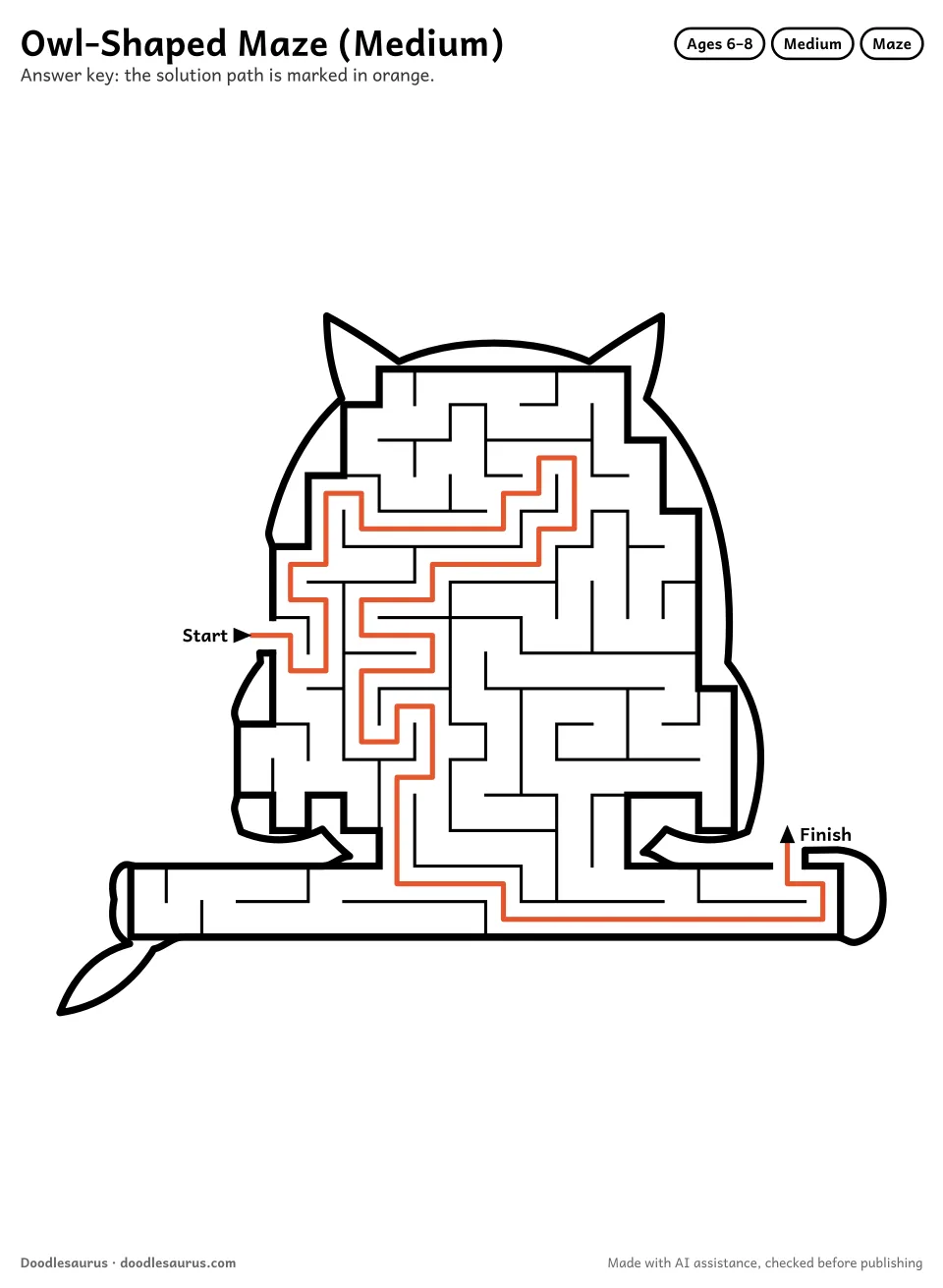
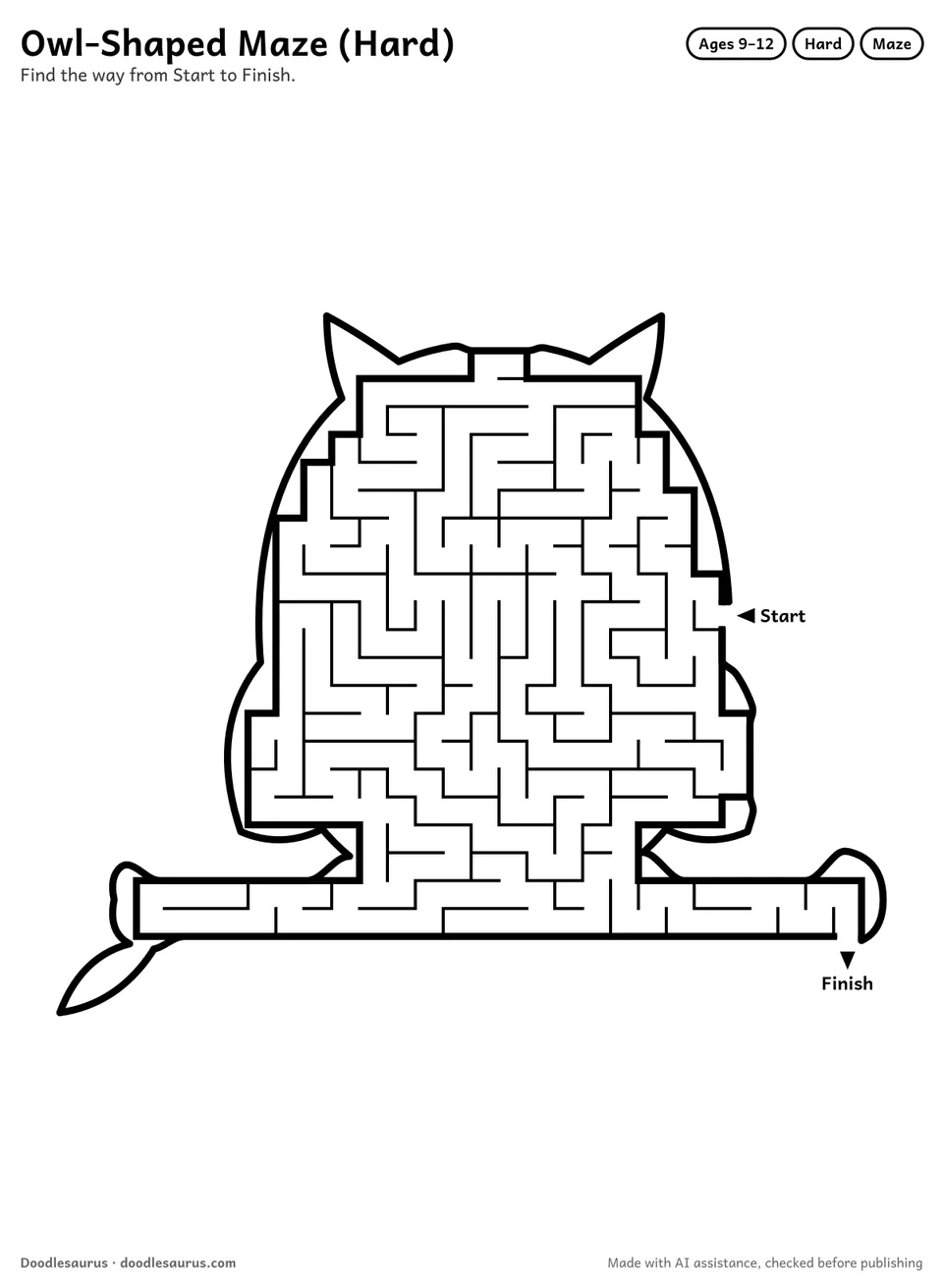
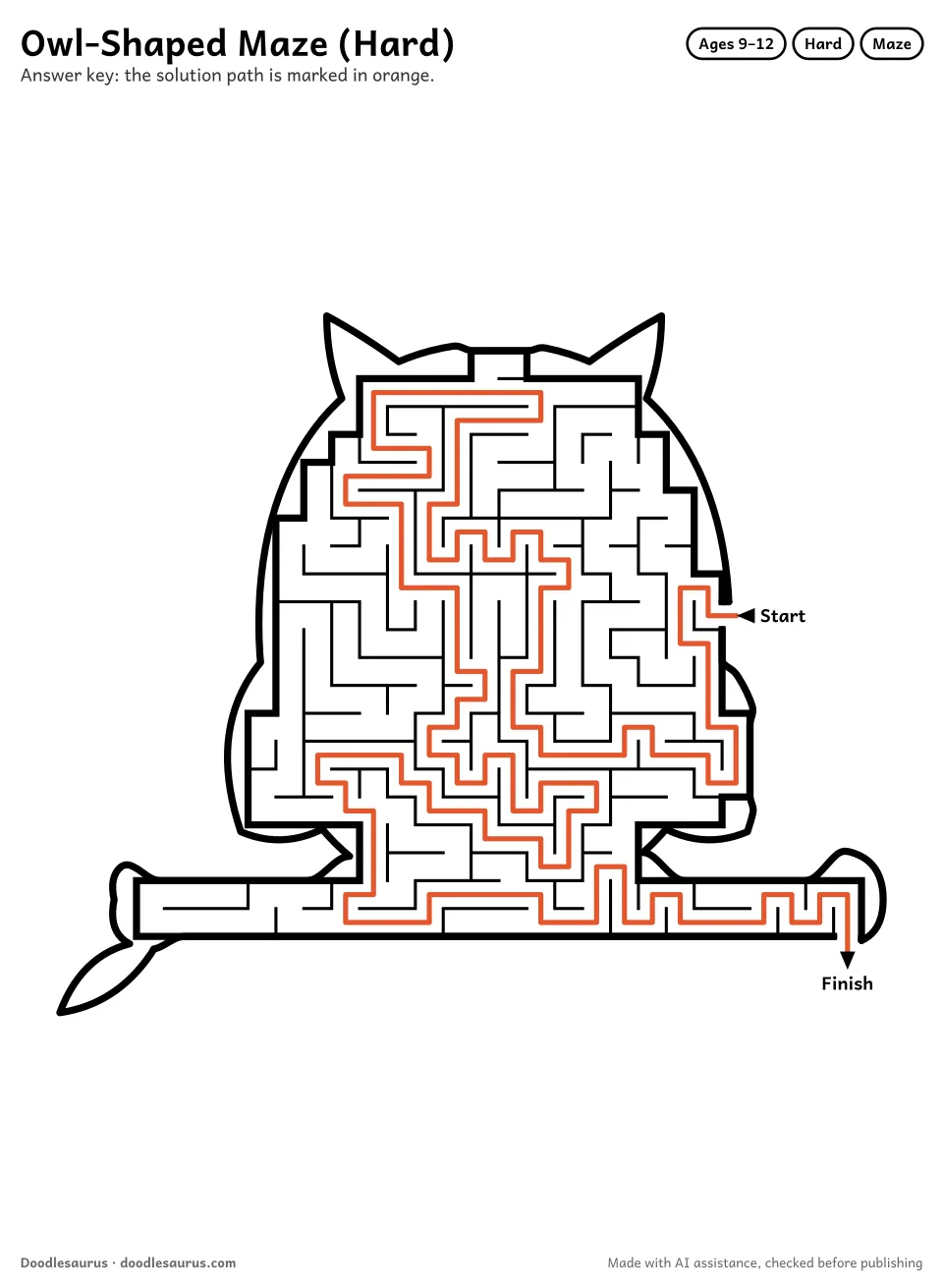
The owl in this owl maze is perched on a long branch, with two short pointed ear tufts on top, a tall rounded body and a leaf hanging under the left end of the branch. The ear tufts stay outside the maze on every level. The walls step along the rest of the outline in small squares. Each level moves the two arrows to a new pair of places outside the outline, each beside a short channel through a gap. Every PDF ends with an answer key that draws the route in orange.
Three levels of path width
The easy owl gets by with only 58 cells, each 12 mm wide, so even a young child holding a crayon in a fist has space to steer. Its route crosses 43 of them. It goes in on the left side of the body and leaves below the branch, just right of the middle.
For ages 6 to 8 the medium owl narrows the paths to 7 mm and holds 191 cells. Its 62-cell route starts outside the left side of the body, a little higher than on the easy owl. It winds up through the owl and back down, then runs along the branch to finish above its right end.
Ages 9 to 12 get the hard owl: 314 cells of 5.5 mm and a 149-cell route that begins outside the right side of the body and ends below the right end of the branch. In between, the solver has to wind up to the top of the owl and all the way back down through the body. Switch off fit to page. The A4 or US Letter PDF then prints at 100 percent, and the hard owl keeps its 5.5 mm paths.
Using the owl maze
The sheets need only a pencil, which makes them handy for waiting rooms and quiet starts in class. Once the path is drawn, many children color the owl and the branch around it.
Skills practiced & tips
- Find both arrows before starting; each level puts them in a different pair of places.
- Run a finger along the route first, then follow it with a pencil.
- If the path gets stuck, back up to the last fork rather than starting over.
- Switch to a new color for each attempt so the newest line is easy to see.
- When the route is finished, color the owl and the branch around it.
Owl fun facts
- Owls can hear the tiny sounds of a mouse moving under leaves or snow.
- Unlike most birds, an owl has both eyes facing forward, much like a person.
- Baby owls are called owlets, and they are covered in fluffy down before their adult feathers grow.
Classroom ideas
- Pre-K (ages 3 to 5): trace the easy owl with a finger first, then solve it with a thick crayon.
- Grade 1: hand out the medium owl and ask children to mark each dead end they find with a small x.
- Grades 4 to 6: compare the route lengths on the three answer keys, 43, 62 and 149 cells, and turn them into a bar chart.
- Year 3 (UK): pupils write turn-by-turn directions for the easy route using left, right, up and down.
More owl activities
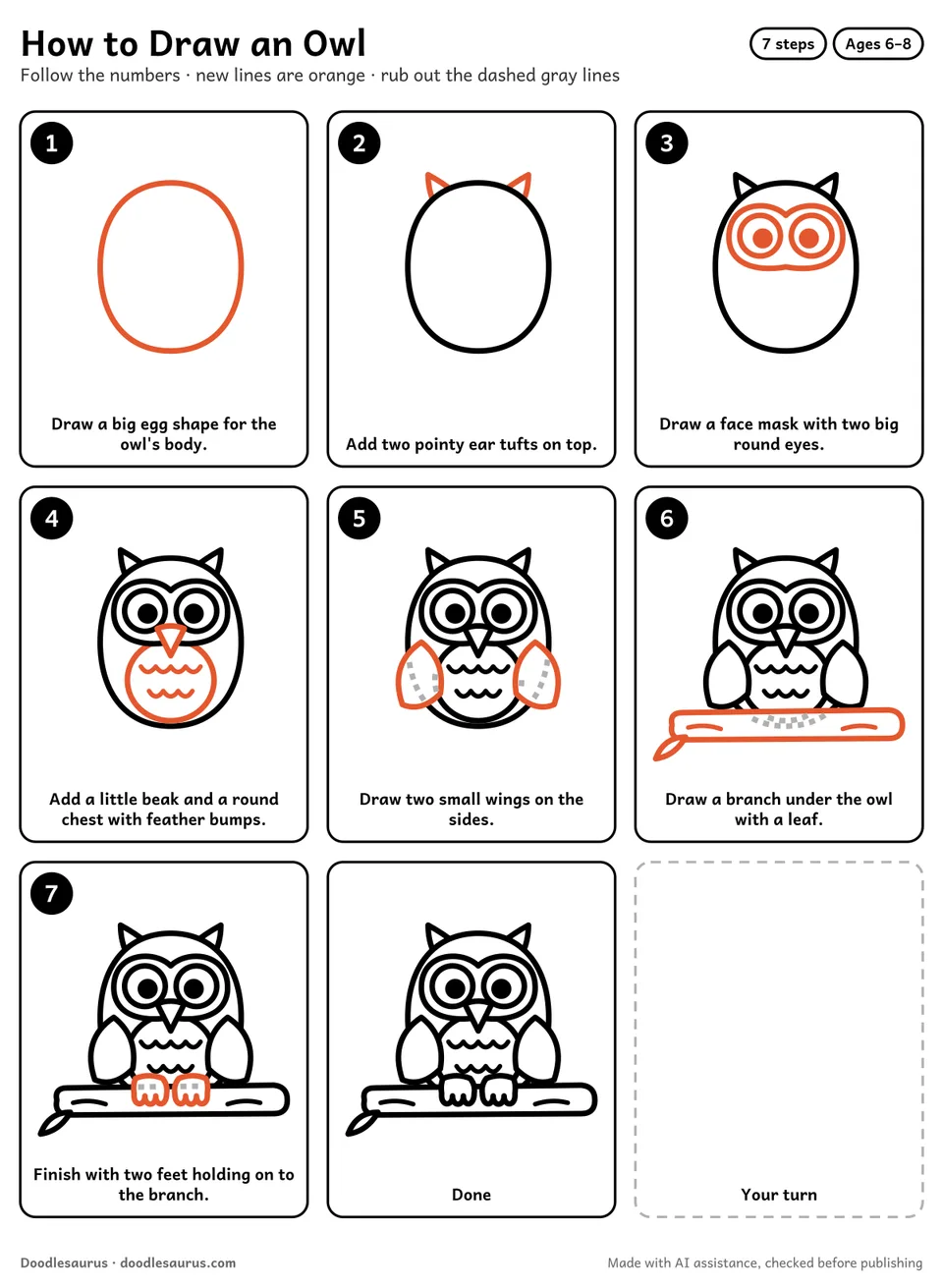
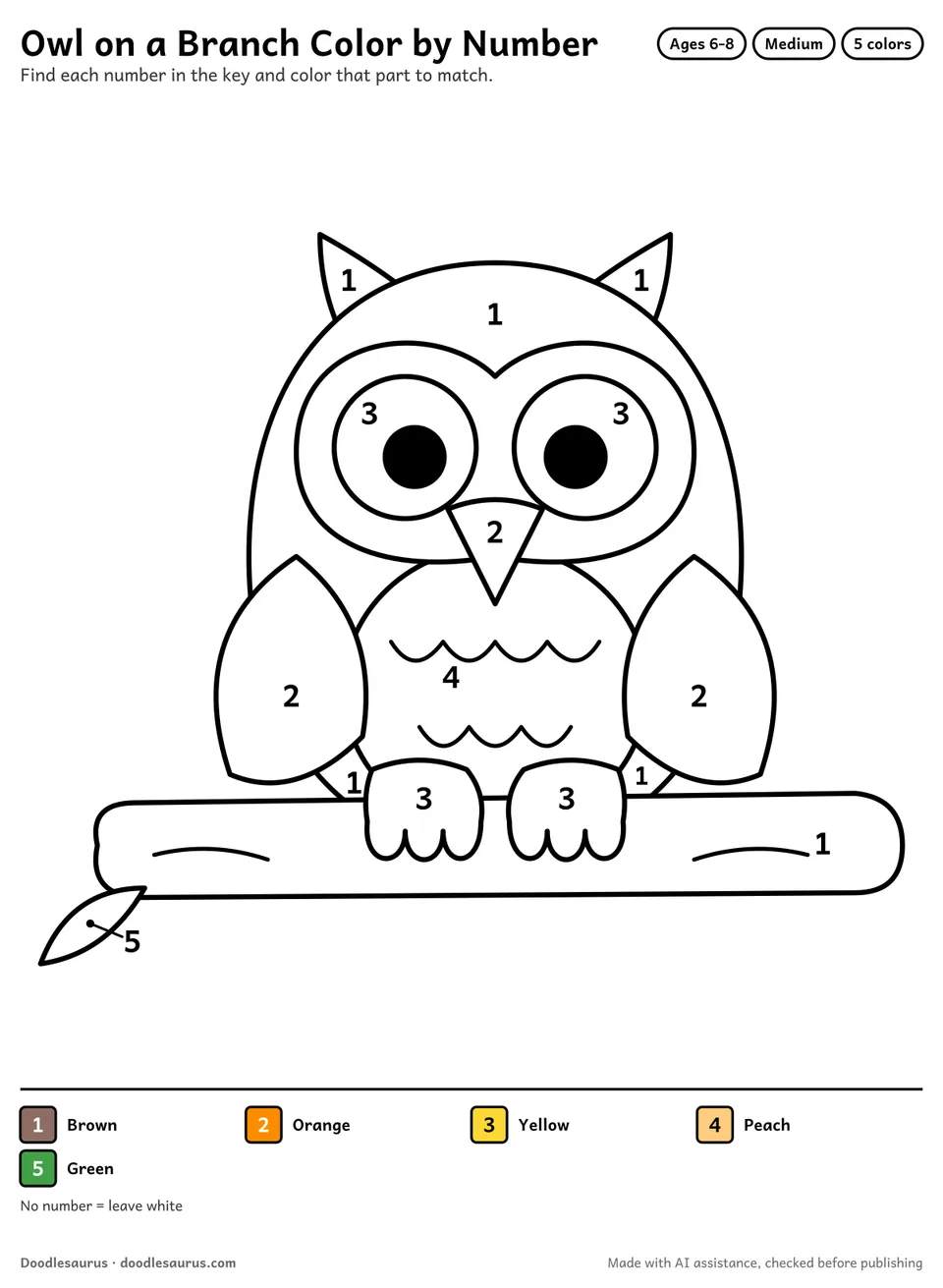
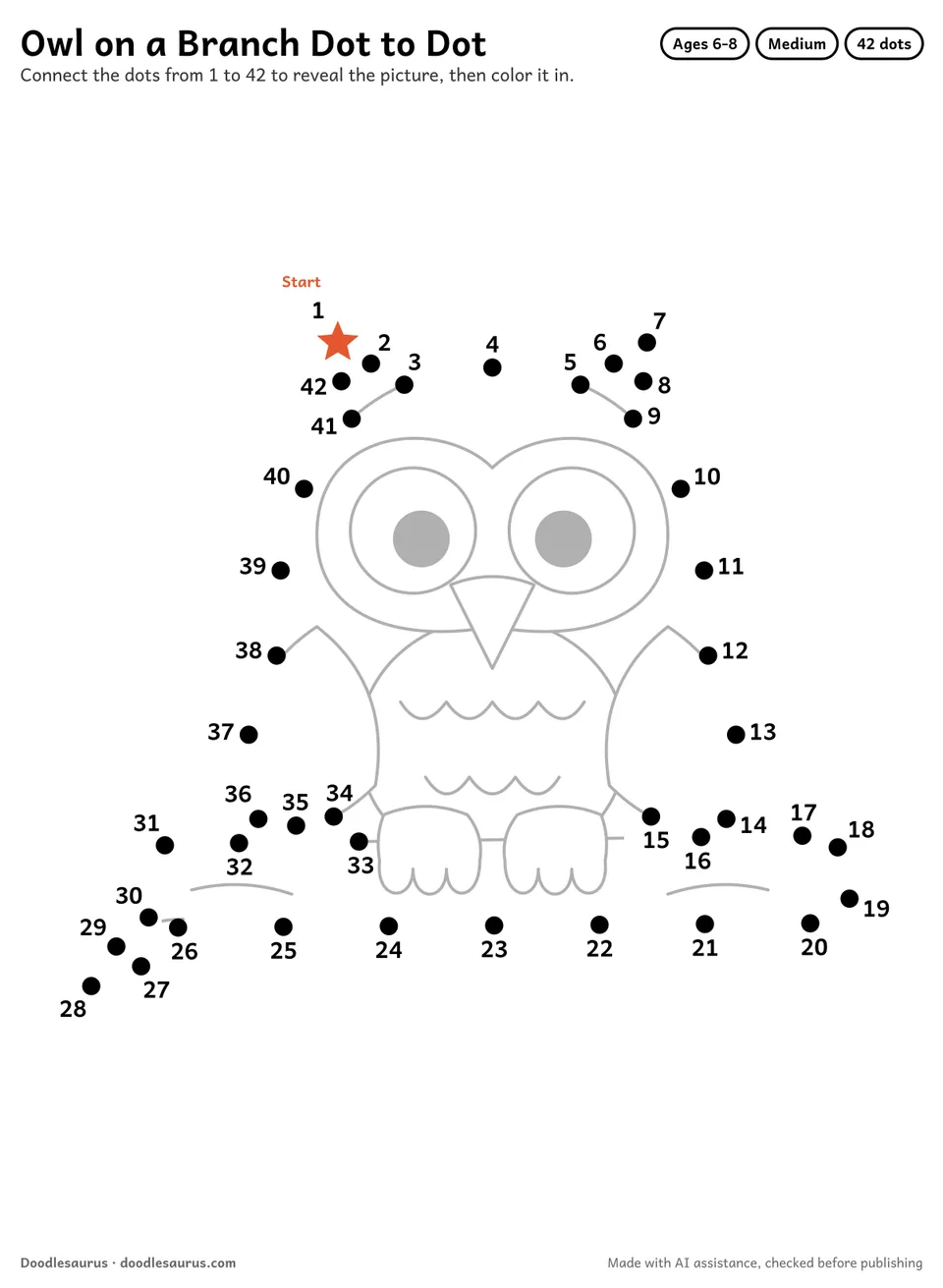
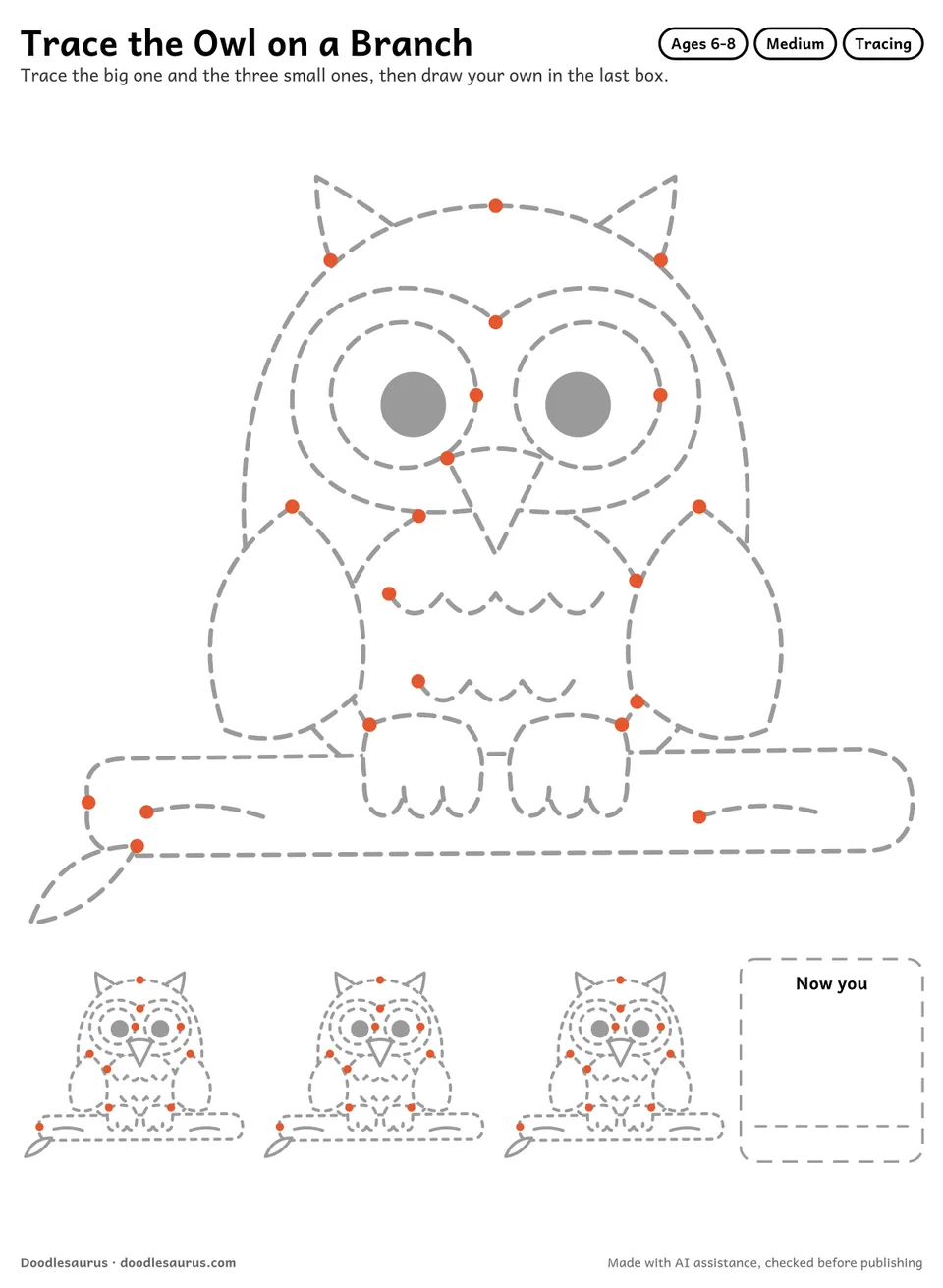
More mazes
Frequently asked questions
Does the easy owl route use most of the maze?
Yes. It crosses 43 of the 58 cells, each 12 mm wide. The medium owl uses 62 of its 191 cells, which are 7 mm wide, and the hard owl 149 of 314 cells of 5.5 mm.
Where do the Start and Finish arrows go?
Both arrows sit just outside the owl, at the end of a short channel cut through the outline. The easy owl starts outside the left side of the body and finishes below the branch, just right of the middle. The medium owl starts outside the left side of the body, a little higher than the easy owl, and finishes above the right end of the branch. The hard owl starts outside the right side of the body and finishes below the right end of the branch.
Which owl maze should a 6-year-old try?
The medium owl, made for ages 6 to 8, with a 62-cell route and paths 7 mm wide, between the 12 mm easy owl and the 5.5 mm hard one.
Can I find this owl in other activities?
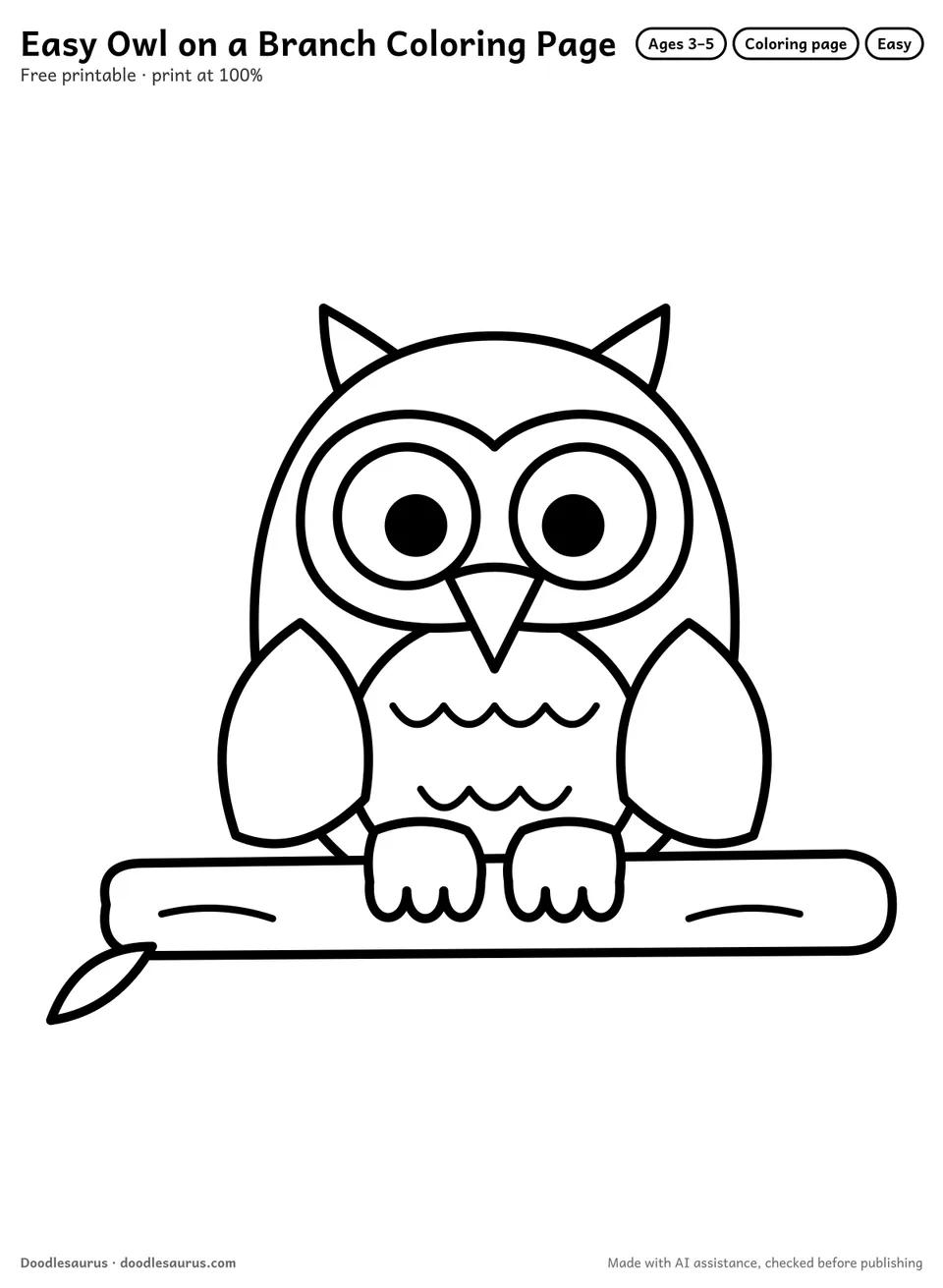
Yes. It is the same perched owl used for the coloring page, the how to draw sheet, the dot to dot, the tracing worksheet and the color by number.
About this printable
- Made with AI assistance (vector drawing authored by a language model) and checked by automated tests and an AI reviewer.
- Checked by automated tests and an AI reviewer on 22 Oct 2026.
- Free for personal and single-classroom use. See the license. Read the license · How these are made · Report a problem.
- Vector PDF, 2 pages, 186×254 mm art box — prints edge-safe on A4 and US Letter.
New printables, twice a month
Our newsletter starts soon, with new sheets twice a month and a free 10-page starter pack for every new reader.