
Dog Tracing Worksheets for Preschool and Up
Dog tracing worksheets with a sitting puppy, floppy ears and a curling tail: one big dog for ages 3 to 5, three small ones for 6 to 8, in A4 or US Letter.
Choose a level
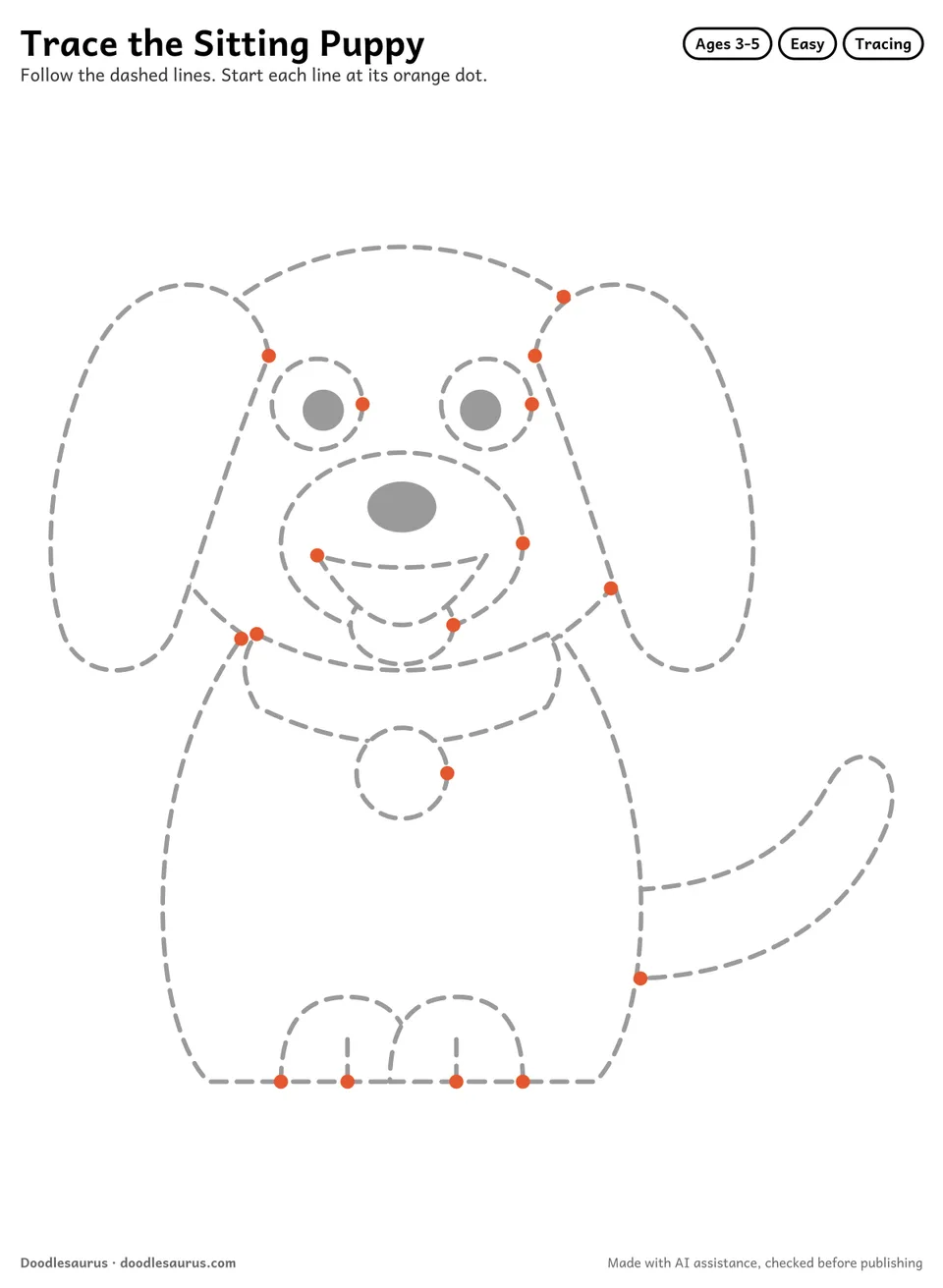
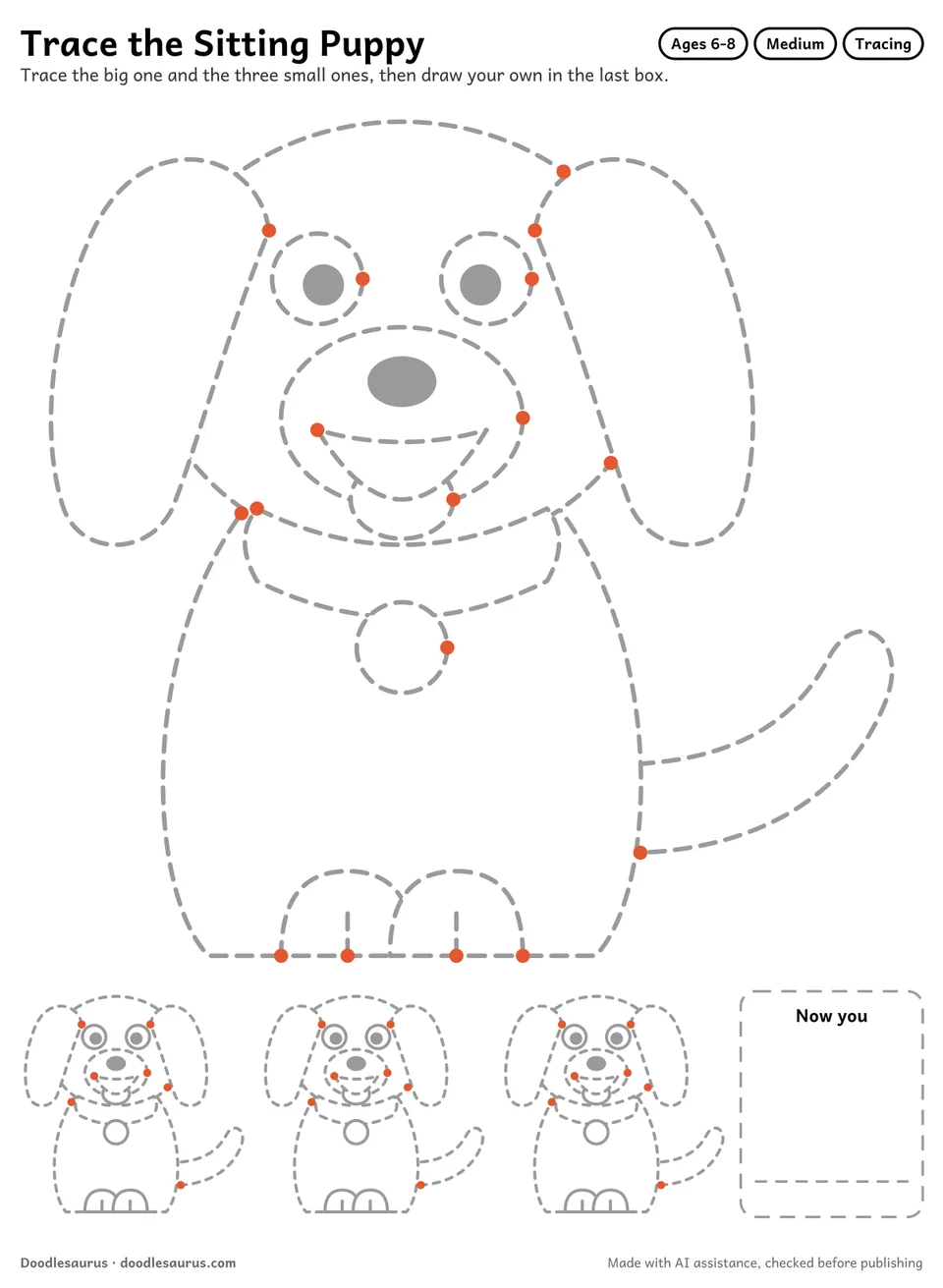
Sitting Puppy Tracing Worksheet
Long ears hang down on both sides of this sitting puppy’s round head, and they make gentle first curves to trace. Each part of the dog, from those ears down to the tail, has an orange dot to start from, so the pencil never has to guess where a stroke begins. The pupils and the nose are already gray.
Easy: one big puppy
On the easy page the dog is drawn large, for ages 3 to 5. The details get smaller toward the bottom: circles for the eyes and the tag, a wide oval for the muzzle and two arched paws that each hold a short straight toe line. The tail curls back on the right.
Medium: small dogs and a free box
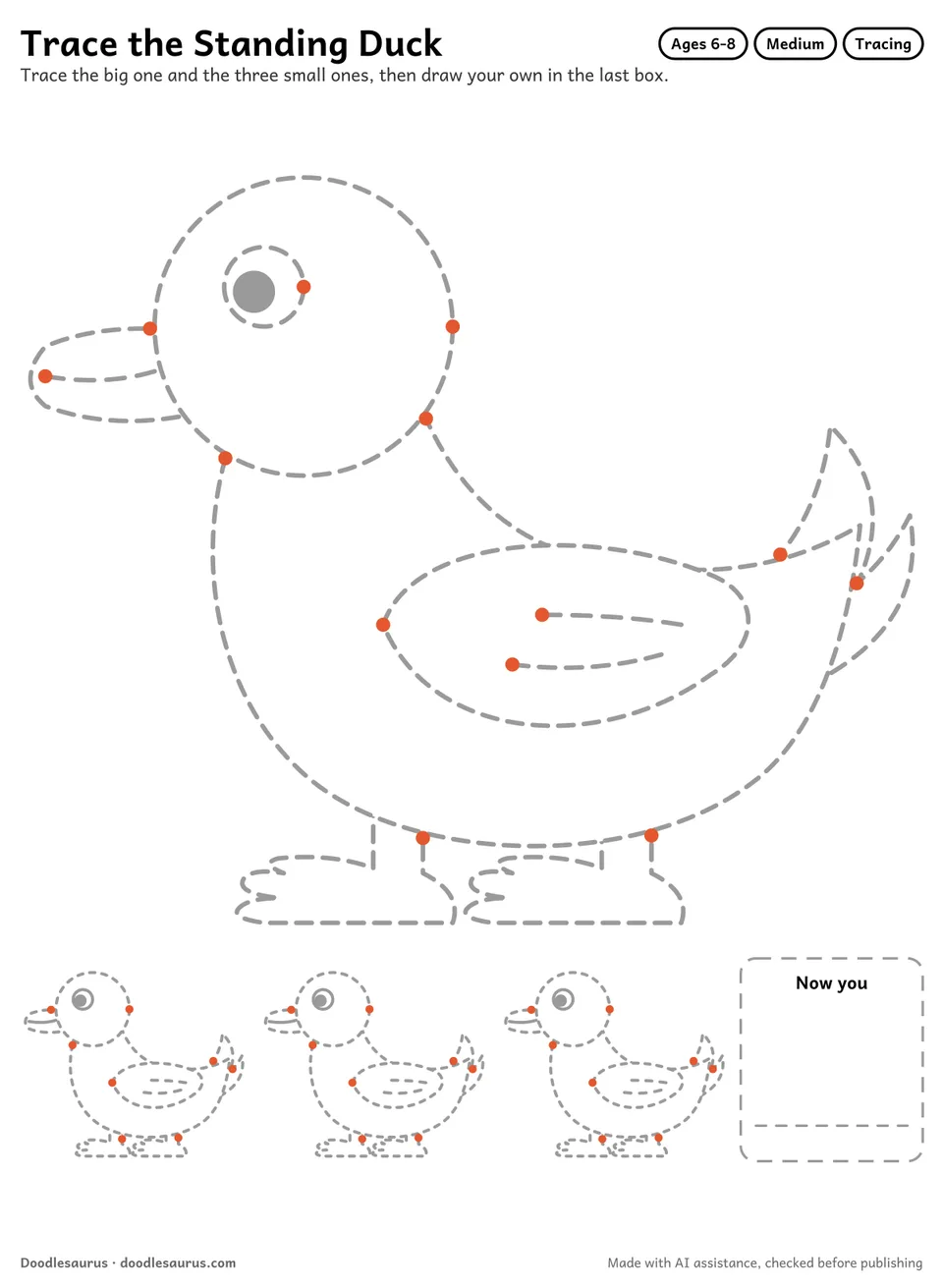
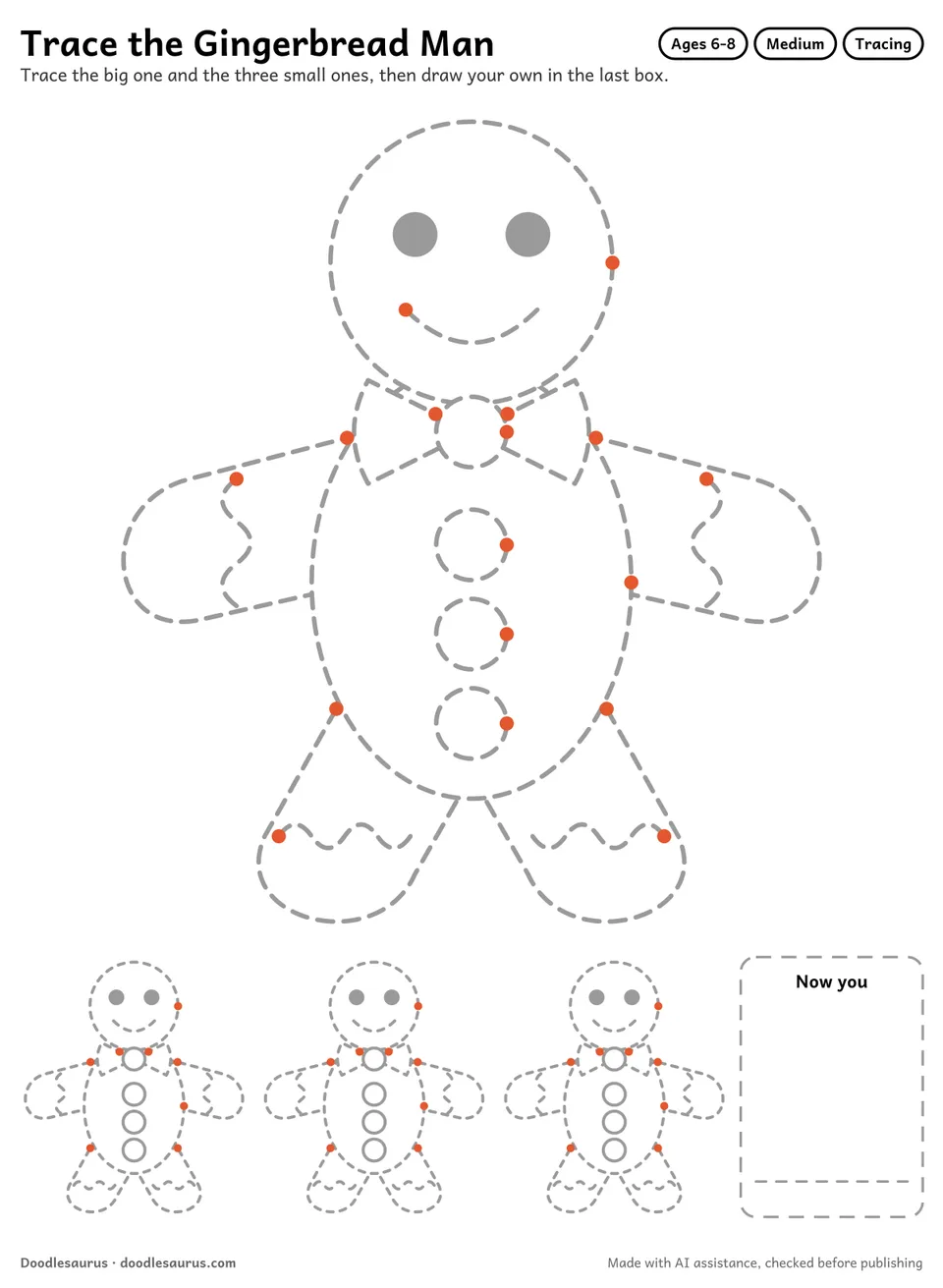
On the medium page for ages 6 to 8, the three small copies under the large puppy have tighter curves. Every stop comes sooner. Their paws, toe lines, tag, eyes and tongue are thin solid lines with no dot. Dashes stay evenly spaced only when the A4 or Letter PDF prints at 100 percent with fit to page off. In the fourth space, an empty Now you box, a child tries the dog with no guides and can compare it with the traced ones.
Skills practiced & tips
- Before tracing, ask your child to put a finger on each orange dot and follow the dashes along.
- Start with the big outer shapes, the head, ears and body, and save the face for later.
- Turn the paper a little when tracing the tail curl so the wrist stays relaxed.
- Use a thick crayon on the easy page and a sharp pencil for the three small dogs.
- Celebrate a slow, steady line rather than a quick one.
Dog fun facts
- The pattern of bumps and lines on a dog's nose is different for every dog, much like a fingerprint.
- Dogs sweat only a little, mostly through the pads of their paws.
- By about six or seven months of age, a puppy's baby teeth have fallen out and been replaced by adult teeth.
Classroom ideas
- Preschool (ages 3 to 5): slide the easy page into a plastic sleeve and trace it again and again with a dry-erase marker.
- Kindergarten: spread the medium page over two short sessions, the big dog first and the small dogs and drawing box next.
- Grade 1: once the Now you box is filled, students add a speech bubble with something the puppy might say.
More dog activities
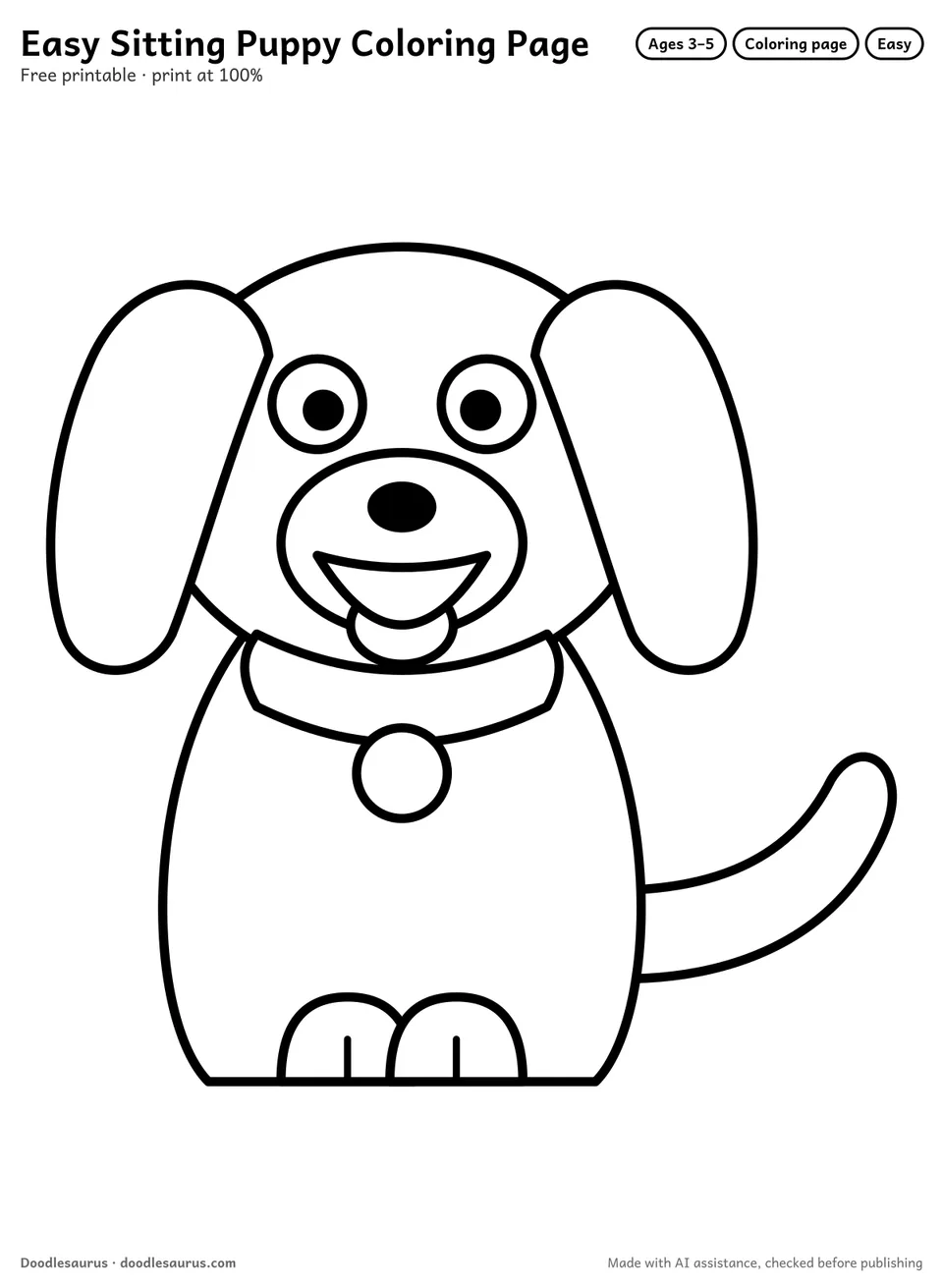
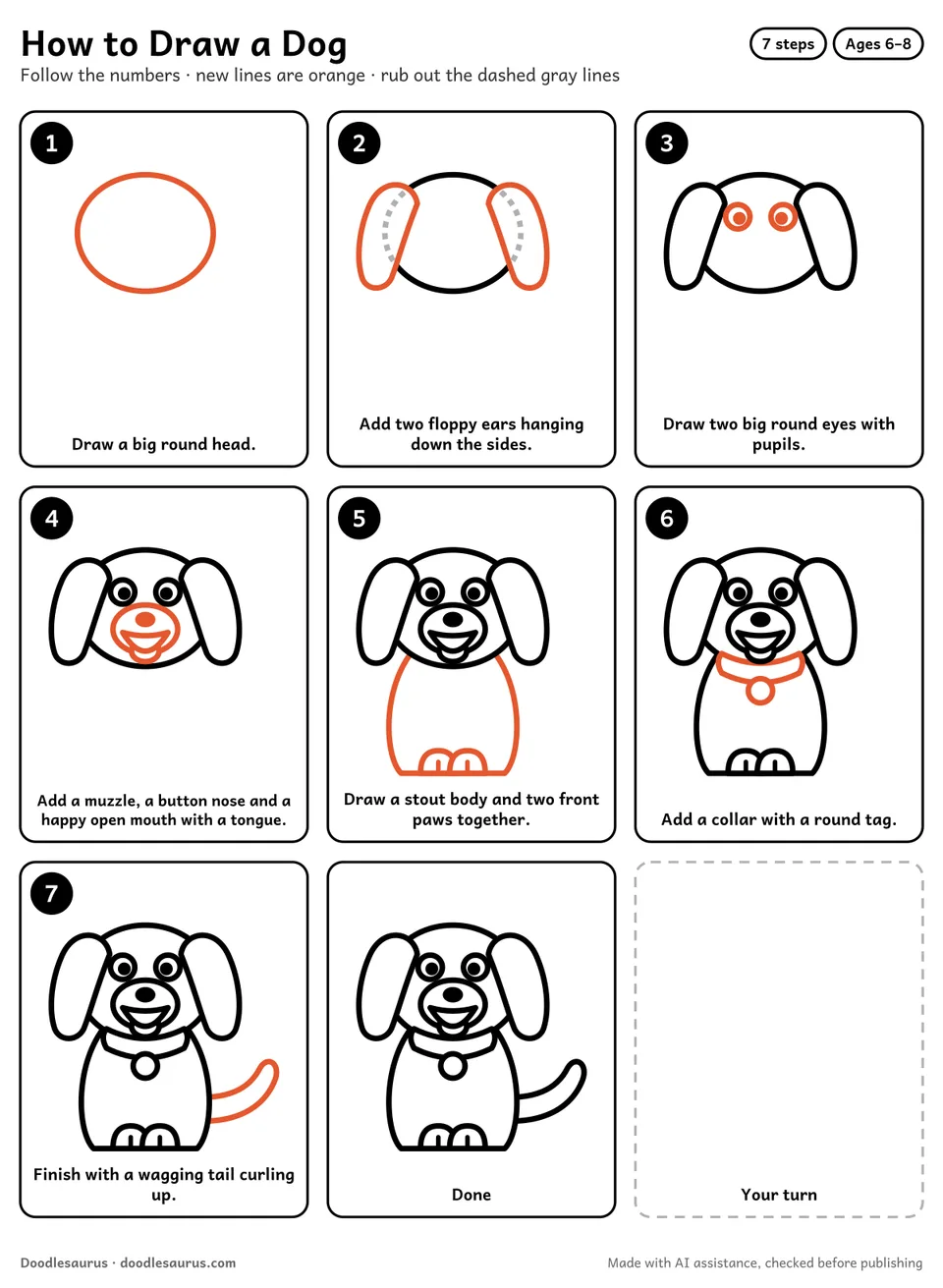
More tracing
Frequently asked questions
Which lines on the three small dogs are not dashed?
Their paws, toe lines, tag, eyes and tongue are thin solid lines with no dot, so only the larger shapes are dashed. The medium sheet for ages 6 to 8 adds those three small copies and an empty Now you box to the one big dashed puppy of the easy sheet for ages 3 to 5.
Why do some lines start with an orange dot?
Every dashed stroke begins at an orange dot. It shows where the pencil goes down and gives the child a clear starting point for each ear, eye, paw and the tail.
Which parts of the puppy should come first?
The big outer shapes: the head, the ears and the body. The face and the tail curl can come later, and turning the paper a little makes the curl easier.
About this printable
- Made with AI assistance (vector drawing authored by a language model) and checked by automated tests and an AI reviewer.
- Checked by automated tests and an AI reviewer on 22 Oct 2026.
- Free for personal and single-classroom use. See the license. Read the license · How these are made · Report a problem.
- Vector PDF, 1 page, 186×254 mm art box — prints edge-safe on A4 and US Letter.
New printables, twice a month
Our newsletter starts soon, with new sheets twice a month and a free 10-page starter pack for every new reader.