
Duck Maze with 103 or 237 Cells
Two duck maze levels to print: 103 cells of 8 mm for ages 6 to 8, or 237 cells of 5.5 mm for ages 9 to 12, each with the solved route in orange.
Choose a level
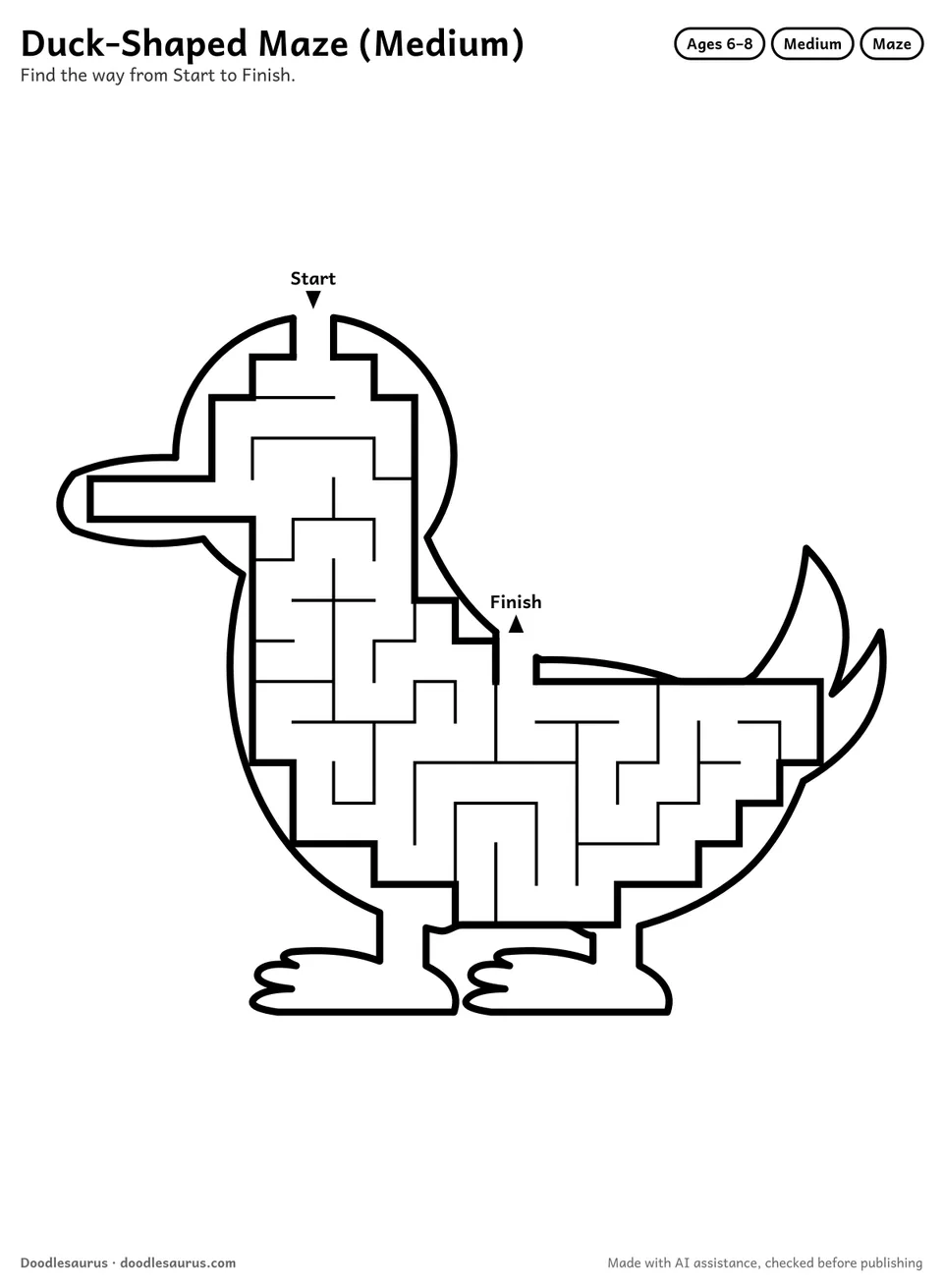
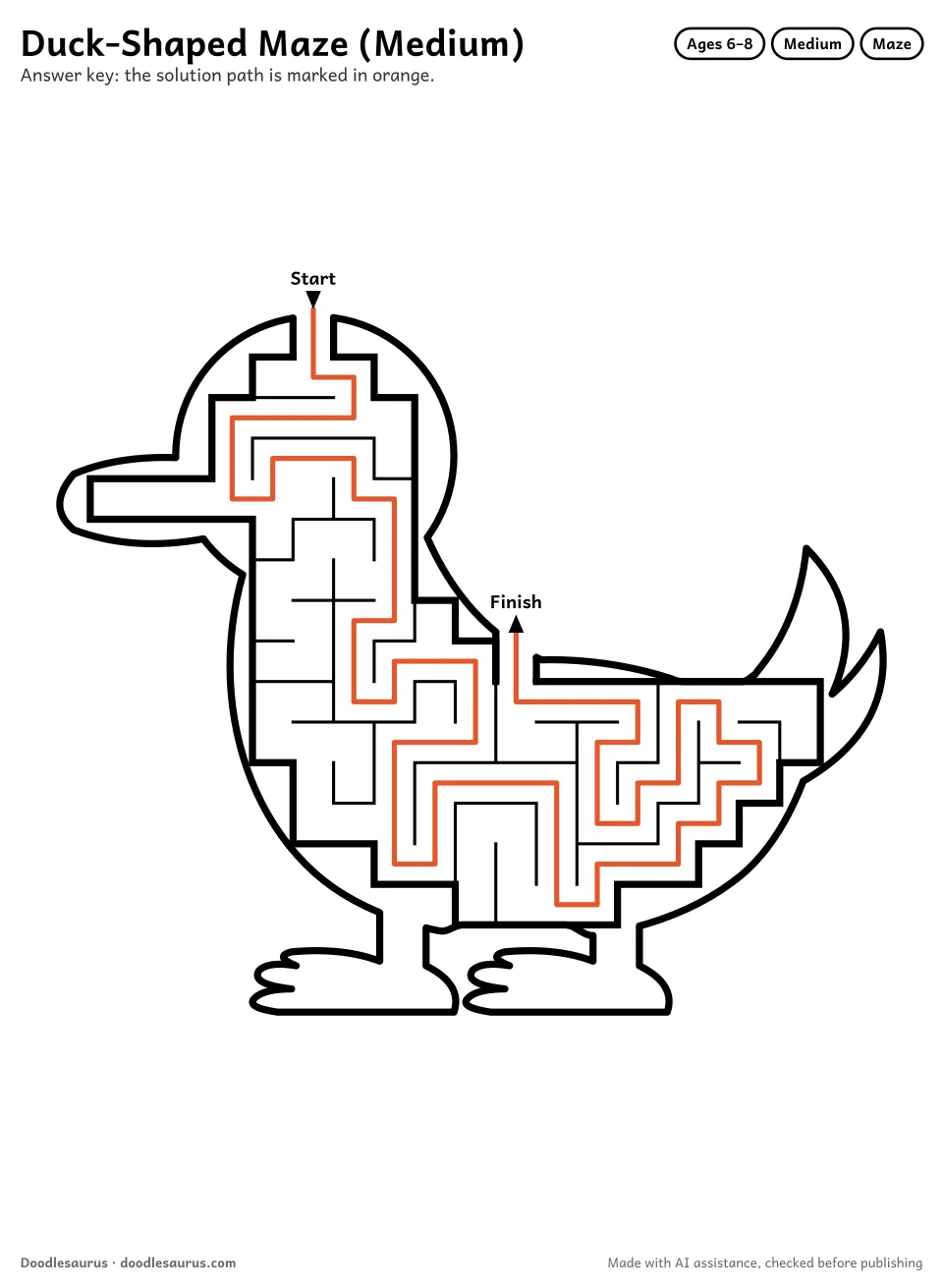
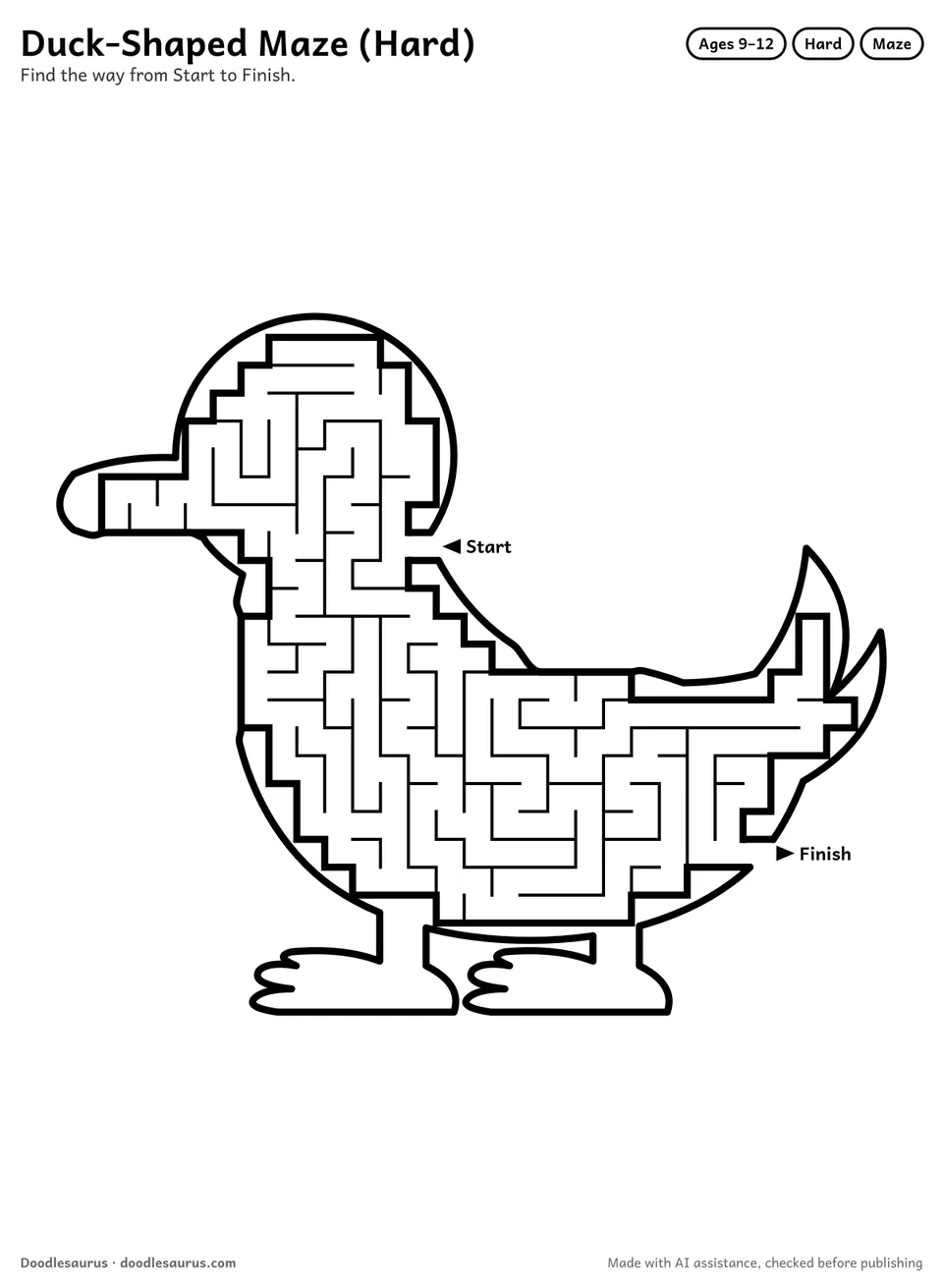
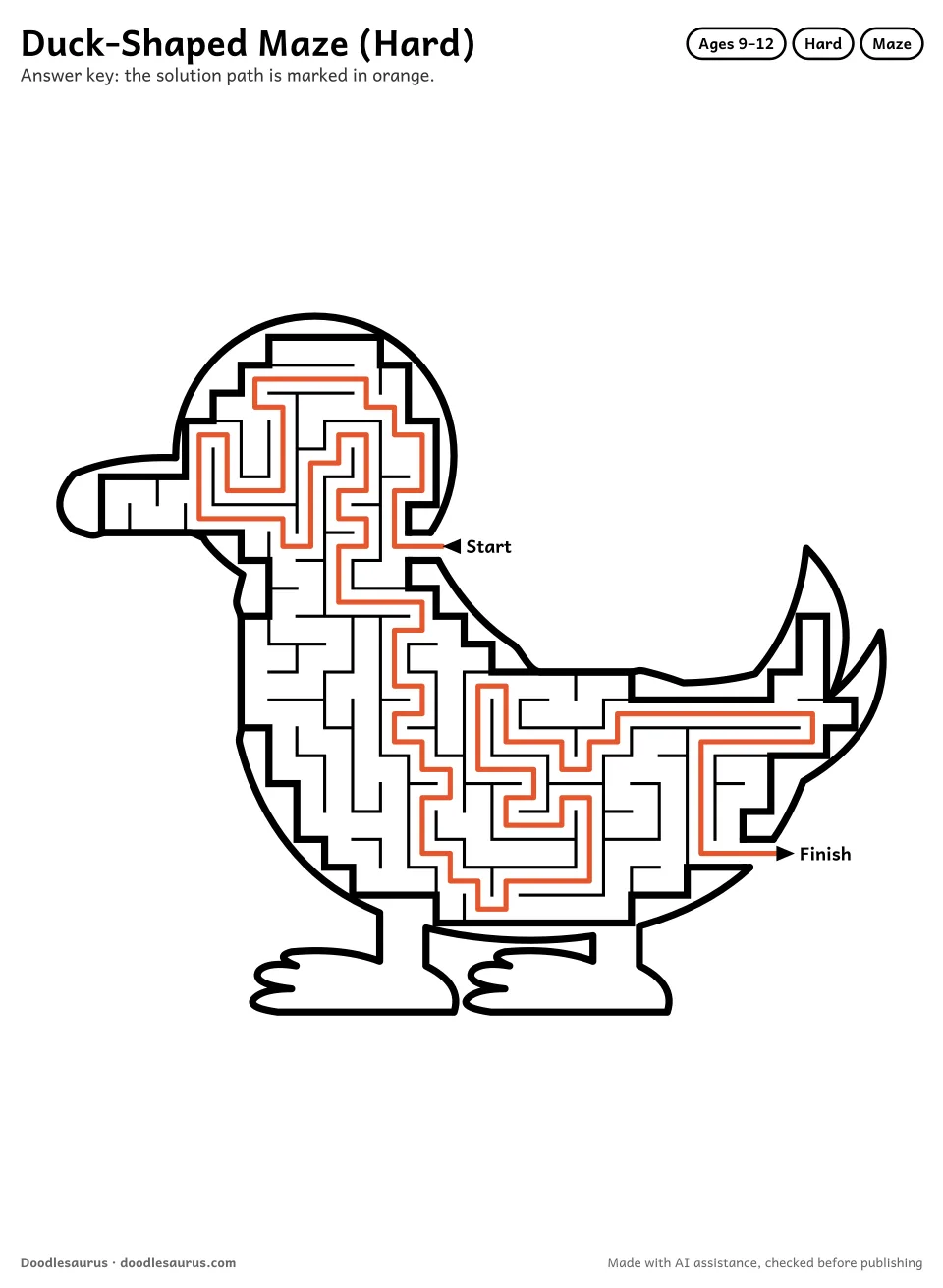
A standing duck
A flat bill pointing left, a curved neck, a plump body and two tail feathers pointing up make the outline of this duck maze. The walls follow that shape in small square steps and stay inside it. Start and Finish are well apart. Each sits at the end of a short channel that runs out through a gap, and the second page of every PDF is an answer key with the route in orange.
Medium and hard
The medium duck is for ages 6 to 8, with 103 cells of 8 mm and a 64-cell route. It enters above the top of the head, winds down the head and the neck and through the body, and leaves above the back, just behind the neck.
More of the duck is in play on the hard page. Corridors reach into the bill and stop above the feet, and 237 cells of 5.5 mm fill the outline for ages 9 to 12. The 116-cell route starts at the back of the head, where the neck begins. It ends at the back end of the body, below the tail, so older children have to work out a path through the head, down the neck and across the body. A pencil has little room to spare on paths that narrow, which is why the A4 or US Letter file needs to print at 100 percent with fit to page turned off.
Clipboards and car trips
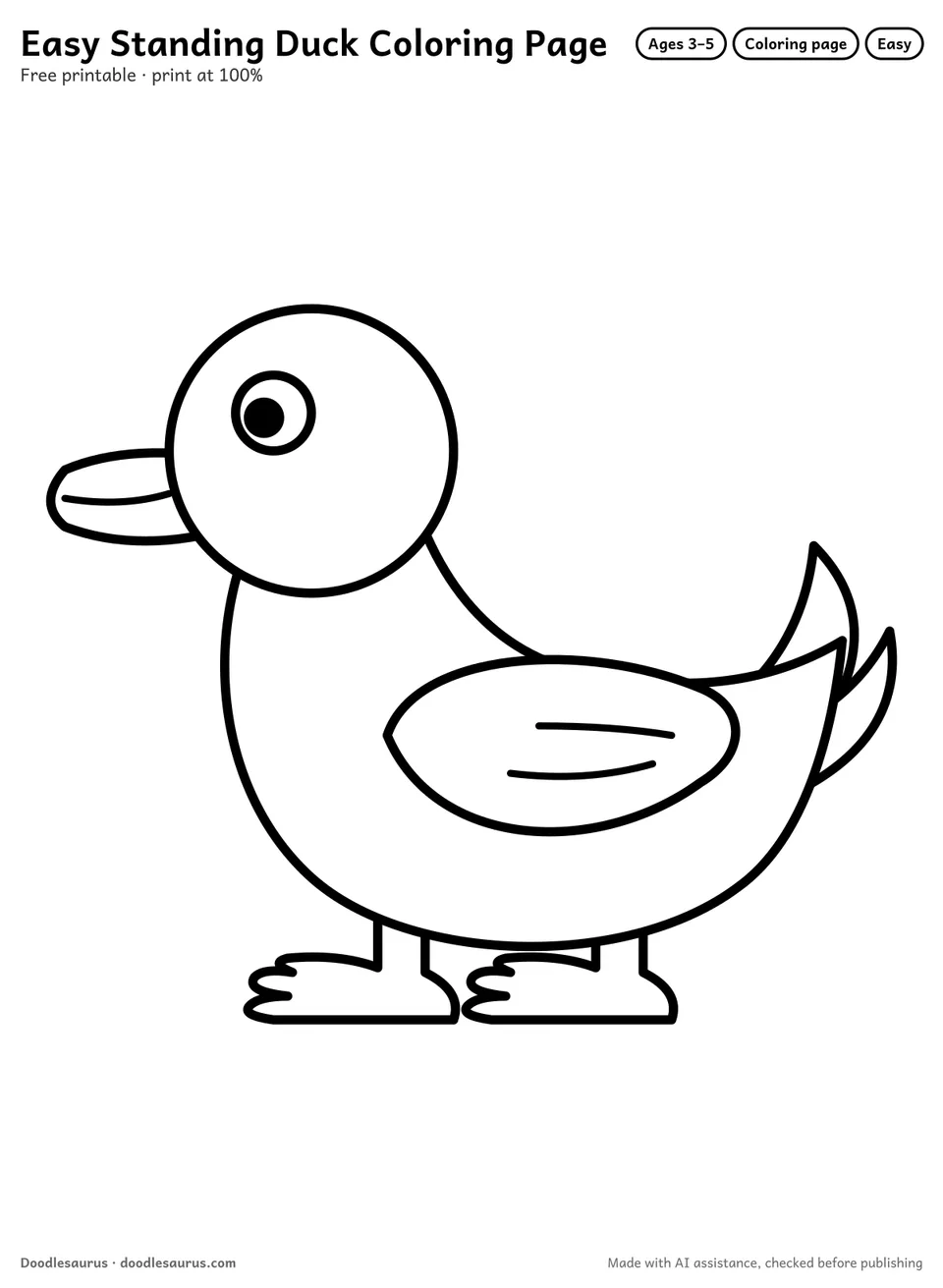
A pencil and a clipboard are enough. That makes the duck handy for waiting rooms, car trips or a quiet start to the school day, and afterward it can be colored, with the bill and feet in orange.
Skills practiced & tips
- Ask your child to find both arrows before drawing anything, since they move between levels.
- Run a finger along the route first, then go over it in pencil.
- Switch to a different color after a dead end so each attempt is easy to see.
- Use a sharp pencil for the hard duck, where the corridors are only 5.5 mm wide.
- Color the bill and feet orange once the route is finished.
Duck fun facts
- Ducks have webbed feet that work like paddles when they swim.
- A male mallard has a glossy green head, while the female is speckled brown.
- Ducklings often follow their mother in a single line soon after hatching.
Classroom ideas
- Kindergarten: trace the medium route with a finger as a group, then let each child try it with a crayon.
- Grade 1: hand out the medium duck as a morning starter and ask children to count the dead ends they found.
- Grades 4 to 6: compare the two answer keys, with routes of 64 and 116 cells, and work out the difference.
- Year 2 (UK): pupils describe the medium route aloud using up, down, left and right.
More duck activities
More mazes
Frequently asked questions
Is the hard duck much longer to solve?
Yes, and tighter too. The hard duck has 237 cells of 5.5 mm and a 116-cell route, where the medium duck has 103 cells of 8 mm and a 64-cell route.
Does either duck route end near the tail?
The hard one does. It starts at the back of the head, where the neck begins, and finishes at the back end of the body, below the tail. The medium route starts above the top of the head and ends above the back, just behind the neck.
Do the paths reach into the bill?
On the hard duck, yes. Its corridors reach into the bill and stop above the feet, so the webbed feet are left to color.
Is this duck used in other activities?
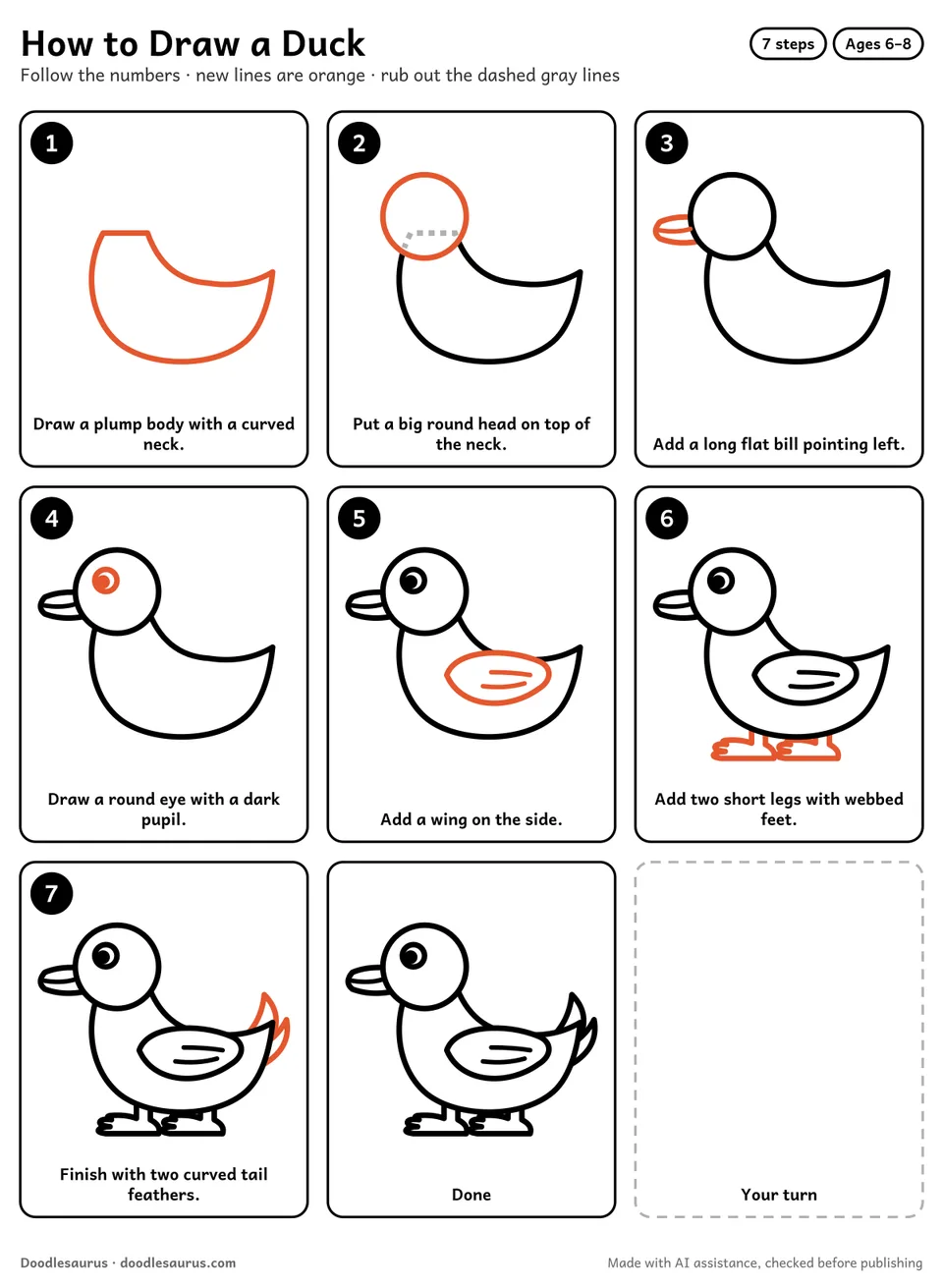
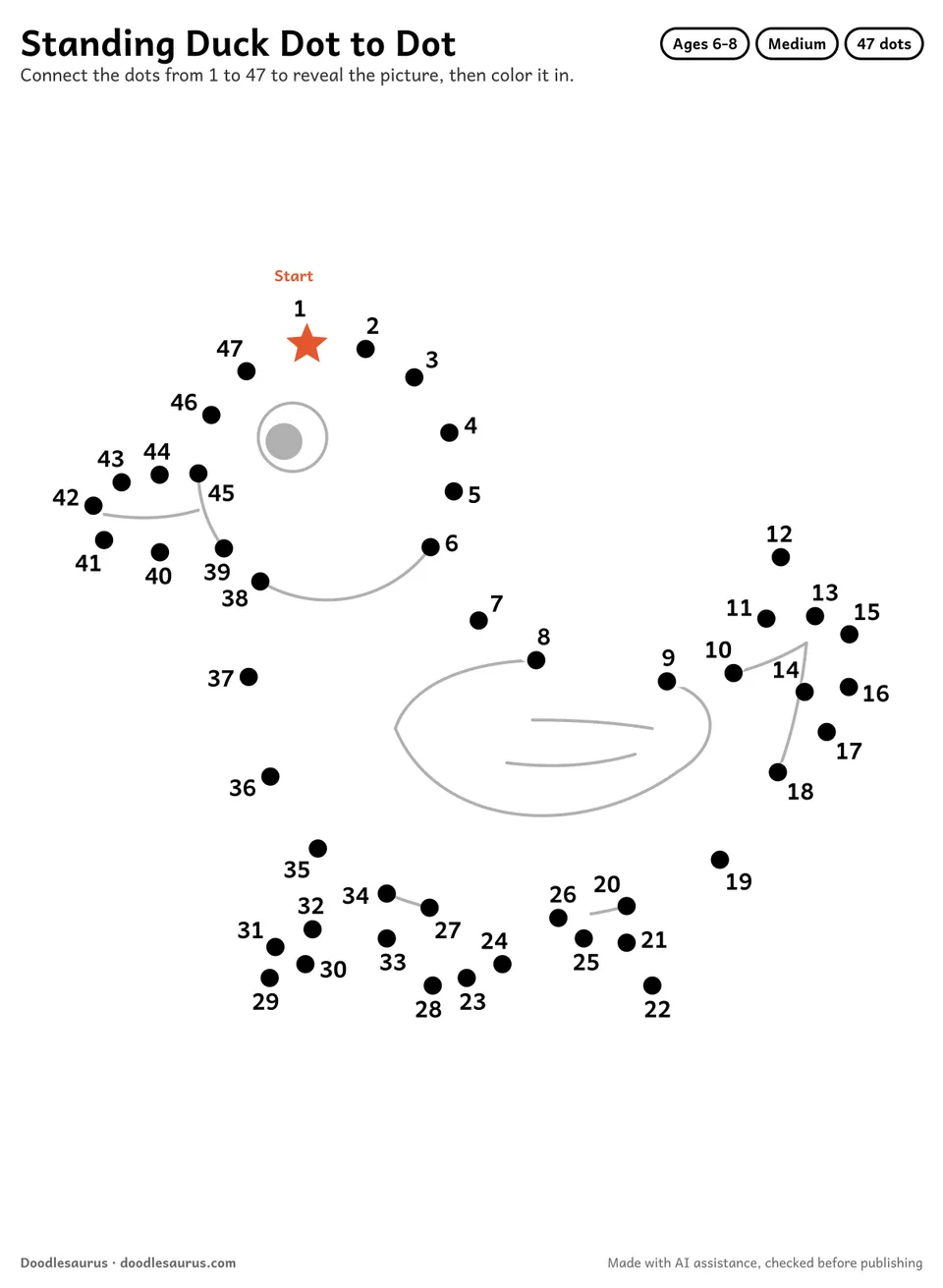
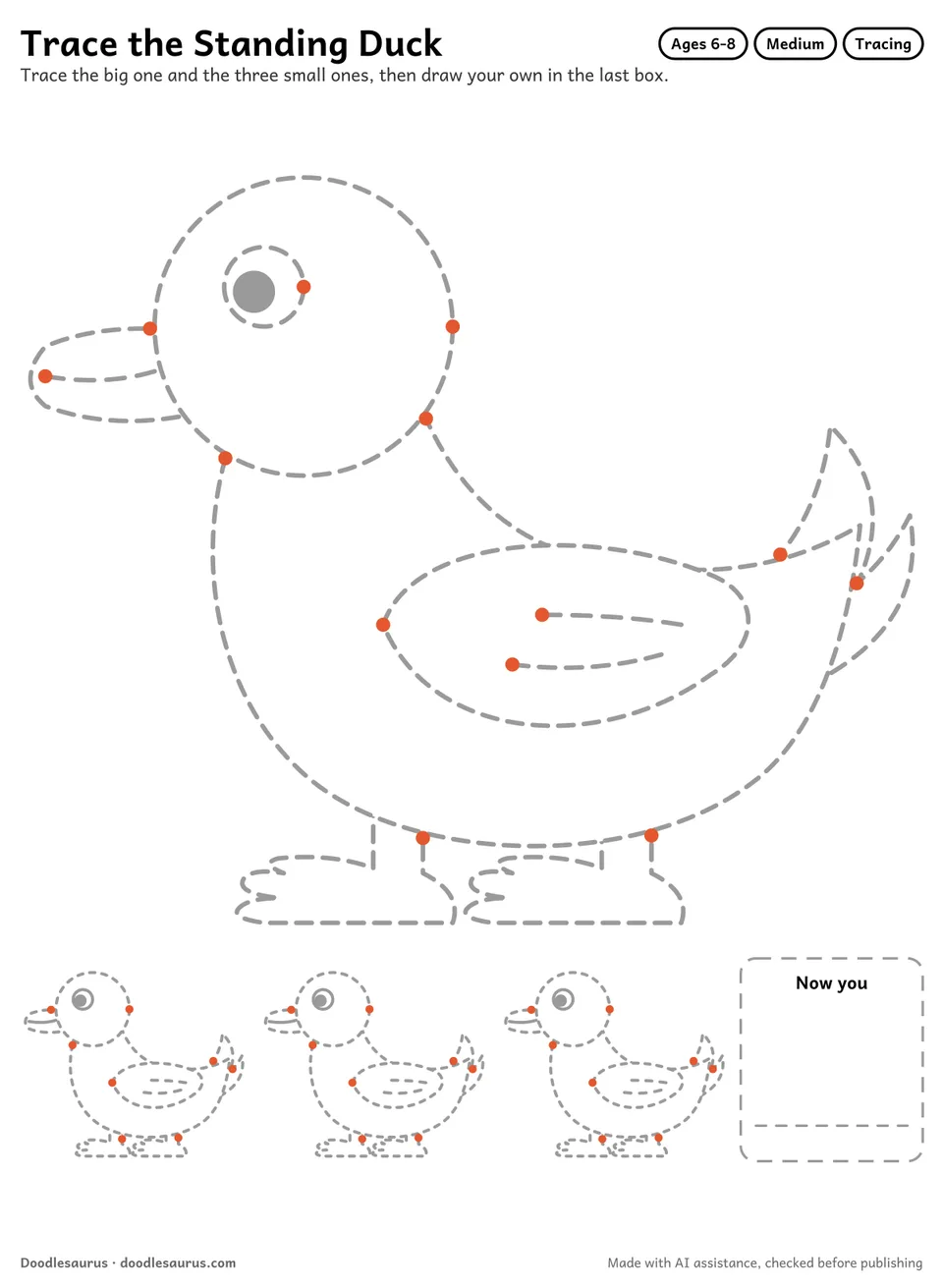
Yes. The same standing duck is also a coloring page, a 7-step how to draw sheet, a dot to dot and a tracing worksheet.
About this printable
- Made with AI assistance (vector drawing authored by a language model) and checked by automated tests and an AI reviewer.
- Checked by automated tests and an AI reviewer on 22 Oct 2026.
- Free for personal and single-classroom use. See the license. Read the license · How these are made · Report a problem.
- Vector PDF, 2 pages, 186×254 mm art box — prints edge-safe on A4 and US Letter.
New printables, twice a month
Our newsletter starts soon, with new sheets twice a month and a free 10-page starter pack for every new reader.