
Duck Tracing Worksheets with a Flat Bill and Webbed Feet
Duck tracing for ages 3 to 8: a standing duck with a flat bill and wide webbed feet, one large on the easy sheet and three small ones with a blank box.
Choose a level
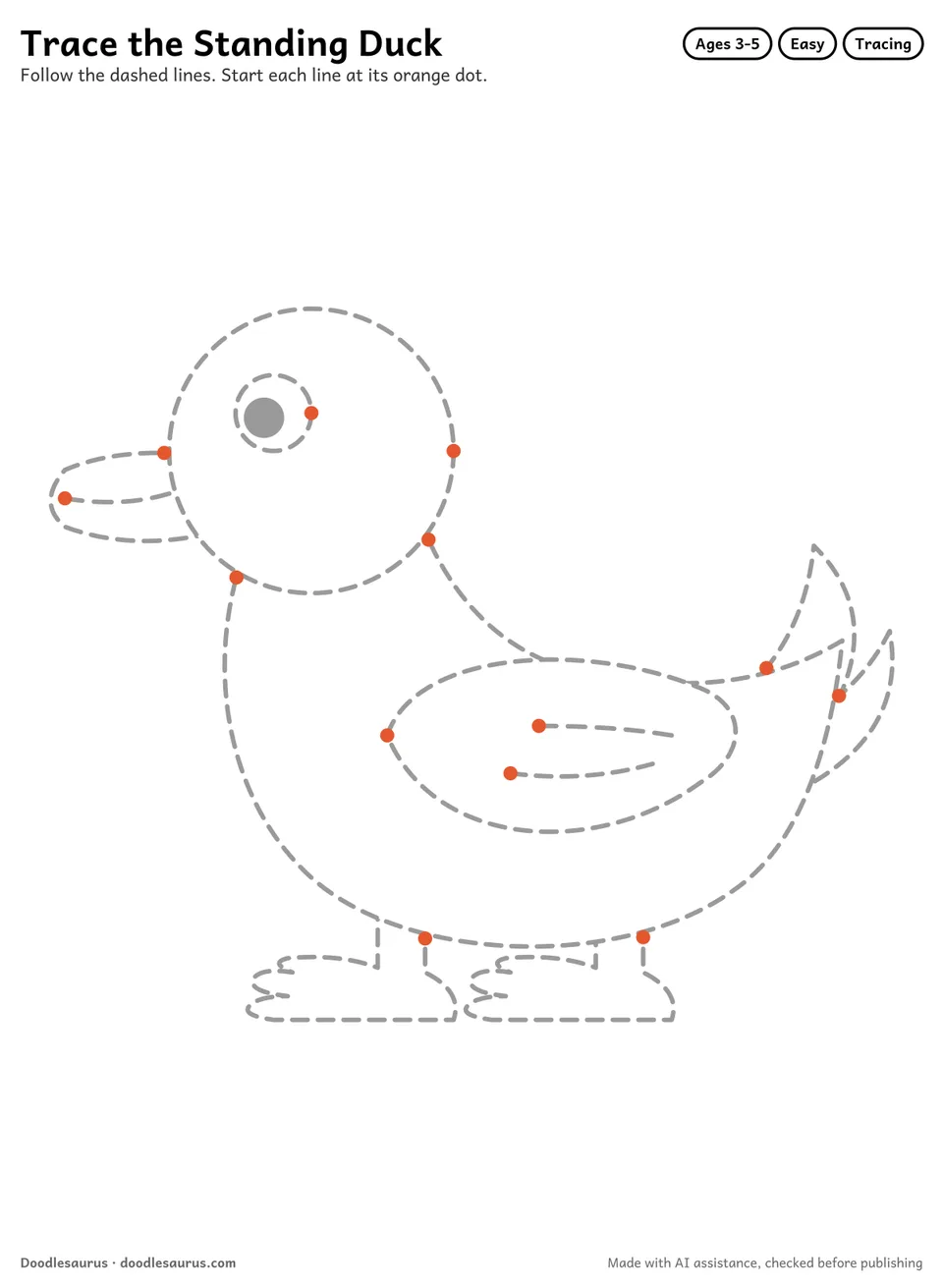
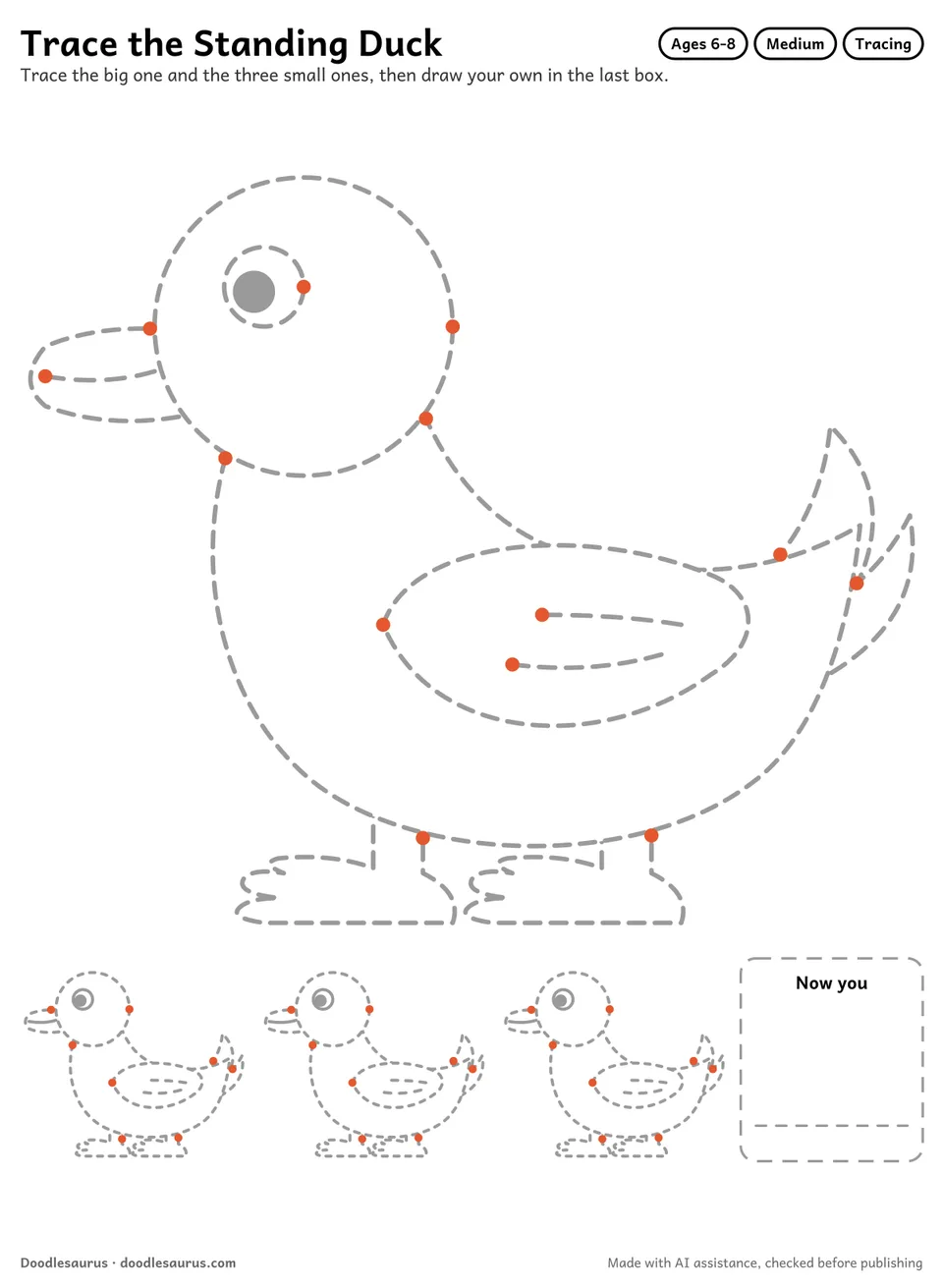
Standing Duck Tracing Worksheet
A big circle for the head is the longest single stroke on this standing duck. The rest follows from it: a smaller ring around the eye, a flat bill, a curved neck sweeping into a round body and an oval wing with two short feather lines. Every line has an orange dot at its start, so nobody has to guess where to begin. The pupil is solid gray.
Easy: one large duck
Most of the easy worksheet for ages 3 to 5 goes to a single duck with long, gentle lines, and the sharper turns come last, in the two tail feathers and the webbed toes.
Medium: big, small and freehand
The large dashed duck fills the top half of the medium worksheet, meant for ages 6 to 8. Underneath sit three smaller copies. Their curves are tighter, and the pencil has to stop and turn more often. Scaling the page down squeezes those dashes, so set the A4 or US Letter file to 100 percent. The blank Now you box comes after the small ducks, for one drawn without any guides.
Skills practiced & tips
- Point to an orange dot and trace the first few dashes with a finger before using the pencil.
- Begin with the big head circle, since it is the longest single stroke on the page.
- Use a thick crayon on the easy sheet and a sharpened pencil for the three small ducks.
- Leave the toes and the two tail points for last, because they need the most careful turns.
- Stop after the large duck if attention fades and come back to the small ones later.
Duck fun facts
- Ducklings can swim within a day of hatching.
- Oil spread from a gland near its tail keeps a duck's feathers waterproof.
- Webbed feet act like paddles, pushing a duck through the water.
Classroom ideas
- Preschool (ages 3 to 5): slip the easy page into a plastic sleeve and trace it with a dry-erase marker at a table center.
- Kindergarten: trace the large duck on day one and the three small ducks with the Now you box on day two.
- Grade 1: after tracing, students write a short sentence about where the duck is going under their own drawing.
More duck activities
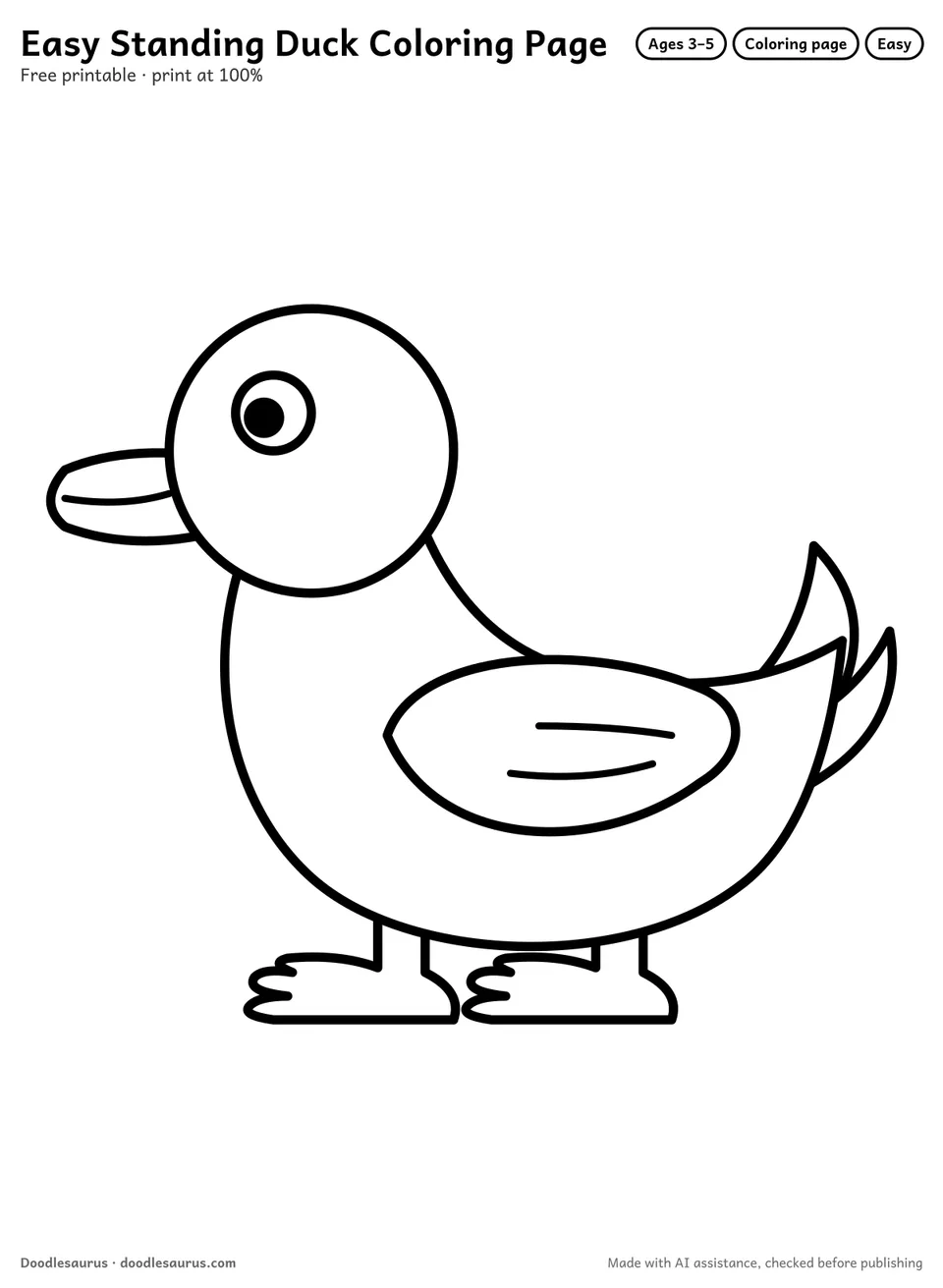
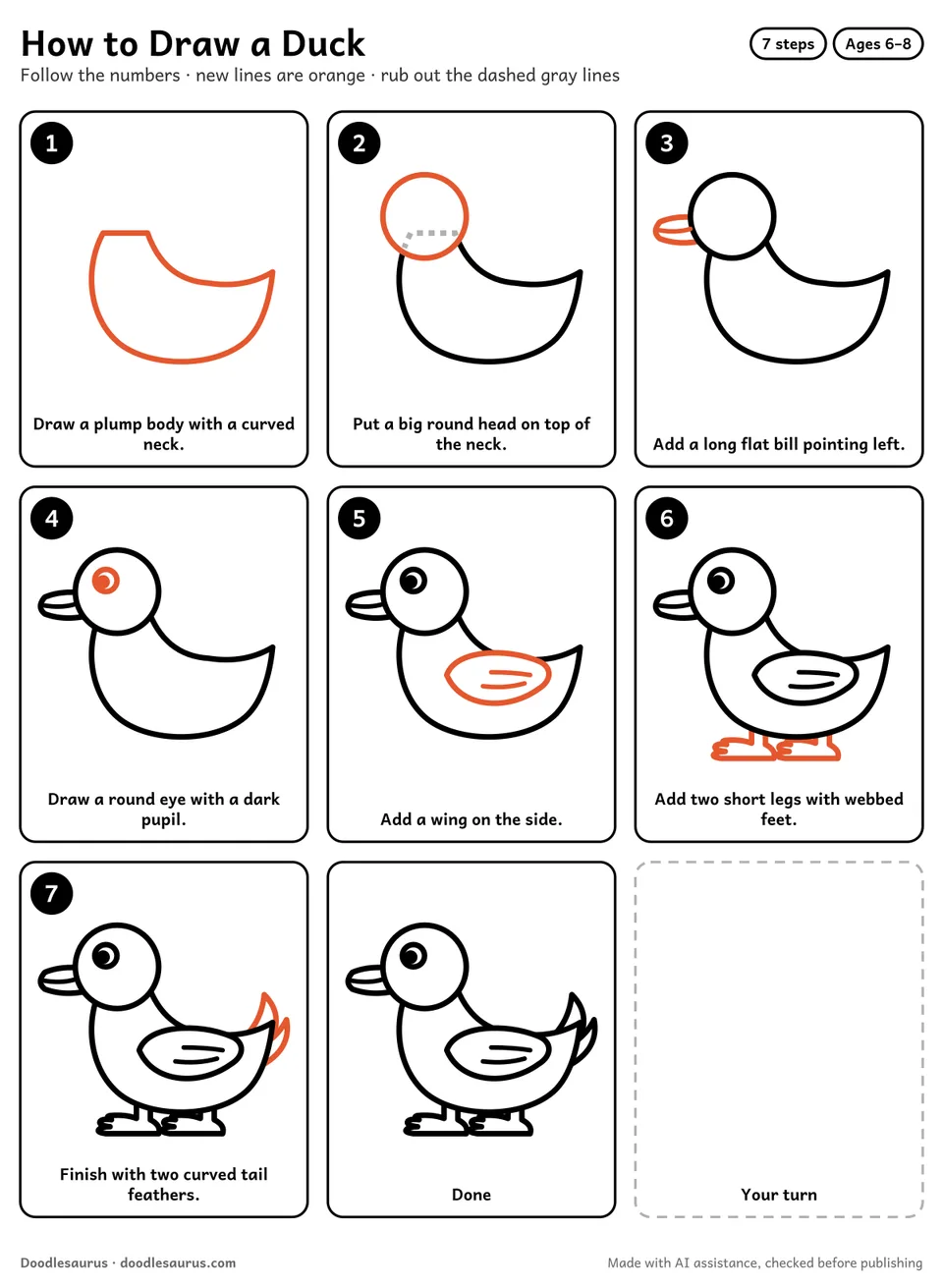
More tracing
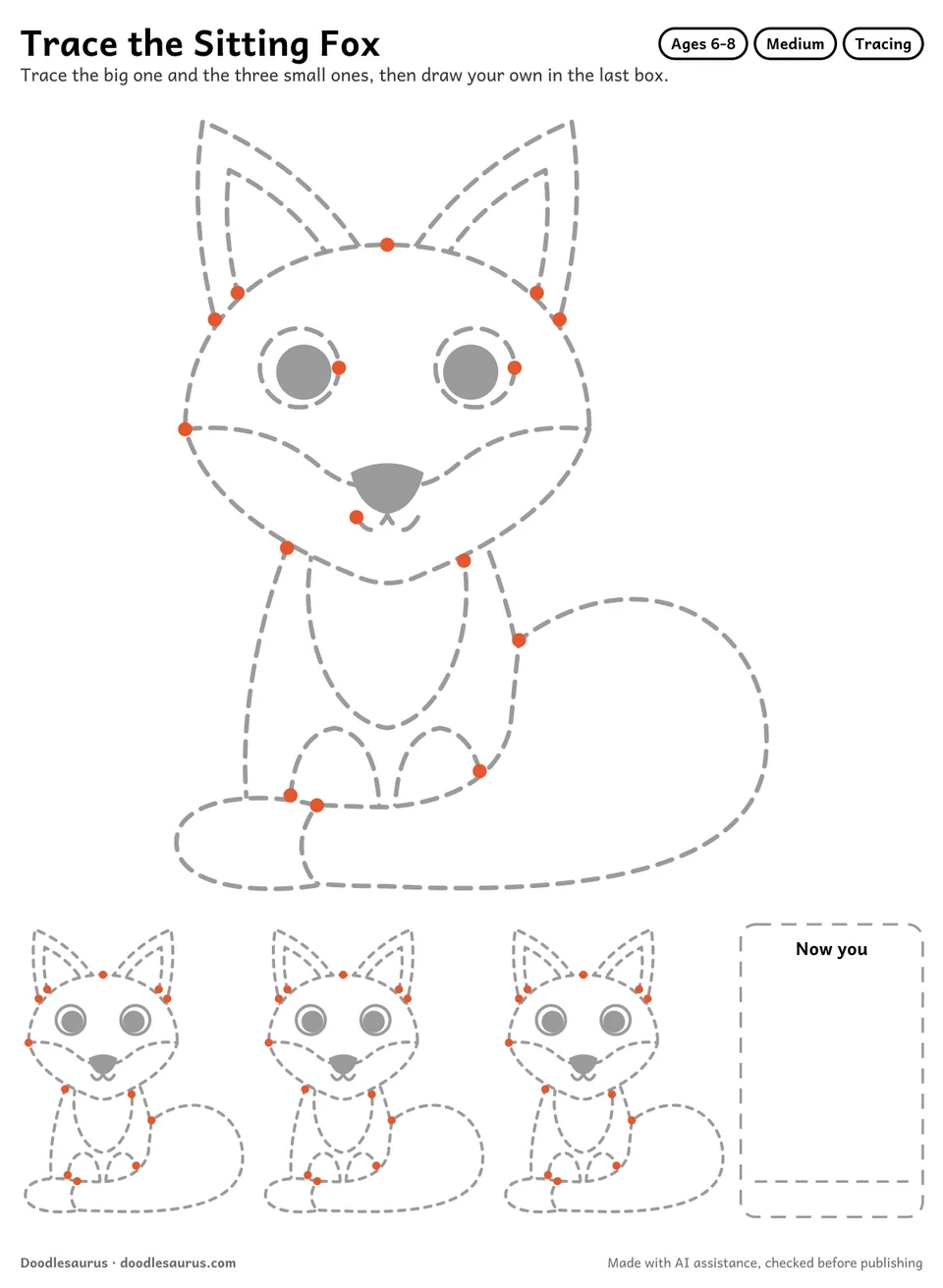
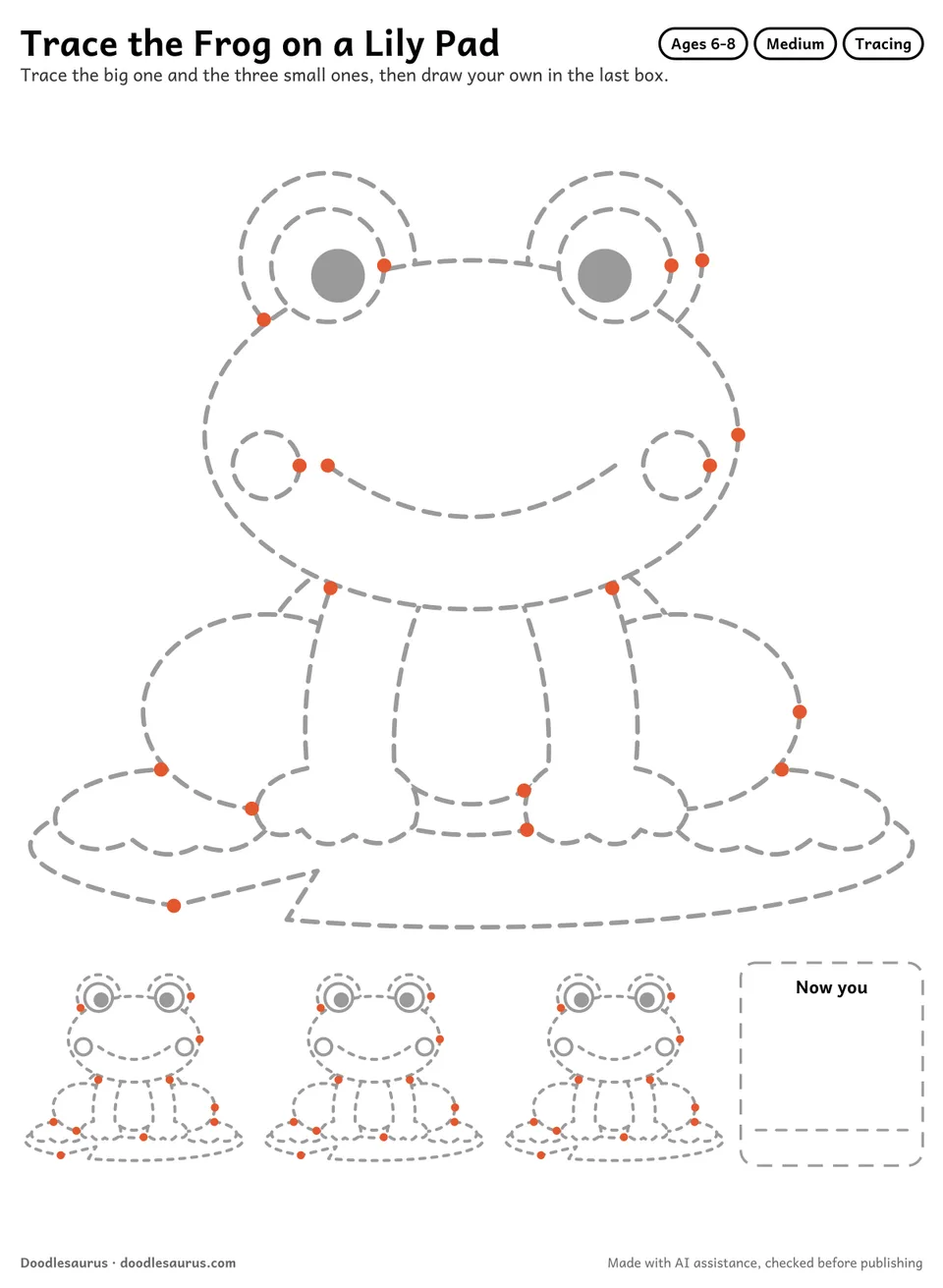
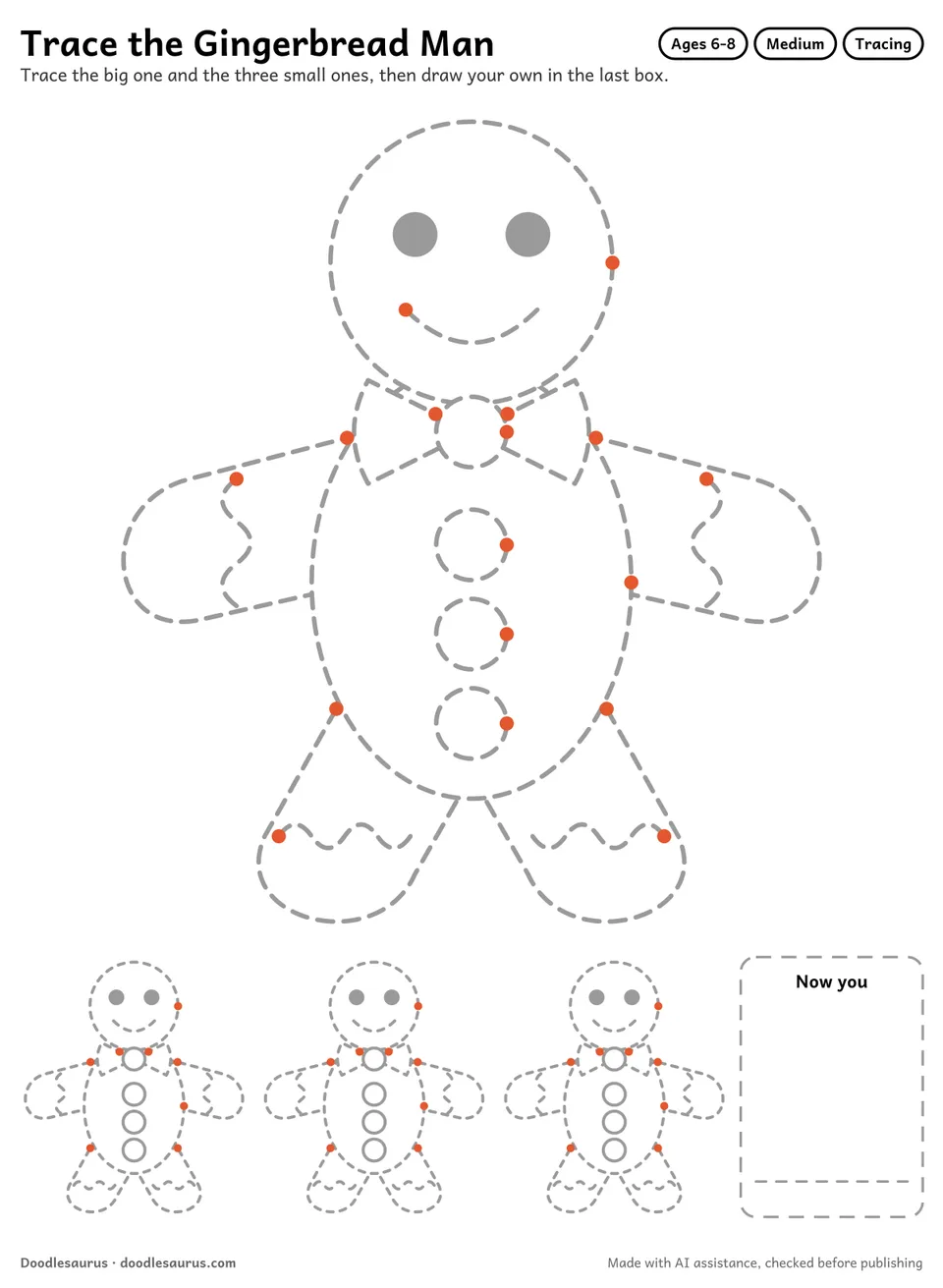
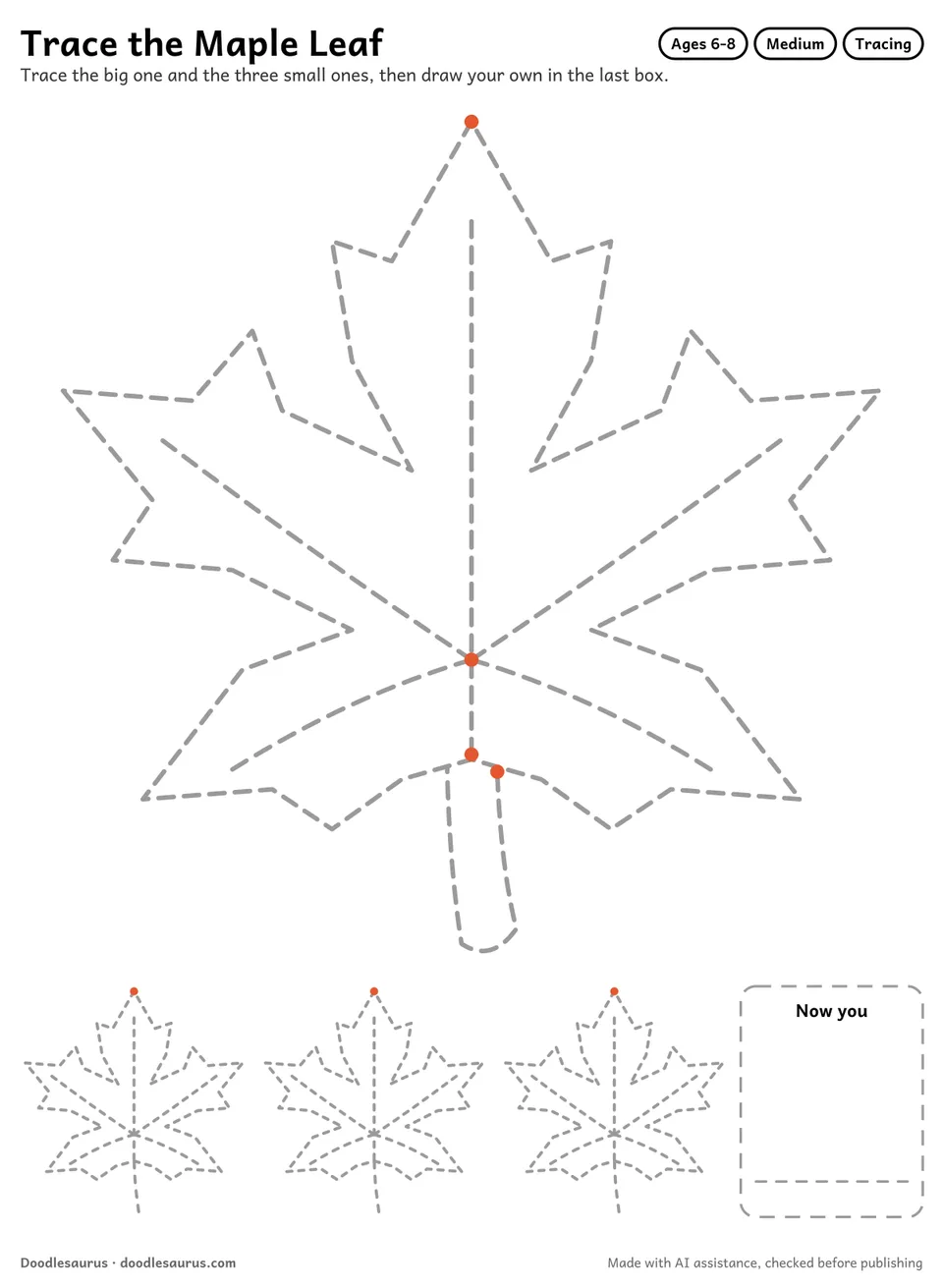
Frequently asked questions
How tight do the curves get on the three small ducks?
Tight enough that the pencil stops and turns more often than on the large duck at the top of the medium sheet for ages 6 to 8. The easy sheet for ages 3 to 5 has one large dashed duck made of long, gentle lines.
Why are there orange dots on the lines?
Each orange dot marks where a stroke begins. It gives your child a fixed spot to put the pencil down and shows which line to follow next.
Which parts of the duck need the most care?
The webbed toes and the two tail feathers, which have the sharpest turns. The big head circle is the easiest place to start.
About this printable
- Made with AI assistance (vector drawing authored by a language model) and checked by automated tests and an AI reviewer.
- Checked by automated tests and an AI reviewer on 22 Oct 2026.
- Free for personal and single-classroom use. See the license. Read the license · How these are made · Report a problem.
- Vector PDF, 1 page, 186×254 mm art box — prints edge-safe on A4 and US Letter.
New printables, twice a month
Our newsletter starts soon, with new sheets twice a month and a free 10-page starter pack for every new reader.