
Butterfly Maze with 77, 196 or 450 Cells
Print a butterfly maze in three levels, from 77 wide cells for ages 3 to 5 to 450 narrow ones for ages 9 to 12. Each free PDF includes an answer page.
Choose a level
From one side of the wings to the other
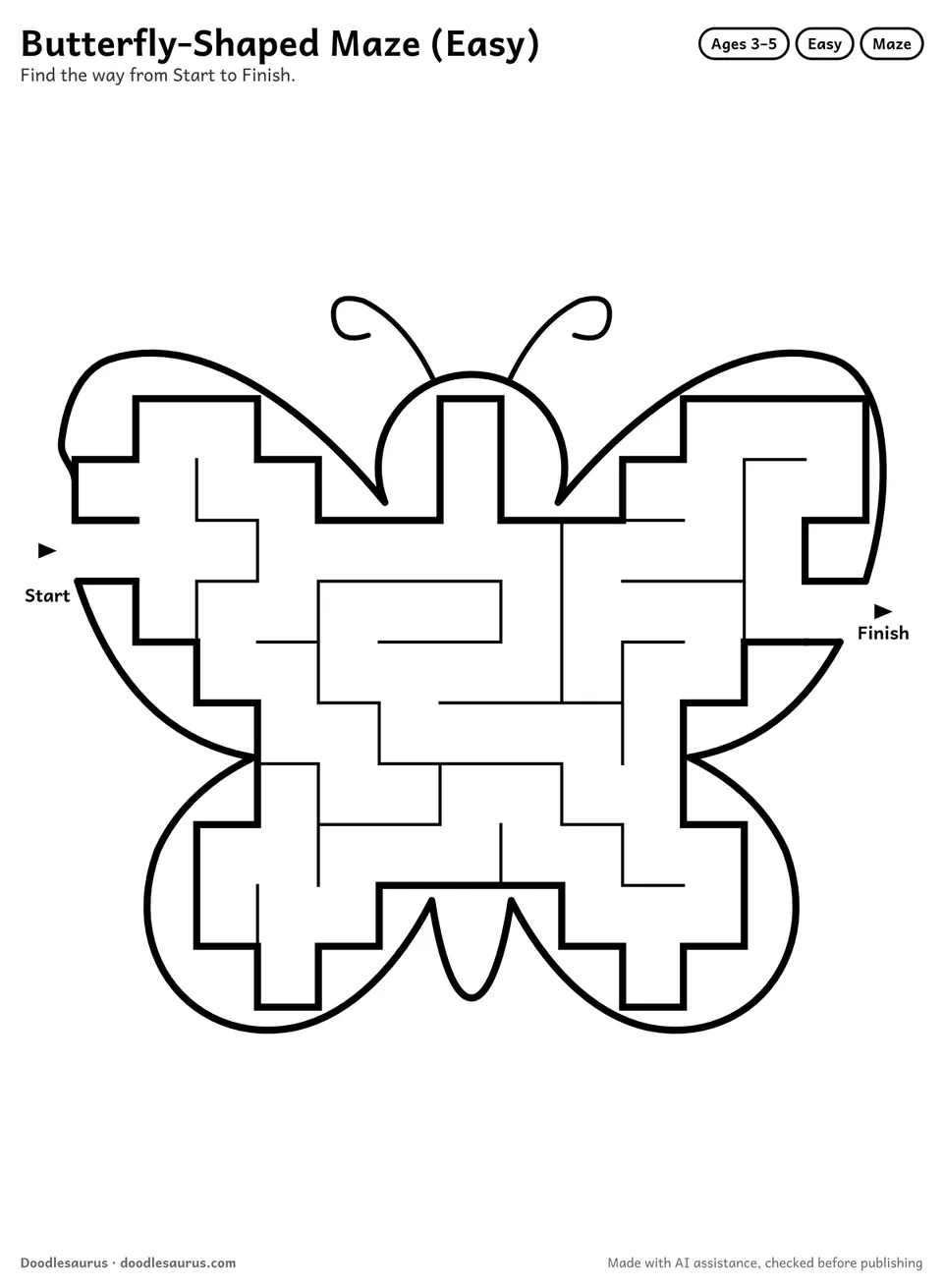
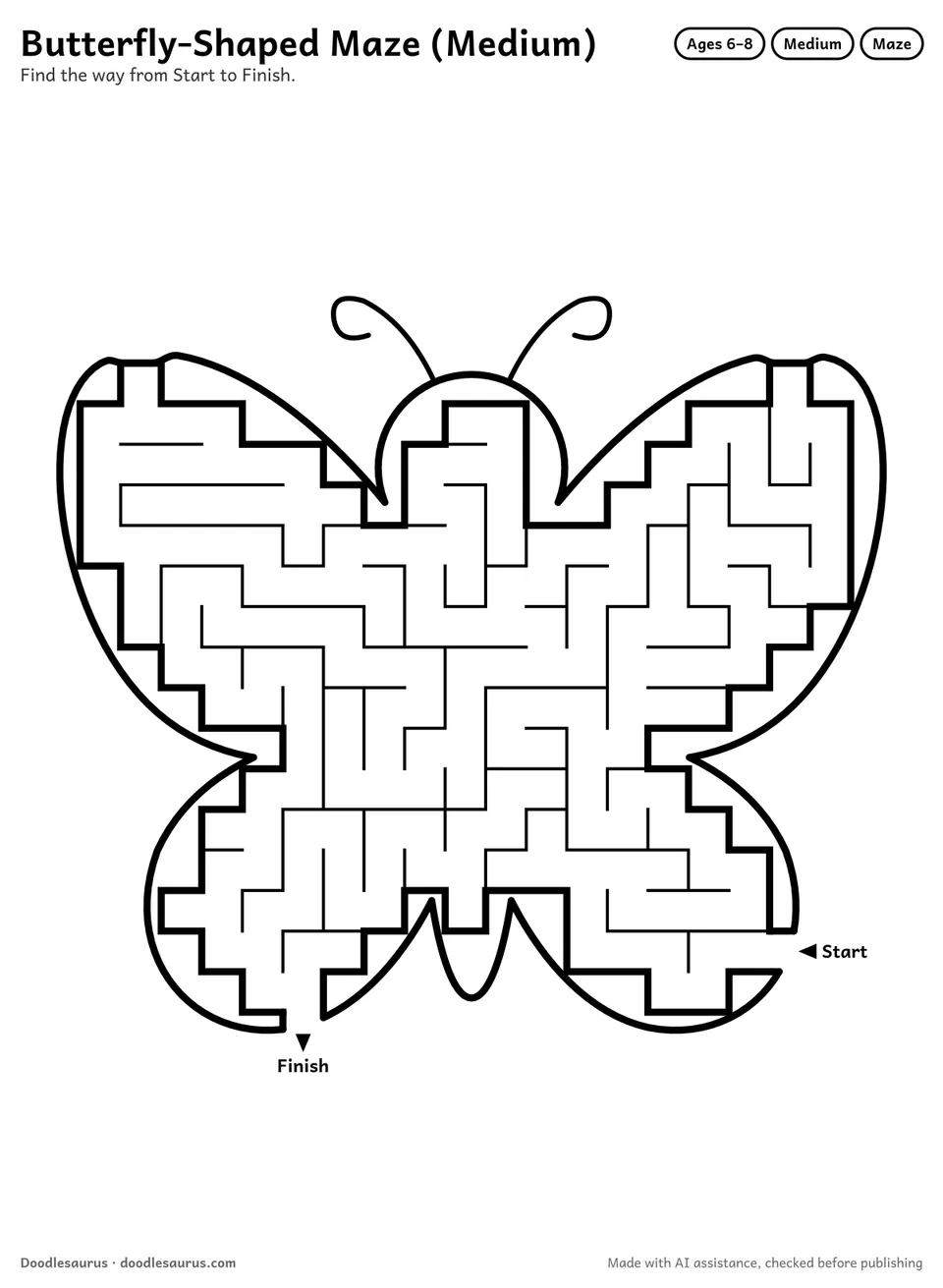
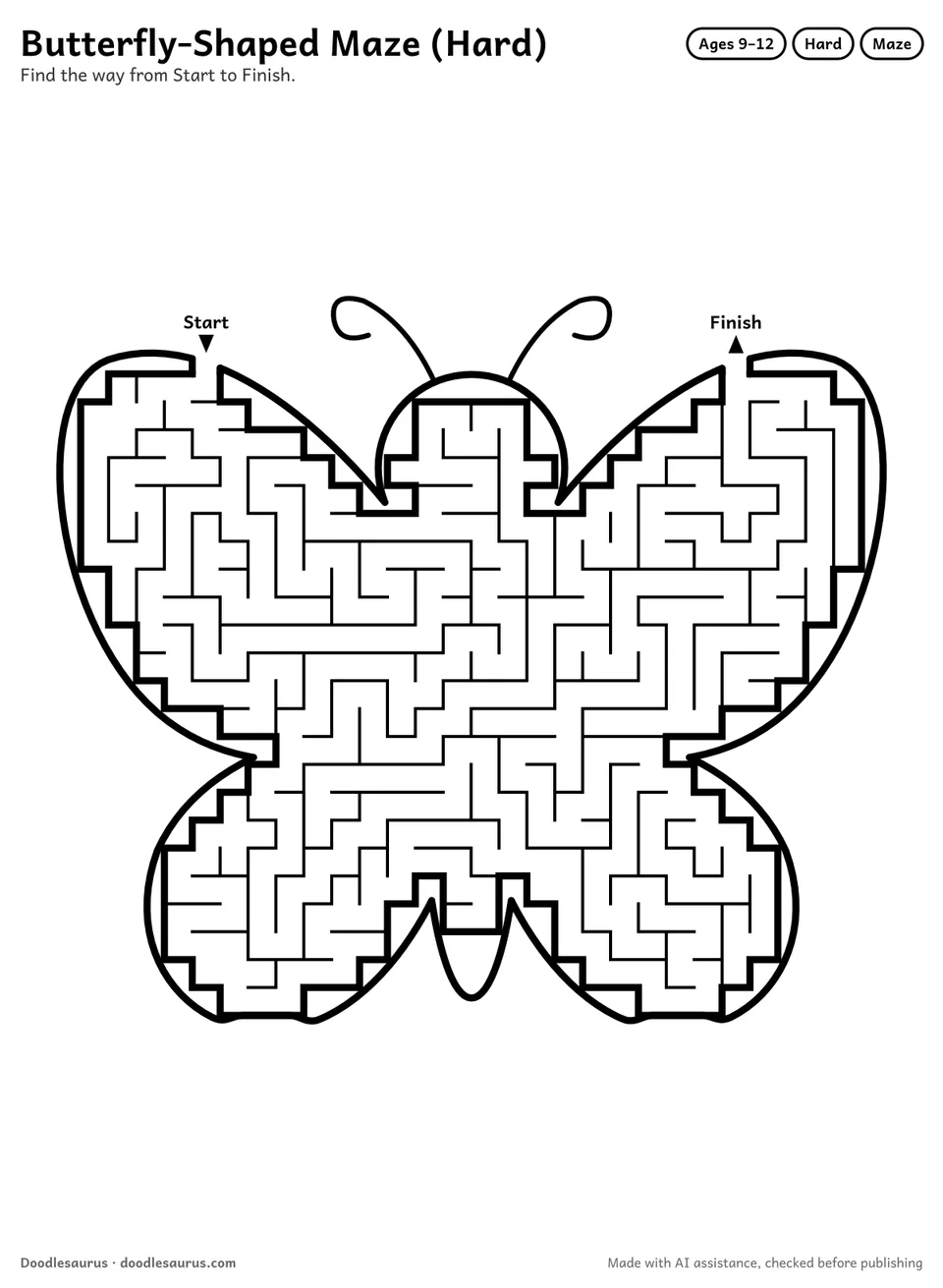
Every route on this butterfly maze crosses the open wings from one side to the other. The outline has two large upper wings, two smaller lower wings, a round head with two curled antennae and a short tip of the body at the bottom. The walls follow those curves in small square steps. Start and Finish are arrows outside the outline, each at the end of a short channel through a gap.
Easy, medium and hard
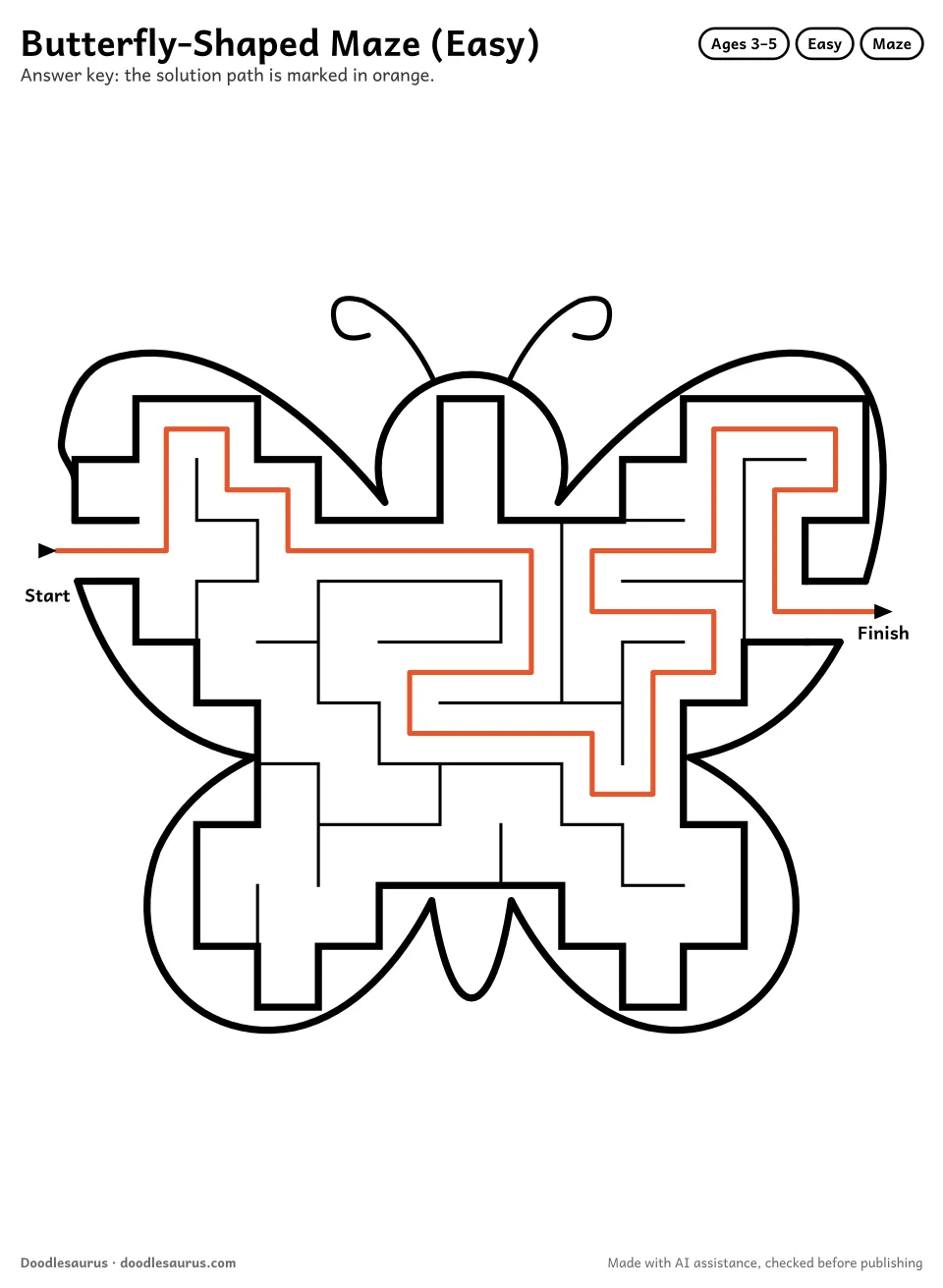
On the easy page the route passes through 38 of the 77 cells, almost half the maze. Those cells are 12 mm wide, for ages 3 to 5, and the path runs from the outer edge of the left upper wing, across the middle, to the outer edge of the right upper wing.
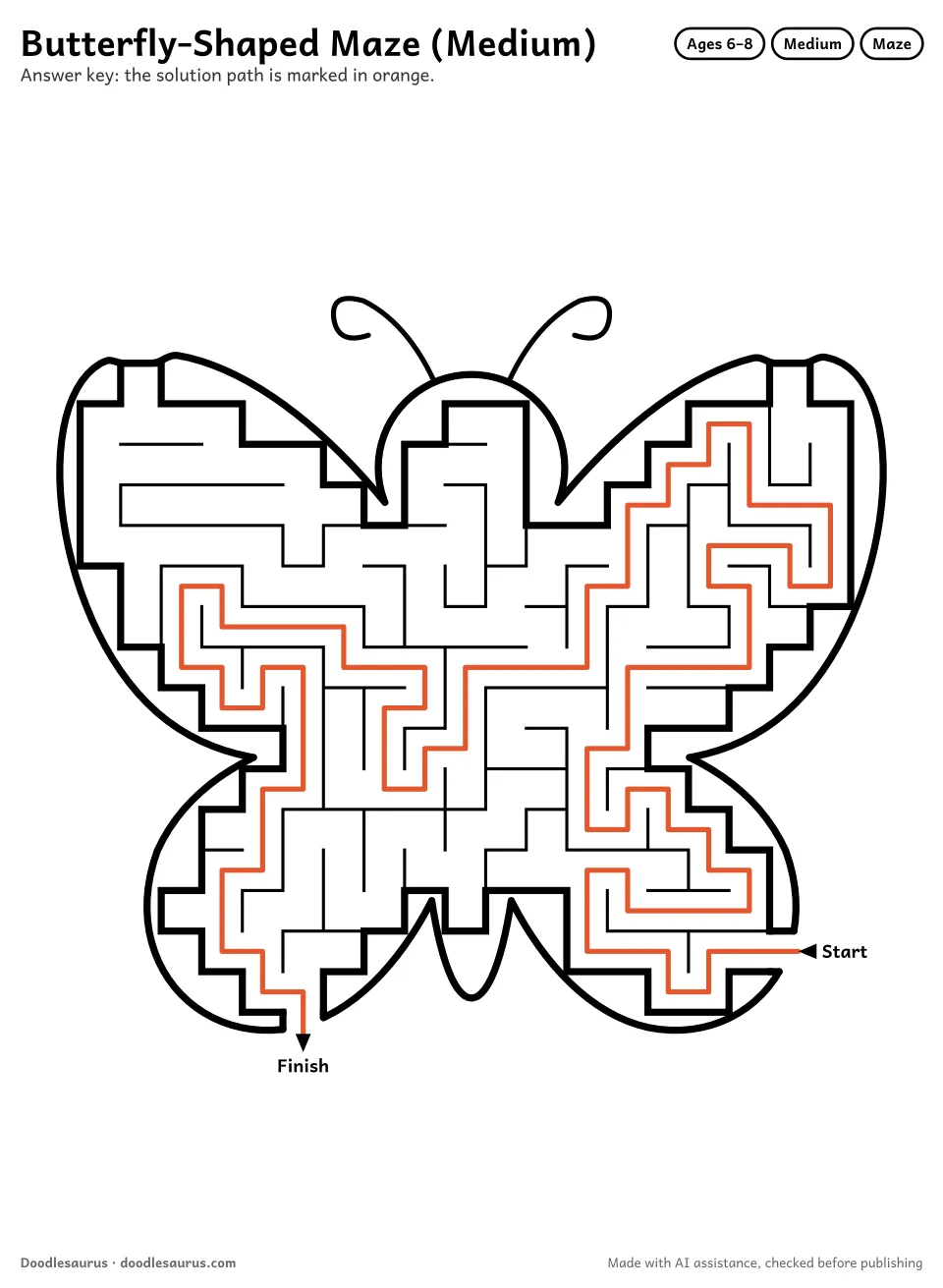
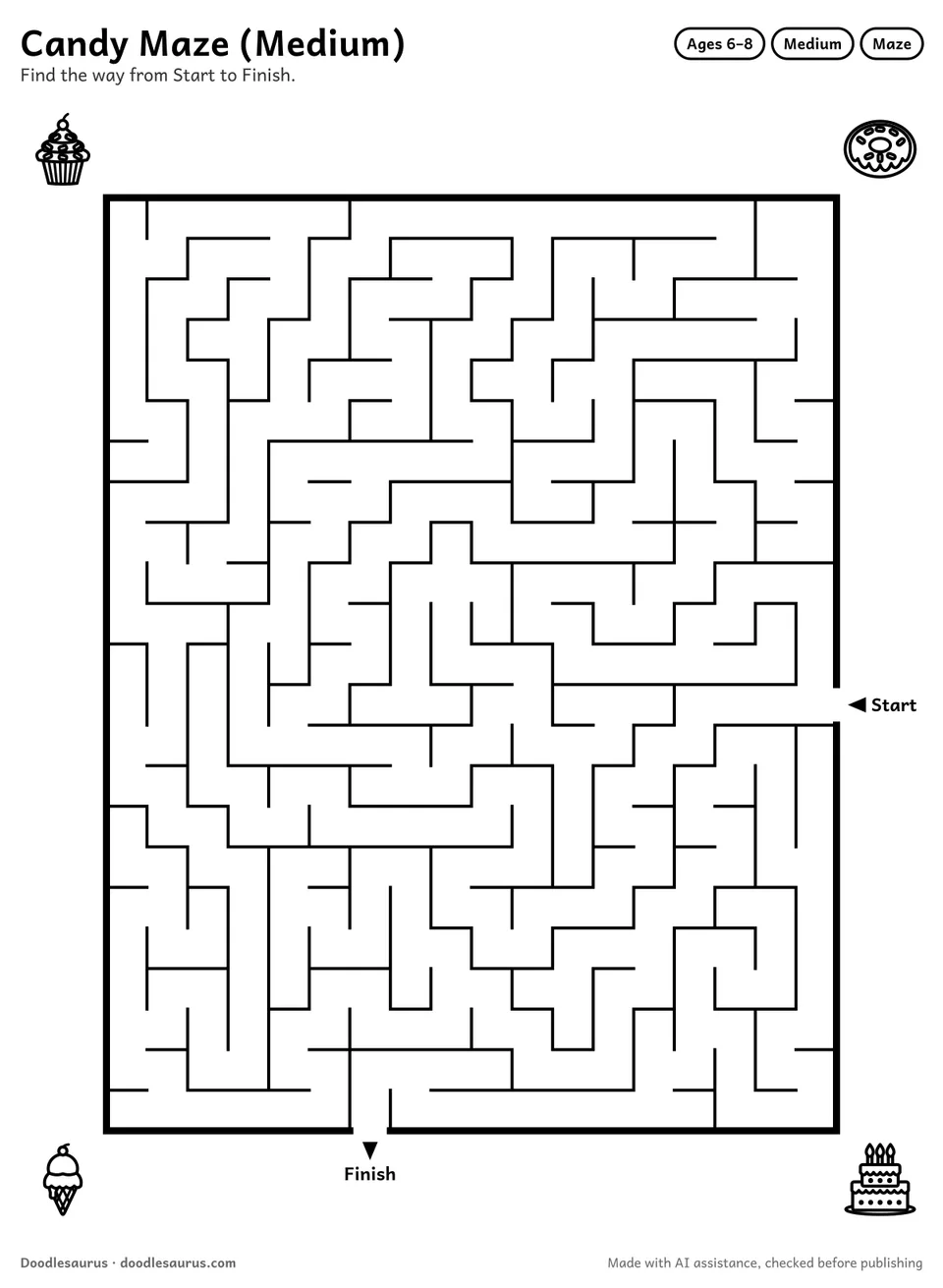
The medium page has 196 cells of 8 mm, for ages 6 to 8. A 93-cell route starts at the outer edge of the right lower wing, climbs into the right upper wing and winds across to the bottom of the left lower wing.
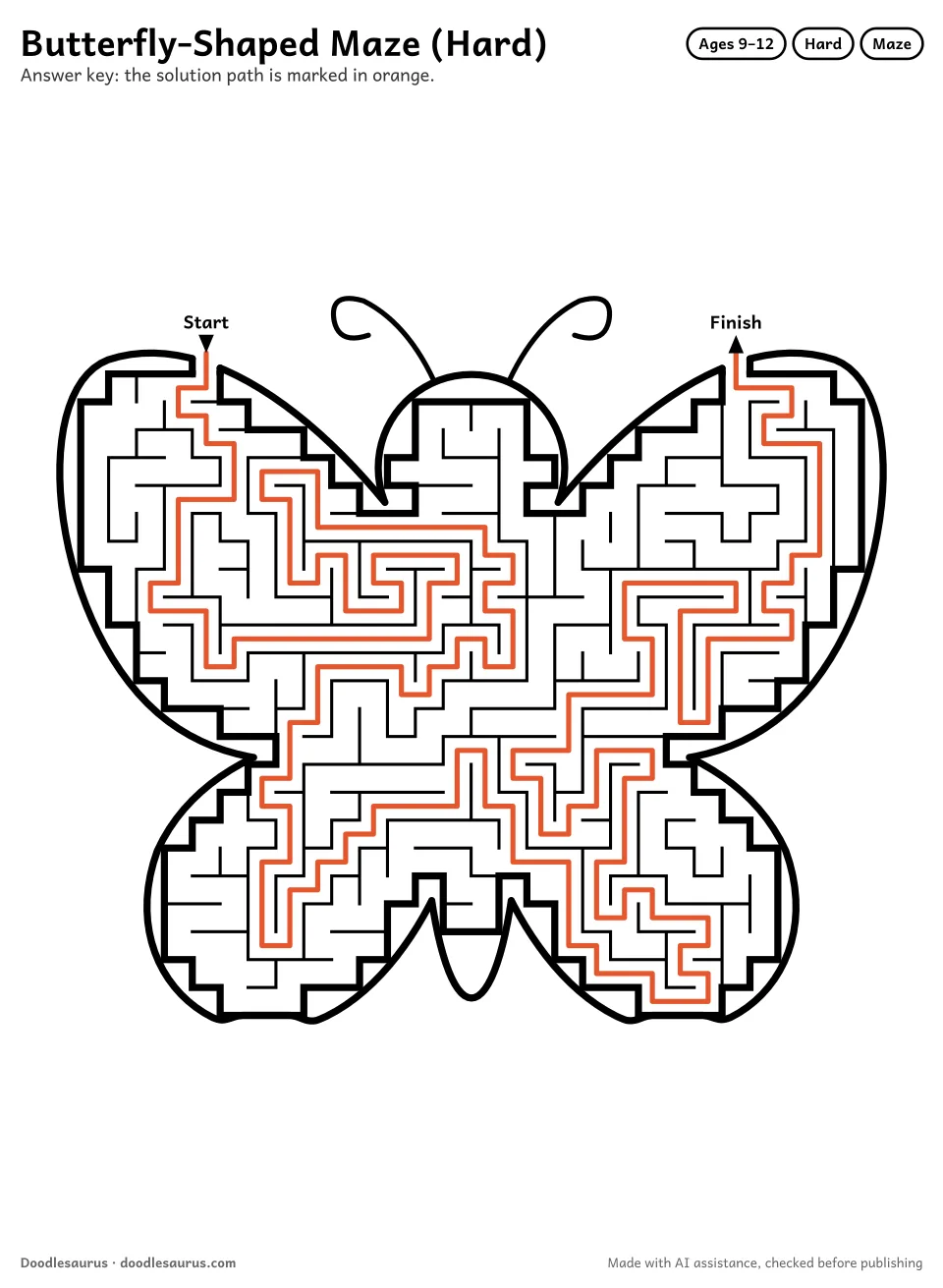
The hard butterfly fits 450 cells of only 5.5 mm into the wings, for ages 9 to 12. Its route is 202 cells long. It goes from the left upper wing through all four wings to the right upper wing, and plenty of side paths lead nowhere. Narrow paths like these are the reason to keep the A4 or US Letter print at 100 percent.
On a trip or before a lesson
It works on a trip, in a waiting room or at the start of a lesson. The answer is on the second page of every PDF. Once the route is done, the wings are left to color.
Skills practiced & tips
- Find both arrows before starting, since Start and Finish move on every level.
- Trace the route with a finger first, then with a pencil.
- At a dead end, go back to the last fork and try the other way.
- On the hard page, a sharp pencil keeps the line inside the 5.5 mm paths.
- Color the wings around the finished route, with bright spots or stripes.
Butterfly fun facts
- Many butterflies can see ultraviolet light, which people cannot, and it helps them find flowers.
- A butterfly cannot fly well when its body is cold, so it often rests in sunshine before taking off.
Classroom ideas
- Pre-K (ages 3 to 5): solve the easy maze with a finger, then with a crayon, as a pencil-control warm-up.
- Grade 2: in pairs, one student draws the medium route while the other gives directions.
- Grades 4 to 6: compare the three route lengths, 38, 93 and 202 cells, and work out how many cells of each maze are not on the route.
More butterfly activities
More mazes
Frequently asked questions
How much do the paths narrow on the hard butterfly?
They shrink from 12 mm on the easy maze to 8 mm on the medium and 5.5 mm on the hard one, while the cell count climbs from 77 to 196 and then 450.
Does the butterfly route always cross from one side to the other?
Yes, but the wings change. The easy route runs from the outer edge of the left upper wing to the outer edge of the right upper wing, and the hard route from above the left upper wing to above the right upper wing. The medium route goes the other way, from the outer edge of the right lower wing to a Finish below the left lower wing.
How much of each maze is the route?
On the easy maze the route uses 38 of the 77 cells, almost half. The medium route takes 93 of its 196 cells, and the hard route 202 of 450.
How many wings does the hard butterfly route cross?
All four. The 202-cell route goes from the left upper wing through all four wings to the right upper wing, and plenty of side paths lead nowhere.
About this printable
- Made with AI assistance (vector drawing authored by a language model) and checked by automated tests and an AI reviewer.
- Checked by automated tests and an AI reviewer on 22 Oct 2026.
- Free for personal and single-classroom use. See the license. Read the license · How these are made · Report a problem.
- Vector PDF, 2 pages, 186×254 mm art box — prints edge-safe on A4 and US Letter.
New printables, twice a month
Our newsletter starts soon, with new sheets twice a month and a free 10-page starter pack for every new reader.