
Butterfly Tracing Worksheets with Spotted Wings
Butterfly tracing worksheets with four spotted wings and curly antennae: one big butterfly for ages 3 to 5, three small for 6 to 8. A4 or US Letter PDF.
Choose a level
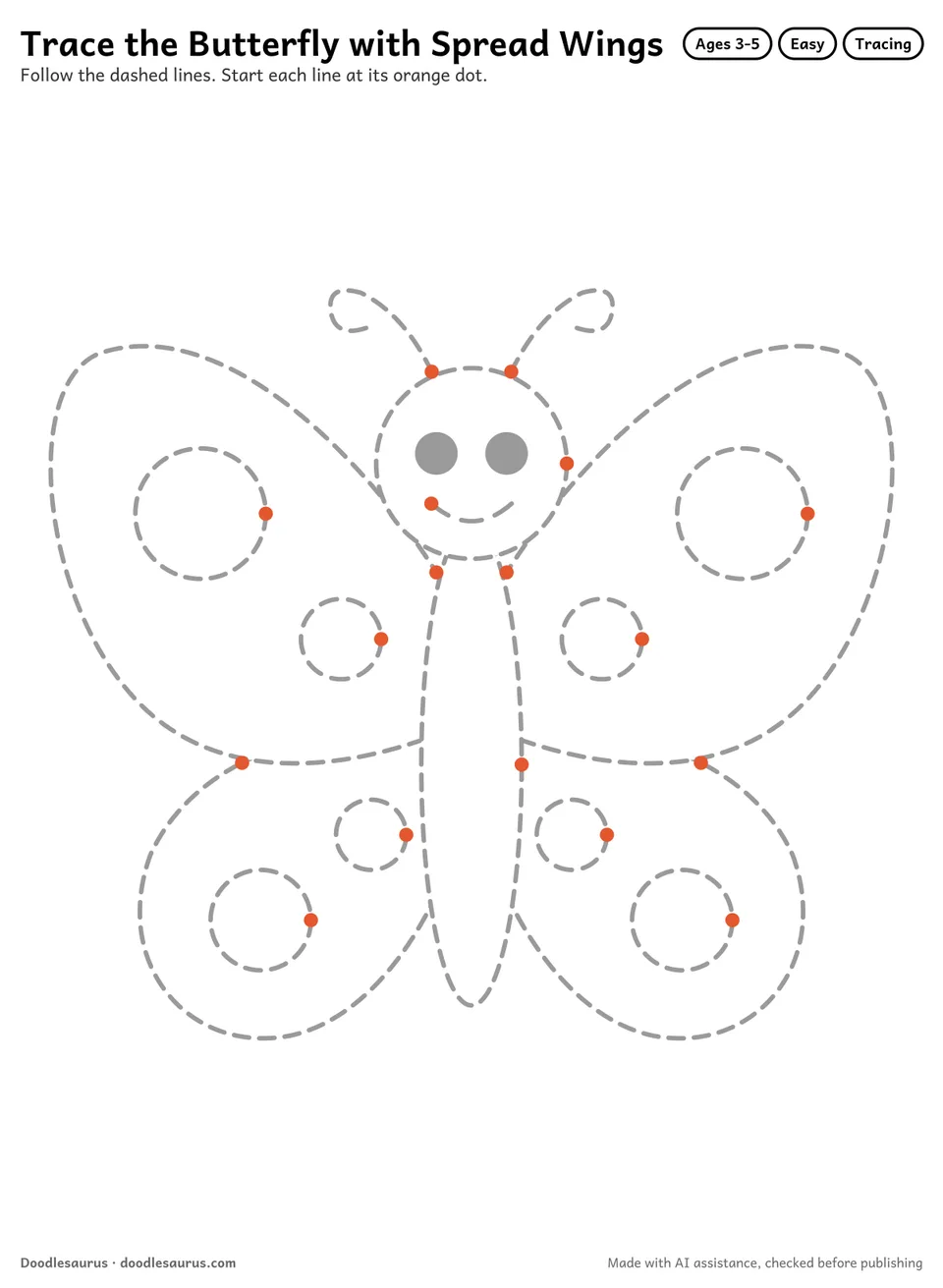
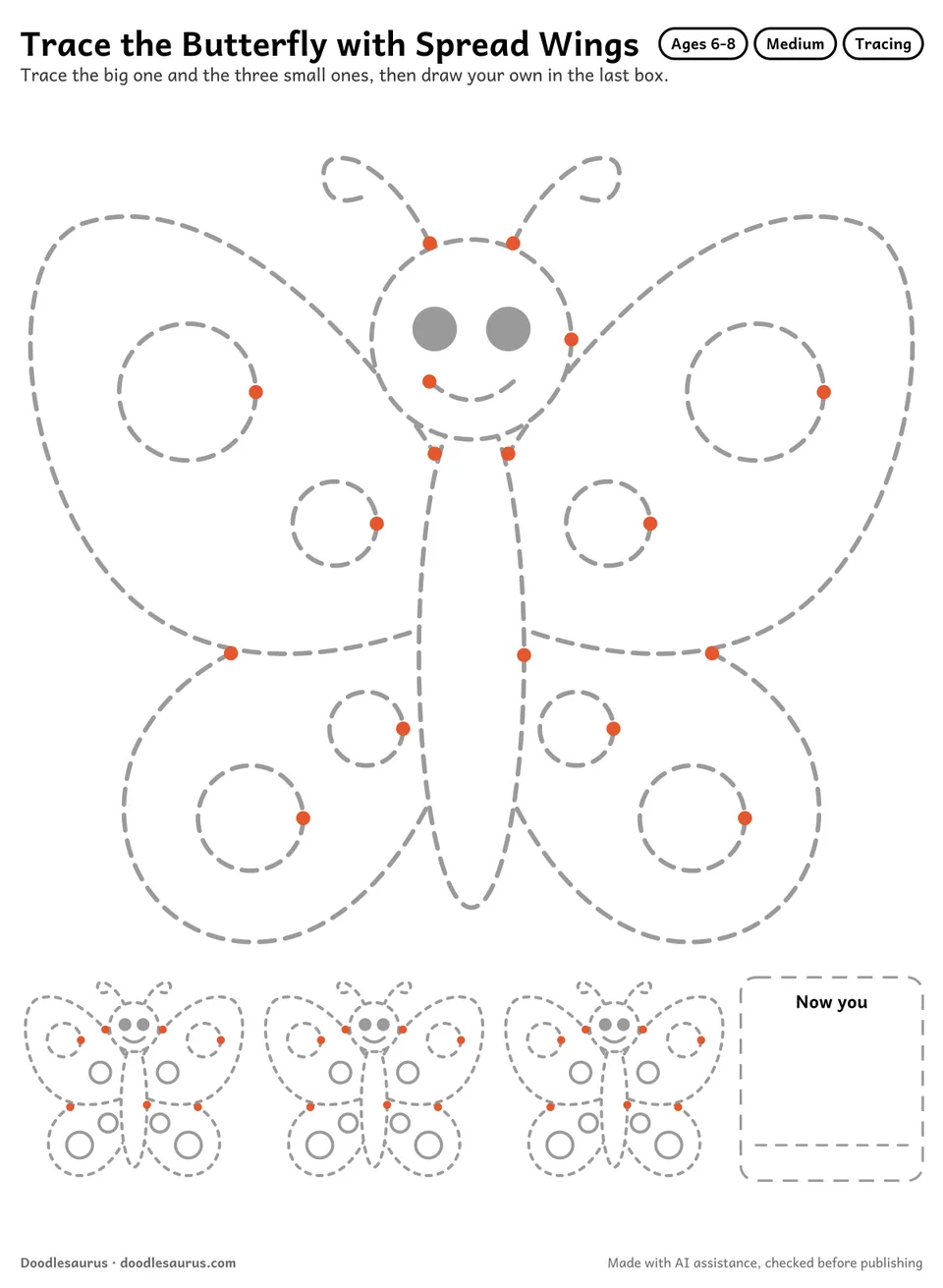
Butterfly with Spread Wings Tracing Worksheet
Wings take up most of this spotted butterfly. There are four of them, two big ones on top and two rounder ones below, and each carries two round spots. Every dashed gray stroke begins at an orange dot, and the two eyes are already filled in gray, so the face looks friendly from the start.
Easy: one big butterfly
Long, sweeping wing curves fill the easy sheet for ages 3 to 5 and invite big, steady arm movements. The eight spots are closed circles that ask for a more careful hand. The antennae end in small curls. A tall, narrow oval makes the body, so a young child gets a little of everything on one page.
Medium: big, small and freehand
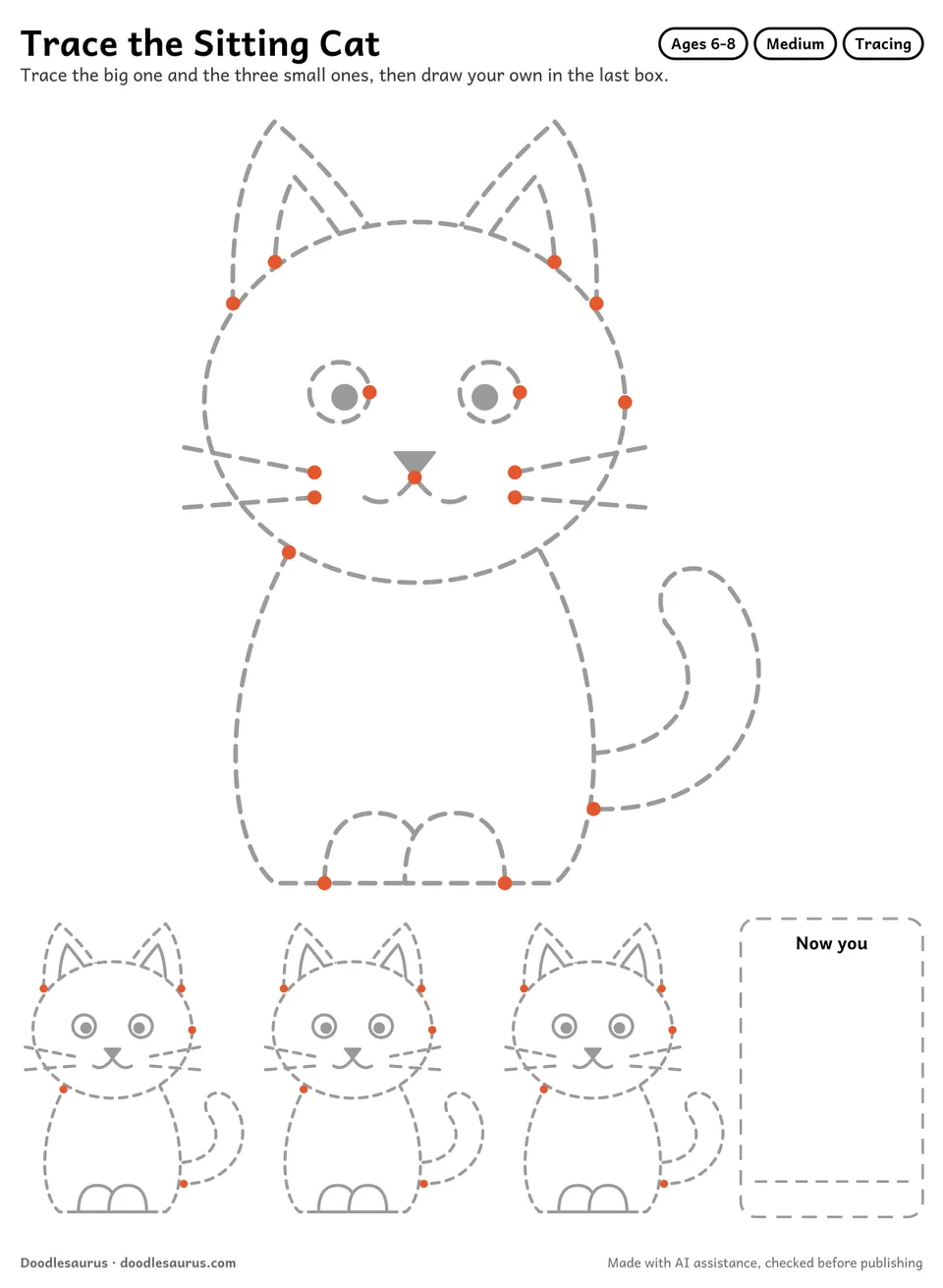
A large dashed butterfly near the top of the medium sheet leads into three small copies along the bottom, for ages 6 to 8. Their curls are tiny. Fit to page would shrink the tight circles even more, while a 100 percent print of the A4 or Letter PDF keeps them easy to follow. To the right sits a dashed box marked Now you, where a child draws the butterfly with no guide lines and can then compare it with the traced ones.
Skills practiced & tips
- Ask your child to find the orange dot before tracing each line.
- Trace the big wing outlines first and leave the small spots for the end.
- Go slowly around each circle and try to close it where it started.
- Turn the paper a little for the antenna curls if the wrist feels stuck.
- A crayon is fine on the easy sheet; the three small butterflies need a sharp pencil.
Butterfly fun facts
- Butterflies are insects, so they have six legs, three main body parts and two antennae.
- Before it becomes a butterfly, a caterpillar sheds its skin one last time to form a chrysalis, where its body is rebuilt.
Classroom ideas
- Preschool (ages 3 to 5): put the easy sheet in a plastic sleeve and trace it many times with a dry-erase marker.
- Kindergarten: trace the big butterfly in one session and the three small ones the next day.
- Grade 1: once the Now you box is filled, students write one sentence about where their butterfly is flying.
More butterfly activities
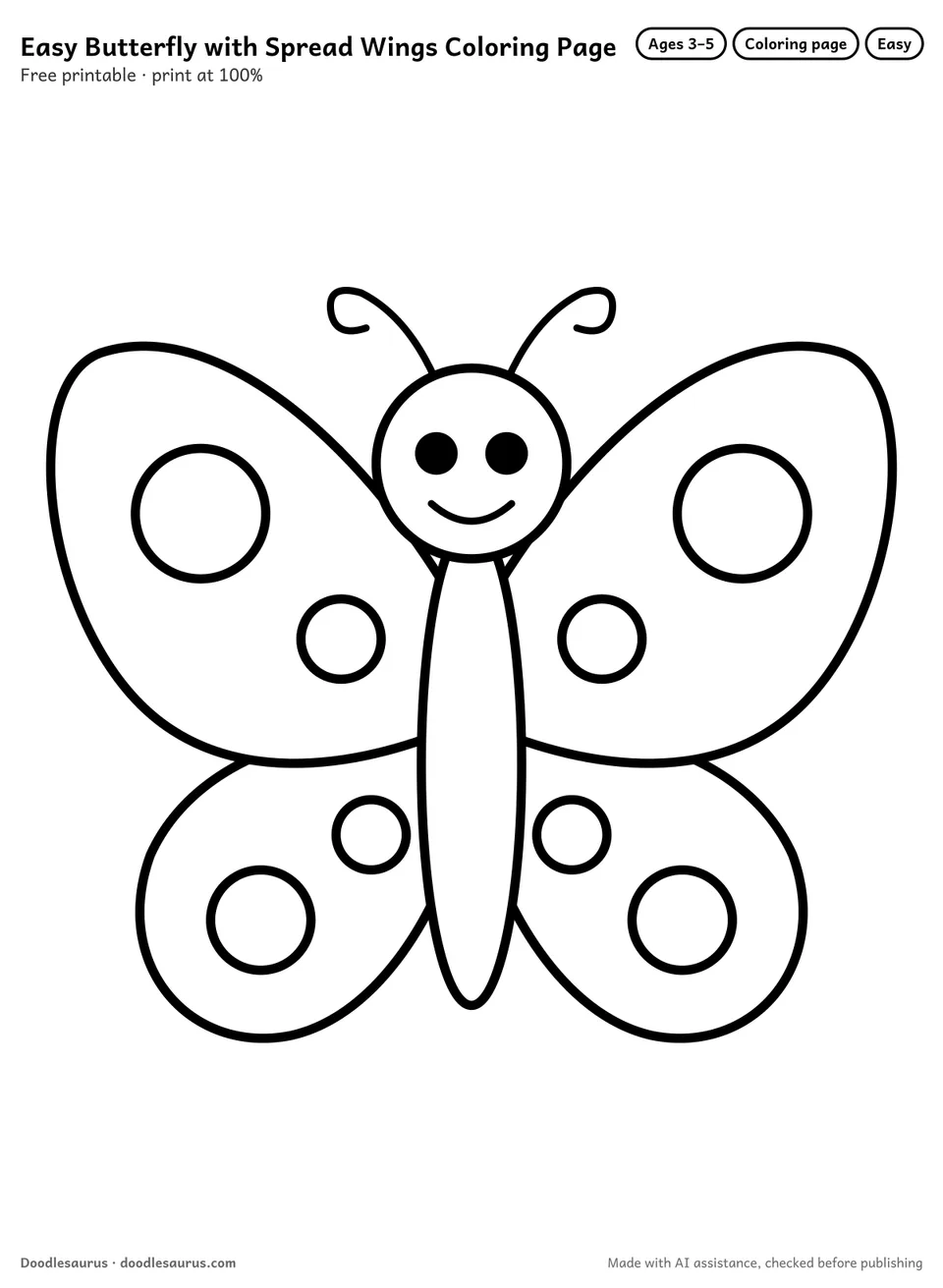
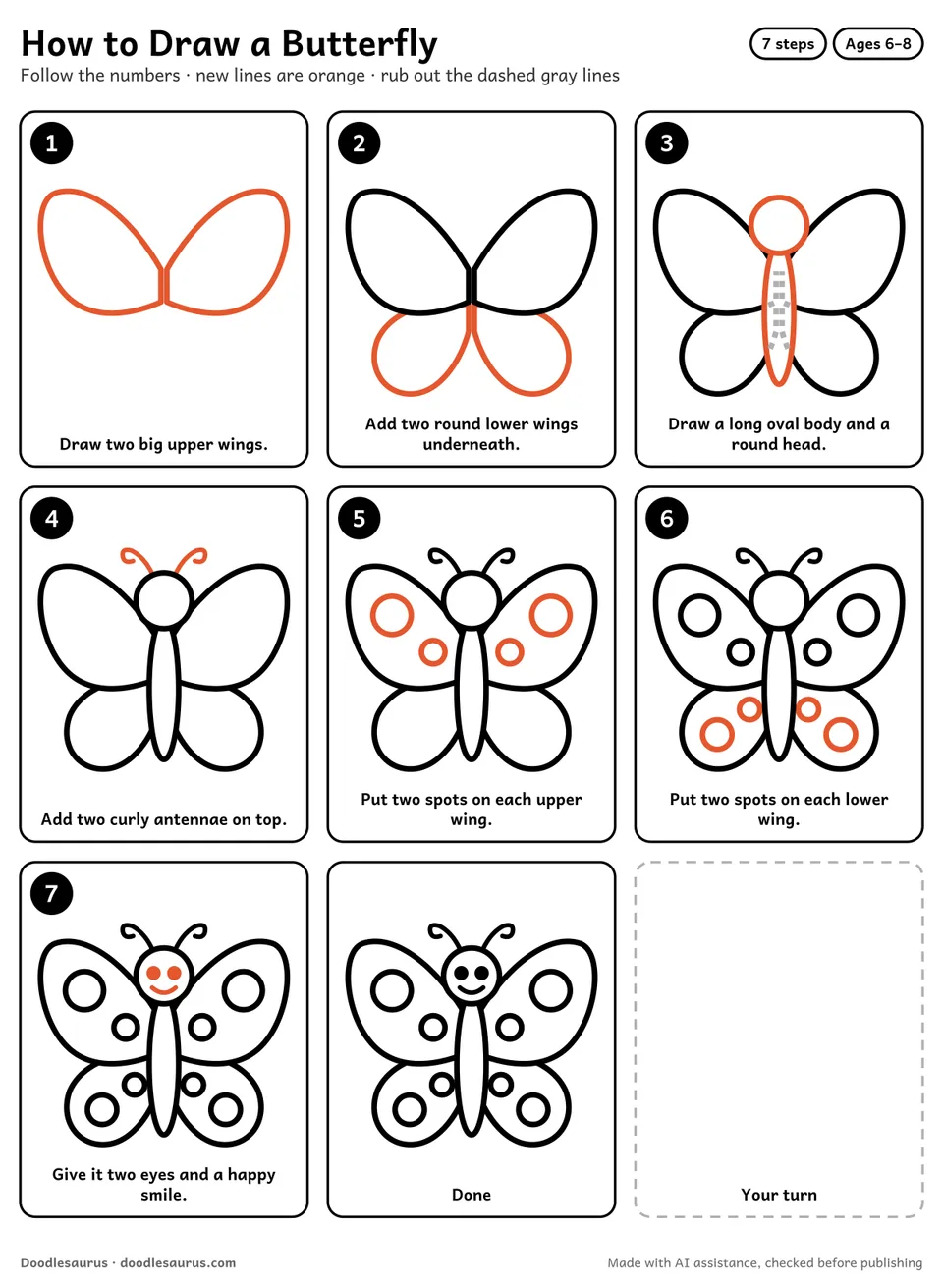
More tracing
Frequently asked questions
Can a child compare the freehand butterfly with the traced ones?
Yes. On the medium sheet for ages 6 to 8 a dashed box marked Now you sits to the right, so a child can draw the butterfly with no guide lines and then hold it up against the traced ones. The easy sheet for ages 3 to 5 has one large dashed butterfly.
Does each antenna start at an orange dot too?
Yes. Each dashed line starts at an orange dot, so a child knows where to begin every wing, spot and antenna. Turning the paper a little helps when the wrist feels stuck on an antenna curl.
How many spots are there to trace?
Eight, two on every wing. Each one is a closed circle, so it helps to go slowly and finish the line where it started.
About this printable
- Made with AI assistance (vector drawing authored by a language model) and checked by automated tests and an AI reviewer.
- Checked by automated tests and an AI reviewer on 22 Oct 2026.
- Free for personal and single-classroom use. See the license. Read the license · How these are made · Report a problem.
- Vector PDF, 1 page, 186×254 mm art box — prints edge-safe on A4 and US Letter.
New printables, twice a month
Our newsletter starts soon, with new sheets twice a month and a free 10-page starter pack for every new reader.